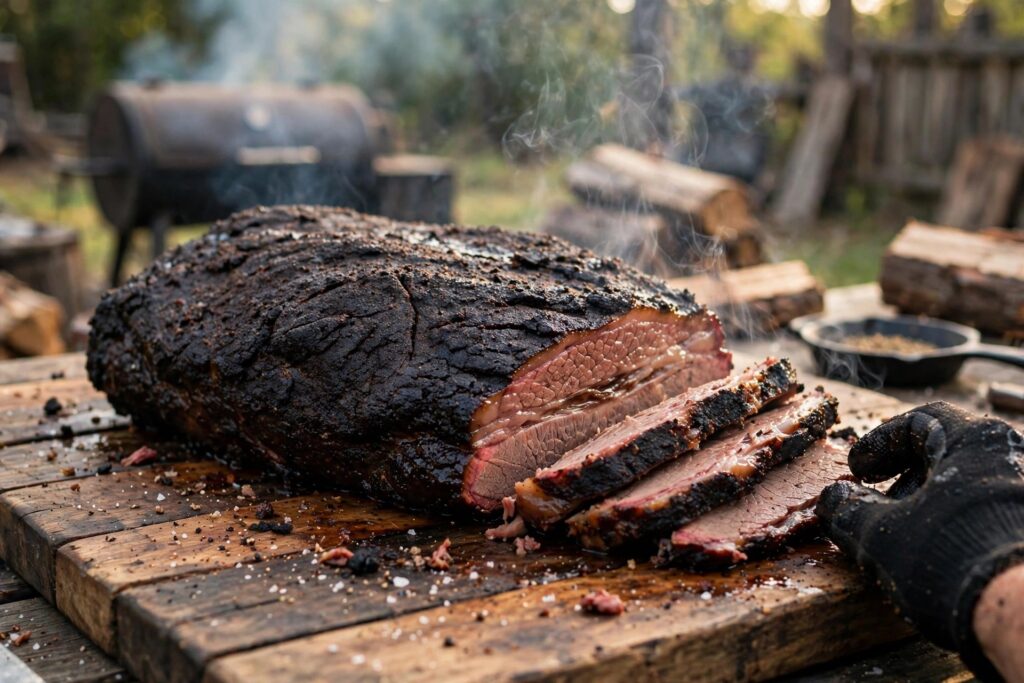
BBQ bark is the dark, flavorful crust that forms on the outside of smoked meat during low-and-slow cooking. It’s built from a coarse dry rub fusing with rendered fat, smoke particles, and dehydrated meat protein through the Maillard reaction — not from burning. Good bark tastes savory, peppery, and smoky with a chewy-crisp bite, and it’s the most flavor-dense part of any brisket, pork shoulder, or rack of ribs.
Ask a pitmaster their favorite bite of brisket and most won’t point at the juicy flat. They’ll point at the dark, craggy edge — the bark. It’s the part people pick off the cutting board before the meat even makes it to the plate. But bark is also the thing beginners destroy most often, usually by wrapping too early or spritzing too much.
Here’s what bark actually is, how it forms step by step, and exactly how to build a dark, firm, flavorful crust every time.
What Is BBQ Bark, Really?
Strip it down and bark is a layered crust made of four things: your dry rub (salt, coarse pepper, sugar, spices), smoke particles that stick to the sticky surface, rendered fat that bastes everything, and a thin skin of gelatinized meat protein called the pellicle sitting underneath it all.
The pellicle deserves a moment. As the meat’s surface heats, its proteins bond into a permanent, paper-thin skin — often less than a millimeter thick — that locks the spice crust in place. That’s why good bark doesn’t slide off when you slice. In old-school salt-only barbecue, the bark is essentially pure pellicle: a thin, golden-brown, chewy-crisp shell.
Here’s the surprise for most beginners: despite looking almost black on a great brisket, good bark is not burnt. Table sugar doesn’t caramelize until past 300°F, and your smoker runs at 225–275°F. That licorice-black color comes from hours of smoke deposition plus Maillard browning — the same reaction that browns a seared steak, just stretched over many hours at lower heat. Burnt tastes bitter and acrid. Bark tastes like concentrated barbecue.
Pulled pork people even have a name for the best bits: Mr. Brown — the dark outside pieces mixed through the meat so every forkful carries bark.
How Bark Forms, Step by Step
Bark doesn’t appear all at once. It builds in stages across the cook:
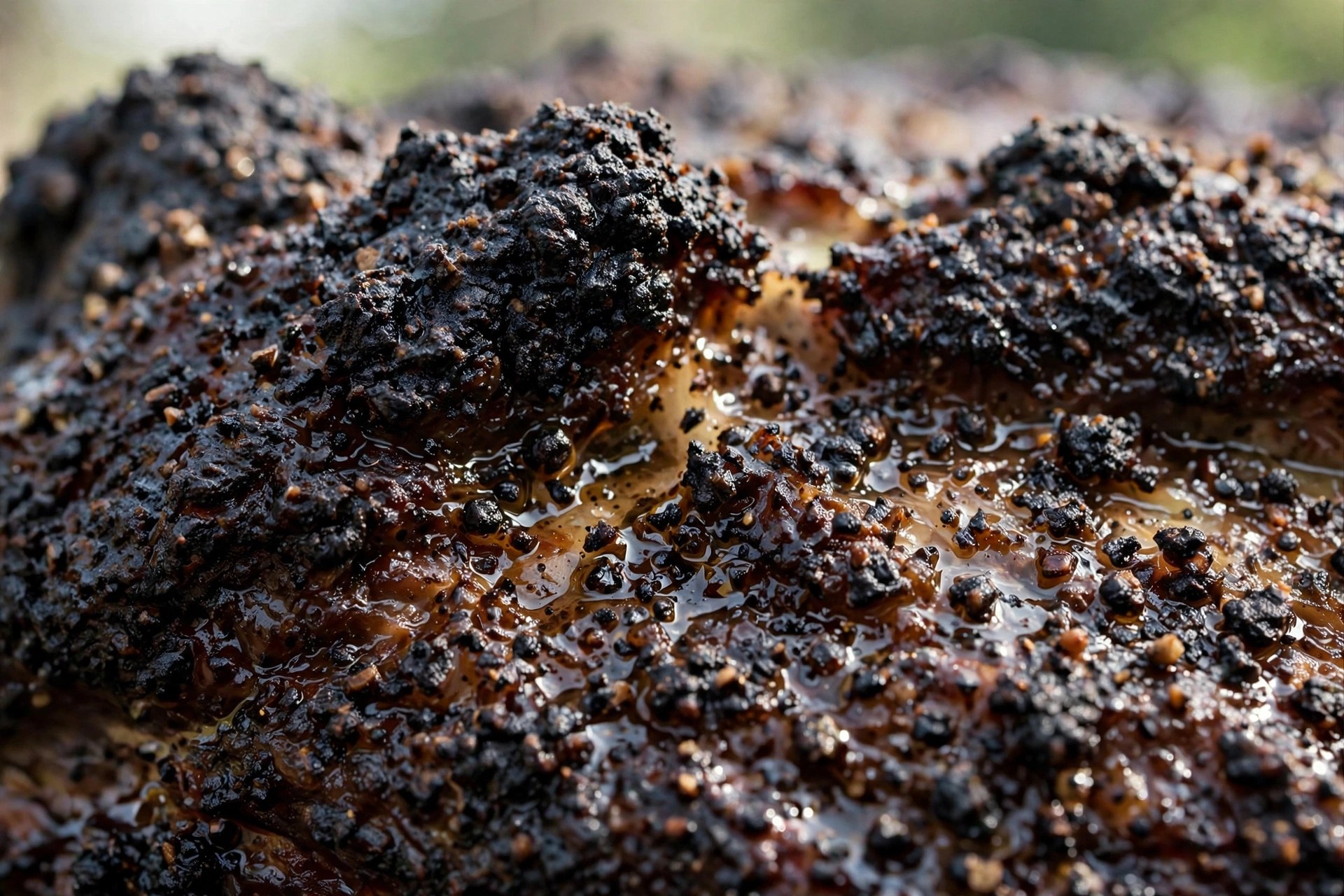
1. The rub turns to paste. As the meat heats, it sweats moisture. Water dissolves the salt and sugar; rendering fat dissolves the fat-soluble spices like paprika and garlic powder. Your dry rub becomes a gritty, flavor-packed slurry coating the meat.
2. Smoke sticks and darkens. Smoke particles adhere to that sticky surface, deepening the color from mahogany toward near-black and adding phenols — the compounds behind smoky flavor. This is where clean, thin blue smoke matters: thick white smoke deposits soot and creosote, which taste bitter instead of smoky.
3. The surface dries and the Maillard reaction takes over. Moisture slowly evaporates off the surface (this evaporation is also what causes the infamous stall). Once the surface is dry enough, Maillard browning kicks in — amino acids and sugars reacting to create hundreds of toasty, savory flavor compounds and firming the crust into a shell.
4. The pellicle sets permanently. Underneath the spice crust, surface proteins polymerize into that thin, durable skin. Once formed, it can’t dissolve. Your bark is now anchored.
The plain-English version: rub + smoke make a sticky paste that dries, browns, and hardens over time. Dry surface, steady heat, clean smoke — that’s the entire formula.
The Rub: Your Bark Foundation
Everything about bark starts before the meat hits the smoker. The rub isn’t just seasoning — it’s the raw material your bark is built from.
- Go coarse. Kosher salt, cracked black pepper, and turbinado or coarse brown sugar build far better texture than fine powders, which blanket the surface and form a pasty layer instead of a crust — coarse-ground black pepper is nearly mandatory on brisket.
- Be generous. A thin dusting won’t build bark. Coat the meat evenly on all sides — you should barely see meat through the rub.
- Go easy on sugar for long cooks. Sugar aids browning, but on a 12-hour brisket cook at the high end of the range it can over-darken — many cooks add sugar only in the final stages. Many Texas-style cooks use nothing but 50/50 salt and pepper.
- Trim so the rub touches meat. Thick, hard fat blocks bark — the crust forms on fat you’ll trim off and throw away. Trim the fat cap to about ¼ inch so the rub bonds to muscle.
- Pat dry first. Moisture under the rub turns it to mush. Pat the meat dry, apply the rub, and let it sweat for 20–30 minutes so the coating adheres.
A binder like mustard or hot sauce is optional — it helps the rub stick but adds little flavor of its own. And if you love the classic Texas profile, SPG seasoning (salt, pepper, garlic) is the pitmaster standard for a reason: simple ingredients, maximum bark.
Pit Control: Temperature, Smoke, and Airflow
Once the meat’s on, three things decide your bark:
| Lever | Target | Why it matters |
|---|---|---|
| Pit temperature | Steady 225–275°F | Dries the surface gradually so Maillard browning builds without scorching. Too hot and the outside overcooks before bark sets. |
| Smoke quality | Thin, blue, barely visible | Clean smoke deposits flavor; thick white smoke deposits bitter soot and creosote. |
| Airflow | Exhaust open, steady draft | Moving air carries moisture off the surface and keeps combustion clean — stagnant air makes stale, bitter smoke. |
| Handling | Leave it alone | Every flip, poke, or lid-lift disturbs the forming crust and drops pit temp. |
Pellet grill owners, take note: pellet smoke is very clean, which is great for flavor but can leave bark paler than an offset smoker’s. If your bark looks anemic, run longer at 225–250°F before wrapping, or add a smoke tube for extra exposure.
Spritzing and Wrapping Without Ruining Bark
This is where most bark dies. Both spritzing and wrapping are useful tools — used wrong, they turn your crust to mush.
Spritz late, not early. Bark needs its first 2–3 hours undisturbed to dry and set. Spritzing a wet rub just washes it into a slurry. Wait until the surface has darkened and the rub no longer wipes off on your finger, then mist lightly — apple cider vinegar, apple juice, or broth — and taper off in the final hours so the bark can firm up for the finish.
Wrap only when the bark is set. The Texas crutch speeds through the stall, but wrapping in foil steams the crust soft. If you must wrap, wait until the bark is dry and firm to the touch — usually around 165–170°F internal — and choose pink butcher paper over foil. Paper breathes; foil braises. Your bark will thank you.
A water pan helps in a different way: it keeps the cooking environment humid early (good for smoke adhesion and the smoke ring) without wetting the meat’s surface directly. Just don’t let dripping condensation rain on your bark.
Best Cuts for Building Bark
Some cuts are just built for bark — lots of surface area, enough fat to render, and long cook times:
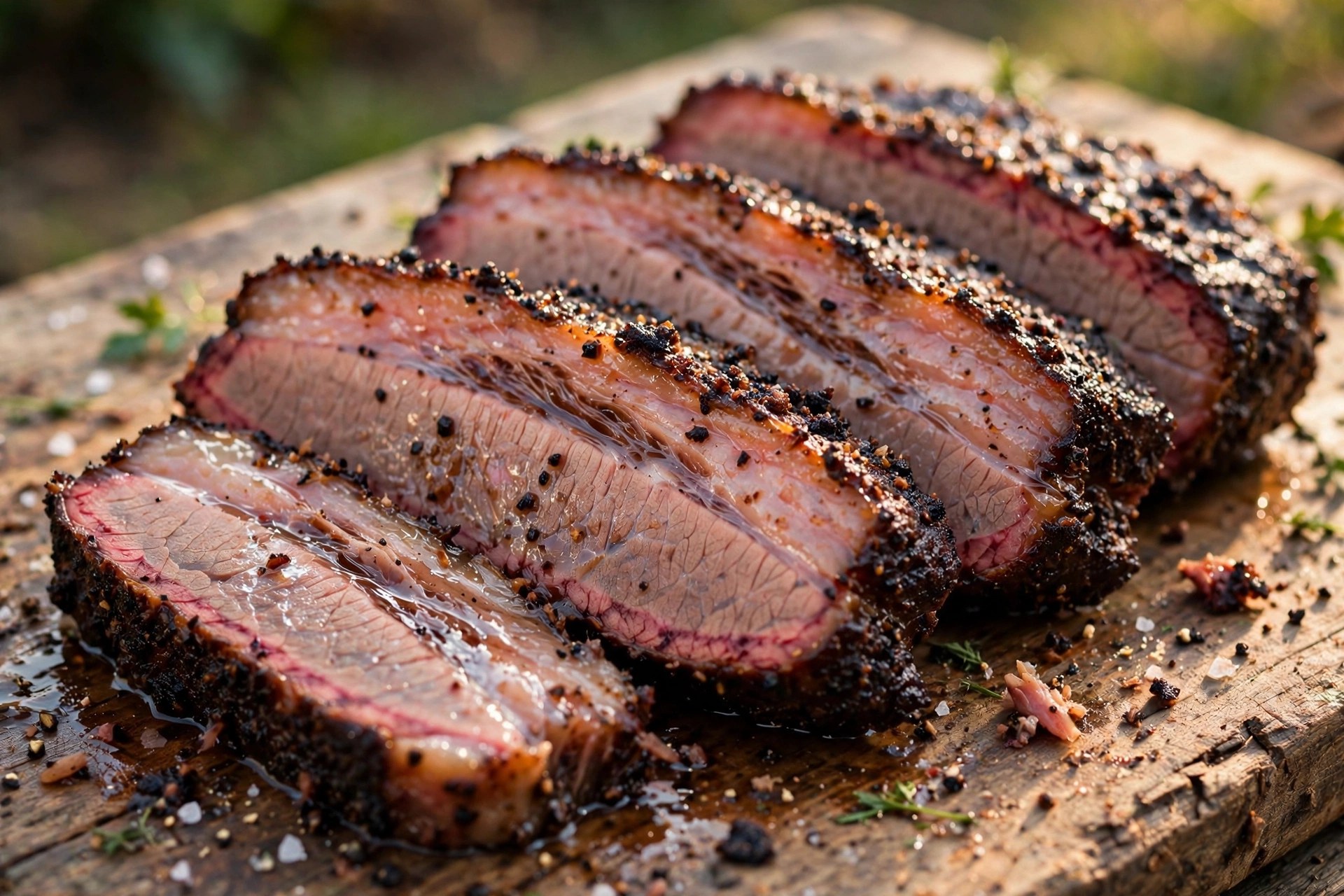
- Brisket — the gold standard. The flat’s huge surface area takes a thick, rugged crust, and a 10+ hour cook gives bark all the time it needs.
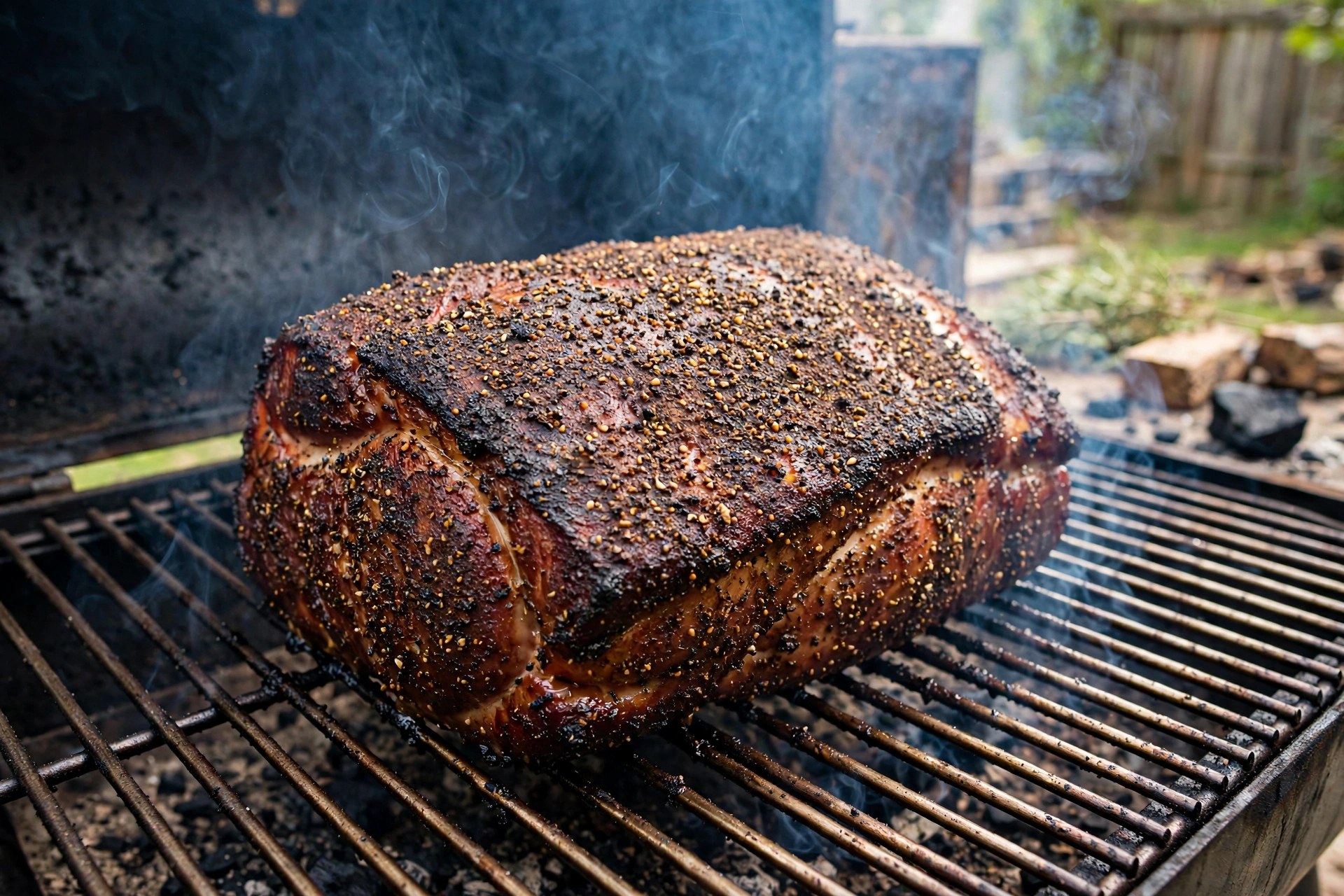
- Pork shoulder (Boston butt) — forgiving and generous. Plenty of surface, plenty of fat, and the bark (Mr. Brown) gets mixed right into the pulled meat.
- Beef ribs — meaty and fatty, practically begging for a thick black crust. Fewer hours than brisket, still spectacular bark.
- Spare ribs — aim for a thinner, bite-through crust here rather than a hard shell. Skip the wrap or unwrap for the last 20–30 minutes to firm it back up.
Want the ultimate bark experience? Burnt ends are essentially bark concentrate — cubed point meat re-smoked in sauce until the edges caramelize. They’re what happens when you take bark as far as it can go.
Can You Fix Mushy Bark?
Sometimes — but prevention beats rescue every time. If wrapping or resting turned your crust soft:
- Unwrap the meat and put it back on the smoker (or a hot oven) uncovered for 30–45 minutes. The dry heat can crisp the surface back up.
- When resting a finished brisket, vent it uncovered for 15–30 minutes before wrapping for the hold. Trapped steam is bark’s enemy.
- Accept the limit: once bark has fully steamed soft, you can improve it but rarely restore it completely.
The better move is building the habits that protect bark in the first place: coarse rub, dry surface, steady 225–275°F, spritz only after the set, wrap late in paper — and spritz with restraint. Do that, and the crust takes care of itself.
Frequently Asked Questions
Is bark burnt meat?
No. Despite the near-black color, good bark isn’t charred — it’s built by the Maillard reaction and smoke deposition at 225–275°F, well below burning temperatures. It should taste savory, peppery, and smoky, never bitter or acrid. Bitterness usually means creosote from dirty smoke, not bark.
Why is my bark soft instead of crispy?
The usual culprits: wrapping too early, wrapping in foil instead of butcher paper, spritzing before the crust set, or resting wrapped without venting first. Wait until the bark is dry and firm (around 165–170°F internal) before wrapping, and vent 15–30 minutes before the final rest.
Does sugar in the rub burn and ruin bark?
At normal smoking temperatures it can’t — table sugar doesn’t caramelize until over 300°F. The dark color comes from smoke and Maillard browning. Still, go lighter on sugar for very long cooks, since it keeps darkening the whole time.
Foil or butcher paper for preserving bark?
Butcher paper, every time. Foil traps steam and braises the crust soft (that’s the Texas crutch trade-off). Pink butcher paper breathes, so the bark stays drier and firmer while the meat still pushes through the stall faster.
Which wood gives the best bark color?
Any hardwood works — oak, hickory, and mesquite are the classics — but color depth comes more from cook time and clean smoke than from the species. A long cook with thin blue smoke builds darker bark than a short cook with heavy white smoke, regardless of wood.
Your next cook, try this: coarse salt-and-pepper rub, meat on at 250°F, hands off for three hours, spritz only once the crust is set, wrap in paper at 165°F if you wrap at all. When you slice and see that dark, rugged edge around juicy meat — and hear people fighting over the end pieces — you’ll know the bark did its job.
[…] “smoke ring” is a misnomer. The visible smoke — the particles that darken your bark and carry smoke flavor — isn’t what paints the ring. As one barbecue science writer put it, […]
[…] top of the meat and burns over hours of heat. Mop sauce is thin enough to wick into the developing bark, adding moisture and flavor without coating or covering anything up. Each light coat evaporates […]
[…] It protects the bark. Bark forms from the Maillard reaction between your rub, rendering fat, and smoke. It needs heat and air […]
[…] more thing hickory does well: color. Hickory smoke lays down a rich mahogany-brown bark on long cooks. If you’ve ever admired the deep reddish-brown crust on a competition brisket, […]
[…] way. Salt amplifies the meat’s natural taste. Pepper adds bite and builds the dark, crunchy bark that Texas brisket is known for. Garlic fills in the savory middle without pulling […]
[…] long before the inside surrendered. Indirect heat also gives smoke time to work, which is why a proper bark only forms during low-and-slow cooks and why clean, thin blue smoke matters so much on longer […]
[…] blue smoke also does the good work you want from a long cook: it builds bark gradually instead of painting the meat black, develops a defined smoke ring without oversmoking the […]
[…] and smoke clings to a moist surface far better than a dry one. That shows up as a darker, richer bark and often a more visible smoke ring. Third, the liquid itself adds flavor: vinegar brings tang, […]
[…] the name, nothing here is actually burnt. The near-black crust comes from hours of smoke building bark on the meat, plus the sugar in the sauce darkening as it caramelizes. Inside, the cubes are soft, […]
[…] to hide behind, every flaw shows up on the plate — dry flat, bitter smoke, under-rendered fat. Bark on a Texas brisket is dark, rugged, and peppery, built from hours of smoke rather than a thick coat […]