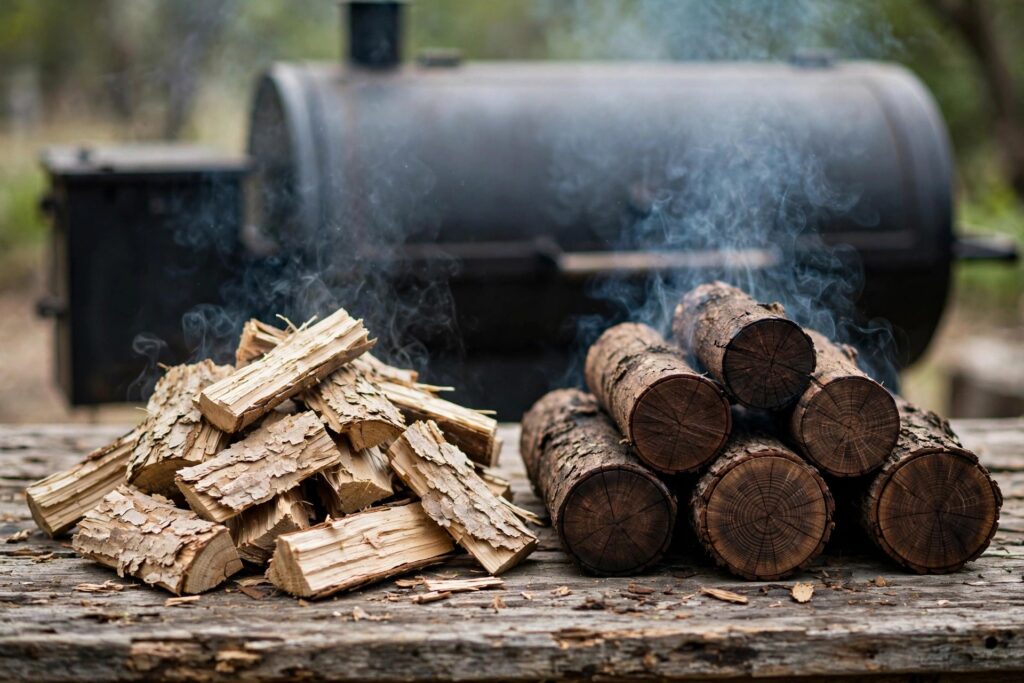
Hickory vs mesquite comes down to this: hickory is the versatile all-rounder with medium-strong, bacon-like smoke that works on almost any meat, while mesquite is the boldest BBQ wood — earthy and intense, best for beef brisket and fast, hot grilling. Pick hickory for your first bag; use mesquite sparingly until you know it.
Both are hardwoods. Both can make great barbecue. But they smoke very differently, and choosing the wrong one for the wrong cook is how you end up with ribs that taste like a campfire ashtray. Here’s how each wood actually behaves, what it tastes like, and exactly when to reach for which one.
The Short Answer: Hickory vs Mesquite at a Glance
If you only buy one bag of wood this year, make it hickory. It’s the classic American BBQ smoke for a reason: medium-strong flavor that flatters pork, beef, chicken, and turkey without bulldozing them. Think of it as the salt of smoke woods — it goes with nearly everything.
Mesquite is a different animal. It’s the strongest-flavored common smoking wood, with a sharp, earthy punch that Texans love on beef. Used lightly, it gives brisket and steaks a deep, savory edge. Used heavily, it turns bitter and overpowering fast. If hickory is salt, mesquite is cayenne.
Quick rule of thumb:
- Long, low-and-slow cooks (brisket, pork shoulder, ribs): hickory is safer; mesquite works only in small doses.
- Hot-and-fast grilling (steaks, burgers, chicken thighs): mesquite shines — short exposure, big flavor.
- Chicken, turkey, fish: hickory (or a fruit wood); mesquite will bury them.
What Does Hickory Smoke Taste Like?
Hickory smoke is savory, a little sweet, and famously bacon-like. That’s not a coincidence — most commercial bacon is smoked with hickory, so the flavor is already wired into your brain as “this is what smoked meat tastes like.” It’s a medium-strong smoke: assertive enough to stand up to a 12-hour brisket, mellow enough not to ruin a chicken thigh.
Hickory comes from trees in the walnut family, and it’s one of the densest hardwoods in North America. That density is why it burns long and steady — a real advantage on overnight cooks where you want consistent smoke at 225–275°F without babysitting the firebox every 30 minutes. It also burns clean with very little sparking, which pitmasters appreciate.
One more thing hickory does well: color. Hickory smoke lays down a rich mahogany-brown bark on long cooks. If you’ve ever admired the deep reddish-brown crust on a competition brisket, hickory (often blended with oak) is usually behind it.
Word of caution from BBQ Host’s hickory vs mesquite breakdown: hickory can turn bitter if you overdo it. The fix is simple — smoke for the first half of the cook (roughly the first 3–4 hours of a 10-hour brisket), then let clean heat finish the job. Meat stops absorbing much new smoke flavor after the first few hours anyway.
What Does Mesquite Smoke Taste Like?
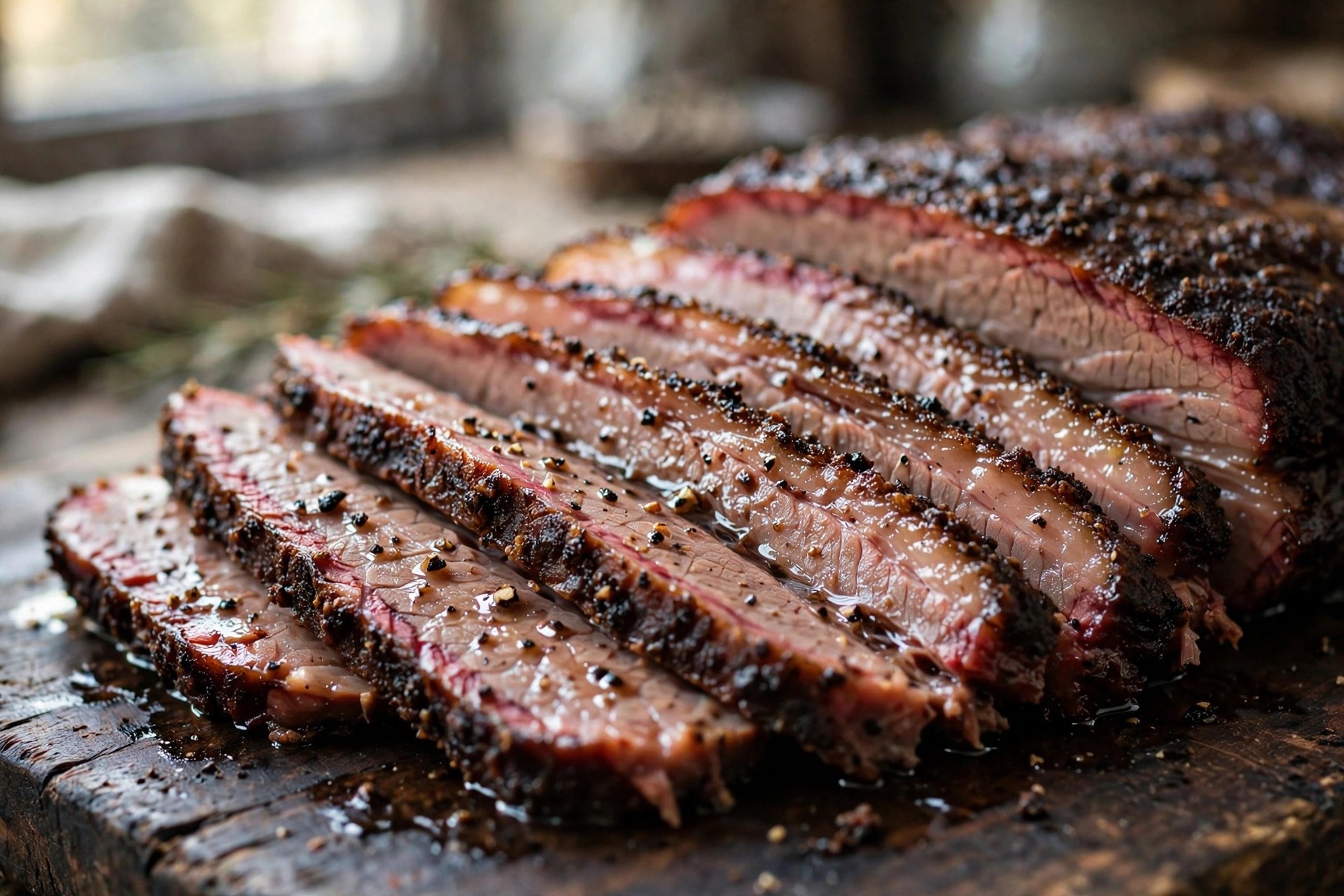
Mesquite is bold, earthy, and sharp — the most intense smoke flavor of any common BBQ wood. The first bite of mesquite-smoked brisket is unmistakable: a deep, almost peppery savoriness that hits harder than hickory and lingers longer. About 70% of America’s mesquite grows in Texas, and it shows in the food — mesquite is the taste of Texas-style beef BBQ.
The wood is extremely dense and rich in nitrogen, which is why it catches fast, burns hot, and throws off the occasional spark. That’s a feature, not a bug, when you’re searing steaks at 500°F+ — mesquite makes outstanding grilling coals. It’s a trickier fuel for a 12-hour low-and-slow cook, because that same intensity compounds over time and can push the meat from “deeply smoky” to “bitter” somewhere around hour six.
This is why experienced pitmasters treat mesquite like a spice, not a base. As Pitmaster Central’s comparison puts it, mesquite burns fast and smokes hard, giving intense smoke and bark — great for dark meats, but probably too strong for a full cook on ribs or pork shoulder.
Best uses for mesquite:
- Beef brisket — in moderation, blended with oak (try 1 part mesquite to 3 parts oak)
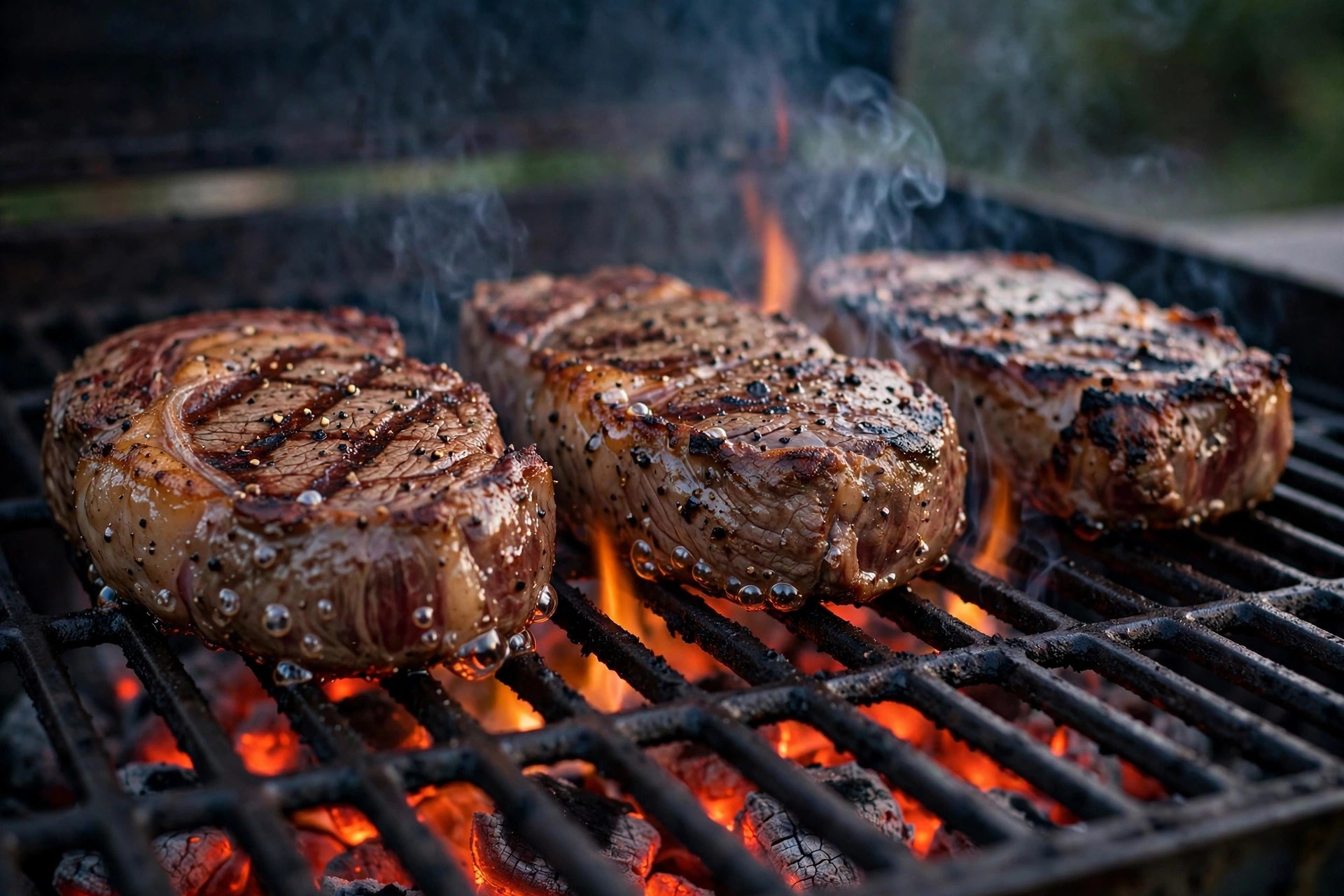
- Steaks and burgers — short, hot cooks where the smoke hits fast and doesn’t overstay
- Chicken pieces and pork chops — as an accent wood, not the main fuel
Hickory vs Mesquite: Side-by-Side Comparison
Here’s the full breakdown in one place:
| Hickory | Mesquite | |
|---|---|---|
| Flavor intensity | Medium-strong | Very strong (strongest common BBQ wood) |
| Flavor notes | Savory, bacon-like, faintly sweet | Earthy, sharp, almost peppery |
| Burn behavior | Long, steady, clean; hardly sparks | Ignites fast, burns hot; occasional sparks |
| Best cooking style | Low-and-slow smoking | Hot-and-fast grilling; short smoke bursts |
| Best meats | Pork, beef, chicken, turkey | Beef brisket, steaks, wild game |
| Color it gives meat | Rich mahogany-brown bark | Darker, almost black bark |
| Beginner-friendly? | Yes — forgiving | No — easy to oversmoke |
| Blends well with | Oak, apple, cherry, pecan | Oak (as the milder base); use sparingly with fruit woods |
One thing they share: both are hardwoods, so both burn longer and cleaner than any softwood (never smoke with pine or cedar — the resin makes acrid, unpleasant smoke). And despite what you might read, both burn at roughly the same rate in the same size pieces, so switching from one to the other doesn’t change your cook time.
Which Wood for Which Meat
The cut matters more than the species. Here’s how to match them up:
Brisket (12–16 hours at 225–250°F, pull at 195–205°F internal). Hickory is the safe pick for the whole cook, often blended 50/50 with oak. Mesquite works beautifully here too — Texas tradition — but cap it at 1 part mesquite to 2–3 parts oak, or use mesquite only for the first 2–3 hours. For a deeper dive on wood choice for this cut, see our guide to the best wood for smoking brisket.
Pork shoulder / pulled pork (10–14 hours at 225–250°F, pull at 195–205°F). Hickory all the way. Pork loves hickory’s bacon-like savoriness, and the long cook time gives mesquite too many hours to turn bitter. If you want a mesquite accent, add one small chunk during the first hour and nothing after.
Ribs (5–6 hours at 225–250°F). Hickory wins again — it gives spare ribs and baby backs that classic BBQ bite without overpowering them. Mesquite is almost always too much for ribs; they’re thin and soak up smoke fast. A fruit wood like apple is arguably even better here.
Steaks, burgers, chops (500°F+, minutes per side). This is mesquite’s moment. Short exposure means you get the bold, earthy char without the bitterness that builds over hours. Hickory works fine too, but mesquite’s intensity is built for the sear.
Chicken and turkey. Hickory, used lightly — 2–3 fist-sized chunks for a whole bird. Poultry skin grabs smoke aggressively, and mesquite will make it taste like an ashtray. Many pitmasters actually prefer fruit woods for birds, but hickory is the strongest wood you should consider.
If you’re cooking Texas-style BBQ specifically, know the regional split: central Texas brisket joints mostly burn post oak, with mesquite as the traditional South Texas grilling wood. Either is authentic — it depends on the cut and the cook.
How to Use Each Wood Without Wrecking Your Cook
Most bad smoke flavor isn’t the wood’s fault — it’s technique. Follow these rules and either wood will treat you well:
- Use dry, seasoned wood. Moisture content should be 20% or less. Wet or green wood smolders, makes thick white smoke, and tastes acrid. Store splits off the ground under cover.
- Match the piece size to the cooker. Fist-sized chunks (roughly 2–3 inches) for kettle grills and bullet smokers; full splits (about 8 inches long, 2–3 inches thick) for offset smokers. Chips burn up in 20–30 minutes — fine for a gas grill, useless for a 12-hour brisket.
- Smoke early, not late. Meat absorbs most of its smoke flavor in the first 2–4 hours. After that, you’re just adding bitterness risk. A good rule: wood for the first half of the cook, clean heat for the second half.
- Chase thin blue smoke. You want a faint, almost invisible blue wisp — not billowing white clouds. White smoke means incomplete combustion and bitter flavor. Open the vents, let the fire breathe, and add wood to a hot coal bed, never to struggling flames. More on this in our thin blue smoke guide.
- Start with less than you think. Two to three chunks is plenty for most backyard cooks. You can always add more next time; you can’t un-smoke a bitter brisket.
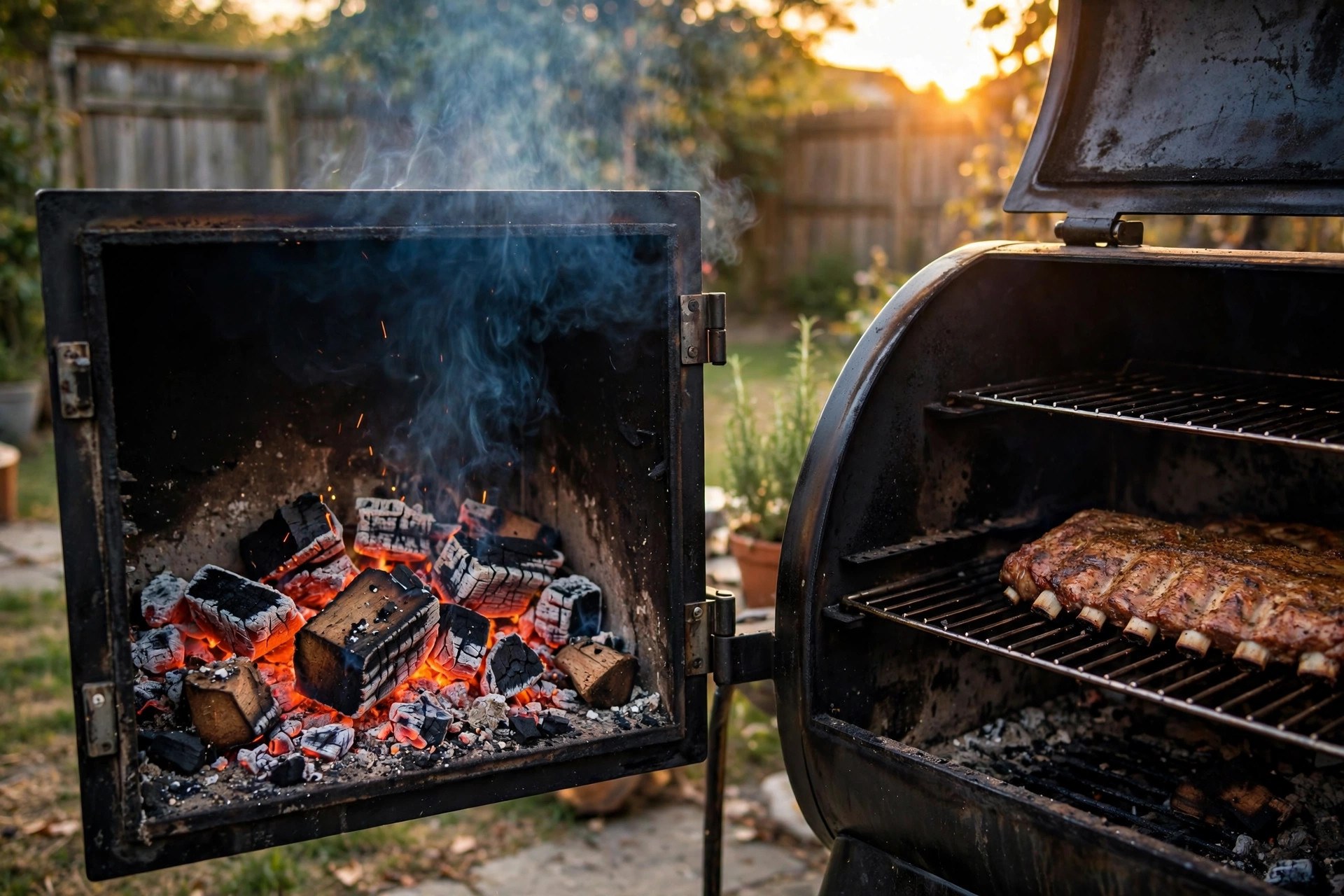
For mesquite specifically: treat the “first half” rule as the “first quarter” rule. One or two mesquite chunks at the start of a brisket cook, then switch to oak or hickory. On a good offset smoker, some pitmasters run mesquite splits as the heat source with the fire burning hot and clean — that works because a hot, efficient fire makes sweet smoke even from strong wood.
Can You Mix Hickory and Mesquite?
Yes — and it’s one of the best ways to use mesquite. Blending lets you borrow mesquite’s boldness while hickory (or oak) keeps it from going overboard.
The golden ratio: start with 3 parts hickory or oak to 1 part mesquite. Smoke with the blend for the first 2–3 hours of the cook, then finish on the milder wood alone. The result is a deeper, more layered smoke than hickory alone — earthy bass notes under hickory’s savory midrange — without the harsh edge of straight mesquite.
Two ground rules for blending:
- Taste each wood solo first. Smoke a batch of chicken thighs with hickory one weekend and mesquite the next. You’ll learn each wood’s personality in two cooks, and your blends will be ten times better for it.
- Mesquite is always the minority. Even experienced pitmasters rarely go above a 50/50 split, and most stay closer to 25% mesquite. When in doubt, use less.
As The Growing Foodie’s comparison notes, a beginner-friendly blend is mostly oak, then hickory, with just a touch of mesquite — oak as the steady base, hickory for character, mesquite for edge.
Which bag should you buy first? Buy hickory. It’s the most forgiving strong smoke wood in BBQ: great on brisket, pork shoulder, ribs, chicken, and turkey, easy to find, and hard to mess up as long as you keep the smoke thin. It’ll carry you through your first year of smoking without a single bitter cook.
Add a small bag of mesquite once you’re comfortable — and the first thing you should do with it is sear steaks over it. That one cook will teach you what mesquite does better than any article can. Then start sneaking a chunk into your brisket blend and see if you miss it when it’s gone.
Your next step: pick one wood and smoke something this weekend. Two chicken thighs, 275°F, one chunk of hickory, 90 minutes. Taste it. Then you’ll know more about hickory vs mesquite than any comparison chart can teach you.
Frequently Asked Questions
Is mesquite too strong for brisket?
Not if you use it right. Straight mesquite for a full 12–16 hour brisket cook usually turns bitter. But blended 1:3 with oak, or used just for the first 2–3 hours, mesquite gives brisket a deep, earthy flavor that’s pure Texas. The key is dose and duration.
Can you mix hickory and mesquite together?
Yes. A 3:1 hickory-to-mesquite ratio for the first few hours of the cook is a proven blend — you get mesquite’s boldness rounded out by hickory’s savory sweetness. Try each wood on its own first so you can actually taste what the blend is doing.
Which wood is better for ribs, hickory or mesquite?
Hickory, by a wide margin. Ribs are thin and absorb smoke quickly, so mesquite’s intensity overwhelms them in a 5–6 hour cook. Hickory gives ribs classic BBQ flavor; apple or cherry wood is even milder if you want the pork to shine.
Does mesquite burn hotter than hickory?
Mesquite ignites faster and can run hotter because it’s extremely dense and nitrogen-rich, which is why it makes excellent grilling coals. But in same-sized pieces at smoking temperatures, both woods burn at roughly the same rate — your cook time doesn’t change when you switch.
Is hickory good for smoking chicken?
Yes, with a light hand. Use 2–3 fist-sized chunks for a whole bird at 275°F; poultry skin picks up smoke fast. It’s the strongest wood most pitmasters recommend for chicken — anything bolder, like mesquite, tends to overpower it.