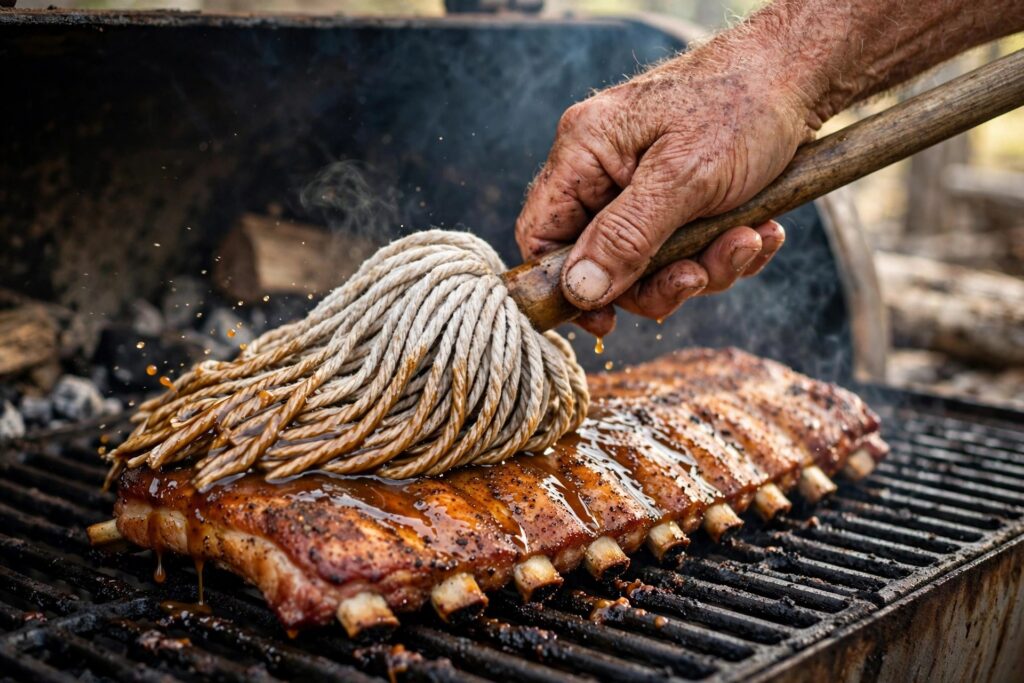
Mop sauce is a thin, vinegar-based liquid that pitmasters brush — or “mop” — onto meat during smoking to keep it moist, build flavor in layers, and help develop bark. Unlike thick finishing BBQ sauce, mop sauce is almost watery, so it soaks into the meat’s surface without burning, and it goes on every 45–60 minutes throughout the cook with a cotton BBQ mop or basting brush.
If you’ve ever wondered why competition brisket tastes seasoned all the way to the bone while your backyard version tastes flat, mop sauce is often the missing piece. It doesn’t replace your rub — it works with it, adding a fresh layer of tang, salt, and spice each time it hits the meat. It’s one of the oldest tricks in barbecue, going back to whole-hog pits where a literal floor mop was used to keep the pig from drying out over a 12-hour cook.
This guide covers what mop sauce is, how it differs from BBQ sauce and spritzing, the classic regional styles, an exact recipe you can make today, and the timing rules that separate great mopping from bark-wrecking overkill.
What Is Mop Sauce, Exactly?
Mop sauce is a thin basting liquid applied to meat during the cook — not at the end, and not as a table sauce. Its base is almost always vinegar (usually apple cider vinegar), thinned further with water, broth, beer, or fruit juice, then seasoned with salt, black pepper, red pepper flakes, and sometimes Worcestershire, mustard, or a little sugar.
The consistency is the whole point. Thick BBQ sauce sits on top of the meat and burns over hours of heat. Mop sauce is thin enough to wick into the developing bark, adding moisture and flavor without coating or covering anything up. Each light coat evaporates between applications, leaving behind concentrated seasoning. Do it right over a long cook and you build dozens of micro-layers of flavor that no single sauce application can match.
The name comes from the tool: a BBQ mop, which looks like a miniature cotton string mop on a wooden handle. Old Carolina pitmasters really did use full-size mops — fresh ones — to slather whole hogs. The cotton head holds a lot of thin liquid and spreads it evenly without scraping off the rub, which is exactly what you want when you’re basting a brisket at hour eight.
Mop Sauce vs BBQ Sauce vs Spritz: What’s the Difference?
These three get mixed up constantly, but they do different jobs at different stages:
| Mop sauce | BBQ sauce (finishing) | Spritz | |
|---|---|---|---|
| Consistency | Thin, watery | Thick, syrupy | Thin, watery |
| Base | Vinegar + broth/beer/juice + spices | Tomato or mustard + sweeteners | Apple cider vinegar, juice, or water |
| When applied | Every 45–60 min during the cook | Last 15–30 min or at the table | Every 30–45 min after bark sets |
| Flavor goal | Layered tang, salt, pepper | Sweet, bold finish | Surface moisture, mild flavor |
| Tool | Cotton mop or brush | Brush or squeeze bottle | Spray bottle |
| Risk if overdone | Soft bark, cooled meat | Burnt, bitter crust | Stalled bark, longer cook |
Think of it this way: the mop sauce works with the rub during the cook, the finishing sauce works over the meat at the end. A spritz, which you can read more about in our spritzing guide, is closer to mopping in spirit — thin liquid, mid-cook — but it’s mostly about surface moisture and bark control, while mop sauce is doing heavier flavor work with its broth, vinegar, and spice load.
The Four Classic Regional Mop Sauce Styles
Mop sauce isn’t one recipe — it changes with the region, the meat, and the tradition. Here are the four styles that define the genre:
1. Carolina vinegar-pepper. The original. Apple cider vinegar, crushed red pepper, black pepper, salt, and a whisper of sugar — nothing else. It’s the backbone of Carolina whole-hog barbecue, where the mop has to season 100+ pounds of pork without covering the smoke. Sharp, peppery, and brutally simple.
2. Texas beef mop. Built for brisket: beef broth, apple cider vinegar, Worcestershire, coarse black pepper, and salt. Some Texas cooks add a splash of beer. The profile stays savory and beefy — no sweetness allowed — because the goal is to amplify the beef, not compete with it. Rodney Scott’s famous whole-hog version is in this family, a vinegar-pepper mop applied with an actual mop that turned him into a James Beard winner.
3. Kansas City tomato mop. Thinner than KC’s famous thick table sauce but sharing the DNA: tomato, vinegar, molasses or brown sugar, and a fuller spice lineup. It’s used on ribs and burnt ends during the cook, then finished with the heavy sauce at the end.
4. Memphis-style vinegar mop. Memphis dry-rub ribs famously get basted with a thin vinegar solution while they cook over charcoal, then dusted with more rub — no sauce at all during the cook. The mop here is seasoning’s assistant, keeping the surface moist so the spice crust builds instead of scorching.
If you’re new to mopping, start with the Carolina or Texas style below. They’re the most forgiving, the cheapest to make, and they work on nearly any cut.
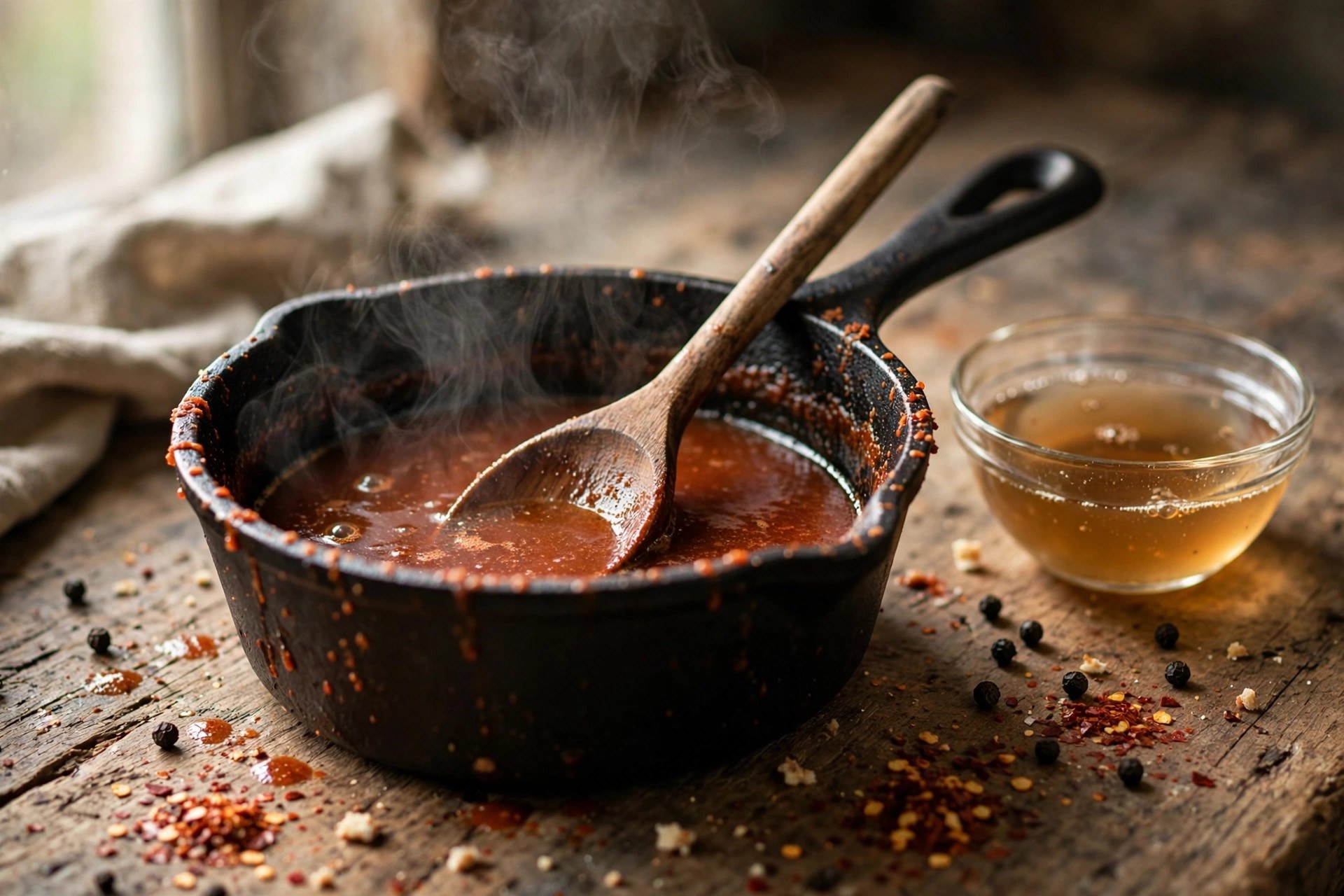
How to Make a Classic All-Purpose Mop Sauce
This recipe splits the difference between Carolina and Texas styles. It works on brisket, pork shoulder, ribs, and chicken — about 3½ cups total, enough for a full 12–14 lb packer brisket cook with some left over.
Ingredients:
- 2 cups apple cider vinegar
- 1 cup beef broth (or apple juice for pork and chicken)
- ¼ cup Worcestershire sauce
- 2 tablespoons oil or melted butter
- 1 tablespoon yellow mustard
- 1 tablespoon packed brown sugar
- 1 teaspoon kosher salt
- 1 teaspoon coarse black pepper
- ½ teaspoon garlic powder
- ½ teaspoon onion powder
- Dash of hot sauce (optional)
Method:
1. Combine everything in a saucepan. 2. Bring to a gentle simmer over medium heat, stirring, for 5–10 minutes until the sugar and salt fully dissolve. 3. Pull it off the heat and use it warm — mop sauce should be hot (around 140°F) when it hits the meat, so a cold mop doesn’t drag the meat’s surface temperature down.
Swap the beef broth for apple juice and you have a pork-and-chicken version. Swap in a cup of cheap lager for the broth and you get a maltier Texas-style mop. The template is: roughly 2 parts acid (vinegar), 1 part savory liquid, a spoonful of fat, salt, pepper, and heat. Adjust the ratios and it stays a mop sauce.
Make it the night before if you can — the flavors meld as it sits, and you’ll have one less thing to fuss with on cook day.
How to Use Mop Sauce on the Smoker, Step by Step
Timing is everything with mopping. Do it wrong and you’ll wash off your rub, cool your meat, and steam your bark into mush. Do it right and you won’t believe the difference.
1. Wait for the surface to set — about 90–120 minutes. Don’t mop wet meat. The rub needs time to bond with the surface and start forming bark. Once the exterior looks tacky and the color has started to deepen, you’re clear. Wait 1.5–2 hours into the smoke before the first mop so you don’t wash your seasoning off.
2. Keep the mop sauce hot. Cold liquid on hot meat drops the surface temperature and stalls your cook. Keep the pot warm on the smoker’s side shelf, over a low burner, or in a foil pan on the grate — around 140°F is the sweet spot.
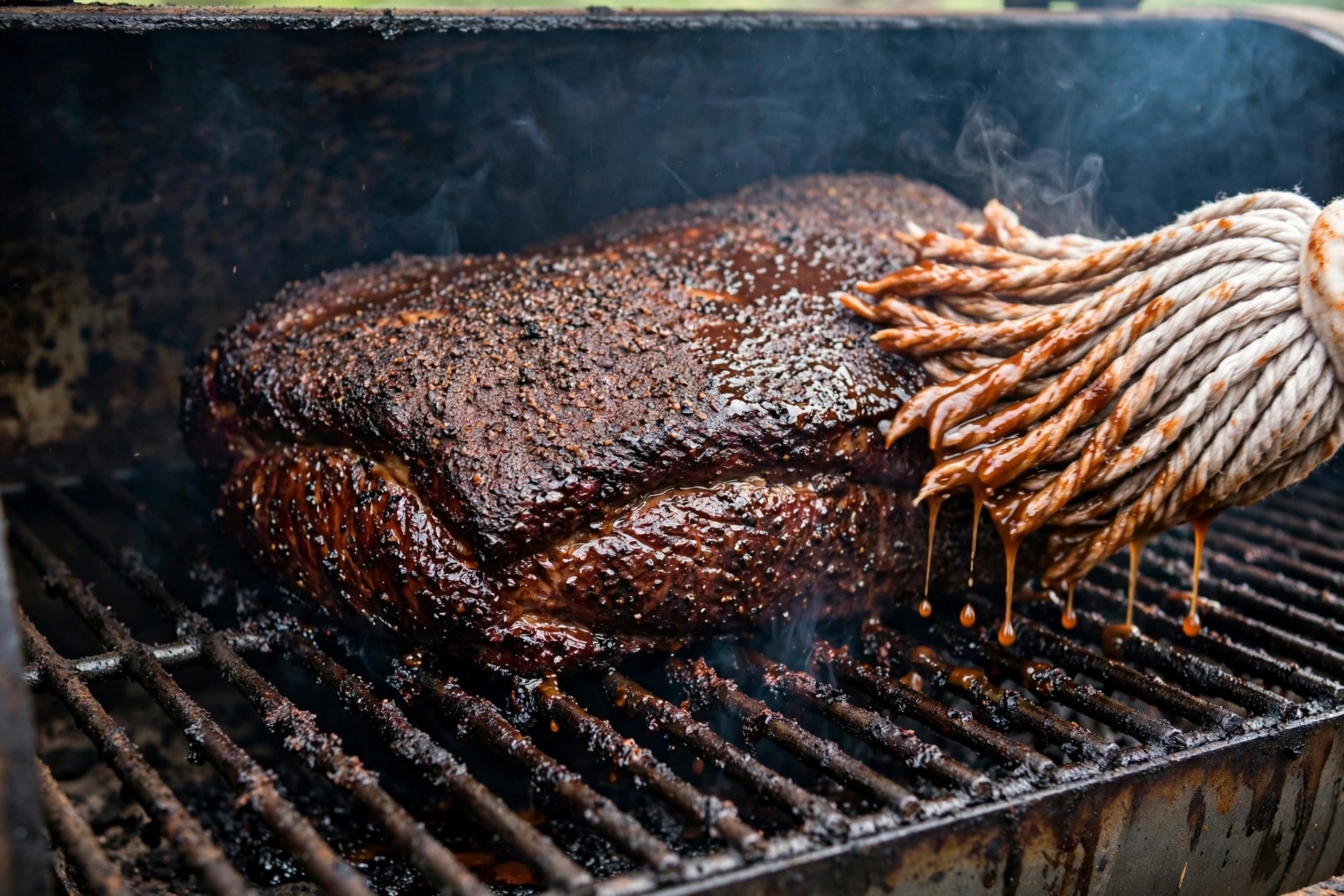
3. Mop lightly every 45–60 minutes. Dip the mop, shake off the excess, and paint a thin coat over the meat. You’re glazing, not drenching. The layer should mostly evaporate before the next coat.
4. Work fast and close the lid. Every second the smoker sits open costs you heat and clean thin blue smoke. Mop with purpose, then shut it.
5. Stop when the bark is set — around 165°F internal. Once the crust is dark, firm, and dry to the touch, mopping adds nothing and only softens what you built. If you’re wrapping, mop right up to the wrap, then stop.
6. On quick cooks, mop when you turn. For chicken, steaks, or anything under two hours, brush a light coat on each time you flip the meat.
Mistakes That Ruin Mop Sauce Results
- Mopping in the first hour. The rub hasn’t bonded yet. You’ll rinse seasoning straight off and end up with patchy, pale bark. Patience — 90 minutes minimum.
- Soaking instead of glazing. Heavy coats pool in the fat cap and drip off, taking rub with them. Brush thin layers and let the surface dry between coats — that’s what builds flavor instead of washing it away.
- A cold mop on hot meat. Every cold application drops the surface temp 10–20°F and adds recovery time. Keep it at ~140°F the whole cook.
- Mopping set bark. Liquid on finished bark steams it soft. The mop’s job is done once the crust is firm and dark.
- Re-dipping a dirty mop into the pot. The mop touches raw meat — bacteria hitch a ride back into your batch. Pour what you need into a separate cup for mopping, and never return used sauce to the main pot.
- Mopping during the stall and wondering why it lasts longer. Evaporative cooling is what causes the BBQ stall — wet mopping right through it extends the stall. This is the normal window to wrap, not to keep mopping.
How Long Does Mop Sauce Keep?
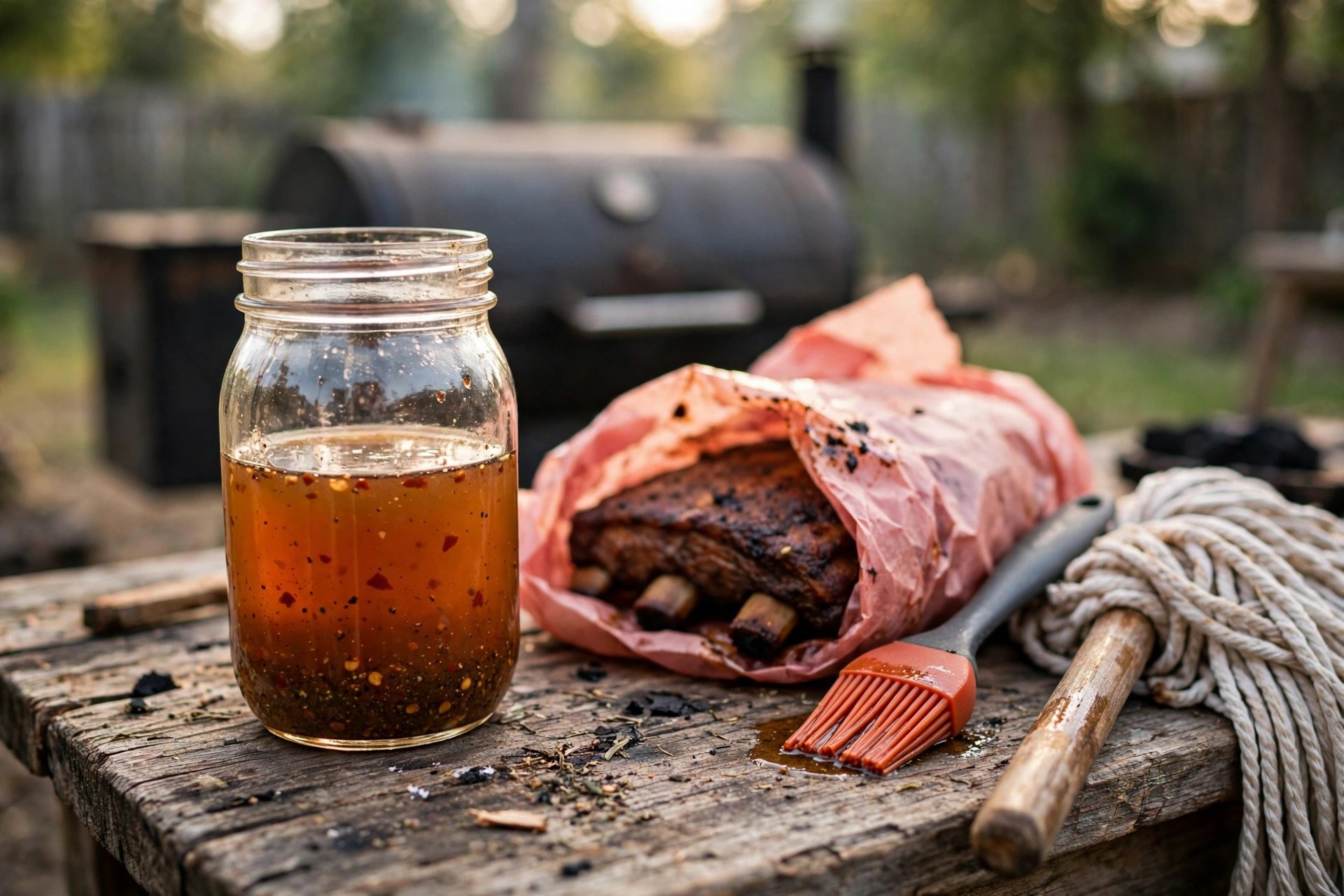
The vinegar does most of the preserving. Stored in a sealed jar in the fridge, mop sauce keeps for up to 3 months — the acidity keeps it safe, and the flavor actually improves over the first few days. Just bring it back to ~140°F before using, and give it a stir since the spices settle.
The food-safety rule that matters: any sauce that has touched raw meat or a used mop is done for the day. Don’t pour it back into the jar, don’t save it, don’t freeze it “for next time.” Portion out what you’ll mop with before the cook starts; anything left in the mop cup gets tossed when the meat comes off.
Frequently Asked Questions
Is mop sauce the same as BBQ sauce?
No. Mop sauce is thin and vinegar-based, applied during the cook to build flavor in layers. BBQ sauce is thick and usually sweet, applied at the very end or served at the table. Using thick BBQ sauce as a mop will burn it; using mop sauce as a table sauce will taste thin and sharp.
When should you start mopping meat?
After the surface has set — roughly 90–120 minutes into the smoke, once the rub looks tacky and the bark has started to darken. Mopping earlier washes off seasoning and delays bark formation.
How often should you mop during smoking?
Every 45–60 minutes is the standard for brisket, pork shoulder, and ribs. Apply thin coats and let the surface dry between applications. Stop mopping once the bark is fully set, around 165°F internal, or when you wrap.
Do I need a special BBQ mop, or will a brush work?
A brush works fine, especially for ribs and chicken. The cotton BBQ mop earns its keep on big cuts like brisket and pork shoulder — the string head holds more thin liquid and covers large surfaces fast without disturbing the rub. Silicone brushes are easier to clean; cotton mops are faster.
Can I mop ribs with this instead of saucing them?
Absolutely — that’s the Memphis play. Mop with a thin vinegar solution during the cook, then finish with an extra dusting of dry rub instead of sauce. You get all the moisture and layered flavor with none of the sticky glaze.
Your next brisket or pork shoulder cook, try this: one batch of the recipe above, kept warm at 140°F, first mop at the 2-hour mark, light coats every 45 minutes until the bark sets. When you slice in and taste seasoning running deeper than the surface, you’ll understand why old pitmasters never skipped the mop.
[…] and taste the reason this sauce has survived a hundred years unchanged. For the chicken itself, mop sauce techniques and the right Carolina-style vinegar pairing round out the cook. White sauce isn’t trying to […]