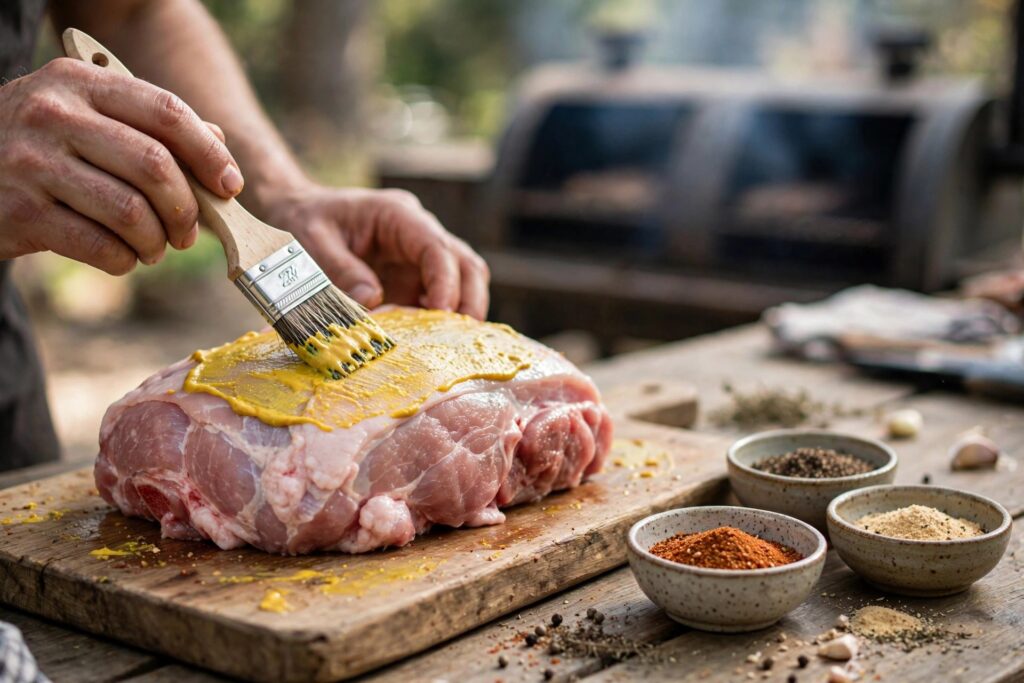
A BBQ binder is a thin layer of liquid or paste — most often yellow mustard — spread on raw meat before the dry rub goes on. Its job is simple: help the seasoning stick to the surface so it stays put through trimming, handling, and a long cook. You don’t strictly need one, but it can make rub coverage more even, especially on trimmed or lean cuts.
You’ve probably seen the photos. A brisket slathered in bright yellow mustard, a pork butt coated in the stuff like it’s going on a hot dog. It looks wrong. The natural reaction is: surely that makes the meat taste like mustard? It doesn’t. After hours in the smoker, the vinegar and water in the mustard cook away, the tang disappears, and what you’re left with is seasoned meat with the rub exactly where you put it. That’s the whole pitch.
What a BBQ Binder Actually Is
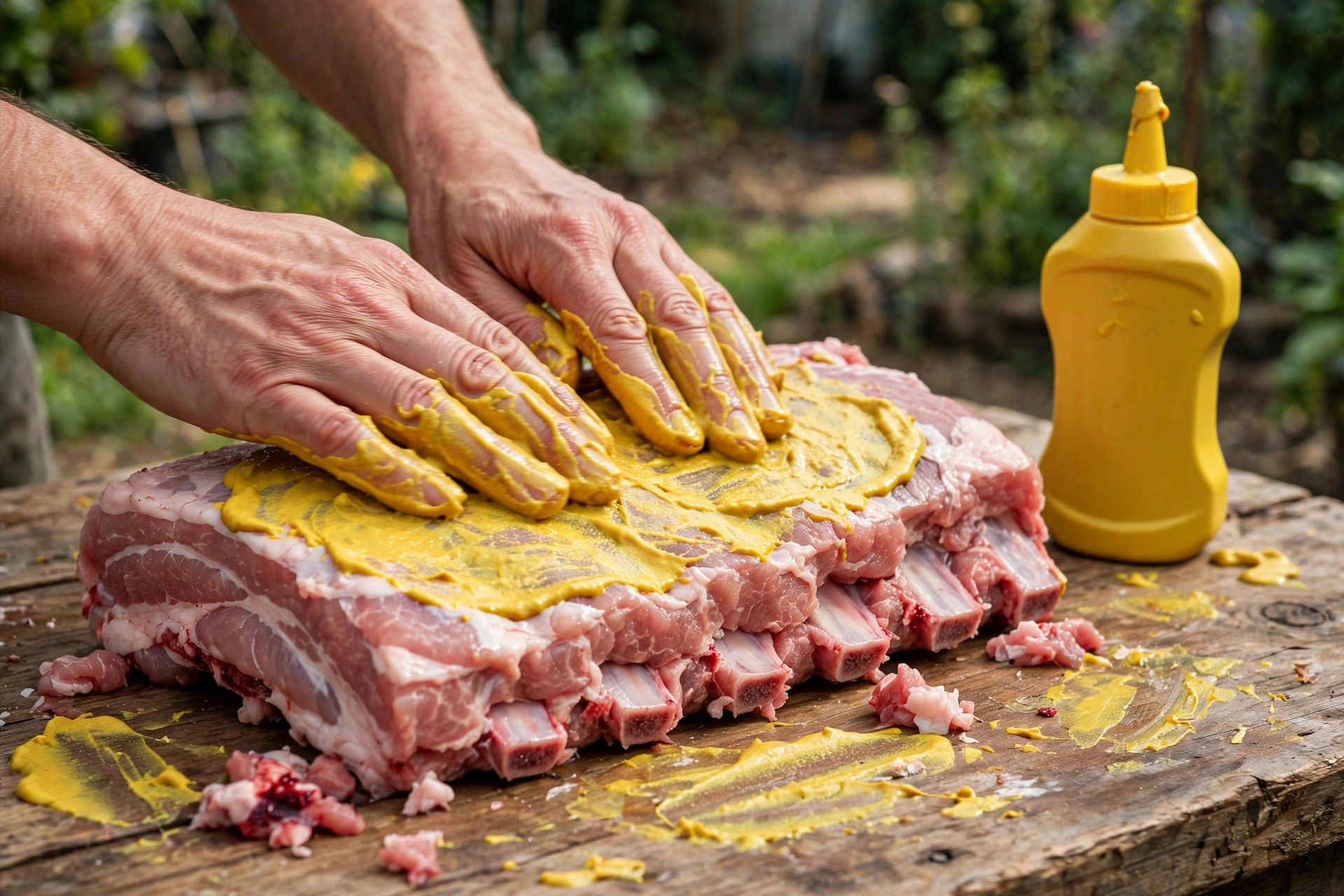
A binder is anything spread on meat between prep and seasoning: mustard, oil, hot sauce, Worcestershire, mayonnaise, even plain water. The classic is yellow mustard, applied in a thin, slick layer — about 2 tablespoons for a full pork butt, less for ribs. You brush or rub it on, then immediately coat the meat with your dry rub.
The mechanism is straightforward. Dry rub on dry meat slides around. Dry rub on a tacky surface grabs. The binder gives the salt, pepper, and spices something to grip during the first critical hours of the cook, before the meat’s own juices and the rendering fat take over the job of holding everything in place.
This is why competitions use binders religiously. When appearance scores count and judges eat with their eyes first, perfectly even seasoning coverage matters. A patchy rub on a competition brisket looks amateur. At home, the stakes are lower — but the technique costs nothing and takes 30 seconds, which is why so many backyard cooks adopted it.
What Binders Do — and What They Don’t
This is where most binder advice goes sideways, so let’s get precise. A binder does exactly two things well, and everything else people claim is a stretch.
What binders actually do:
- Help seasoning adhere evenly. The rub grips the tacky layer instead of sliding off smooth fat or dry patches.
- Reduce rub loss during handling. Moving meat onto the smoker, spritzing, wrapping — every touch knocks seasoning loose. A binder keeps more of it where you put it.
What binders don’t do:
- They don’t tenderize. Mustard isn’t an acid marinade in any meaningful sense — the contact time and concentration are far too low to change texture.
- They don’t keep meat moist. A millimeter of mustard has no moisture-retaining power over a 12-hour cook. Girls Can Grill’s brisket binder guide puts it bluntly: binders either evaporate or get absorbed into the bark, contributing nothing to juiciness.
- They don’t noticeably change flavor. The vinegar cooks off, the mustard tang disappears. If your brisket tastes like mustard, you used a gallon of it.
- They don’t build bark by themselves. Bark comes from dehydration, smoke contact, heat, the Maillard reaction, and the rub itself. A binder is a helper, not the engine.
Honest expectations are what separate binder users who swear by the technique from those who tried it once and shrugged. Use it for adhesion. Judge it on adhesion.
The Most Common Binders, Compared
Almost anything sticky works. The differences between binders are real but small — most pitmasters just reach for whatever’s closest. Here’s how the popular options stack up:
| Binder | Best on | Flavor impact | Notes |
|---|---|---|---|
| Yellow mustard | Pork butt, ribs, brisket | None after cooking | The default: cheap, sticky, vinegar pairs naturally with pork |
| Olive or canola oil | Anything, especially poultry | Neutral | Helps crisp skin; use a light coat so the rub still bites |
| Worcestershire sauce | Brisket, beef ribs | Slight umami | Thin and watery — season immediately before it runs off |
| Hot sauce | Chicken, pork | Background heat | One of the few binders that survives with actual flavor |
| Mayonnaise | Chicken, turkey | Rich, helps crisp skin | Extra adhesive; the egg fat aids browning |
| Plain water | Anything | Zero | Works fine — rub sticks to damp meat; the minimalist’s choice |
| Beef tallow | Brisket | Mild beefiness | Melt it first and spread thin, or it clumps and blocks seasoning |
| Pickle juice | Chicken, pork | Faint tang | A Texas-joint favorite — more about convenience than chemistry |
| Honey or maple syrup | Ribs (with caution) | Sweet caramelization | Sugars burn easily; save for the final hour or use sparingly |
A few practical notes from the table. Mustard wins on pork partly because mustard is vinegar-based, and vinegar and pork are a natural match — though the pairing is mostly tradition, since the flavor cooks off anyway. Mayo is the sleeper pick for poultry: the fat in it helps skin crisp the way butter does on a grilled cheese. And honey-style binders are the only ones that can genuinely hurt you — sugar burns at smoking temperatures, so treat them as a finishing glaze, not a prep step.
The MeatStick’s binder guide covers the same lineup and lands in the same place: there’s no single best binder — pick based on the meat and what’s in your pantry.
When a Binder Is Worth It
Not every cook needs one, but there are situations where a binder earns its 30 seconds:
- Heavily trimmed briskets. Trim away the surface fat and you’re left with smooth, dry meat that sheds rub. A thin mustard or oil layer fixes the slipperiest surface in barbecue. If you’re working through the right way to slice brisket later, you’ll want that bark intact to show for it.
- Lean cuts. Pork tenderloin, chicken breasts, turkey breast — cuts with little fat and smooth surfaces benefit the most, since there’s no rendering fat early in the cook to grab the seasoning.
- Cold meat straight from the fridge. Rub bounces off cold, firm fat. A binder gives it something to stick to while the surface comes up to temperature.
- Ribs. The bone side and the smooth membrane side are both slick. A mustard layer before seasoning helps the rub stay put through a long, low cook — worth it when you’re dialing in how many ribs are in a full rack and want every bone evenly seasoned.
- Competition or photos. When appearance is judged, even coverage is the whole game. Binders are standard on the comp circuit for a reason.
- High-handling cooks. If you’re spritzing every 45 minutes or moving meat around a crowded grate, the extra adhesion pays off.
When to Skip It Entirely
Plenty of championship barbecue is cooked with no binder at all. Skip it when:
- The meat is already tacky. Dry-brined meat — salted and rested uncovered in the fridge overnight — develops a naturally tacky surface called a pellicle. Rub grips it perfectly. Adding mustard on top is redundant.
- You’re cooking fatty cuts. Pork butt and untrimmed brisket point render fat early, which holds seasoning on its own. The binder adds nothing.
- You’re injecting. As the Girls Can Grill guide notes, an injected brisket always has a light sheen of liquid on the surface — that natural moisture works as a binder by itself. If you use a meat injector for juicier BBQ, check the surface before reaching for the mustard bottle.
- The rub sticks on its own. Some commercial rubs with a little sugar or fine grind cling fine to damp meat. If it sticks, it’s done — no ritual required.
The honest rule: a binder is a preference, not a requirement. Try a cook with and without on the same cut, and keep whichever you like. Barbecue has enough real variables — temperature, wood, timing — without inventing mandatory steps.
How to Apply a Binder the Right Way
The single most common binder mistake is using too much. You want a slick sheen, not a coating. Here’s the process:
- Pat the meat dry first. Paper towels off the surface moisture so the binder — not a puddle of purge — is what’s touching the meat.
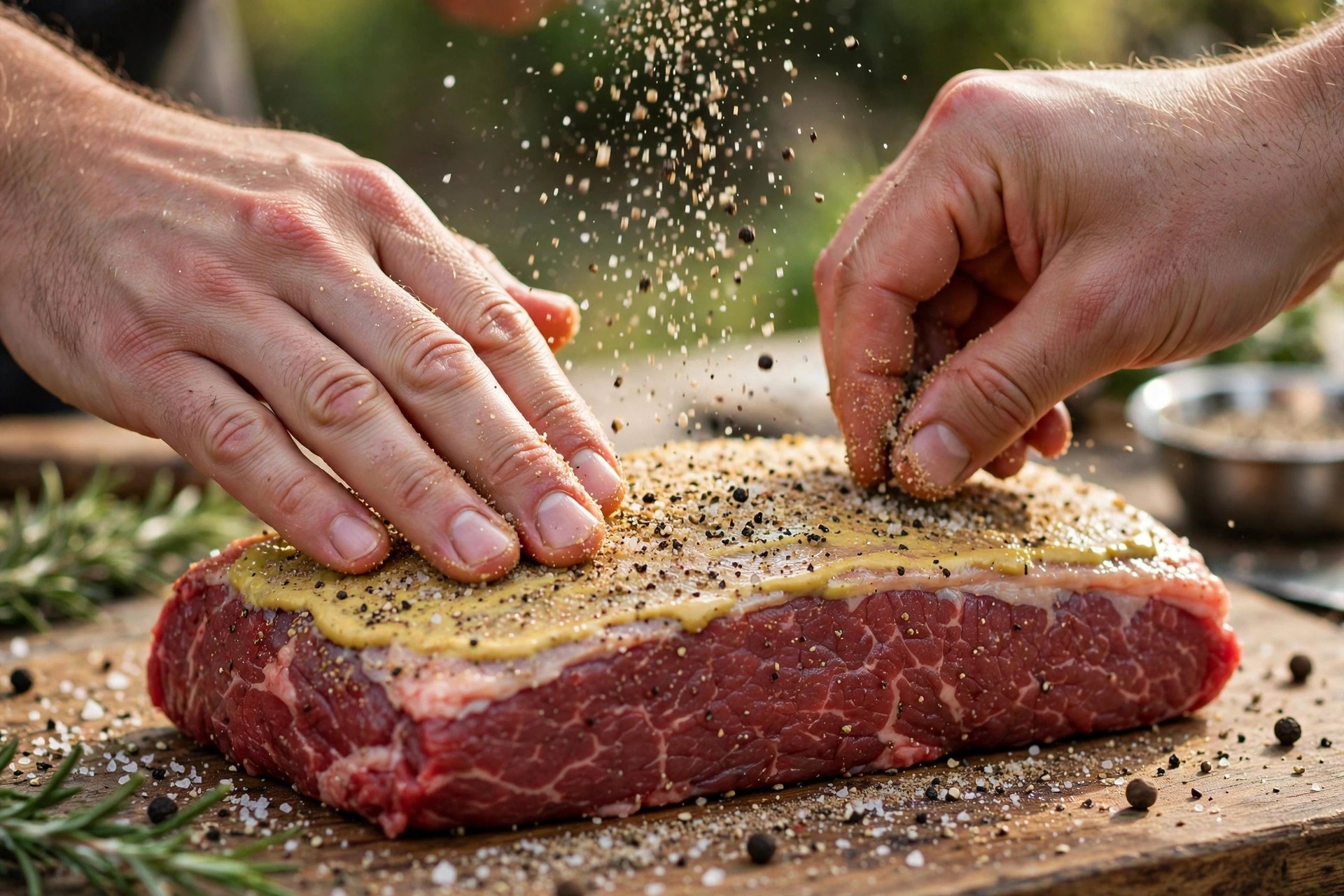
- Apply a thin layer. About 2 tablespoons of mustard for a pork butt, 1 tablespoon per side of a brisket, a light brush on ribs. If you can see it pooling or dripping, wipe some off.
- Spread with your hands. Hands beat brushes for thin, even coverage. Get the sides and edges, not just the top.
- Season immediately. Don’t let the binder sit and dry out — the rub needs to hit it while it’s tacky. Coat generously, then pat the seasoning in. Rubbing or smearing clumps the rub and streaks the binder.
- Rest briefly, then cook. Fifteen to thirty minutes at room temperature lets the rub hydrate and lock in. Then it goes on the smoker like any other cook.
One timing note: apply the binder right before the rub, not hours ahead. Mustard dries out, oil migrates, and a dried binder layer is just a crust of its own that the rub sits on top of instead of bonding with. Binder, then rub, then a short rest — that’s the whole sequence.
Binder vs Dry Brine: Which Holds Rub Better?
The real competition for the binder isn’t “no binder” — it’s the dry brine. Salting meat 12 to 24 hours ahead, uncovered in the fridge, does two things a binder can’t: it seasons the meat deeply, and it creates that tacky pellicle that grabs rub on its own.
| Method | Rub adhesion | Flavor effect | Prep time |
|---|---|---|---|
| Mustard binder | Excellent | None after cooking | 30 seconds before seasoning |
| Oil binder | Very good | Neutral; helps crisp skin | 30 seconds before seasoning |
| Dry brine (salt, overnight) | Excellent (tacky pellicle) | Deeper seasoning, better moisture retention | 12–24 hours ahead |
| No binder, damp meat | Good | None | None |
If you plan ahead, the dry brine wins — it does the binder’s job plus real seasoning work. If you’re cooking today, the binder is the shortcut to the same even coverage. Many competition cooks do both: dry brine overnight, then a whisper of binder before the final rub for insurance. At home, pick whichever fits your schedule.
Either way, remember what actually builds bark on smoked meat: dehydration, smoke, heat, the Maillard reaction, and the rub. The binder is the assistant, not the star. Get your SPG seasoning ratios right and your temperatures steady, and the binder is just the thing that keeps it all in place.
FAQs
Will mustard as a binder make my BBQ taste like mustard?
No. The vinegar and water in yellow mustard cook off during a long smoke, and the tang disappears. What’s left is seasoned meat — the mustard contributes adhesion, not flavor. If you can taste mustard in the finished product, the layer was far too thick.
How much binder should I use on a brisket?
About 1 tablespoon per side, spread into a thin sheen with your hands. You’re aiming for tacky, not coated. For a pork butt, roughly 2 tablespoons total does it. Less is more — excess binder can make the bark greasy or prevent the rub from biting into the meat.
Can I use a binder on chicken?
Yes, and it’s one of the better use cases. Chicken skin is smooth and lean, so rub slides off easily. Olive oil or mayonnaise work especially well — the fat also helps the skin crisp. Keep the layer thin and season right away.
Is olive oil or mustard better as a binder?
For adhesion, they’re nearly identical. Mustard is stickier and cheaper, and it’s the traditional pick for pork. Oil is more neutral and versatile, and it’s the better choice for poultry where you want the fat to help crisp the skin. Pick based on the meat, not the myth.
Do competition pitmasters use binders?
Most do. In competition, appearance scores reward perfectly even bark and seasoning coverage, so binders are standard practice. They’re not required by any competition rules — just a widely used technique. Three Little Pigs BBQ’s binder breakdown covers why comp cooks lean on them.
Your next step: on your next pork butt, try the side-by-side test. Mustard binder on one half, nothing on the other, same rub, same cook — then pull both and compare the bark. You’ll see exactly what a binder does and doesn’t do in one cook. For the cook itself, nail your pulled pork internal temperature and give the meat a proper rest, and the binder will have done its small, honest job.