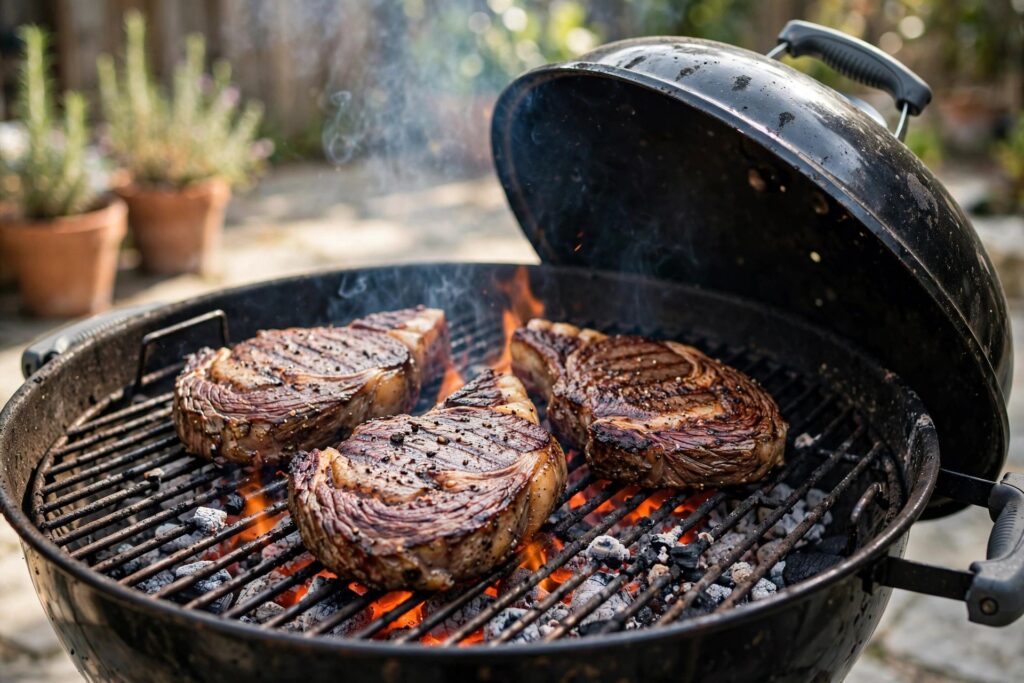
Direct vs indirect grilling comes down to where the food sits relative to the fire. Direct grilling places food right over the heat source at 450°F or higher for fast searing. Indirect grilling puts food beside or away from the fire at 225–350°F, cooking it slowly with circulating hot air like an outdoor oven.
If you’ve ever torched the outside of a thick steak while the center stayed stubbornly raw, you’ve learned this lesson the painful way. The grill wasn’t the problem. The heat placement was. Once you understand which method suits which food — and how to run both at once — the grill stops being a gamble and starts behaving like the precision tool it is.
What Is Direct Grilling?
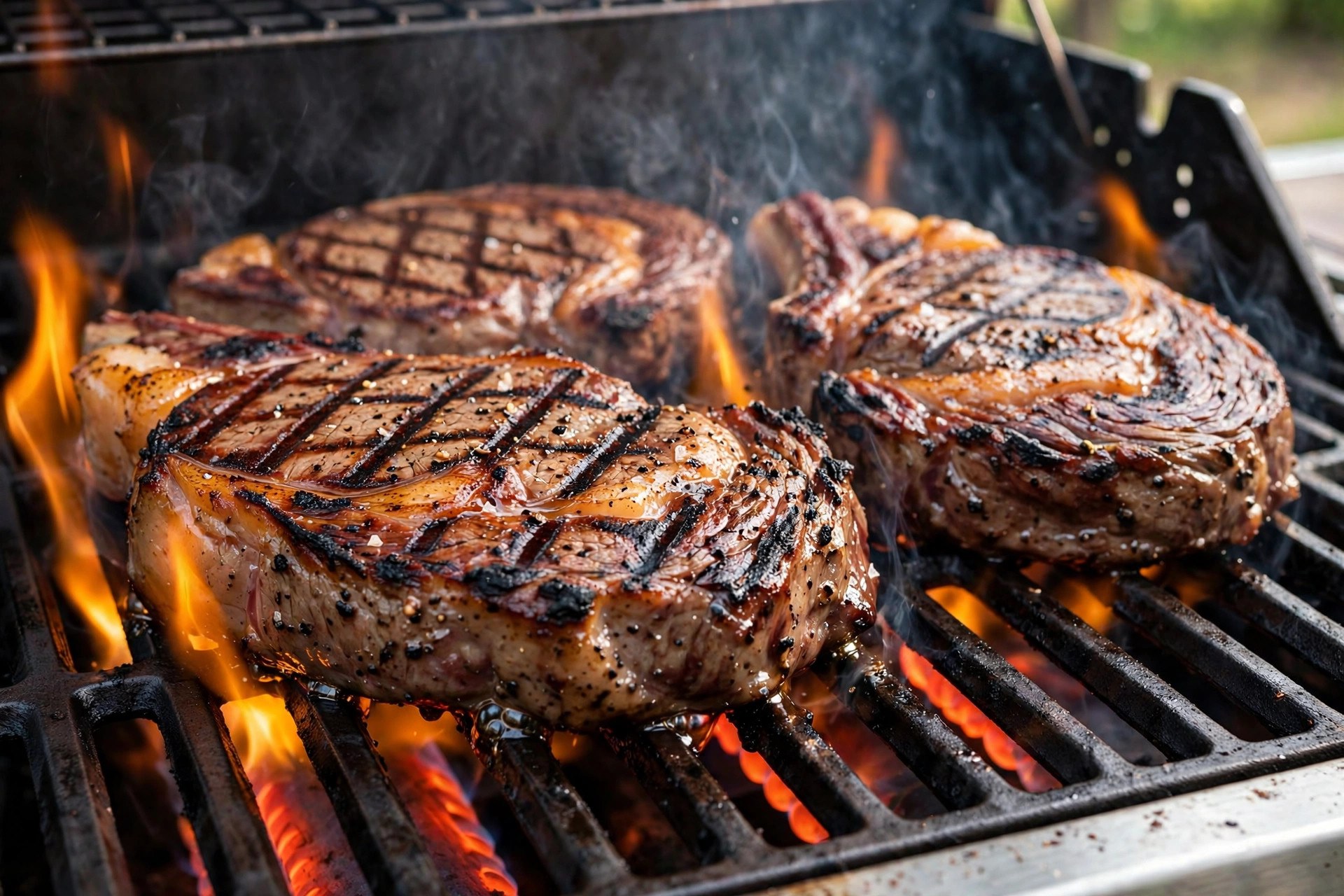
Direct grilling is what most people picture when they think of grilling: food sitting on the grate directly above glowing coals or lit gas burners. The heat hits the food straight on as infrared radiation — the same kind of heat you feel standing in front of a campfire. Grate temperatures run 450°F to 550°F or higher, and the food cooks fast, usually in 5 to 20 minutes.
This is the method that creates the deep brown crust on a steak and the crosshatch marks on a burger. At those temperatures, the surface of the meat passes 300°F quickly, triggering the Maillard reaction — the chemical reaction between amino acids and sugars that builds hundreds of savory flavor compounds. Without direct, intense heat, a steak tastes flat no matter how good the beef is. The sear is the flavor.
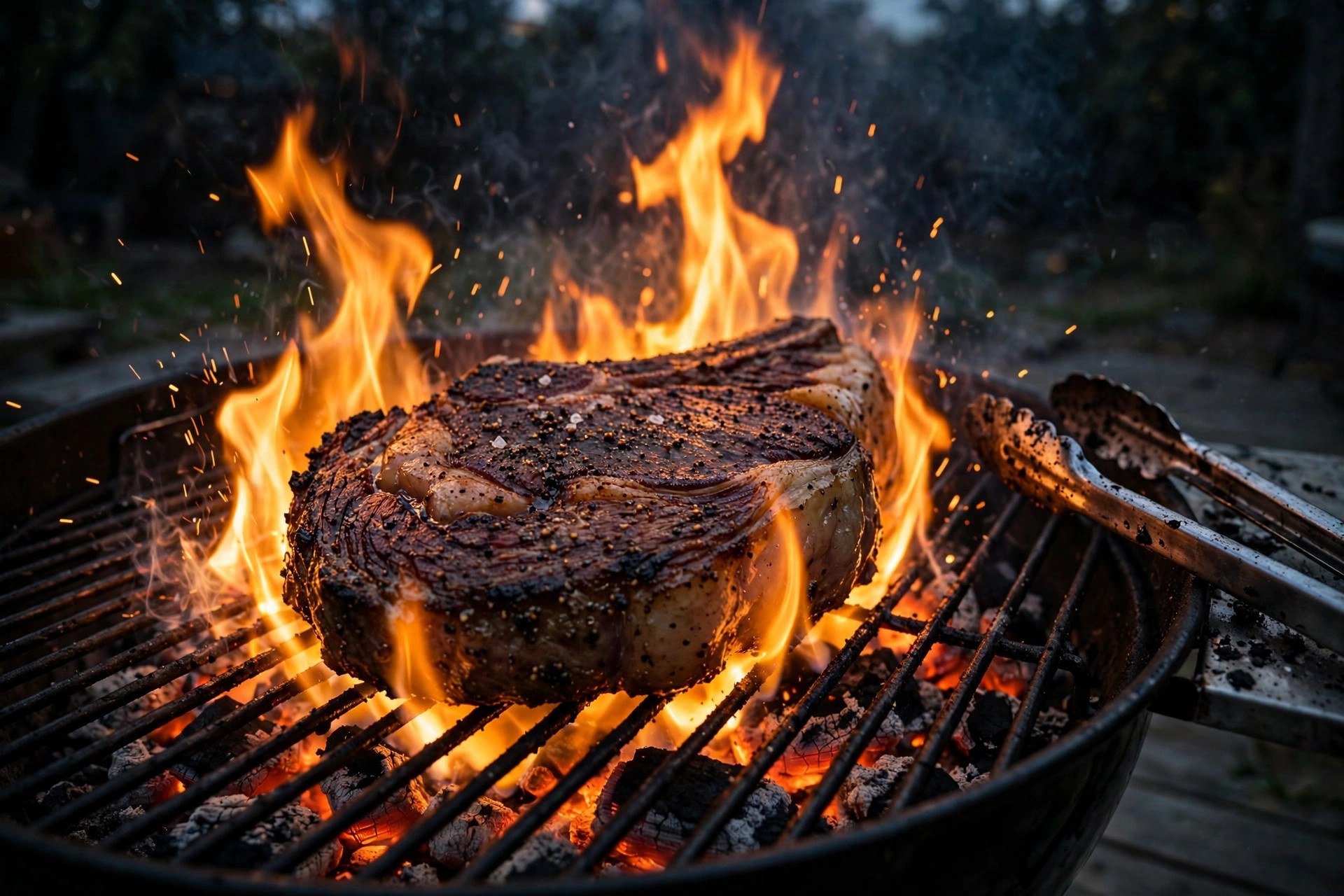
Direct heat has one rule: don’t walk away. Fat dripping onto flames causes flare-ups, and a flare-up can take a pork chop from perfect to bitter in under a minute. Keep the lid open or cracked so you can watch, keep tongs (not a fork — piercing squeezes out juice) in your hand, and flip once or twice instead of fussing constantly. The science of radiation versus convection heat explains why this method sears beautifully but can’t penetrate deep without burning the surface.
What Is Indirect Grilling?
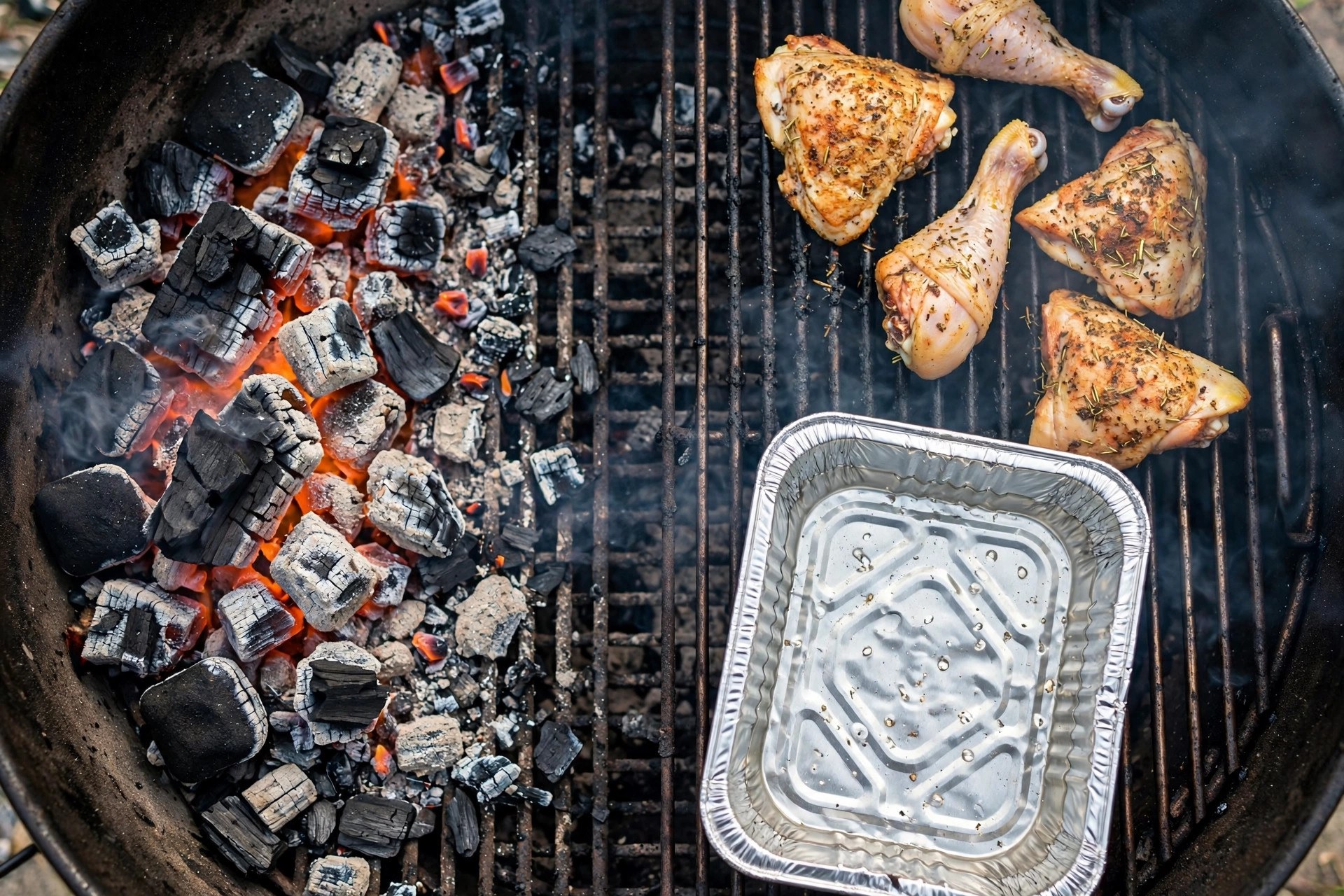
Indirect grilling moves the food away from the fire. On a charcoal grill, you bank the coals to one side and put the food on the other. On a gas grill, you light one or two burners and cook over the unlit ones. The lid stays closed, and the grill chamber fills with hot air that circulates around the food at 225°F to 350°F — essentially turning your grill into an outdoor oven.
This gentler heat is what thick and tough cuts need. A pork shoulder doesn’t become pulled pork because of high heat; it becomes pulled pork because hours of moderate heat melt its collagen into gelatin. Direct heat would incinerate the outside long before the inside surrendered. Indirect heat also gives smoke time to work, which is why a proper bark only forms during low-and-slow cooks and why clean, thin blue smoke matters so much on longer sessions.
Indirect grilling is far more forgiving than direct. Leaving a brisket on ten minutes too long is a non-event. Leaving shrimp on ten minutes too long is a tragedy. That wide margin of error is why indirect heat is the safer choice whenever you’re unsure — and why it’s the backbone of everything from roast chicken to full packer briskets. If you’re still fuzzy on where grilling ends and barbecue begins, our breakdown of smoking vs grilling draws that line clearly. For setup walkthroughs across gas, charcoal, and pellet cookers, this indirect grilling guide is a useful companion.
Direct vs Indirect Grilling: Side-by-Side Comparison
Here’s the whole decision in one table. When in doubt, check the thickness of what you’re cooking and the time it needs.
| Direct Grilling | Indirect Grilling | |
|---|---|---|
| Heat placement | Food sits directly over the fire | Food sits beside or away from the fire |
| Typical temperature | 450–550°F+ at the grate | 225–350°F in the chamber |
| Lid position | Open or cracked | Closed |
| Cook time | 5–20 minutes | 30 minutes to 12+ hours |
| How heat moves | Radiant (infrared) heat | Convection (circulating hot air) |
| Best for | Thin steaks, burgers, hot dogs, kebabs, shrimp, vegetables | Whole chicken, ribs, brisket, pork shoulder, roasts |
| Attention needed | Constant — flare-ups strike fast | Occasional checks; very forgiving |
| Flavor goal | Sear, crust, char, grill marks | Even cooking, tenderness, smoke absorption |
When to Use Each Method
The simplest rule in all of grilling: if it’s under 1½ to 2 inches thick and cooks in under 20 minutes, go direct. If it’s thicker or needs longer, go indirect. Thickness decides, not the type of meat.
Reach for direct heat when you’re cooking:
- Burgers (¾-inch patties) — 450–500°F, 3–4 minutes per side. Press a small dent in the center of each patty so they cook flat instead of puffing up.
- Steaks under 1½ inches — 500°F+, 2–4 minutes per side for medium-rare. Pat the surface dry first; moisture steams instead of searing.
- Hot dogs and sausages — 400°F, 5–8 minutes, rolling occasionally. Watch sausages closely: the fat renders fast and flare-ups follow.
- Boneless chicken breasts or thighs — 425–450°F, 6–8 minutes per side. A quick marinade or brine keeps them from drying out over the fierce heat.
- Shrimp and scallop skewers — 450°F, 2–3 minutes per side. They cook so fast they barely have time to register the heat.
- Vegetables (asparagus, peppers, zucchini, corn) — 400–450°F, 5–10 minutes. A light coat of high-heat oil prevents sticking and adds char.
Reach for indirect heat when you’re cooking:
- Whole chicken (4–5 lb) — 350°F, about 1¼ to 1½ hours until the thigh hits 165°F. Direct heat burns the skin before the joints cook through.
- Ribs — 250–275°F, 4–6 hours depending on the cut. Slow heat renders the fat and softens the connective tissue without charring the bark.
- Pork shoulder / Boston butt — 250°F, 8–12 hours. This is the cut that made indirect heat famous.
- Brisket — 250–275°F, 10–14 hours for a full packer. No other method will do.
- Thick steaks (2 inches+) — 225–250°F indirect until 10–15°F below your target, then a hard direct sear to finish (the reverse sear, covered below).
- Turkey breast or whole turkey — 325°F, roughly 15 minutes per pound. Indirect heat keeps the skin golden instead of blackened.
How to Set Up a Two-Zone Grill
You don’t have to choose one method per cook. The two-zone setup gives you a screaming-hot direct zone and a calm indirect zone on the same grill, so you can sear and then finish, or rescue food from a flare-up by sliding it to safety. This is the single most useful grill skill you can learn.
On a gas grill: it’s almost embarrassingly easy. Light the burners on one side to high or medium-high and leave the other side off (on a two-burner grill, one on, one off; on a four-burner, the two outer burners on and the middle off). Preheat with the lid closed for 10–15 minutes. Food over the lit burners gets direct heat; food over the dark burners cooks indirect. A drip pan under the food on the cool side catches fat and stops flare-ups before they start. If you’re shopping for the right hardware, see our picks for the best gas grills with flexible burner layouts.
On a charcoal kettle: light a full chimney of charcoal and wait until the coals are white-hot and ashed over, about 15–20 minutes. Pour them out, then push every coal to one side of the grate — or split them into two banks with a gap in the middle for a whole chicken. Set a foil drip pan with a little water on the empty side, replace the top grate, and put the lid on with the top vent positioned over the food (not the coals) so heat and smoke wash across the meat on their way out. Saveur’s charcoal two-zone walkthrough covers this classic arrangement step by step. For kettle recommendations, check our best kettle grill guide.
On a kamado: use the heat deflector plates (the ceramic “plate setter”). With deflectors in, the entire grate becomes an indirect zone — perfect for low-and-slow. Remove them and you’re cooking direct over lump charcoal at searing temperatures. Many kamado cooks start a thick steak indirect with deflectors in, then pull the deflectors for a finishing sear.
On a pellet grill: pellet grills are indirect by nature — the firepot sits below a diffuser plate, so you’re cooking with convection by default. Set 225–300°F and cook anywhere on the grate. For direct heat, check whether your model has a sear plate or open-flame mode; without one, crank the grill to its maximum (usually 450–500°F+) for the closest thing to a direct sear. Read more in our pellet grill explained guide.
The Reverse Sear: One Cook, Both Methods
The reverse sear is the two-zone setup’s greatest trick, and it’s the best way to cook any steak 1½ inches or thicker. Instead of searing first and hoping the center catches up, you do it backwards: gentle indirect heat first, violent direct heat last.
- Season generously with salt and pepper (at least 40 minutes ahead, or overnight in the fridge for a dry brine). Cold, damp meat sears poorly.
- Set up for indirect at 225–250°F. Coals banked to one side, or one gas burner on low. Place the steak on the cool side and close the lid.
- Cook to 10–15°F below your target. For medium-rare (130–135°F final), pull the steak off at 115–120°F internal. This takes 30–45 minutes for a 2-inch ribeye. Use a thermometer — guessing defeats the whole method.
- Rest the steak on a cutting board while you crank the grill as hot as it goes: open all the vents on charcoal, or turn every gas burner to high for 5–10 minutes. You’re aiming for 500°F+ at the grate.
- Sear 60–90 seconds per side directly over the hottest zone. You’re building crust now, not cooking — the inside is already done.
- Rest 5–10 minutes before slicing. The internal temperature will coast up a few final degrees while the juices redistribute.
The result is a steak that’s pink edge to edge with almost no gray band, wrapped in a deep mahogany crust. The traditional sear-first method can’t match it, because blasting a cold steak with direct heat always overcooks a ring of meat beneath the surface. There’s real science behind the resting step, too — see why carryover cooking matters before you slice too early.
Mistakes That Ruin the Cook
- Cooking everything over direct heat. It’s the default for beginners and the cause of most grill disasters. If the food needs more than 20 minutes, it doesn’t belong over the flames.
- Leaving the lid open during indirect cooks. An open lid turns your “outdoor oven” back into a campfire. Every peek dumps the hot air you’ve built up and can add 10–15 minutes to the cook.
- Skipping the preheat. Food laid on a lukewarm grate sticks, steams, and never sears. Give a grill 10–15 minutes with the lid closed before direct cooking.
- No thermometer. The poke test and the “juices run clear” test are folklore. A $15 instant-read thermometer beats 30 years of guessing, especially on indirect cooks where the food is judged by its internal number.
- Panicking at flare-ups. Don’t spray water (it makes steam and ash). Just slide the food to the indirect zone, close the lid to starve the flames of oxygen, and wait 30 seconds.
- Saucing too early. Sugary BBQ sauce burns over direct heat in minutes. Sauce during the last 5–10 minutes, or sauce on the indirect side where the heat is gentle.
Frequently Asked Questions
Can you cook a whole chicken over direct heat?
Not successfully. A whole chicken needs 1¼ to 1½ hours, and direct heat will blacken the skin long before the thighs reach 165°F. Cook it indirect at 350°F with the lid closed, skin-side up, and you’ll get crispy skin and juicy meat.
What temperature is indirect grilling?
Indirect grilling runs 225°F to 350°F inside the closed grill. Use the low end (225–275°F) for barbecue cuts like ribs, brisket, and pork shoulder, and the higher end (325–350°F) for roasting poultry and anything you want to cook through in about an hour.
Do you grill with the lid open or closed for direct heat?
Open or cracked for thin, fast foods like burgers, hot dogs, and thin steaks — you want to watch them constantly. For thicker items finishing over direct heat, closing the lid for a minute or two helps the heat surround the food.
Can I set up direct and indirect zones on a small gas grill?
Yes. On a two-burner grill, turn one burner to high and leave the other off — food over the lit burner gets direct heat, food over the unlit burner cooks indirect. On three or four burners, light one side and leave the rest off.
Is indirect grilling the same as smoking?
They’re close cousins but not identical. Indirect grilling uses the same gentle convection heat as smoking, but smoking means longer cooks (often 4+ hours) with wood smoke as a primary flavor source. Many backyard cooks live in the overlap: ribs at 250°F on a kettle with wood chunks are both.
Learn the two-zone setup this weekend and you’ll immediately cook better than most backyard grillers. Pick one cook — burgers are perfect — and run half the batch over screaming direct heat and finish the thick ones on the indirect side. Taste the difference, and you’ll never go back to the single-zone gamble.