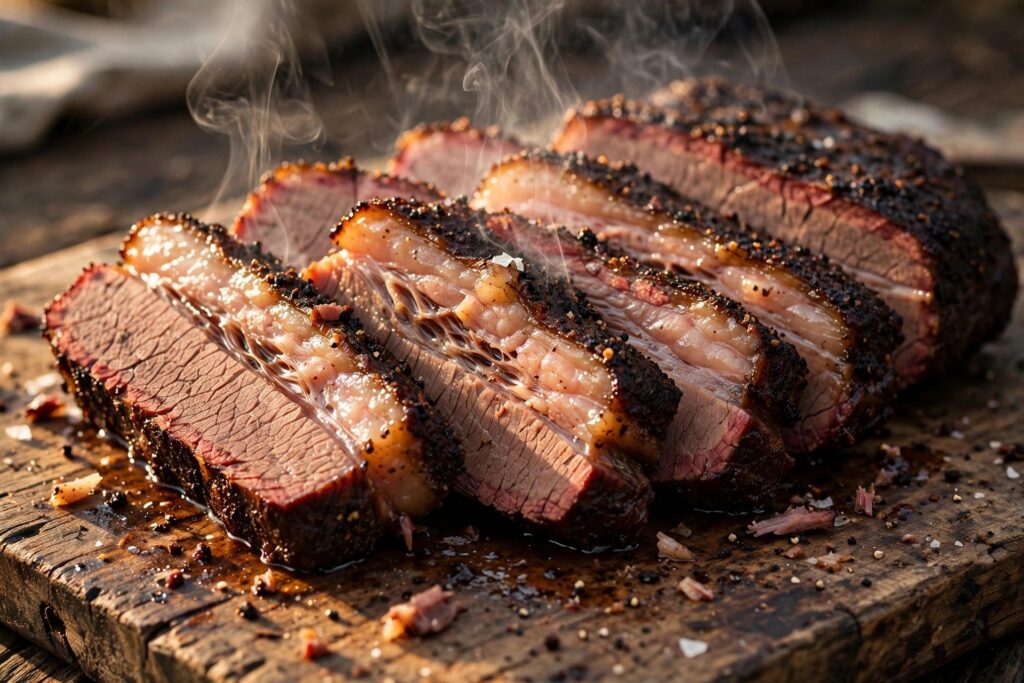
The BBQ stall is evaporative cooling: moisture rising to the meat’s surface evaporates and cancels out your smoker’s heat, so the internal temperature stops climbing — usually between 150°F and 170°F — for 1 to 6 hours. Nothing is broken. Ride it out, or wrap the meat in foil or butcher paper to push through faster.
Four hours into your first brisket, everything looks perfect. The temperature climbed steady from 40°F to 155°F, the bark is turning that deep mahogany color, and you’re feeling like a pitmaster. Then the thermometer stops moving. An hour passes. Then two. You’re at 158°F and nothing is happening while your guests’ arrival time gets closer. Welcome to the stall — the most misunderstood part of low-and-slow barbecue, and the reason more briskets get ruined by panic than by any other mistake.
What Is the BBQ Stall?
The BBQ stall (also called “the plateau”) is the period during a long smoke when a large cut’s internal temperature flatlines — sometimes for hours — even though your smoker is holding steady heat. It hits brisket, pork shoulder, beef ribs, and other big cuts cooked low and slow, almost always somewhere in the 150–170°F internal range.
It’s not a malfunction. Your smoker is fine, your thermometer is fine, and your meat is fine. The stall is physics doing its job, and understanding it is the difference between a cook that ends in triumph and one that ends with you cranking the heat at 9 p.m. and serving something dry.
Here’s the part beginners miss: the stall is actually a sign things are going right. While the temperature isn’t moving, moisture is migrating, the surface is drying into bark, and collagen is starting its long melt into gelatin. All of that has to happen for great barbecue. The number on the display just doesn’t show any of it.
Why the BBQ Stall Happens: Evaporative Cooling, Explained Simply
The cause of the BBQ stall is evaporative cooling — the same reason sweat cools your skin on a hot day.
As your brisket heats up, moisture inside the muscle fibers migrates toward the surface. When that moisture reaches the outside, it evaporates into the smoker’s airflow. Evaporation absorbs a huge amount of heat energy. For a window in the middle of the cook, the heat lost to evaporation roughly equals the heat coming in from your smoker. Input matches output, so the internal temperature holds flat — sometimes it even dips a degree or two.
This isn’t a guess. Food scientist Greg Blonder ran the definitive test for AmazingRibs: he put a wet sponge and a chunk of pure fat side by side in a smoker at 225°F, both with probes. The fat heated on a smooth, steady curve with no stall at all — which killed the old theory that the stall comes from fat rendering. The sponge climbed to about 140°F, then stalled hard for more than four hours before taking off again once it dried out. Water evaporating was the whole story.
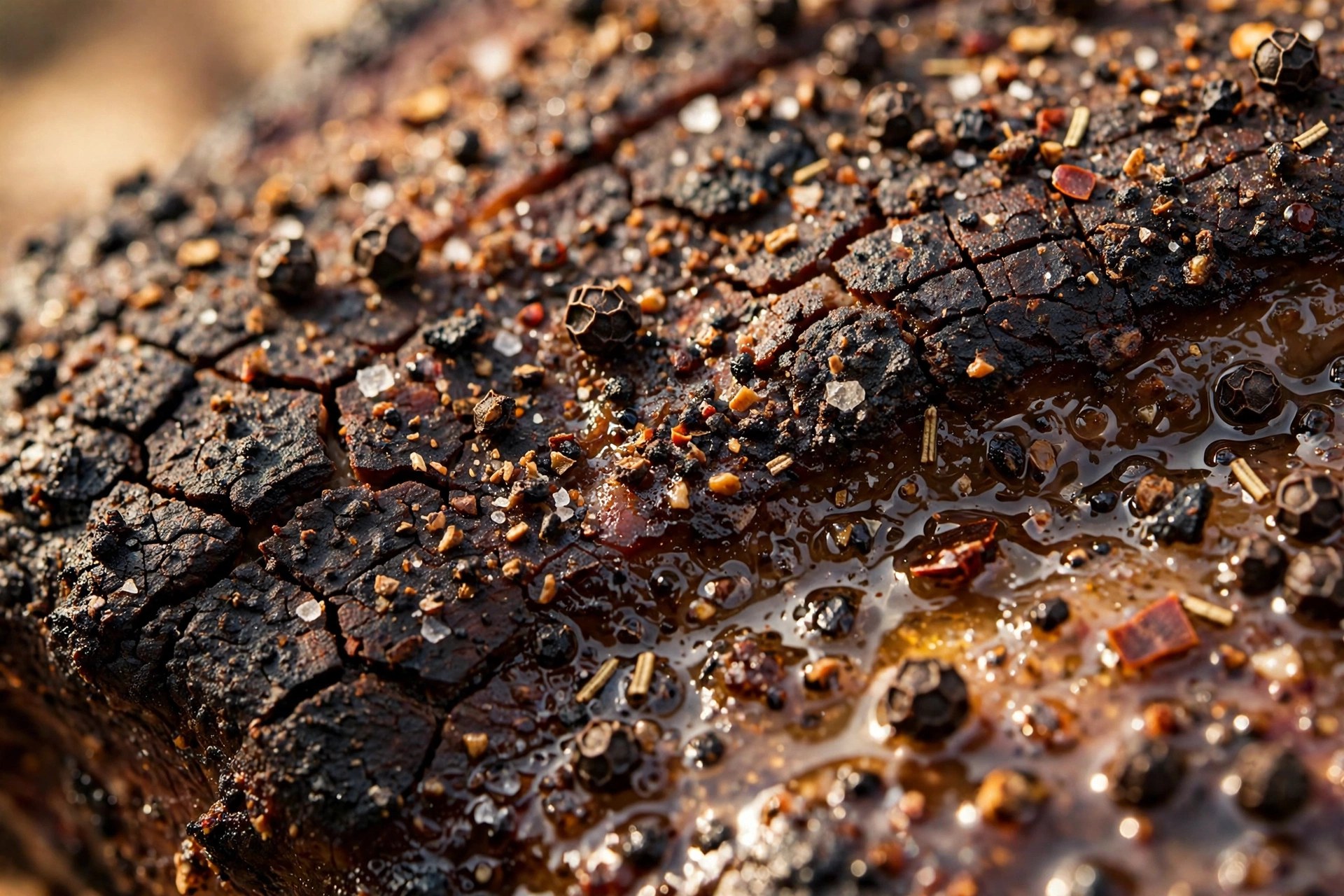
That experiment also busted a second myth: the idea that the stall is collagen “absorbing” heat. Collagen breakdown uses far too little energy to stall a 14-pound brisket. It’s moisture leaving the surface, full stop. And that’s good news, because it means the stall is also the engine that builds your bark — that drying, tacky surface (the pellicle) is exactly what smoke and rub turn into crust.
When Does the Stall Hit and How Long Does It Last?
For brisket, the stall almost always lands between 150°F and 170°F internal. But the exact timing and length vary a lot by cut. Here’s what to expect:
| Cut | Typical stall range | Average stall length |
|---|---|---|
| Full packer brisket (12–16 lbs) | 150–170°F | 2–6 hours |
| Brisket flat only (5–8 lbs) | 150–165°F | 1–3 hours |
| Pork shoulder / butt (8–10 lbs) | 150–170°F | 2–4 hours |
| Beef plate ribs | 155–170°F | 1–3 hours |
| Spare ribs / baby backs | 150–160°F | 30–90 minutes |
Three things control how long your stall runs:
- Cut size and shape. Bigger, thicker cuts hold more moisture and take longer to dry at the surface. A 15-pound packer can stall twice as long as a 6-pound flat.
- Humidity. A water pan in the smoker, humid weather, or a kamado that traps moisture all slow evaporation — which sounds nice until you realize slower evaporation means a longer stall.
- Airflow. An offset smoker with the exhaust wide open moves humid air away from the meat and shortens the stall. A pellet grill with choked-down airflow holds humid air against the surface and can stretch it out.
One more thing worth knowing: if your brisket “stalls” at 130°F, your pit is probably running cold — check your smoker temp. And if it seems stuck past 180°F, that’s usually not a true stall at all, just a slow climb through the thick fat cap. Real stalls live in the 150–170°F window.
Spritzing and water pans feed the stall. Both add moisture to the meat’s surface or the smoker’s air, and surface moisture is the fuel for evaporative cooling. A water pan in a dry climate keeps the bark from drying too fast, but it also stretches the stall — that’s the tradeoff. Similarly, spritzing every 30 minutes during a deep stall is like pouring water on the exact process you’re waiting to finish. If the stall is dragging past hour four, stop spritzing and let the surface dry.
Pellet grills deserve a special mention here. Their tight, efficient fireboxes and choked-down airflow hold humid air against the meat, which is why pellet-grill briskets often stall longer than the same cut on an offset. If you cook on pellets, keep the exhaust open and consider 275°F your default — you’ll still get a stall, just a shorter one.
How to Push Through the BBQ Stall: 3 Legit Options
You have three strategies when the stall hits. None is wrong — they’re tradeoffs between bark quality and time.
- Ride it out unwrapped (best bark). Leave the meat naked on the grate and let the stall run its course. The extended exposure to dry heat and smoke builds the thickest, darkest, most deeply rendered bark. Hold your pit steady at 225–250°F and don’t touch the vents to “help.” The tradeoff is time: a stubborn stall can add hours, so build a cushion into your plan.
- Use the Texas crutch (fastest). Wrap the meat tightly once the bark has set (around 165°F internal) and the stall breaks in under an hour. Wrapping traps steam against the surface, which kills the evaporative cooling and lets conductive heat drive the temperature back up. Details on materials below.
- Bump the pit temp slightly (the compromise). Raising your smoker from 225°F to 275°F during the stall adds heat input without fully sacrificing the bark. This works best unwrapped and shaves real time, but don’t spike to 300°F+ — that dries the exterior before the interior collagen has broken down.
The Texas Crutch: Foil vs Butcher Paper
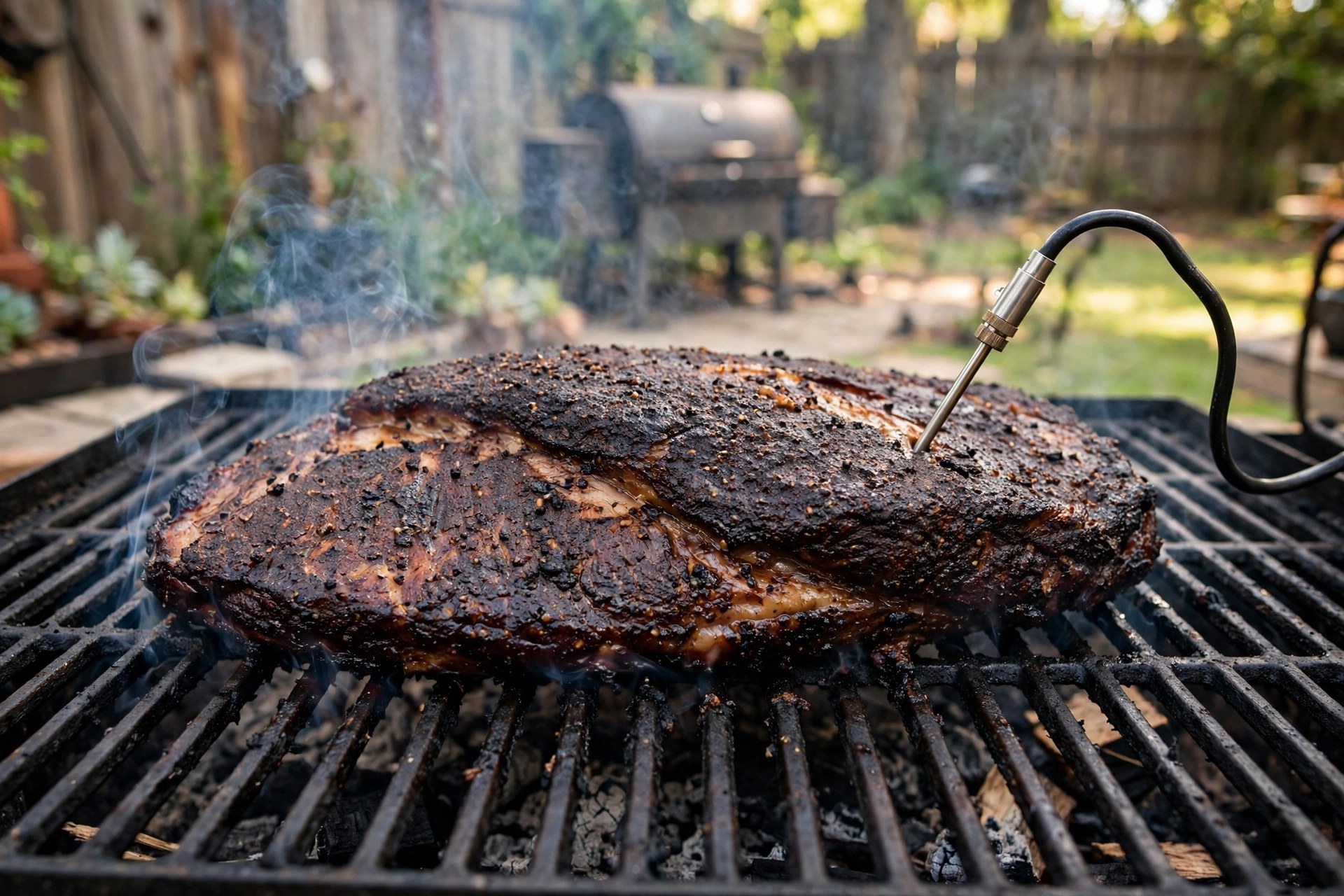
The “Texas crutch” — wrapping mid-cook — exists specifically to beat the stall. As AmazingRibs explains, a tight wrap creates near-100% humidity around the meat, which stops surface evaporation cold. No evaporation, no evaporative cooling, no stall. But the material you choose changes the result:
| Aluminum foil | Pink/peach butcher paper | |
|---|---|---|
| Speed through stall | Fastest — fully sealed, traps all steam | Fast, slightly slower than foil |
| Bark texture | Softer, can turn steamy or mushy | Stays firm — paper breathes |
| Moisture | Very high; juices can pool (“brisket boat”) | Good, without waterlogging the crust |
| Best for | Tight deadlines, stubborn stalls | Backyard cooks who want bark quality |
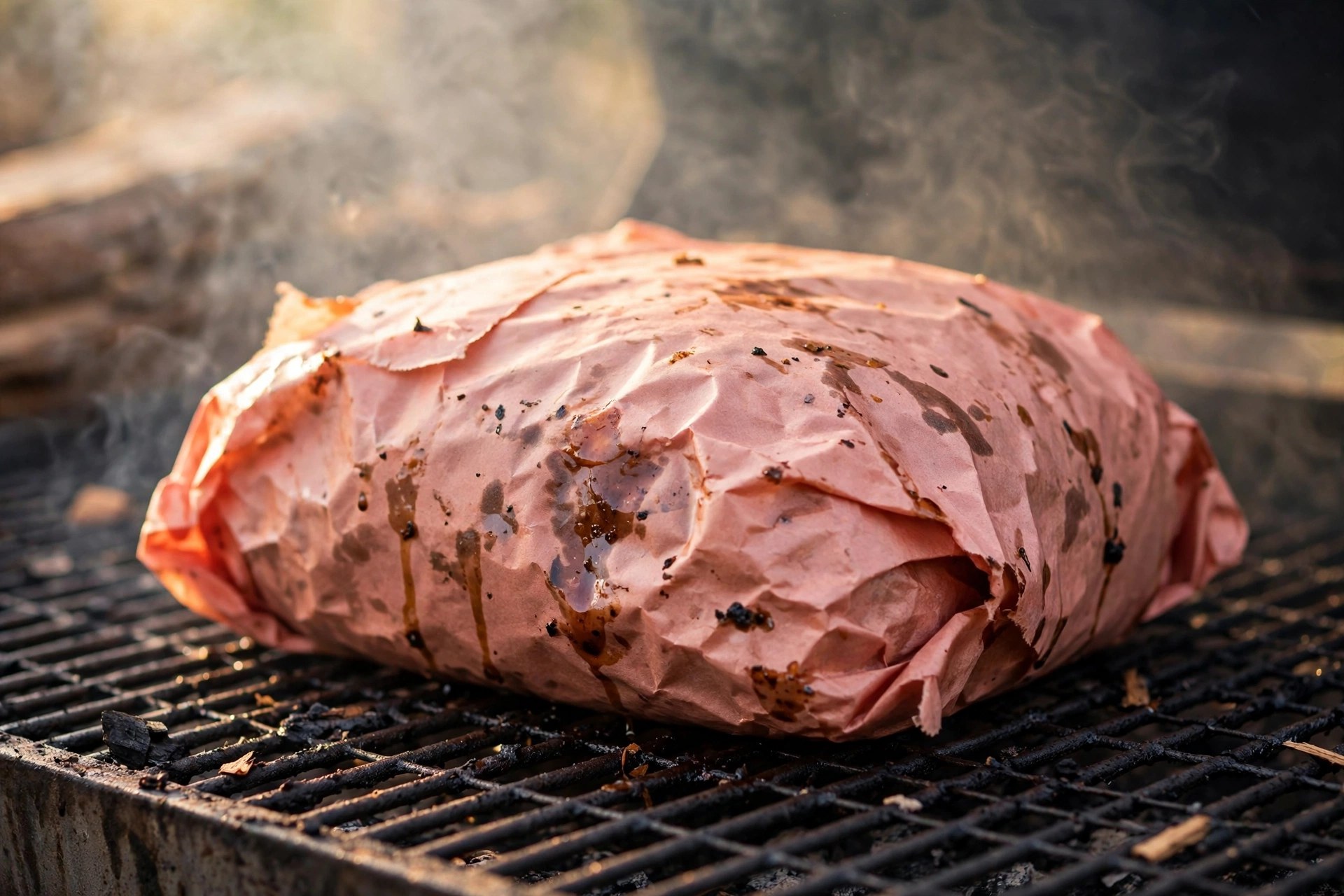
Timing the wrap matters as much as the material. Wrap at about 165°F internal, once the bark has visibly set — dark mahogany, firm to the touch, no longer wet or tacky. Wrap before 150°F and you’ll steam a bark that never formed, locking in a soft gray crust no matter what you wrap with.
5 Mistakes That Make the Stall Worse
- Cranking the heat to “push through.” Spiking to 300°F+ dries the outside before the inside is ready and undoes hours of smoke work. If you want more heat, go to 275°F — not 325°F.
- Spritzing too often. Every spritz adds surface moisture, which is literally the fuel for evaporative cooling. Spritzing has its place, but during a deep stall, each spray extends it.
- Opening the lid to check. Every peek dumps heat and adds 15–20 minutes to your cook. Trust the probe.
- Wrapping before the bark sets. A wrap at 150°F on a pale, tacky surface gives you pot roast with a gray exterior. Wait for 165°F and a firm crust.
- Pulling at a number instead of a feel. The stall teaches the big lesson: brisket is done when a probe slides into the flat like soft butter — usually 200–205°F, but the feel is the finish line, not the digit. Let it rest properly after, and carryover will do the last bit of work (see our guide to carryover cooking).
If you want the full temperature roadmap, our guide to the best temp to smoke brisket covers pit temps from start to finish.
BBQ Stall FAQ
How long does the BBQ stall last?
For a full packer brisket, expect 2 to 6 hours in the 150–170°F range. Smaller cuts like a brisket flat or pork shoulder usually stall 1 to 4 hours. Size, humidity, and smoker airflow are the three things that move the number.
What temperature does brisket stall at?
Almost always between 150°F and 170°F internal. If your brisket flatlines well outside that range, check your smoker temperature first — a stall at 130°F usually means the pit is running cold.
Should you wrap during the stall?
Yes, if time matters — wrapping in foil or peach butcher paper once the bark sets around 165°F (the Texas crutch) can cut a multi-hour stall down to under an hour. If bark is your top priority and you have the time, ride it out unwrapped instead.
Does the stall happen with pork shoulder too?
Yes. Pork butt stalls in the same 150–170°F window for 2 to 4 hours on average. The same fixes apply: wait it out or wrap once the bark is set.
Can you prevent the BBQ stall?
Not really, and you shouldn’t want to — the stall is what builds bark. You can shorten it by cooking at 275°F instead of 225°F, keeping the exhaust open for good airflow, and skipping the water pan, but the stall itself is normal physics.
The stall stops feeling scary the moment you understand it. Plan for it — start your cook earlier than you think you need to — and then either ride it out for maximum bark or wrap at 165°F and power through. Next up: learn how to slice brisket against the grain so all that patience pays off on the cutting board.
[…] just spent 12 to 16 hours nursing a brisket through the stall. It’s probe-tender, the bark is beautiful, and every instinct says slice it open right now. […]
[…] Then forget about it and focus on what actually matters — tender meat, good seasoning, and a clean run through the stall. That’s the part people […]
[…] takes over. Moisture slowly evaporates off the surface (this evaporation is also what causes the infamous stall). Once the surface is dry enough, Maillard browning kicks in — amino acids and sugars reacting to […]
[…] Evaporative cooling is fighting your heat, and the meat is still cooking, just not climbing. Understanding the stall is half the battle; pushing through it is the other […]