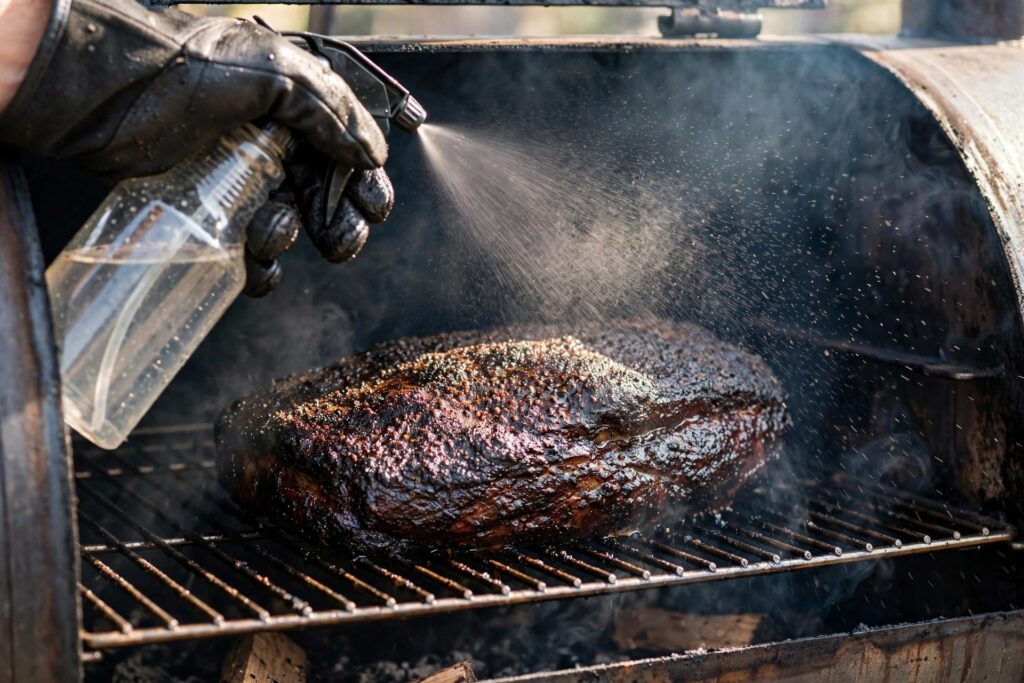
Spritzing means misting the surface of your meat with a liquid — apple juice, apple cider vinegar, or plain water — every 30 to 60 minutes while it smokes. It keeps the surface from drying out, adds a little flavor, and helps smoke stick, which gives you darker bark and a deeper smoke ring.
Pitmasters argue about spritzing like it’s a religion. Some won’t smoke without a spray bottle in hand; others never touch one and swear their brisket turns out fine. The truth is less dramatic: spritzing is a small lever, not a magic one. Here’s what it actually does, what to put in the bottle, when to start and stop, and how to do it without wrecking your bark.
What Spritzing Actually Does to Smoked Meat
When you mist the surface of a brisket or pork shoulder, three things happen. First, the liquid evaporates and cools the surface slightly — the same evaporative cooling behind the stall — which slows the outside from overcooking while the inside catches up. Second, it keeps the surface moist and tacky, and smoke clings to a moist surface far better than a dry one. That shows up as a darker, richer bark and often a more visible smoke ring. Third, the liquid itself adds flavor: vinegar brings tang, juice brings sweetness, Worcestershire brings savory depth.
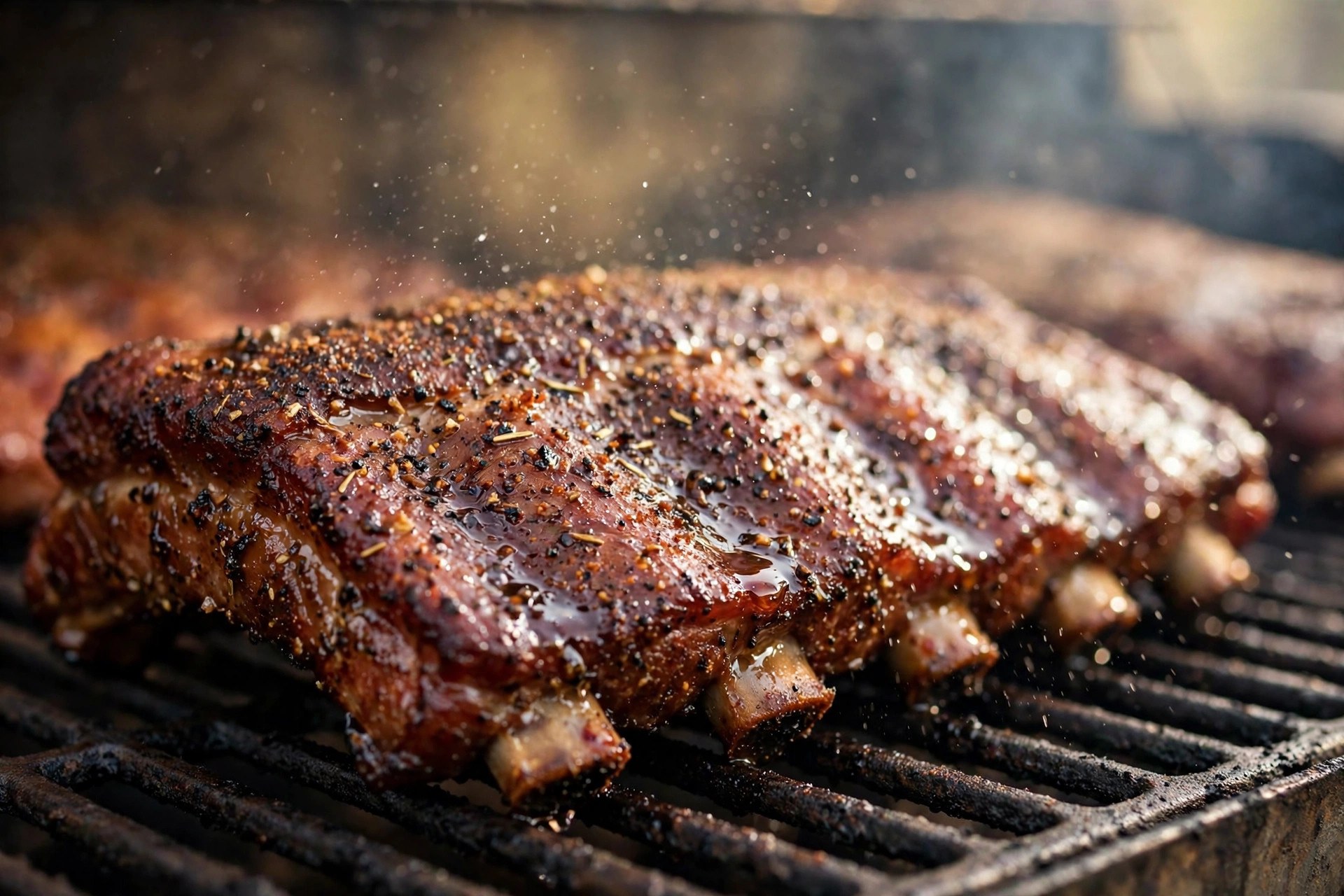
As Tasting Table’s spritz breakdown notes, the sugars in a spritz also encourage the bark to caramelize into that dark, crusty layer, while the cooling effect keeps the cook even across the whole cut.
One honest caveat: spritzing is a surface game. It doesn’t drive moisture deep into the meat — nothing you spray on the outside can do that. And every time you open the lid, you lose heat. Spritz fast, or the heat loss costs you more than the mist gains you.
That trade-off is also why some pitmasters skip spritzing on cooks where the lid barely opens anyway — a steady pellet smoker with a water pan, for example, already keeps the chamber humid. Spritzing earns its keep most on offset smokers and charcoal cookers, where stronger airflow dries the meat’s surface faster and the extra humidity has to be added by hand. Match the technique to your cooker, not to a rule.
The Best Liquids for Spritzing Meat
Almost any thin liquid works, but they don’t all do the same thing. Pick based on the meat and the flavor you want:
| Liquid | What it adds | Best on |
|---|---|---|
| Apple cider vinegar (diluted 50/50 with water) | Bright tang, mild tenderizing bite | Brisket, beef ribs |
| Apple juice | Sweetness, helps bark caramelize | Pork ribs, pork shoulder |
| Plain water | Moisture only, zero flavor change | Anything — especially when your rub is already dialed in |
| Beer | Malt aroma, mild tang | Pork, chicken |
| Beef broth | Savory depth | Brisket, beef ribs |
| Worcestershire sauce (diluted) | Umami, dark color | Beef cuts |
What to keep out of the bottle: sugary BBQ sauce and thick marinades. They clog the nozzle, wash off your rub, and the sugar burns into bitterness at smoking temperatures. Pastime Bar and Grill’s guide runs through the same liquid options with the same warning: thin liquids mist, thick ones make a mess.
Three Spritz Recipes Worth Keeping
You don’t need anything complicated. These three cover nearly every cook:
- Classic brisket spritz. 1/2 cup apple cider vinegar, 1/2 cup water, 1 tablespoon Worcestershire sauce. Shake it in the spray bottle. Tangy, savory, and the workhorse ratio most pitmasters start with.
- Pork spritz. 1 cup apple juice, 1/2 cup apple cider vinegar. Sweet with a tangy edge — perfect for ribs and pork shoulder, where the sweetness complements the meat.
- Sweet-heat rib spritz. 1 cup apple juice, 1/4 cup apple cider vinegar, 1 tablespoon brown sugar, 1 teaspoon smoked paprika. Use it in the second half of the cook; the sugar caramelizes into the bark but can scorch if it goes on too early.
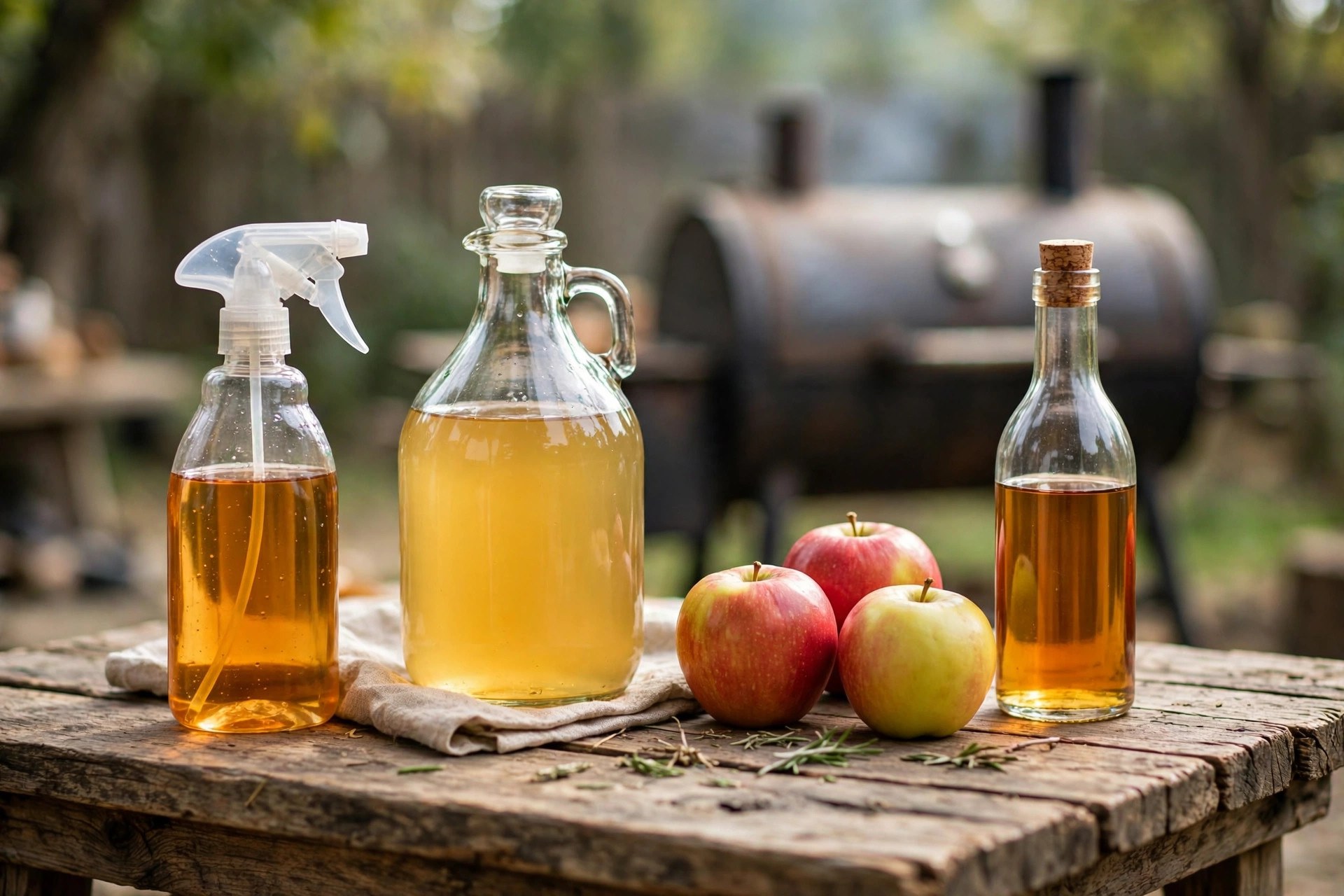
Make them fresh each cook, or keep a batch in the fridge for up to 5 days. Bring the bottle to room temperature before you use it — cold liquid hitting hot meat is a small shock you don’t need.
When to Start, How Often, and When to Stop Spritzing
Timing matters more than the recipe. Get it wrong and you’ll wash your rub off a wet piece of meat; get it right and the bark just keeps building.
- Start only after the bark sets — usually 2 to 3 hours in. In the first hour or two the rub is still wet and fragile. Spritzing then washes seasoning right off. Wait until the surface looks dry and tacky to the touch, and the color has started to darken. That’s your green light.
- How often: every 30–45 minutes for ribs and chicken; every 45–60 minutes for brisket and pork shoulder. Bigger cuts lose moisture more slowly and tolerate less attention. Ribs are thin and dry out faster, so they earn the shorter interval.
- Stop when you wrap. Once the meat goes into foil or butcher paper, the wrap traps its own moisture — spritzing under the wrap is pointless. (One common trick: give the butcher paper itself a light spritz before wrapping, which keeps the paper from wicking moisture out of the bark.)
- Ease off in the final hour if the bark looks right. Extra moisture late in the cook can soften a bark that was shaping up nicely. Spritzing is a tool for the middle of the cook, not the finish.
Set a timer. It’s embarrassingly easy to forget a spritz for two hours and then overcompensate with a soaking — which is worse than skipping it entirely.
One more timing note: let the meat, not the clock, make the final call. If the surface still looks wet and glossy from the last spritz, skip the next round — more liquid on top of wet liquid just pools and drips. If the edges look dry and the color is darkening faster than the center, that’s the meat asking for attention. After a few cooks you’ll read the surface the way you read a thermometer, and the timer becomes a backup instead of a boss.
How to Spritz Meat Without Ruining Your Cook
The technique itself takes thirty seconds. Doing it badly takes the same thirty seconds, so do it right:
- Use a fine-mist nozzle, not a stream. You want a cloud of tiny droplets, not a jet. Cheap food-safe spray bottles from the hardware store work perfectly.
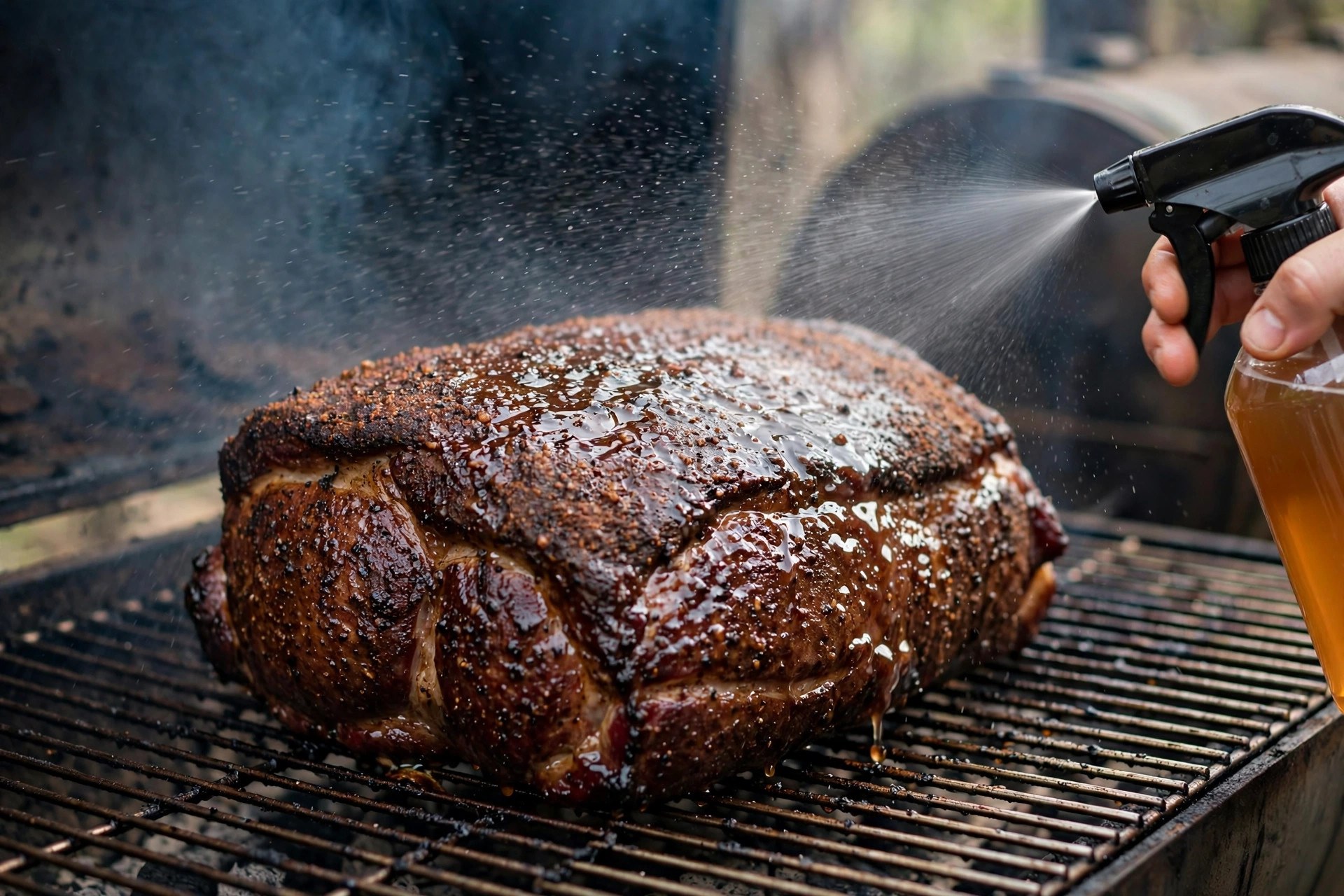
- Hold the bottle 6–8 inches from the meat. Three to five pulls of the trigger per side is plenty. You’re going for a glisten, not a puddle.
- Work fast — lid open under 60 seconds. Every peek dumps chamber heat and costs you several minutes of recovery. Open, mist, close. No admiring.
- Mist the top and sides; skip the bottom. The underside sits on the grate and won’t dry out the same way.
- Use room-temperature liquid. Cold spritz on a hot brisket cools the surface unevenly and can stall your cook for no good reason.
- Don’t drench. If liquid is pooling in the bark’s crevices or running off the meat, you’ve used three times too much. A light sheen is the target.
Common Spritzing Mistakes
Most spritzing problems come from the same handful of errors:
- Spritzing in the first hour. Wet rub plus mist equals seasoning soup running off your meat.
- Over-spritzing. Too much liquid softens the bark into a mushy exterior and dilutes the flavor you worked hours to build.
- Using BBQ sauce as a spritz. The sugar scorches into bitterness at 250°F. Sauce goes on at the end, never in the bottle.
- Treating every spritz like a photo shoot. Two minutes of lid-open admiring costs more heat than the mist is worth. Be quick.
- Spritzing right up to the wrap — or after it. Once the bark is set and the wrap goes on, put the bottle away.
Spritz vs Mop vs Injector: Which One, When
Spritzing isn’t the only way to add moisture during a cook — just the lightest-touch one. Here’s how it compares to its cousins:
- Spritzing: fine mist, applied often, barely disturbs the bark. Best for brisket and ribs when you want surface moisture and flavor with minimal fuss.
- Mopping: a thicker liquid brushed or mopped on with a mop sauce and a brush or cotton mop. Older-school and heavier-handed — it adds more liquid and flavor per application but disturbs the bark more, which is why mopping has largely lost ground to spritzing.
- Injecting: flavor goes inside the meat with a meat injector before the cook, not on the surface during it. It solves a different problem — interior juiciness and flavor — and pairs fine with spritzing.
- Water pan: ambient humidity with zero lid-opening. A water pan in the smoker handles the environment while spritzing handles the surface. Many pitmasters run both.
Think of it as a spectrum: water pan (hands-off, ambient) → spritz (light, frequent, surface) → mop (heavy, occasional, surface) → inject (before the cook, interior). Most backyard cooks need only the first two.
Spritzing FAQs
Do I need to spritz meat when smoking?
No. It’s optional, and plenty of great BBQ never gets spritzed. A water pan, a well-managed fire, and wrapping at the right time can do similar work. Spritzing is just the most direct way to control surface moisture.
Can you spritz too much?
Absolutely. Over-spritzing softens the bark, washes off rub, and every extra lid-opening dumps heat — which stretches your cook time. Light and regular beats heavy and frequent.
What can I use instead of apple juice for spritzing?
Plain water, diluted apple cider vinegar, beer, or broth all work. Water is the neutral choice when your rub is already doing the flavor work; vinegar adds tang; broth adds savory depth on beef.
Does spritzing extend the cook time?
Slightly — the evaporative cooling and the heat lost each time you open the lid both slow things down. If you work fast (under a minute per spritz), the difference is minutes, not hours.
Should I spritz chicken or turkey while smoking?
Yes, a light spritz every 30–45 minutes helps lean poultry stay moist — poultry dries out faster than fatty cuts like brisket or pork shoulder. Just don’t expect crispy skin; no smoker runs dry enough for that.
On your next cook, fill a spray bottle with equal parts apple cider vinegar and water, wait until the third hour when the bark has set, and give the meat a light mist every 45 minutes until the wrap. It’s a small habit with a visible payoff — and once you see the difference in the bark, the spray bottle earns a permanent spot next to your tongs.
Leave a Reply