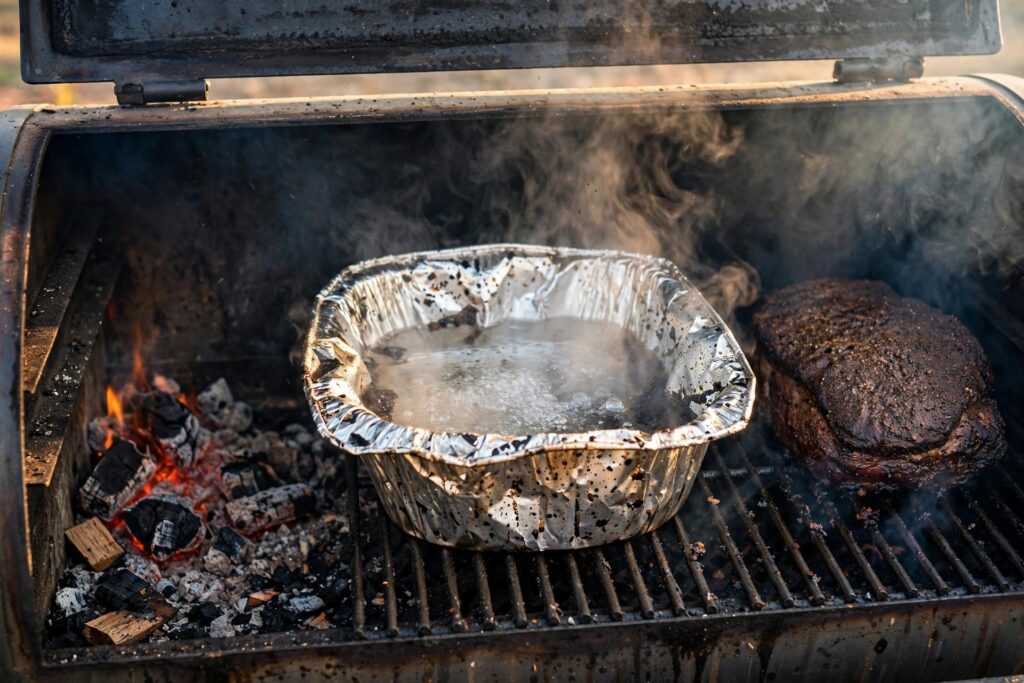
A water pan in a smoker is a simple pan of water placed inside the cooking chamber. As the water evaporates, it raises humidity, steadies the temperature, and keeps the surface of the meat moist so smoke sticks better. You don’t need one for every cook — but for long, low-and-slow sessions, it makes your life noticeably easier.
If you’ve spent any time in BBQ forums, you’ve heard both sides. Some pitmasters treat a water pan as essential gear. Others run their smokers bone-dry and turn out excellent brisket. Both camps have a point, because a water pan isn’t magic — it’s just physics. This guide breaks down what it actually does in the cooker, when it helps, where to put it, and how to use it without the guesswork.
What Does a Water Pan Do in a Smoker?
At its simplest, a water pan is just a heat-safe pan of water sitting inside your smoker. Nothing fancy — most pitmasters use a cheap disposable aluminum pan. But that plain pan does three genuinely useful jobs at once:
- It steadies the temperature. Water takes a lot of energy to heat up or cool down, so a few quarts of it act like a thermal anchor. When your fire flares or the wind gusts, the water absorbs the swing instead of your meat feeling all of it.
- It raises humidity. As water evaporates, the air inside the cooker gets moister. That slows moisture loss from the meat’s surface, keeping it tacky longer — and smoke adheres far better to a moist surface than a dried-out one. As Aaron Franklin puts it in Franklin Barbecue, a humid environment preserves the moist, tacky surface of the meat, which is exactly what attracts smoke. Kamado Joe’s masterclass guide walks through the same effect in detail.
- It shields the meat. Placed between the fire and the meat, the pan blocks harsh radiant heat and catches dripping grease, which cuts down on flare-ups and scorched fat.
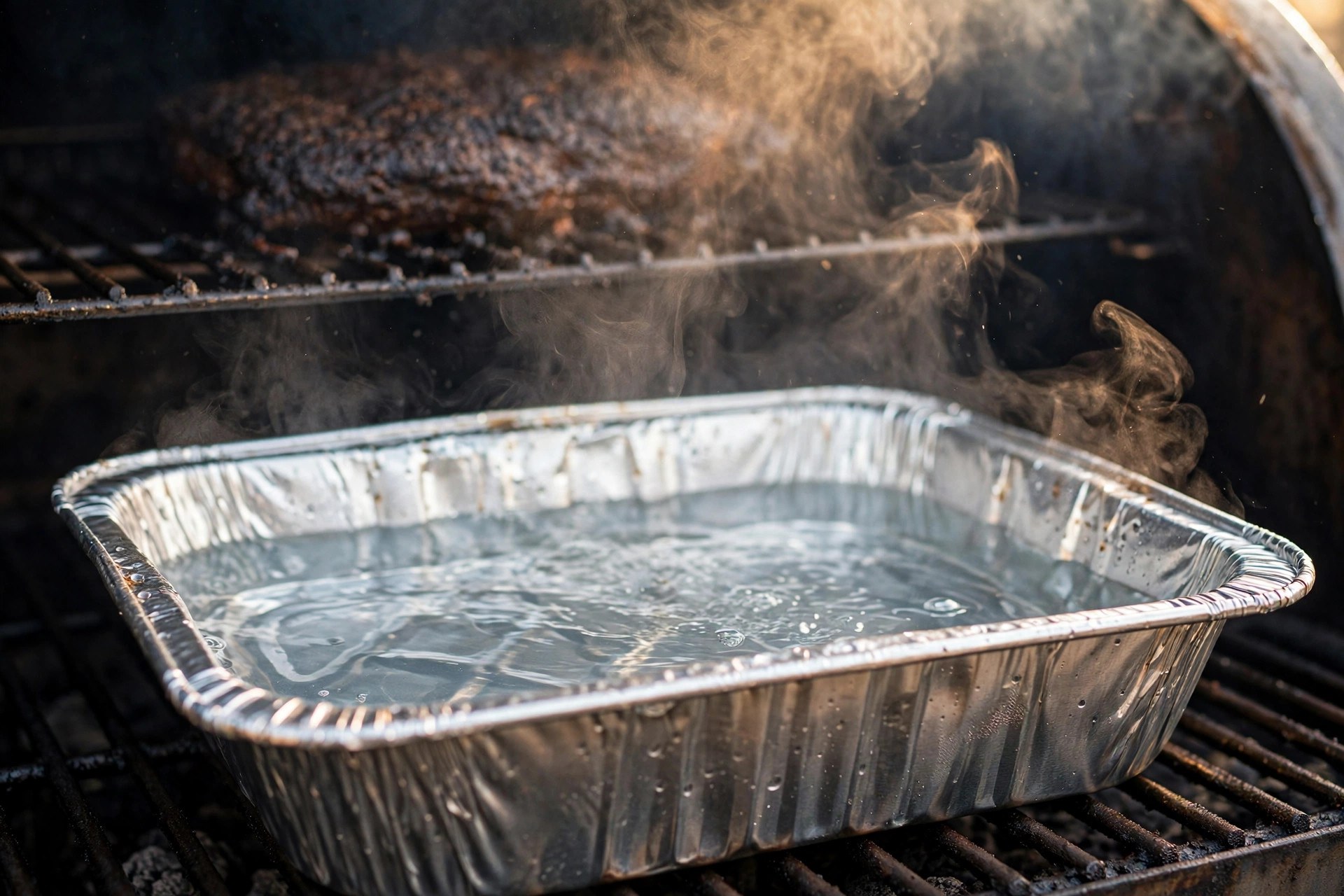
Now here’s the part that surprises people: a water pan does not push moisture into the meat. The juiciness of a brisket or pork shoulder comes from rendered fat, broken-down collagen, cooking to the right tenderness, and resting the meat properly. The pan’s job is controlling the environment around the meat — not injecting anything into it. Get that distinction right and everything else about water pans makes sense.
Do You Actually Need One? It Depends on Your Smoker
Short answer: no, not always. The longer answer depends on what you’re cooking in. Some smokers are designed around a water pan; others regulate themselves so well that a pan is a nice-to-have at best.
| Smoker type | Do you need one? | Why |
|---|---|---|
| Offset stick burner | Yes, for long cooks | Strong airflow through the chamber dries meat surfaces fast. Added humidity makes the whole cook more forgiving. |
| Kamado (Big Green Egg, Kamado Joe) | Helpful, not required | Already efficient and naturally humid, but the extra thermal mass smooths temperatures on 10+ hour cooks. |
| Pellet smoker | Optional | Precise temp control and even heat do most of the work. Grill Simply’s breakdown suggests trying one on a long brisket or pork butt to see if you notice a difference. |
| Electric or vertical smoker | Usually yes | Many are designed around a water pan — some ship with one. Follow the manufacturer’s intended setup. |
| Kettle or charcoal grill | Yes | Doubles as a drip pan and a heat deflector for indirect smoking, catching grease before it hits the coals. |
The honest test: if you’re fighting temperature swings or your meat’s surface dries out and hardens before the bark sets, a water pan will help. If your cooks already run steady and moist, you’re not missing much.
Water Pan vs Drip Pan: Don’t Confuse the Two
People use these terms interchangeably, and they’re not the same thing:
- Water pan: holds water to humidify the chamber and stabilize temperature. Ideally sits between the heat source and the meat.
- Drip pan: sits under the meat to catch grease and drippings — either to keep your smoker clean or to save the drippings for sauce.
A water pan placed directly under the meat can do both jobs at once, which is why the confusion exists. One thing to watch: if rendered fat forms an oil slick across the water’s surface, evaporation slows down and the pan does less of its humidity job. If you’re cooking something fatty, either skim the pan occasionally or run a separate drip pan under the meat and keep the water pan off to the side.
Where to Put the Water Pan in Your Smoker
Placement matters, but the rule is simple: put the pan somewhere it can absorb heat and evaporate without choking airflow — ideally between the heat source and the meat. Here’s how that looks by cooker:
- Offset smoker: on the cooking grate between the firebox opening and the meat. That’s the hottest zone, so evaporation is strong. Leave room around the pan so hot air and smoke still flow freely toward the chimney.
- Kamado: above the heat deflectors, below the cooking grate. You don’t need a huge pan — pick one that fits comfortably without blocking the gap around the edges where heat circulates.
- Pellet smoker: on a cooking grate off to the side, away from the temperature sensor and out of the way of the meat. Since it’s only there for humidity, anywhere convenient works.
- Electric or vertical smoker: use the manufacturer’s designated slot or the bottom of the unit, where it’s positioned to catch heat without blocking the element.
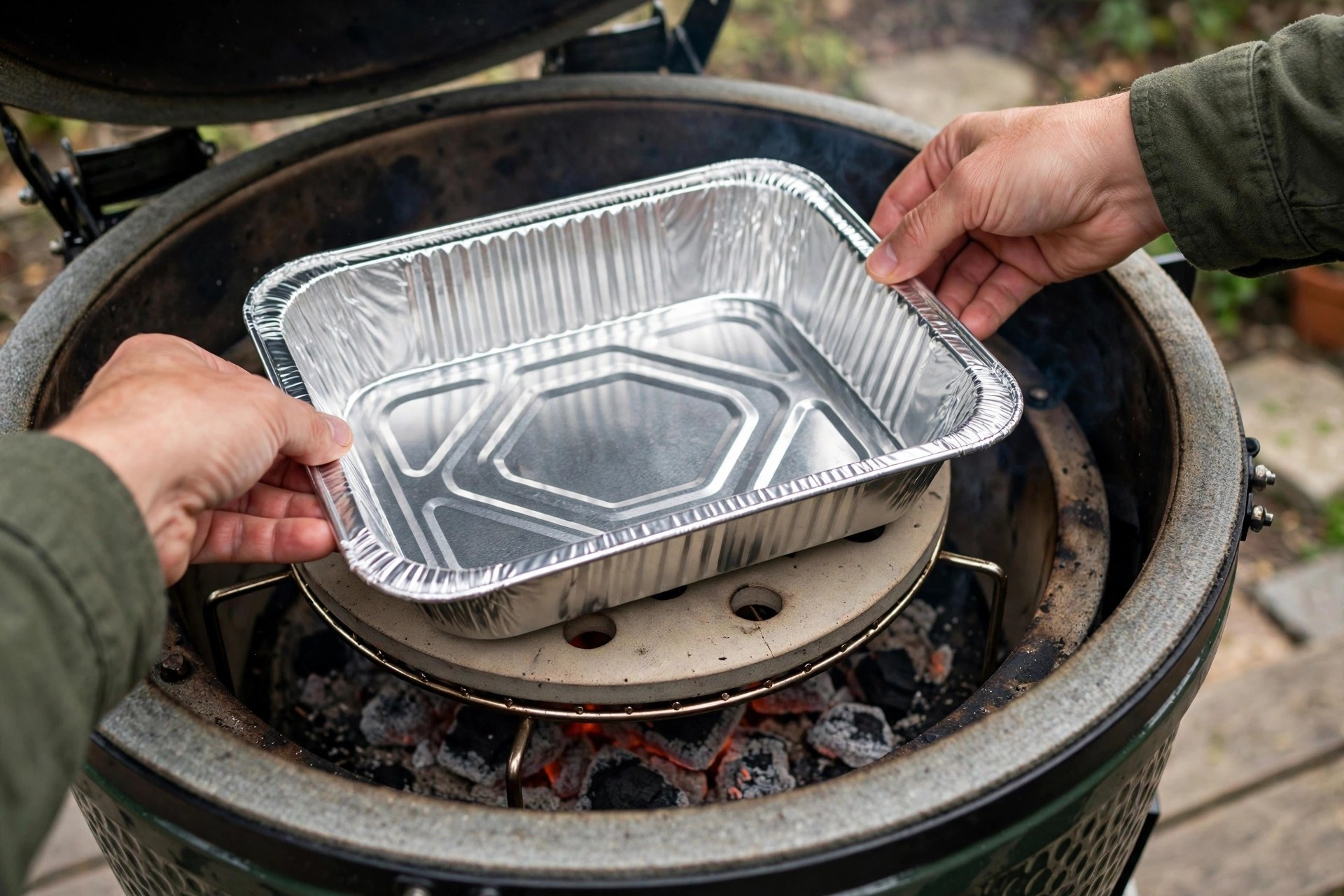
The biggest placement mistake is wedging in a pan so large it blocks airflow. A smoker breathes through its chamber; suffocate that and you get stale smoke and temperature trouble. When in doubt, go a size smaller.
How to Set Up, Fill, and Refill a Water Pan
Using one is dead simple, but a few habits separate smooth cooks from soggy messes:
- Put the empty pan in before you preheat the smoker. Positioning a dry pan is easy; carrying three quarts of sloshing water into a hot cooker is not.
- Line it or go disposable. Smoke, grease, and drippings bake onto the pan during a long cook. A disposable aluminum pan — or foil lining a reusable one — means you toss it instead of scrubbing it.
- Fill it about 75% full with a pitcher. A standard 9×13-inch foil pan holds roughly 3 quarts, so three-quarters full is a little over 2 quarts. Don’t fill to the brim — it’ll slosh, and you’ll be opening the lid to mop up.
- Hot or cold water? Doesn’t matter much. The smoker brings it to temperature either way. Hot water from the tap just shaves a few minutes off your recovery time after setup.
- Check the level every 2–3 hours on long cooks. At 225–250°F, expect roughly a quart to evaporate every 2–3 hours, depending on airflow. Top it back up to the half-to-three-quarter mark.
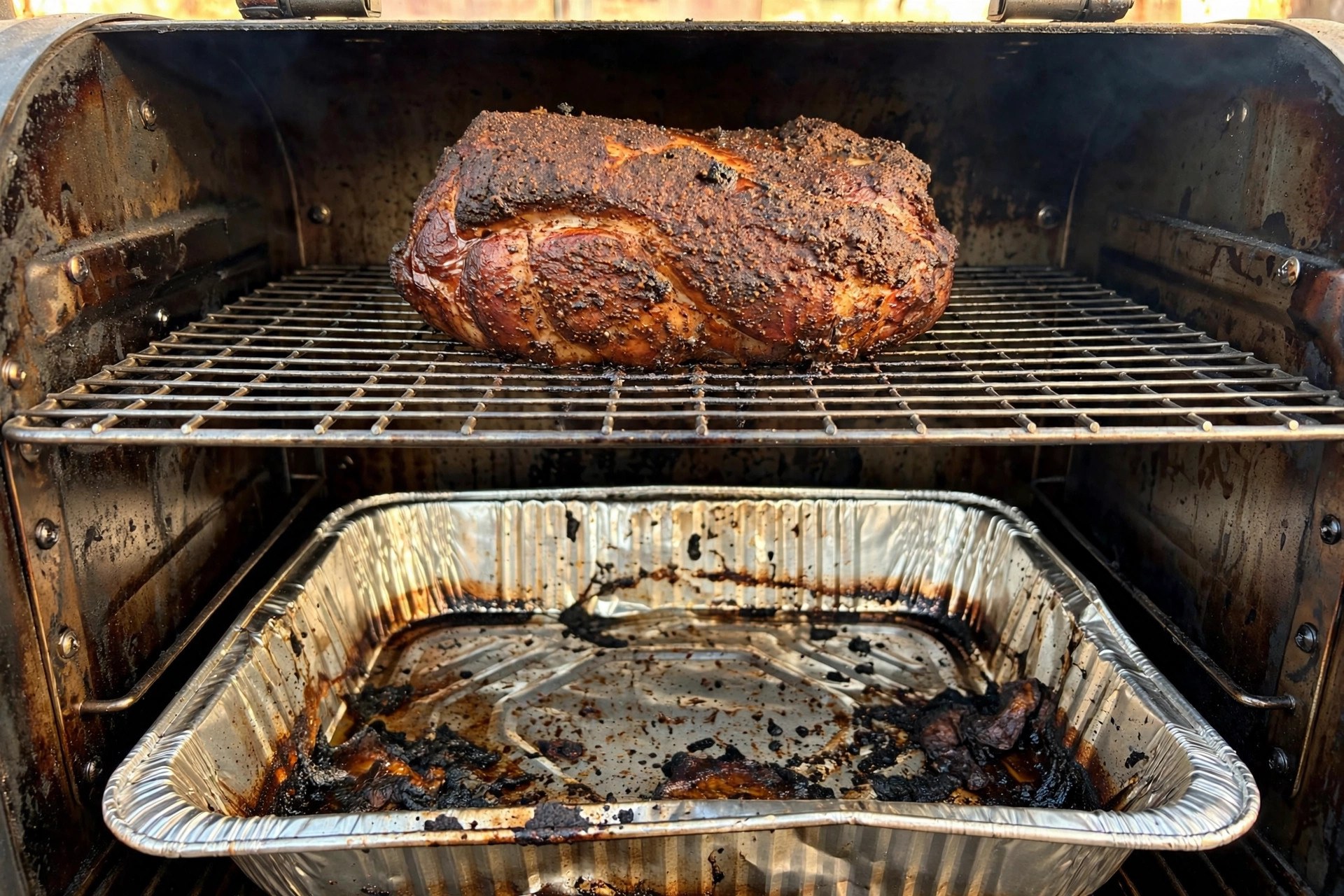
- Never let it run dry. A dry pan stops doing its job and the baked-on drippings can scorch, throwing bitter, acrid notes into the chamber. If the pan’s empty and blackened like the one below, you’ve waited too long.
Should You Put Anything Besides Water in the Pan?
Apple juice, beer, onion, herbs, spices — the internet is full of water-pan recipes, all built on the idea that flavored steam flavors the meat. Here’s the uncomfortable truth: very little of that flavor actually transfers. Steam is mostly water, and the smoke, the rub, and the meat itself dominate the final flavor by a mile. Pitmasters who’ve tried every combination tend to land in the same place: plain water does the job.
If you enjoy the ritual, a splash of juice or beer hurts nothing. But keep two things in mind. First, sugary liquids caramelize onto the pan as they concentrate, which makes cleanup dramatically worse. Second, whatever you pour in, you’re buying and hauling for a benefit you probably can’t taste. My take: save the apple juice for spritzing, where it actually touches the meat, and keep the water pan plain.
The Trade-Offs: Bark, the Stall, and Smoke Rings
A water pan isn’t all upside. Here’s what it costs you, so you can decide with open eyes:
Bark sets more slowly. Bark forms as moisture evaporates from the meat’s surface and the rub’s spices and proteins transform in the heat. More chamber humidity means slower surface drying, which means bark takes longer to set. You’ll still get good bark — but if yours isn’t developing, check your rub, your temperature, and whether you wrapped too early before blaming the pan.
The stall can stretch longer. The stall is evaporative cooling — the same physics that makes sweat cool your skin. A humid chamber feeds that process, so the stall can drag on longer with a water pan running. The extra time isn’t wasted — it gives fat and collagen more time to render — but plan your cook accordingly.
It doesn’t build the smoke ring. Some folks assume humidity creates the ring. It doesn’t. The smoke ring is a chemical reaction between nitric oxide from combustion and myoglobin in the meat, and it happens in the first couple of hours while the meat is still cold. If you want a deeper ring, start with cold meat and a clean-burning fire — the pan is irrelevant to it.
One combination worth trying: a water pan for ambient humidity plus occasional spritzing for surface moisture. The pan handles the environment while you sleep; the spritz handles the meat’s surface while you’re awake. Together they cover both sides of the moisture equation without either one doing all the work.
Water Pan FAQs
Do I need a water pan in a pellet grill?
No — pellet smokers regulate temperature and airflow well enough on their own. But it’s worth trying one on a long brisket or pork butt cook. If the meat’s surface stays tacky longer and the bark looks better, keep doing it. If you can’t tell the difference, skip it.
Should I use hot or cold water in a smoker water pan?
Either works. The smoker brings the water to temperature quickly either way. Hot water saves you a few minutes of recovery time after setup, which is the only real advantage.
Can I put beer or apple juice in the water pan instead of water?
You can, but you probably shouldn’t expect flavor from it. Very little flavor transfers through steam — plain water gives you the same humidity benefit with easier cleanup.
Will a water pan make my brisket juicier?
Not directly. It keeps the meat’s surface moist and steadies the cooking temperature, which creates better conditions for juicy meat. Actual juiciness comes from the cut, proper rendering, cooking to the right tenderness, and resting the meat before slicing.
For your next brisket or pork butt, try this: set a disposable foil pan in the smoker before you light it, fill it three-quarters full with plain water, and cook exactly like you normally would. You’ll likely notice calmer temperatures and a meat surface that stays tacky and smoke-hungry longer — and that’s a lot of payoff for a pan that costs about a dollar.
[…] which keeps the chamber humid and adds flavor — you can often skip the water pan entirely. Our smoker water pan guide explains the few situations where you still want […]