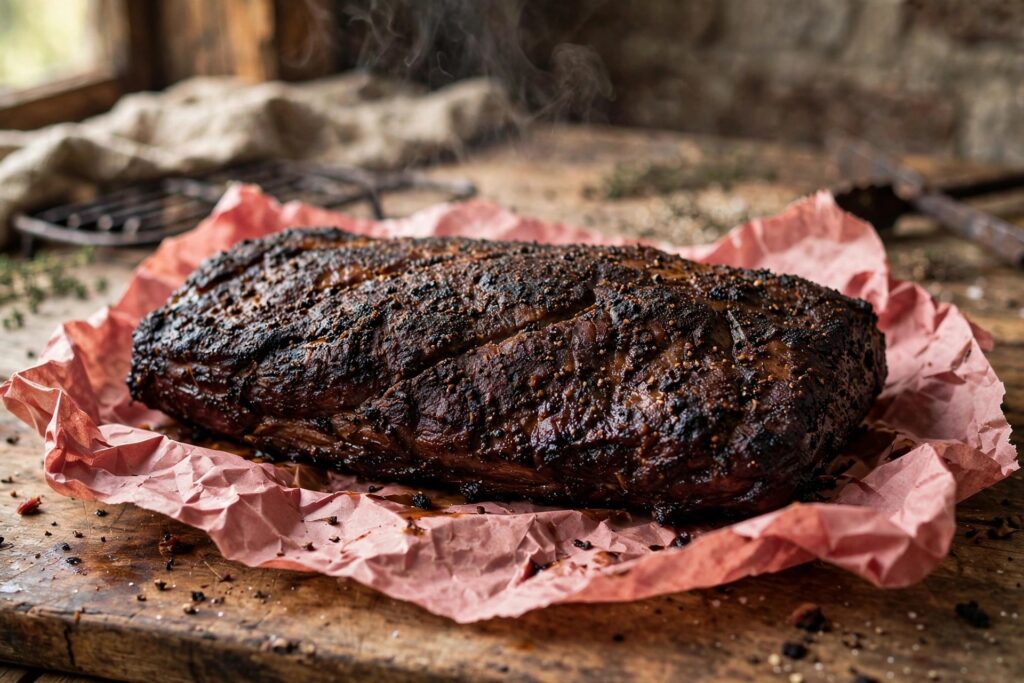
Rest brisket for at least 1 hour after smoking — and 2 to 4 hours is better. Wrap it, place it in a dry cooler with towels, and let it sit until the internal temperature drops to about 150°F before slicing. A proper rest lets the juices redistribute and the meat finish tenderizing. Skip it, and those juices end up on your cutting board instead of in the meat.
You just spent 12 to 16 hours nursing a brisket through the stall. It’s probe-tender, the bark is beautiful, and every instinct says slice it open right now. Don’t. The rest is the final step of the cook, not a pause before it — and it’s the step that separates juicy, bendable slices from a brisket that looks great for ten seconds and then dries out in front of your guests.
How Long Should You Rest Brisket? The Short Answer
Minimum: 1 hour. Ideal: 2 to 4 hours. That’s the answer for a full packer brisket, and it holds up across just about every serious pitmaster’s practice.
For smaller cuts, you can scale down a bit — but never below 45 minutes. Here’s a practical guide:
| Brisket size | Minimum rest | Ideal rest |
|---|---|---|
| Flat only, 5–7 lbs | 45 minutes | 1–1.5 hours |
| Half packer, 8–10 lbs | 1 hour | 2 hours |
| Full packer, 12–16 lbs | 1 hour | 2–4 hours |
| Holding for a party (any size) | — | 4–8 hours in a cooler or warm oven |
Yes, you can genuinely hold a brisket for 8 hours and have it come out better than a 1-hour rest. Barbecue joints do this every day — it’s called “holding,” and it’s one of the real secrets of competition and restaurant brisket. More on that below.
Why Resting Brisket Makes or Breaks It
Three things happen during the rest, and all three matter:
1. The juices redistribute. Raw brisket is about 71% water, and even fully cooked it holds more than half its weight in moisture. During the cook, heat squeezes the muscle fibers and pushes that moisture outward. Slice immediately and it floods the cutting board — the meat never gets a chance to pull it back in. Resting lets the fibers relax and reabsorb. As SmokedBBQSource puts it, the moisture needs time to thicken and settle back into the meat instead of running out onto the board.
2. Carryover cooking finishes the job. When you pull a brisket at 203°F, it doesn’t stop cooking — residual heat keeps pushing the internal temperature up another 5 to 10°F before it starts falling. That carryover window continues breaking down collagen into gelatin, which is what makes brisket feel juicy rather than just wet. (Our full explainer on carryover cooking covers the numbers.)
3. The temperature evens out. Fresh off the smoker, the outside of your brisket is much hotter than the center. Resting lets that gradient relax, so every slice — not just the middle ones — eats tender.
How to Rest Brisket: 4 Proven Methods
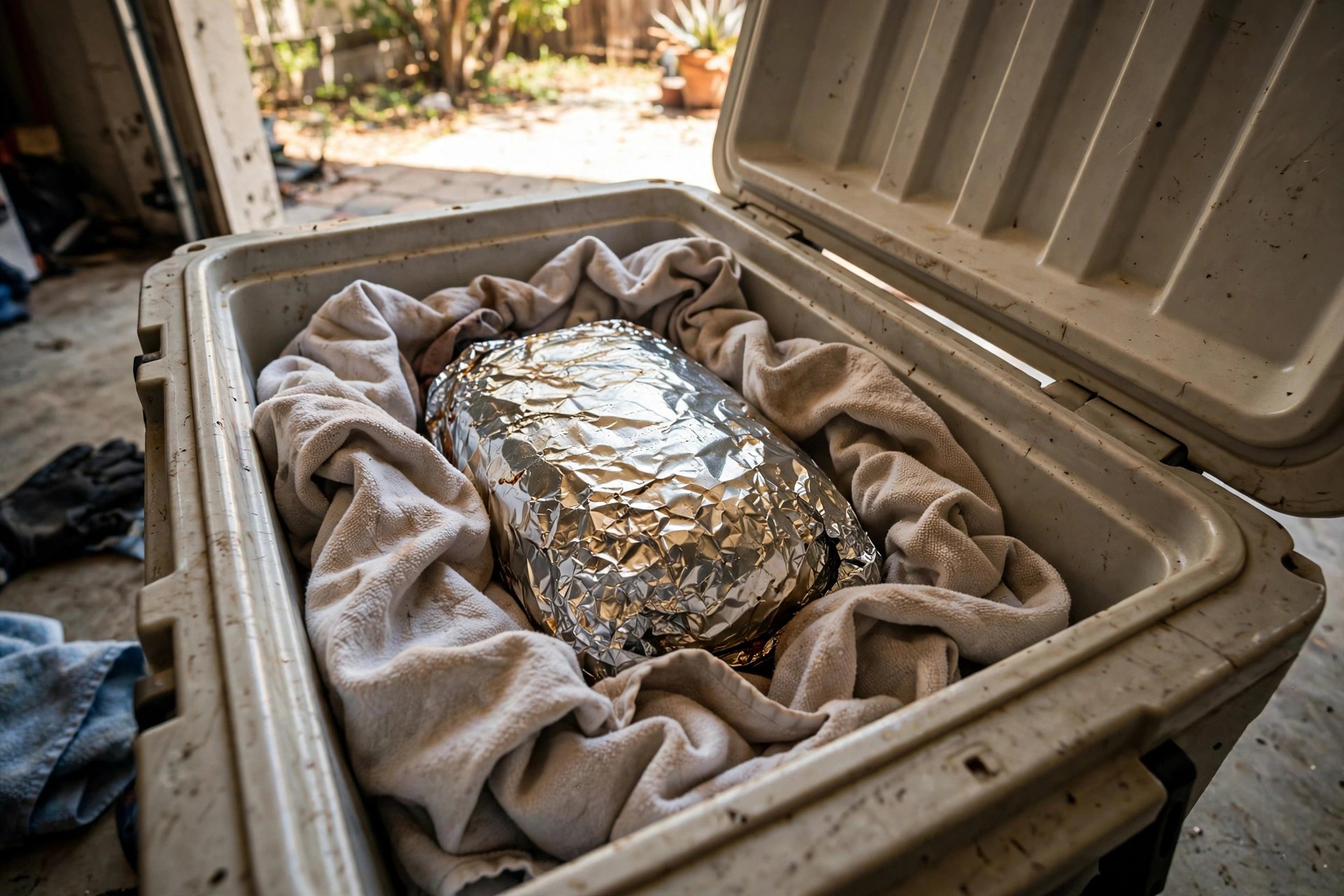
- The faux Cambro (cooler method) — best for most people. Wrap the brisket in butcher paper or foil, wrap that in old towels, and place it in a dry cooler with the lid closed. Preheat the cooler first with hot water (dump it out before the meat goes in). A decent cooler holds a brisket above 140°F for 4 to 6 hours easily — many go 8. The towels catch drips and add insulation.
- Warm oven hold — best for long holds. Set your oven to its lowest setting, ideally 150–170°F, and rest the wrapped brisket inside. This is how many competition cooks and restaurants hold brisket for 8 to 12 hours. Keep it wrapped so it doesn’t dry out, and don’t let the oven run hotter than 170°F or the bark softens and the meat overcooks.
- Counter rest — fine for 1 hour. Leave the wrapped brisket on a cutting board at room temperature for up to an hour. This is also the best choice if your bark came out softer than you wanted: unwrap it and let it rest open, and the crust firms up as it cools. Don’t go past an hour on the counter — see the danger zone rule below.
- Cambro or steam cabinet — the pro setup. Insulated food carriers (Cambros) are what caterers use; they keep food hot for 4+ hours with zero energy input. Steam cabinets add gentle humidity on top of heat. Overkill for most backyards, but if you’re cooking for a crowd regularly, they’re worth knowing about.
Should You Rest Brisket Wrapped or Unwrapped?
If you wrapped during the cook, keep it wrapped for the rest — the wrap holds in juices and adds insulation. But there’s one trick the best pitmasters use: vent before you rest.
When the brisket comes off the smoker, open the wrap for 15 to 20 minutes and let steam escape. This stops carryover cooking from running away — a brisket pulled at 205°F and immediately sealed in a cooler can coast up to 212°F+ and turn mushy. Venting lets the surface temperature drop quickly while the interior keeps gently finishing. Then rewrap, towel it up, and put it in the cooler.
If you cooked unwrapped the whole way and the bark is exactly where you want it, wrap it for the rest anyway (butcher paper is ideal) — an unwrapped rest in a cooler still loses heat faster and can soften the bark unevenly from trapped steam.
Paper or foil for the rest? Butcher paper is the better resting wrap for most cooks. It breathes just enough that the bark stays firm instead of steaming soft, while still insulating well inside a cooler. Foil works and holds heat slightly longer, but after several hours a foil-wrapped brisket can develop a softer, pot-roast-like exterior. If you wrapped in foil to power through the stall, consider re-wrapping in paper for the rest — it takes two minutes and the bark will thank you.
The 140°F Danger Zone Rule
Food safety puts a floor under all of this. Once cooked meat’s internal temperature drops below 140°F, bacteria can multiply rapidly. The USDA’s danger zone is 40–140°F, and you don’t want your brisket lingering there.
Practical rules:
- Counter rests are fine up to 1 hour, but monitor with a probe — don’t guess.
- In a preheated cooler with towels, a full packer stays above 140°F for 6 to 8 hours. A leave-in thermometer (see our picks for the best wireless meat thermometer) lets you verify without opening the lid.
- If the internal temp is approaching 140°F and you’re not serving yet, move it to a 150–170°F oven to hold.
- When in doubt, slice and refrigerate. You can always reheat brisket without drying it out — you can’t un-spoil it.
4 Resting Mistakes That Ruin Good Brisket
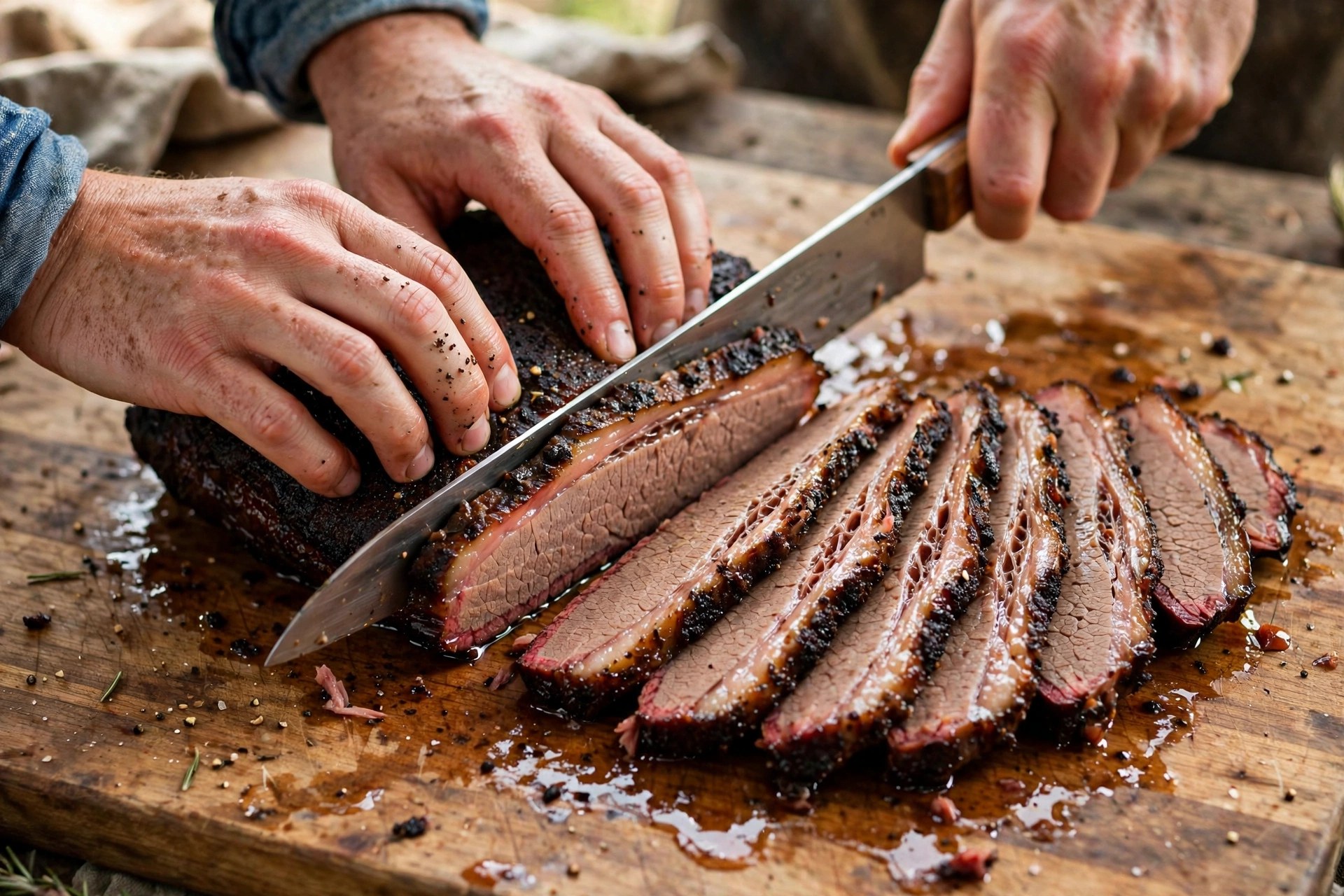
- Slicing too hot. Cutting at 180°F+ internal means juices pour out no matter how long you cooked it. Wait until the thickest part of the flat reads about 150°F before the knife comes out.
- Skipping the rest entirely. Even 45 minutes beats zero. If dinner is “ready now,” tent it and give it at least half an hour — it’s the highest-ROI time in the whole cook.
- A cold cooler. Putting a 200°F brisket into a 70°F cooler wastes the first hour of heat just warming the plastic. Preheat with hot water, dump, towel, then load the meat.
- Resting a wrapped brisket sealed tight straight off a hot pit. Without venting first, carryover can push the meat past tender into mushy. Fifteen minutes open on the counter, then wrap and hold.
How to Know the Rest Is Done
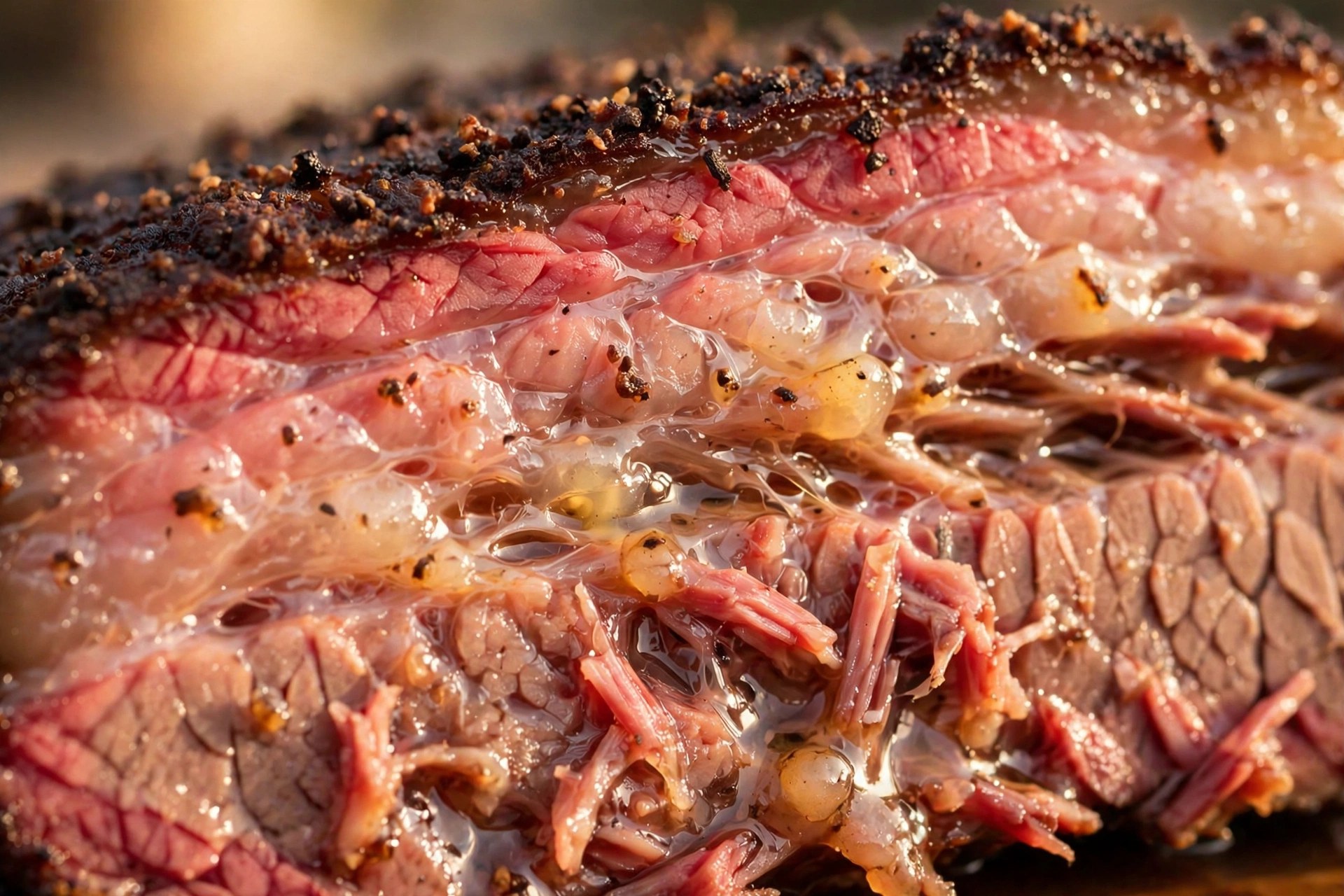
Time is a guideline; temperature is the truth. The rest is done when the thickest part of the flat reads about 150°F on a reliable thermometer. That’s the sweet spot — cool enough that juices stay locked in the meat when you cut, hot enough to serve immediately.
You’ll also notice the brisket feels different. Fresh off the smoker it’s rigid and tense; after a proper rest it relaxes and feels supple when you press it through the wrap. The bark, which may have softened slightly under the wrap, firms back up as surface moisture settles. If you vented before wrapping, you’ll find the crust has real bite to it again.
One more practical note: plan the rest backward from serving time. If dinner is at 6 p.m. and you want a 3-hour rest, the brisket needs to be probe-tender by 3 p.m. — which means building the stall (2 to 6 hours of it) into your morning math. Cooks who plan the rest first and the smoke second almost never serve late.
Brisket Resting FAQ
How long should brisket rest before slicing?
At least 1 hour, ideally 2 to 4 hours for a full packer. Don’t slice until the internal temperature has dropped to about 150°F — slicing hotter lets the juices run out onto the cutting board.
Can you rest brisket too long?
Yes, but the limit is generous: in a preheated cooler or a 150–170°F oven, brisket holds beautifully for 8 hours and many cooks go 10 to 12. The real limit is food safety — never let the internal temperature sit below 140°F. Past 12 hours, even a good hold starts to soften the bark and dull the texture.
Should brisket rest wrapped or unwrapped?
Wrapped. Keep whatever you cooked in (butcher paper or foil), but vent it open for 15 to 20 minutes right off the smoker to bleed off steam and stop carryover cooking, then rewrap for the hold.
What temperature should brisket be when you slice it?
Around 150°F internal in the thickest part of the flat. That’s cool enough that the juices stay put, but still plenty hot to serve — brisket holds serving heat for a long time once sliced.
Can I rest brisket in the oven?
Absolutely — it’s one of the best methods for long holds. Set the oven to 150–170°F, keep the brisket wrapped, and it will hold for 8+ hours. Just don’t go above 170°F or you’ll keep cooking it.
The rest is free tenderness — no extra skill required, just patience and a cooler. Once it’s rested and reading ~150°F, the payoff step is the cut itself: here’s how to slice brisket against the grain, and if you’re feeding a crowd, our guide to keeping BBQ warm for a party picks up where the rest leaves off.
[…] like soft butter — usually 200–205°F, but the feel is the finish line, not the digit. Let it rest properly after, and carryover will do the last bit of work (see our guide to carryover […]
[…] And if you’re still working on the cook itself, the best temperature to smoke brisket and how long to rest brisket cover the steps that come before the knife ever touches the […]
[…] the rest: brisket needs 1–2 hours of resting, wrapped, before slicing. This isn’t optional — it’s when juices […]
[…] 12 to 16 hours smoking that brisket. The bark set beautifully, the flat probed like butter, and the rest did its job. Now there’s a pound or two left in the fridge, and one bad reheat is all it […]
[…] is where resting your brisket fits in. A proper rest of 1 to 2 hours in a cooler or wrapped on the counter is safe and necessary. […]
[…] people get wrong: the clock starts when the meat comes off the heat, not when the party ends. That rest for your brisket is part of the window. Resting 1–2 hours wrapped in a cooler or on the counter is normal and […]
[…] first, always. Rest the brisket at least one hour — up to three — before the knife comes out. Cutting early floods the board with juices that […]
[…] what. For a party, slightly soft bark on juicy meat beats crisp bark on dry meat every time. Our brisket resting guide covers the shorter version of this same […]