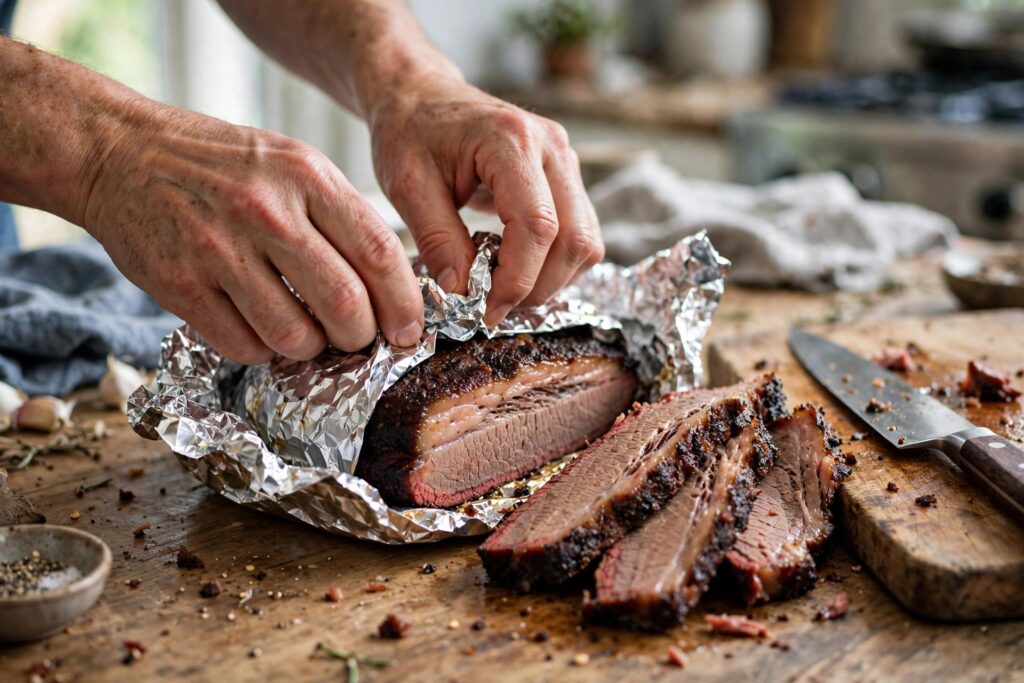
To store leftover BBQ safely, refrigerate it within 2 hours of cooking (1 hour if it’s above 90°F outside), divide it into shallow, airtight containers, and keep your fridge at 40°F or below. Eat refrigerated leftovers within 4 days, or freeze them for 2–3 months. Reheat everything to 165°F before serving.
That’s the whole system in one breath. But the details are where people get sick or ruin great meat — like the guy who wraps a whole brisket in foil, shoves the 12-pound brick in the fridge, and wonders why it smells funky on day three. A big hunk of hot meat cools from the outside in, and the center can sit in the bacterial danger zone for hours while the fridge hums away, completely unaware.
This guide covers the full safe-storage workflow for leftover barbecue: cooling it fast, wrapping it right, setting up the fridge, freezing for later, and reheating without turning it into sawdust.
Start With the 2-Hour Rule
Everything in food safety flows from one rule: perishable food shouldn’t spend more than 2 hours between 40°F and 140°F, the temperature range the USDA calls the danger zone. In that range, bacteria like Salmonella and E. coli can double every 20 minutes. On a hot day above 90°F — which describes most backyard cookouts — the window shrinks to 1 hour.
Here’s what most people get wrong: the clock starts when the meat comes off the heat, not when the party ends. That rest for your brisket is part of the window. Resting 1–2 hours wrapped in a cooler or on the counter is normal and necessary. But if the brisket rested for two hours, then sat sliced on the serving table for another two, you’re at four hours total. The meat looked fine and tasted fine — bacteria don’t change the flavor until it’s way too late.
Some ground rules from the USDA’s grilling and food safety guidance:
- Don’t wait for room temperature. This is the most common mistake. Putting warm food in the fridge is safe — the USDA says refrigerate leftovers as soon as possible, even if steam is still coming off.
- Hot food stays hot. While serving, keep BBQ at 140°F or above. A 200°F oven, a warming tray, or a chafing dish all work.
- One hour when it’s hot out. If the picnic table is sitting in 95°F heat, food gets one hour out, not two.
- When in doubt, throw it out. Food left in the danger zone too long can’t be saved by reheating — some bacterial toxins survive heat.
Cool It Fast: Shallow, Small, and Sliced
The fridge doesn’t cool food instantly — it cools it from the outside in. A whole unsliced packer brisket is 14 pounds of thermal mass; its center can take six or more hours to drop below 40°F, spending most of that time in the danger zone. That’s why the USDA’s number-one storage tip is to divide food into shallow containers.
Practical cooling steps for big cuts:
- Slice or pull before storing. Slice brisket against the grain into serving pieces, or pull pork into chunks. More surface area means faster cooling. Yes, whole pieces stay juicier — but cooling fast matters more for safety.
- Use containers 2–3 inches deep. Spread meat in a thin layer rather than piling it. Two shallow containers cool faster than one deep one.
- Leave the lid cracked for the first 30 minutes. A sealed lid traps steam and slows cooling. Let the initial blast of heat escape, then seal.
- Use an ice bath for the desperate. If you’ve got a mountain of pulled pork and a warm kitchen, set the container in a sink of ice water for 20 minutes, stirring once. It drops through the danger zone fast.
- Don’t stack containers. Air needs to circulate. Leave space between containers in the fridge for the first couple of hours.
Note that carryover cooking is still working in your favor here — a brisket pulled at 203°F internal keeps coasting for a while. That’s fine. What you’re racing is the stretch between 140°F and 40°F, and dividing the meat wins that race.
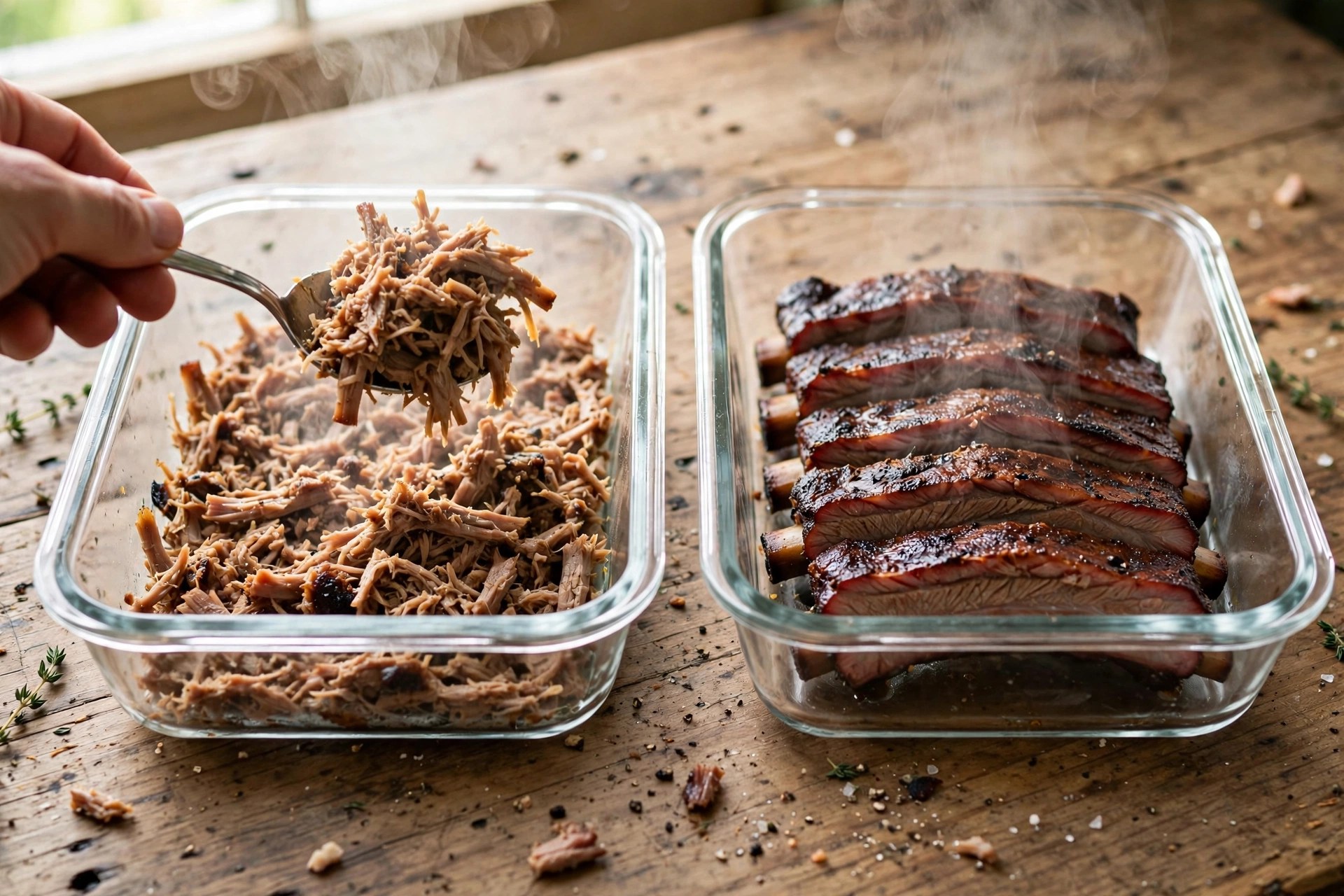
Choose Your Wrap: Foil vs Plastic vs Vacuum Seal
Not all wrapping is equal. The goal is the same — keep air out and juices in — but the methods differ a lot in how well they do it. Here’s the honest comparison:
| Method | Air Barrier | Best For | Downside |
|---|---|---|---|
| Vacuum sealing | Excellent | Freezing; storing brisket and pork for days | Needs the machine and bags |
| Plastic wrap + zip-top bag | Very good | Everyday fridge storage | Two steps; uses plastic |
| Airtight glass/plastic containers | Good | Short-term fridge storage, 1–3 days | Headspace air remains; takes fridge space |
| Aluminum foil | Fair | Short rests, transporting to a party | Tears easily; air pockets remain; acidic sauces react with it |
| Butcher paper | Poor | Resting, not storing | Breathable by design — great for bark, terrible for storage |
The winning everyday combo: press plastic wrap directly against the meat’s surface (no air pockets), then seal it in a zip-top bag with the air squeezed out, or drop it into a container with a locking lid. For freezing, vacuum sealing is worth the investment — it prevents freezer burn far better than anything else, and your burnt ends will taste like they were just smoked.
One thing to skip: wrapping acidic foods (vinegar-based sauces, Alabama white sauce) in foil for days. The acid reacts with the aluminum and gives the food a metallic taste. Use glass or plastic for sauced leftovers.
Fridge Setup: Temperature and Placement
The rule is 40°F or below. In practice, set your fridge to 38°F. Refrigerators cycle — the compressor kicks on and off, and the temperature swings a few degrees around the set point. A 38°F set point keeps you safely under 40°F even at the warm end of the cycle.
Placement matters more than people think:
- Don’t cram it. An overstuffed fridge can’t circulate cold air. If you smoked for a crowd, you may need to borrow space in a second fridge or a cooler with ice packs.
- Keep leftovers on upper shelves. The bottom shelf near the crisper can run a few degrees warmer in some fridges. More importantly, keep cooked meat above raw meat — raw chicken dripping onto your brisket is a contamination disaster.
- Label everything with the date. “Pulled pork — Sat” takes five seconds and eliminates the Wednesday guessing game.
- Use a fridge thermometer. The built-in dial lies. A $5 hanging thermometer tells you the truth. If your fridge can’t hold 40°F, nothing else in this guide works.
If you’re keeping BBQ warm for a party instead of storing it, that’s a different game — holding at 140°F+ in an oven or warmer, not cooling down. Don’t confuse the two: holding warm for hours is fine, cooling slowly through the danger zone is not.
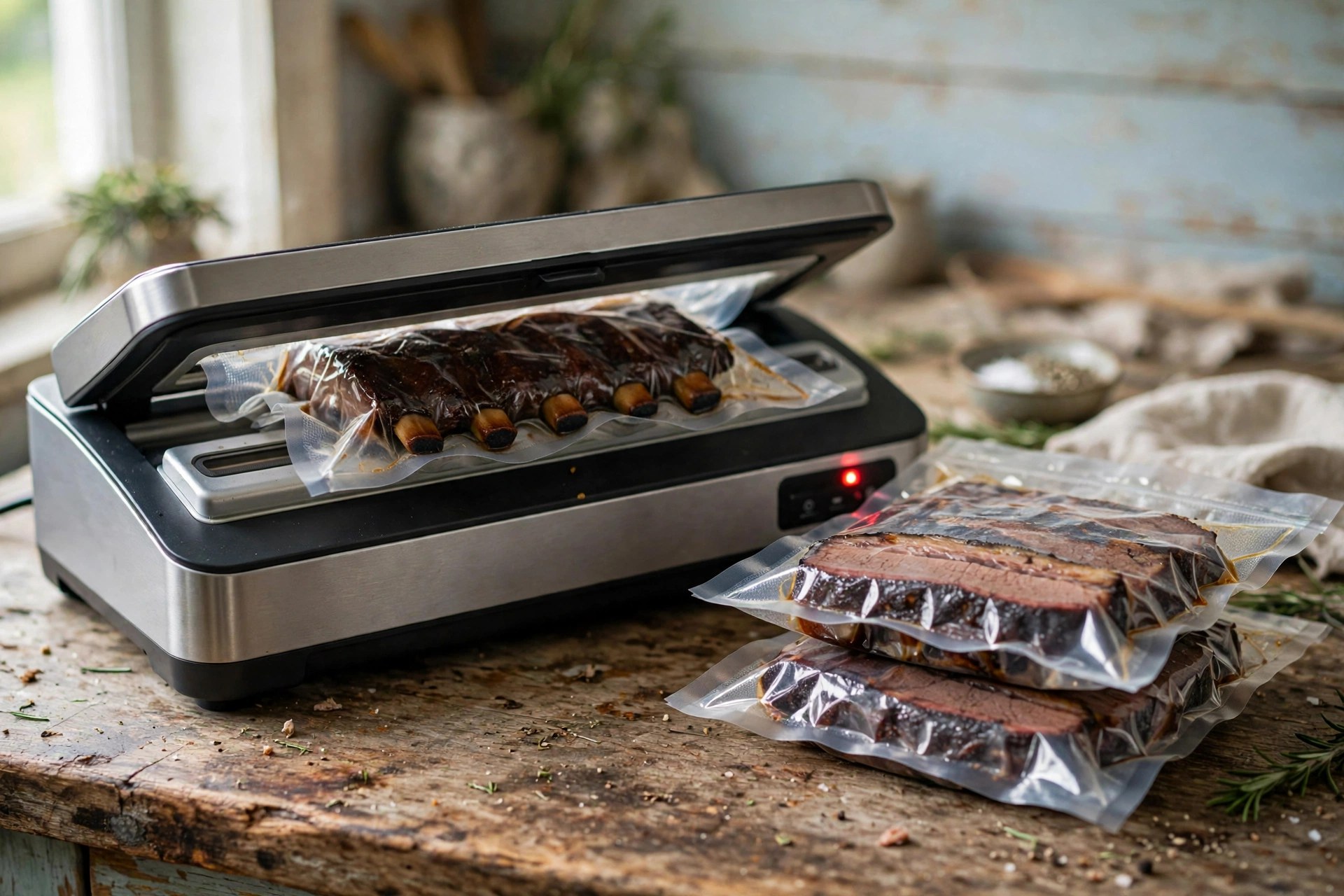
Freezing Leftover BBQ for the Long Haul
If you can’t eat it in four days, freeze it — but freeze it early, on day one or two. Freezing pauses bacterial growth; it doesn’t reverse it. Meat that was already borderline on day four comes out of the freezer still borderline.
The freezer method that actually preserves quality:
- Portion into meal sizes. One to two pounds per bag. Thawing a five-pound brick to eat one pound means refreezing — and every thaw-freeze cycle costs quality.
- Add the juices. Pour collected drippings into the bag before sealing. The fat and gelatin protect the meat from drying and carry the flavor back when reheated.
- Double-wrap. Plastic wrap tight against the meat, then a freezer bag with air pressed out — or vacuum seal. Freezer burn is just dehydration, and air is the cause.
- Label with contents and date. “Brisket flat, Sep 26” — frozen meat all looks the same after a month.
- Freeze flat. Lay bags flat on a sheet pan until solid, then stack them like files. They thaw faster and store tighter.
Frozen BBQ stays safe indefinitely at 0°F, but quality is best within 2–3 months, per the USDA. After that, expect drier texture and faded smoke flavor. Thaw in the fridge — a pound of pulled pork takes overnight; a dense brisket flat can take 24 hours. Never thaw on the counter. Once thawed, treat it like fresh leftovers: use within 3–4 days.
Reheating Without Drying It Out
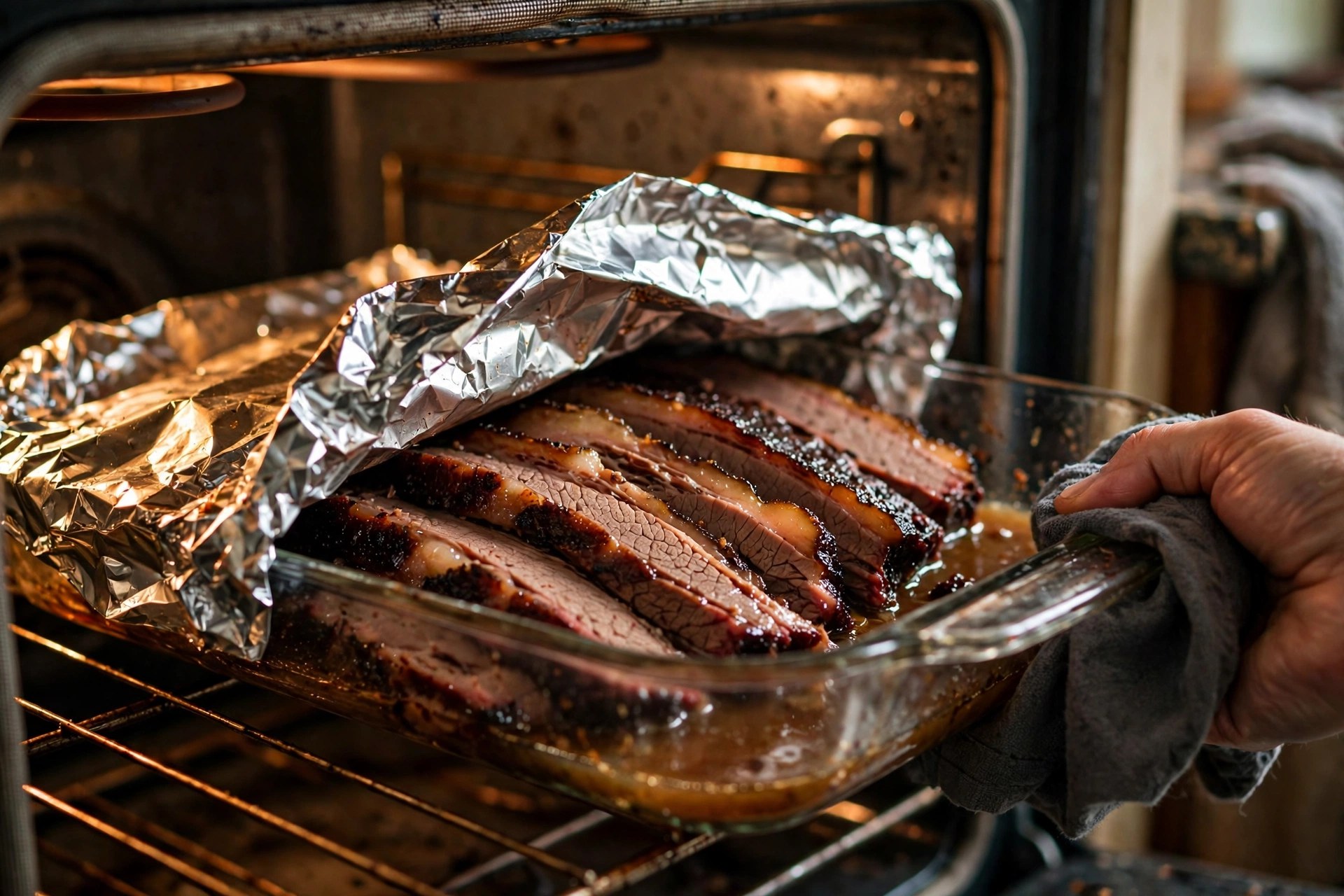
Safe reheating means every part of the meat reaches 165°F internal, per the USDA. The trick is getting there without squeezing out all the moisture you worked 12 hours to build. The method depends on the cut:
- Brisket: wrap slices with a splash of beef broth, warm covered at 275°F until steaming. Full method: how to reheat brisket.
- Pulled pork: skillet or covered pan over low heat with reserved juices. Full method: how to reheat pulled pork.
- Ribs: wrap in foil with a little liquid, 275°F until hot through. Full method: how to reheat ribs.
General rules: reheat only what you’ll eat (repeated heating and cooling is a bacterial playground), add moisture before heating, and go low and slow just like the original cook. The microwave works in a pinch — cover the food, add liquid, and stir or rotate halfway — but the oven gives you better texture every time. And don’t use a slow cooker to reheat: it warms food too slowly, parking it in the danger zone.
If you’re coming from the freezer, you can reheat directly without thawing in a pinch — the USDA says it’s safe, it’ll just take longer. Cover it, add liquid, and check that the center hits 165°F.
Frequently Asked Questions
How do you store leftover BBQ brisket?
Slice it (or leave large pieces whole), add the collected juices, wrap tightly in plastic wrap or vacuum seal, and refrigerate at 40°F or below within 2 hours of cooking. Eat within 4 days or freeze for 2–3 months.
Can I put warm BBQ directly in the fridge?
Yes — the USDA recommends refrigerating leftovers as soon as possible, even if they’re still steaming. Divide large cuts into shallow containers first so the center cools quickly instead of staying warm inside a big mass.
How long can BBQ sit out at a party?
Two hours at normal temperatures, one hour if it’s above 90°F. Keep the serving platter on ice or the hot tray above 140°F to buy time, and refrigerate what hasn’t been eaten as soon as the meal winds down.
Should leftover BBQ be stored with or without sauce?
Without, if you can. Sauce adds moisture that softens bark and can turn the surface mushy over a few days. Store the meat plain and sauce it when reheating. If it’s already sauced, use glass or plastic containers — acidic sauces react with aluminum foil.
Is it safe to refreeze thawed BBQ?
Only if it thawed in the fridge and stayed under 40°F the whole time — and even then, quality takes a hit. Meat thawed on the counter or in warm water should be cooked or eaten, not refrozen.
The whole safe-storage habit takes about ten minutes after the meal: divide, shallow-pack, seal, label, fridge. Do that while the smoker’s still cooling down and your leftovers will taste like barbecue all week — safely.