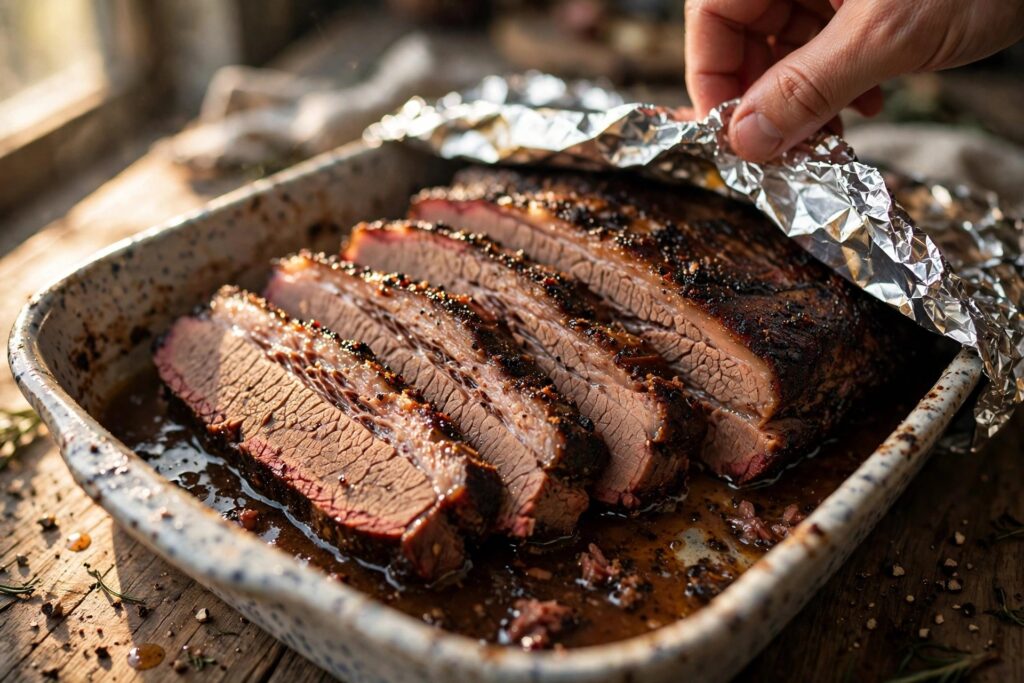
To reheat brisket without drying it out, warm it low and slow at 250°F with a splash of beef broth, tallow, or saved drippings, wrapped tightly in foil, until it reaches 165°F internally — about 45 to 60 minutes for a typical portion. Gentle heat plus trapped steam is what keeps the meat fibers from squeezing out their moisture.
You spent 12 to 16 hours smoking that brisket. The bark set beautifully, the flat probed like butter, and the rest did its job. Now there’s a pound or two left in the fridge, and one bad reheat is all it takes to undo everything. The good news: reheating brisket is actually one of the most forgiving steps in barbecue — if you respect three rules.
The Golden Rule: Low Heat, Liquid, and a Tight Wrap
Every method below is a variation on the same idea. Brisket dries out during reheating for exactly one reason: heat drives moisture out of the muscle fibers faster than the meat can hold onto it. Fix that and you fix the problem.
Low heat warms the center before the exterior overcooks. Added liquid creates steam inside the wrap that bathes the meat in moisture. A tight wrap — foil, butcher paper, or a sealed bag — traps that steam around the meat instead of letting it escape into the oven. Skip any one of these and you’re gambling.
Here’s how the common methods compare at a glance:
| Method | Temp / setting | Time | Moisture retention | Best for |
|---|---|---|---|---|
| Oven | 250°F | 45–60 min | High | Whole chunks and large portions |
| Sous vide | 150°F water bath | 1–2 hours | Highest | Sliced brisket, zero risk of overcooking |
| Skillet | Medium-low, covered | 3–5 min | Medium | A few slices, fast |
| Smoker / grill | 225°F indirect | 45–60 min | High | Restoring bark texture |
| Microwave | 20–30% power | 2–4 min | Low | Emergencies only |
Before we get into the steps, one more thing: the USDA recommends reheating all leftovers to 165°F internal for food safety. Many competition pitmasters serve reheated brisket around 140–145°F, which is classic serving temperature — but when in doubt, 165°F is the safe target, and everything below is written around it.
How to Reheat Brisket in the Oven (Step by Step)
The oven is the best all-around method for reheating brisket. It’s even, it’s forgiving, and it handles everything from a whole unsliced chunk to a pan of slices. BBQ Report’s tested walkthrough lands on the same 250°F target for the same reason: low, indirect heat that can’t outrun the meat’s ability to absorb it.
- Pull the brisket from the fridge 20–30 minutes early. Taking the chill off first means less time in the oven and more even warming from edge to center.
- Preheat the oven to 250°F. Not 300, not 325. Higher heat warms the outside while the middle stays cold — the classic route to dry edges and a lukewarm center.
- Place the brisket in a baking dish or foil pan. A rimmed sheet pan works too, but a dish with sides holds the juices where they belong.
- Add 2–3 tablespoons of liquid per pound of meat. Beef broth, melted tallow, or saved drippings poured right over the top. The meat should look glossy, not swimming.
- Wrap the pan tightly with heavy-duty foil. Crimp the edges so steam can’t escape. This is the step that does most of the work.
- Heat 45–60 minutes, until a thermometer reads 165°F in the thickest part. Slices may finish in 30–40 minutes; thick chunks need the full hour.
- Rest 5–10 minutes before serving. Same logic as the original rest — cut too soon and the juices run onto the board.
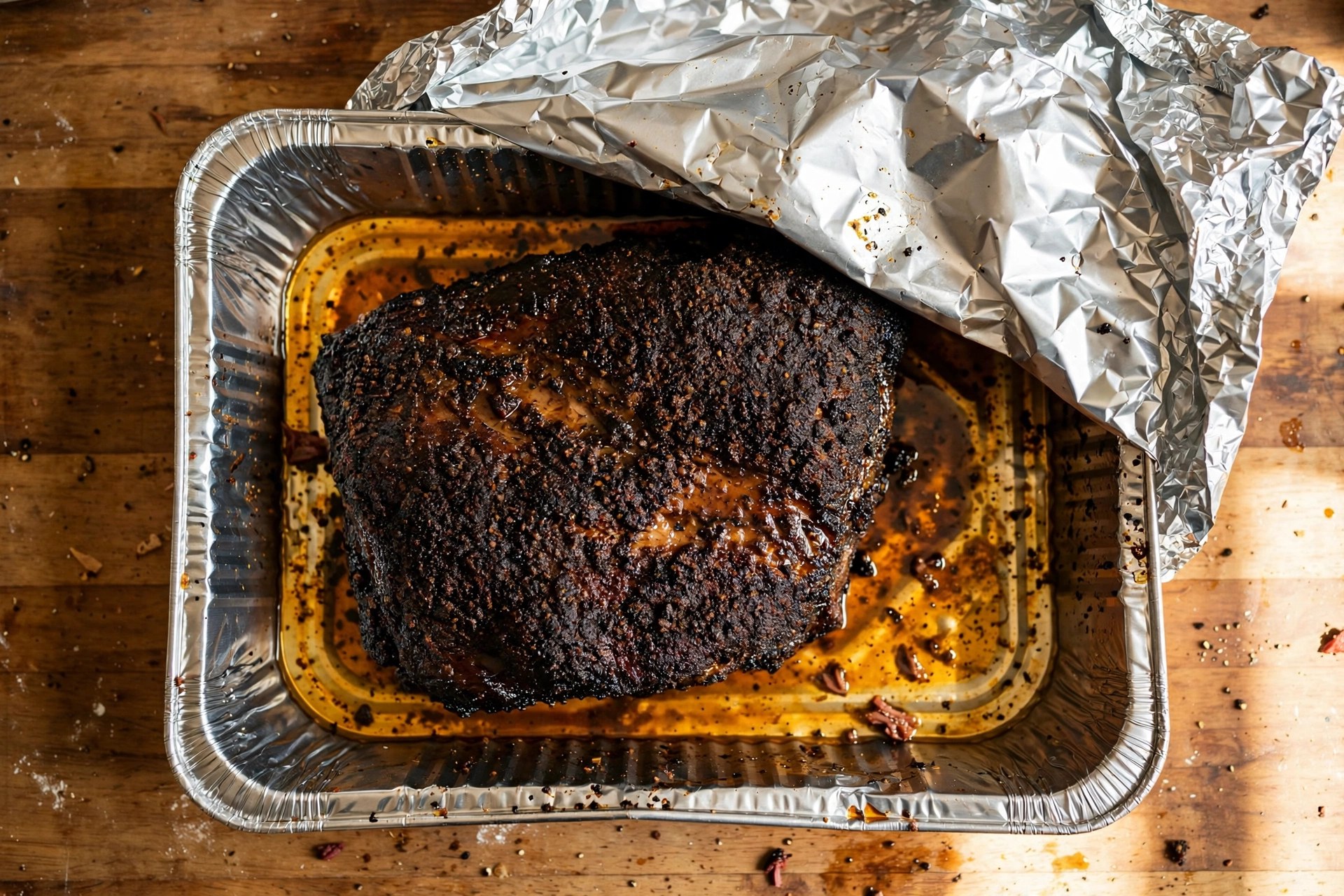
One pitmaster trick for the last five minutes: peel the foil back and let the top of the brisket sit uncovered. The dry oven air firms the bark back up after its steam bath. Five minutes crisps; fifteen minutes dries — set a timer.
Reheat Whole Brisket Before You Slice It
This is the single biggest lever on the final result, and it’s a decision you make at storage time, not serving time. Reheating a whole chunk preserves far more moisture than reheating slices, because less surface area is exposed to heat. Intact muscle fibers hold their juices; sliced surfaces leak them.
Our guide to slicing brisket covers the technique, but the timing rule is simple: store whole, reheat whole, slice what you’ll eat right now. Sliced brisket has dramatically more exposed surface, so it absorbs added broth faster — but it also gives up moisture faster in the fridge and the oven. If your leftovers are already sliced, keep the slices stacked tightly together in the pan (fan them slightly so the liquid reaches between them) and cut 10–15 minutes off the oven time.
Sous Vide, Skillet, and Smoker: Beyond the Oven
If you own an immersion circulator, this is the highest-quality way to reheat brisket. Set the water bath to 150°F, drop in the vacuum-sealed bag, and walk away for 1–2 hours. The meat physically cannot overcook — it can only ever reach the temperature of the water around it. Sliced brisket reheats evenly, edge to edge, with essentially zero moisture loss. It’s the method competition cooks reach for when every slice counts.
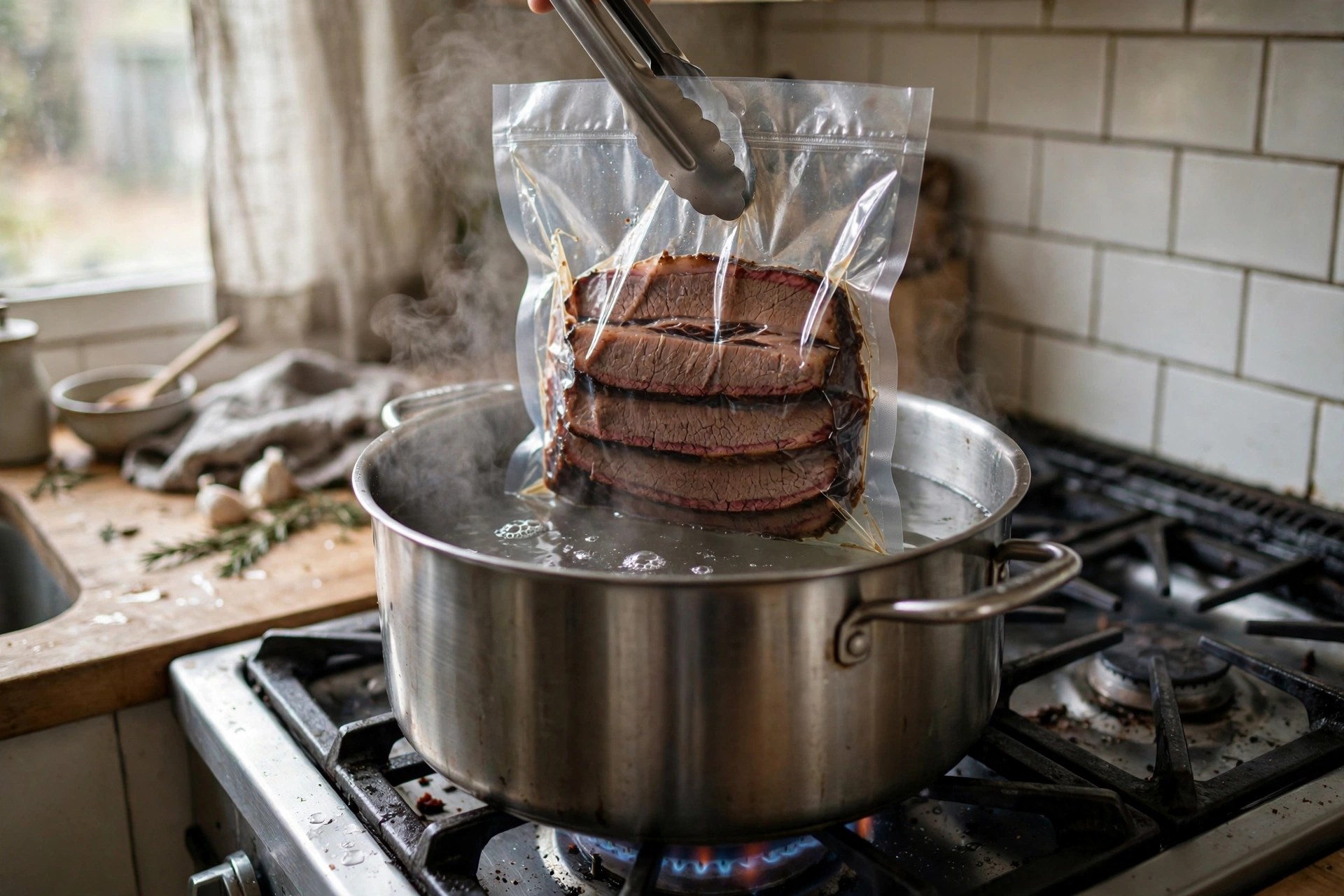
No circulator? The poor man’s version works on the same principle. Seal sliced brisket in a zip-top bag with the air pressed out, and lower it into a pot of water held at a bare simmer — not a rolling boil. Give it 20–30 minutes for refrigerated meat, about double for frozen. The sealed bag traps every drop of moisture the same way foil does, and the water bath keeps the temperature gentle and even. As Malcom Reed demonstrates, vacuum-sealing the whole brisket in its own juices before it ever hits the fridge sets you up perfectly for exactly this kind of reheat.
Skillet and smoker: when you want texture back
Sometimes the goal isn’t just warm, moist brisket — it’s brisket with a little bite to the outside. Two methods deliver that.
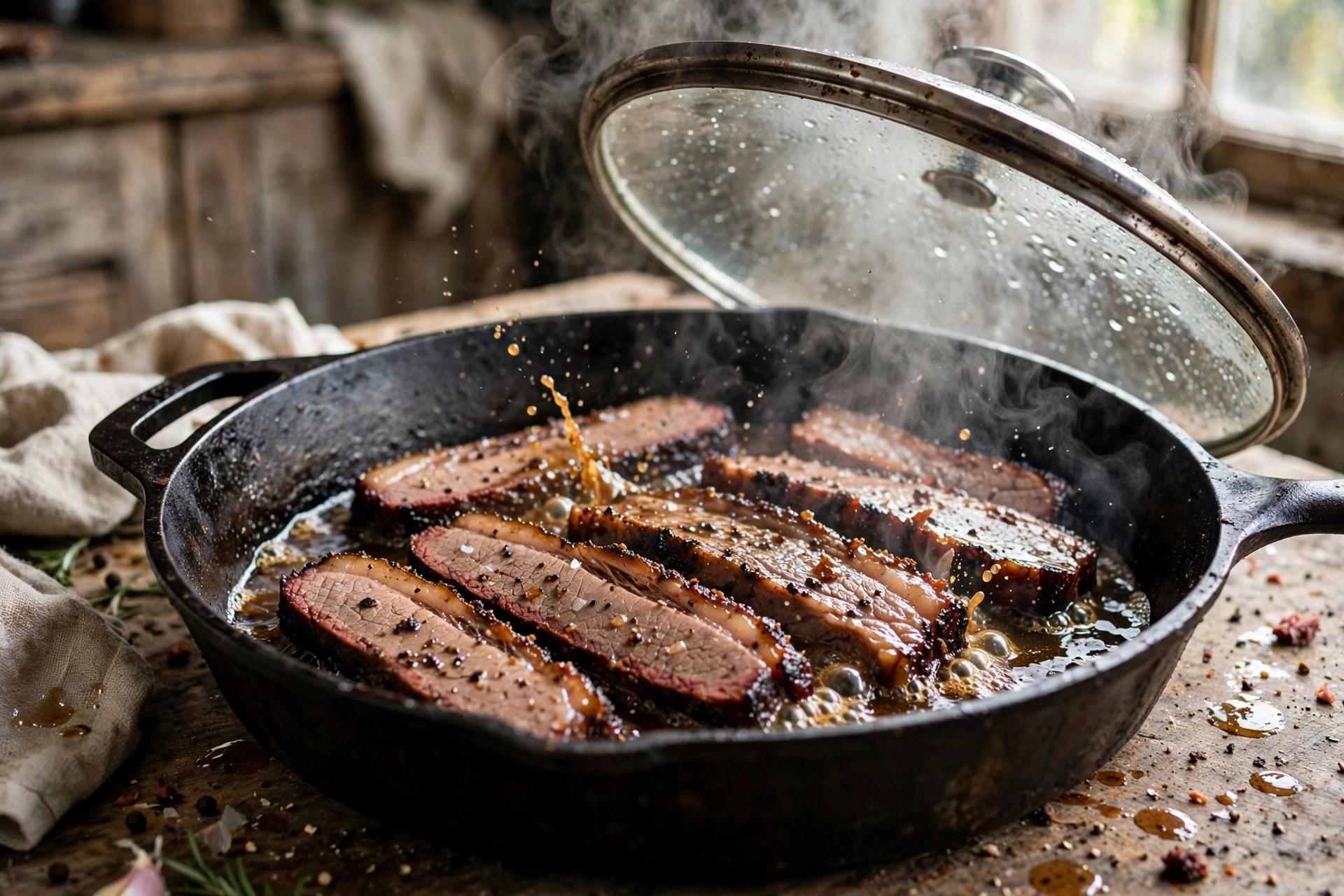
The skillet is the fast one. Heat a cast-iron pan over medium-low, add a spoonful of beef tallow or a splash of broth, lay the slices in a single layer, and cover with a lid. The lid is non-negotiable — it turns the skillet into a little steam chamber. Three to five minutes, flip once, and you’re eating. This is the best method for a few slices destined for sandwiches or tacos, where slightly crisped edges are a feature.
The smoker is the slow one, and it’s the only method that can genuinely restore bark. Set up for two-zone indirect heat at 225°F, wrap the brisket in foil or butcher paper with a splash of liquid, and heat on the indirect side until it hits 165°F. Then unwrap for the final 10 minutes. The dry smoker air firms the bark while a whisper of fresh smoke re-aromatizes the exterior. Total time runs about the same as the oven — you’re trading convenience for texture, and for leftover burnt ends, it’s worth it.
What Liquid Should You Add? Ranked
Not all liquids are equal. Water works in a pinch, but it dilutes the smoky, beefy flavor you spent all day building. Ranked from best to acceptable:
- Beef tallow from the original cook. Smoked beef fat adds richness and authentic flavor without a drop of dilution. If you trim your briskets, start saving the fat — it’s liquid gold for reheating.
- Saved drippings / au jus. The juices that collected in the wrap or the pan are the meat’s own flavor, concentrated. Pour them back in.
- Beef broth or stock. The most accessible option and a perfectly good one. Low-sodium gives you more control if your rub was salty.
- A 50/50 mix of apple cider vinegar and water. The tang complements pepper-forward Texas-style rubs nicely. Use it sparingly — a tablespoon or two, not a pour.
- Plain water. Better than nothing. It creates the steam you need; it just doesn’t add anything.
The move that separates the planners from the improvisers: freeze your drippings in ice cube trays. Every time you smoke a brisket, pour the defatted juices into trays and freeze. Each cube is a single-serving portion of concentrated flavor, ready to drop onto next month’s leftovers. Two minutes of effort after the cook saves every future reheat.
Storing Brisket So It Reheats Better
A great reheat starts the day before — at the cutting board. Brisket that’s stored well reheats well; brisket that’s tossed in the fridge uncovered was doomed before it cooled.
Refrigerator (up to 3–4 days). Cool the brisket within two hours of serving, then store it whole and tightly wrapped — plastic wrap pressed directly against the meat, then foil, or a vacuum-sealed bag. Air is the enemy: it dries the surface and invites freezer-burn flavors even in the fridge. Our full breakdown of storing leftover BBQ covers containers and timing in detail.
Freezer (2–3 months). Vacuum sealing is the gold standard. Malcom Reed’s method is worth copying: drain the juices from the wrap through a fat separator, put the whole brisket in a foil pan with the defatted au jus, and vacuum-seal the entire pan in an expandable bag. No vacuum sealer? Wrap tightly in plastic wrap, then foil, then a freezer bag, squeezing out as much air as possible at each layer.
Thawing. Always thaw in the refrigerator — never on the counter. A whole brisket needs a full 24–48 hours to thaw through; slices need 8–12. Cold water thawing (bag submerged, water changed every 30 minutes) works in a few hours if you’re in a hurry. And if you’re holding brisket hot for a party instead of cooling it, that’s a different game — meat held above 140°F the whole time doesn’t need “reheating” at all.
The fridge-life numbers are worth memorizing: 3–4 days refrigerated at 40°F or below, 2–3 months frozen. Past that, you’re not reheating — you’re risking.
5 Mistakes That Ruin Reheated Brisket
- Microwaving on full power. High microwave heat seizes the muscle fibers almost instantly, turning slices rubbery and dry. If the microwave is your only option, use 20–30% power, cover with a damp paper towel, and heat in 30-second bursts.
- Skipping the liquid. Dry meat plus dry heat equals dry meat. There is no method where adding nothing works — even the smoker method needs that splash of broth.
- Slicing before storing. Pre-slicing the whole brisket before it goes in the fridge multiplies the exposed surface area and bleeds moisture all night. Store whole; slice what you’ll eat.
- Reheating the whole batch twice. Every reheat cycle pushes the meat through the temperature danger zone and squeezes out more moisture. Reheat only the portion you’re serving right now.
- Cranking the oven to save time. 400°F will warm the outside in 15 minutes and leave the center cold — or worse, cook the outside a second time while the inside catches up. Patience is the ingredient.
Frequently Asked Questions
What temperature should reheated brisket reach?
165°F internal, per USDA guidance for leftovers. Use a thermometer in the thickest part. Some pitmasters serve at 140–145°F — classic serving temperature — but 165°F is the safe target, especially if the meat was fully cooled and stored.
Can you reheat brisket in the microwave?
You can, but treat it as a last resort. Place slices on a microwave-safe plate, cover with a damp paper towel, set power to 20–30% (never full), and heat in 30-second intervals, checking between each. Full power turns brisket tough in under two minutes.
Can you reheat brisket straight from frozen?
It’s much better thawed. Thaw in the refrigerator for 24–48 hours first, then use the oven at 250°F or sous vide at 150°F. Reheating from frozen takes roughly twice as long and heats unevenly — the outside dries while the center is still thawing.
Why does my reheated brisket taste dry?
Almost always one of three causes: the heat was too high, no liquid was added, or the brisket was pre-sliced before storage. Fix all three next time — 250°F, broth in the pan, foil sealed tight, whole chunk — and the difference is dramatic.
Is it safe to reheat brisket more than once?
It’s not recommended. Each cycle degrades texture and pushes the meat through the 40–140°F danger zone again. Portion before you store, reheat only what you’ll eat, and keep the rest cold.
Your next step is the easiest one on this page: after your next smoke, pour the drippings through a fat separator into an ice cube tray and freeze them. The next time leftover brisket hits the oven, you’ll have single-serving cubes of pure flavor ready to go — and that’s the difference between reheated brisket that’s merely warm and reheated brisket nobody can tell wasn’t fresh.
[…] juicy meat with a surface that doesn’t taste steamed. The same logic applies to reheating brisket and pulled pork, which dry out for exactly the same […]