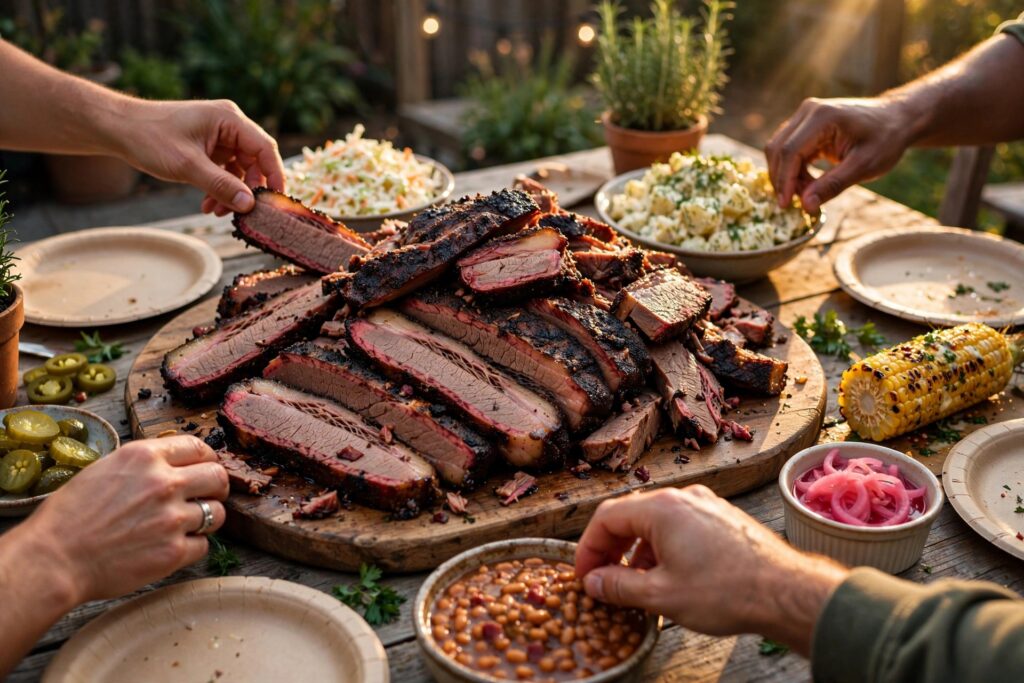
Plan on 1 pound of raw brisket per adult — that cooks down to about 1/2 pound of sliced brisket per person. Kids need roughly half the adult amount. Because brisket loses 40 to 50 percent of its weight to trimming and cooking, a 15-pound packer feeds about 15 adults with normal appetites.
That’s the whole math in one sentence, but parties have a way of punishing anyone who stops at the headline number. Big eaters, sandwich service, a table full of sides, a guest list that keeps growing — they all move the target. Here’s how to nail the number for your specific crowd, plus what to buy, when to cook it, and how much slack to build in so you never run dry.
How Much Brisket Per Person: The Golden Rule
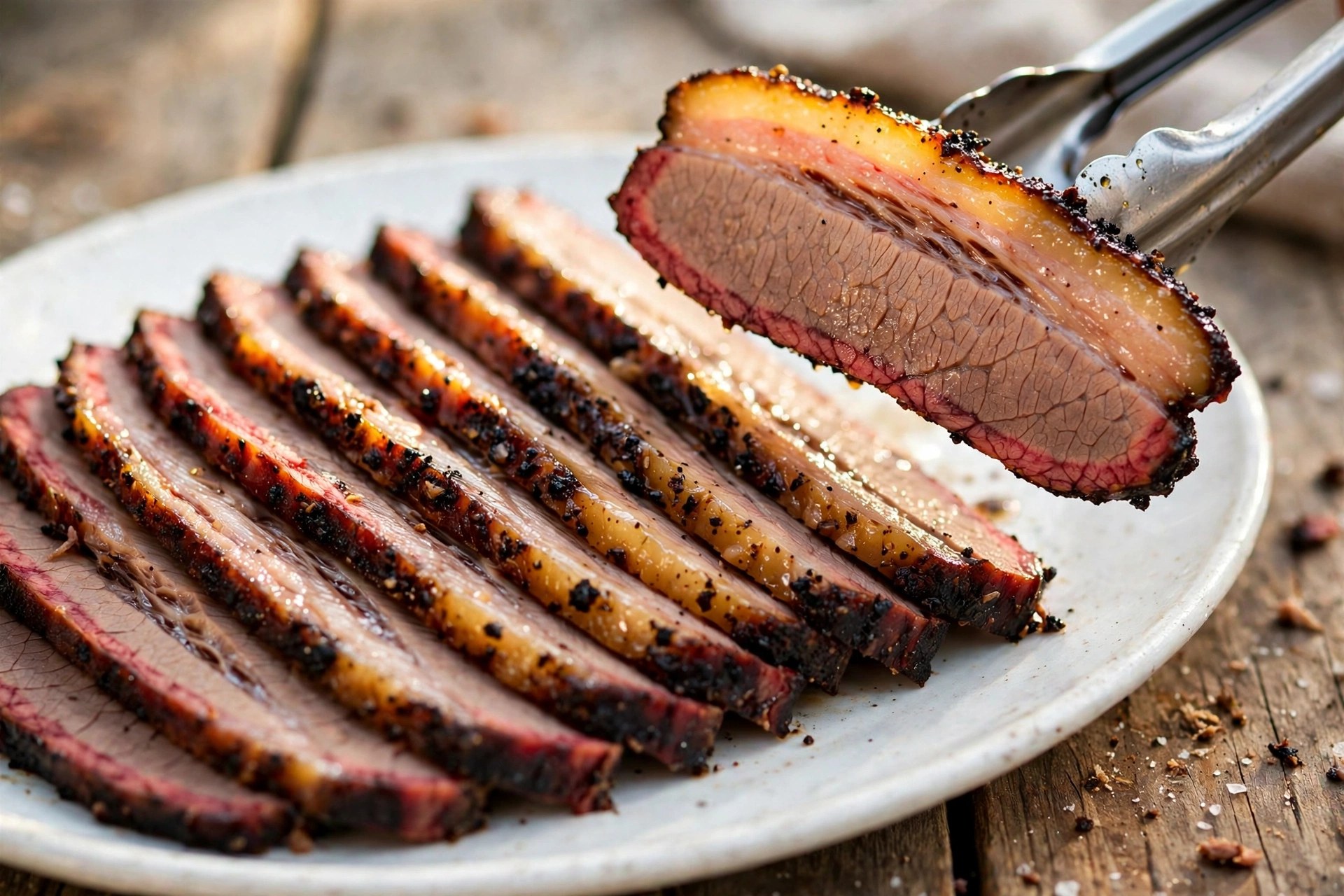
The industry-standard serving is 1/2 pound (8 ounces) of cooked brisket per adult when brisket is the main event. That’s a generous plate of slices — about 4 to 5 pencil-thick cuts — and it matches what most BBQ joints put in front of you.
Working backward from that plate: brisket sheds roughly half its raw weight between trimming and the smoker, so 1/2 pound cooked means buying 1 pound of raw, untrimmed brisket per person. Twenty adults, twenty pounds of raw packer. Ten adults, ten pounds. The math is almost suspiciously clean, which is why pitmasters have used it for decades.
Children land at about half the adult portion — 1/4 pound cooked, which means 1/2 pound raw per kid. Teenagers, as every parent knows, count as adults for brisket purposes. Possibly as adults and a half.
These numbers assume brisket is the star. If you’re running a full spread with ribs, pulled pork, or chicken alongside it, you can trim the brisket portion to 1/3 pound cooked per person, since guests graze across everything. PopularBBQ’s cookout math guide lands in the same place: leave the totals alone when multiple proteins share the table, because people naturally spread their appetite around.
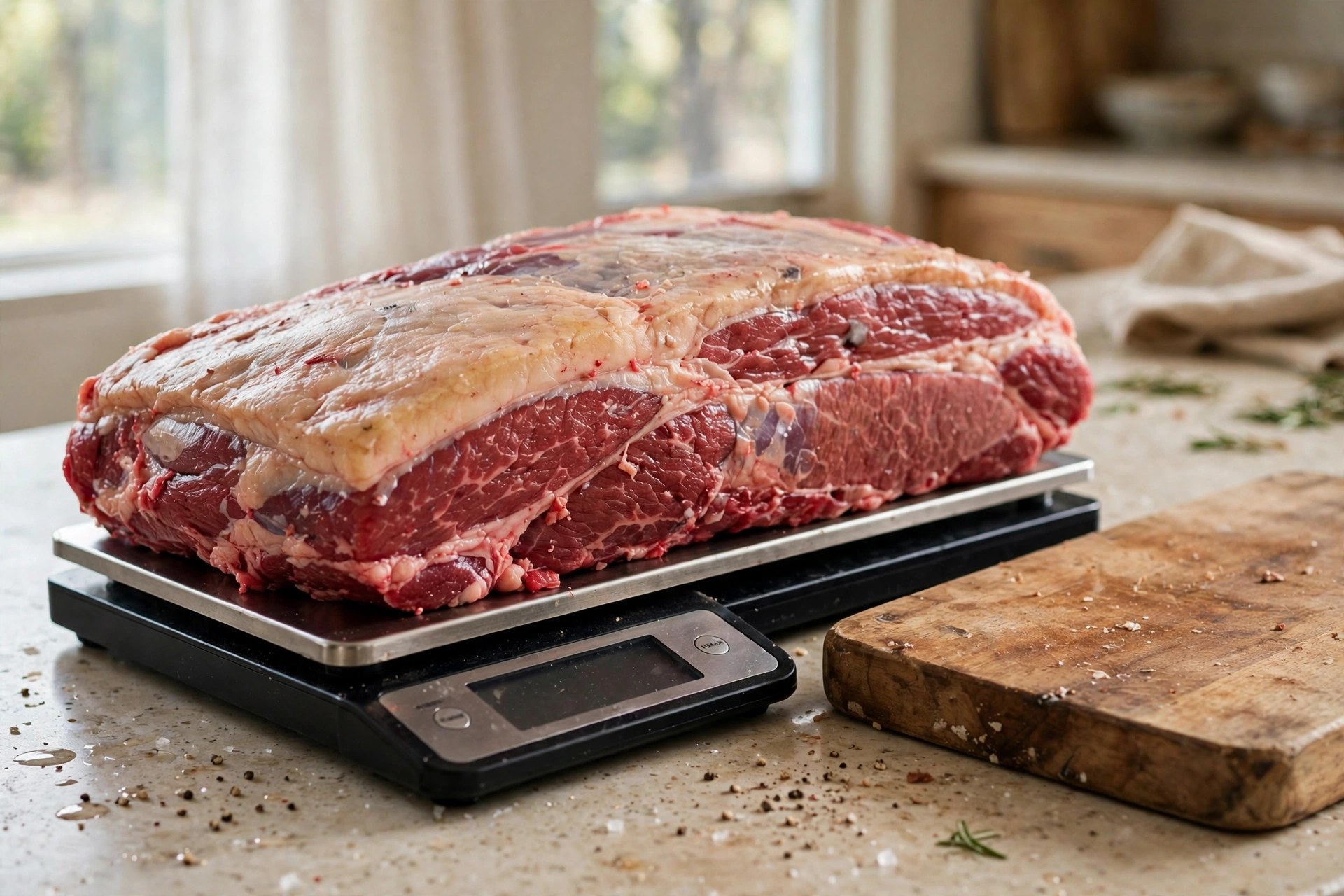
Why Brisket Loses Half Its Weight
If the 50-percent loss sounds dramatic, it helps to see where the pounds actually go. Nothing is going wrong — this is just what a big, fatty, hardworking muscle does under heat.
First, trimming. A packer brisket wears a thick fat cap plus hard deckle fat between the point and flat, and a responsible trim takes off 1 to 2 pounds before the meat ever sees smoke. Most cooks leave about 1/4 inch of fat cap for basting and remove the rest, along with silver skin and any discolored edges. On a 15-pound packer, expect to lose roughly 10 percent right on the cutting board.
Then, the cook. Over 12-plus hours at 225–250°F, three things happen at once: surface moisture evaporates (this is what causes the famous stall), intramuscular fat renders and drips away, and muscle fibers contract and squeeze out juices. By the time the brisket probes tender at 200–205°F internal, you’re holding 50 to 60 percent of the weight you started with.
The leaner the cut, the harder it shrinks. A whole packer with its point intact yields better than a lone flat, because the point’s marbling bastes everything around it. The Trellis’s portion guide uses the same 40–50 percent shrinkage figure and the same conclusion: buy double the cooked weight you want to serve. Plan around the 50-percent rule and you’ll never come up short.
Grade nudges the numbers a little. A Prime packer with heavy marbling renders more fat in the smoker, so its cooked yield can dip a point or two below a leaner Choice brisket — but the juicier slices are worth it, and the 50-percent rule still covers you either way. What matters far more than grade is trim: every extra pound of hard fat you leave on is a pound you paid for and won’t serve, so trim with confidence.
The Party Math: Guests to Pounds
Here’s the table to screenshot. It assumes brisket is the main protein, 1/2 pound cooked per adult, and a 50-percent yield from raw to sliced:
| Adults | Cooked brisket needed | Raw packer to buy | What that looks like |
|---|---|---|---|
| 6 | 3 lbs | 6–7 lbs | One large flat |
| 10 | 5 lbs | 10–11 lbs | One small packer |
| 15 | 7.5 lbs | 14–16 lbs | One full packer |
| 20 | 10 lbs | 19–22 lbs | One large packer + a flat |
| 30 | 15 lbs | 28–32 lbs | Two full packers |
| 50 | 25 lbs | 48–55 lbs | Three to four packers |
A note on packer sizing: whole packers at warehouse clubs typically run 12 to 18 pounds. You can’t buy exactly 19 pounds of brisket, so you round up to what exists — a 15-pound packer plus a 6-pound flat, say. Rounding up is a feature, not a bug. Leftover brisket is one of life’s great second-day pleasures, and no host in history has regretted having extra.
Adjusting the Numbers for Your Crowd
The golden rule gets you 90 percent of the way there. These adjustments cover the rest:
- Big eaters or brisket superfans: bump to 3/4 pound cooked per person — that’s 1.5 pounds raw each. A 15-pound packer feeds 10 hungry adults at this rate.
- Lots of sides: with a loaded table of BBQ sides — mac and cheese, beans, slaw, potato salad — drop to 1/3 pound cooked per person.
- Multiple meats: brisket plus ribs or pulled pork? Keep the 1/3-pound cooked portion. Guests split their plate across proteins.
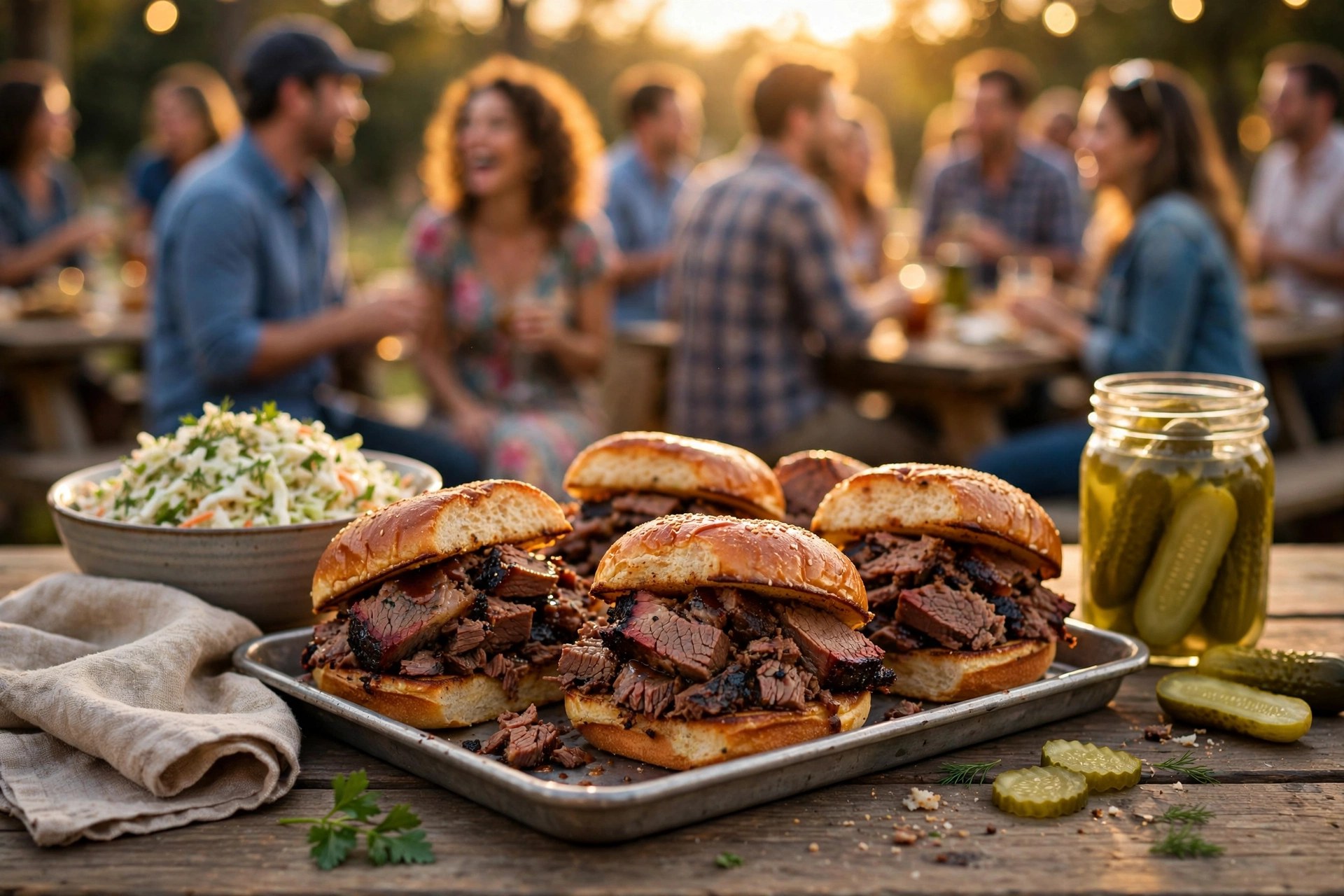
- Sandwich service: chopped brisket sandwiches need about 1/3 pound (5–6 ounces) of meat per sandwich. One pound of cooked brisket makes roughly 3 sandwiches.
- Kids under 10: 1/4 pound cooked each, or 1/2 pound raw. Kids 10 and up eat with the adults.
- Brisket as the only meat: add 25 percent to every number in the table. When there’s nothing else to graze on, people eat more of what’s there.
- The safety margin: add 20 percent to your final raw number. It covers the cousin who brings two friends and the uncle who discovers seconds.
Run the adjustments in order: start with headcount, pick your per-person portion, convert to raw weight, then add the safety margin last. For example, 20 adults as a multi-meat cookout: 20 × 1/3 lb cooked = 6.7 lbs cooked → 13.4 lbs raw → plus 20% = about 16 lbs raw. One solid packer covers it.
Packer vs Flat: Which Cut for Your Headcount
For small parties (6–10 people), a single flat is the practical move. It’s 5–8 pounds raw, fits any smoker or oven, and cooks in 8–10 hours instead of 12–14. The trade-off is yield: the lean flat shrinks harder and dries out easier, so buy at the top of your range and don’t skip the wrap.
For 12 or more guests, go whole packer. The point’s fat protects the flat through the long cook, the yield per dollar is better (packers often cost less per pound than flats alone), and you get the point meat for chopped sandwiches or burnt ends the next day. Two smaller packers beat one giant one if your smoker runs tight — they cook faster and more evenly than a single 18-pounder.
One more buying tip: brisket prices swing with the season. Holiday weekends see the case picked over and the per-pound price climb, so buy a week early when you can. Vacuum-sealed, an unopened packer holds 2–3 weeks in the fridge, and it freezes beautifully for months. Your party math should never depend on what’s left in the meat case the day before.
Timing the Cook for Party Day
Buying the right amount means nothing if the brisket isn’t ready when guests arrive. Work backward from serving time:
- Estimate cook time: at 225–250°F, plan 1 to 1.25 hours per pound of raw packer. A 15-pounder is a 15- to 19-hour cook including the stall.
- Add the rest: brisket needs 1–2 hours of resting, wrapped, before slicing. This isn’t optional — it’s when juices redistribute.
- Add the hold buffer: a finished brisket holds beautifully for 4+ hours wrapped in a cooler or a 170°F oven. Finish early on purpose; keeping BBQ warm is easy, rushing a stall is not.
- Set your start time: for a 6 PM Saturday party with a 15-pound packer, you’re lighting the smoker around midnight Friday. Yes, really.
- Slice to order: slice what you need and keep the rest whole — unsliced brisket stays juicy far longer on a buffet.
If you’re plating portions instead of running a buffet line, weigh the first few servings on a kitchen scale. Most people eyeball portions badly — what looks like half a pound is often closer to a quarter — and a quick check keeps the platter from emptying before the line ends.
Cooking a day ahead is a legitimate strategy, not a compromise. A whole cooked brisket, cooled and refrigerated unsliced, reheats beautifully — warm it gently and slice just before serving. Our guide to reheating brisket without drying it out walks through the method. Many competition cooks swear day-old brisket slices cleaner than fresh.
Frequently Asked Questions
How much brisket per person for a party?
Buy 1 pound of raw brisket per adult, which yields about 1/2 pound of cooked sliced brisket each. For kids, halve it: 1/2 pound raw per child. Add 20 percent extra as a safety margin.
How much brisket do I need for 20 people?
About 20 pounds of raw packer brisket, which cooks down to roughly 10 pounds sliced. In practice that means one large packer plus a flat, or two medium packers.
How much does brisket shrink when smoked?
Expect to lose 40 to 50 percent of the raw weight to trimming, rendered fat, and moisture loss. One pound of raw brisket yields roughly 1/2 pound of cooked, sliced meat.
Should I buy a whole packer or just the flat for a party?
For 12+ guests, buy whole packers — better yield, better price per pound, and the fatty point keeps the flat moist. For 6–10 guests, a single flat is easier to handle and fits any cooker.
How many sandwiches does a pound of brisket make?
About 3 hearty sandwiches per pound of cooked brisket, at roughly 1/3 pound of chopped meat per sandwich. Twenty sandwich servings need about 7 pounds of cooked brisket, or 14 pounds raw.
Do the math a week out, buy early, start the smoker the night before, and build in that 20-percent cushion. Then when the platter hits the table and the line forms, you’ll be the relaxed host with tongs in hand — not the one doing emergency portion math. And whatever’s left over? Store it right and you’ve got the best sandwiches of your week ahead.
[…] BBQ safely for the full breakdown, and if you’re comparing proteins for your next event, our brisket per person guide runs the same math for […]