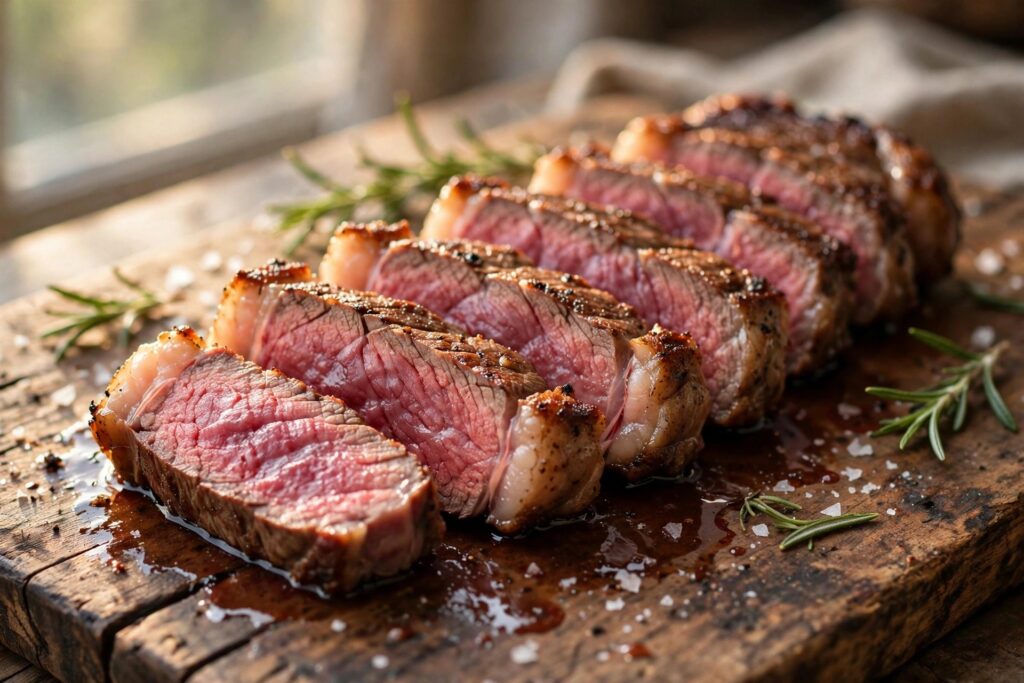
Carryover cooking is the rise in a food’s internal temperature after you take it off the heat. The outside of the meat is hotter than the center, so residual heat keeps migrating inward for several minutes. Depending on the cut, expect another 3 to 15°F — which is exactly why experienced cooks pull meat before it hits the target temperature.
This is the single most misunderstood part of cooking meat. You watch the thermometer like a hawk, pull the steak at a perfect 135°F medium-rare, let it rest — and slice into a 145°F medium. The heat didn’t come from anywhere mysterious. It was already inside the meat, sitting in the outer layers, waiting to finish its journey to the center. Understand this, and you stop overshooting doneness forever.
What Is Carryover Cooking?
Carryover cooking is the phenomenon where food keeps cooking after the heat source is gone. When you sear, grill, roast, or smoke meat, the exterior always gets hotter than the interior — heat moves from the surface inward. The moment you pull the meat off the grill, the outer layers are still loaded with thermal energy, and that energy has to go somewhere. Some escapes into the air. The rest travels inward, pushing the center temperature higher for several minutes until the whole piece equalizes. Wikipedia’s entry on carryover cooking puts the typical rise at 5–25°F (3–14°C) depending on size and density, with larger, denser cuts climbing the most.
Think of it like a freight train. You can cut the engine, but the cars keep rolling forward on momentum. The hotter the outside of the meat and the thicker the cut, the longer that momentum lasts.
The practical rule is simple: cook to a pull temperature, not a final temperature. Decide the internal temp you want to serve at, subtract the expected carryover rise, and pull the meat when the thermometer hits that lower number. The rest does the rest.
Why Meat Keeps Cooking After It Leaves the Heat
Three things are happening at once during the rest, and all three push the center temperature up.
1. The temperature gradient equalizes. While the meat cooks, the outside might be 400°F+ (a seared crust) while the center is 120°F. That steep gradient doesn’t vanish when the meat leaves the fire. Heat flows from hot to cold, so the outer layers keep donating energy to the center until temperatures level out. This is the main engine of carryover cooking.
2. The surface acts like a battery. A hard-seared crust or a bark-covered brisket exterior is dense with stored heat. That energy can’t disappear — it radiates outward into the air or conducts inward into the meat. The thicker and denser the cut, the more of that stored heat ends up traveling inward rather than escaping.
3. The meat is still losing heat slowly. Air is a poor conductor, so a resting roast loses heat from its surface far more slowly than it gained it in the oven or on the grill. During the first 5–10 minutes, inward heat flow outpaces surface cooling — and the center temperature climbs. Only later, as the gradient flattens, does the whole piece start cooling down.
Cooking method matters enormously here. A steak seared over screaming-hot coals has a massive gradient — blazing crust, cool center — so carryover is strong. The same steak cooked sous vide at 130°F has almost no gradient at all, so carryover is nearly zero. Gentle cooking methods produce gentle carryover; aggressive sears produce big coasts.
How Many Degrees Does Carryover Cooking Add?
These are the ranges pitmasters and chefs work with. Your exact numbers shift with thickness, cooking temperature, and resting conditions, but this table gets you in the right neighborhood:
| Cut | Typical Carryover Rise | Suggested Rest |
|---|---|---|
| Thin steaks, chops (under 1 inch) | 2–5°F | 5 minutes |
| Thick steaks (1.5–2 inches) | 5–8°F | 10–15 minutes |
| Burgers and patties | 1–3°F | 3–5 minutes |
| Pork chops, thick-cut | 5–8°F | 5–10 minutes |
| Whole chicken or turkey | 5–10°F | 20–30 minutes |
| Prime rib and large roasts | 10–15°F | 20–30 minutes |
| Brisket (whole packer) | 5–10°F | 1–2 hours (resting, see below) |
| Pork butt / shoulder | 5–10°F | 45–60 minutes |
| Fish fillets | 2–3°F | 3 minutes |
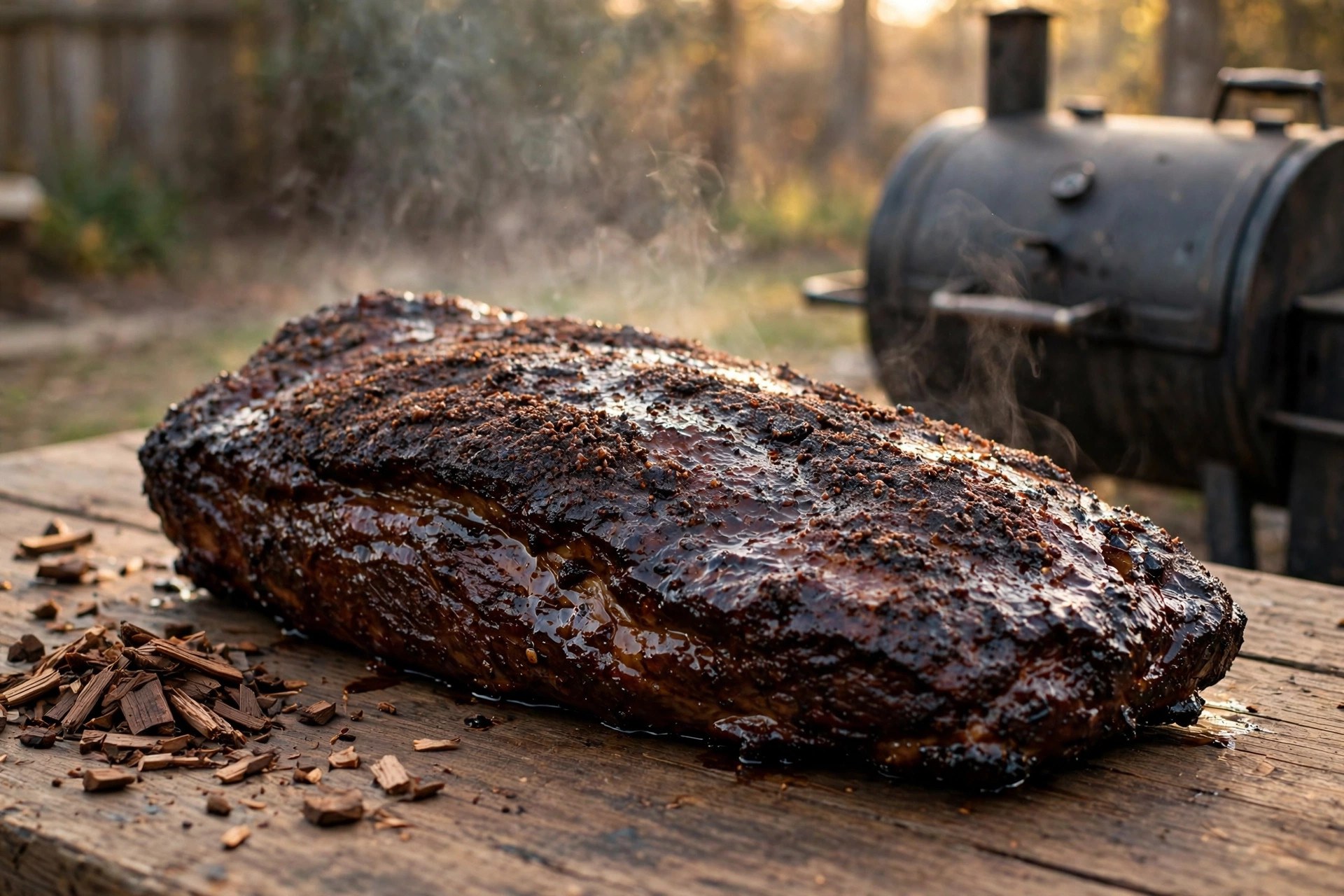
Notice the pattern: size and density drive everything. A fish fillet barely coasts because there’s nowhere for heat to hide. A 14-pound packer brisket is a thermal battery — it can climb a full 10°F after leaving the smoker, and a brisket wrapped in foil or butcher paper and held in a cooler will coast even longer because the wrap traps heat. The brisket-specific breakdown at Girls Can Grill’s carryover guide puts most briskets at 5–10°F of rise, with thicker packers and higher pit temps pushing the top of that range.
The Pull-Temperature Cheat Sheet
This is the table to tape inside a cabinet door. Target is the temperature you want to serve; pull is when the meat comes off the heat:
| Meat | Serve At (Target) | Pull At | Rest |
|---|---|---|---|
| Steak, medium-rare | 130–135°F | 120–125°F | 10 min |
| Steak, medium | 140–145°F | 130–135°F | 10 min |
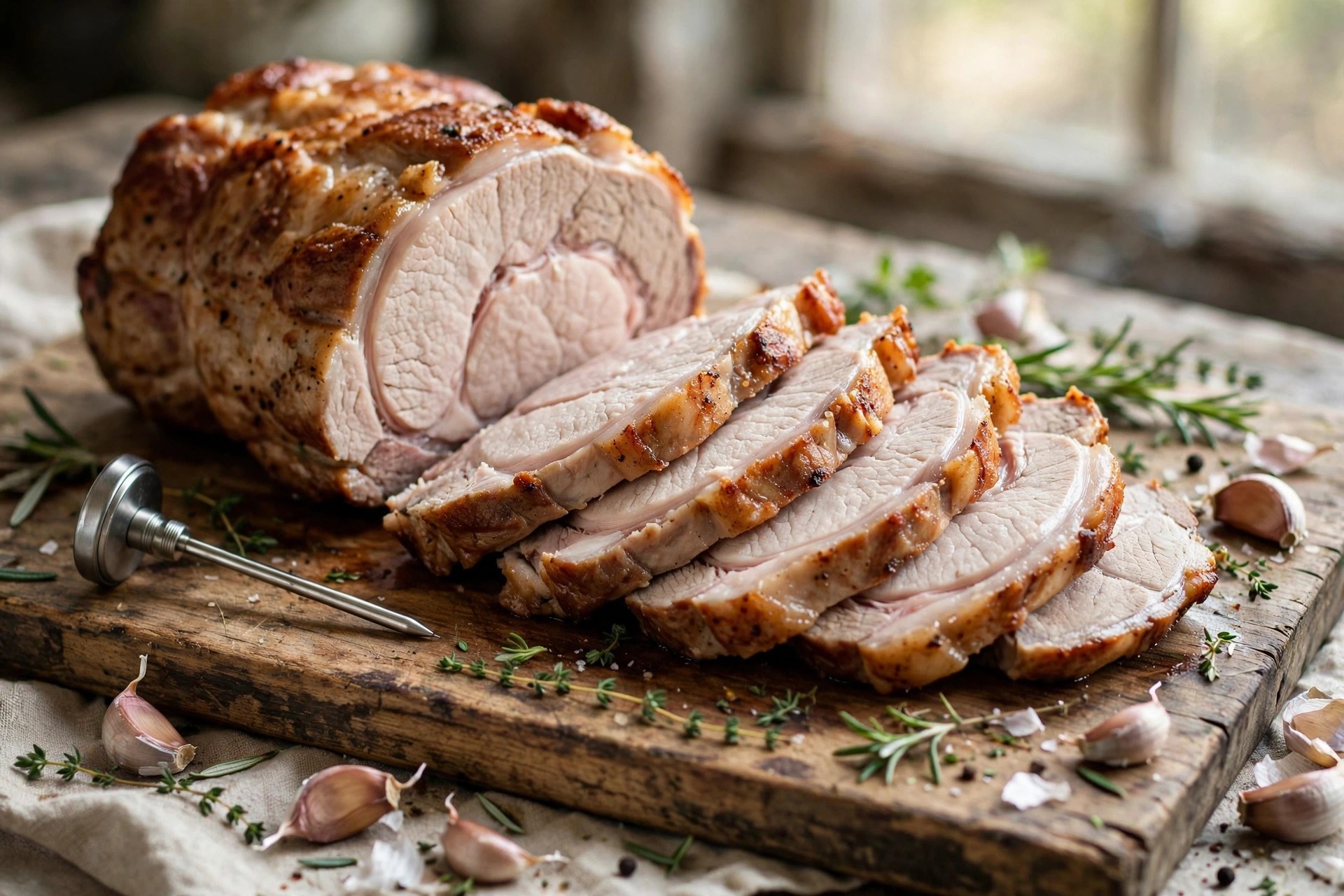
| Pork chops | 145°F | 135–140°F | 5–10 min |
| Whole chicken | 165°F | 155–160°F | 20 min |
| Brisket | 200–205°F | 195–200°F | 1–2 hrs |
| Pork butt (pulled pork) | 200–205°F | 195–200°F | 45–60 min |
| Baby back ribs | 200–203°F | ~195°F | 15–20 min |
Two notes. First, the brisket and pork butt numbers assume you’re pulling for tenderness, not a precise doneness — the 200°F+ range is where collagen has fully rendered, and carryover finishes the job while the meat rests. Our pulled pork temperature guide digs into why that window matters. Second, these are starting points, not gospel. The only way to calibrate your grill, your cuts, and your kitchen is a good thermometer and a few cooks of note-taking.
Carryover Cooking vs. Resting: Not the Same Thing
People use the words interchangeably, but they’re describing two different things happening during the same pause.
Carryover cooking is the temperature climb — heat migrating inward, raising the center temp. It’s physics, it happens whether you want it or not, and it’s done in roughly 5–20 minutes depending on the cut.
Resting is everything else the pause accomplishes: muscle fibers relax as they cool slightly, juices that were driven toward the center by the heat redistribute through the meat, and the surface dries a touch so the crust or bark stays crisp instead of steaming. Cut a steak the second it leaves the grill and juices flood the board; give it 10 minutes and they stay in the meat where they belong.
Resting times and carryover times overlap but aren’t equal. A brisket’s carryover climb finishes in the first 20–30 minutes, but pitmasters rest briskets for 1–2 hours because the long rest continues tenderizing and reabsorbing juices — that’s why our how long to rest brisket guide recommends holding, not just waiting. And if you’re planning to hold meat for a party, read our guide to keeping BBQ warm so the long hold doesn’t turn into overcooked mush.
Carryover Cooking and Brisket: Where It Matters Most
Brisket is where carryover cooking stops being a fun fact and becomes a make-or-break skill. A whole packer can weigh 12–16 pounds, cook for 12–14 hours, and climb 5–10°F after you pull it. Pull at 205°F because someone told you “brisket is done at 205” and carryover takes it to 212–215°F — dry, crumbly, overcooked.
The right move: start probing for tenderness around 195°F. When the probe slides into the flat like it’s going into room-temperature butter, pull it — even if the thermometer reads 197°F. Carryover and the long rest will carry it to the finish. Wrapping changes the math: a brisket wrapped in foil holds heat longer and coasts more than one wrapped in butcher paper, which coasts more than an unwrapped one. If you wrapped in foil, pull 2–3°F earlier than you would otherwise.
There’s a related trap worth knowing: the BBQ stall, where a brisket’s temperature plateaus around 150–165°F for hours. Impatient cooks crank the heat to push through it — which loads the exterior with extra energy and makes the eventual carryover spike bigger. Patience at the stall means a gentler carryover at the end.
The Mistakes That Blow Right Past Your Target Temp
- Cooking to the target instead of the pull temp. The #1 error. If you want to serve at 135°F, the thermometer should read 125–130°F when the meat comes off the heat. As the Chef’s Resource guide puts it: pull at your target and you’ve already missed the window.
- Resting in the hot pan. A cast-iron skillet holds a huge amount of heat and keeps searing the bottom of your steak while it “rests.” Move meat to a cutting board or a warm plate, never a cold metal tray that chills one side unevenly.
- Tenting too tightly. A loose foil tent keeps a big roast warm; a tight wrap traps steam and softens the crust you worked for. Tent loosely, or skip it for steaks and chops with a short rest.
- Trusting the grill’s built-in thermometer. Dome and lid thermometers can read 25–50°F off the grate temperature. A $15 instant-read in the meat is the only number that counts for pull timing.
- Slicing early “just to check.” Cutting to peek at doneness releases heat and juices at the worst moment. Trust the thermometer, wait the full rest, then slice.
- Forgetting carryover on the reheat. Warming up already-cooked meat adds its own small temperature climb — pull it a few degrees shy of serving temp there too.
Is Carryover Cooking Safe?
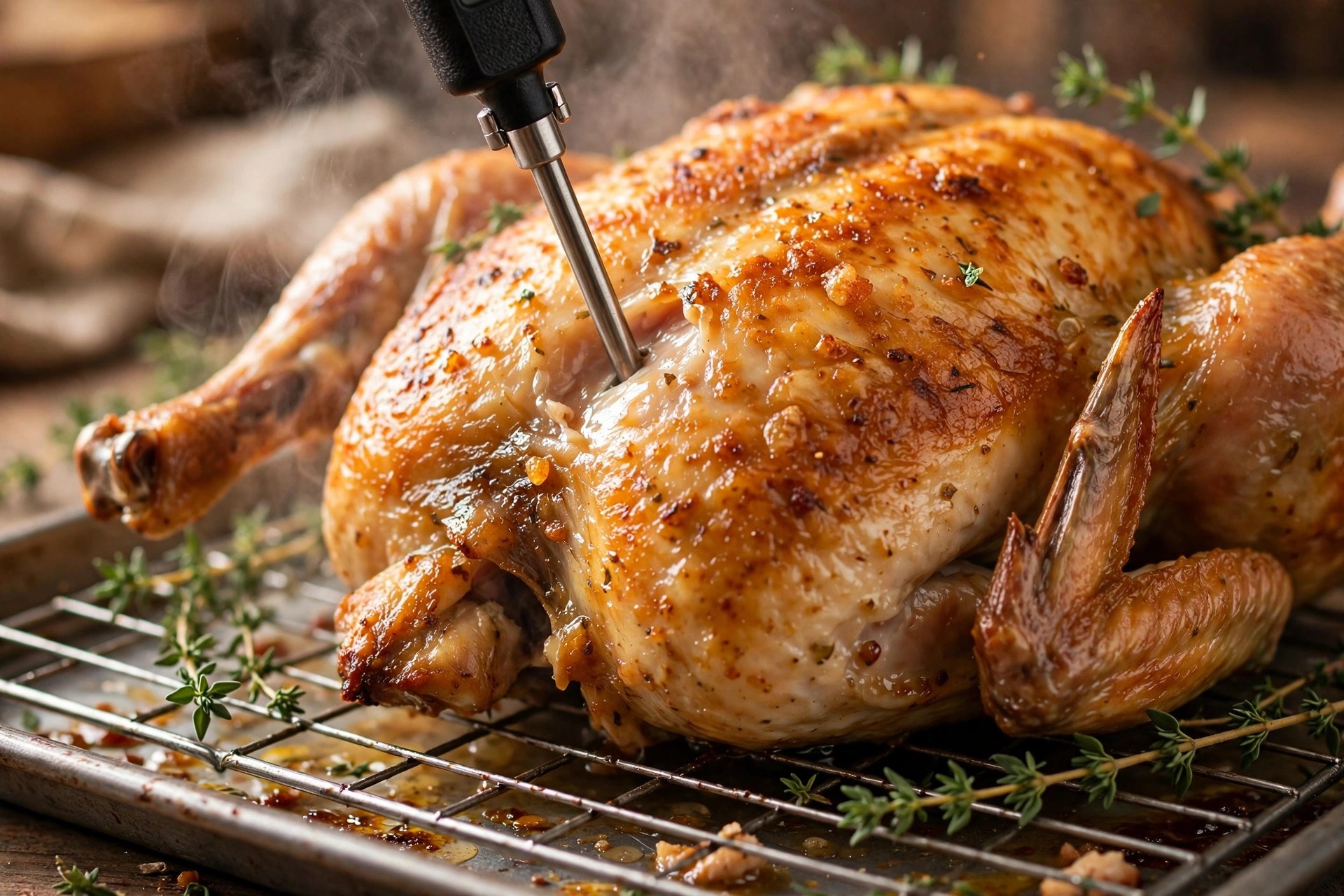
Yes — with one important boundary. Carryover cooking only moves heat that’s already in the meat; it can’t create doneness from nothing. For poultry, the USDA recommends 165°F throughout. Many experienced cooks pull chicken at 155–160°F and let carryover finish the climb to 165°F during the rest, which works if you verify 165°F on a thermometer before serving. If you’re unsure, just cook to 165°F and let it rest — a properly rested chicken at 165°F is still juicy. Our how to tell when smoked chicken is done and pork doneness temperature guides cover the exact targets.
The real food-safety angle is the danger zone, not carryover. Meat shouldn’t sit between 40°F and 140°F for more than 2 hours total. Carryover keeps meat above that zone during a normal rest, which is actually helpful — but a multi-hour hold needs to stay hot (above 140°F), not just warm.
FAQs About Carryover Cooking
How many degrees does carryover cooking add?
Typically 3–15°F depending on the cut. Thin steaks and fish add 2–5°F; thick steaks and pork chops add 5–8°F; large roasts add 10–15°F; briskets and pork butts add 5–10°F. Bigger, denser, and harder-seared means a bigger climb.
Does carryover cooking happen in the oven too?
Yes — it happens with every cooking method, not just grilling. A roast pulled from a 425°F oven has a hotter exterior than one pulled from a 225°F smoker, so oven roasts often coast more than smoked meats. The gentler the cooking method, the smaller the carryover.
Should you cover meat while it rests?
Loosely tent large roasts with foil to keep them warm over a 20–30 minute rest. Skip the tent for steaks and chops resting 5–10 minutes — trapped steam softens the crust. Never wrap tightly unless you’re deliberately holding the meat hot for serving later.
Can you use carryover cooking to finish undercooked chicken?
Don’t count on it. Carryover adds degrees, not guarantees — and poultry needs to reach 165°F throughout. Pull chicken no lower than 155°F, verify 165°F with a thermometer during the rest, and if it doesn’t get there, put it back on the heat.
Why does my brisket keep rising after I wrap it?
Wrapping in foil or butcher paper traps heat around the meat, slowing heat loss and extending the carryover climb. A wrapped brisket can rise 5–10°F after leaving the smoker. Compensate by pulling 2–5°F earlier than your target, especially with foil.
Your next step: on your very next cook, pull the meat 5–10°F below your target, set a timer for the rest, and watch the thermometer climb. One cook of seeing it happen will teach you more than any chart — and you’ll never serve an overshot steak again.
[…] outer layers push warmth toward the center. If you want the full breakdown of how that works, our guide to carryover cooking walks through it cut by […]
[…] real target on a whole bird is a split decision: pull when the breast hits 160–162°F and let carryover cooking carry it to 165°F during the rest, while the thighs coast into the 175–180°F zone on their own. […]