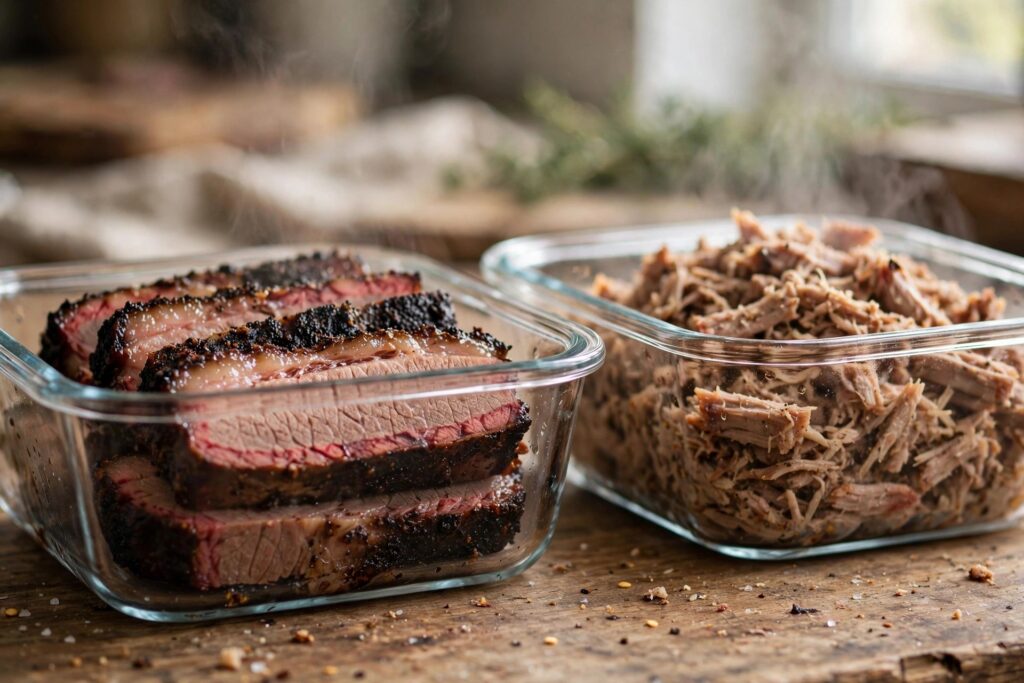
Smoked meat lasts 3 to 4 days in the fridge when stored at 40°F or below. That covers brisket, pulled pork, ribs, smoked chicken, and turkey. The clock starts the moment the meat drops into the danger zone, not when you pulled it off the smoker. Smoked fish is the exception — use it within 1 to 2 days.
Those numbers surprise a lot of backyard pitmasters. Smoking feels like preservation — our grandparents did it to keep meat edible for weeks, right? The problem is that modern hot-smoking is cooking with flavor, not curing. The smoke gives you taste and bark, but it doesn’t buy you a single extra day of safety beyond any other cooked meat.
Here’s the full breakdown: exactly how long each cut lasts, why the smoke doesn’t protect you, the 2-hour rule that matters more than anything, and what to do with a whole packer you can’t finish.
How Long Does Smoked Meat Last in the Fridge: The Numbers
The USDA’s rule for cooked leftovers is straightforward: eat or freeze them within 3 to 4 days. Smoked meat counts as cooked meat, full stop. The smoke, the rub, the low-and-slow magic — none of it changes the rule.
But not all smoked meats behave identically. Fatty cuts with intact bark hold up differently than pulled meat with a ton of surface area. Here’s what real-world experience plus food-safety guidance says for the most common barbecue:
| Smoked Meat | Fridge (40°F or below) | Freezer (0°F or below) |
|---|---|---|
| Brisket (whole, unsliced) | 3–4 days | 2–3 months at best quality |
| Brisket (sliced) | 3–4 days (dries out faster) | 2–3 months |
| Pulled pork | 3–4 days | 2–3 months |
| Pork or beef ribs | 3–4 days | 2–3 months |
| Smoked chicken | 3–4 days (use sooner if possible) | 2–3 months |
| Smoked turkey | 3–4 days | 2–3 months |
| Burnt ends | 3–4 days | 2–3 months |
| Smoked sausage | 3–4 days (some cured varieties hold a bit longer) | 2–3 months |
| Smoked fish | 1–2 days | 2–3 months |
A couple of notes on the table. Frozen meat stays safe indefinitely at 0°F — it never becomes dangerous in the freezer. But quality slides after about 2 to 3 months: freezer burn creeps in, bark goes soft, and moisture leaves. And smoked fish is in its own category. The FDA notes that seafood spoils faster than land meats, so treat smoked salmon or trout as a two-day food, not a four-day one.
Why Smoking Doesn’t Buy You Extra Shelf Life
Here’s the confusion. Centuries ago, smoking did preserve meat — cold smoke, heavy salt, weeks of drying. That process removed so much moisture that bacteria couldn’t survive. Modern barbecue smoking is nothing like that. You’re cooking at 225–275°F for hours, producing a juicy, moist product. That’s a cooked dinner, not jerky.
So what actually protects leftover barbecue? Nothing special. The same factors protect it as protect last night’s roast chicken:
- It was cooked through. A brisket that finished at 200°F+ had its surface bacteria destroyed. That’s real, and it’s the same protection any properly cooked meat has.
- It’s cold now. At 40°F or below, most bacteria grow very slowly. A few — like Listeria — can still creep along in the cold, which is why the four-day limit exists.
- It was handled cleanly. Every time bare hands, a dirty cutting board, or a used knife touches the meat, new bacteria arrive. That reset the clock faster than anything else.
And what about the smoke itself? Wood smoke contains phenols and acids that are mildly antimicrobial on the meat’s surface. Mildly. Think of it as a tiny head start, not a shield. Nobody serious about food safety treats smoked meat differently from grilled meat, and neither should you.
The 2-Hour Rule Matters More Than the Fridge
Most spoiled barbecue never had a chance — it lost the battle on the counter, not in the fridge. Bacteria multiply fastest between 40°F and 140°F, the zone the USDA calls the danger zone. Perishable food shouldn’t sit in it longer than 2 hours. On a hot day above 90°F — every summer cookout — that shrinks to 1 hour.
This is where resting your brisket fits in. A proper rest of 1 to 2 hours in a cooler or wrapped on the counter is safe and necessary. But if you rest for two hours, then slice, then leave the platter on the table for another two hours while everyone eats? You’ve spent four hours in the danger zone. The fridge can’t fix that.
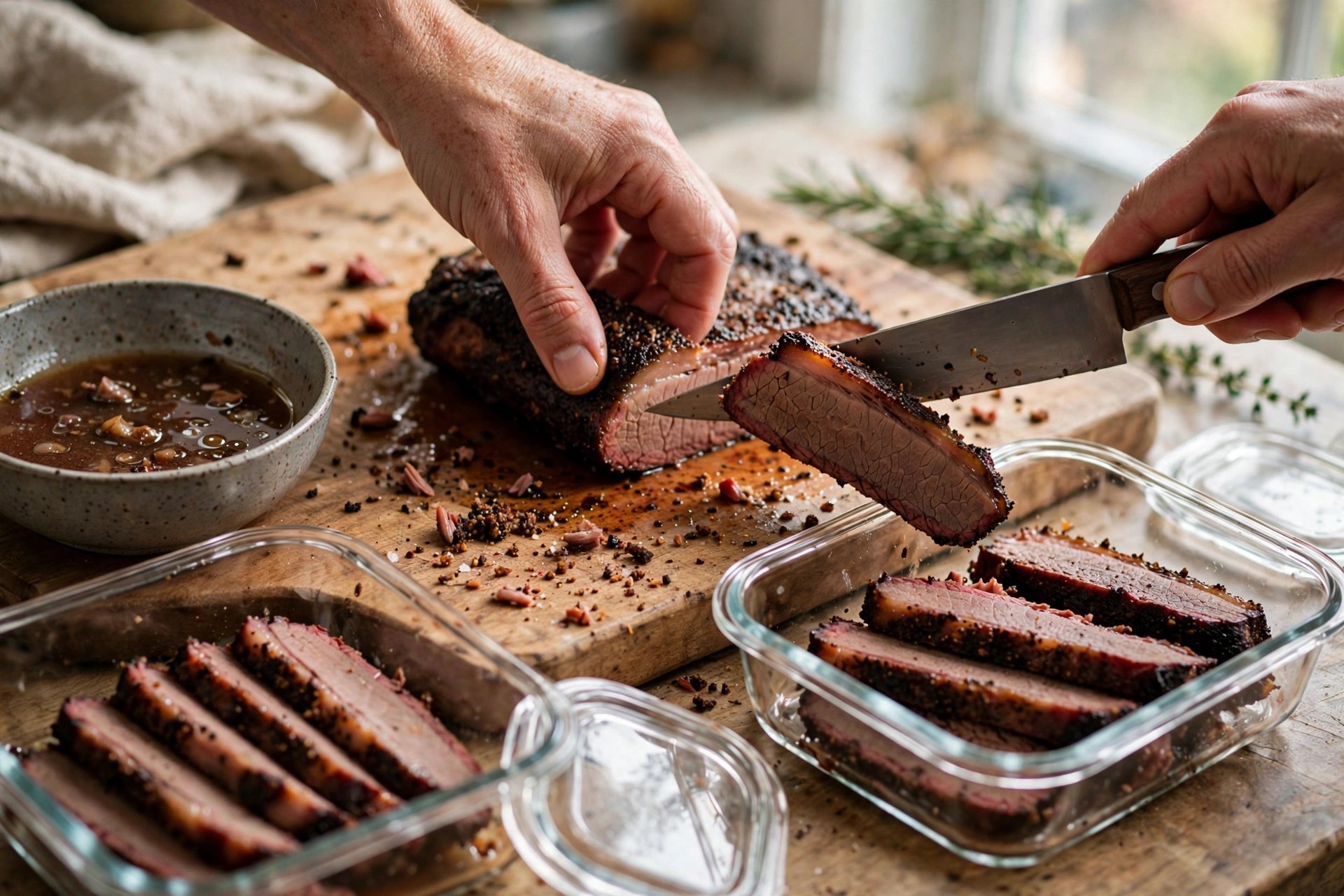
The practical version: decide what’s for tonight and what’s for later before you slice. Slice what you’ll eat, portion the rest, and get it into the fridge while it’s still warm. The USDA specifically says you don’t need to cool leftovers to room temperature first — putting warm food straight in the fridge is safe, as long as you portion it into shallow containers so it cools quickly.
Store It Right and the Full Four Days Actually Happen
Getting the full 3–4 days isn’t automatic. Sloppy storage shortens it. Here’s what keeps leftovers at their best the whole window:
- Portion into small, shallow containers. A whole 14-pound packer cools dangerously slowly in the fridge. Slice or pull what you won’t eat and pack it into containers no more than 2–3 inches deep. Shallow cools fast.
- Keep the juices. Brisket slices dry out sitting in bare air. Pour the collected juices over the meat before sealing. For pulled pork, the rendered fat in the pan is liquid gold — keep it.
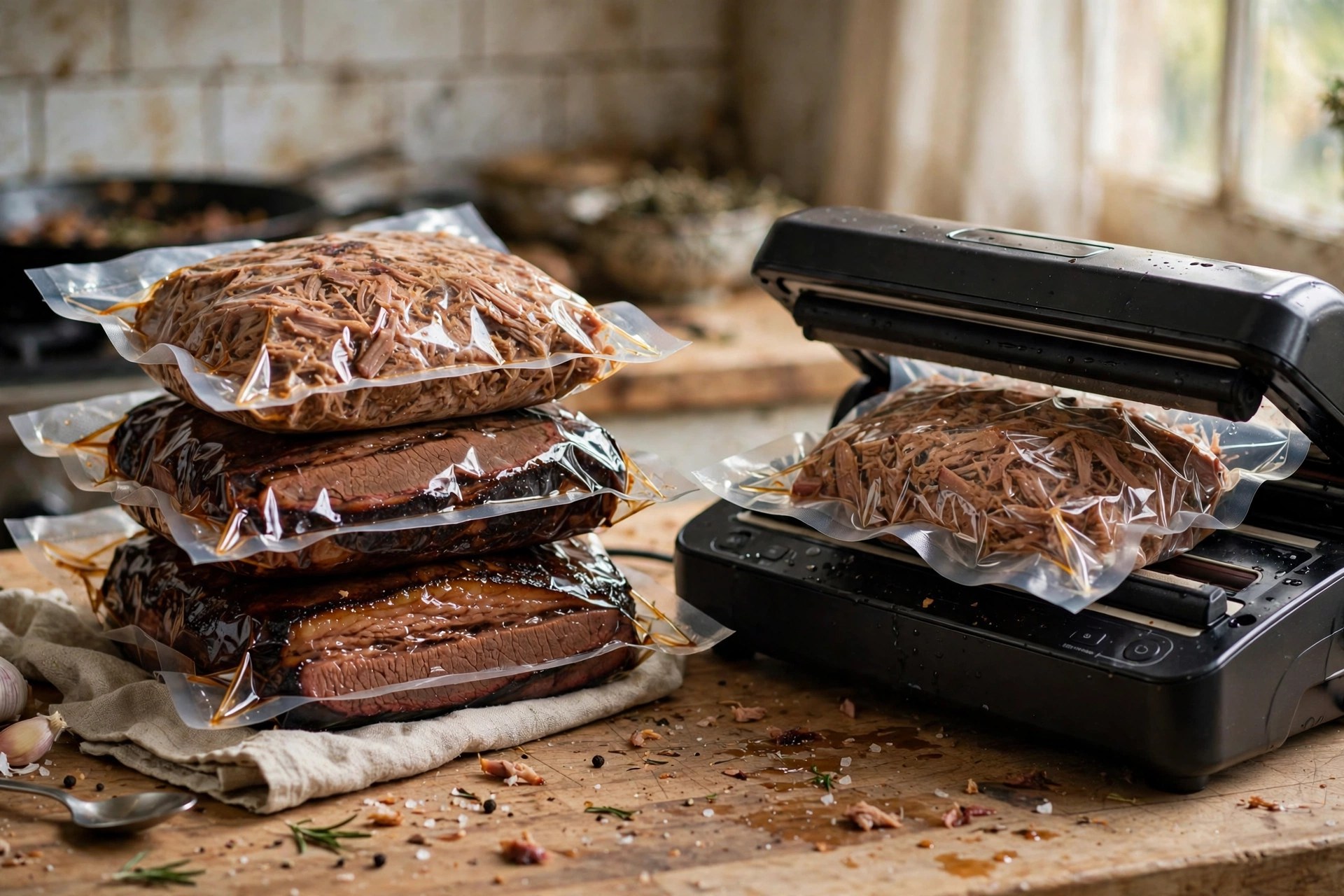
- Seal it airtight. Oxygen is the enemy of quality (and it feeds some spoilage bacteria). Vacuum sealing is the gold standard; tight plastic wrap pressed right against the meat plus a zip-top bag is nearly as good; loose foil over a plate is the worst common option.
- Label the date. A strip of tape with “smoked Saturday” removes all guessing by Wednesday. Your future self will thank you.
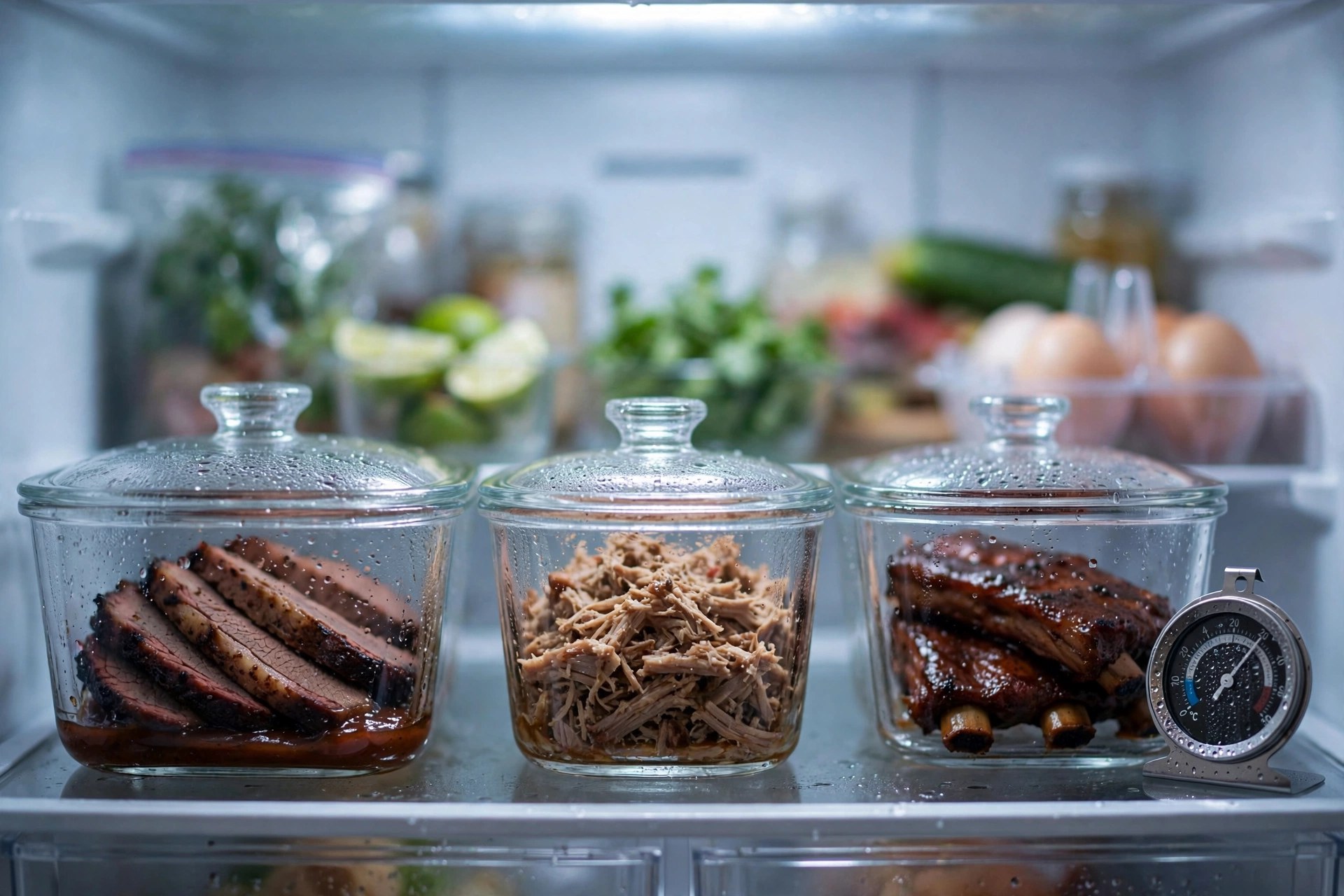
- Set the fridge to 38°F. The limit is 40°F, but fridges cycle. Setting 38°F gives you a buffer. Use a cheap fridge thermometer — many fridges run 3–5 degrees warmer than the dial claims.
One more tip from experience: store brisket unsliced if you can. A whole flat or a big uncut chunk loses moisture far slower than pre-cut slices. Slice only what you’re about to eat. Your slicing technique matters at serving time, but at storage time, less cutting is better.
Signs Your Smoked Meat Has Turned
Smoked meat smells strong even when it’s perfect — don’t let that fool you either way. You need to know what wrong smells and looks like:
- Sour or rancid smell. Good leftover BBQ smells smoky and meaty. A sour, tangy, or “off” note means spoilage bacteria have moved in. Trust your nose.
- Slimy surface. If the bark feels slick or sticky under your fingers, that’s a bacterial film. Wash it off and it comes right back — that’s the test.
- Gray or green patches. Some graying on the surface of beef is normal oxidation. Green, blue, or white fuzzy spots are mold. Cut it away? No — toss the piece.
- Mushy texture. Meat that’s breaking down into mush has been colonized. Even reheating won’t make it right.
- Bloated packaging. If a vacuum bag puffed up like a balloon, gases from bacterial growth inflated it. Don’t open it — discard it.
And the golden rule, straight from food-safety agencies: when in doubt, throw it out. A brisket costs less than a hospital visit. If you can’t remember which day it went into the fridge, or it smells even slightly wrong, don’t gamble.
Freezing: The Real Way to Beat the Clock
If you smoked a whole packer for four people, you already know: nobody’s finishing it in four days. Freezing is your pressure valve. At 0°F, bacterial growth stops completely. The meat stays safe as long as it stays frozen — quality is the only thing on a timer, and you’ve got 2–3 months before it declines noticeably.
Freeze on day one or two, not day four. Freezing doesn’t reverse anything that’s already growing. Portion into meal-sized amounts — a pound or two per bag — so you can thaw exactly what you need. Double-wrap: tight plastic wrap against the meat, then a freezer bag with the air squeezed out, or better, vacuum seal it.
Thaw in the fridge, never on the counter. A one-pound bag of pulled pork thaws overnight; a dense brisket flat can take a full day. Once thawed, treat it like fresh leftovers: use within 3–4 days. When you’re ready to eat, reheat brisket gently to 165°F with a splash of broth, and do the same for pulled pork and ribs — low and slow wins again, just like the original cook.
Frequently Asked Questions
How long does smoked brisket last in the fridge?
Three to four days at 40°F or below, stored in an airtight container. Whole, unsliced brisket keeps quality better than sliced, since less surface area means less moisture loss and less bacterial exposure. Freeze it by day two if you won’t finish it in time.
Can I eat smoked meat after 5 days in the fridge?
Don’t. The USDA’s limit is four days, and spoilage bacteria can make food unsafe without any visible signs. A few bacteria, including Listeria, grow even at refrigerator temperatures. The risk isn’t worth it — freeze leftovers you can’t eat by day four.
Does smoked meat last longer than grilled meat?
Not in any meaningful way. The mild antimicrobial effect of smoke compounds on the surface is real but small. Food-safety agencies treat smoked, grilled, and roasted meats identically: 3–4 days refrigerated, reheat to 165°F.
How long can smoked meat sit out before it goes bad?
Two hours at room temperature, one hour if it’s above 90°F. After that, bacteria in the danger zone (40–140°F) have had enough time to make the food unsafe — and reheating won’t destroy all the toxins they may have produced.
Is it safe to put warm smoked meat in the fridge?
Yes. The USDA says to refrigerate leftovers as soon as possible, even if steam is still coming off them. Divide big cuts into shallow portions first so the center cools quickly instead of sitting warm inside a giant chunk.
So here’s your move after the next cook: decide tonight’s portion, slice the rest into meal-sized pieces, seal them with their juices, and date the containers. Four days of great leftovers — or freeze half on day one and you’ve got barbecue ready for a random Tuesday. That’s the whole game.