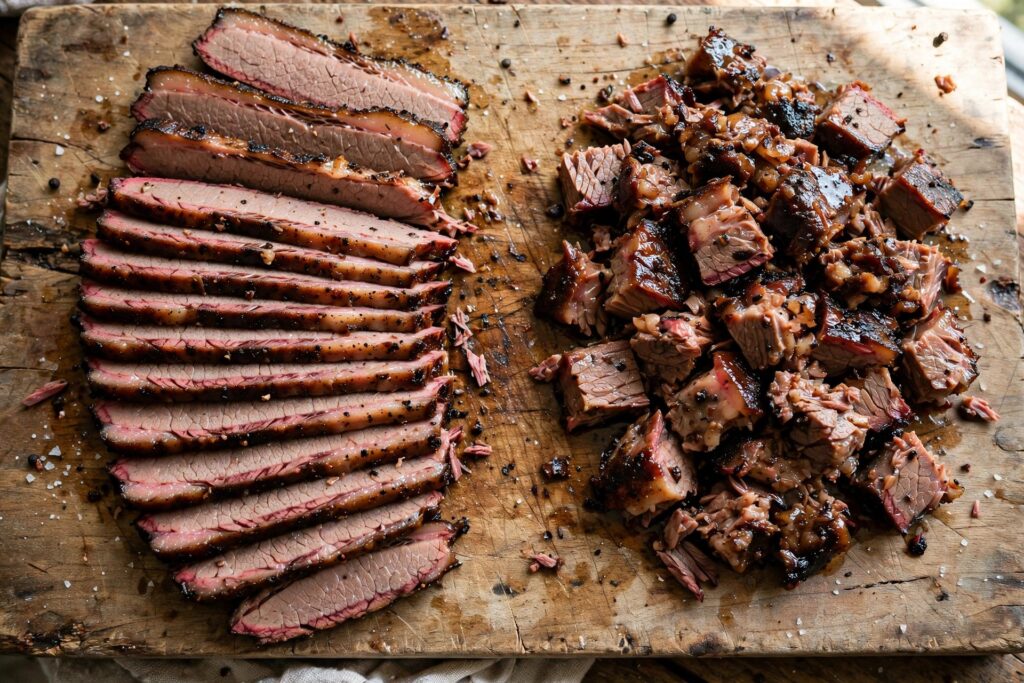
The difference between sliced and chopped brisket comes down to which muscle you’re cutting. The lean flat gets sliced into neat, even cuts for plated servings, while the fatty point gets chopped into bite-size pieces for sandwiches, tacos, and big crowds. Same brisket, two cuts, two very different eating experiences.
This isn’t really a debate with a winner. Chopped and sliced brisket come from the same animal, the same smoker, and often the same brisket. The question is never “which is better” — it’s “which cut do I have in front of me, and how am I serving it?” Get that right and both versions are outstanding. Get it wrong and you’ll be sawing at a point that won’t slice or chopping a flat that deserved better.
The Short Answer: It’s About the Muscle, Not the Mood
A whole packer brisket is two muscles joined by a thick seam of fat: the flat and the point. Everything about the slice-vs-chop decision flows from their differences. BBQ Host’s chopped vs sliced guide frames it the same way — the technique follows the cut, not the other way around.
| The Flat | The Point | |
|---|---|---|
| Shape | Rectangular, uniform thickness | Triangular, thick and irregular |
| Fat | Lean, with a fat cap on one side | Heavily marbled throughout |
| Grain | Straight, easy to read | Less defined, runs in odd directions |
| Best cut style | Sliced against the grain | Chopped or shredded |
| Flavor profile | Deep, beefy, full-flavored | Juicier, richer, milder |
| Ideal internal temp | 195°F, probe-tender | 195–210°F (203°F is the sweet spot) |
The flat’s even grain and lean texture reward precise slicing. The point’s marbling and odd angles make clean slices nearly impossible — but chop it up and that same fat turns into the juiciest sandwich meat you’ve ever had. If you want to see exactly where the two muscles separate, our point vs flat breakdown walks through the seam cut step by step.
When to Slice Brisket (and How to Do It Right)
Slice when presentation matters: a plated dinner, a holiday table, a barbecue spread where the brisket is the centerpiece. Thin, even slices of flat — showing off that dark bark edge and pink smoke ring — are the most impressive-looking way to serve brisket. Sliced brisket is also the move when you want each bite to taste clean and beefy, unmasked by sauce.
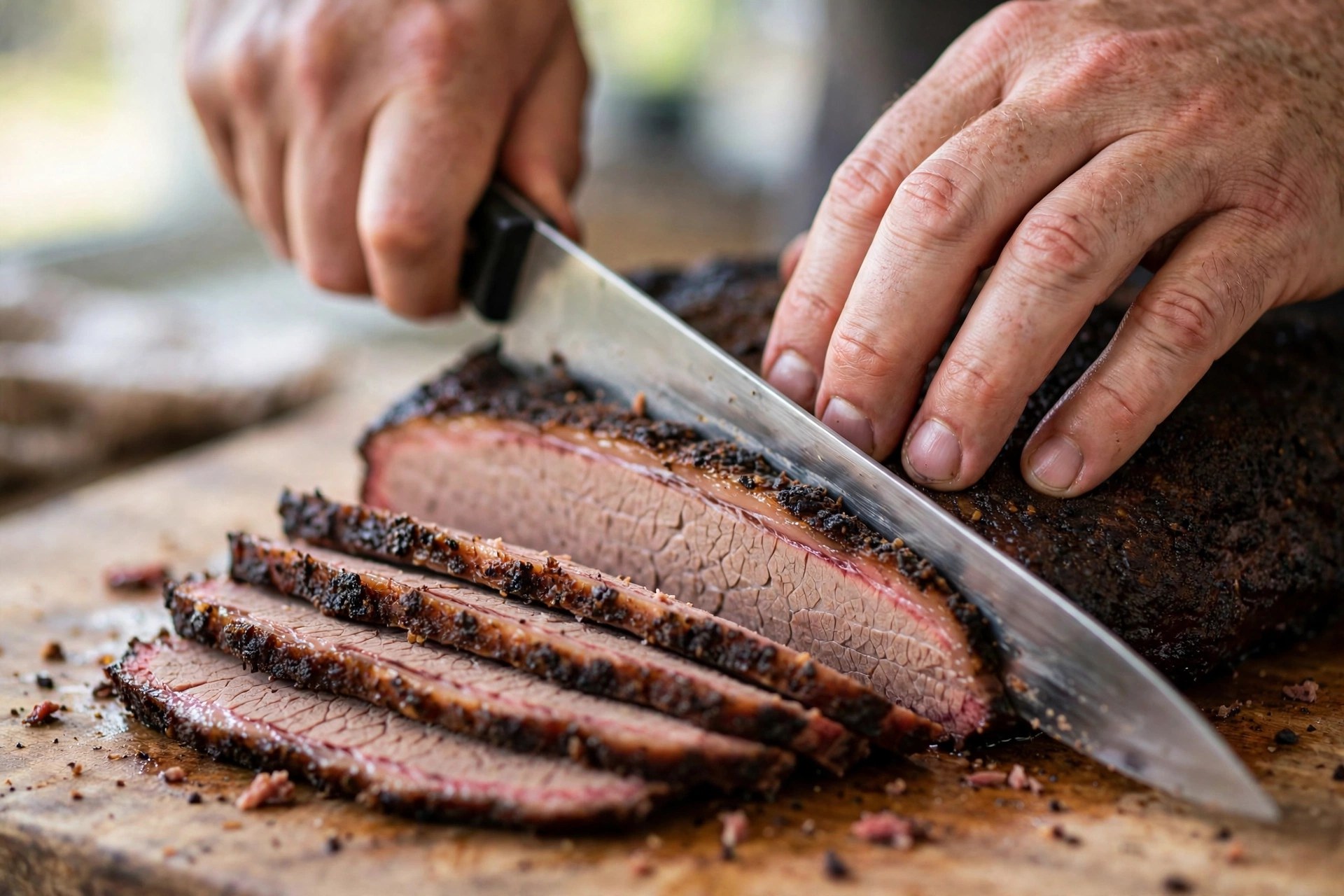
Here’s how to get it right:
- Rest first, always. Rest the brisket at least one hour — up to three — before the knife comes out. Cutting early floods the board with juices that should be in the meat.
- Find the grain. Look at the long muscle fibers running along the flat and position your knife perpendicular to them. Our full slicing guide covers this in detail.
- Cut ¼ to ½ inch thick. Competition-style slices run pencil-thick; a hearty ½-inch slice suits a home table. Either way, every slice must cross the grain at 90 degrees — that’s what makes a lean cut eat tender.
- Use a long, sharp knife. A 12-inch slicer or a sharp chef’s knife, drawn in smooth strokes. Sawing back and forth tears the meat and smears the bark.
The temperature window matters here more than anywhere else. Pull the flat at 195°F internal — probe-tender but still firm enough to hold a slice. Let it creep past 200°F and the flat starts falling apart on the board, which looks rustic but won’t win you any compliments.
When to Chop Brisket (and How to Do It Right)
Chop when you’re feeding a crowd, filling sandwiches, or working with the point. Chopped brisket piles high, looks generous on a plate, and — because it’s usually mixed with a little sauce — stays juicy through a long buffet line. Tacos, nachos, baked potatoes, and chili all start with chopped point.
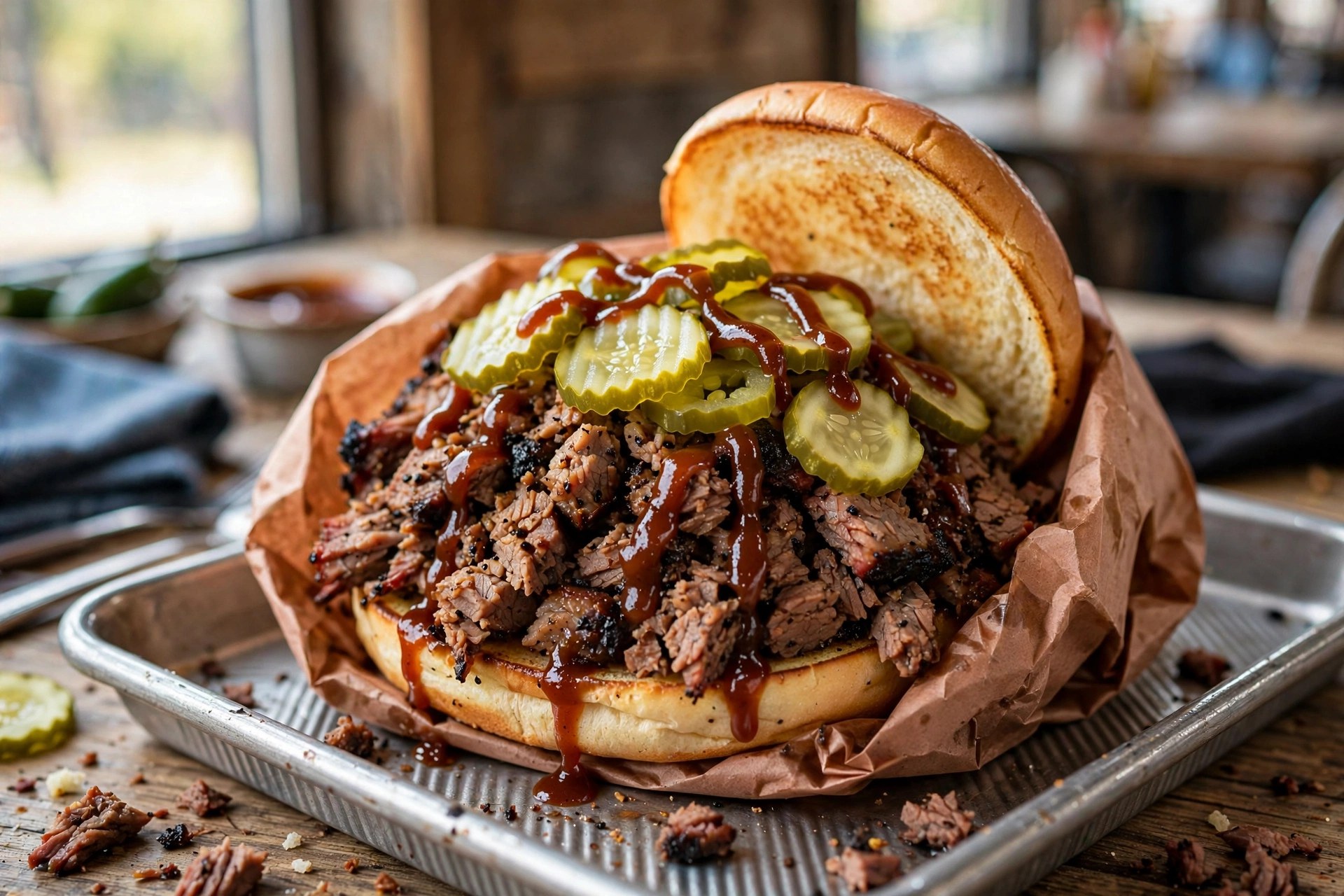
The chopping process:
- Separate the point from the flat after the cook (or cook them separately from the start).
- Cut the point into thick sections, cutting against the grain — the point’s grain is less obvious than the flat’s, so take a moment to read it first.
- Rotate the sections 90 degrees and chop into bite-size pieces, roughly ½ to ¾ inch.
- Pick out any large unrendered fat or gristle as you go. This is the hidden advantage of chopping: it lets you quality-control every bite.
- Toss with warm barbecue sauce or a splash of beef broth to keep everything moist.
One pitmaster trick worth stealing: add something acidic. The point is rich, and a little apple cider vinegar, a squeeze of lime, or the tang of a vinegar-based sauce balances the fat beautifully. The Bearded Butchers recommend cooking the point to 203°F for chopping — hot enough that the fat fully renders but the meat still holds a chop instead of shredding into mush.
Sliced vs Chopped Brisket: Side-by-Side Comparison
Here’s the full picture in one place:
| Sliced Brisket | Chopped Brisket | |
|---|---|---|
| Cut used | Flat | Point |
| Texture | Firm, tender slices with a clean bite | Soft, juicy, irregular pieces |
| Flavor | Beefier and more pronounced | Richer and milder; takes sauce well |
| Best serving | Plated dinners, formal spreads | Sandwiches, tacos, buffets, chili |
| Serving size (cooked) | ½ pound per person | ⅓ pound per person (piles look generous) |
| Skill required | Higher — grain reading, knife work, temp control | Lower — forgiving and hard to mess up |
| Leftover use | Sandwiches, hash, brisket grilled cheese | Chili, nachos, baked potatoes, burnt ends |
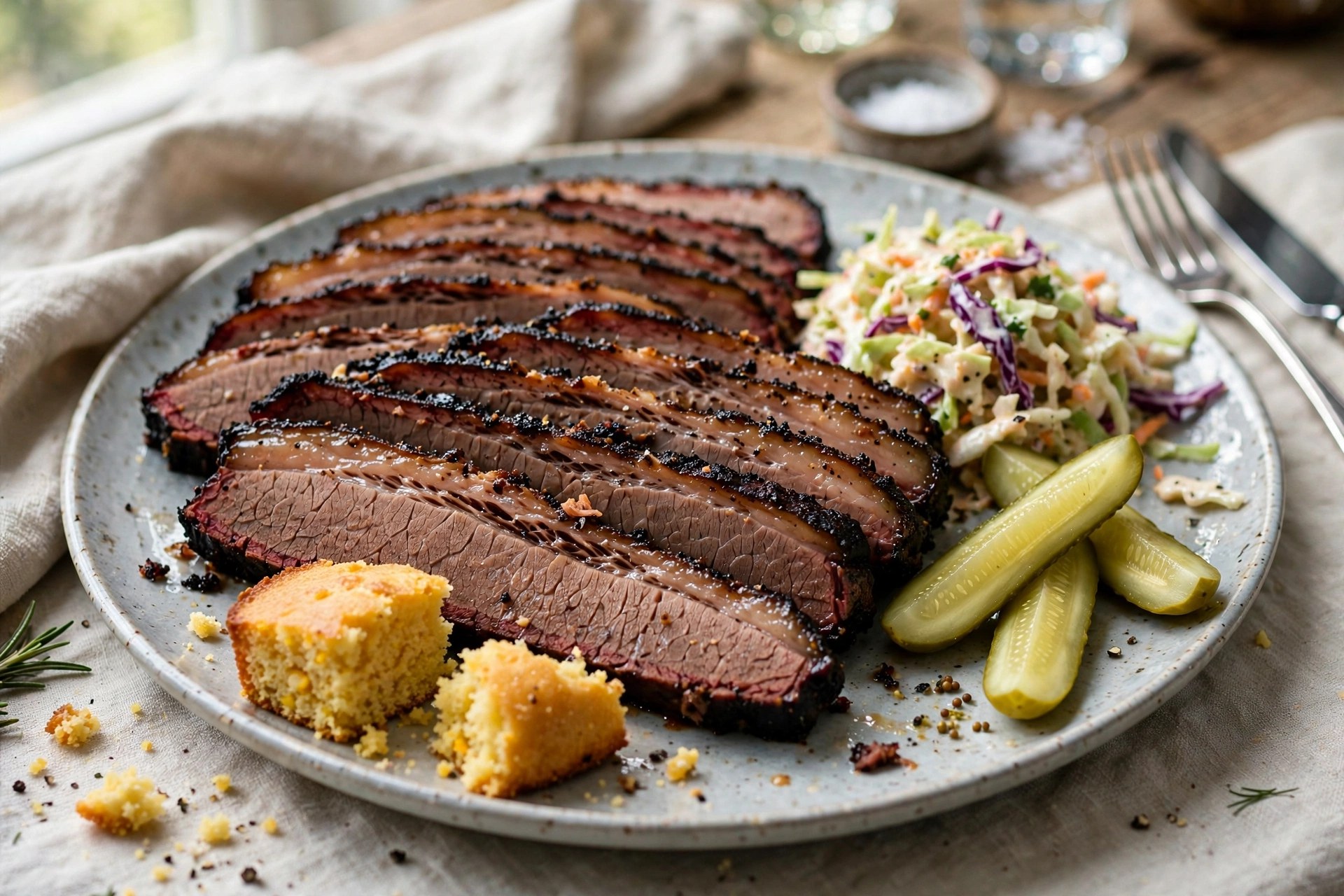
What to Buy and How Much to Serve
Your shopping list depends on which style you’re after. A whole packer (10–16 pounds) gives you both muscles and both options — slices from the flat, chopped from the point. Buying just what you need is cheaper and simpler if you’ve already decided:
- For slicing: buy the flat, or a whole packer. Butchers often charge a premium for the flat alone because it’s the more popular retail cut.
- For chopping: buy the point (ask your butcher — it’s sometimes labeled “deckle”), or a whole packer and chop the point after the cook.
On quantities, brisket shrinks. A packer loses 30–40% of its raw weight to trimming and rendering, so plan on ½ pound of raw brisket per person, which lands you about ⅓ pound cooked. Chopped brisket stretches a little further on the plate — the irregular pieces pile high and look generous — so you can lean toward ¼ to ⅓ pound cooked per person for sandwiches. Our brisket-per-person guide has the full math for parties and catering.
Temperature: The Part Most People Get Wrong
The single biggest reason briskets disappoint has nothing to do with slicing or chopping — it’s pulling the meat at the wrong temperature. The two muscles finish at different points, and that gap is exactly why so many pitmasters separate them:
- Flat (for slicing): pull at 195°F internal, probe-tender. Go much higher and it won’t slice cleanly.
- Point (for chopping): cook to 195–210°F; 203°F is the sweet spot where fat fully renders and the meat chops into juicy pieces instead of shredding.
- Rest: minimum 1 hour, up to 3, wrapped in a dry cooler. Slicing or chopping early is the fastest way to dry out perfect meat.
- Carryover: the meat keeps climbing 5–10°F off the heat, so factor that in before you call it done. Our carryover cooking explainer shows why pulling “a little early” is usually right.
If you’re cooking a whole packer and want both styles, the standard play is: smoke to 165°F, separate the point from the flat, wrap the flat and finish it to 195°F for slicing, and let the point ride to 203°F for chopping. Two muscles, two targets, one cook.
Can You Serve Both? Getting the Best of Both Worlds
You don’t have to choose. A whole packer brisket naturally gives you both styles — and honestly, that’s how most great barbecue spreads work. Slice the flat for the platter, chop the point for sandwiches, and let guests pick their favorite. The two textures on one table actually make each other look better: the neat slices show off your knife skills, while the chopped pile promises pure comfort.
If you’re going the both-styles route, plan the cook around the split:
- Smoke whole to 165°F, then separate the point from the flat along the fat seam.
- Wrap the flat and finish it to 195°F for slicing — rest it a full hour before carving.
- Return the point unwrapped and take it to 203°F for chopping, or cube it for burnt ends if you want a showstopper.
- Slice and chop at serving time, not before. Pre-cut meat dries out fast on a buffet.
A 14-pound packer yields roughly 5–6 pounds of cooked meat — enough for 12–15 guests eating both styles. Put the sliced flat on a wooden board at one end of the table and the chopped point in a warm pan at the other, with buns, pickles, onions, and sauce in the middle. It looks like a feast because it is one.
Sliced vs Chopped Brisket FAQs
Can you slice the point?
Technically yes, but it’s not worth it. The point’s irregular shape and undefined grain make clean slices nearly impossible, and its high fat content means slices eat greasy rather than tender. Chop or shred the point — that’s what it’s built for.
Can you chop the flat?
You can, but you’ll get a drier result. The flat is lean, so chopped flat tastes noticeably less juicy than chopped point and doesn’t carry sauce as well. If the flat is all you have, chop it and toss it generously with warm sauce or broth.
Which is juicier: sliced or chopped brisket?
Chopped brisket usually tastes juicier, because it comes from the fattier point and is typically mixed with sauce. But a properly cooked, properly rested flat sliced against the grain can be remarkably juicy too — juiciness is about technique, not just the cut.
Which is better for feeding a crowd?
Chopped. It looks abundant on a plate, works in sandwiches and tacos that guests can assemble themselves, and it’s far more forgiving — temperature and knife skills matter less. Plan about ⅓ pound of cooked chopped brisket per person.
Does chopping hide a bad brisket?
Partly — and that’s a legitimate strategy. An overcooked or slightly dry flat makes a fine chopped sandwich when mixed with sauce, while it would be a disappointing slice. But chopping can’t fix undercooked, tough meat; that needs more time in the smoker, not a different knife.
Your next step: decide how you’re serving before you buy. Sandwiches and a crowd? Get the point (or a packer) and plan to chop. A plated dinner where the brisket is the star? Get the flat and practice reading the grain. Match the muscle to the menu, and the slice-vs-chop question answers itself.
Leave a Reply