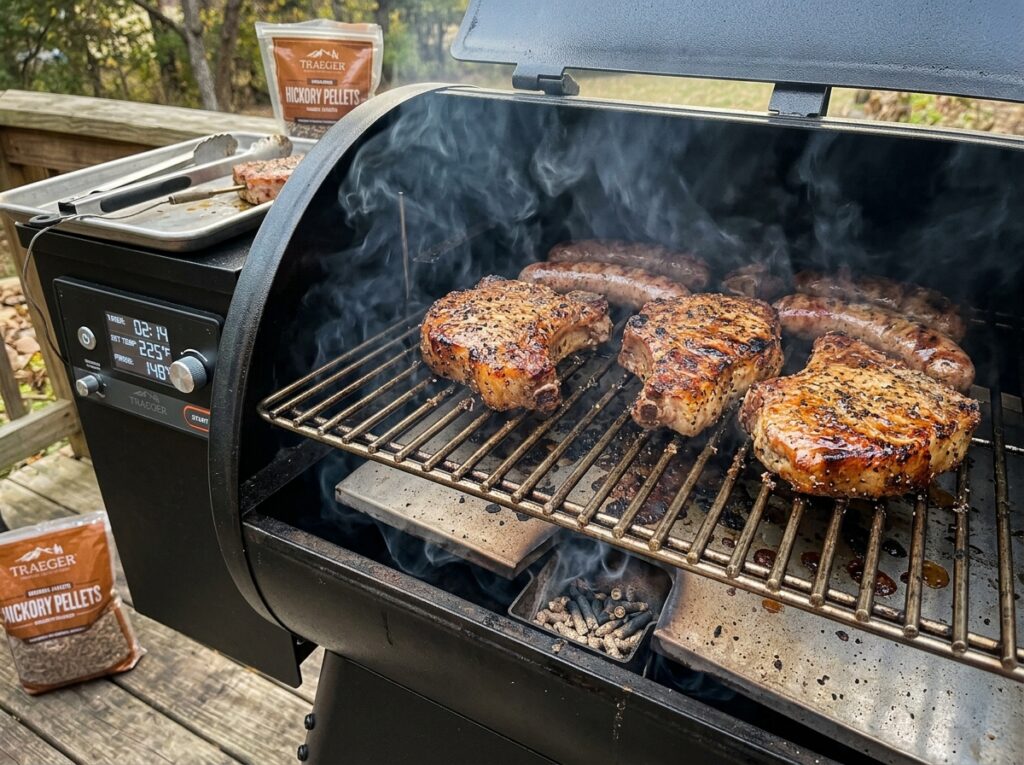
A pellet grill sold every 3 seconds during last year’s Memorial Day weekend. That single stat tells you how mainstream these cookers have become — and how confusing the buying process can get when dozens of brands scream for your attention.
Here’s the thing. You don’t need the most expensive pellet grill. You don’t need the one with the flashiest WiFi app. You need the one that fits your backyard, your cooking style, and your budget. That’s exactly what this guide helps you figure out.
I’ve spent years testing, comparing, and talking to pitmasters about what actually matters in a pellet grill versus what’s just marketing noise. Whether you’re a weekend warrior smoking your first rack of ribs or a seasoned cook who wants better temperature control, you’ll find clear, no-nonsense answers here.
What Exactly Is a Pellet Grill and Why Do People Love Them?
If you’ve never used one, a pellet grill can feel like a mystery wrapped in steel and smoke. So let’s break it down simply.
A pellet grill burns compressed hardwood pellets — tiny cylinders made from sawdust — as fuel. An electric auger feeds pellets from a hopper into a fire pot, where they ignite. A fan circulates heat and smoke around your food, much like a convection oven, except everything picks up real wood-fired flavor along the way.
The magic? Temperature control. You set a dial (or tap your phone), and the grill holds that temperature within a few degrees. No babysitting a charcoal fire. No wrestling with vents at 2 a.m. during a brisket cook. The grill does the work.
That’s why pellet grills have exploded in popularity. They give you the smoky flavor of a traditional smoker with the convenience of a gas grill. You can smoke a pork butt low and slow at 225°F, then crank it up to 450°F to sear steaks — all on the same machine. If you’ve been debating between a gas grill and a smoker, a pellet grill sits right in the sweet spot between both.
How I Evaluated Each Pellet Grill
Before I throw recommendations at you, let’s talk about what actually matters. Because specs on a product page can be misleading, and a grill that looks perfect online might frustrate you the first weekend you use it.
Temperature Range and Accuracy — Can it hold low temps (180–225°F) for smoking without wild swings? Can it reach high temps (450°F+) for searing? The best pellet grills stay within ±5°F of your set temperature. Cheaper ones can swing 25°F or more, and that inconsistency shows up in your food.
Build Quality and Materials — Thick steel walls retain heat better and last longer. Thin sheet metal warps over time, leaks smoke, and rusts faster than you’d expect. I paid close attention to gauge thickness, paint quality, and how solid the grill felt when you pushed on it.
Cooking Area — This isn’t just about square inches. It’s about usable space. Can you fit a full packer brisket without it touching the walls? Can you add a second rack of ribs without blocking airflow? I looked at both primary and secondary cooking surfaces.
Ease of Use — How long does startup take? Is the ash cleanout system convenient or a nightmare? Can you load pellets without spilling half the bag? Small details matter a lot over months of regular use.
WiFi and Smart Controls — Nearly every mid-range and premium pellet grill now offers WiFi connectivity. But there’s a huge difference between an app that actually works reliably and one that loses connection every ten minutes.
Value — Not “cheapest price,” but what you actually get for every dollar spent. A $500 grill with great temp control and solid build can outperform a $1,200 grill with gimmicky features.
I also factored in real customer feedback, warranty terms, and brand reputation for customer service. Because a five-year warranty means nothing if the company takes three weeks to respond to your email.
Best Pellet Grills Worth Your Money in 2025
Traeger Ironwood XL — Best Overall
Traeger practically invented the pellet grill back in 1985, and the Ironwood XL shows why they’re still considered the gold standard by many backyard cooks. The D2 drivetrain uses a variable-speed auger and fan to maintain temperature within ±5°F, and the Wifire app lets you monitor and adjust your cook from anywhere.
What sets the Ironwood apart from Traeger’s cheaper Pro series is the double-wall insulation. It locks in heat and smoke, which means better fuel efficiency and more consistent results in cold weather. If you live somewhere with chilly winters and still want to smoke a turkey in December, this matters more than you’d think.
The cooking surface gives you roughly 885 square inches — enough for six racks of ribs or two whole briskets side by side. The Super Smoke mode pumps extra smoke at low temperatures, which is exactly what you want for brisket, pork butt, or salmon.
At around $1,500–$1,700, it isn’t cheap. But if you cook frequently and want a grill that’ll perform consistently for years, the Ironwood XL earns its price tag. The build quality feels premium, the app works reliably, and temperature recovery after opening the lid is impressively fast.
Who it’s best for: Serious home cooks who grill or smoke at least twice a week and want rock-solid consistency.
Recteq RT-700 (Bull) — Best Bang for the Buck
Recteq (formerly REC TEC) has built a cult following for one reason: they deliver premium performance at mid-range prices. The RT-700, nicknamed “The Bull,” is their flagship, and it punches well above its weight class.
The PID controller keeps temperatures tight, and the stainless steel build is unusually robust for a grill in the $1,200 range. Most competitors at this price use painted carbon steel, which starts showing wear after a couple of years. The RT-700’s stainless construction feels like it belongs on a grill costing twice as much.
You get 702 square inches of main cooking space (plus an upper rack), WiFi control through a solid app, and pellet hopper capacity that won’t leave you refilling mid-cook. The horn-shaped handles give it a distinctive look that’s either charming or ridiculous depending on your taste — but they’re sturdy, and that’s what counts.
One genuine weak point: the high-temp searing performance. It reaches about 500°F, which is respectable, but if you want those aggressive char marks on a ribeye, you might still reach for a separate charcoal setup or a kamado grill. For everything else — smoking, roasting, baking, everyday grilling — the RT-700 is outstanding.
Who it’s best for: Buyers who want near-premium quality without paying premium prices.
Weber SmokeFire EX6 (2nd Gen) — Best for Weber Loyalists
The original SmokeFire launch in 2020 was rough. Flare-ups, auger jams, and frustrated customers dominated early reviews. Weber listened, redesigned critical components, and the second-generation SmokeFire is a genuinely different grill.
The EX6 gives you 1,008 square inches of cooking space and reaches a legitimate 600°F, making it one of the few pellet grills that can truly sear. Weber’s Flavorizer bars — a carryover from their gas grill line — sit above the fire pot to vaporize drippings and reduce flare-ups, which was the biggest fix from Gen 1.
The Weber Connect app provides step-by-step cooking assistance, including flip and serve notifications based on internal food temperature. For someone newer to smoking and grilling, this guided approach takes a lot of guesswork out of the process.
Build quality is strong (it’s Weber, after all), and their customer service reputation remains one of the best in the outdoor cooking industry. The price sits around $1,200–$1,400 for the EX6, which is competitive given the cooking space and searing capability.
The trade-off? The hopper holds only about 22 pounds of pellets, which is smaller than competitors at this level. For long overnight cooks, you might need to top it off.
Who it’s best for: Grillers who want strong searing performance and trust the Weber brand.
Camp Chef Woodwind WiFi 36 — Most Versatile
If versatility is your top priority, Camp Chef probably deserves your attention more than any other brand. The Woodwind WiFi 36 pairs a full-size pellet grill with Camp Chef’s Slide and Grill technology — a lever that opens direct flame access for searing without removing any grates.
That’s a big deal. Most pellet grills create indirect heat only, so you’re essentially baking your food with smoke. The Slide and Grill feature gives you direct flame grilling when you want it, and traditional pellet smoking when you don’t. Two cooking styles, one grill.
You also get Camp Chef’s Ash Kickin’ cleanout system, which is genuinely one of the best cleanup mechanisms in the industry. Pull a lever, and ash dumps into a cup below the fire pot. No scooping, no shop-vac needed. After you’ve cleaned a Traeger’s fire pot by hand a few dozen times, you’ll really appreciate this feature.
The 36-inch model offers 1,236 total square inches of cooking space across two racks. WiFi and Bluetooth connectivity work through a decent app, and you can add a sidekick burner attachment for a flat-top griddle, pizza oven, or BBQ box. That modular system lets you expand your cooking options without buying separate appliances.
Price typically falls between $900 and $1,100, making it one of the most feature-rich pellet grills in the sub-$1,200 range. If you already own a portable griddle or love cooking on flat-tops, the Sidekick attachment is a natural add-on.
Who it’s best for: Cooks who want one grill that does everything — smoking, grilling, searing, and more.
Pit Boss Sportsman 820 — Best Budget Pick
Not everyone needs a $1,500 grill. If you’re just getting into pellet grilling or you cook outdoors a few times a month, the Pit Boss Sportsman 820 delivers solid performance at a price that won’t make your wallet cry.
Around $450–$550, this grill gives you 849 square inches of cooking space (including upper rack), a flame broiler for direct grilling, and a PID controller that holds temperature reasonably well. It won’t match the precision of a Traeger Ironwood, but for the price difference, most casual grillers won’t notice.
The heavy-gauge steel construction feels surprisingly solid, and Pit Boss offers a 5-year warranty — the best coverage in this price bracket. The standard analog control board works fine, though you won’t get WiFi or app connectivity at this level.
Is it perfect? No. The paint finish isn’t as durable as pricier options, the hopper capacity is modest, and the temperature can swing ±15°F during windy conditions. But if you’re smoking your first 3-2-1 ribs or learning how to manage a long pork butt cook, this grill won’t hold you back.
Who it’s best for: Budget-conscious beginners who want real wood-fire flavor without a major investment.
Z Grills 11002B — Best Large Capacity
Feeding a crowd regularly? The Z Grills 11002B gives you a staggering 1,060 square inches of cooking space across multiple racks — enough for a whole hog, several briskets, or enough chicken for a neighborhood block party.
Z Grills keeps prices aggressive. This large-capacity model typically runs $600–$750, which is remarkable for the cooking area you get. The PID controller does its job, WiFi works (when it works — the app could use improvement), and the build quality is decent for the price.
The catch with Z Grills is consistency. Some units arrive with minor quality control issues — loose screws, slightly misaligned doors, or uneven grate finishes. Most of these are easy fixes, but if you expect a flawless unboxing experience, set expectations accordingly. Their customer service team is responsive, though, and they’ll ship replacement parts quickly.
Who it’s best for: People who cook for large groups and want maximum space without breaking the bank.
Pellet Grill vs. Other Grills: Where Does It Shine (and Where Doesn’t It)?
A pellet grill isn’t the best choice for every situation. Understanding where it excels and where it falls short saves you from buyer’s regret.
Pellet grill vs. charcoal: Charcoal gives you higher max heat and that distinct charcoal flavor. Pellet grills offer convenience and consistency. If you love the ritual of starting coals and managing a fire, a pellet grill might feel too automated. If you want to set a temp and walk away, pellet wins every time. For charcoal fans who want the best of both worlds, a kamado grill is worth considering.
Pellet grill vs. offset smoker: Dedicated offset smokers produce a deeper, more intense smoke profile. Pit masters who’ve spent years mastering fire management on an offset smoker often say pellet grills produce “lighter” smoke flavor. That’s true. But offsets demand constant attention, and the learning curve is steep. Pellet grills produce excellent smoke flavor with 90% less effort.
Pellet grill vs. gas grill: Gas heats up faster and often sears better at max temperature. Pellet grills add wood-fired flavor that gas simply can’t replicate. If you only grill burgers and hot dogs and don’t care about smoke flavor, a gas grill is simpler and cheaper. But if you ever want to smoke a brisket or slow-cook ribs, gas won’t get you there.
Pellet grill vs. gravity smoker: This is the newer matchup. Gravity smokers use lump charcoal with a fan-controlled system. They reach higher temperatures than most pellet grills and produce a charcoal-plus-smoke flavor that’s genuinely different. The trade-off? Slightly less set-and-forget convenience and more ash to clean.
The honest answer is that a pellet grill gives you about 85% of the performance of specialized cookers across multiple cooking styles. It’s the Swiss Army knife of outdoor cooking. If you want one grill that smokes, roasts, bakes, and grills decently, nothing else matches its versatility.
What to Look for Before Buying a Pellet Grill
Hopper Size Matters More Than You Think
Most mid-range pellet grills hold 18–22 pounds of pellets. At 225°F, you’ll burn roughly 1–2 pounds per hour. So a full hopper gets you anywhere from 10 to 20+ hours of cook time depending on temperature and weather conditions.
If you plan to smoke briskets overnight (which typically takes 12–16 hours at the right temperature), a small hopper means waking up at 3 a.m. to add pellets. A 30+ pound hopper eliminates that worry entirely. It sounds like a minor detail until you’re groggy, stumbling outside in the dark to feed your grill.
PID Controller vs. Standard Controller
Older and budget pellet grills use standard (non-PID) controllers that cycle the auger on and off at fixed intervals. The result? Temperature swings of 20–30°F are common. You set 225°F, and the grill bounces between 200°F and 250°F throughout the cook.
PID controllers (proportional-integral-derivative) continuously adjust auger speed and fan output based on real-time temperature data. The result is much tighter temperature control — usually within ±5–10°F. Every grill I recommended above uses a PID controller, and I’d strongly suggest making this a non-negotiable requirement in your search.
WiFi: Useful Feature or Expensive Gimmick?
Two years ago, I would’ve called WiFi on a pellet grill a “nice-to-have.” In 2025, I’d call it genuinely useful — if the app works well.
A reliable WiFi connection lets you monitor grill temp and food temp from your phone. You can adjust settings without walking outside. You get alerts when your meat hits target internal temperature. Some apps even store cook histories and offer guided recipes.
The key word is “reliable.” A buggy app that disconnects constantly is worse than no app at all, because you’ll rely on it and then get burned (literally). Traeger’s Wifire and Camp Chef’s app are the most consistent right now. Recteq’s works well too. Some budget brands offer WiFi that’s more frustrating than helpful.
If you do go WiFi-enabled, I’d still recommend using a standalone wireless meat thermometer as a backup. Built-in grill probes can read a few degrees off, and having an independent temp check gives you peace of mind during important cooks.
Portability — Do You Need It?
Most full-size pellet grills weigh 100–180 pounds. They aren’t going anywhere once you park them on the patio. But if you tailgate, camp, or compete in BBQ events, a portable pellet grill is a completely different category worth exploring.
Portable pellet grills like the Traeger Ranger or Green Mountain Grills Trek sacrifice cooking space for mobility. You won’t fit a full brisket, but you can absolutely smoke a pork shoulder, a few racks of baby back ribs, or a dozen chicken thighs at a campsite.
Getting the Most Out of Your Pellet Grill
Buying a great pellet grill is half the equation. Using it well is the other half.
Season it before your first cook. Run the grill at 350°F for 30–45 minutes with the lid closed. This burns off manufacturing oils and residues. Your food will taste better from day one.
Don’t skip the startup cycle. Every pellet grill has a startup procedure — usually running the auger with the lid open for a few minutes to establish a clean fire. Skipping this step leads to a dirty ignition, excessive smoke, and sometimes a “fireball” in the fire pot. Follow the manual here. Always.
Use quality pellets. Cheap pellets with high filler content produce more ash, less consistent heat, and weaker smoke flavor. Brands like Lumberjack, Bear Mountain, and CookinPellets use 100% hardwood with no fillers. The difference in performance is noticeable, and the cost difference is only a few dollars per bag.
Keep the fire pot clean. Ash buildup in the fire pot is the number one cause of temperature issues and failed ignitions. Vacuum it out every 3–4 cooks. This takes two minutes and prevents headaches.
Don’t open the lid unnecessarily. Every time you lift the lid, you lose 50–75°F of heat. The grill recovers, but those repeated drops add cook time and can affect bark formation on meat. If you need to spritz or mop your brisket, do it quickly and close the lid.
Invest in good accessories. A reliable instant-read thermometer is essential — don’t rely solely on the grill’s built-in probes. Good grill gloves protect your hands during long cooks. A sturdy grill brush keeps grates clean and food tasting right. These small investments make your cooking experience dramatically better.
Common Mistakes New Pellet Grill Owners Make
Over-smoking the food. When you first get a pellet grill, the temptation is to smoke everything at the lowest possible temperature for as long as possible. The result? Bitter, acrid, over-smoked food that nobody enjoys. Smoke is a seasoning, not the main flavor. Use it wisely — especially with poultry and fish, which absorb smoke much faster than beef or pork.
Ignoring the weather. Cold, wind, and rain all affect pellet grill performance. Wind pulls heat out of the cooker. Cold temperatures make the grill work harder to maintain temp, burning through pellets faster. If you live in a windy area, consider a grill with double-wall insulation or position the grill behind a wind break. An insulated grill blanket helps in sub-40°F weather.
Not planning for pellet storage. Hardwood pellets absorb moisture. Wet pellets swell, jam the auger, and can destroy your grill’s feeding mechanism. Store pellets in a sealed container in a dry location. Never leave a half-used bag open in the garage over a humid summer. This one mistake has sent more augers to the repair shop than anything else.
Expecting it to taste exactly like a stick burner. A pellet grill produces clean, mild wood smoke. A traditional offset smoker burning splits of oak or hickory produces thicker, more intense smoke. Both are delicious — but they’re different flavors. Appreciate your pellet grill for what it does rather than criticizing it for what it doesn’t.
How Much Should You Spend?
The pellet grill market roughly breaks into three tiers.
Under $500 — You’ll find decent entry-level options from Pit Boss, Z Grills, and a few others. Expect basic PID controllers, adequate build quality, and few bells and whistles. These grills cook good food. They just don’t have the precision, durability, or features of higher-end models. Perfect for someone who grills occasionally and wants to try pellet cooking without a major financial commitment.
$500–$1,200 — This is where the best value lives. Camp Chef, Recteq, and the lower-end Traegers all play here. You get solid PID control, WiFi, good build materials, and enough features to satisfy most home cooks. If I had to recommend one price range for the average buyer, it’s this one.
$1,200+ — Premium territory. Traeger Ironwood and Timberline, Yoder, Memphis Grills, and similar brands. You’re paying for exceptional temperature control, superior insulation, commercial-grade materials, and features like app-controlled smoke profiles. Worth it if you cook frequently, entertain often, and view outdoor cooking as a serious hobby.
Quick reality check: a $500 pellet grill and a $2,000 pellet grill both produce delicious smoked meat. The difference is in consistency, convenience, durability, and features — not in whether the food tastes good. I’ve had competition-worthy ribs come off grills at every price point.
What Pellet Flavor Should You Use?
Pellet flavor choice seems minor, but it affects the final taste of your food more than most people realize.
Hickory is the classic all-purpose option. Strong smoke flavor that works well with pork (especially pulled pork), beef, and poultry. If you only buy one flavor, make it hickory.
Oak provides a medium smoke intensity and pairs beautifully with brisket and beef ribs. Many Texas-style BBQ restaurants smoke exclusively with oak.
Cherry adds a subtle sweetness and gives meat a gorgeous mahogany color. It’s fantastic with pork ribs and chicken. Blending cherry with hickory is one of my favorite combinations.
Apple is the mildest fruitwood option. Excellent for fish, chicken, and pork where you want just a hint of smoke without overpowering delicate flavors.
Mesquite is the strongest option. It can turn bitter if used for long cooks, so it’s best reserved for shorter, higher-heat grilling sessions. Blending mesquite with a milder wood keeps the flavor in check.
Pro Tip: Competition pellets (blends of multiple hardwoods) work well when you don’t want to overthink wood pairing. They give you a balanced smoke profile that complements almost any protein.
FAQ
Is a pellet grill worth it over a charcoal grill?
It depends on what you value. If convenience, consistent temperatures, and set-and-forget smoking appeal to you, a pellet grill is absolutely worth it. If you prefer the hands-on experience of managing live fire and want higher searing temperatures, you might prefer charcoal or a kettle grill. Many outdoor cooks own both — a pellet grill for smoking and low-and-slow cooks, and a charcoal grill for quick high-heat grilling.
How long do pellet grills last?
A well-maintained pellet grill from a reputable brand typically lasts 5–10 years. The fire pot, igniter rod, and auger motor are the components that wear out first, but they’re usually replaceable for $30–$100 each. Keeping the grill clean, storing it covered, and using quality pellets all extend its lifespan significantly.
Can you grill burgers and steaks on a pellet grill?
Yes, but with a caveat. Most pellet grills max out at 450–500°F, while charcoal and gas grills can exceed 700°F. You can grill a perfectly good burger or steak on a pellet grill, but achieving a hard, steakhouse-style sear is more difficult. Grills with direct-flame access (like Camp Chef’s Slide and Grill or Weber’s SmokeFire) handle searing better than standard pellet grills. Some people also use a cast iron skillet on the grill grate for a better sear.
Do pellet grills use a lot of electricity?
Pellet grills use electricity to power the auger, fan, igniter, and control board. Typical consumption is about 300 watts during startup (first few minutes) and drops to around 50 watts during steady operation. That’s roughly the same as a standard light bulb. Annual electricity cost for regular use is minimal — usually under $10–$15.
What’s the best pellet grill for beginners?
The Camp Chef Woodwind WiFi 36 or Pit Boss Sportsman 820 are both excellent starting points. Camp Chef offers more features and versatility at a mid-range price, while Pit Boss gives you solid performance at a budget-friendly cost. Both are forgiving, easy to operate, and won’t overwhelm a first-time user.
Your Next Step
Finding the best pellet grill really comes down to three honest questions: how often will you use it, what do you want to cook, and what can you comfortably spend? Answer those, and the right choice usually becomes obvious pretty quickly.
If you’re still on the fence, start with a mid-range option like the Camp Chef Woodwind or Recteq RT-700. They’re forgiving enough for beginners, capable enough for experienced cooks, and priced fairly enough that you won’t feel guilty if you only fire it up twice a month at first. (Spoiler: once you taste your first home-smoked rack of ribs, twice a month will quickly become twice a week.)
Good luck picking your grill — and even more luck to whoever gets to eat what comes off it.