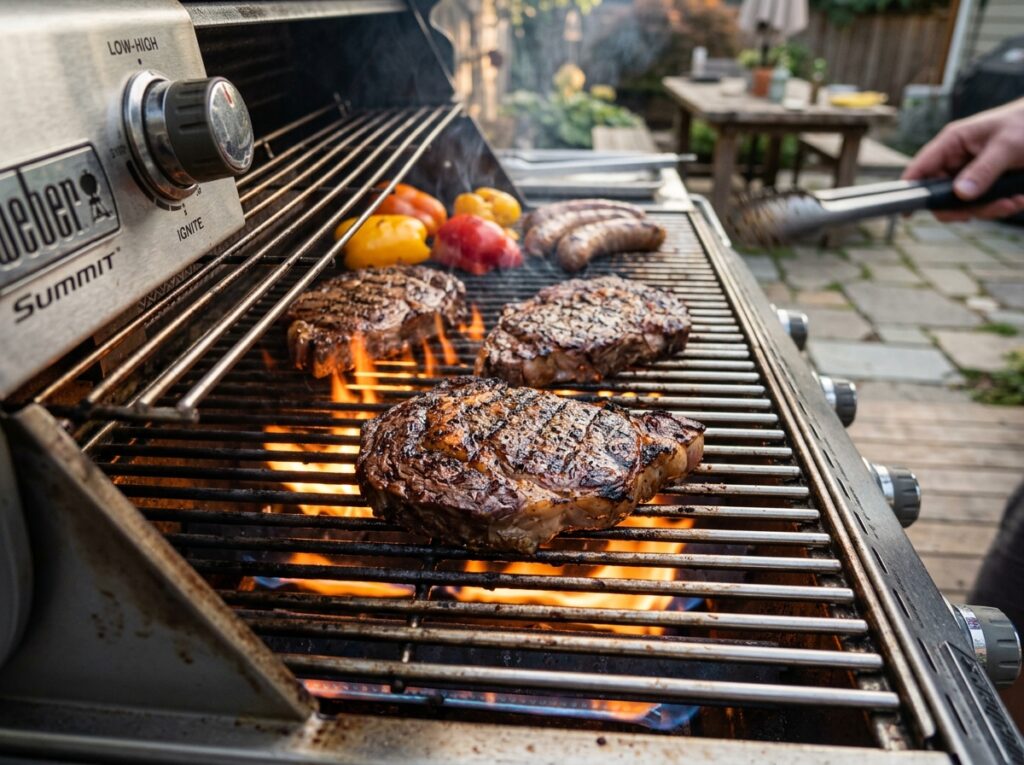
Most people spend more time picking a streaming subscription than they do picking a gas grill — and then wonder why their burgers taste mediocre and the lid warps after one summer. A gas grill is one of those purchases you’ll live with for 5 to 10 years, so getting it wrong is genuinely expensive.
The good news? You don’t need to be a grill expert to make a smart choice. You just need to know what actually matters, what’s marketing fluff, and which grills have earned their reputation through real-world use. That’s exactly what this guide covers.
What Makes a Gas Grill Actually Good?
Before jumping into specific models and recommendations, it’s worth stepping back and talking about what separates a genuinely good gas grill from one that looks impressive in the store and disappoints on the patio.
The answer isn’t always BTUs. That’s probably the biggest trap buyers fall into.
BTU (British Thermal Unit) is a measure of heat output, not cooking performance. A grill pushing 60,000 BTUs with thin grates and poor heat retention will cook worse than a 40,000 BTU grill with heavy cast iron grates and a tight lid. What you’re really looking for is even heat distribution, solid construction, and a lid that actually seals well.
The other thing that matters more than most buyers expect is burner quality. Stainless steel burners last significantly longer than cast iron or aluminized steel ones. Weber, for example, uses stainless steel burners on most of their mid-range and premium models, which is a big part of why those grills hold up so well over time.
The Three Things That Predict Long-Term Satisfaction
Build quality is the foundation. Flimsy carts, thin lids, and plastic knobs that crack after two seasons are warning signs you’ll see on cheap grills. Porcelain-coated cast iron grates are generally worth paying for — they retain heat better and create a better sear than plain steel grates.
Cooking area is something people consistently misjudge. If you’re feeding a family of four with occasional guests, you need at least 450–500 square inches of primary cooking space. People with larger gatherings often need 600+ square inches. The secondary (warming rack) space matters less than primary grate area.
Ease of maintenance sounds boring, but you’ll thank yourself later. Grills with removable grease trays, easy-access burner tubes, and simple grate removal are far more likely to get cleaned regularly — and a clean grill performs better and lasts longer.
The Best Gas Grills Worth Buying in 2026
There’s no single “best” gas grill for everyone. The right pick depends on your budget, how often you grill, how many people you’re cooking for, and whether you want portability or a permanent backyard setup. Here’s an honest breakdown by category.
Best Overall: Weber Spirit II E-310
Weber has been making gas grills since the 1950s, and the Spirit II E-310 is the model that consistently earns its reputation — not because of marketing, but because it works reliably for years.
It’s a 3-burner propane grill with 529 square inches of cooking space across the primary grate. The porcelain-coated cast iron grates hold heat well, and Weber’s GS4 grilling system (which includes the burners, ignition, and grease management) is genuinely well-engineered. The crossover ignition means all three burners light from a single push of a button, even in wind.
The Spirit II isn’t flashy. You won’t find a sear station or infrared burner or Bluetooth connectivity. But it heats evenly, cleans easily, and holds up to years of regular use without drama.
Price range: Around $500–$600. Worth every dollar if you’re a regular griller.
Pro Tip: Weber’s 10-year warranty on most parts is one of the best in the industry. That warranty alone tells you something about how they build their grills.
Best Premium Pick: Weber Genesis E-325s
If you want to step up from the Spirit without going into full-luxury territory, the Genesis E-325s is the sweet spot. It adds a sear station burner — a tightly packed set of burner tubes that generates intense, concentrated heat perfect for getting a crust on steaks.
The cooking space expands to 669 square inches total, and the build quality is noticeably more solid than the Spirit. The lid is heavier, the grates are thicker, and the side tables are sturdier.
For someone who grills 3–4 times a week through the summer, the Genesis justifies the price. For a casual weekend griller, the Spirit II is probably enough.
Price range: Around $900–$1,100 depending on where you buy and current promotions. If you’re curious about finding the best time to buy, prices tend to drop significantly in late August and September — you can read more about when to time your grill purchase to get the best deal.
Best Budget Gas Grill: Char-Broil Performance Series 4-Burner
Char-Broil doesn’t have Weber’s reputation, but their Performance Series is one of the more honest budget grills available. For around $250–$350, you get a 4-burner setup with 480 square inches of primary cooking space and porcelain-coated grates.
The main trade-off is longevity. Char-Broil uses aluminized steel burners rather than stainless, which means they’ll need replacement sooner — typically after 3–5 years of regular use rather than 10+. The build feels lighter overall.
But if you grill occasionally, rent your place, or aren’t sure how committed you are to outdoor cooking yet, this is a smart starting point. Don’t let anyone tell you that you need to spend $1,000 to grill well. You don’t.
Did you know? The Char-Broil Performance Series has been one of the top-selling gas grills in the U.S. for several consecutive years, largely because it hits the right price point for new grillers.
Best High-End: Napoleon Prestige 500
Napoleon is a Canadian company that’s been gaining serious market share in the premium grill space, and the Prestige 500 is their flagship residential model.
What sets it apart is the JETFIRE ignition system, which uses a small pilot flame to ignite the main burners — making cold-weather lighting far more reliable than standard spark igniters. It also comes with an infrared rear burner for rotisserie cooking, something most grills in this price class skip.
The build quality is excellent. Stainless steel construction throughout, heavy-duty grates, and a lid that seals tightly. The Prestige 500 sits around $1,200–$1,400, and if you’re the kind of person who takes outdoor cooking seriously, it’s worth the investment.
Best Portable Gas Grill: Weber Q2200
The Weber Q2200 is the go-to recommendation for anyone who needs portability without giving up cooking performance. It’s a single-burner tabletop grill, but it puts out 12,000 BTUs across a 280 square inch grate — enough to cook for 2–3 people comfortably.
The cast iron grates are the real star here. For a portable grill, the heat retention is surprisingly good, and you can actually get a decent sear on a steak, which is unusual at this size.
It runs on a 1-pound propane canister or can be adapted to a full 20-pound tank. If you camp, tailgate, or just want a grill for small weekday meals on the balcony, the Q2200 hits the mark cleanly.
Price range: Around $200–$250.
Gas Grill vs. Other Grill Types: Know What You’re Choosing
A gas grill isn’t the right choice for everyone — and being honest about the trade-offs matters.
Gas grills win on convenience. Turn the knob, press the igniter, wait 10–15 minutes for preheat, and you’re cooking. That speed and control is genuinely useful when you’re grilling on a Tuesday after work.
What gas grills don’t do well is smoke flavor. If you want that deep, wood-fired taste in your ribs or brisket, a pellet grill, kamado, or offset smoker will do that better. A gas grill can produce some smoke with wood chips in a smoker box, but it’s not the same experience.
If you’ve been curious about the difference between gas and charcoal, or you’re wondering whether a pellet grill might suit your needs better, it’s worth understanding what each cooking style offers before committing. Our breakdown of the best pellet grills and the best kamado grills can help you compare.
Some people end up owning both a gas grill and a smoker — using the gas grill for quick weeknight cooking and the smoker for weekend projects like ribs or pulled pork. There’s nothing wrong with that setup if your budget and space allow.
Quick Fact: According to the Hearth, Patio & Barbecue Association (HPBA), gas grills account for nearly 63% of all grills owned in the U.S., largely because of how easy they are to use for everyday cooking.
What to Look for When You’re Buying a Gas Grill
You’ve seen the top picks, but how do you evaluate any grill you come across — including ones not on this list?
Burner Material and Count
Stainless steel burners > cast iron > aluminized steel in terms of longevity. Most quality grills have 3 or more burners, which lets you set up two-zone cooking — high heat on one side for searing, lower heat on the other for finishing or keeping food warm.
Two-zone cooking is genuinely one of the most useful techniques for gas grilling. You sear your steak over the hot zone for 2 minutes per side, then move it to the cooler side with the lid closed to finish cooking to your target temperature. The result is a better crust and more even doneness throughout.
Lid and Body Construction
A heavy, well-fitting lid holds heat in and makes indirect cooking (and some light smoking) far more effective. Thin lids warp over time and create hot spots. If you’re buying in person, lift the lid and feel the weight. Close it and check the fit.
Double-walled lids are even better — you’ll find them on premium models from Napoleon and Weber’s Genesis line. They maintain temperature better and reduce fuel consumption.
Grate Material
Porcelain-coated cast iron grates are the standard recommendation. They hold heat, create good grill marks, and are fairly easy to clean. They can chip if dropped or scrubbed too aggressively, so use a proper grill brush and handle them carefully.
Plain stainless steel grates are durable but don’t retain heat as well. Some premium grills use solid stainless rod grates, which are thick enough to hold heat well and extremely durable — Napoleon uses these on the Prestige series.
Ignition System
Push-button electronic ignition is the standard now, and it works well on quality grills. Battery-powered igniters tend to be more reliable than piezoelectric ones. The real test is whether the grill lights consistently after sitting unused for a few weeks — cheaper igniters often fail here first.
If you ever end up with an igniter failure, keep a long-reach lighter on hand. Most gas grills have a small hole near the burner for manual lighting. It’s a simple backup that most people don’t know about until they need it.
Grease Management
This is genuinely underrated. A well-designed grease management system (removable catch tray, angled bottom panel, accessible cleanout) means you’ll actually clean your grill. Neglected grease traps are the #1 cause of gas grill flare-ups and fires. Weber’s design on the Spirit and Genesis is particularly clean and practical.
How to Get the Best Results from Your Gas Grill
Buying a great grill is step one. Getting the most out of it is step two.
Preheat properly. Always give your gas grill 10–15 minutes on high with the lid closed before cooking. This brings the grates up to temperature, burns off residue from last time, and ensures you get proper grill marks and searing from the start.
Don’t press down on burgers. That sizzle you get when you press a burger is the sound of moisture leaving the meat. You’re literally squeezing flavor out. Let the burger sit, flip once, and resist the urge.
Use a meat thermometer. Guessing doneness by touch is an unreliable habit that leads to overcooked chicken and undercooked pork. A good instant read thermometer tells you exactly where you are in seconds, and it’s the single best tool upgrade you can make as a griller.
Clean your grates after every cook. Give them a scrub with a grill brush while they’re still hot — residue comes off much easier when warm. A quick wipe with an oiled paper towel afterward seasons the grates and prevents sticking next time.
Pro Tip: If you’re cooking chicken thighs or wings on a gas grill, start them on the cool side with the lid closed until they hit about 165°F internally, then move them to the hot side for a few minutes to crisp the skin. You’ll avoid both flare-ups and flabby skin.
And once you’ve got your gas grill dialed in, you might find yourself wanting to try more ambitious cooks. Ribs are a natural next step — and while a smoker handles them traditionally, you can absolutely do 3-2-1 ribs on a gas grill with a smoker box and some patience.
Gas Grill Maintenance: The Simple Routine That Keeps It Running
Most gas grills fail prematurely not because of poor build quality but because of neglect. A simple seasonal routine makes a real difference.
At the start of grilling season, check your burner tubes for blockages (spiders love nesting in them during winter). Remove the grates and flavorizer bars, brush off debris, and inspect the burners for cracks or corrosion. Check the gas line and connections with soapy water — bubbles mean a leak, and that needs fixing before you cook.
Mid-season, empty the grease trap and give the inside of the grill a wipe down. If you see a lot of buildup on the bottom of the cook box, scrape it off before it becomes a fire hazard.
At the end of season, do a thorough clean, cover the grill with a quality cover, and if you’re storing it somewhere very cold, consider disconnecting the propane tank and storing it separately in a ventilated area.
A covered grill also lasts years longer than an uncovered one. If you don’t have a cover for your grill yet, it’s one of the cheapest upgrades you can make. Most brands sell covers fitted to their specific models, and they’re worth the $30–$60.
FAQ
Q: How many BTUs do I actually need in a gas grill?
A: For most home grilling, 30,000–50,000 BTUs across 3–4 burners is plenty. What matters more than total BTU count is the BTU-per-square-inch ratio — aim for around 80–100 BTUs per square inch of cooking space. Beyond that, even heat distribution and grate quality matter far more than raw BTU numbers.
Q: Propane vs. natural gas — which should I choose?
A: Propane gives you portability and is available everywhere, making it the better choice for most people. Natural gas requires a dedicated gas line hookup to your home, but it’s cheaper to run long-term and means you’ll never run out mid-cook. If you grill daily and have an outdoor gas hookup (or are willing to install one), natural gas is worth it. Otherwise, stick with propane.
Q: How long should a gas grill last?
A: A quality gas grill — Weber, Napoleon, Broil King — should last 10–15 years with basic maintenance. Budget grills typically last 3–6 years before burners and grates need replacement. The body and cart often outlast the internal components, so replacing burners and grates on a mid-range grill is often smarter than buying a new budget one.
Q: Can I add smoke flavor to food cooked on a gas grill?
A: Yes, though it takes a bit more effort. Put soaked wood chips (hickory, apple, cherry) in a metal smoker box and place it directly over a burner. Set that burner to medium-high, put your food over the unlit burners, and close the lid. You won’t get the same depth of flavor as a dedicated smoker, but you’ll get real wood smoke in the food. If you want to compare what a smoker actually offers, check out our best offset smoker guide to see what you’d be stepping into.
Q: Is it safe to use a gas grill on a covered patio or under a pergola?
A: It can be, but with precautions. You need at least 3 feet of clearance on all sides and a minimum of 8 feet of clearance above the grill. Never use a gas grill in an enclosed space — carbon monoxide buildup is a serious hazard. Check your grill’s manual for exact clearance requirements, and make sure your patio has adequate ventilation before cooking.
Wrapping Up
If you’ve read this far, you know enough to make a confident decision. The Weber Spirit II E-310 is where most people should start — it’s reliable, well-built, and priced fairly for what it delivers. If you want more cooking space and features, step up to the Genesis E-325s. If budget is tight, the Char-Broil Performance Series is a sensible entry point. And if you’re a serious outdoor cook who wants the best, Napoleon’s Prestige 500 is hard to argue with.
The most important thing you can do right now is measure the space you have, decide on propane or natural gas, and set a realistic budget before you walk into a store or open a browser tab. That clarity alone will cut through 80% of the confusion.
Pick your grill, keep it clean, get a decent set of grill tools, and start cooking. The rest comes with practice — and practice is the best part.