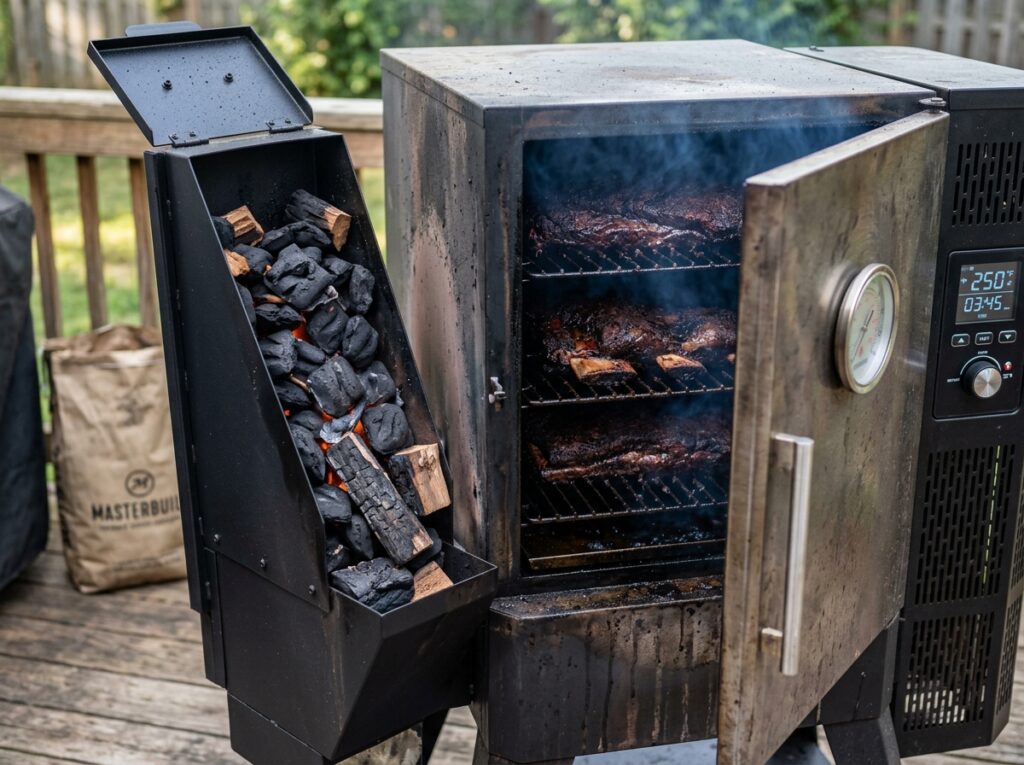
Most people who try a gravity smoker for the first time say the same thing: “Why didn’t I buy this sooner?” And honestly, it makes sense. A gravity smoker gives you the real charcoal flavor of a stick burner with the set-it-and-forget-it convenience of a pellet grill. That’s a combination most BBQ fans didn’t think was possible five years ago.
But here’s the thing — not every gravity smoker on the market deserves your money. Some nail the temperature control but fall apart after one season. Others look great on paper but can’t hold low-and-slow temps without constant babysitting. I’ve spent serious time testing, comparing, and breaking down the best gravity smokers available right now so you don’t have to learn the hard way.
Whether you’re smoking your first brisket or your hundredth rack of ribs, this guide will help you pick the right one.
What Exactly Is a Gravity Smoker (And Why Should You Care)?
Before we get into specific models, let’s make sure we’re on the same page about what a gravity smoker actually does.
A gravity smoker — sometimes called a gravity-fed smoker or gravity charcoal smoker — uses a vertical hopper filled with charcoal. Gravity pulls the charcoal down toward a firebox at the bottom. A fan controls the airflow, which controls the temperature. You set your target temp, and the fan does the work.
Think of it this way: you get the authentic smoke and charcoal taste that offset smoker fans love, but with a digital controller keeping things steady. It’s like having an experienced pitmaster watching your fire 24/7, except it’s a small electric fan.
The result? Rock-steady temperatures anywhere from 200°F to 800°F on most models. That means you can low-and-slow smoke a pork butt all night and then sear steaks the next evening — all on the same cooker.
Pro Tip: If you’ve been torn between a pellet smoker and a charcoal setup, a gravity smoker is genuinely the best of both worlds. You don’t have to compromise.
How I Picked the Best Gravity Smokers
I didn’t just look at spec sheets. Here’s what actually mattered in my evaluation:
Temperature consistency — Can it hold 225°F for 12+ hours without wild swings? Can it reach searing temps above 700°F? I checked real-world performance, not just marketing claims.
Build quality — Thick steel, solid welds, quality gaskets, and hardware that won’t rust out after one winter. A smoker is an investment, and it should last.
Cooking space — Total square inches matter, but usable space matters more. Can you actually fit a full packer brisket? How about multiple racks of ribs at once?
Ease of use — How simple is the startup process? How intuitive is the controller? Can a first-time smoker figure it out without watching six YouTube tutorials?
Fuel efficiency — Charcoal isn’t cheap. A well-designed gravity smoker should burn lean, not chew through 20 pounds of lump charcoal in a single cook.
Value for money — Price alone doesn’t tell the story. A $500 smoker that lasts ten years is a better deal than a $300 one that falls apart in two.
The Best Gravity Smokers for 2025 — Detailed Reviews
Masterbuilt Gravity Series 1050
If there’s one gravity smoker that put this entire category on the map, it’s the Masterbuilt 1050. And for good reason — it does almost everything right at a price that doesn’t make your wallet cry.
You get 1,050 square inches of cooking space across multiple grates. That’s enough room for six racks of ribs, a couple of pork butts, or a full brisket with room to spare. The digital controller holds temperature within about 5°F of your target, which is impressive for a charcoal-burning cooker.
The temperature range runs from 225°F all the way up to 700°F. So yes, you can smoke low and slow in the morning and grill burgers for dinner. The GravityFan keeps airflow steady, and the DigitalFan controller with Wi-Fi lets you monitor and adjust temps from your phone.
One thing I really appreciate: the fold-down front shelf doubles as a side table, and the reversible smoke + sear grates let you switch between indirect smoking and direct-heat grilling without swapping anything out.
Where it falls short: The ash cleanout system works, but it’s not as clean as Masterbuilt claims. You’ll still need to do some manual cleanup after long cooks. The paint on the exterior can also chip if you’re not careful with it — this isn’t a ceramic-coated kamado grill that shrugs off the elements.
Best for: People who want a do-everything cooker that smokes, grills, and sears without costing $2,000+.
Masterbuilt Gravity Series 800
Not everyone needs 1,050 square inches of cooking space. If you’re typically cooking for four to six people, the Gravity Series 800 hits a sweet spot.
You still get the same digital controller, the same fan-driven temperature management, and the same charcoal flavor. The 800 square inches of cooking space is plenty for most weekend cooks — think a full rack of spare ribs, a whole chicken, and some sausages all at once.
The 800 is also a bit more compact, which matters if your patio or deck space is limited. It fits into tighter spots without sacrificing performance.
The feature set is nearly identical to the 1050: Wi-Fi connectivity, the same temperature range, the same reversible grates. You’re basically paying less for a slightly smaller version of the same proven design.
Where it falls short: If you entertain large groups or like to cook in bulk for meal prep, you might feel cramped. Also, like the 1050, the hopper capacity means you’ll need to refill charcoal on cooks longer than about 12-14 hours.
Best for: Backyard cooks who want Masterbuilt quality in a more manageable size.
Char-Griller Gravity Fed 980
Char-Griller jumped into the gravity smoker game with a solid entry, and the 980 is their flagship. It offers 980 square inches of cooking space and a price point that usually undercuts Masterbuilt by a noticeable margin.
The temperature range goes from 200°F up to 700°F. The digital control panel is straightforward — no app required, though some might miss the Wi-Fi feature. Temperature stability is good, generally holding within 10°F of target, which is respectable.
Build quality is decent for the price. The steel gauge is adequate, and the powder-coat finish holds up reasonably well. The charcoal hopper is easy to load, and the ash management system is one of the simpler designs on the market.
One feature I like: the removable water pan. Adding moisture to the cooking chamber makes a real difference for long cooks, especially with leaner cuts like chicken breast or turkey.
Where it falls short: Temperature swings can be slightly wider than Masterbuilt, especially during cold or windy weather. The gaskets around the door aren’t as tight, which can lead to minor smoke leaks. These aren’t dealbreakers, but they’re worth knowing about.
Best for: Budget-conscious buyers who want a capable gravity smoker without spending top dollar.
Masterbuilt Gravity Series 560
The 560 is the entry-level model in Masterbuilt’s gravity lineup, and it’s often the one people start with. At 560 square inches of cooking space, it’s compact enough for apartment balconies (where allowed) or small patios.
Don’t let the “entry-level” label fool you — the 560 uses the same core technology as its bigger siblings. The digital fan controller works identically, temperature stability is just as good, and the charcoal flavor is the same. You’re only giving up cooking area.
This model is great for couples or small families. You can comfortably smoke a pork butt, a couple racks of baby backs, or a small brisket flat. If you’re curious about what makes a flat different from a full packer, there’s a great breakdown of brisket flat vs. packer that’s worth reading before you shop.
Where it falls short: The smaller hopper means more frequent charcoal refills on long cooks. And if you ever plan to cook for a crowd — holiday gatherings, neighborhood cookouts — you’ll wish you’d gone bigger.
Best for: Beginners, small households, or anyone with limited outdoor space.
Weber SmokeFire Gravity (If You Can Find One)
Weber hasn’t officially labeled any of their smokers as “gravity-fed,” but their approach to combining charcoal and smart technology has evolved significantly. Keep an eye on Weber’s 2025 lineup, as industry rumors suggest they’re entering the gravity-fed space more directly.
For now, if you’re a Weber loyalist looking for something that blends tech with traditional fuel, their pellet offerings are the closest option. But a true gravity smoker from Weber would be a serious contender given their build quality and brand support.
Worth noting: If you’re already in the Weber ecosystem and want a charcoal-driven experience, a kettle grill paired with a slow-and-sear insert can get you surprisingly close to gravity smoker results. It just requires more hands-on management.
Gravity Smoker vs. Other Smoker Types — How Does It Stack Up?
You’re probably wondering how a gravity smoker compares to the other popular options. Let me break this down honestly.
Gravity Smoker vs. Pellet Smoker
Pellet smokers burn compressed wood pellets and use an auger system to feed them into a firepot. They’re incredibly convenient — just fill the hopper and set the temp.
The tradeoff? Pellet smoke is milder. A gravity smoker running on lump charcoal and wood chunks produces a more pronounced smoke ring and deeper smoky flavor. If taste is your top priority, gravity wins. If absolute convenience matters most, a pellet grill might suit you better.
Gravity Smoker vs. Offset Smoker
An offset smoker is the gold standard for traditional BBQ. It burns real wood logs and produces incredible flavor. But it demands your attention — you need to manage the fire, adjust vents, and stay close for hours.
A gravity smoker gives you about 85-90% of that flavor with about 10% of the effort. For most backyard cooks, that tradeoff is absolutely worth it. Competition pitmasters might prefer the control and tradition of an offset. Everyone else will probably prefer sleeping through the night while their brisket smokes.
Gravity Smoker vs. Propane Smoker
Propane smokers are simple and affordable, but they produce heat from gas — not charcoal. You can add wood chips for smoke flavor, but the base heat source doesn’t contribute any flavor on its own. A gravity smoker is a clear upgrade in taste, temperature range, and versatility.
What to Look for Before Buying a Gravity Smoker
If you’ve narrowed it down but still aren’t sure which model to grab, focus on these factors.
Your typical cook size. Are you feeding two people or twenty? If you regularly smoke for a crowd, don’t skimp on cooking area. If it’s mostly weeknight dinners for the family, a 560-800 square inch model works fine.
Your climate. Gravity smokers use insulation and sealed chambers to hold heat. If you live somewhere with harsh winters or heavy wind, look for thicker steel and tighter gaskets. Cold weather forces the fan to work harder, which burns through charcoal faster.
Charcoal type. Most gravity smokers work with both lump charcoal and briquettes. Lump burns hotter and cleaner. Briquettes burn more consistently and cost less. Experiment with both to find what you prefer.
Available space. Measure your patio, deck, or cooking area before you order. The Masterbuilt 1050, for example, is a big unit. Make sure you have clearance on all sides for safety and airflow.
Did you know? A gravity smoker running at 250°F typically burns about one pound of charcoal per hour. That makes a 16-hour overnight brisket cook cost you roughly $8-12 in fuel — cheaper than most pellet smokers.
Tips for Getting the Best Results From Your Gravity Smoker
Owning a gravity smoker is one thing. Getting the most out of it is another. Here are some things that’ll make a real difference in your results.
Season your smoker before the first cook. Run it at 350°F for about two hours with the grates inside. This burns off any manufacturing residue and starts building a protective layer inside the cooking chamber. Don’t skip this step.
Use a mix of charcoal and wood chunks. Fill your hopper with lump charcoal, then toss in three or four fist-sized wood chunks scattered throughout. As the charcoal burns down, it hits the wood chunks at intervals, giving you consistent smoke over several hours without overwhelming the meat.
Don’t open the lid unless you have to. Every time you lift that lid, you lose heat and extend your cook time. Trust your thermometer. Speaking of which, a good wireless meat thermometer paired with your smoker’s built-in probe gives you everything you need to monitor your cook without peeking.
Clean the ash out after every cook. This one sounds obvious, but a lot of people skip it. Ash buildup restricts airflow, which makes your fan work harder and your temperatures less stable. A five-minute cleanup after each session keeps your smoker performing like new.
Start with forgiving cuts. If you’re new to smoking, don’t start with brisket. Try pork butt first — it’s much more forgiving of temperature swings and timing errors. Finding the best temperature to smoke pork butt is a great starting point. Once you’ve nailed pulled pork, move on to ribs using something like the 3-2-1 method. Then, when you’re confident, tackle brisket.
The Charcoal Question: Lump vs. Briquettes in a Gravity Smoker
This debate is almost as old as BBQ itself, but it matters more in a gravity smoker than in a regular grill. Here’s why.
Lump charcoal is irregular in size and shape. In a gravity-fed hopper, those irregular pieces can sometimes bridge — meaning they get stuck and stop falling toward the fire. This can cause temperature drops until you shake or bump the hopper. On the other hand, lump burns hotter, produces less ash, and gives a cleaner flavor.
Briquettes are uniform. They stack neatly, feed reliably, and rarely bridge. They produce more ash, though, which means more frequent cleanouts. The flavor difference between lump and briquettes is subtle, but real — lump has a slightly more natural wood taste.
My recommendation? Use a high-quality briquette as your base for reliable feeding, and mix in lump charcoal and wood chunks for flavor. That combo gives you the best of both worlds.
What About Accessories?
A gravity smoker doesn’t need a ton of extras, but a few accessories make life significantly easier.
A good set of grill gloves is non-negotiable. You’re working with charcoal, hot grates, and heavy cuts of meat. Regular oven mitts won’t cut it.
An instant-read thermometer is essential for checking doneness without relying solely on built-in probes, which can sometimes read a couple of degrees off. The best pitmasters always verify with a handheld.
A sturdy grill cover designed for your specific model keeps rain, sun, and debris from degrading the finish. Most manufacturers sell fitted covers, and they’re worth every penny.
FAQ
How long does charcoal last in a gravity smoker?
On average, a full hopper of charcoal lasts between 10 and 16 hours at smoking temperatures (225-275°F). At higher grilling temperatures (400°F+), fuel consumption increases significantly — expect closer to 6-8 hours. The exact duration depends on your charcoal type, outside temperature, wind conditions, and how often you open the lid.
Can you grill on a gravity smoker, or is it only for smoking?
Absolutely — most gravity smokers double as grills. Models like the Masterbuilt Gravity Series can reach temperatures of 700°F or higher, which is more than enough for searing steaks, grilling burgers, or charring vegetables. Some even include reversible grates with a direct-heat sear option. It’s genuinely a multi-purpose cooker.
Is a gravity smoker better than a pellet smoker?
It depends on what matters most to you. A gravity smoker produces stronger, more authentic charcoal and smoke flavor. A pellet smoker is slightly more convenient because pellets are cleaner and produce less ash. If flavor is your priority, go with gravity. If ease and cleanup matter more, a pellet smoker might be your better bet. Many experienced BBQ enthusiasts prefer gravity smokers for the taste advantage.
Are gravity smokers hard to maintain?
Not at all. The main maintenance task is cleaning out the ash after each cook and wiping down the grates. Occasionally, you’ll want to check the fan and controller for any debris buildup, but that’s about it. Compared to an offset smoker that requires fire management and a kamado grill that needs careful gasket care, a gravity smoker is pretty low-maintenance.
Can I use wood chips or wood chunks in a gravity smoker?
Yes, and you should. While charcoal provides the heat and base flavor, adding wood chunks (hickory, oak, cherry, mesquite, or pecan) throughout your charcoal hopper adds layers of smoke flavor. Wood chips work too, but they burn faster. Chunks are better for long cooks because they smolder slowly as the charcoal reaches them.
Your Next Move
A gravity smoker sits in a sweet spot that didn’t really exist a few years ago. You get real charcoal flavor, hands-off temperature control, and the versatility to smoke and grill on the same unit. That’s a hard combination to beat.
If you’re upgrading from a basic grill or a propane smoker, the jump in food quality will genuinely surprise you. If you’re coming from a pellet smoker, you’ll notice the deeper smoke profile right away. And if you’ve been eyeing an offset but don’t want to babysit a fire all day, a gravity smoker gives you most of that experience with a fraction of the effort.
Pick the size that fits your cooking style, stock up on good charcoal and a few bags of wood chunks, and start with something simple like a pork butt or a batch of baby back ribs. Once you taste what a gravity smoker can do, you’ll understand why this category is growing so fast.