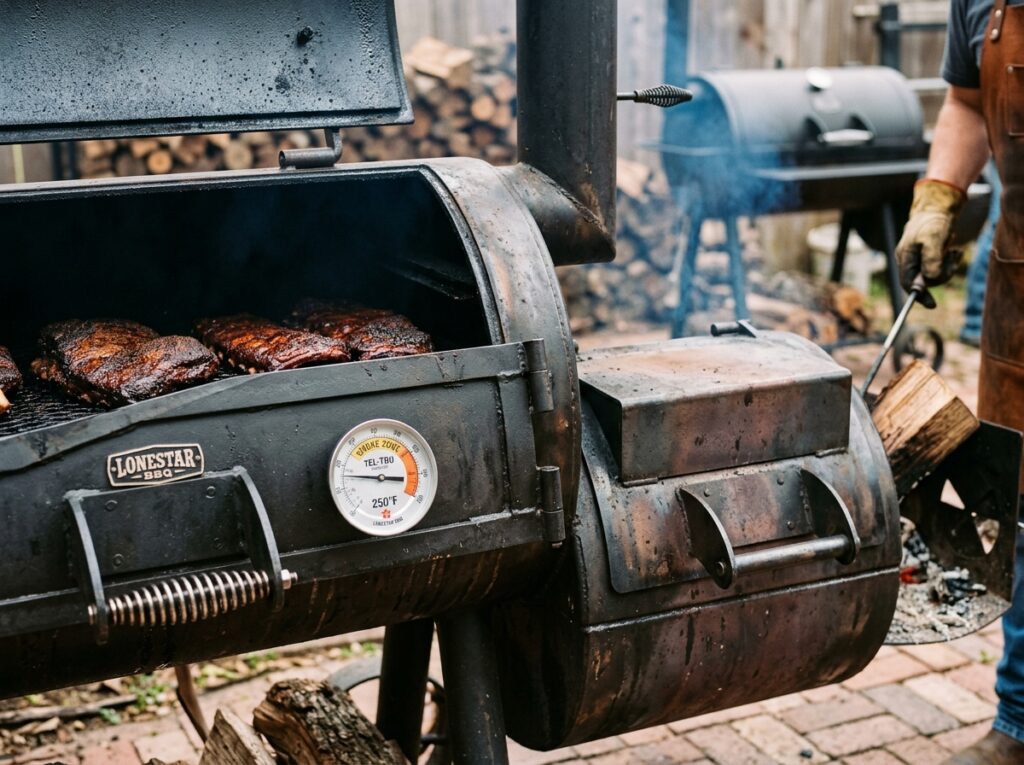
There’s a reason competition pitmasters and backyard legends keep coming back to offset smokers. No pellet feeder. No digital controller. Just fire, smoke, and your instincts. But here’s the catch — buying the wrong offset smoker can turn your weekend cook into a frustrating battle against temperature swings, leaky seals, and thin metal that warps after a few sessions.
I’ve spent years testing, researching, and talking to people who actually cook on these things week after week. And the truth is, the best offset smoker for you depends on your budget, your experience, and how serious you are about the craft. Some folks need a forgiving entry-level unit. Others want a heavy-duty pit that’ll outlast them.
This guide breaks it all down — real recommendations, honest pros and cons, and the stuff most articles skip over. Let’s get into it.
Why Offset Smokers Still Dominate the BBQ World
You might wonder why offset smokers remain so popular when pellet grills, gravity-fed smokers, and kamado grills exist. The answer is simple: flavor and control.
An offset smoker burns real wood or a combination of charcoal and wood chunks in a separate firebox. That smoke travels across your meat and exits through the chimney on the opposite end. You’re not relying on a computer chip or a fan to manage your fire. You are the temperature controller.
That hands-on process creates a smoke profile that’s genuinely hard to replicate with other cooker types. The bark on a brisket, the smoke ring on ribs, the deep mahogany color on a pork shoulder — offset smokers produce these results naturally because the smoke is clean, thin, and flowing constantly.
There’s also something deeply satisfying about tending a fire. It’s a skill. And once you learn it, you won’t want to go back.
Quick fact: Most top-placing teams at competitions like the Houston Livestock Show or Memphis in May still use stick burners (offset smokers). That tells you something about what produces the best results when flavor matters most.
Of course, offsets aren’t perfect. They demand attention, patience, and a willingness to learn fire management. If you want a “set it and forget it” experience, a pellet smoker or a gravity-fed smoker might suit you better. But if you want the full experience and the best possible flavor? An offset is hard to beat.
What Makes a Good Offset Smoker? (The Stuff That Actually Matters)
Before I throw product names at you, let’s talk about what separates a good offset smoker from a bad one. Because there are a LOT of cheap offsets on the market that look great in photos and perform terribly in your backyard.
Steel Thickness
This is the single most important factor. Thin steel (less than 3mm) can’t hold heat. It warps over time. It creates hot spots and makes temperature management a nightmare — especially in cold or windy weather.
Look for smokers with at least 1/4-inch (6.35mm) steel on the cooking chamber. Some budget-friendly options use 3mm steel, which is workable but not ideal for long cooks in colder climates. The thicker the steel, the more thermal mass it has, and the more stable your temps will be.
Seal Quality
Air leaks are the enemy. If smoke is pouring out of the doors, the lid seam, or the firebox connection, you’re losing heat and getting inconsistent results. Good offset smokers have tight-fitting doors with quality latches or gaskets. Some models come with welded seams rather than bolted connections, which dramatically reduces leaks.
Pro tip: If you buy a budget offset that leaks, you can add high-temp gasket tape to the doors. It won’t fix a fundamentally bad design, but it helps with minor gaps.
Firebox Design
The firebox should be large enough to hold a proper fire without constant reloading. A good firebox also has an air intake damper that lets you control airflow precisely. Some premium models include a grate or basket inside the firebox that holds your wood off the bottom, promoting better combustion and cleaner smoke.
Airflow and Draft
Smoke needs to flow smoothly from the firebox, across the cooking chamber, and out the chimney. This is where engineering really matters. Poorly designed offsets create dead zones where smoke pools, leading to bitter, over-smoked meat. Well-designed ones use reverse flow plates, tuning plates, or carefully calculated openings to distribute heat and smoke evenly.
Cooking Grate Size
Think about what you typically cook. A small offset with 400 square inches of cooking space might handle a couple racks of ribs and a chicken. But if you’re cooking brisket for a crowd or doing multiple pork butts, you’ll want 600+ square inches on the main grate, ideally with additional racks above.
Best Offset Smokers: My Top Picks for 2025
I’ve organized these by budget range because that’s honestly the first decision most people need to make. A $300 offset and a $3,000 offset are two very different animals.
Best Budget Offset Smoker: Oklahoma Joe’s Highland
If you’re spending under $400 and want a legitimate offset smoking experience, the Oklahoma Joe’s Highland is the smoker that’s proven itself over and over. It uses a combination of heavy-gauge steel and a solid firebox design that punches well above its price point.
The cooking surface gives you around 900 square inches total (main chamber plus the firebox grate, which you can also use for direct grilling). The dampers work well for airflow control, and the overall build quality is surprisingly good for the price.
What I like: The firebox is genuinely usable — large enough for split logs, with a clean-out door for ash removal. The temperature gauge placement isn’t perfect (it’s at the top of the lid, not grate level), but that’s an easy fix with an aftermarket thermometer.
What to know: You’ll likely need to add gasket material to the doors and possibly a tuning plate set to even out temperature differences between the firebox end and the chimney end. There’s a learning curve, but thousands of backyard cooks have turned this smoker into a consistent performer with minor modifications.
Best for: Beginners who want to learn real fire management without a massive investment.
Best Mid-Range Offset Smoker: Lone Star Grillz 20″ x 42″ Classic
Stepping into the $1,500–$2,500 range changes everything. The Lone Star Grillz 20″ x 42″ is built with 1/4-inch steel throughout, and you can feel the difference the moment you close the door. It clunks shut with authority. No wobble, no gaps, no light peeking through.
This smoker features a reverse flow design, which means a steel plate underneath the cooking grates directs heat and smoke from the firebox to the far end of the chamber before it rises up and travels back across your food and out the chimney. The result? Much more even temperatures across the entire grate.
What I like: The build quality is borderline obsessive. Welds are clean, the paint is high-temp, and the firebox-to-chamber connection is welded (not bolted). Temperature management on this thing is genuinely easy once you learn basic fire control. I’ve held 250°F for 12+ hour cooks with minimal fuss.
What to know: Lone Star Grillz is a custom shop, so lead times can stretch to 8–12 weeks depending on demand. You’re also paying for shipping, which isn’t cheap given the weight (these things weigh 300+ pounds).
Best for: Intermediate to experienced cooks who want a “buy it for life” smoker without going into competition-grade pricing.
Best Premium Offset Smoker: Workhorse Pits 1975
For serious pitmasters willing to invest $3,000+, Workhorse Pits (based in Houston, Texas) builds some of the finest offset smokers available today. The 1975 model is their flagship — a 1/4-inch steel beast with a fully insulated firebox, stainless steel grates, and engineering that practically manages airflow for you.
The draft on this smoker is almost perfect out of the box. You set your intake damper, get your fire going with seasoned hardwood, and the temperature stabilizes within 15–20 minutes. Compare that to cheaper offsets that can take 45 minutes or more to settle.
What I like: The attention to detail. The grease management system actually works (no pooling, no flare-ups during long cooks). The door latches create a seal so tight that you get zero visible smoke leaks. And the overall aesthetic? It looks like a piece of industrial art.
What to know: The price. You’re spending real money here, and you need to be honest about whether you’ll use it enough to justify the cost. If you cook every weekend and host regularly, it’s worth every penny. If you smoke meat three times a year, this isn’t the right move.
Best for: Dedicated BBQ enthusiasts and competition cooks who want top-tier performance and durability.
Best Small Offset Smoker: Dyna-Glo Wide Body Offset
Not everyone has space for a full-size offset. The Dyna-Glo Wide Body gives you a surprisingly capable offset experience in a more compact footprint. With about 780 square inches of total cooking space, it handles weekend cooks for a family of four without taking over your entire patio.
The steel isn’t as thick as the mid-range and premium picks (it’s closer to 2.5–3mm), so you’ll notice more temperature sensitivity in windy or cold conditions. But for the $250–$350 price point, it’s a solid entry into offset smoking.
What I like: The “wide body” design gives the cooking chamber more vertical space, which is great for hanging sausages or fitting taller cuts. The adjustable charcoal tray in the firebox is a nice touch that some competitors skip.
What to know: Like most budget offsets, the factory thermometer is unreliable. Pick up a good instant-read thermometer and a wireless meat thermometer before your first cook. You’ll thank yourself later.
Best for: Space-constrained cooks or anyone who wants to try offset smoking without a big commitment.
Best Reverse Flow Offset: Old Country BBQ Pits Pecos
Old Country BBQ Pits has been making smokers in Texas for decades, and the Pecos is their popular reverse flow model. Priced around $800–$1,000, it sits in that sweet spot between budget and mid-range — offering genuinely thick steel and a reverse flow plate system at a price that won’t require a second mortgage.
The Pecos weighs around 200 pounds, which tells you the steel is substantial. The reverse flow design evens out temperatures across the cooking chamber, and the overall construction quality reflects Old Country’s long manufacturing history.
What I like: The value. For under $1,000, you’re getting a smoker that performs like models costing twice as much. The firebox is well-sized for split logs, and the air intake damper offers fine control.
What to know: The paint job on Old Country smokers is functional, not pretty. After seasoning and a few cooks, the exterior develops its own character (read: it gets rustic fast). Some people love that. Others want a cleaner look. Also, availability can be spotty — these are often found at Academy Sports stores in the South, and online ordering options vary.
Best for: Value-focused cooks who want reverse flow performance without paying custom shop prices.
Offset Smoker vs. Other Smoker Types: A Quick Reality Check
People often ask me whether they should go offset or choose something else entirely. Here’s my honest take.
If you enjoy the process of cooking as much as the food itself, an offset is your match. Tending the fire, reading the smoke color, making damper adjustments — it’s active cooking. Some folks find this meditative. Others find it annoying.
A pellet grill gives you convenience and consistency. You fill the hopper, set a temperature, and check back occasionally. The flavor is good but noticeably different from stick-burning. It’s milder, less complex.
A kamado grill offers insane fuel efficiency and versatility (smoking, grilling, baking, roasting). But the cooking space is limited compared to a full-size offset, and adding wood for smoke flavor requires some extra steps.
A propane smoker is easy to operate and affordable, but the smoke flavor profile is the weakest of all these options.
The bottom line? There’s no objectively “best” smoker type. Only what’s best for your cooking style, your schedule, and your taste preferences.
How to Season and Break In a New Offset Smoker
You’ve unboxed your new offset. It smells like machine oil and fresh paint. Don’t put food on it yet.
Every offset smoker needs a proper seasoning — or “burn-in” — before its first cook. This process removes manufacturing residues, cures the interior, and creates a thin layer of carbon and oil that protects the steel.
Start by wiping down the interior with warm, soapy water and a cloth. Rinse it and let it dry completely. Then coat all interior surfaces (including grates) lightly with a high-heat cooking oil. Canola, vegetable, or flaxseed oil all work fine. Don’t go heavy — you want a thin, even layer.
Build a small fire in the firebox using charcoal and a few wood chunks. Let the temperature climb to about 275°F–300°F and hold it there for 2–3 hours. You’ll notice the interior darkening and the paint smell disappearing. That’s exactly what you want.
After the burn-in, let the smoker cool completely. You’re ready to cook.
Did you know? Many experienced cooks recommend doing a “sacrifice cook” — something simple like chicken thighs or a pork butt — as your first real cook. It seasons the chamber further and gives you a low-stakes chance to learn your smoker’s behavior before attempting something like a full packer brisket.
Fire Management Tips for Offset Smokers
This is where most people struggle, and it’s what separates a good offset cook from a frustrating one. Fire management isn’t magic, but it does take practice.
Start with Charcoal, Transition to Wood
The easiest way to build a fire in an offset is to start with a chimney full of lit charcoal as your base. Once it’s ashed over and glowing, dump it in the firebox. Add one or two splits of seasoned hardwood on top. Wait for the wood to catch, and you’ll see thin, blue-ish smoke coming from the chimney. That’s clean smoke — exactly what you want.
Thick, white, billowing smoke means your wood is smoldering, not burning. Open your air intake more or use smaller splits until the fire catches properly. White smoke creates bitter, acrid flavors on your meat. Clean smoke creates the flavor you’re chasing.
Maintain a Small, Hot Fire
New offset users make the same mistake: building a massive fire and then trying to choke it down with the dampers. This creates dirty smoke and wild temperature swings.
Instead, keep a smaller, hotter fire. Add one split at a time. Let it catch before adding another. You’re looking for steady temps in the 225°F–275°F range (depending on what you’re cooking), and a small, clean-burning fire achieves this more consistently than a big, smoldering pile.
Use the Dampers Strategically
Your offset has two airflow controls: the firebox intake damper and the chimney exhaust damper. Think of the intake as the gas pedal and the exhaust as the… well, leave it alone most of the time.
Keep the chimney damper fully open (or very close to it). You want smoke flowing freely out of the cooker. Closing the chimney traps stale smoke inside, which tastes terrible on food.
Control your temperature primarily with the firebox intake. More air = hotter fire. Less air = cooler fire. Small adjustments. Be patient.
Know Your Wood
Seasoned hardwood is non-negotiable. Green or wet wood smolders, creates excessive steam, and adds off-flavors. Oak is the gold standard for offset smoking — it burns hot, burns long, and has a clean, versatile flavor. Hickory is stronger and works beautifully with pork and beef. Pecan is milder and slightly sweet. Mesquite burns very hot and has an intense flavor that works best for shorter cooks like steaks or fajitas.
For a long smoke like brisket or pork butt, post oak or a blend of oak and hickory is tough to beat.
Caring for Your Offset Smoker: Making It Last
Offset smokers are mostly steel, and steel rusts. Proper care extends the life of your cooker by years — possibly decades.
After each cook, while the smoker is still slightly warm, brush the grates with a good grill brush. Remove ash from the firebox once it’s completely cool. Ash holds moisture, and moisture accelerates rust.
Every few months (or more often if you live in a humid climate), wipe the exterior with a light coat of cooking oil or use a high-temperature spray designed for smokers. Cover your offset when it’s not in use. A good fitted cover is a $30–$60 investment that prevents hundreds of dollars in rust damage.
If your smoker develops surface rust, hit it with a wire brush, clean the area, and apply high-heat paint. Catching rust early prevents it from becoming a structural problem.
One more thing — don’t obsess over cleaning the interior. That dark, built-up layer of smoke residue (called “seasoning” or “patina”) actually protects the steel and adds flavor. Wipe up any pooled grease to prevent rancidity and fire hazards, but leave the walls alone.
Common Mistakes New Offset Smoker Owners Make
I’ve seen the same errors play out hundreds of times. Here are the ones that trip people up the most.
Opening the lid too often. Every time you lift the lid, you lose heat and smoke. Recovery can take 15–20 minutes, especially on budget offsets with thinner steel. Resist the urge to peek. If you’re looking, you’re not cooking.
Using the wrong thermometer. The factory dial thermometer on your smoker is probably inaccurate by 25–50°F. Place a reliable digital probe at grate level for an accurate reading. Better yet, use a dual-probe setup — one for the chamber temp, one for your meat.
Not preheating long enough. Give your offset at least 30–45 minutes to stabilize before putting food on. The steel needs to absorb heat evenly, and your fire needs to settle into a rhythm. Rushing this step means fighting temperature swings for the first few hours of your cook.
Ignoring wind. Wind dramatically affects offset performance. If possible, position your smoker so the firebox faces into the wind (this helps draft) or use a windbreak. On gusty days, you’ll adjust your fire more frequently — accept that going in.
Cooking too much, too soon. Your first cook on a new offset shouldn’t be a 14-hour brisket. Start with something forgiving. Chicken quarters, pork ribs (try the 3-2-1 method), or a small pork butt. Learn how your smoker breathes, where the hot spots are, and how quickly it burns through wood. Then work your way up to the challenging cuts.
FAQ
What size offset smoker do I need?
For most backyard cooks feeding a family and occasionally hosting friends, a 20-inch diameter cooking chamber with 600–900 square inches of grate space works perfectly. If you regularly cook for large groups (20+ people) or want to do multiple briskets at once, look at 24-inch or larger chambers. Keep in mind — bigger smokers need more fuel and more attention to maintain even temps.
Can I use an offset smoker in cold weather?
Yes, but it takes more fuel and more patience. Thicker steel smokers handle cold weather far better than thin-gauge models because they retain heat more effectively. You’ll burn through about 30–40% more wood during winter cooks. Using a windbreak and keeping your firebox well-stocked helps a lot. Some cooks also wrap their cooking chambers with welding blankets for extra insulation during sub-freezing temps.
How often do I need to add wood to an offset smoker?
It depends on your smoker size, the wood species, and the outside temperature. As a rough guide, expect to add a split every 30–60 minutes during a typical cook at 250°F. Denser hardwoods like oak and hickory burn longer than softer species like pecan or fruit woods. You’ll develop a rhythm after a few cooks — eventually, you’ll know when to add wood based on the sound and smell of your fire rather than a timer.
Is a reverse flow offset smoker better than a standard offset?
Reverse flow smokers distribute heat more evenly, which makes temperature management easier — especially for beginners. The steel baffle plate underneath the grates acts as a heat sink, reducing temperature spikes. Standard offsets can achieve similar evenness with tuning plates or by learning to manage their hot spots. Neither is objectively “better.” Reverse flow is more forgiving; standard flow gives you slightly more control over smoke intensity and cooking zone temperatures once you master it.
What’s the best wood for offset smoking?
Oak (particularly post oak) is the most versatile and widely used wood for offset smoking. It produces a medium smoke flavor that complements beef, pork, poultry, and even fish. Hickory is bolder and works great for ribs, pork shoulders, and bacon. Cherry and apple produce a milder, sweeter smoke ideal for poultry and lighter meats. Mesquite is the strongest — use it sparingly or for quick, high-heat cooks. Always use seasoned (dried) hardwood, never green wood or softwoods like pine.
Your Next Move
Choosing the best offset smoker comes down to being honest with yourself about three things: what you can afford, how much time you’ll spend cooking, and how willing you are to learn fire management. A budget offset with some DIY modifications can produce incredible barbecue. A premium offset makes the process smoother and more consistent. Both get you to the same place — real smoke, real fire, real flavor.
If you’re on the fence, start with something in the budget or mid-range category. Cook on it for a season. Learn how fire behaves. Figure out whether tending a firebox feels like a chore or a calling. If it’s a calling, you’ll know when it’s time to upgrade — and you’ll appreciate every dollar you spend on that next smoker because you’ll understand exactly what you’re paying for.
Now grab some seasoned oak, light that fire, and get cooking.