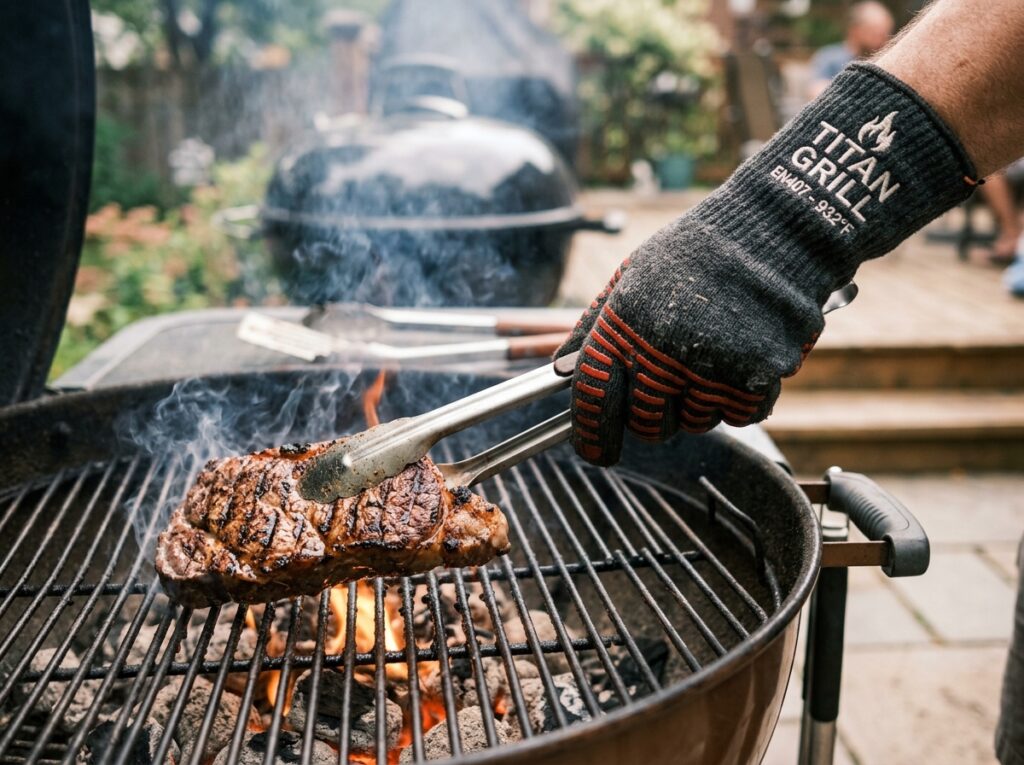
A quick grab of a hot grate with a damp kitchen towel — that’s how most grill burns start. You think you’re being careful, but regular oven mitts and makeshift rags aren’t built for the kind of heat a charcoal grill or offset smoker throws at you. We’re talking about temperatures that can climb past 500°F in seconds.
The right pair of grill gloves changes everything. They let you move grates, flip briskets, adjust charcoal, and pull pork shoulders off the smoker without flinching. But here’s the catch — not every glove labeled “heat resistant” actually delivers. Some feel like wearing oven mitts from the 1990s. Others protect against heat but fall apart after three uses.
This guide breaks down exactly what makes grill gloves worth buying, which materials actually work, and how to pick the right pair based on the kind of grilling you do. Whether you’re running a pellet smoker all night or doing a fast sear on a gas grill, your hands deserve proper protection.
Why Regular Oven Mitts Don’t Cut It for Grilling
You might be wondering — “I already have oven mitts. Why do I need separate grill gloves?” It’s a fair question, and the answer comes down to three things: heat exposure, dexterity, and durability.
Standard oven mitts are designed for quick tasks inside a kitchen oven. You open the door, grab a pan, set it down. That’s maybe 5–10 seconds of contact. Grilling is a completely different story. You’re holding tongs, repositioning heavy grates, adjusting charcoal, and sometimes handling meat directly. That takes time, grip, and finger control — things a puffy oven mitt simply can’t provide.
Most kitchen mitts also aren’t rated for the temperatures outdoor grills produce. A kamado grill running at 700°F for pizza, or a propane torch you use for searing — these create direct heat exposure that goes way beyond what your kitchen oven demands.
Grill gloves are built with individual finger slots, higher heat ratings, and materials that resist not just heat but also grease, steam, and open flames. That’s a huge difference when you’re standing over a live fire.
Quick Fact: Steam burns are actually more common than direct flame burns during grilling. When you unwrap foil packets or open a smoker lid, the blast of steam can scald exposed skin in less than a second. Good grill gloves protect against this too.
What to Look for in the Best Grill Gloves
Before jumping into specific products, let’s talk about the features that actually matter. It’s easy to get distracted by flashy marketing, so here’s what you should focus on.
Heat Resistance Rating
This is the single most important factor. Grill gloves should handle at least 450°F sustained heat for comfortable grilling. If you do high-heat searing or work with a kamado grill, look for gloves rated up to 800°F or higher.
But here’s something most people don’t realize — the listed heat rating usually refers to the material itself, not how long you can comfortably hold something at that temperature. A glove rated at 932°F doesn’t mean you can grip a 900-degree grate for 30 seconds without feeling anything. It means the material won’t melt or burn through. You’ll still feel heat transfer over time.
Pay attention to both the max temperature rating and the comfortable contact time at high temperatures.
Material Type
The material determines everything — heat protection, flexibility, grip, and lifespan. Here’s a quick breakdown of the most common options:
Aramid Fiber (Kevlar/Nomex): These are the same materials used in firefighter gear. They offer excellent heat resistance, good flexibility, and solid durability. Most mid-to-high-end grill gloves use aramid fiber as their base layer.
Silicone: Often used as an outer coating on fabric gloves. Silicone adds grip and waterproofing, making it easier to handle greasy meat or wet surfaces. The downside? Pure silicone gloves can feel bulky and reduce finger sensitivity.
Leather: Traditional and still popular for a reason. Quality cowhide or goatskin leather handles moderate heat well and gives you excellent dexterity. Leather gloves are great for campfire cooking and moving wood or charcoal. They won’t match aramid fiber for extreme heat, though.
Cotton/Terry Cloth Lined: Many gloves use a cotton inner lining for comfort. This matters more than you’d think — if a glove feels uncomfortable or makes your hands sweat excessively, you won’t use it consistently.
Fit and Dexterity
A glove that’s too thick to grip tongs is basically useless. You need enough dexterity to handle grill tools, adjust vents, and pick up smaller items. Look for gloves with individual finger construction rather than mitten-style designs.
Length matters too. Forearm-length gloves (typically 14–18 inches) protect your wrists and lower arms from radiant heat, especially when reaching into a deep smoker or over a hot grate.
Washability
This one gets overlooked constantly. Grill gloves get dirty — grease, sauce, smoke residue, you name it. If you can’t wash them easily, they’ll start smelling terrible after a few sessions. Machine-washable gloves save you a lot of hassle.
Types of Grill Gloves and Who They’re Best For
Not every griller needs the same type of glove. Your cooking style, the equipment you use, and how often you grill should guide your choice.
Insulated Fabric Gloves with Silicone Grip
These are the most popular all-around option for backyard grillers. They combine an aramid fiber or heat-resistant fabric shell with silicone grip patterns on the palm and fingers. You get decent heat protection (usually 450–500°F), good grip even on greasy surfaces, and enough flexibility to handle tongs and spatulas.
They’re perfect if you grill on weekends, use a kettle grill or gas grill, and need something practical and affordable. Most are machine washable, which is a big plus.
Best for: Casual to regular grillers, general purpose BBQ
Heavy-Duty Aramid/Nomex Gloves
If you’re doing serious smoking — long cooks on an offset smoker or overnight sessions on a pellet grill — you’ll want something tougher. Heavy-duty aramid gloves are built for extended exposure to high temperatures. They often feature multiple layers: an outer heat-resistant shell, a middle insulation layer, and a soft inner lining.
These gloves handle 600°F+ without breaking a sweat. You can move hot grates, adjust burning charcoal, and pull a pork shoulder straight off the smoker without using a fork or hook.
The trade-off is bulk. They’re thicker than lighter fabric gloves, so fine motor tasks like adjusting small vents can feel clumsy.
Best for: Dedicated smokers, competition BBQ, high-heat cooking
Leather Welding-Style Gloves
Here’s a bit of a secret in the grilling community — many experienced pitmasters use leather welding gloves instead of purpose-built grill gloves. Why? Because quality welding gloves are designed for prolonged heat exposure, they’re incredibly durable, and they provide great finger dexterity.
A pair of genuine cowhide or goatskin welding gloves rated for forge work handles everything a grill can throw at them. They’re also typically longer, reaching mid-forearm for extra protection.
The catch? They’re not waterproof. Grease and moisture will soak into the leather over time, and they can’t go in a washing machine. You’ll need to wipe them down and condition them occasionally, just like any leather product.
Best for: Open fire cooking, fire pit grilling, moving wood and charcoal, long smoke sessions
Pure Silicone Gloves
These are the bright-colored, rubbery gloves you’ve probably seen advertised online. They’re waterproof, easy to clean (just rinse them off), and they grip wet or greasy surfaces incredibly well. Some people use them to shred pulled pork by hand, which is admittedly convenient.
The problem? Their heat protection is limited. Most pure silicone gloves start feeling uncomfortable around 400°F after just a few seconds. They also don’t breathe at all, so your hands sweat like crazy during longer cooks. They work fine for quick tasks — pulling a foil packet off the grill or grabbing a pan handle — but they’re not ideal as your primary grill gloves.
Best for: Quick-grab tasks, shredding meat, handling hot pans, wet conditions
How to Test If Your Grill Gloves Actually Work
You bought a pair of gloves, and they claim to be rated at 932°F. Great. But how do you actually know they’ll protect you before you grab a blazing hot grate?
Here’s a simple real-world test you can do at home.
The Boiling Water Test: Boil a pot of water (212°F). Put on your gloves and hold the pot by its sides for 15 seconds. If you feel significant heat within those 15 seconds, the gloves won’t hold up well near a 500°F grill. Good grill gloves should let you hold that boiling pot comfortably for at least 20–30 seconds.
The Hot Grate Test: Heat your grill to medium-high (around 400°F). With your gloves on, briefly grip the grate and lift it slightly. If you feel heat almost immediately, you know those gloves need more insulation for serious grilling. A quality pair should give you a good 10-second window before you start feeling warmth at this temperature.
Pro Tip: Never test a new pair of gloves by grabbing the hottest thing you can find. Start with moderate heat and work your way up. This way you understand the glove’s limits gradually instead of learning them through a burn.
Features That Separate Good Gloves from Great Ones
Once you’ve nailed down the basics — material, heat rating, fit — there are a few extra details that separate a decent pair from one you’ll actually love using for years.
Extended Cuff Length
Standard grill gloves cover your fingers and palm. Better ones extend 14–18 inches up your forearm. That extra coverage matters more than most people think. When you reach over a hot grill to adjust something at the back, or when you open a smoker lid and a wave of 300°F heat rolls out, your forearms are exposed. Burns on the inner wrist and forearm are surprisingly common, and they’re completely preventable with longer gloves.
Textured Grip Patterns
A slick glove on a greasy rib rack is a disaster waiting to happen. Look for gloves with raised silicone patterns or textured surfaces on the palm and fingers. Some gloves have grip only on the palm, which isn’t enough — you want texture extending across the fingers and thumb too, because that’s where you actually grip things.
Removable Liners
A few higher-end gloves offer removable inner liners. This is brilliant for two reasons. You can wash the liner separately (they absorb sweat and odor faster than the outer shell), and you can replace just the liner if it wears out instead of buying entirely new gloves.
Ambidextrous Design
This seems minor, but it saves real frustration. Gloves that work on either hand mean you don’t have to fumble around finding the “right” glove when you’re in the middle of a cook. Most quality grill gloves are designed this way, but double-check before buying.
Common Mistakes People Make with Grill Gloves
Even with a great pair of gloves, there are some pitfalls that trip people up.
Using wet gloves near high heat. This is a big one. Water conducts heat much faster than air, so a damp glove transfers heat to your skin dramatically faster than a dry one. If your gloves get wet from steam, water, or even heavy sweat, take them off and let them dry before using them near high temperatures again. This applies to every type — fabric, leather, and even silicone-coated gloves with fabric liners.
Relying on gloves as a substitute for tools. Grill gloves protect your hands, but they aren’t meant to replace proper grill tools. You still need long-handled tongs, spatulas, and a good grill brush for cleaning. Gloves are your backup layer of protection, not your primary cooking instrument.
Ignoring wear and tear. Heat-resistant materials degrade over time, especially with regular use. If you notice the fabric thinning, the silicone cracking, or the inner lining bunching up, replace your gloves. A compromised glove that worked great six months ago might fail you right when you need it most.
Storing gloves near the grill. Hanging your gloves on a hook next to a hot grill seems convenient, but prolonged heat exposure — even ambient heat — breaks down the fibers faster. Store them in a drawer or cabinet when not in use.
Grill Gloves vs. Other Heat Protection Options
You’ve probably seen different approaches to heat protection floating around grilling forums. Let’s talk about how gloves compare to the alternatives.
Grill Gloves vs. Hot Pads/Pot Holders: Hot pads are fine inside a kitchen, but they’re too small and flat for grill work. You can’t grip a round grate handle or hold a brisket with a 7-inch square pad. Gloves win here because they let you wrap your fingers around objects and actually control what you’re holding.
Grill Gloves vs. Long-Handled Tools Only: Some grillers skip hand protection entirely and rely on extra-long tongs and spatulas. This works for basic grilling, but the moment you need to reposition a grate, add charcoal, or move a large piece of meat, you’ll wish you had gloves. And if you’re doing any kind of low-and-slow smoking — say 3-2-1 ribs — you’ll be reaching into the smoker more often than you think.
Grill Gloves vs. Wet Towels: Please stop doing this. I know it seems like it works, but wet towels create steam against your skin, which causes burns faster than dry heat does. A folded wet towel might feel cool for the first second, then the water heats up and you’re holding a scalding compress against your hand. It’s genuinely dangerous.
Caring for Your Grill Gloves So They Last
You don’t need to baby your grill gloves, but a little maintenance goes a long way.
Fabric and Aramid Gloves: Most can go in the washing machine on a gentle cycle with mild detergent. Skip the bleach — it breaks down aramid fibers. Air dry them completely before your next use. Never put them in a hot dryer, as that can damage the heat-resistant properties.
Leather Gloves: Wipe them down with a damp cloth after each use to remove grease. Every few months, apply a light coat of leather conditioner to keep the material supple. Don’t submerge them in water — leather that gets fully soaked and then dries out becomes stiff and brittle.
Silicone Gloves: The easiest to clean. Rinse under warm water with dish soap, or toss them in the dishwasher. They dry quickly and don’t hold odors as much as fabric alternatives.
Did You Know? Aramid fibers like Kevlar can lose up to 10% of their strength after prolonged UV exposure. If you leave your gloves out in direct sunlight regularly, they’ll degrade faster than if you store them in a shaded spot.
What About Using a Meat Thermometer Instead of Touching Everything?
Here’s a piece of advice that might seem unrelated but actually reduces how much you need to handle hot things: use a good instant-read thermometer or wireless meat thermometer.
When you know the internal temperature of your meat without opening the lid constantly, you reduce the number of times you need to reach into a hot grill or smoker. That means less heat exposure for your hands and gloves, and — bonus — your food cooks better because you’re not letting heat escape.
A wireless thermometer is especially useful for long smokes. You’re monitoring brisket internal temp or pork butt temperature from your phone instead of opening the smoker every 30 minutes. Your gloves will last longer, your food will turn out better, and your hands will stay safer.
FAQ
How hot can grill gloves handle?
It depends on the material. Most fabric gloves with silicone grips handle 450–500°F comfortably. Aramid fiber gloves can withstand 600–932°F, though comfortable contact time varies. Always check the manufacturer’s specific rating, and remember that the listed max temperature refers to the material — not how long you can comfortably hold something at that heat.
Can I use grill gloves to shred pulled pork?
You can, but silicone-coated or pure silicone gloves work best for this task because they’re easy to clean afterward. Fabric gloves will absorb grease and sauce, making them harder to wash. If you do use fabric gloves for shredding, wash them right after to prevent staining and odor buildup.
Are more expensive grill gloves always better?
Not necessarily. A $15–25 pair of well-reviewed aramid fiber gloves will serve most backyard grillers perfectly. You start paying a premium for features like removable liners, extra-long cuffs, and branded materials, which matter most for competitive or professional use. The sweet spot for most people is the $20–35 range.
How often should I replace my grill gloves?
With regular weekend use, a quality pair should last 1–2 years. Replace them sooner if you notice thinning fabric, cracked silicone, holes, or if the inner lining has bunched up permanently. Don’t wait for a failure to happen while you’re holding something hot.
Can grill gloves protect against steam?
Yes, most heat-resistant gloves offer some steam protection, but this is one area where silicone-coated gloves excel. The waterproof silicone layer blocks steam from reaching your skin. Uncoated fabric gloves may allow steam to penetrate, especially if the glove gets damp.
Your Hands Are Worth Protecting
Grilling should be fun, not a trip to the emergency room. A solid pair of grill gloves costs less than a single hospital visit for a burn — and way less than the frustration of nursing blistered fingers for two weeks.
Pick a pair that matches how you cook. If you’re a weekend warrior doing burgers and steaks, a good silicone-gripped fabric glove does the job. If you’re running an offset smoker or a kamado at high temps, invest in heavy-duty aramid or quality leather gloves. And whichever you choose, keep them dry, keep them clean, and replace them before they fail.
Your next cook is waiting. Gear up, stay safe, and focus on what actually matters — making great food.