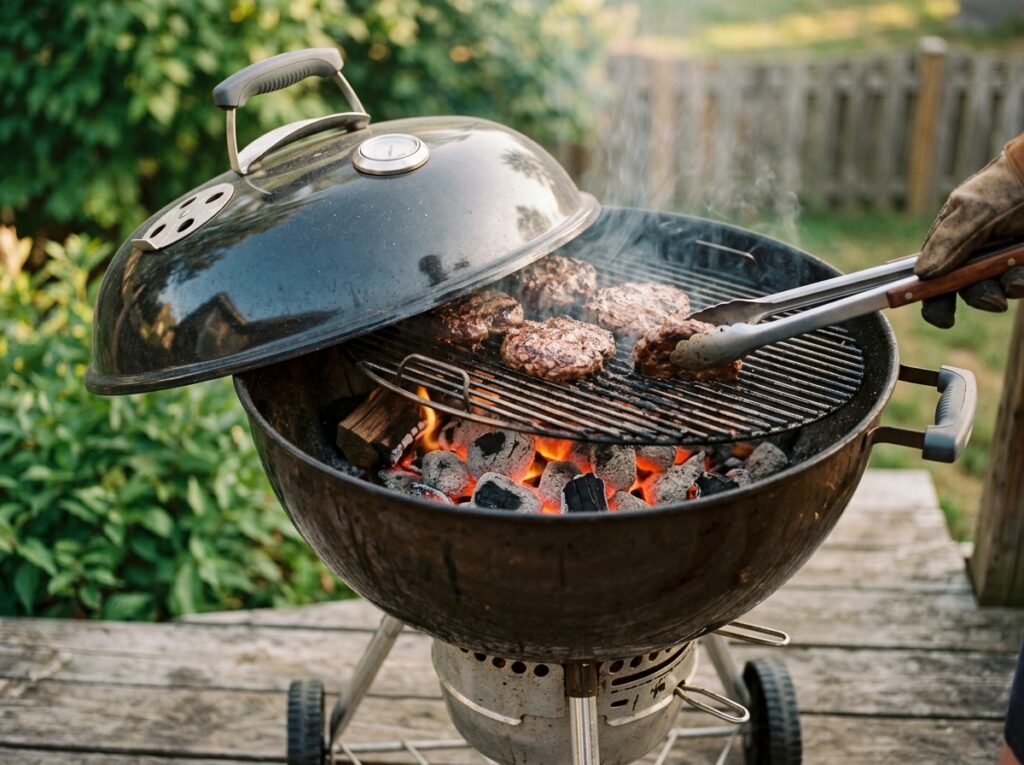
There’s a reason your dad probably grilled on a kettle, your neighbor grills on one, and pitmasters still keep one around even after buying $2,000 smokers. The kettle grill is deceptively simple — just a bowl, a lid, a grate, and some vents. But that simplicity is exactly what makes it so powerful. You can sear steaks at 700°F, slow-smoke a pork butt at 250°F, bake pizza, and roast a whole chicken — all on the same $150 piece of equipment.
The problem? There are dozens of kettle grills on the market now, and they’re not all created equal. Some rust within a year. Others have flimsy legs that wobble every time you flip a burger. A few look great on paper but can’t hold temperature worth a damn.
I’ve spent years testing, cooking on, and comparing kettle grills. This guide breaks down the best kettle grills you can buy right now, what makes each one worth considering, and how to pick the right one for your specific needs. No fluff, no filler — just honest recommendations from someone who’s burned through more charcoal than most people will in a lifetime.
Why the Kettle Grill Still Matters in 2025
With pellet grills, kamado cookers, and smart Wi-Fi-connected smokers everywhere, you might wonder why anyone would still choose a kettle grill. Fair question.
Here’s the short answer: nothing gives you this much cooking versatility for this little money. A quality kettle grill costs between $100 and $400. A good kamado grill starts around $500 and climbs past $2,000 fast. A solid pellet smoker sits in a similar price range.
But the price isn’t even the strongest argument. Kettle grills teach you fire. They make you a better cook because you learn how to manage airflow, control temperature with vents, and work with direct and indirect heat zones. There’s no electronic controller doing the thinking for you. You’re in charge.
And let’s be real — kettle grills produce some of the best-tasting grilled food you’ll ever eat. That combination of charcoal flavor, high radiant heat, and the way drippings vaporize on hot coals creates something a gas grill simply can’t replicate.
Quick fact: Weber sold its first kettle grill in 1952, and the basic design hasn’t changed much since. That’s over 70 years of proof that this thing works.
What I Look for in a Kettle Grill
Before jumping into specific models, let me walk you through what actually separates a great kettle grill from a mediocre one. These are the factors I weigh every time I evaluate one.
Build Quality and Materials
The body of a kettle grill takes serious abuse — heat, rain, grease, temperature swings. Cheap grills use thin steel that warps after a season or two. The best kettles use heavy-gauge steel with porcelain enamel coating inside and out. That enamel does two jobs: it protects against rust and reflects heat back into the cooking chamber for more even temperatures.
Look at the legs, too. A tripod design is classic but can feel tippy with a full load of food. Four-legged designs with crossbars tend to feel more planted and stable.
Vent System and Temperature Control
This is where a lot of budget kettles fall short. The dampers (both top and bottom) need to open and close smoothly, seal reasonably well, and give you enough adjustment range to go from low-and-slow smoking temperatures all the way up to raging hot searing temperatures.
A good bottom vent sweeps ash away from the coals as you adjust it — Weber’s One-Touch system does this brilliantly. If ash builds up and chokes your fire, you lose heat control fast.
Cooking Grate Size and Quality
Most standard kettle grills come in 22-inch or 26-inch diameters. A 22-inch grill gives you roughly 363 square inches of cooking space — enough for about 13 burgers at once. That’s plenty for a family of four with guests. The 26-inch jump feels modest on paper, but it adds nearly 40% more cooking area, which matters if you’re feeding crowds regularly.
The grate material matters too. Plated steel is cheap but rusts over time. Stainless steel lasts longer. Hinged grates let you add charcoal without removing all your food — a small feature that makes a big difference during long cooks.
Ash Management
Nobody talks about this until they own a grill that makes ash cleanup miserable. The best kettle grills have a sealed ash catcher or removable ash bowl underneath. You sweep the ash down, pull out the catcher, dump it, and you’re done. Grills without this feature leave you scooping ash by hand, which is messy and annoying.
The Best Kettle Grills You Can Buy Right Now
I’ve narrowed this list down to models that genuinely earn a recommendation. Each one has a specific strength, so the “best” pick depends on what you need most.
Weber Original Kettle Premium 22-Inch
Price range: $165–$185
If someone asks me to recommend one kettle grill and nothing else, this is it. The Weber Original Kettle Premium is the gold standard for a reason. It doesn’t try to do anything fancy — it just does the fundamentals better than almost everything else in its price range.
The porcelain-enameled bowl and lid hold up for years. The One-Touch cleaning system sweeps ash into a removable aluminum catcher with a single lever. The damper vents are precise enough to hold 225°F for smoking or open up wide for 500°F+ searing.
You get a hinged cooking grate, which is a huge deal if you’re doing any kind of two-zone cooking. Need to add more coals halfway through a long cook? Just flip open the hinged section and drop them in. No removing food, no juggling hot grates.
Who it’s for: Anyone who wants a reliable, proven kettle grill that’ll last 10+ years with basic care. This is the one I recommend to beginners and experienced grillers alike.
One honest critique: The lid handle can get warm during high-heat cooks. Not burning hot, but warm enough that you’ll notice. A pair of solid grill gloves solves this instantly.
Weber Master-Touch 22-Inch
Price range: $250–$280
Think of the Master-Touch as the Premium’s older, slightly more capable sibling. It shares the same proven body and vent system but adds a few upgrades that serious grillers will appreciate.
The biggest addition is the Gourmet BBQ System (GBS) cooking grate. It has a removable center section that accepts interchangeable inserts — a wok, a pizza stone, a sear grate, a griddle. This turns your kettle into a multi-tool. Want to stir-fry vegetables over charcoal? Drop in the wok insert. Craving pizza with that smoky char? Swap in the pizza stone.
You also get a built-in lid thermometer, which the basic Premium model skips. Now, I’ll be honest — lid thermometers on kettle grills aren’t super accurate because they measure air temperature at lid level, not at grate level where your food sits. You’ll still want a good instant-read thermometer for checking food temps. But the lid thermometer is handy as a general reference for whether your grill is in the right ballpark.
Who it’s for: Grillers who want that extra versatility without jumping to a completely different style of cooker. If you see yourself doing more than just burgers and steaks — if you want to experiment with pizza, stir-fry, or dedicated searing — the Master-Touch justifies its price bump.
Weber Performer Deluxe 22-Inch
Price range: $429–$469
This is where kettle grills start feeling like complete outdoor cooking stations. The Performer Deluxe takes the same excellent 22-inch kettle and mounts it on a cart with a prep table, a charcoal storage bin, and a propane ignition system built into the bottom.
That propane ignition system is the standout feature. You press a button, a small gas burner lights underneath your charcoal, and within about 10 minutes your coals are ready to cook. No chimney starter, no lighter fluid, no waiting around. For people who grill several times a week, this convenience adds up fast.
The cart and side table give you workspace for plates, grill tools, sauces, and seasoning — something basic kettle grills completely lack. You also get a larger charcoal capacity, a sealed ash catcher, and the same Gourmet BBQ System grate as the Master-Touch.
Who it’s for: Frequent grillers who want the kettle experience without the minor hassles. If you grill three or more times a week and value convenience alongside flavor, this is the kettle to get.
Worth noting: At this price point, you’re approaching gas grill territory, but you’re getting far superior flavor. That trade-off matters if taste is your priority.
Napoleon Rodeo Pro 22-Inch Kettle
Price range: $190–$220
Napoleon doesn’t get enough credit in the kettle grill space. Most people know them for their high-end gas grills, but their Rodeo Pro kettle is genuinely impressive.
The body is solid — heavy-gauge porcelain-coated steel that feels substantial when you lift the lid. What sets the Rodeo Pro apart are the dual-level stainless steel cooking grates. You get a main grate plus an elevated warming rack with more usable space than most competitors offer.
The bottom vent uses a rotating disk design that provides smooth, precise airflow control. It’s different from Weber’s lever system, but it works just as well once you learn the feel. The included diffuser plate also makes it easier to set up indirect cooking zones, which is great if you’re planning to do any smoking.
Who it’s for: Grillers who want a well-built alternative to Weber and don’t mind trying something different. The Rodeo Pro competes directly with the Master-Touch at a slightly lower price with some unique features.
SNS Grills Slow ‘N Sear Kettle
Price range: $350–$400
This is the grill that serious kettle enthusiasts get excited about. SNS Grills designed their kettle from the ground up around two-zone cooking and smoking. The Slow ‘N Sear insert — a charcoal basket that creates a defined hot zone on one side of the grill — comes built in.
Why does that matter? Because two-zone cooking is the secret to getting the most out of a kettle grill. You put your coals on one side (direct heat for searing) and cook your food on the other side (indirect heat for roasting or smoking). The SNS design makes this setup effortless and consistent. You don’t need to rig up makeshift charcoal baskets or aluminum dividers.
The kettle itself is well-built with heavy steel, a tight-fitting lid, and a quality vent system. The grate is stainless steel and hinged. There’s also a drip pan built into the design, so grease doesn’t pool on top of hot coals and cause flare-ups during long cooks.
If you want to do both smoking and grilling on the same cooker, the SNS Kettle does it better than any other kettle I’ve tested. It holds smoking temperatures remarkably well for a kettle — I’ve maintained 250°F for six-hour cooks without any major adjustments.
Pro tip: If you already own a standard Weber 22-inch kettle, you can buy just the Slow ‘N Sear insert separately and drop it in. It’s not quite the same as the purpose-built SNS kettle, but it’s a massive upgrade for about $100.
Who it’s for: The griller who wants to push the kettle format to its limits. If you plan to smoke ribs, pork butts, or briskets on your kettle regularly, this is the one to get.
Weber Original Kettle 18-Inch
Price range: $80–$100
Not everyone needs a full-size grill. If you live in an apartment with a small balcony, tailgate on weekends, or just want a compact kettle for two people, the 18-inch Weber Kettle is the answer.
You get the same build quality and vent system as the larger models, just in a smaller package. The cooking area drops to about 240 square inches — enough for six to eight burgers or a few steaks and some vegetables.
It’s light enough to carry easily and fits in the trunk of any car. For tailgating and camping trips, it’s hard to beat.
Who it’s for: Solo cooks, couples, apartment dwellers, and tailgaters. Don’t overthink it — if you need something small and reliable, this is your grill.
Oklahoma Joe’s Blackjack Kettle
Price range: $150–$180
Oklahoma Joe’s is better known for their offset smokers, but the Blackjack Kettle holds its own in a crowded field. It’s a 22-inch kettle with a thick steel body and a few smart design touches.
The standout is the adjustable charcoal tray inside the bowl. You can raise or lower the charcoal bed, which gives you direct control over how close your coals sit to the cooking grate. Lower the tray for low-and-slow cooking; raise it when you want intense, steak-searing heat. It’s a simple mechanism that adds genuine cooking flexibility.
The ash dump on the bottom works cleanly, and the lid fits snugly with a good seal. The built-in thermometer is just okay — same advice applies here about using a dedicated wireless meat thermometer for precision.
Who it’s for: Grillers who want adjustable charcoal positioning without aftermarket accessories. If you cook a wide variety of foods at different temperatures, the height-adjustable tray is a meaningful feature.
How to Get the Most Out of Your Kettle Grill
Buying a great kettle grill is step one. Learning to use it properly is where the magic happens. Here are the techniques that make the biggest difference.
Master the Two-Zone Setup
This is the single most important technique for kettle grilling. Pile your charcoal on one half of the grill and leave the other half empty. Now you have a hot direct zone for searing and a cooler indirect zone for gentle cooking.
Sear your steak over the coals for two minutes per side, then slide it to the indirect side to finish cooking to your target internal temperature. This method prevents the outside from burning while the inside catches up. You get a beautiful crust and a perfectly pink center.
The same principle works for chicken thighs, thick pork chops, and bone-in cuts that need more time to cook through. Sear first, then move to indirect and close the lid.
Use the Vents — They’re Your Temperature Knobs
Your bottom vent controls how much oxygen feeds the fire. More air means hotter fire. Less air means cooler fire. Your top vent controls how quickly hot air and smoke exit the cooker.
A good rule of thumb: keep the top vent at least partially open during every cook. If you close it completely, you starve the fire of oxygen, it smothers, and you get bitter, acrid smoke instead of clean thin smoke.
For smoking at 225°F–250°F, you’ll usually want the bottom vent about one-quarter open and the top vent about half open. For high-heat grilling, open both vents wide and let the fire breathe.
The Charcoal Chimney Is Your Best Friend
Please don’t use lighter fluid. It leaves a chemical taste on your food, even if you think it’s burned off. A charcoal chimney starter costs about $15 and lights your coals in 15–20 minutes using just a couple of newspaper sheets or fire starter cubes.
Fill the chimney, light the bottom, wait until the coals on top are ashing over with gray edges, and dump them into your grill. It’s cleaner, faster, and your food tastes better.
Keep It Clean, But Don’t Obsess
After each cook, close all the vents and let the remaining coals die out. Before your next cook, open the bottom vent, light new coals, and once the grill is hot, brush the grate with a good grill brush. That high heat sterilizes the grate, and a quick brushing removes any stuck-on bits.
Every few cooks, dump the ash from the catcher. Accumulated ash restricts airflow and makes temperature control harder. Once or twice a season, wipe down the inside of the lid — you’ll see a flaky black buildup. That’s not mold; it’s carbon and grease residue. It’s harmless, but clearing it out keeps things working smoothly.
Kettle Grill vs. Other Grill Types — Where Does It Fit?
You might be weighing a kettle against other options. Here’s an honest comparison.
Kettle vs. gas grill: Gas grills are more convenient — turn a knob and you’re cooking. But kettle grills produce significantly better flavor thanks to charcoal and smoke. If convenience is everything, go gas. If flavor is your priority, go kettle. Our gas grill guide covers the best options if you lean that direction.
Kettle vs. kamado grill: Kamado grills (like the Big Green Egg or Kamado Joe) are essentially insulated kettles made from ceramic. They hold temperature longer, use less charcoal, and excel at low-and-slow smoking. But they cost 3–5x more and weigh 150+ pounds. A kettle gives you 80% of the capability at 20% of the price.
Kettle vs. pellet grill: Pellet grills are set-it-and-forget-it smokers that maintain temperature automatically. They’re fantastic for long smokes but can’t sear as well as a kettle over open coals. Many serious cooks own both — a pellet grill for overnight briskets and a kettle for weeknight steaks.
Kettle vs. griddle: Griddles are flat cooking surfaces great for smash burgers, eggs, and pancakes. But they can’t smoke, can’t do indirect cooking, and don’t give you that charcoal flavor. Different tools for different jobs. If you’re curious, check our outdoor griddle recommendations.
Common Mistakes New Kettle Grill Owners Make
I’ve made every one of these mistakes, so you don’t have to.
Opening the lid too often. Every time you lift that lid, you lose heat and extend your cook time. For indirect cooking, resist the urge to peek. Your food is fine. If you’re cooking something that takes 30+ minutes, check it maybe once or twice.
Using too much charcoal. You don’t need a mountain of briquettes for every cook. Six to eight burgers? About 50–60 briquettes in a half-moon setup is plenty. For smoking, you need even less — the minion method (a small pile of lit coals placed on top of unlit coals) lets a small amount of charcoal burn slowly for hours.
Ignoring the wind. Wind is the invisible enemy of temperature control. Position your grill so the bottom vent faces away from the prevailing wind. Wind blowing directly into your intake vent sends temperatures spiking unpredictably.
Not preheating the grate. Just like a pan on the stove, a cold grate sticks. Let your grill heat up for 10–15 minutes with the lid on before you put food down. Those sear marks you want? They come from a hot grate.
FAQ
What size kettle grill should I buy?
For most people, 22 inches is the sweet spot. It’s big enough to cook for four to six people comfortably, small enough to fit on a patio or deck, and compatible with the widest range of accessories. Only go with 18 inches if space is extremely limited, and consider 26 inches only if you regularly cook for large groups of 10 or more.
Can you smoke meat on a kettle grill?
Absolutely. A kettle grill is a surprisingly capable smoker. Set up your coals on one side using the minion method, add a couple of wood chunks on top, place a water pan on the empty side, and put your meat above the water pan. With the vents partially closed, you can maintain 225°F–275°F for several hours. I’ve smoked baby back ribs and pork butts this way with excellent results.
How long does a kettle grill last?
A well-maintained Weber kettle can easily last 10–15 years. The porcelain enamel protects against rust, and replacement parts (grates, ash catchers, vents) are widely available and inexpensive. Keep it covered when not in use, dump the ash after each cook, and store it out of standing water. Some people have Weber kettles from the 1990s that still cook beautifully.
Is a kettle grill good for beginners?
It’s one of the best grills for beginners. The design is straightforward — you’re working with charcoal, two vents, and a grate. There’s a learning curve with temperature control, but you’ll get comfortable within three or four cooks. Starting on a kettle teaches you fundamental grilling skills that transfer to every other type of cooker.
What’s the best charcoal to use in a kettle grill?
Briquettes are consistent and predictable — great for beginners and long cooks. Lump charcoal burns hotter, lights faster, and produces less ash, but it’s less uniform in size so heat can be uneven. Many experienced kettle grillers use briquettes for smoking and lump for high-heat searing. Both work well; it’s about matching the charcoal to the cook.
Your Next Step
Here’s what I’d tell a friend sitting across from me: if you don’t own a kettle grill yet, start with the Weber Original Kettle Premium 22-inch. It’s under $200, it’ll last you a decade, and it’ll teach you everything you need to know about live-fire cooking. Once you outgrow it — or more likely, once you realize you want more accessories and convenience — you can upgrade to the Master-Touch or the SNS Kettle.
If you already own a kettle and want to get more out of it, grab a chimney starter, a good instant-read thermometer, and practice two-zone cooking on your next three cooks. That alone will transform your results.
The kettle grill isn’t the flashiest thing in outdoor cooking right now. It doesn’t connect to your phone, it doesn’t have an app, and it won’t maintain temperature while you take a nap. But it puts you in direct contact with fire and food in a way that no other grill does — and honestly, that connection is what makes grilling worth doing in the first place.