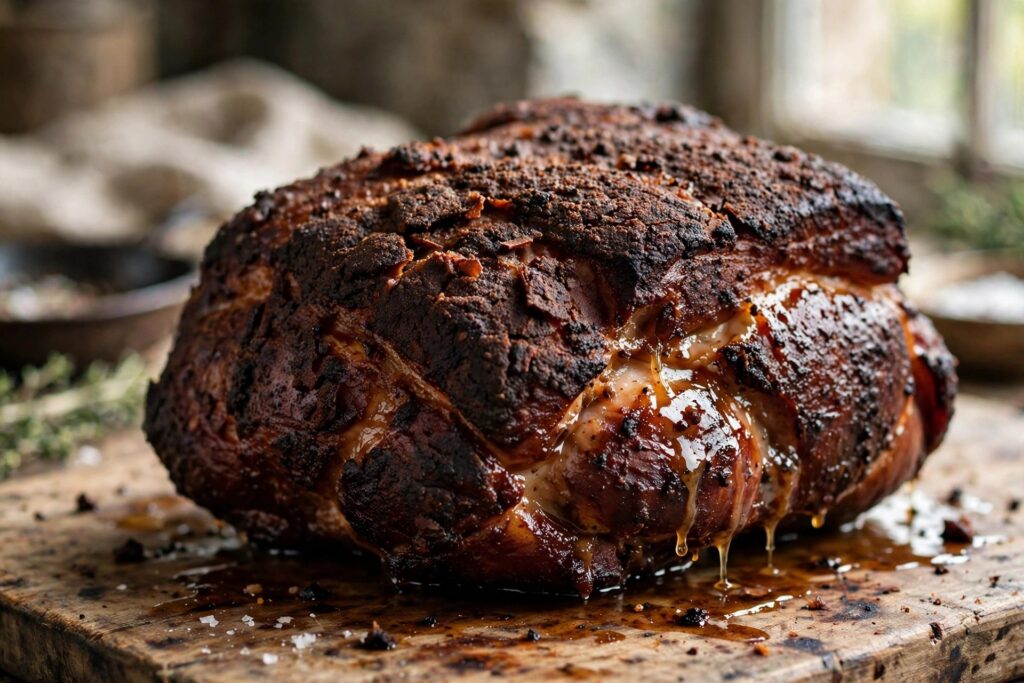
Pulled pork is done when it reaches an internal temperature of 195–205°F. Most pitmasters pull the pork butt off the heat at 200–203°F, when the probe slides in like butter and the blade bone wiggles loose. Yes, pork is technically safe to eat at 145°F — but it won’t shred until the collagen melts, and that only happens up near 200°F.
That one-sentence answer solves the whole puzzle, but there’s a catch: the number alone isn’t the full story. Two butts can both read 201°F and one shreds like a dream while the other fights back. Tenderness is a combination of temperature and time, and understanding the difference is what separates great pulled pork from the stubborn, stringy kind.
This guide covers the exact temperature target for pulled pork, why it sits so far above the safety line, what happens at each stage of the cook, where to place your probe so you’re not fooled, and the feel tests that tell you it’s truly ready.
The Target: 195–205°F for Pulled Pork
If you need one number to memorize, make it 200°F. That’s the internal temperature for pulled pork that the majority of experienced cooks aim for. At that point the connective tissue has broken down enough that the meat pulls apart with almost no resistance.
The workable window is 195°F on the low end to 205°F on the high end. Pull at 195°F and you’ll get good pulled pork — a few stubborn spots, maybe, but nothing a fork can’t handle. Let it ride to 200–203°F and it practically falls apart on its own. Push past 205°F and you’re in mush territory: the meat turns pasty, loses its texture, and dries out as the shredded fibers squeeze out moisture.
There’s an old habit among beginners of treating the USDA safe temperature — 145°F — as the finish line. For a pork chop, that is the finish line. For pulled pork, it’s barely the starting gun. More on why below.
Why 145°F Is Safe but Nowhere Near Done
Here’s the distinction that trips people up. The USDA’s minimum safe temperature of 145°F is a food safety number. It means the heat has killed the pathogens that matter. Nothing about 145°F says the meat is tender.
A pork butt — the shoulder cut used for pulled pork — is loaded with collagen, the tough connective tissue that holds muscle fibers together. Collagen doesn’t care about 145°F. It starts melting into rich, silky gelatin around 160°F and needs hours of heat above that to finish the job. That’s the entire reason pulled pork is a low-and-slow cook in the first place.
Pull a butt at 145°F and you’ve got a safe, sliceable roast — chewy, dense, and impossible to shred. That’s fine if you want roasted pork shoulder for dinner. But if you want pulled pork, you need the full journey to the low 200s. Think of 145°F as “won’t hurt you” and 200°F as “falls apart.”
This is also why the standard pork doneness chart and the pulled-pork target live in different worlds. Same animal, different goal, different finish line.
What Happens Inside the Butt at Each Temperature
The cook is a slow march through distinct stages, and knowing what’s happening inside helps you read your thermometer with confidence instead of anxiety. Here’s the timeline for an average butt on a 250°F smoker:
| Internal temp | What’s happening | What you should do |
|---|---|---|
| 40–140°F | The smoke ring forms and the surface takes on color; meat is still firm and raw-tasting | Leave the lid closed; don’t fuss with it |
| 140–160°F | Collagen starts softening; bark begins to set and darken | Start watching for the stall |
| 150–170°F | The stall: evaporation cools the meat and the climb pauses, sometimes for hours | Wrap in foil or butcher paper if you’re in a hurry, or wait it out |
| 180–190°F | Fat renders heavily; meat is tender enough to slice but still resists shredding | Don’t pull yet — this is where impatient cooks go wrong |
| 195–205°F | Collagen fully converts to gelatin; fibers release from each other | Start probing for tenderness; pull when it glides in |
| Above 205°F | Structure breaks down too far; texture turns mushy and moisture escapes | You’ve overshot — rest it and serve immediately |
The stall deserves a special mention because it’s the moment most beginners panic. Your thermometer will sit at 160°F for what feels like forever — that’s normal. Evaporative cooling is fighting your heat, and the meat is still cooking, just not climbing. Understanding the stall is half the battle; pushing through it is the other half.
Where to Put the Probe (This Matters More Than You’d Think)
A thermometer only tells the truth about the exact spot its tip touches. On a pork butt, that’s a problem, because a butt is thick, uneven, and has a bone running through the middle. Place the probe wrong and you’ll get a reading that’s 10 degrees off from reality — in either direction.
Do it this way:
- Aim for the thickest part of the meat, pushing the probe in at least 2–3 inches. That’s where the last collagen melts, so it’s the slowest spot and your true doneness indicator.
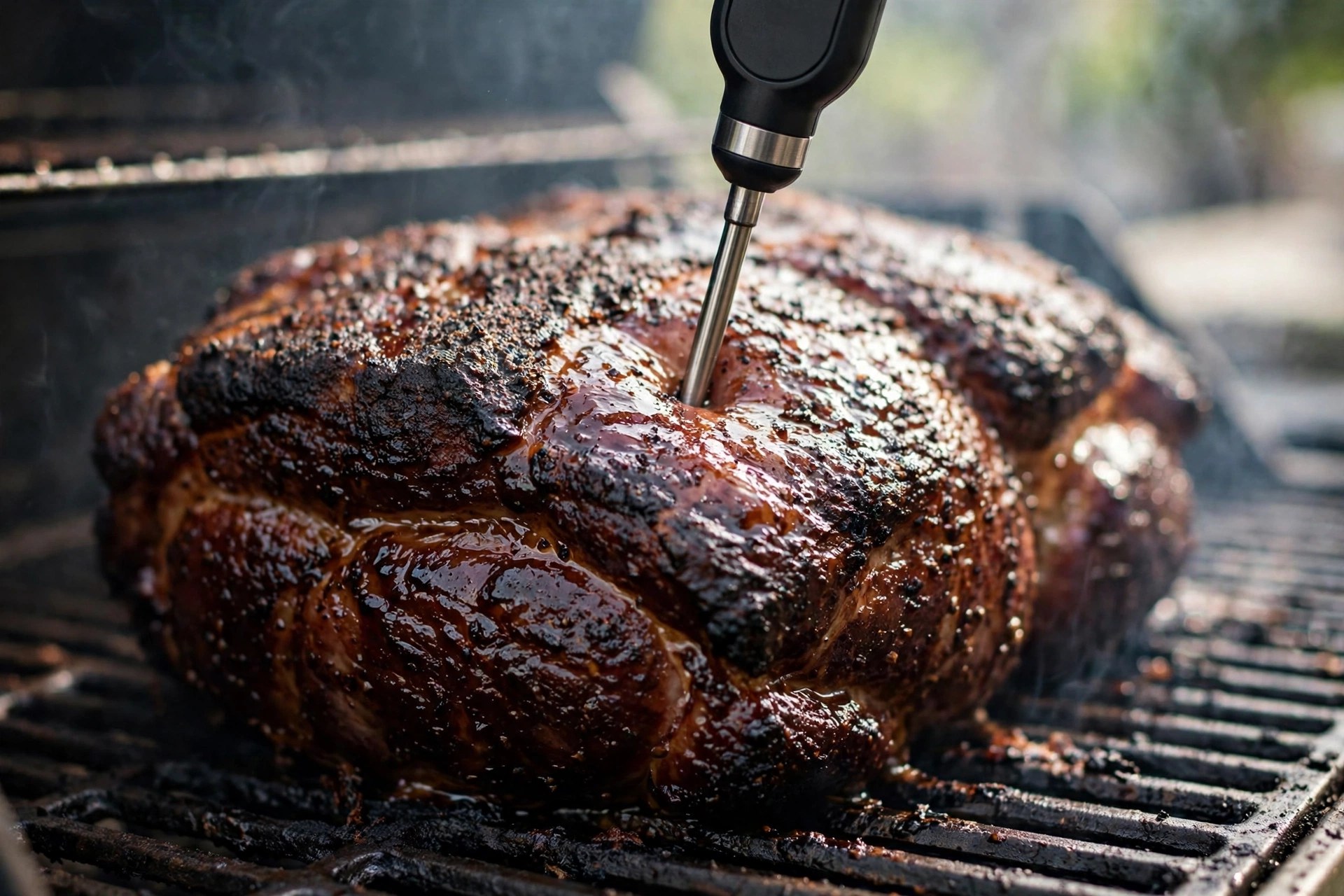
- Keep the tip away from the bone. Bone conducts heat differently and will lie to you — it’ll read hot when the surrounding meat isn’t there yet. Probe beside the bone, not touching it.
- Stay out of fat pockets. A big seam of fat will read cooler than muscle and make you overcook. If you hit resistance-free glide right away, you’re probably in fat — pull back and re-probe.
- Check two or three spots once you’re near 195°F. Butts cook unevenly; one side can lag the other by 5–8°F.
If you’re running a leave-in probe during the cook, back it up with a good instant-read thermometer for the final call. Leave-in probes are for tracking; instant-reads are for deciding.
The Feel Test: Probe-Tender Beats the Number
Here’s a secret the temperature charts leave out: the number is your guide, but feel is your verdict. Two butts at 200°F can have different textures because thickness, fat content, and cook speed all vary. That’s why pitmasters talk about “probe-tender” — and why it matters more than any single reading.
The probe test. Slide your thermometer probe into several spots around the butt. When it’s done, it should glide in with almost no resistance — like pushing a skewer through room-temperature butter. If you feel the probe pushing through tight muscle, the meat isn’t ready, whatever the display says.
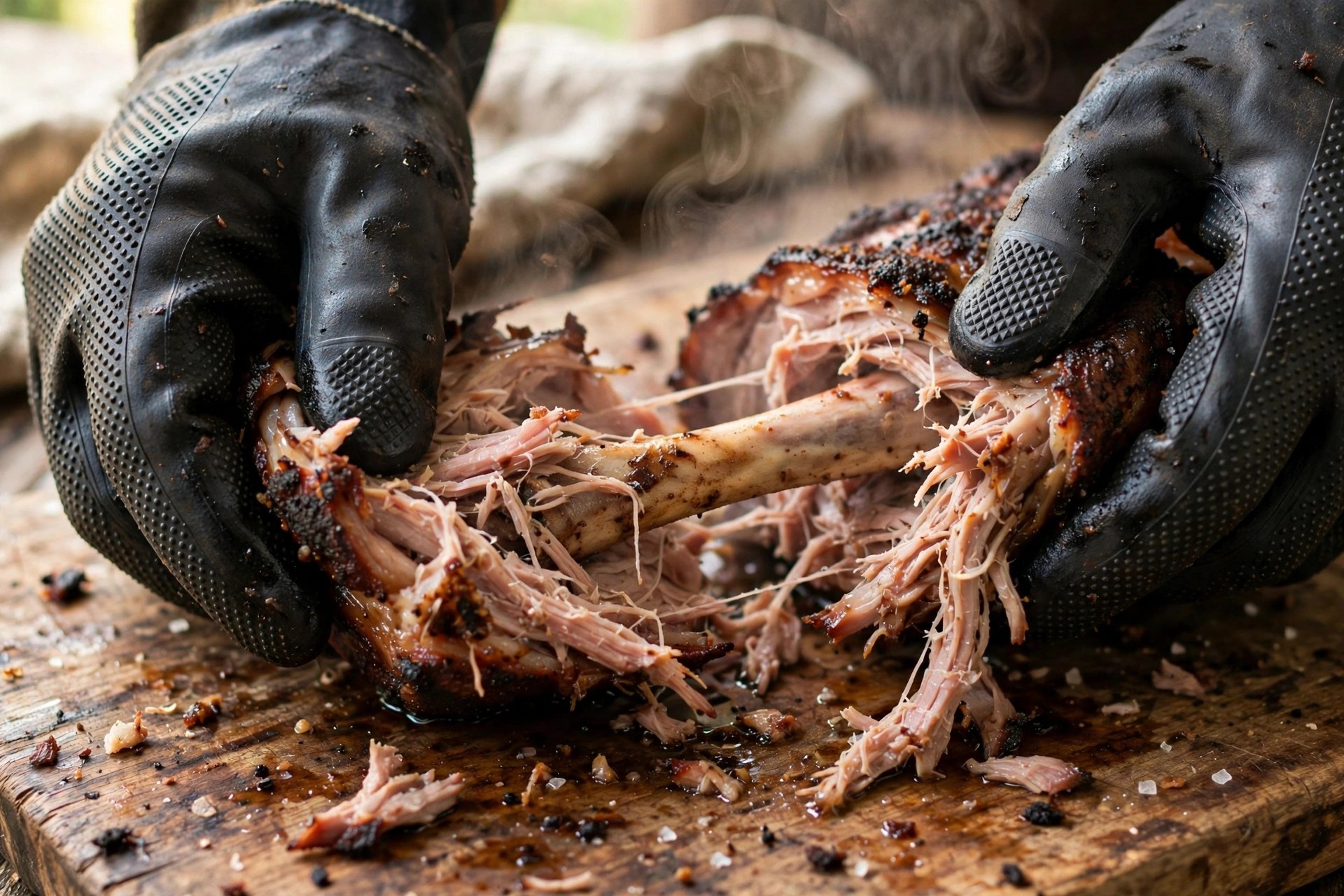
The wiggle-bone test. Grab the blade bone with a pair of tongs or a gloved hand and give it a gentle twist. When the butt is ready, the bone loosens and slides out almost clean, with the meat barely clinging. This works because the collagen surrounding the bone is the last to melt — if the bone moves freely, everything else is done too.
The jiggle test. Give the butt a little shake on the grate. A finished butt feels loose and jiggly, like the whole thing might fall apart. An unfinished one feels solid and firm, like a single block.
Use the temperature to tell you when to start checking — begin probing around 190–195°F. Use feel to tell you when to pull. As one doneness guide puts it, that butter-soft probe feel beats any single reading. That’s the sentence worth underlining.
Don’t Skip the Rest
You carried a butt all the way to 200°F over 10+ hours. Pulling it apart immediately would be like running a marathon and sprinting the last mile — unnecessary and costly. Rest it.
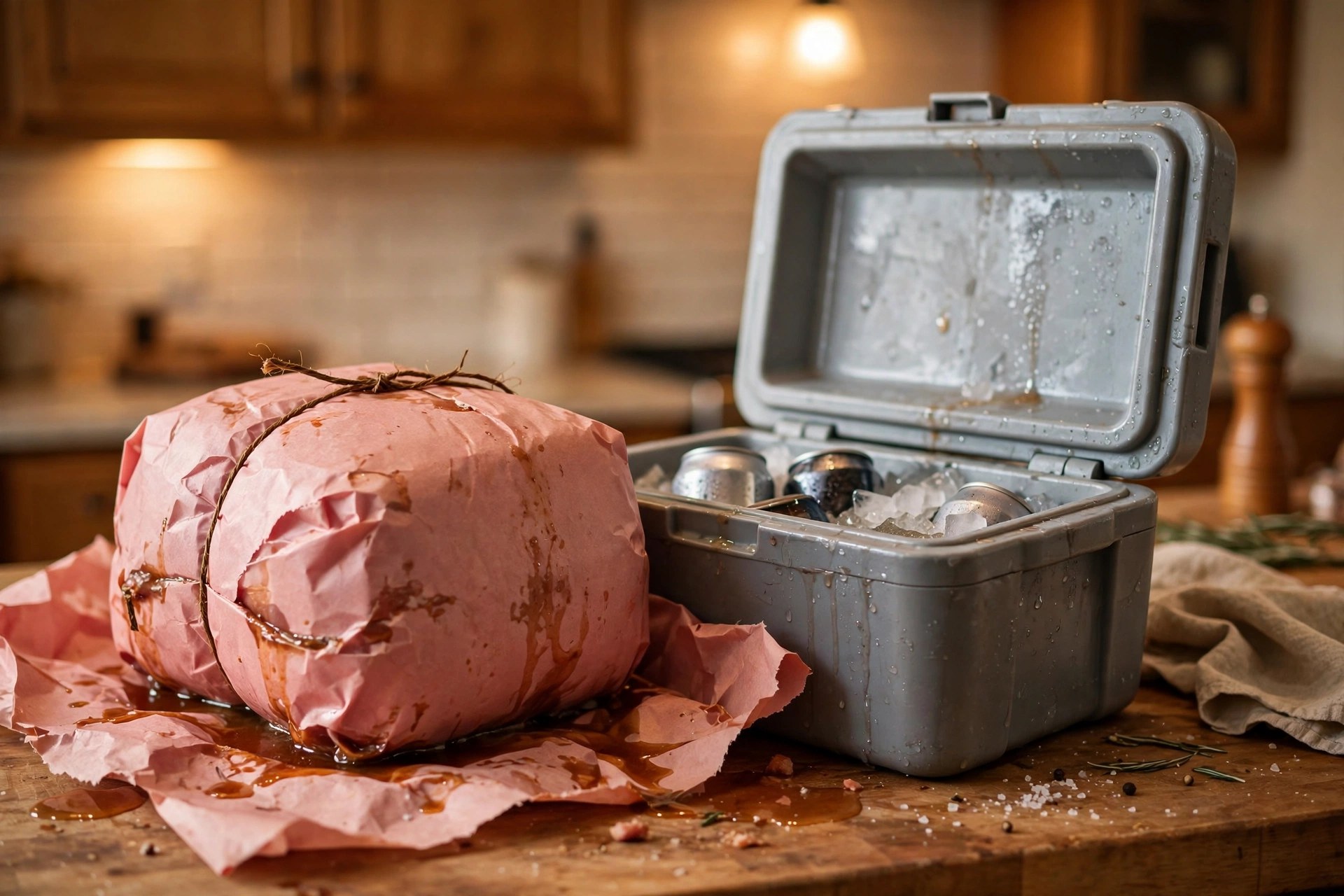
The minimum rest is 30 minutes, wrapped in foil or butcher paper. An hour is better. If dinner timing is tricky, a wrapped butt will hold in a dry cooler (no ice) packed with towels for 2–4 hours and stay piping hot — this is what caterers do, and it actually improves the result because the long, gentle hold lets the gelatin set slightly and the juices settle back into the fibers.
A few rest rules:
- Keep it wrapped the whole time — unwrapped resting bleeds heat and moisture.
- If you wrapped in foil for the cook, vent it for 5 minutes before re-wrapping to rest, or the bark steams into mush.
- Expect carryover cooking of 3–5°F in the first 20 minutes. If you like pulling at exactly 200°F, take it off at 195–197°F and let carryover do the last bit.
- Pull or shred after the rest, not before — shredding exposes surface area and the meat cools and dries fast.
The resting principles are the same ones that apply to resting a brisket — patience at the end pays off on the plate.
Overshot or Undershot: Fixing a Miss
Even with a good thermometer, cooks go sideways. Here’s how to recover.
Pulled it at 185°F and it’s tough? This is the most common mistake. The meat is safe but the collagen hasn’t finished melting, so it shreds in chunks and chews stringy. The fix is simple: put it back on. Wrap it, return it to a 250–275°F smoker or a 300°F oven, and take it the rest of the way to 200°F. No harm done.
Overshot to 208–210°F? It’ll be mushy — fine for sandwiches where texture matters less, less ideal for presentation. Don’t toss it. Chop rather than pull (the strands are too fragile), mix in the rendered juices, and serve it sauced. Nobody at the table will complain.
Dry even at the right temp? Two usual culprits: no rest, or the butt itself was lean. Mix the collected drippings back into the shredded meat, and next time consider a slightly fattier butt or a shorter unwrapped phase. What temp you cook at matters too — the right smoker temperature for pork butt keeps the long cook from drying the outside before the inside finishes.
Frequently Asked Questions
Can I pull pork at 190°F?
You can, but expect a fight. At 190°F most of the collagen has melted, but some tough pockets remain. The meat will shred with effort and a few chunks will refuse to break down. Give it another 30–60 minutes to reach 195–200°F and it will reward you.
Is 205°F too hot for pulled pork?
205°F is the top of the acceptable range, not a disaster. Some butts — especially big, thick ones — are at their best right at 203–205°F. Past 205°F the texture turns mushy. Judge by probe feel first and the number second.
How long should pulled pork rest before shredding?
Rest a minimum of 30 minutes wrapped in foil or butcher paper; an hour is ideal. It can hold in a towel-lined cooler for 2–4 hours and stay hot. Shred after the rest, not before.
Does a boneless butt cook to the same temperature?
Yes — 195–205°F is the target either way. Boneless butts cook a little faster and more evenly since there’s no bone slowing heat transfer, so start checking about 30 minutes earlier. You lose the wiggle-bone test, so rely on the probe glide instead.
What smoker temperature gets me to 200°F internal?
225–275°F is the standard range. At 225°F a typical 8-pound butt takes 12–16 hours; at 275°F the same butt finishes in 8–10 hours. The internal target doesn’t change — only the journey time does.
Your next step is simple: on your next cook, start probing for tenderness at 190°F, pull when the probe glides like butter — usually 200–203°F — and rest it wrapped for an hour. Do that once and you’ll never wonder about the number again.
[…] is where collagen has fully rendered, and carryover finishes the job while the meat rests. Our pulled pork temperature guide digs into why that window matters. Second, these are starting points, not gospel. The only […]
[…] temp verified with a probe in the thickest injected area. Check our pork temperature guide and pulled pork target temps for exact […]