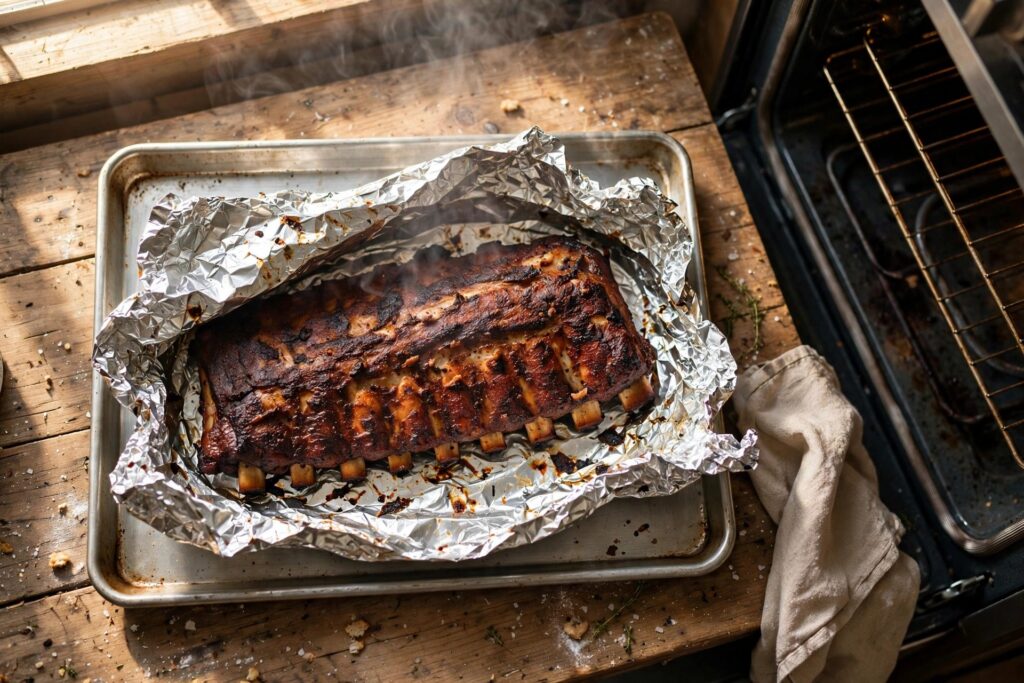
The best way to reheat ribs without drying them out is in a 325°F oven: wrap the ribs tightly in foil with a splash of apple juice, broth, or drippings, then heat until the thickest part of the meat reads 165°F on an instant-read thermometer. A refrigerated half rack usually gets there in 25 to 35 minutes. This guide shows you exactly how to reheat ribs in the oven, on the grill, and with faster methods when you’re short on time.
The Golden Rule: Cover Them, Go Gentle, Hit 165°F
Everything about reheating ribs comes down to one problem: leftover ribs have already given up most of their moisture during the first cook. There is less water left to lose, so the second round of heat is where things go wrong. Dry, exposed heat pulls out what little remains, and you end up with ribs that taste like they were cooked twice. Because they were.
The fix works for every rib type and every method on this page. Keep the ribs covered while they warm through. Add a small splash of liquid inside the wrap. Pull them the moment the thickest part of the meat hits 165°F — the safe temperature for all reheated leftovers, per the FoodSafety.gov temperature chart. The thermometer is doing the deciding, not the timer.
Once the center is at temperature, you can uncover the ribs for a few minutes to firm up the bark or set the sauce. Do that last, keep it short, and you get the best of both worlds: hot, juicy meat with a surface that doesn’t taste steamed. The same logic applies to reheating brisket and pulled pork, which dry out for exactly the same reasons.
Why Reheated Ribs Dry Out in the First Place
Understanding the failure modes helps you avoid them, so here’s what’s actually happening inside the ribs during a reheat.
First, muscle fibers squeeze. Meat proteins contract as they heat, wringing out moisture like a sponge being twisted. This already happened once during the original cook, which is why the meat is denser and less forgiving now. A second hard squeeze leaves very little juice behind.
Second, uncovered hot air is brutal. Convection in a 375°F oven strips surface moisture fast. The outside of the ribs can be parched and leathery while the center is still cool, because heat moves inward slowly through thick meat. Cranking the temperature only widens that gap.
Third, sugar scorches. Most barbecue sauces are heavy on brown sugar, honey, or molasses, and those sugars start caramelizing and then burning well below broiler temperatures. Sauced ribs left exposed to direct heat for the whole reheat come out with blackened, bitter patches instead of a glossy glaze.
Covering the ribs solves all three at once. The wrap traps steam, which keeps the surface damp and the heat even. The liquid inside the wrap adds a little humidity insurance. And low, steady heat gives the center time to catch up without the edges paying the price.
How to Reheat Ribs in the Oven (the Best All-Around Method)
For most people, most of the time, the oven wins. It gives you even heat, room for full racks, and total control over the wrap. Here’s the exact process:
- Heat the oven to 325°F. That temperature is warm enough to move things along but gentle enough to be forgiving. Lower (250°F) works too and is even gentler — it just takes longer.
- Bring the ribs out of the fridge and let them sit at room temperature for 15 to 20 minutes while the oven heats. Cold ribs straight from the fridge heat unevenly, with a frigid center and an overdone exterior.
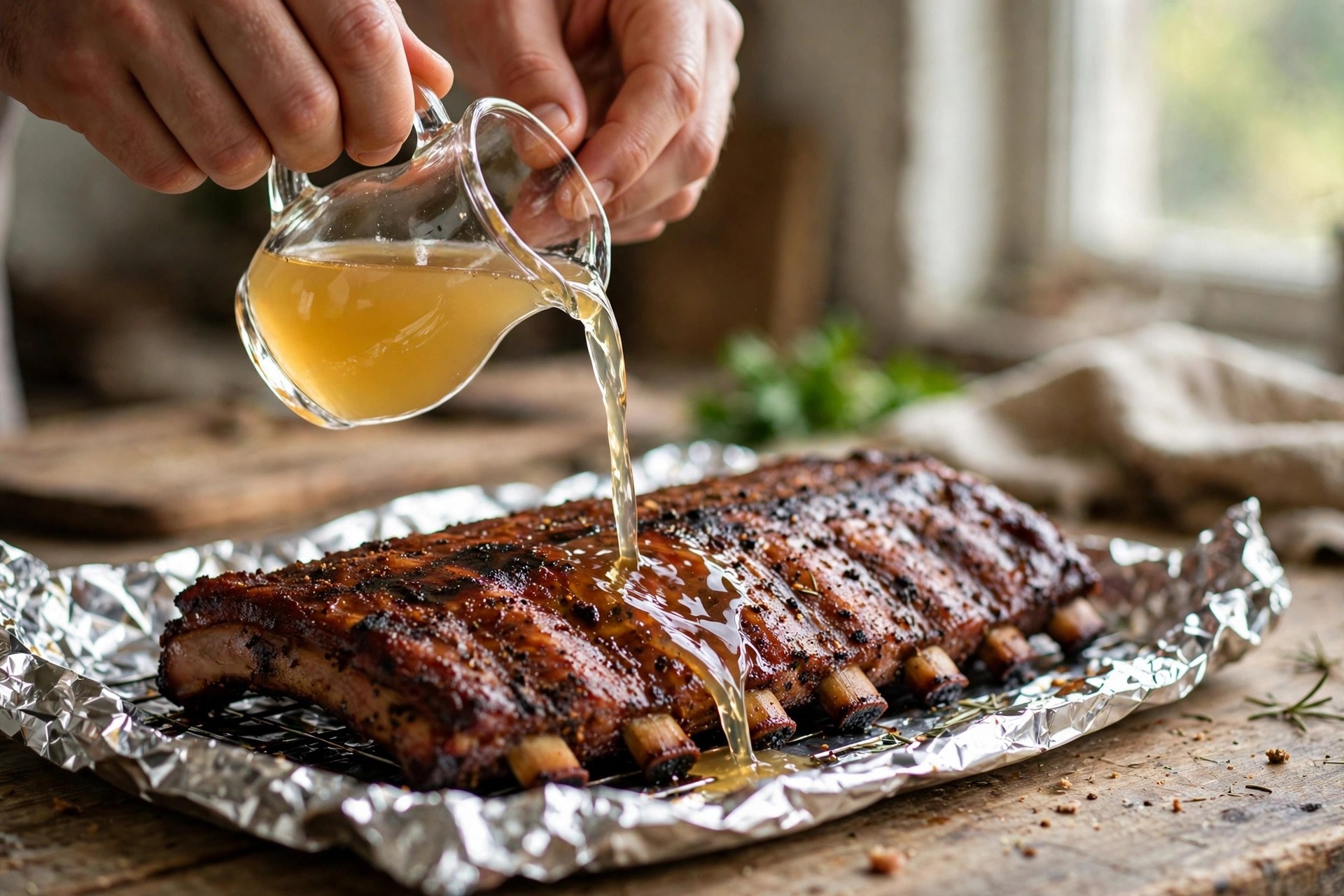
- Add a splash of liquid. Two to three tablespoons per half rack is plenty. Apple juice, chicken or beef broth, water, or — best of all — reserved drippings from the original cook. For pork ribs, apple juice or broth. For beef ribs, beef broth or drippings.
- Wrap tightly in heavy-duty foil, or place the ribs in a baking dish and seal the top with foil. Meat side up for pork ribs; don’t overthink the orientation, just seal every edge so steam can’t escape.
- Heat until the thickest part reads 165°F. Start checking early: 20 to 30 minutes for a few refrigerated bones or a half rack, 35 to 45 minutes for a full rack. Slide the probe between two bones, centered in the meat — touching bone gives a false high reading.
- Uncover briefly if you want texture. Once the center hits 165°F, unwrap and give the ribs 5 to 8 minutes back in the hot oven to firm the bark, or a couple of minutes under the broiler to set fresh sauce. Watch sauced ribs like a hawk here — sugar goes from set to scorched fast.
- Rest 5 minutes, then slice and serve. A short rest lets the juices settle back into the meat instead of running out onto the cutting board.
If you’re cooking ribs today to serve tomorrow rather than reheating true leftovers, the same method applies — and our guide on how to keep BBQ warm covers the holding side of that plan.
Oven vs Grill vs Air Fryer vs Microwave: Which Method Wins?
Every method can work. They just trade moisture, texture, speed, and effort differently. Here’s the honest comparison:
| Method | Temp | Time (refrigerated) | Moisture | Best for |
|---|---|---|---|---|
| Oven | 325°F, covered | 20–45 min | Excellent | Full racks, half racks, most situations |
| Grill | 250–300°F, indirect | 15–35 min | Very good (wrapped) | Bark, char, outdoor finish |
| Air fryer | 350°F | 5–10 min | Fair | 2–3 cut bones, quick lunch |
| Microwave | 50% power | 3–5 min | Poor to fair | Last resort, single servings |
| Smoker | 225–250°F | 30–60 min | Good (wrapped) | When the pit is already running |
The oven is the default recommendation because it’s the most forgiving across every variable: portion size, rib type, and how dry the ribs already are. The grill earns its place when surface texture matters to you. Everything else is a situational tool.
How to Reheat Ribs on the Grill
Reheating on the grill makes sense when you want bark back, a little char, or that outdoor finish the oven can’t give you. The technique mirrors the oven method, with one critical difference: you must stay on indirect heat.
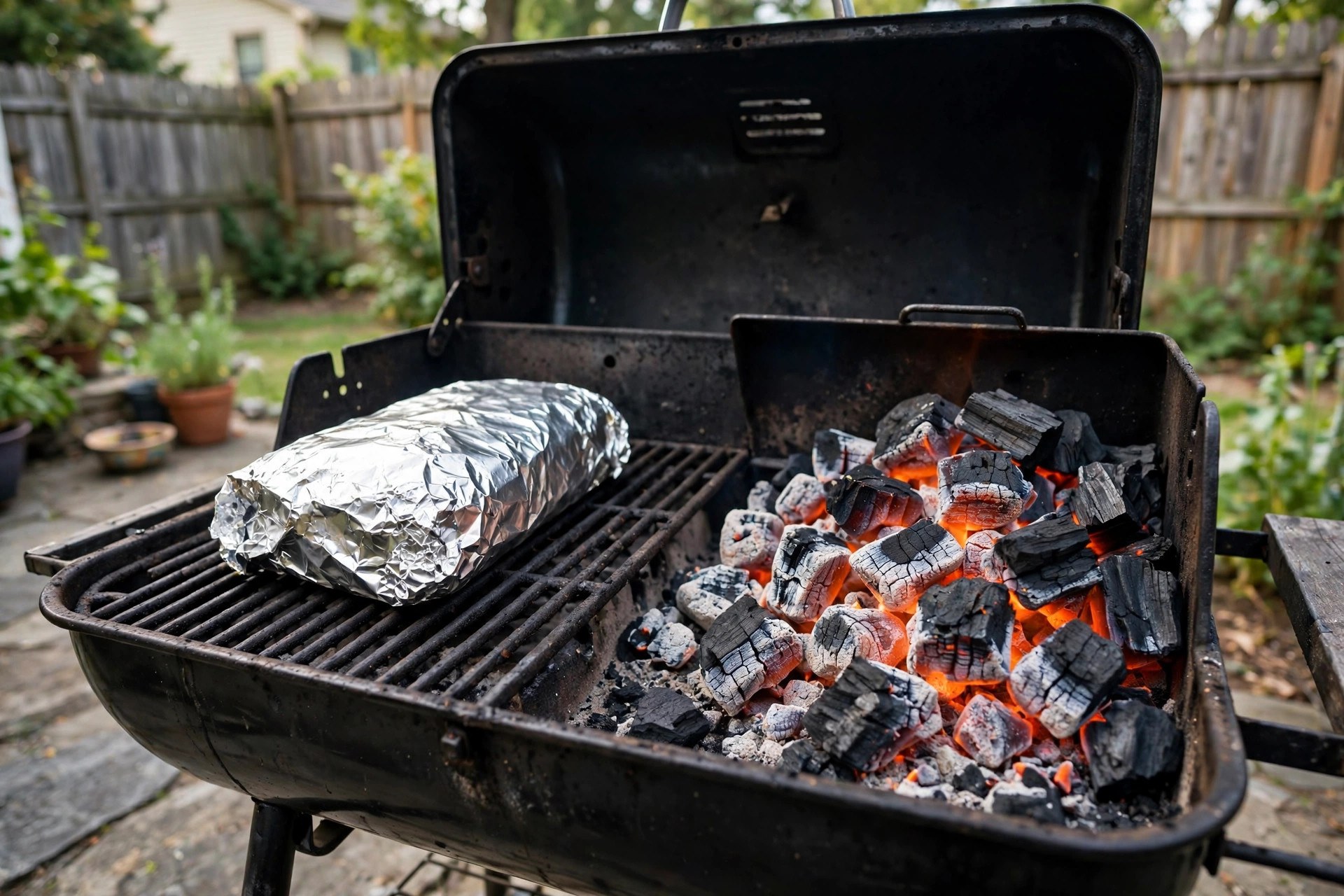
Set up a two-zone fire — coals or burners on one side, nothing on the other. Wrap the ribs in foil with a splash of liquid, exactly as you would for the oven, and place the packet on the cool side with the lid closed. Grill temperature should sit between 250°F and 300°F. Thawed portions take 15 to 35 minutes; flip the packet once halfway through so both sides warm evenly.
Only unwrap near the end, once the center is already hot. Give the ribs 3 to 5 minutes directly over the heat (or under a hot lid) to crisp the bark, brushing on fresh sauce in the last couple of minutes if you like. Sauce applied at the start will burn long before the middle is warm — save it for the finish.
One thing to skip: the microwave-style shortcut of blasting ribs over direct flames to “warm them quick.” That’s how you get ribs that are charred outside and cold in the middle, which is the exact failure the wrap method exists to prevent.
Reheating by Rib Type: Baby Backs, Spares, and Beef Ribs
Not all ribs reheat the same. The leaner and thinner the cut, the faster it dries out — so match your care level to the meat:
- Baby back ribs are the most fragile. They’re leaner than spares with less fat to protect them, so they dry out fastest. Use the low end of the time ranges, don’t skip the liquid, and pull them at 165°F without pushing further. Extra sauce or a light mop before wrapping helps a lot.
- Spare ribs and St. Louis cut are the most forgiving pork ribs. More fat, more meat, more margin for error. They handle the full 35 to 45 minutes for a whole rack without complaint, and they reheat beautifully on the grill.
- Beef back ribs look big but carry less meat than you’d think, and that meat dries quickly without protection. Wrap them well and keep the finish short.
- Beef plate short ribs are the opposite problem: very thick, so the center takes much longer to warm through. Probe in two or three spots, not just one, and budget extra time. Thawed short ribs can need 45 to 60 minutes even wrapped.
If you’re not sure what you’re holding, our breakdown of how many ribs are in a full rack will help you identify the cut — and plan portions for next time.
Frozen Ribs, Sauced Ribs, and the Rules That Keep You Safe
A few situations need their own playbook:
- Reheating from frozen. It’s safe to reheat frozen ribs without thawing first — just keep them wrapped and budget roughly 50% more time than a thawed portion. A frozen half rack that would take 30 minutes thawed needs about 45. Probe the very center carefully before unwrapping.
- Sauced ribs. Hold the fresh sauce until the last few minutes. Reheat wrapped and unsauced (or with only a light coat), then brush on fresh sauce during the uncovered finish so it sets glossy instead of scorching.
- Dry-rubbed ribs. These are the easiest to reheat well — no sugar to burn, no sauce to manage. A light spritz of apple juice before wrapping is all they need.
- Only reheat what you’ll eat. Cooling and reheating the same ribs twice wrecks the texture and multiplies the food-safety risk. Portion before you store, not before you serve.
Now the safety checklist, because it matters more here than with a fresh cook:
- Were the ribs refrigerated within 2 hours of cooking (1 hour if it was over 90°F outside)? If not, throw them out. Reheating can’t undo that.
- Have they been in the fridge 3 to 4 days or less? Cooked meat leftovers keep 3 to 4 days refrigerated and 2 to 6 months frozen, according to the FoodSafety.gov cold storage chart. Past that, don’t gamble.
- Does the thickest part of the meat hit 165°F? That’s the target for all leftovers — no exceptions, no eyeballing.
- Skip the slow cooker for reheating. It warms food too slowly through the danger zone (40°F to 140°F). A slow cooker is fine for holding already-hot ribs at a party, not for the reheat itself. More on safe holding in our guides to how long smoked meat lasts in the fridge and storing leftover BBQ.
Frequently Asked Questions
What temperature should ribs reach when reheated?
165°F in the thickest part of the meat, measured with an instant-read thermometer. That’s the safe minimum for all reheated leftovers, and it applies whether you use the oven, grill, or air fryer. Don’t judge by bubbling sauce or steaming foil — only the thermometer reading counts.
Can you reheat ribs twice?
You shouldn’t. Every reheat squeezes out more moisture and gives bacteria another trip through the danger zone. Portion your leftovers before storing so you only reheat what you’ll eat in one sitting. If you must reheat twice, the ribs still need to hit 165°F throughout — but expect noticeably drier meat.
Should ribs be reheated covered or uncovered?
Covered for the reheat, uncovered only for a brief finish. Wrapping in foil (or using a covered pan) traps steam and keeps the surface from drying out while the center warms through. Uncover for just 5 to 8 minutes at the end if you want to firm up the bark or set fresh sauce.
How long does it take to reheat ribs in the oven at 350°F?
About 15 to 25 minutes for a refrigerated half rack wrapped in foil — but 350°F is hotter than ideal and less forgiving. At 325°F you get a wider margin before the edges dry out, so most pitmasters prefer the slightly lower temperature even though it takes 5 to 10 minutes longer.
Can I reheat ribs in an air fryer without drying them out?
Yes, for small portions — 2 or 3 cut bones, not a full rack. Run the air fryer at 350°F for 5 to 8 minutes, checking at the halfway mark. A light brush of sauce or a few drops of apple juice before cooking helps, and don’t overcrowd the basket. Air fryers dry edges fast, so this method trades some moisture for speed and crispness.
Your next step is simple: next time ribs come off the smoker, wrap the leftovers in meal-sized portions with a spoonful of drippings before they go in the fridge. That one habit — portioned, wrapped, with liquid — makes every future reheat nearly foolproof.