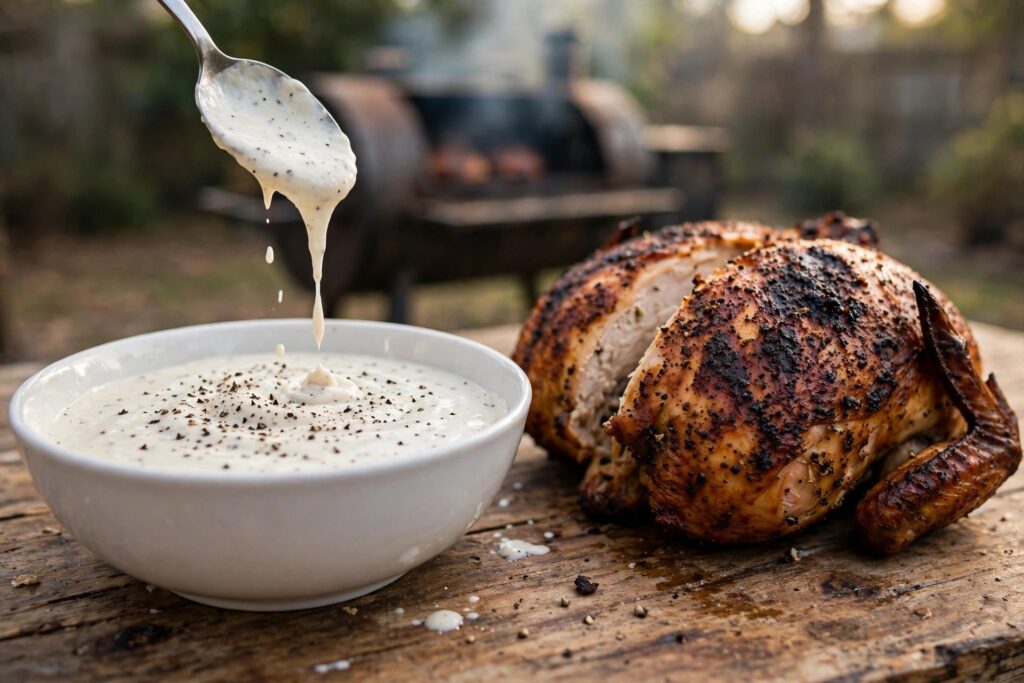
Alabama white sauce is a tangy, mayonnaise-based barbecue sauce made from mayo, apple cider vinegar, salt, and plenty of black pepper, with horseradish or cayenne for bite. It was invented by Big Bob Gibson in Decatur, Alabama, in 1925 as a sauce for his smoked chicken. Instead of tomato or mustard, it cuts through rich smoke with bright acidity — the state’s answer to the red sauces of the rest of the South.
The first time you see it, you might think somebody mixed up the coleslaw dressing. A creamy white drizzle over barbecued chicken looks wrong if you’ve grown up around sweet red sauce. Then you taste it. The vinegar hits first, sharp and clean, then the pepper blooms, and suddenly the smoky richness of the chicken makes perfect sense. This is sauce built for one job: cutting through fat and smoke without hiding either.
What Is Alabama White Sauce, Exactly?
Strip it down and Alabama white sauce is an emulsified sauce: fat (mayonnaise) whisked with acid (apple cider vinegar) and seasoned with salt, coarse black pepper, lemon juice, and a little heat from cayenne or horseradish. It is thick enough to cling to a chicken half, tangy enough to cut a mouthful of smoke, and peppery enough to remind you it’s barbecue.
The texture sits somewhere between a thick vinaigrette and a loosened-up ranch dressing. It is not ranch, though — ranch is buttermilk-thin with herb flavor. White sauce is richer, sharper, and built on vinegar, not dairy. Pitmasters in North Alabama are quick to correct you on that.
What makes it distinct in the barbecue world is that it contains no tomato, no mustard base, and no molasses. Every other regional sauce is built on one of those. White sauce starts where other sauces end: with mayonnaise, an ingredient most pitmasters wouldn’t go near. That’s exactly why it works on chicken — poultry doesn’t have the heavy fat of brisket or pork shoulder, so it can handle a sauce with real richness of its own.
Where Did It Come From? The Big Bob Gibson Story
Every origin story in barbecue is a little disputed, but this one is as solid as they come. Robert “Big Bob” Gibson — a railroad man from Decatur, Alabama — started cooking barbecue in his backyard in 1925. He built massive hickory-fed pits and smoked whole split chickens, and he served them with a sauce nobody had seen before: mayonnaise thinned with apple cider vinegar, kicked up with black pepper and cayenne.
The timing matters. In 1925, barbecue in the South meant vinegar or tomato sauces, and chicken was barely a barbecue meat — pork and beef ruled. Gibson’s smoked chicken with white sauce was a gamble on all fronts, and it paid off. His restaurant, Big Bob Gibson Bar-B-Q, has been running in Decatur ever since, and the family recipe has stayed remarkably consistent through four generations.
Gibson’s original formula, shared over the years, gives you a sense of the proportions: roughly 1 quart of mayonnaise to ¾ quart of apple cider vinegar — a much thinner ratio than most home versions — plus corn syrup for sweetness, horseradish, lemon juice, cayenne, salt, and black pepper. Modern backyard recipes lean thicker and drop the corn syrup, but the vinegar-forward bite is non-negotiable.
From Decatur, the sauce spread across North Alabama and then the whole state. It stayed a regional secret for decades — one of those things you didn’t know existed until you drove through Alabama. Lillie’s Q traces how the sauce went from a Decatur original to a national cult favorite, and notes that North Alabama pitmasters still treat it as the defining sauce of the region.
What Goes Into a Classic Recipe
The backbone never changes: mayonnaise, vinegar, salt, pepper. Everything else is a seasoning knob. Here’s a reliable home version that makes about 2 cups:
- 2 cups mayonnaise — Duke’s if you can get it; it has no added sugar and a higher egg-yolk content that makes a richer base
- ½ cup apple cider vinegar — the soul of the sauce; white vinegar works but tastes sharper and less rounded
- 1–2 tablespoons prepared horseradish — the traditional kick; use the mild end first and adjust
- 2 teaspoons lemon juice — brightens everything
- 1½ teaspoons coarse black pepper — freshly cracked, never the dusty pre-ground stuff
- 2 teaspoons yellow mustard — for emulsification and a whisper of tang
- 1 teaspoon kosher salt
- ½ teaspoon cayenne pepper — for background heat
- ¼ teaspoon garlic powder
Whisk it all until smooth, then refrigerate at least an hour before serving. It genuinely tastes better the next day — the pepper and horseradish need time to bloom into the vinegar. Thin it with a spoonful more vinegar if it clings too thick; every brand of mayo behaves a little differently.
The balance you’re chasing is roughly 4 parts mayo to 1 part vinegar. That ratio gets you tangy without breaking the emulsion. Go much heavier on vinegar and the sauce can split, especially if the ingredients are cold. Room-temperature mayo whiskes up smoother, which is one small trick that separates a great batch from a grainy one.
If you want to play with it, Tasting Table’s guide to upgrading white sauce suggests Dijon or whole-grain mustard, a dash of vinegar-based hot sauce, or even a pinch of nutmeg for warmth — all additions that sit on top of the classic formula without replacing it.
How the Dunk Works: White Sauce on Smoked Chicken
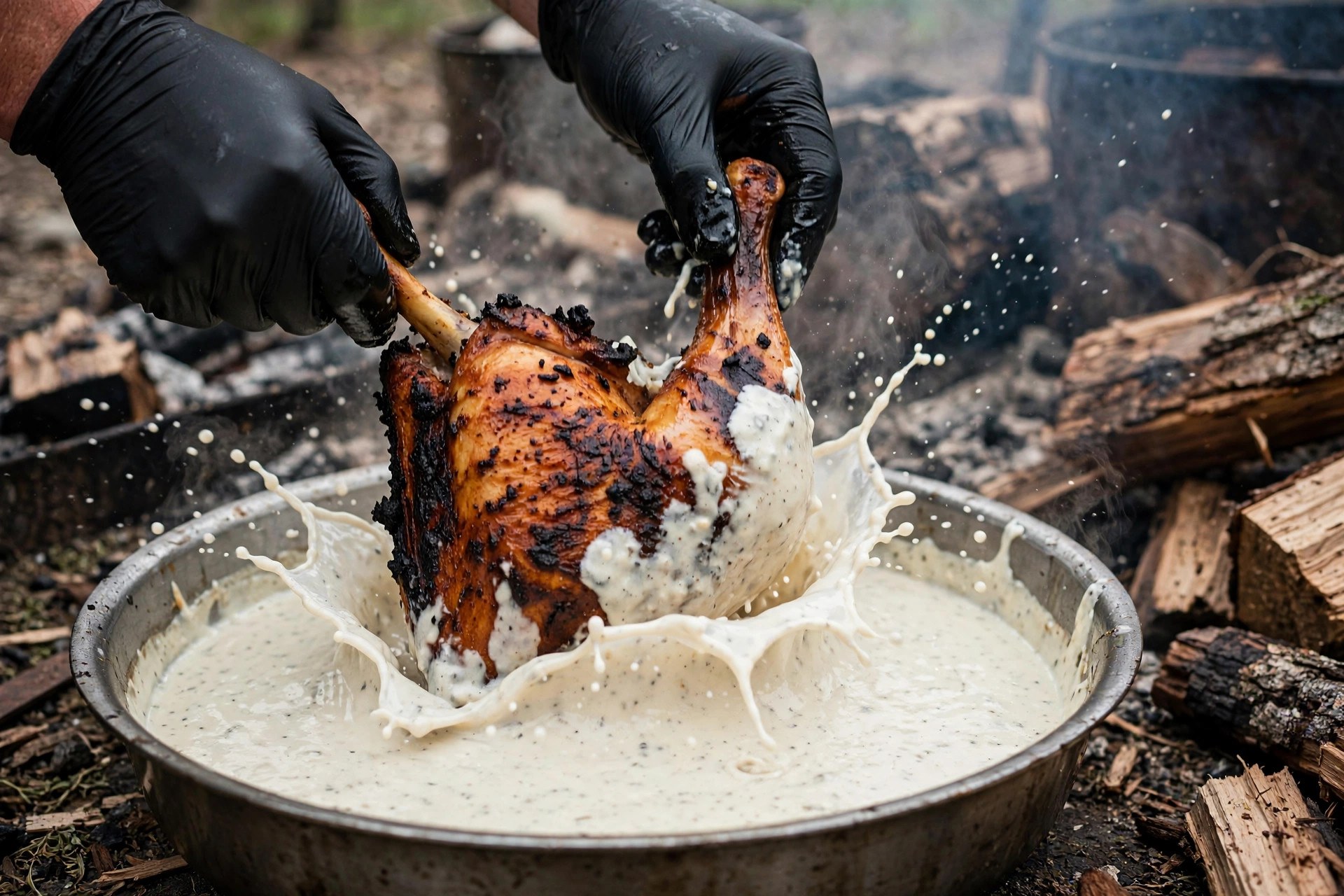
The traditional method is beautifully simple. Gibson’s pitmasters smoke spatchcocked whole chickens — laid flat so they cook evenly — over hickory at around 275°F for about 90 minutes to 2 hours, until the thickest part of the thigh reads 165°F. Then, the moment they come off the pit, each chicken gets dunked straight into a vat of white sauce.
The dunk is the signature move. The hot chicken thins the sauce just enough for it to coat evenly, and the residual heat melts it into the skin. You serve extra on the side for dipping, but the dunk does the real work.
At home, the sequence looks like this:
- Season simply. Traditional white-sauce chicken gets just salt and pepper under the skin. The sauce brings the flavor; the rub should stay out of its way.
- Smoke at 275°F. Slightly hotter than a standard brisket smoke — you want the skin to crisp, not turn rubbery. Aim for 90 minutes to 2 hours for a spatchcocked bird.
- Pull at 165°F in the thigh. Use a thermometer at the point where smoked chicken is fully done — thigh meat, away from the bone.
- Dunk while hot. Brush or dip the chicken in white sauce within a minute of it coming off the heat. The warmth does the glazing for you.
- Serve more on the side. Always keep a separate, clean bowl for dipping — never double-dip back into the dunk vat.
One warning: keep the sauce off direct heat. Mayo-based sauces can separate and turn oily if they boil on the grill. The classic move is a last-five-minutes glaze over indirect heat, or better yet, the post-cook dunk. If you want a grilled-on finish, brush it on during the final minutes and watch it like a hawk.
White Sauce vs the Other Southern Sauces
Every Southern barbecue region has its defining sauce, and the differences come down to base, acid, and sweetness. Here’s how white sauce stacks up:
| Sauce style | Base | Flavor profile | Classic pairing |
|---|---|---|---|
| Alabama white | Mayonnaise + apple cider vinegar | Tangy, peppery, rich | Smoked chicken |
| Eastern North Carolina | Vinegar + red pepper flakes | Thin, hot, sharp | Whole-hog pork |
| South Carolina mustard | Mustard + vinegar | Tangy, pungent, bright | Pork shoulder |
| Kansas City | Tomato + molasses | Sweet, thick, smoky | Ribs, burnt ends |
| Memphis dry-rub style | None (dry rub) | Spicy crust, optional thin sauce | Pork ribs |
White sauce is the only one built on an emulsion rather than a reduction. That changes how it behaves: it goes on cold or at room temperature, it never gets simmered into the meat, and it has a freshness that vinegar and tomato sauces can’t match. It’s closer to a finishing sauce than a cooking sauce — which is why it pairs so well with poultry, the least assertive of the smoked meats.
If you’re building a regional spread, it plays beautifully against the others. A chicken dunked in white sauce next to ribs with a Carolina mop shows two completely different ideas of what barbecue sauce can be. For a deeper map of where each style comes from, see the breakdown of the four regions of American BBQ.
What Else Can You Do With It?
Gibson made it for chicken, but white sauce is one of the most versatile sauces in barbecue. Once you’ve got a jar in the fridge, it ends up on everything.
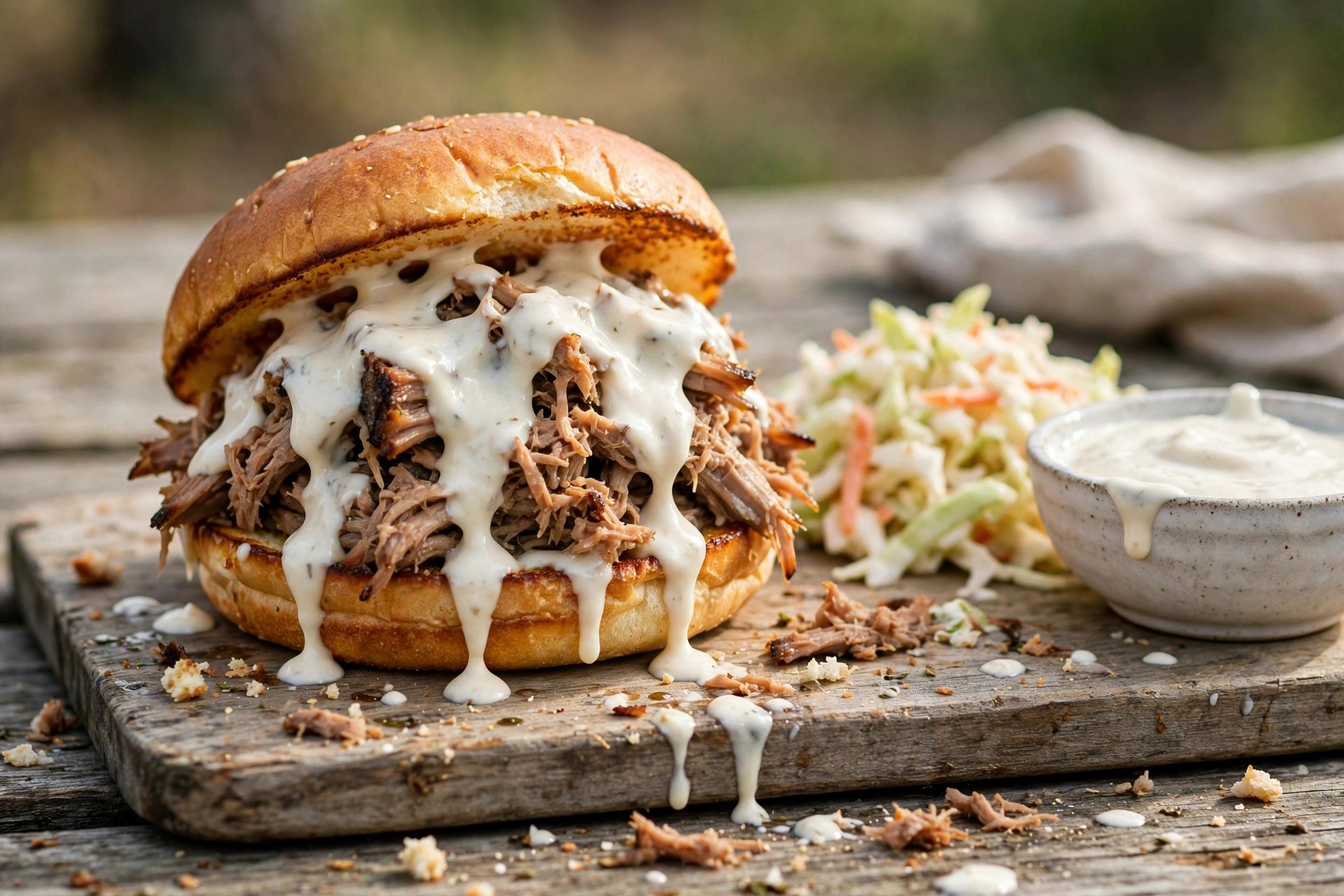
- Pulled pork sandwiches. The vinegar tang cuts pork’s richness the same way it cuts chicken’s smoke. It’s a different sandwich than the tomato-sauce version — brighter, less sweet.
- Grilled vegetables. Drizzle over asparagus, zucchini, or corn on the cob. The sauce clings to char like it was made for it.
- Coleslaw base. Mayo is already the backbone of slaw dressing — white sauce just makes it a zippier one. Toss shredded cabbage and carrots with a half cup.
- Wings and fried food. It was practically born to be a wing dip. Fried pickles, mozzarella sticks, shrimp — anything fried loves this stuff.
- Turkey. Smoked turkey breast with white sauce is a sleeper hit at holiday cookouts, especially paired with the right BBQ side dishes.
How to Store It and How Long It Keeps
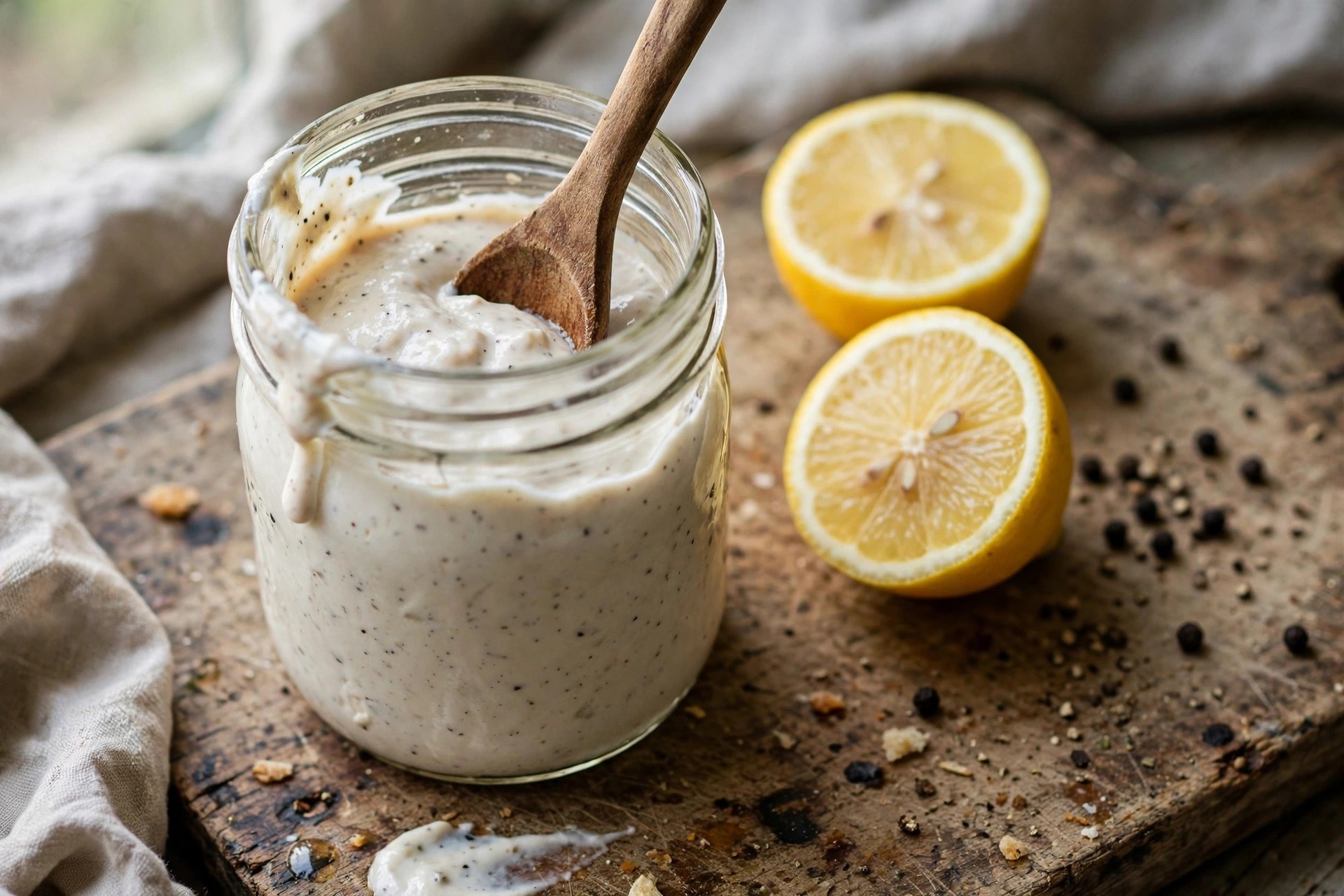
Because it’s mayo-based, white sauce lives in the fridge, always. Store it in a sealed jar and it keeps 7 to 10 days. It actually improves for the first 24 to 48 hours as the flavors meld.
A couple of practical notes:
- Separation is normal. The vinegar may weep to the surface after a few days. Just stir it back together — the emulsion hasn’t broken unless it refuses to recombine.
- Never freeze it. Mayonnaise emulsions split permanently in the freezer. You’ll get a grainy, weepy mess when it thaws.
- Serve cold or room temp. Pull it from the fridge 20 minutes before the cookout. Cold sauce on hot chicken is the classic contrast.
- Food safety counts double here. Mayo-based sauces at a cookout shouldn’t sit out more than 2 hours (1 hour above 90°F). Keep the serving bowl nested over ice on a hot day.
If you’re making a big batch for a crowd, make it the day before — one less thing to do on cook day, and better-tasting sauce as a reward. For guidance on timing a whole spread, keeping BBQ warm for a party covers the logistics the sauce can’t.
FAQs
What does Alabama white sauce taste like?
Tangy, peppery, and rich — sharp vinegar up front, creamy mayo body, and black pepper heat on the finish. It tastes like a zesty coleslaw dressing with more attitude, nothing like ranch or mayo straight from the jar.
Can you use Alabama white sauce on pork and beef?
Yes. It was made for smoked chicken, but it’s excellent on pulled pork, turkey, wings, and grilled vegetables. On heavy beef like brisket it can feel redundant — the meat is rich enough already — so chicken and pork are the sweet spot.
Does white sauce need to be cooked?
No, it never touches heat during prep. Whisk and chill. The only heat it meets is the hot chicken at dunk time, and you should keep it off direct grill heat to avoid splitting the emulsion.
Is Alabama white sauce keto-friendly?
Most homemade versions are. With Duke’s mayo and no corn syrup, the sauce is essentially zero carbs — just fat from the mayo. Skip versions with added sugar if you’re counting.
Where can I buy it if I don’t want to make it?
Several national brands sell it, including Big Bob Gibson’s own bottled version and Lillie’s Q Ivory sauce. Check the ingredient list for real mayo without fillers — the good ones taste close to homemade, but homemade takes five minutes and costs less.
Here’s your next step: whisk a double batch this weekend — one jar for the fridge, one for a friend. Smoke a spatchcocked chicken at 275°F, dunk it hot, and taste the reason this sauce has survived a hundred years unchanged. For the chicken itself, mop sauce techniques and the right Carolina-style vinegar pairing round out the cook. White sauce isn’t trying to be the loudest sauce in barbecue. It’s trying to be the sharpest — and it wins.