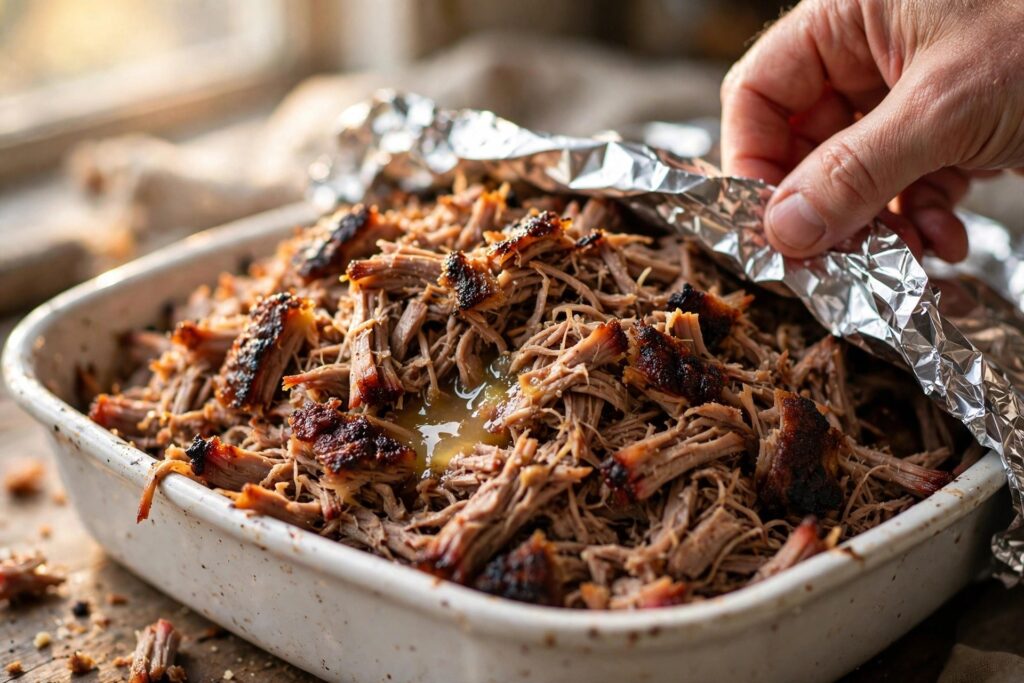
To reheat pulled pork without drying it out, warm it gently at 250°F in a covered baking dish with a splash of apple juice, broth, or reserved cooking juices — about 30 minutes per pound — stirring once, until the center reaches 165°F. Low heat plus trapped steam is what keeps every strand juicy instead of turning it into dry strings.
Pulled pork handles leftovers better than most barbecue, and worse than you’d guess. All those shredded strands that make it so luscious fresh off the smoker also give heat and air thousands of tiny surfaces to attack. But the fix is simple, and every method below follows the same logic: gentle heat, a little added moisture, and a lid or foil seal so the steam stays where the meat is.
Why Pulled Pork Dries Out When Reheated
It helps to know what you’re fighting. A pork shoulder is about two-thirds water when it comes off the smoker, and shredding it exposes an enormous amount of surface area compared to a solid chunk of meat like brisket. More surface area means moisture escapes faster — in the fridge overnight and again the moment heat hits it.
There’s a second problem: refrigeration firms up the rendered fat and gelatin that made the pork feel juicy in the first place. Cold pulled pork always feels drier than it is. The job of reheating isn’t just warming it up — it’s re-melting that fat and gelatin back into the strands. That only happens with slow, even heat. Blast it and the outside of each strand seizes before the fat inside has a chance to soften, which is exactly how you get pork that tastes dry even though it started juicy.
The upside: because pulled pork is shredded, it also absorbs added liquid faster than any other cut. A splash of apple juice or broth mixed through the strands disappears in minutes. No other barbecue rewards good reheating technique quite this fast.
How to Reheat Pulled Pork in the Oven (Step by Step)
The oven is the most reliable method for anything more than a single serving. It heats evenly, it holds a crowd-sized batch, and the foil seal does the moisture work for you. Food Readme’s safety-first guide lands on the same core formula — gentle heat, added moisture, covered dish, 165°F in the center.
- Preheat the oven to 250°F. Low and slow, same as the original cook. Higher heat dries the exterior strands before the middle warms through.
- Spread the pork in a baking dish. An even layer, no deeper than 2–3 inches. A deep pile heats unevenly — the top dries while the center stays cold.
- Add moisture: ¼ cup of liquid per pound of pork. Apple juice, chicken or pork broth, or reserved cooking juices. Toss it through the strands so everything is lightly coated, not swimming.
- Cover tightly with foil. Crimp it around the dish. The foil traps steam, and the steam is what rehydrates the meat.
- Heat about 30 minutes per pound, stirring once halfway. Open the foil, give it a gentle toss so the cooler center strands move to the outside, reseal, and continue.
- Check for 165°F in the center. That’s the USDA target for reheated leftovers. A thermometer in the deepest part of the dish settles any doubt.
- Rest 5 minutes, then toss once more. The rest lets the juices settle back into the strands instead of pooling at the bottom.
Want a little bark texture back? Pull the foil off for the last 10–15 minutes. The dry oven air crisps the exposed top strands while the covered base stays steamy. It’s a small step that makes reheated pork taste noticeably closer to fresh.
Stovetop and Skillet: The 10-Minute Method
For one or two servings, the skillet beats the oven on speed without giving up much on quality. The trick is treating it like a gentle steam, not a sear.
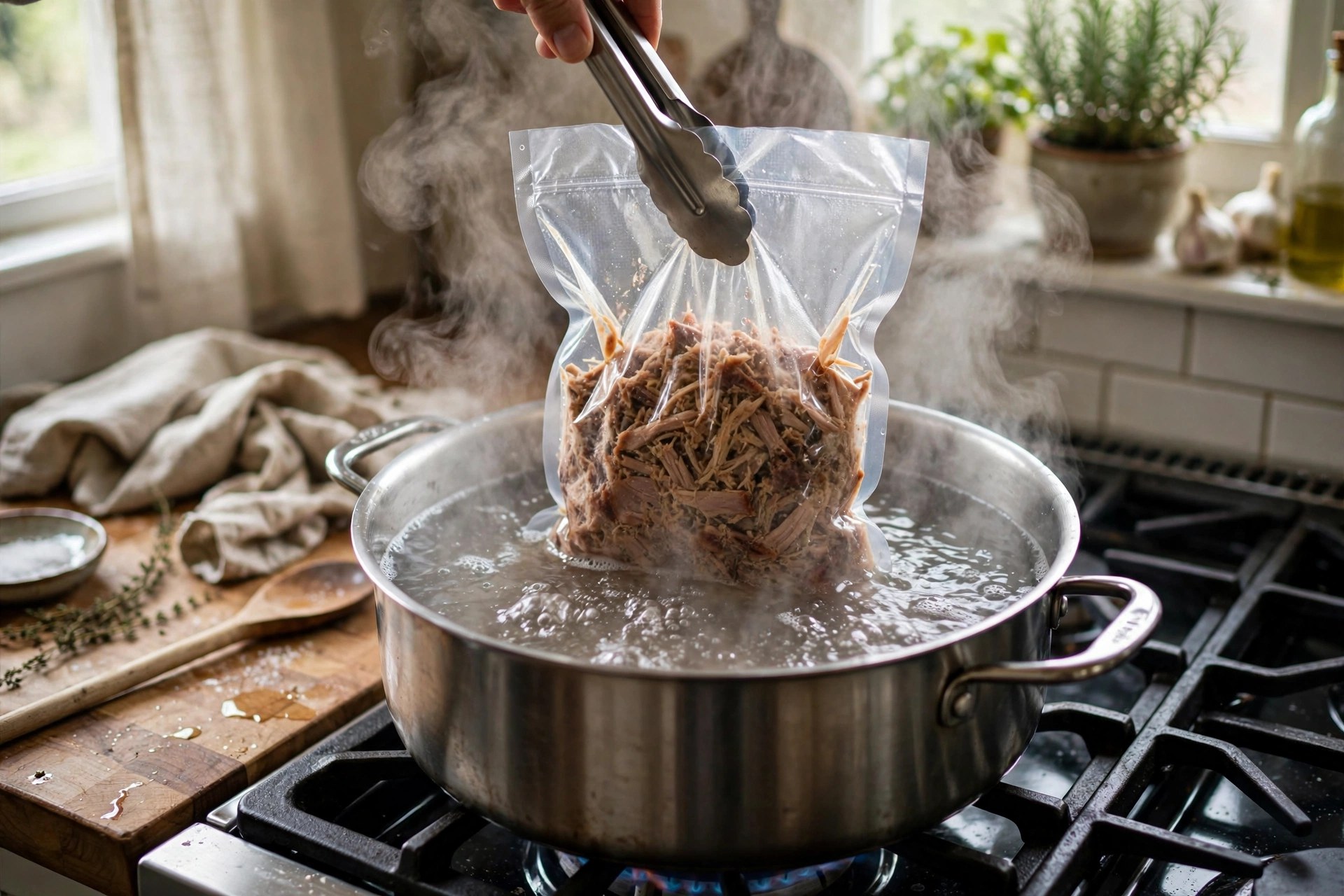
Set a large skillet over medium-low heat — never higher. Add the pork in an even layer, splash in a few tablespoons of broth, apple juice, or water, and cover with a lid. The lid matters more than the liquid: it traps steam and turns the skillet into a mini-oven. Stir every 2–3 minutes so no strand sits against the hot metal too long, and pull it off the heat at 165°F, usually 8–10 minutes total.
A nonstick skillet is actually the better tool here than cast iron. Cast iron holds so much heat that the bottom layer of pork can scorch before the top warms through; nonstick’s gentler, more even surface is kinder to shredded meat. If all you have is cast iron, keep the burner on the lowest setting that still produces steam and stir more often.
The Sealed-Bag Hot Water Method
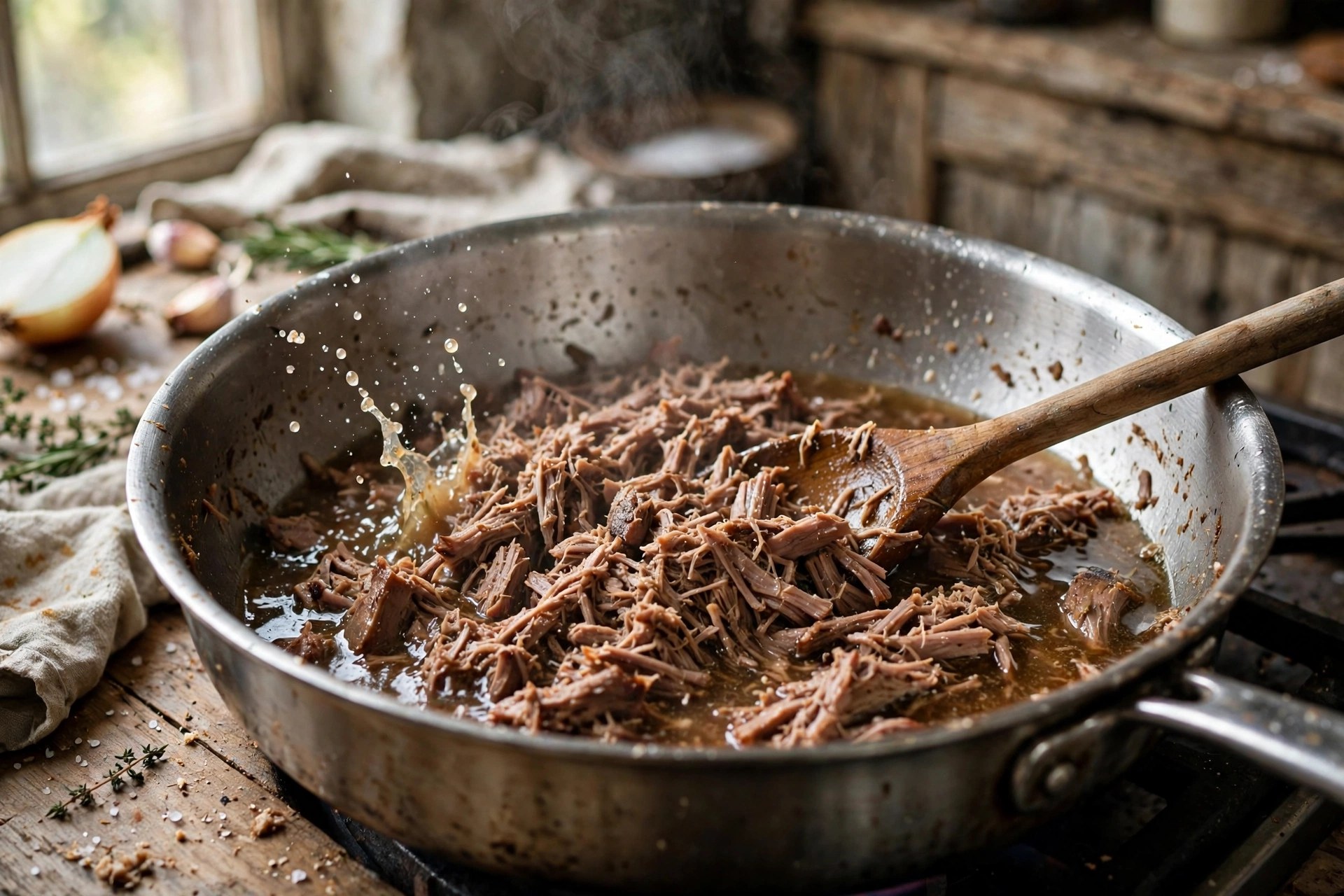
This is the cleverest low-effort method in the lineup, and it starts at storage time. Vacuum-seal your leftover pulled pork in meal-size portions. When it’s time to eat, drop the sealed bag into a pot of simmering water — no oven, no dish, no added liquid needed, because the sealed bag traps every drop of the pork’s own moisture.
The timing math, courtesy of The Takeout’s breakdown: about 5 minutes per 5-ounce serving for refrigerated pork, and roughly double that for frozen. A pound of pulled pork is a little over three servings, so a one-pound bag needs around 15 minutes from the fridge. Label each bag with servings and time in permanent marker — “2 servings @ 10 min” — and there’s zero guesswork on a weeknight.
Two practical notes. First, keep the water at a lively simmer, not a hard rolling boil — violent boiling can stress the bag seal. Second, use bags rated for heat (vacuum-seal bags or freezer-grade zip-tops with the air pressed out via the water-displacement method). Thin sandwich bags can soften and leak at sustained high heat.
No vacuum sealer? The same principle works with a zip-top bag and a pot of water at 150–160°F — essentially a manual sous vide. It takes a little longer, but the moisture retention is in a different league from any dry-heat method.
Slow Cooker Reheating for a Crowd
Feeding a party? The slow cooker is built for exactly this. It’s how caterers hold and serve big batches of pulled pork without it drying out over hours — and it pairs perfectly with planning portions from our pulled pork per person guide so you’re reheating the right amount in the first place.
Add the pork to the cooker with ½ cup of broth, apple juice, or finishing sauce for a full batch (scale down for smaller amounts), set it to LOW, and give it 2–4 hours, stirring every hour. The low setting on most cookers runs 190–200°F — hot enough to push the pork safely past 165°F, gentle enough that it can’t scorch. Resist the urge to use HIGH: it boils the liquid, toughens the strands, and defeats the whole point.
The slow cooker doubles as your serving vessel, which is the real win for gatherings. Once the pork hits 165°F, switch to WARM and it will hold beautifully for 2–3 hours while guests graze. Stir in a little extra sauce or broth if the top starts looking dry. For the full holding playbook — temperatures, time limits, and food-safety rules — see how to keep BBQ warm for a party.
What to Add: The Moisture Lineup
Pulled pork absorbs added liquid fast, so a little goes a long way. Here’s what to reach for, and how much:
| Liquid | Amount per pound | Why it works |
|---|---|---|
| Reserved cooking juices | ¼ cup | The pork’s own flavor, concentrated. Best option if you saved them. |
| Apple juice or cider | ¼ cup | Classic pork pairing; gentle sweetness that matches smoke. |
| Chicken or pork broth | ¼ cup | Savory and neutral; won’t change the flavor profile. |
| Vinegar finishing sauce | 2–3 tbsp | Carolina-style tang that cuts the richness. Add after reheating so the acid stays bright. |
| BBQ sauce | 2–3 tbsp | Adds moisture and flavor — but stir it in after reheating, not before. |
That last row deserves emphasis: don’t reheat pork in sugary BBQ sauce. The sugars scorch and turn bitter at sustained heat, especially in a skillet or uncovered oven. Warm the pork in broth or juice, then toss with sauce at the end. The exception is a thin vinegar-based Carolina-style finishing sauce — low sugar, high acid — which can go in from the start and only gets better.
One more flavor trick: if your pork tastes flat after reheating, it usually needs acid or salt, not more liquid. A splash of apple cider vinegar and a pinch of salt, tossed through at the end, wakes up flavors that cold storage muted.
Storing, Freezing, and the 165°F Rule
Good reheating starts with good storage. Refrigerate pulled pork within two hours of serving, in airtight containers or sealed bags at 40°F or below, and use it within 3–4 days. Our smoked meat fridge-life guide has the full numbers; the short version is that the clock starts the moment the meat cools, not the moment you remember to put it away.
For anything you won’t eat within that window, freeze it — and freeze it in meal-size portions. A gallon bag of pork takes forever to thaw and forces you to reheat the whole thing at once. Single-meal vacuum bags thaw in hours, reheat evenly, and mean you only ever warm what you’ll eat. Flatten the bags before freezing so they thaw faster and stack neatly.
Thaw in the refrigerator, never on the counter — a flat one-pound bag needs 8–12 hours. In a hurry, submerge the sealed bag in cold water, changing the water every 30 minutes; it’ll thaw in 1–2 hours. Full leftover storage details, including the containers that actually seal, are in our storage guide.
And the temperature rule, one more time because it matters: reheated pork must reach 165°F in the center. That’s the USDA line for leftovers, and it’s the number every method above is built around. Shredded pork heats fast, so check the deepest part of the pile — the spot most likely to lag behind. If you smoked the butt yourself, you already know from our pulled pork temperature guide that thermometers beat guesswork; the same applies on the way back up.
Frequently Asked Questions
What temperature should reheated pulled pork reach?
165°F in the center of the pile, per USDA guidance for leftovers. Use a thermometer in the deepest part — shredded pork can have cool pockets even when the top strands are steaming.
Can you reheat pulled pork more than once?
It’s best to reheat only what you’ll eat. Each cool-and-reheat cycle degrades the texture and adds avoidable food-safety risk. Portioning into meal-size bags before you freeze solves this completely.
Can you reheat pulled pork from frozen?
You can, but thawing first gives noticeably better results. A sealed bag in simmering water takes about double the refrigerated time from frozen — roughly 10 minutes per 5-ounce serving. In the oven, add 15–20 minutes to the normal time and stir an extra time.
Can you reheat pulled pork in the microwave?
Yes, for a single serving. Cover the pork in a microwave-safe dish, use medium (50%) power — never full — stir halfway, and rest a minute before checking the temperature. Full power creates rubbery hot spots in shredded meat within seconds.
How do you get crispy bark back on reheated pulled pork?
Uncover the dish for the last 10–15 minutes of oven reheating at 250°F, or spread the pork on a sheet pan under the broiler for 2–3 minutes — watching constantly. The dry heat crisps the exposed strands while the interior stays moist.
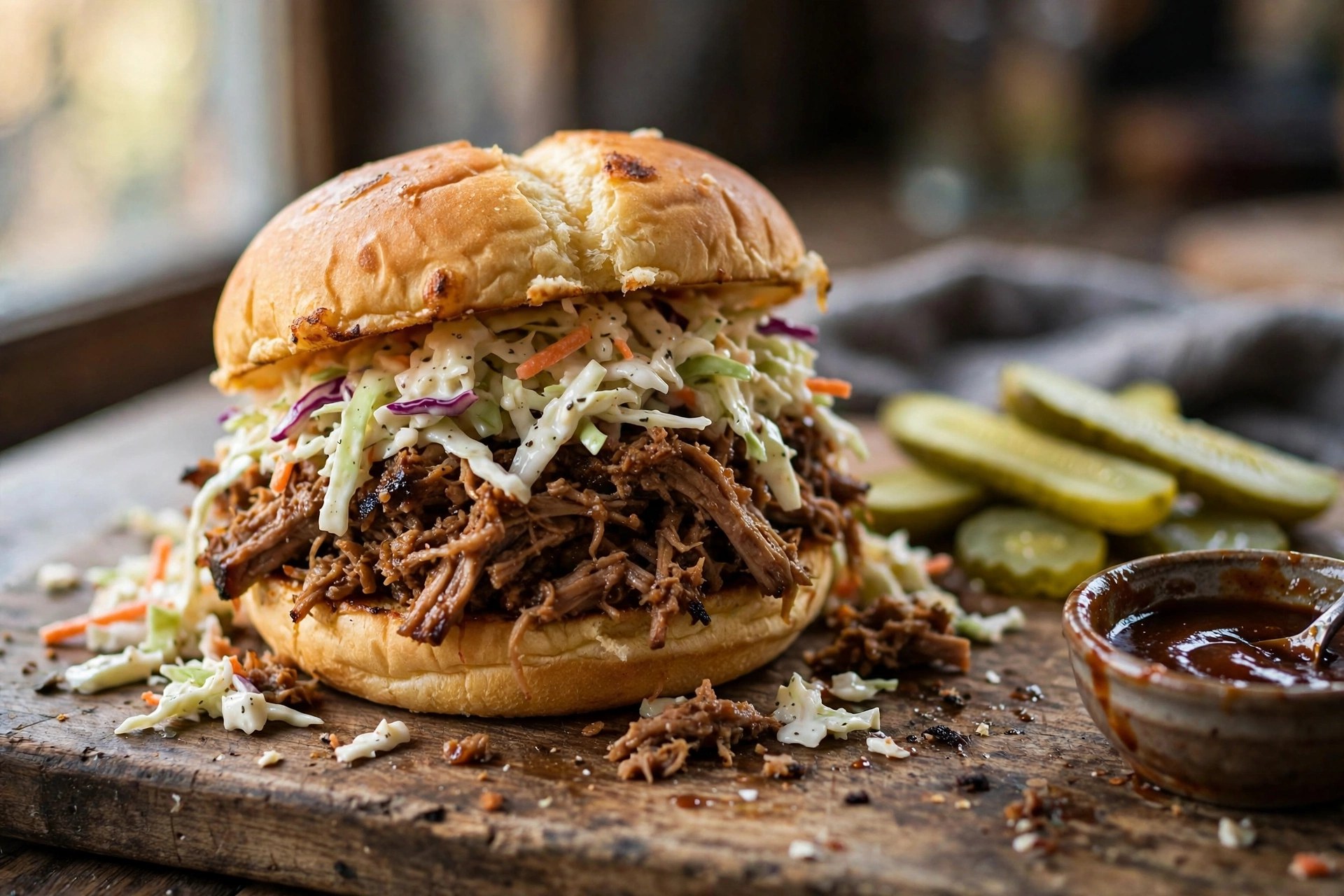
Your next step takes thirty seconds at the end of your next smoke: before the pork goes into containers, portion it into meal-size vacuum bags, label each one with servings and reheat time, and freeze them flat. The next time a pulled pork craving hits on a Tuesday night, dinner is a pot of simmering water away — and nobody at the table will guess it wasn’t fresh off the smoker.