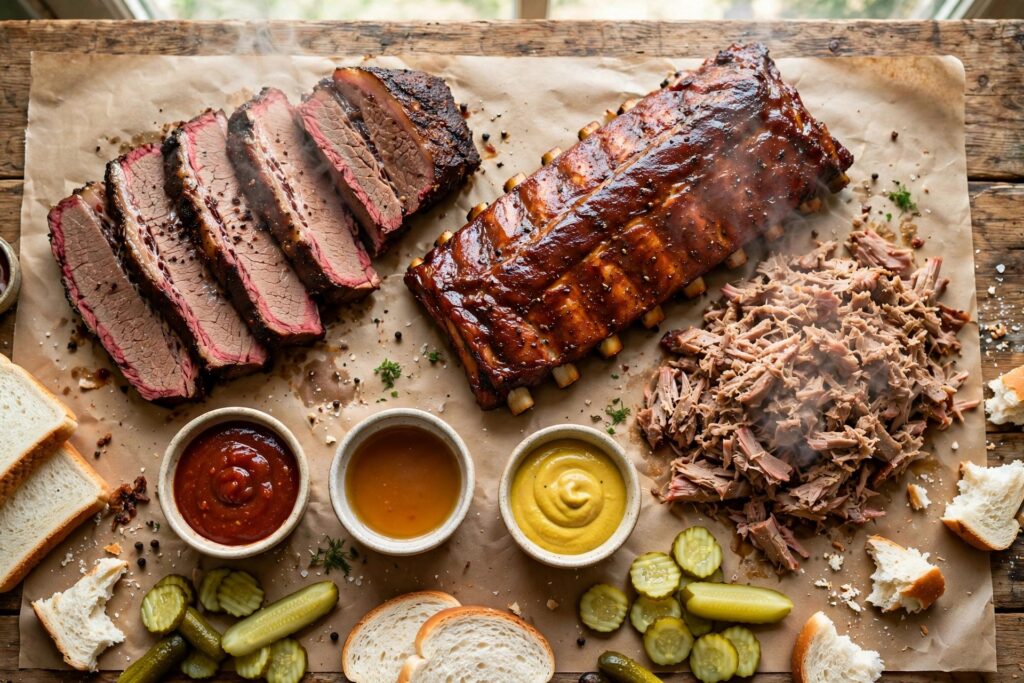
The four regions of American BBQ are Texas, Kansas City, Memphis, and the Carolinas. Texas is built on beef brisket with salt and pepper, Kansas City is famous for sweet tomato-based sauce and burnt ends, Memphis centers on dry-rubbed pork ribs, and the Carolinas smoke whole hogs or pork shoulders dressed in vinegar or mustard sauce. Together they cover nearly every major style of low-and-slow American barbecue.
Every BBQ argument you’ve ever heard — the “sauce vs. no sauce” fight, the brisket-vs-ribs debate, the Carolina mustard wars — traces back to these four regions. They’re not just different recipes. They’re different answers to the same question: what do you do with a tough cut of meat, a pile of hardwood, and twelve hours?
The Four Regions of American BBQ at a Glance
Before we get into the details, here’s the one-paragraph version. Texas is beef country: brisket, post oak smoke, coarse salt and black pepper, sauce strictly optional. Kansas City does a little of everything — ribs, brisket, chicken, turkey — and sauces it all with a thick, sweet, tomato-and-molasses glaze. Memphis is pork town, where ribs come “dry” (rub only) or “wet” (basted in a tangy tomato-vinegar sauce). The Carolinas are pork-only territory, where whole hogs and pork shoulders get chopped, pulled, and dressed with sharp vinegar-pepper, ketchup-vinegar, or golden mustard sauces.
All four cook low and slow — typically 225°F to 275°F for anywhere from 6 to 18 hours — and all four burn real hardwood. Where they split is on meat, wood, seasoning, and sauce. Those four variables explain almost every difference you’ll ever taste.
Texas BBQ: Beef Brisket and the Salt-and-Pepper Gospel
Texas is the odd one out, and Texans wouldn’t have it any other way. While the rest of the South smokes pork, Texas smokes beef — specifically the brisket, a 12- to 16-pound cut from the chest of the cow that needs 12 to 18 hours at 250°F to 275°F before it turns tender.
The seasoning is famously minimal: coarse kosher salt and cracked black pepper, sometimes called a “Dalmatian rub.” That’s it. No sugar-heavy rubs, no mop sauces. The philosophy is that great beef plus clean post oak smoke needs no dressing up. Post oak is Texas’s signature wood — mild, steady-burning, and mild enough to smoke brisket for half a day without turning it bitter.
Central Texas runs on the “meat market” tradition, born in German and Czech butcher shops in towns like Lockhart and Taylor. You order by the pound, the brisket is sliced to order, and it lands on pink butcher paper with white bread, pickles, and raw onion. Sauce, if the joint offers any, stays in a cup on the side. East Texas works differently — chopped beef and pork served with a sweeter, thinner tomato sauce — but Central Texas sets the reputation.
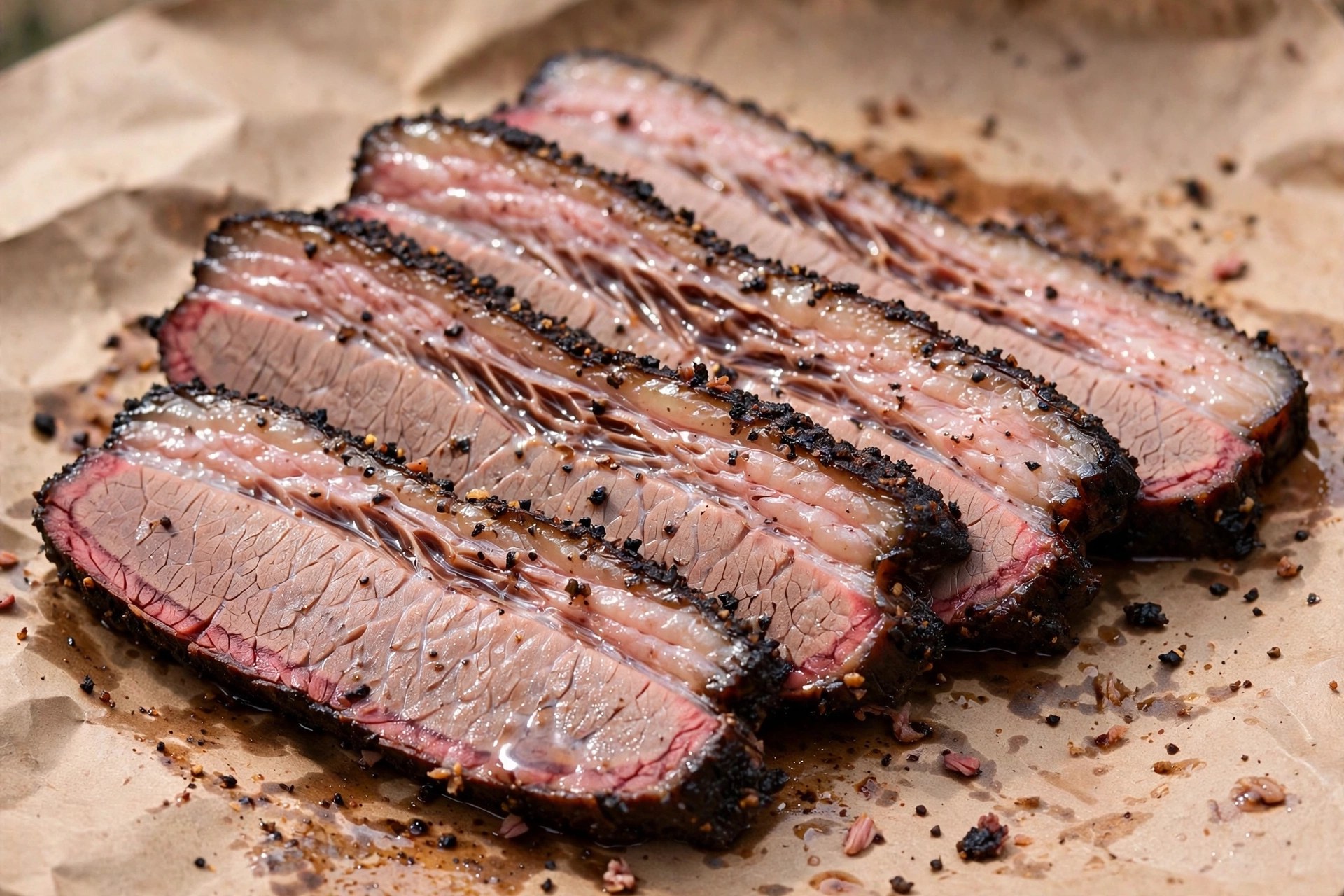
A proper Texas brisket tells its own story on the cutting board. The bark should be jet black and peppery, the smoke ring a pink band running about a quarter inch into the meat, and a slice of the flat should drape over a finger without falling apart. If a Texas pitmaster sees you reaching for sauce before tasting, you’ll get a look. Taste first.
Kansas City BBQ: Sweet Sauce and a Menu With Everything
If Texas is a purist, Kansas City is a host. KC’s barbecue tradition — which traces back to the early-1900s pit of a cook named Henry Perry — is famous for doing everything: pork ribs, beef brisket, chicken, turkey, sausage, and its single greatest invention, burnt ends.
Burnt ends deserve their own paragraph. They’re the charred, caramelized corners cut from the fatty point end of a smoked brisket, chopped into cubes, tossed back in sauce, and smoked again until they’re basically meat candy — crisp edges, melting centers. They started as free scraps handed to waiting customers. Now they’re a headlining dish.
The other half of KC’s identity is sauce: thick, sweet, and tangy, built on tomato and sweetened with molasses or brown sugar. This is the barbecue sauce most of America pictures when it hears the phrase. It’s brushed on while the meat finishes and poured on again at the table. Hickory is the smoke of choice, and rubs run richer and sweeter than Texas’s two-ingredient approach.
Kansas City is also the competition capital — the American Royal, one of the world’s largest barbecue contests, draws hundreds of teams to the metro every autumn. If you want to understand KC style fast, order a burnt-end sandwich and a slab of sauced ribs. You’ll get the whole philosophy in two bites: smoke first, sweetness close behind.
Memphis BBQ: Dry Rubs, Wet Ribs, and Pork Royalty
Memphis is the pork capital of the mid-South. Its two pillars are pork ribs and pulled pork shoulder, smoked over hickory and seasoned with a heavy dry rub built on paprika, garlic, cayenne, and black pepper.
What makes Memphis genuinely distinctive is the dry-or-wet choice, and it matters — ordering wrong in Memphis is like ordering a steak wrong in Texas.
- Dry ribs are coated in rub before and after smoking, with no sauce at all. The spice crust stays crisp, and you taste pure pork and paprika smoke. Sauce often arrives on the side so you can dip.
- Wet ribs are basted during cooking with a thinner, tangier tomato-based sauce — still built on tomato, but with more vinegar and more restraint than Kansas City’s sweet glaze.
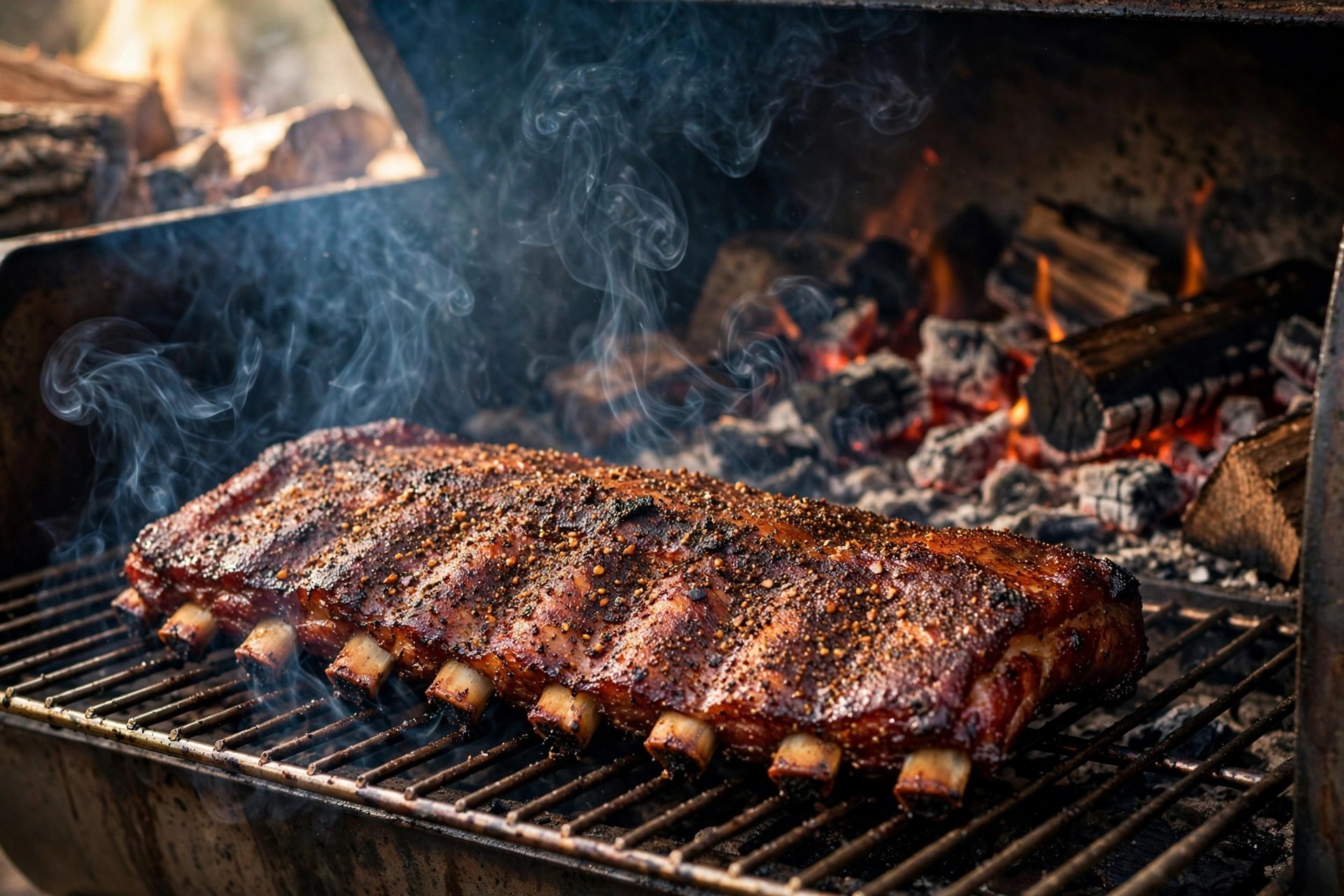
Memphis has quirks beyond the ribs. Barbecue spaghetti — pulled pork and sauce tangled into spaghetti — is a real local dish, not a gimmick. And every May, the city hosts the World Championship Barbecue Cooking Contest, where teams compete across whole hog, shoulder, and rib categories. If Texas is about beef and KC is about sauce, Memphis is about the rub: layers of spice that season the meat from the outside in.
Carolina BBQ: Whole Hog, Vinegar, and the Mustard Line
Carolina barbecue is the oldest tradition in the country, and it’s really three sauces arguing over one animal: the pig. Here’s the breakdown:
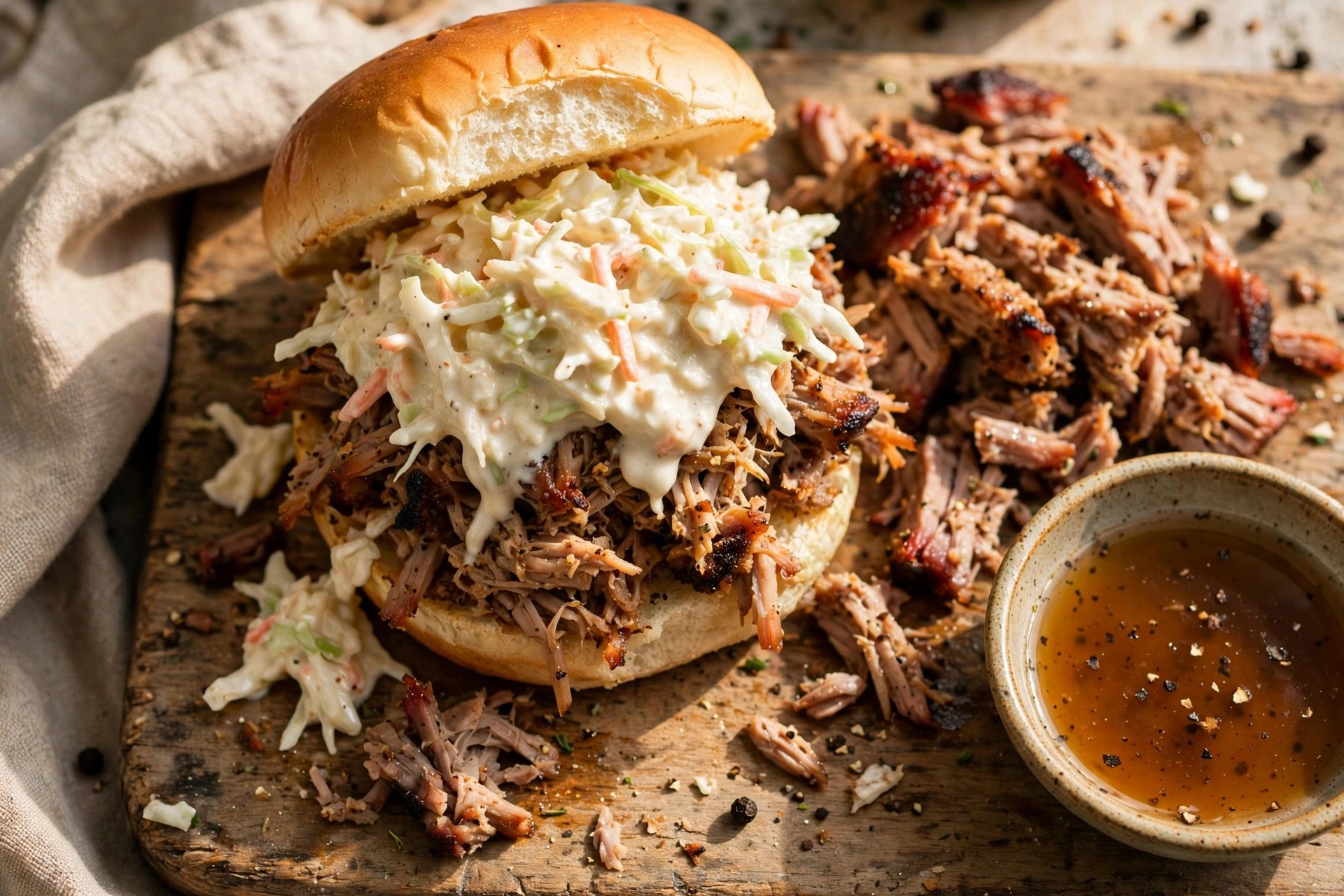
- Eastern North Carolina — the whole hog, cooked low and slow over hardwood coals for 10 to 12 hours, then chopped (skin and all) and dressed with a sharp, thin sauce of vinegar and crushed red pepper. No tomato. Traditionally served on a soft bun topped with creamy coleslaw.
- Lexington / Piedmont North Carolina — pork shoulder only, no whole hog, with a sauce that adds a touch of ketchup to the vinegar base. The signature side is “red slaw,” coleslaw tinted with the same dip.
- South Carolina — famous for “Carolina Gold,” a yellow mustard-based sauce with German-immigrant roots. Tangy, bright, and the default for pulled pork across much of the state.
What unites all three is the philosophy: pork is the canvas, and the sauce is thin and acidic enough to cut through the fat rather than mask it. A Carolina pitmaster would never slather meat in sweet glaze. The meat took ten hours. The sauce is there to make it sing, not to cover it up.
If you want the deep dive on this style — its history, its sauces, and how to cook it yourself — read our full guide to Carolina style BBQ.
How the Four Regions Compare Side by Side
The table below puts the four traditions head to head. It’s the fastest way to see what changes when you cross from one region to another.
| Region | Star meat | Signature wood | Seasoning | Sauce | Signature dish |
|---|---|---|---|---|---|
| Texas (Central) | Beef brisket | Post oak | Salt and pepper | None, or on the side | Sliced brisket on butcher paper |
| Kansas City | Everything — ribs, brisket, chicken, burnt ends | Hickory | Sweet-spicy rub | Thick, sweet tomato-molasses | Burnt ends |
| Memphis | Pork ribs and shoulder | Hickory | Paprika-heavy dry rub | Dry rub, or thin tomato-vinegar | Dry or “wet” ribs |
| Carolina | Pork — whole hog or shoulder | Oak and hickory | Light rub or none | Vinegar-pepper, ketchup-vinegar, or mustard | Chopped whole-hog sandwich |
Notice what’s consistent: every region cooks low and slow, every region burns real hardwood, and every region builds its style around the meat that was cheapest and most available locally. Cattle country made Texas brisket. Pig country made Carolina whole hog. History shows up on the plate.
Ordering Like a Local: A Quick Etiquette Guide
The fastest way to mark yourself as a tourist is to blanket everything in sauce before tasting. Each region has its own table manners, and locals take them personally:
- Texas: don’t ask for sauce on the brisket. Taste it first; if the joint offers sauce, use it sparingly and on the side. Order by the pound.
- Kansas City: sauce is the point. Order burnt ends and let them come sauced. Nobody will judge you for extra napkins.
- Memphis: decide up front — “dry” (rub only) or “wet” (basted). Either is correct, but you have to choose.
- Carolina: the sandwich comes dressed. In eastern North Carolina, slaw goes on the sandwich. Expect vinegar, not sweetness.
The deeper principle: sauce should follow the meat, not drown it. Acidic, thin sauces — vinegar, mustard — are built to cut through fatty pork. Sweet, thick sauces are built to glaze. Match them to the cut and you’ll taste exactly why each tradition exists.
There’s a fifth layer to this map, by the way. Beyond the big four you’ll find Alabama’s white sauce over smoked chicken, Kentucky’s mutton barbecue in Owensboro, St. Louis’s pork steaks, and California’s Santa Maria tri-tip — each a regional answer to the same low-and-slow question. Our guide to the history of Southern BBQ traces how these traditions grew out of the same roots.
For more on the technique side — the bark on smoked meat, Texas style BBQ in full detail, and Memphis style BBQ — those guides go deeper on each tradition.
FAQs: The Four Regions of American BBQ
What are the 4 regions of American BBQ?
The four most famous regional styles are Texas (beef brisket, salt and pepper, minimal sauce), Kansas City (varied meats, sweet tomato-molasses sauce, burnt ends), Memphis (pork ribs and pulled pork, dry rub or wet), and the Carolinas (pork with vinegar-pepper or mustard sauce).
Which American BBQ region uses beef?
Texas. While the rest of the South built its barbecue on pork, Texas barbecue centers on beef — especially brisket smoked 12 to 18 hours over post oak with nothing but salt and pepper.
What is the difference between Kansas City and Memphis BBQ?
Kansas City uses a wide range of meats with a thick, sweet, tomato-based sauce applied liberally. Memphis focuses on pork ribs and shoulder with a paprika-heavy dry rub, offering ribs either “dry” (rub only) or “wet” (basted in tangy tomato-vinegar sauce).
What makes Carolina BBQ different from the other regions?
Carolina is the only region that smokes whole hogs, and its sauces are thin, acidic, and vinegar- or mustard-based rather than sweet and tomato-based. The three sub-styles are Eastern NC (whole hog, vinegar-pepper), Lexington NC (shoulder, ketchup-vinegar), and South Carolina (mustard-based “Carolina Gold”).
Is American BBQ always smoked?
Traditional American barbecue means cooking meat low and slow — usually 225°F to 275°F for 6 to 18 hours — over indirect heat and hardwood smoke. Grilling, by contrast, is fast cooking over direct high heat. The two methods are different techniques, not different names for the same thing.
The best way to understand the four regions isn’t to read about them — it’s to taste them. Start with the style closest to your own cooking: if you own a smoker and love beef, cook a Central Texas brisket first. If pork is your thing, smoke a shoulder and dress it Carolina-style. The regional map is really a menu. Pick your first stop and light the fire.
[…] Later waves built the modern scene: Fiorella’s Jack Stack brought smoked steaks and lamb ribs, Joe’s Kansas City Bar-B-Que turned a gas station into a championship machine, and the Jones sisters made Jones Bar-B-Q the city’s only woman-owned and woman-run pit. KC barbecue grew out of African American pitmaster tradition blending with the city’s stockyard meatpacking economy — cheap, abundant meat meeting slow, patient fire. You can trace that thread through the full story in our guide to the four regions of American BBQ. […]