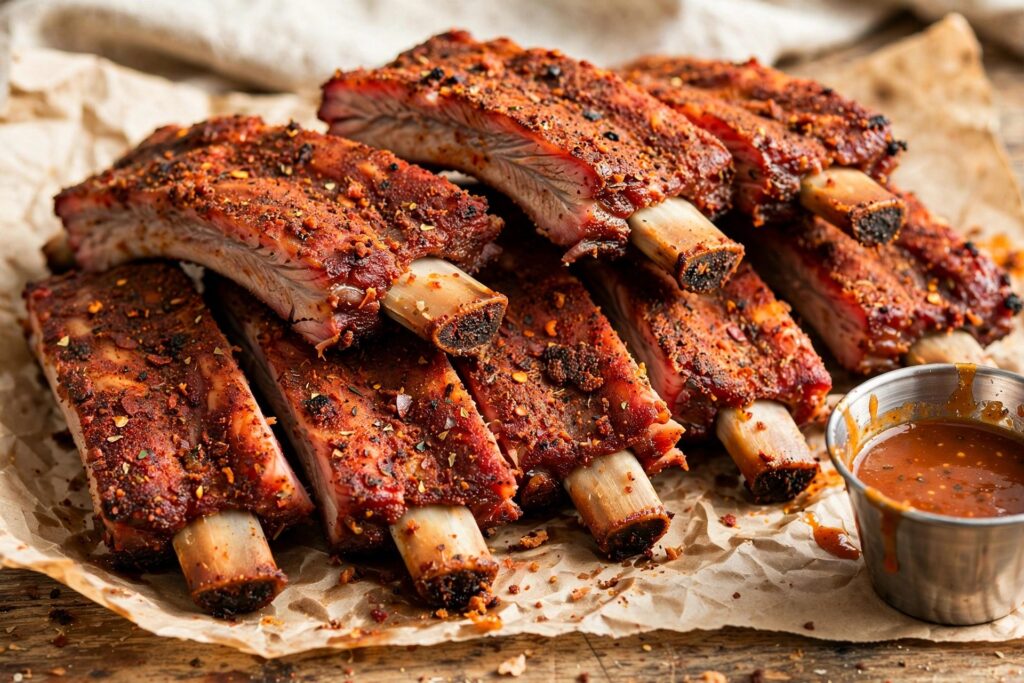
Memphis style BBQ is pork — specifically dry-rubbed ribs and hand-pulled pork shoulder — seasoned with a bold, paprika-heavy spice mix and smoked low and slow over hickory wood. Sauce plays second fiddle here: ribs come “dry” with just the rub or “wet” with a thin, tangy glaze, and the sauce always arrives on the side, never dumped on top.
What Defines Memphis Style BBQ
Memphis sits on the Mississippi River, and that geography shaped everything about its barbecue. The city grew into a transportation hub in the late 1800s, and pit-smoked pork became the food of the workers moving through it — affordable, abundant, and cooked slowly enough to feed a crowd. Pork shoulder and ribs were cheap cuts, and Memphis cooks built an entire cuisine around making them taste like luxury.
Three things define the style. First, pork is the meat — beef barely registers. Second, the flavor comes from the rub, not the sauce: a multi-ingredient dry mix that goes on before the smoke and, in a Memphis trick you won’t see many other places, gets sprinkled on again after cooking while the meat is still hot, blooming in the heat for a second layer of fresh spice. Third, hickory wood. It grows everywhere in western Tennessee, burns long, and lays down the bold, assertive smoke that can stand up to that heavy rub.
The city’s barbecue culture runs deep enough to have its own vocabulary. You don’t say you’re “going out for barbecue” in Memphis. You say you’re getting Rendezvous ribs, or a shoulder sandwich from Tops, or barbecue spaghetti from The Bar-B-Q Shop. As this Taste of Home guide to Memphis barbecue puts it, the city is a barbecue-specific town where each joint owns its signature dish.
The Memphis Rub: Spice Before Sauce
The rub is the engine of Memphis style BBQ. There’s no single canonical recipe — pitmasters guard theirs, and competition champ Melissa Cookston-style rubs run long — but the architecture is consistent: paprika forms the base, then savory, sweet, and spicy elements get layered in until the mix is bold but balanced. Bold, not fiery. The best Memphis rubs roll across your tongue with dried herbs, garlic, and earthy spice first, with just a little pinch of heat at the back.
A solid home version looks something like this:
- ¼ cup paprika — the foundation; smoked paprika works if you want an extra layer of smoke
- 2 tablespoons brown sugar — sweetness, but half of what a Kansas City rub would use
- 1 tablespoon each: garlic powder, onion powder, kosher salt
- 2 teaspoons black pepper, 1 teaspoon cayenne — the heat layer; scale the cayenne to your taste
- 1 teaspoon each: dry mustard, dried oregano — the earthy notes that make it Memphis rather than generic
That mix goes on generously — Memphis pitmasters don’t dust, they crust — and the same rub typically seasons the house sauce too, tying the whole plate together. One champion pitmaster told reporters he uses 17 herbs and spices in his rub, which tells you everything about how seriously Memphis takes this layer of flavor.
Dry Ribs vs Wet Ribs: Memphis’s Signature Debate
This is the rivalry that defines Memphis barbecue. Same city, same pork, two completely different finishes — and locals will argue about it the way other towns argue about sports teams.
Dry ribs were popularized by Charlie Vergos at The Rendezvous in the 1950s, and they’re still the more famous of the two. The story is great: Vergos found an old coal chute in his restaurant’s basement and started grilling ribs directly over charcoal instead of slow-smoking them, mixing Greek seasonings from his heritage — vinegar, oregano, garlic — with Cajun spices he picked up in New Orleans. The result: ribs basted with vinegar while they cook, then dusted heavily with rub right before serving. No sauce on the meat. None. A cup of the house sauce comes on the side for anyone who wants it.
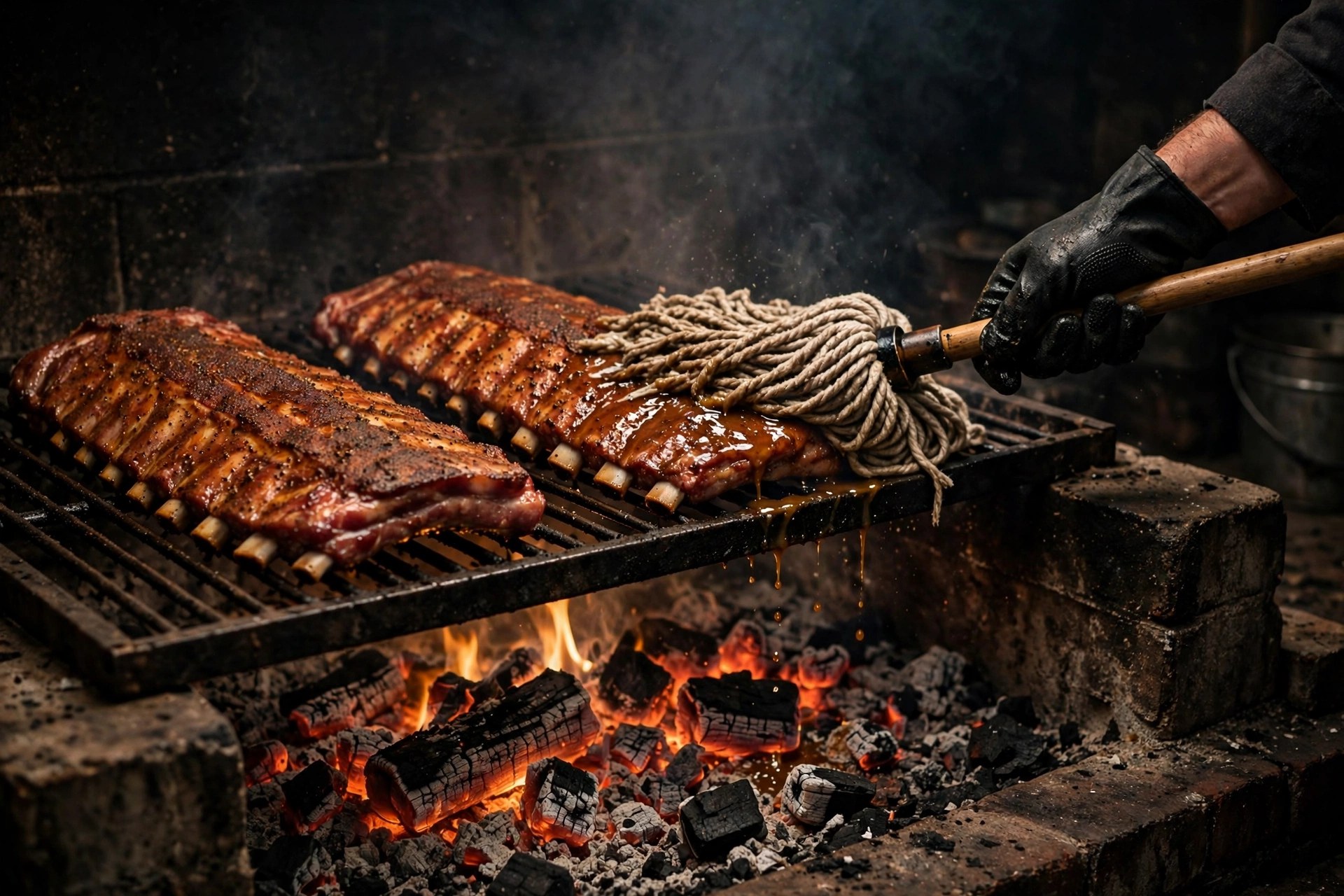
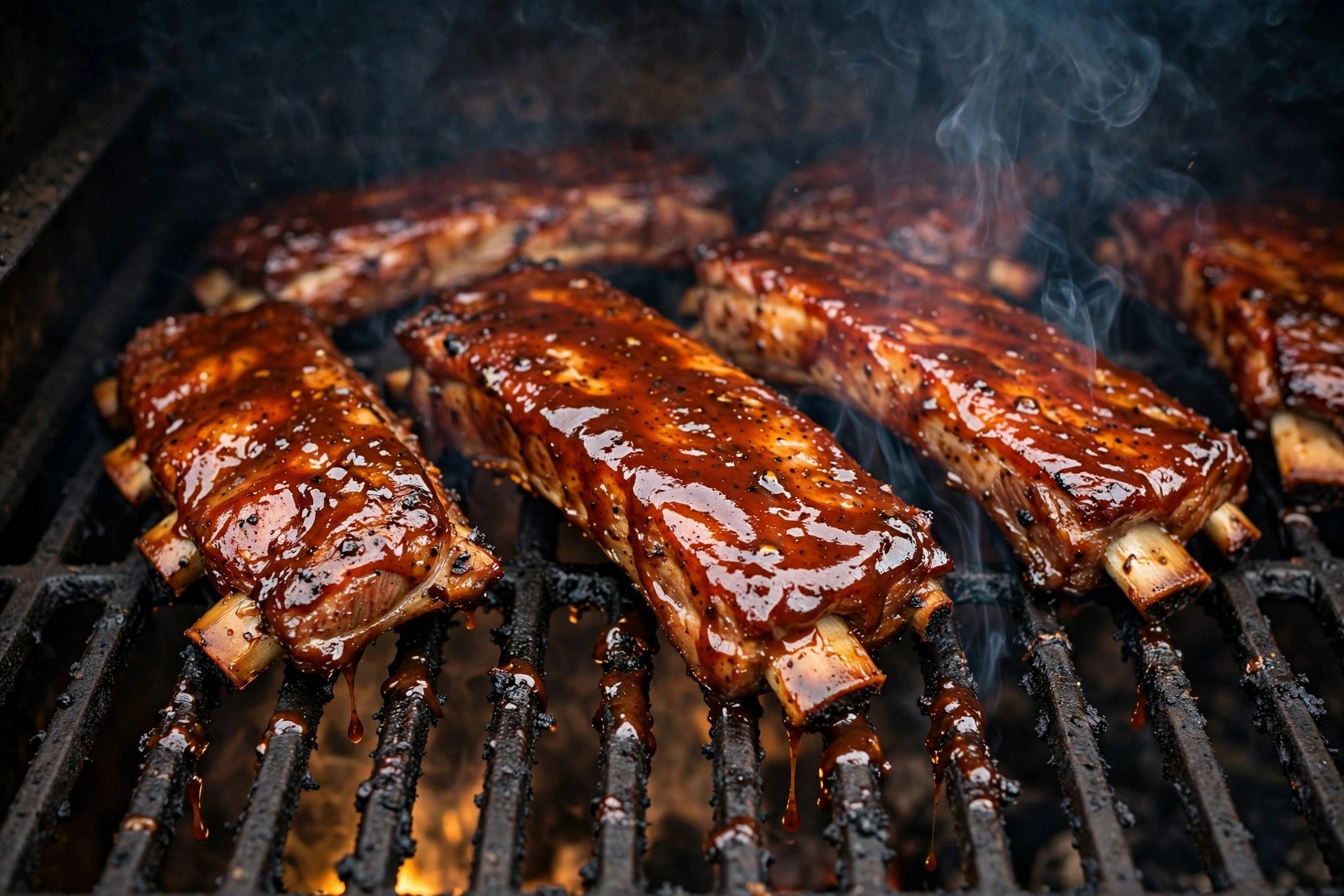
Wet ribs take the more traditional route: seasoned with the same style of rub, then slow-smoked over hickory and brushed with a thin barbecue sauce near the end of the cook. The sauce sets into a glossy glaze rather than a thick topping, and the ribs come out sticky and messy. Napkins are not optional.
| Dry ribs | Wet ribs | |
|---|---|---|
| Cook method | Grilled directly over charcoal | Slow-smoked over hickory |
| Seasoning | Heavy dry rub, dusted on after cooking | Rub before smoking, sauce glaze at the end |
| Sauce | On the side only | Glazed on during the final stretch of the cook |
| Texture | Crusty, intensely spiced exterior | Sticky, glossy, caramelized exterior |
| Famous at | The Rendezvous | Most other Memphis smokehouses |
| Best for | Spice lovers who want to taste the rub | Sauce lovers who want a tangy glaze |
Which one wins? Neither is more flavorful — they’re just different instruments playing the same song. Our wet ribs vs dry ribs comparison digs into the practical differences, and if you’re cooking at home, this guide to telling when ribs are done without a thermometer covers the bend test both styles share.
Pulled Pork Sandwiches, Memphis Style
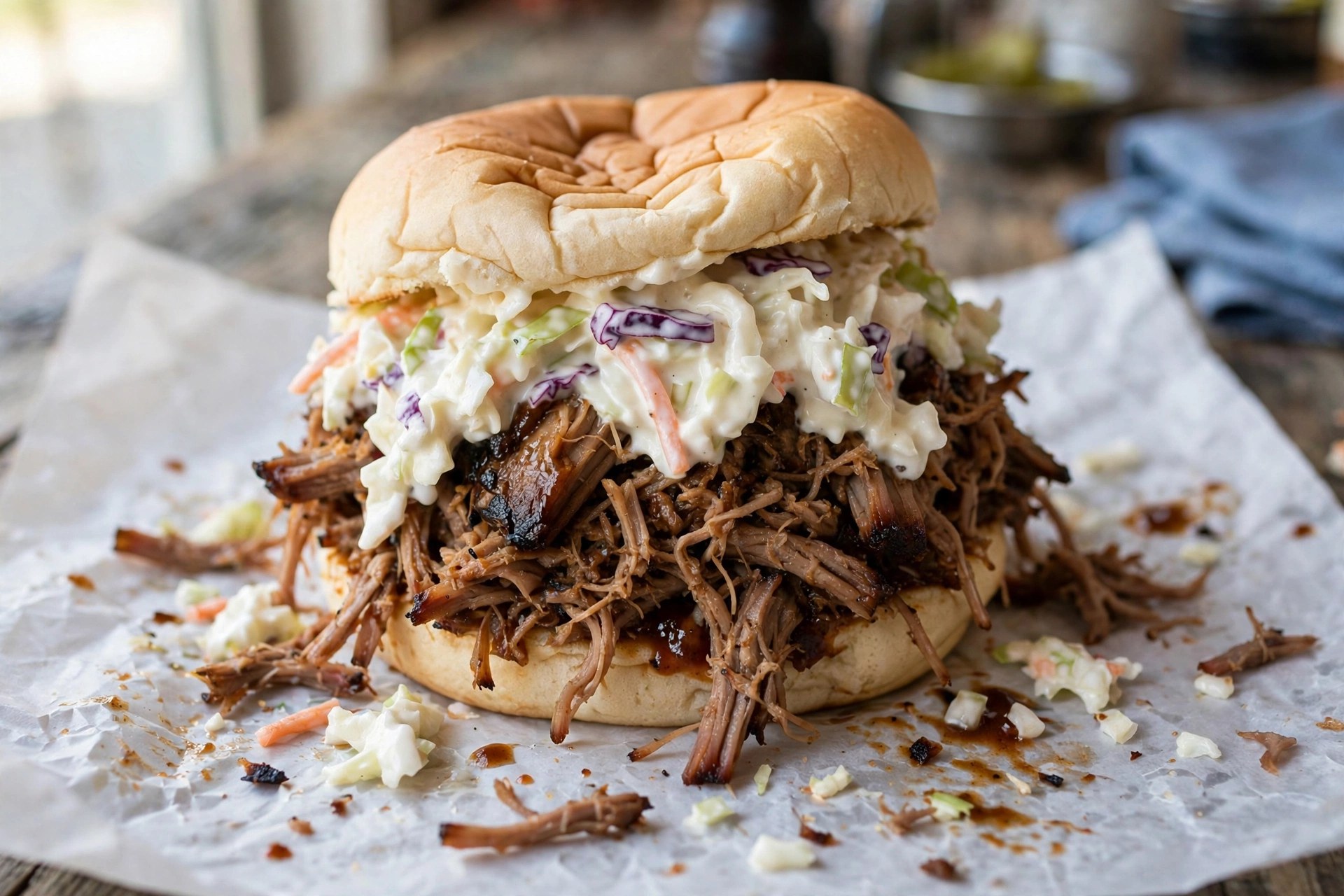
If ribs are Memphis’s headline act, the pulled pork sandwich is the workhorse. Pork shoulders smoke at 225 to 250°F for 8 to 10 hours until they hit a pulling temperature around 195 to 205°F — the point where the bone slides out clean and the meat shreds with a tug. Then the pork gets hand-pulled, piled absurdly high on a soft white bun, and topped with a heap of coleslaw. Yes, on top. The cool, crunchy slaw against the rich pork and the bold rub is the whole point, and skipping it is a rookie mistake.
The sandwich is a study in balance. The pork brings smoke and fat, the rub brings spice, the thin sauce brings tang, and the slaw brings cool crunch. Some Memphis spots make their slaw mustard-style — yellower, tangier — which doubles down on the whole tangy-savory theme of the plate.
Get the details right at home: the internal temperature for pulled pork is 195–205°F, and if you’re feeding a crowd, plan on about a third to a half pound of cooked pork per person — which means roughly a pound of raw shoulder per head after shrinkage. A full rack of spare ribs feeds two to three people, for the rib nights.
Hickory Smoke and the Memphis Sauce
Hickory is the wood that built Memphis barbecue. It’s abundant in the region, burns long and steady, and produces a strong, bacon-like smoke that punches through heavy rubs instead of hiding under them. Where Central Texas leans on mild post oak that flatters the meat quietly, Memphis wants its smoke to be a full participant in the flavor — bold enough to hold its own against paprika, cayenne, and mustard.
The sauce follows the same logic as everything else: balanced, not sweet. Memphis barbecue sauce is thinner than the thick, molasses-heavy sauces of Kansas City. It’s tomato-forward with real tang from vinegar, savory notes from mustard and garlic, sweetness from sugar or molasses, and the house dry rub stirred in so the sauce echoes the meat instead of competing with it. As one Rendezvous owner describes their 12-ingredient house sauce, it’s a little more tomatoey and vinegary than sweet or mustardy — designed to support the ribs, never to mask them.
Typical Memphis sauce ingredients, in rough proportion:
- 2 cups tomato base (ketchup or tomato puree) — the body
- 1 cup vinegar (cider or red wine) — the signature tang
- ¼ cup mustard — savory depth
- ¼ cup brown sugar plus a splash of molasses — restrained sweetness
- Dry rub, 2–3 tablespoons — ties the sauce to the meat
- Garlic, Worcestershire, hot sauce to taste — the background hum
Simmer 15 to 20 minutes, let it cool, and serve it warm on the side. The golden rule stays intact: sauce complements, rub leads.
Beyond the Classics: The Weird, Wonderful Memphis Menu
Here’s something the other Big Four regions don’t do as boldly: Memphis pitmasters treat barbecue as an ingredient, not just a plate. The experimentation started decades ago and never stopped.
Barbecue spaghetti is the strangest and most beloved — smoked pulled pork tossed into a tangy barbecue-spaghetti sauce, allegedly born when a Memphis pitmaster married his smokehouse to his Italian neighbor’s kitchen. It sounds wrong. It tastes right. Barbecue nachos pile pulled pork, cheese sauce, and jalapeños onto chips, and they show up on menus all over town. Dry-rubbed fries, tots, and onion rings carry the same spice mix as the ribs into side-dish territory. And the barbecue pizza dates back to the 1950s at Coletta’s Italian Restaurant — reportedly an Elvis favorite.
The through-line is the same rub-and-smoke DNA applied to anything that holds still. Memphis in May — the World Championship Barbecue Cooking Contest held every spring — is where that creativity meets competition: hundreds of teams, tens of thousands of visitors, and categories for ribs, shoulder, and whole hog that pitmasters spend all year preparing for. This regional BBQ overview places Memphis’s pork-and-hickory identity alongside Texas, Kansas City, and Carolina, and our four regions of American BBQ guide maps how each style earned its turf.
Memphis Style BBQ FAQs
What is Memphis style BBQ?
A pork-focused barbecue style from Memphis, Tennessee, built on bold dry rubs, hickory smoke, and thin tangy sauce served on the side. Its signatures are dry-rub ribs and pulled pork sandwiches topped with coleslaw.
What is the difference between Memphis dry ribs and wet ribs?
Dry ribs are grilled over charcoal and finished with a heavy dusting of dry rub — no sauce on the meat. Wet ribs are slow-smoked over hickory and brushed with thin barbecue sauce near the end of the cook for a sticky glaze. Sauce comes on the side with both.
What kind of wood is used for Memphis BBQ?
Hickory, which grows abundantly in western Tennessee. It burns long and produces a strong, bold smoke that stands up to Memphis’s heavy spice rubs.
Is Memphis BBQ sauce sweet or tangy?
Tangy first. Memphis sauce is thinner than most, tomato-forward with a real vinegar bite, savory mustard and garlic notes, and only moderate sweetness — plus the house dry rub mixed in.
Why do Memphis pulled pork sandwiches have coleslaw on top?
The cool, crunchy slaw contrasts with the rich, smoky pork and the bold spice rub. It’s the defining move of the sandwich — order it “with slaw” and pile it on.
Start with a rack of dry ribs and a shoulder sandwich with slaw, sauce on the side, and you’ll understand Memphis in two plates: the rub leads, the hickory backs it up, and the sauce knows its place. Everything after that — the spaghetti, the nachos, the May competition — is just Memphis being Memphis.
Leave a Reply