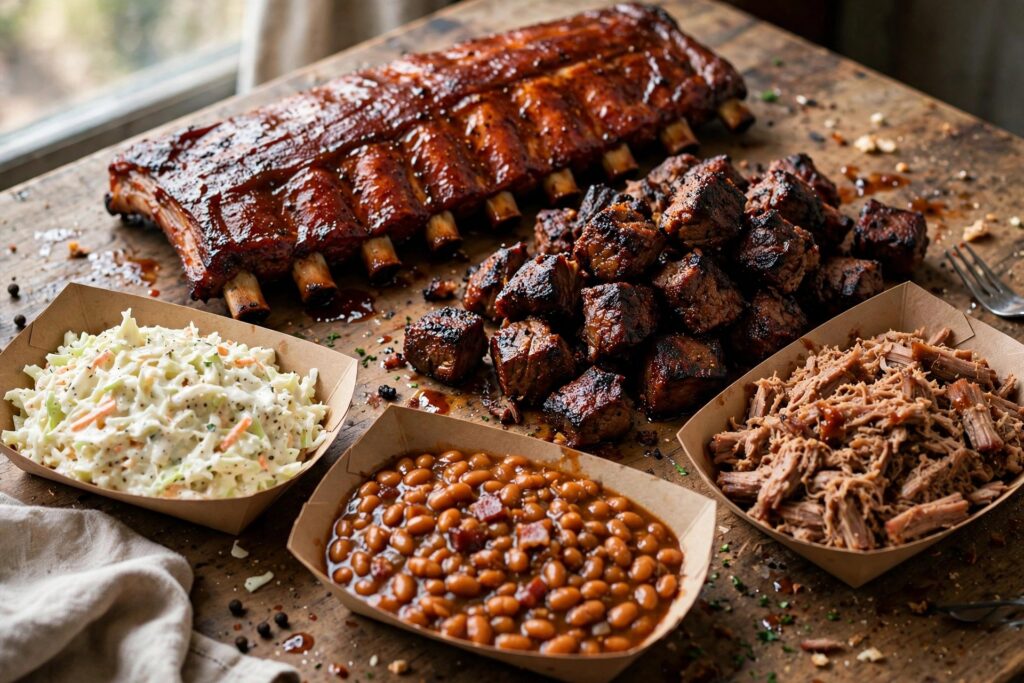
Kansas City style BBQ is a regional American barbecue defined by slow-smoked meats coated in a complex dry rub and finished with a thick, sweet, tomato-based sauce. Unlike Texas or Carolina styles that specialize in one or two meats, KC barbecue smokes just about everything — ribs, brisket, pulled pork, sausage, and chicken — over hickory and oak wood. It’s also the birthplace of burnt ends, the caramelized brisket-point nuggets that started here as a throwaway cut.
Kansas City is often called the barbecue capital of the world, and the numbers back up the brag: the metro area is home to more than 100 barbecue restaurants, from century-old institutions to gas-station counters with championship trophies. But what actually makes KC barbecue different from every other style? It comes down to five things — and once you know them, you’ll spot KC-style cooking anywhere.
A Short History of Kansas City BBQ
The story starts with one man. Henry Perry set up a barbecue stand in Kansas City’s garment district around 1908, selling slow-smoked meats wrapped in newsprint and slathered in a tangy, peppery sauce. Perry cooked over oak and hickory — the woods growing all around Missouri — and served whoever showed up: day laborers, jazz musicians, neighborhood families. His menu was wide even then, with Midwestern beef and whatever else he could smoke.
Perry ran his stand until his death in 1940, and that’s where the family tree gets interesting. His former cooks split off and opened their own joints. Charlie and Arthur Bryant took over Perry’s spot and renamed it Arthur Bryant’s, which food writer Calvin Trillin later called “the single best restaurant in the world.” George Gates, another Perry-trained cook, founded Gates Bar-B-Q in 1946 — and the rivalry between Gates and Bryant’s is still the city’s friendliest feud.
Later waves built the modern scene: Fiorella’s Jack Stack brought smoked steaks and lamb ribs, Joe’s Kansas City Bar-B-Que turned a gas station into a championship machine, and the Jones sisters made Jones Bar-B-Q the city’s only woman-owned and woman-run pit. KC barbecue grew out of African American pitmaster tradition blending with the city’s stockyard meatpacking economy — cheap, abundant meat meeting slow, patient fire. You can trace that thread through the full story in our guide to the four regions of American BBQ.
What Defines Kansas City Style BBQ
Strip away the restaurant names and five traits define the style, no matter whose pit the meat comes from.
1. Every meat, not one meat. Texas means brisket. Carolina means pork. Kansas City means all of it: pork spare ribs and baby backs, beef brisket, pulled pork, smoked sausage, chicken, turkey, and sometimes fish. The style is defined by how the meat is seasoned and sauced, not by which animal it came from.
2. A complex dry rub, then sauce. KC rubs go well beyond salt and pepper — paprika, brown sugar, garlic powder, onion powder, cumin, mustard powder, and black pepper are all common. But unlike Memphis, where dry rub is often the whole story, KC meat almost always meets sauce before it hits the plate.
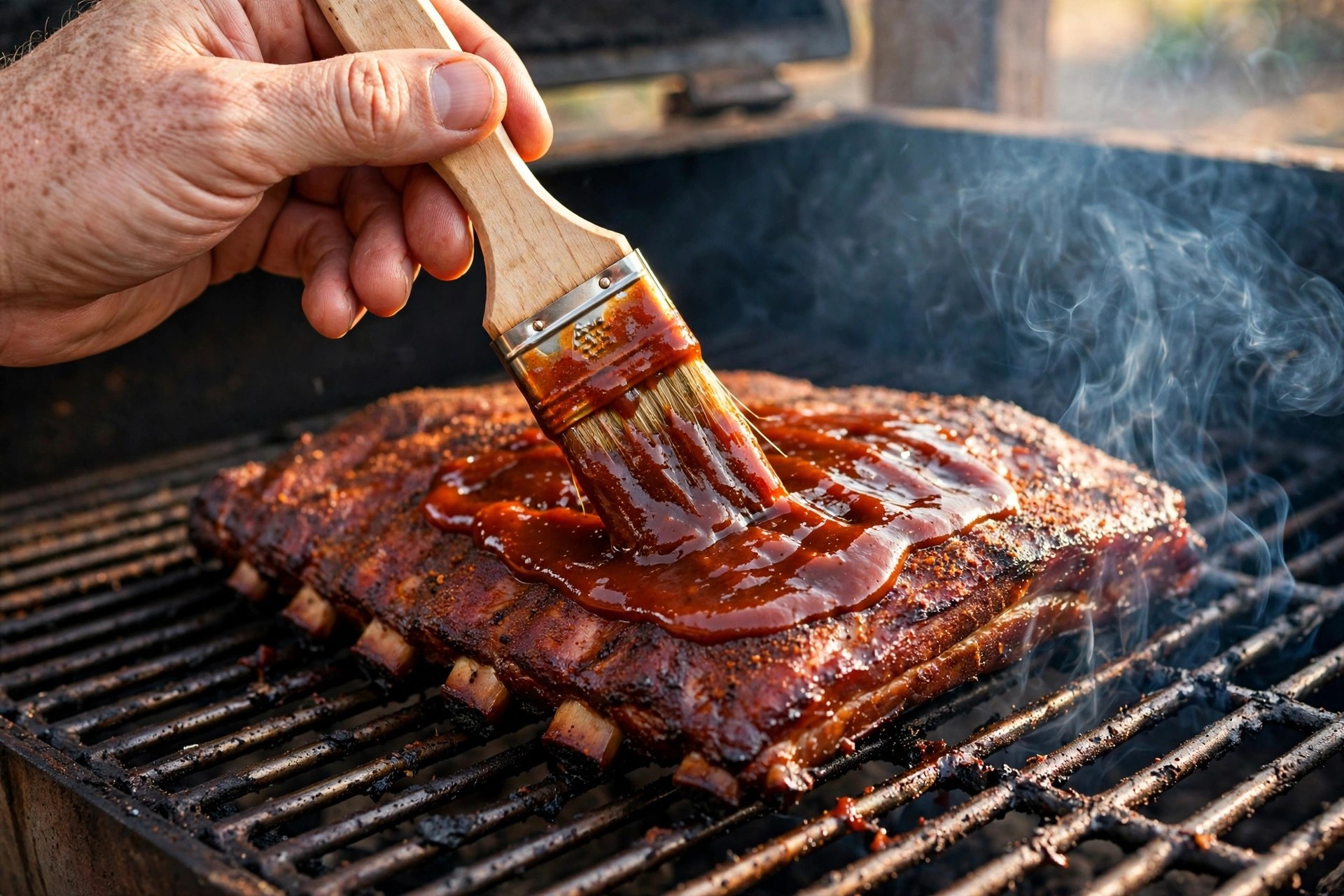
3. Thick, sweet, tomato-based sauce. This is the calling card. KC sauce is built on a ketchup and molasses base, darkened with brown sugar, balanced with vinegar, and kicked with black pepper. It’s applied generously — glazed onto the meat in the final minutes or served alongside for dipping.
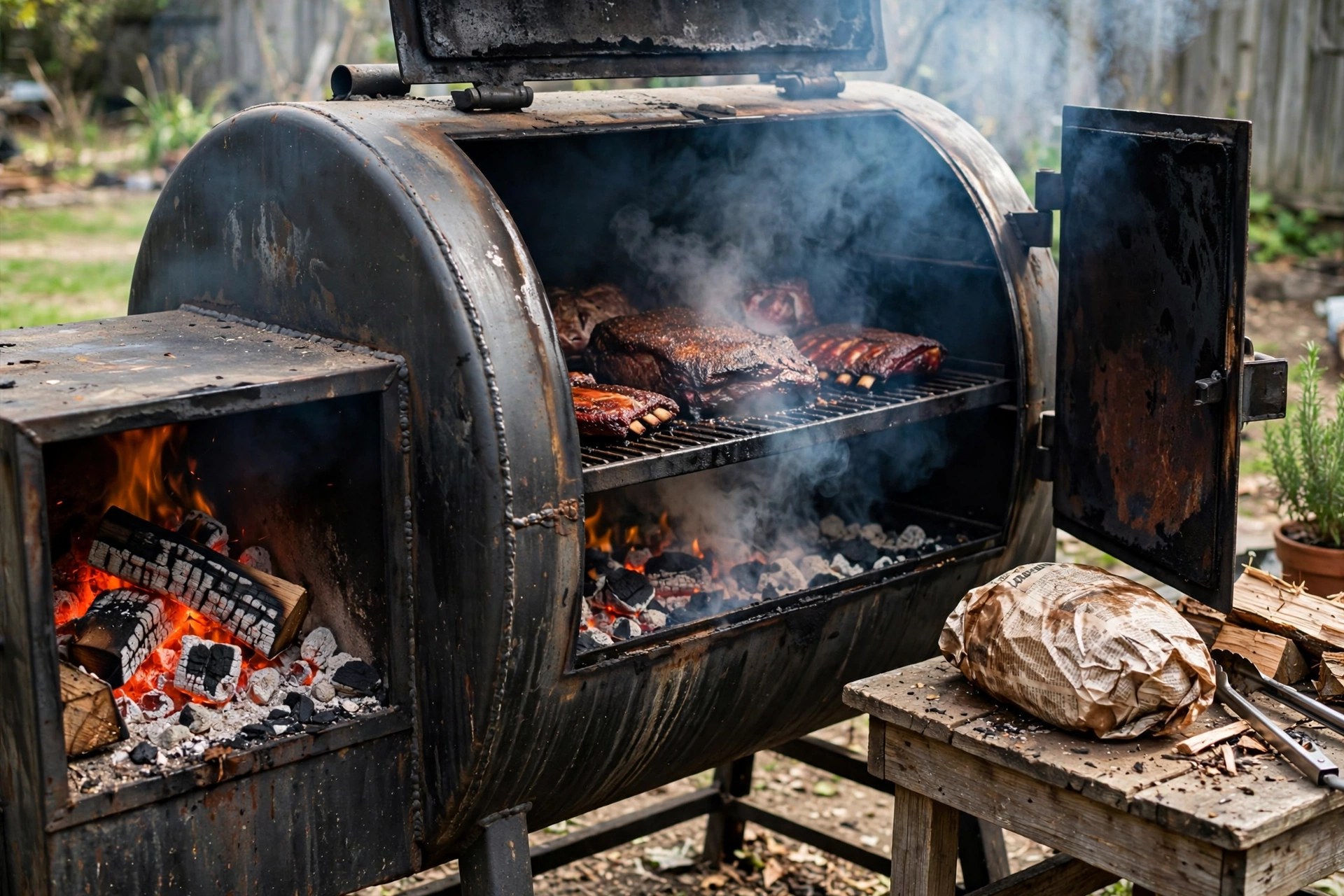
4. Hickory and oak smoke. Henry Perry smoked over hickory and oak, and most KC pits still do. Hickory brings a strong, bacony smoke that stands up to the sweet sauce; oak burns steady and long for the overnight brisket cooks. Fruitwoods like apple show up too, but hickory is the signature. If you’re choosing fuel, our hickory vs mesquite breakdown explains why KC sticks with hickory.
5. Burnt ends. No other style claims them. These crispy, fatty, twice-smoked cubes cut from the brisket point are Kansas City’s original contribution to barbecue — and the thing every visitor gets told to order first.
Kansas City Style vs Other BBQ Styles
The fastest way to understand KC barbecue is to put it next to the other big three. Each style answers the same question — what do you smoke, how do you season it, and what goes on top — completely differently.
| Style | Primary meat | Seasoning | Sauce | Signature dish |
|---|---|---|---|---|
| Kansas City | Everything: ribs, brisket, pork, chicken | Complex dry rub, then sauce | Thick, sweet, tomato-based | Burnt ends |
| Texas | Beef brisket | Salt and coarse pepper (SPG) | Thin, often served on the side | Brisket |
| Memphis | Pork ribs and shoulder | Dry rub, sometimes no sauce at all | Thin, tangy tomato-vinegar | Dry ribs |
| Carolina | Whole hog / pulled pork | Salt, pepper, red pepper | Vinegar-pepper or mustard-based | Pulled pork |
The pattern is clear: KC is the maximalist style. More meats, more seasoning, more sauce. Texas is minimalist — salt, pepper, smoke. Memphis splits the difference with its famous wet-or-dry ribs debate. Carolina goes acidic and thin where KC goes sweet and thick. A side-by-side of KC and Memphis sauce shows how the two tomato-based sauces still land in completely different places.
The Sauce: Thick, Sweet, and Tomato-Based
KC sauce is the one most Americans picture when they hear “barbecue sauce” — that’s how influential it became. The classic formula starts with ketchup and molasses: ketchup brings tomato sweetness and tang, molasses adds depth and that syrupy body. From there, brown sugar, apple cider vinegar, Worcestershire sauce, yellow mustard, onion and garlic powder, black pepper, and a little hot sauce round out the profile.
What matters as much as the recipe is the timing. KC pitmasters don’t drown raw meat in sauce. The meat smokes naked under its dry rub for most of the cook, and sauce goes on only in the last 15 to 30 minutes — long enough to caramelize and set into a sticky glaze, short enough that the sugars don’t scorch. Order ribs “extra saucy” and you’ll get a second coat at the counter, but the smoke and rub always come first.
One thing the locals will tell you: the famous joints don’t agree on sweetness. Gates’ sauce leans peppery and less sweet, closer to Perry’s original. Arthur Bryant’s leans bolder and tangier. Most KC households keep two or three bottles in the fridge and have strong opinions about all of them.
Burnt Ends: The Dish KC Invented
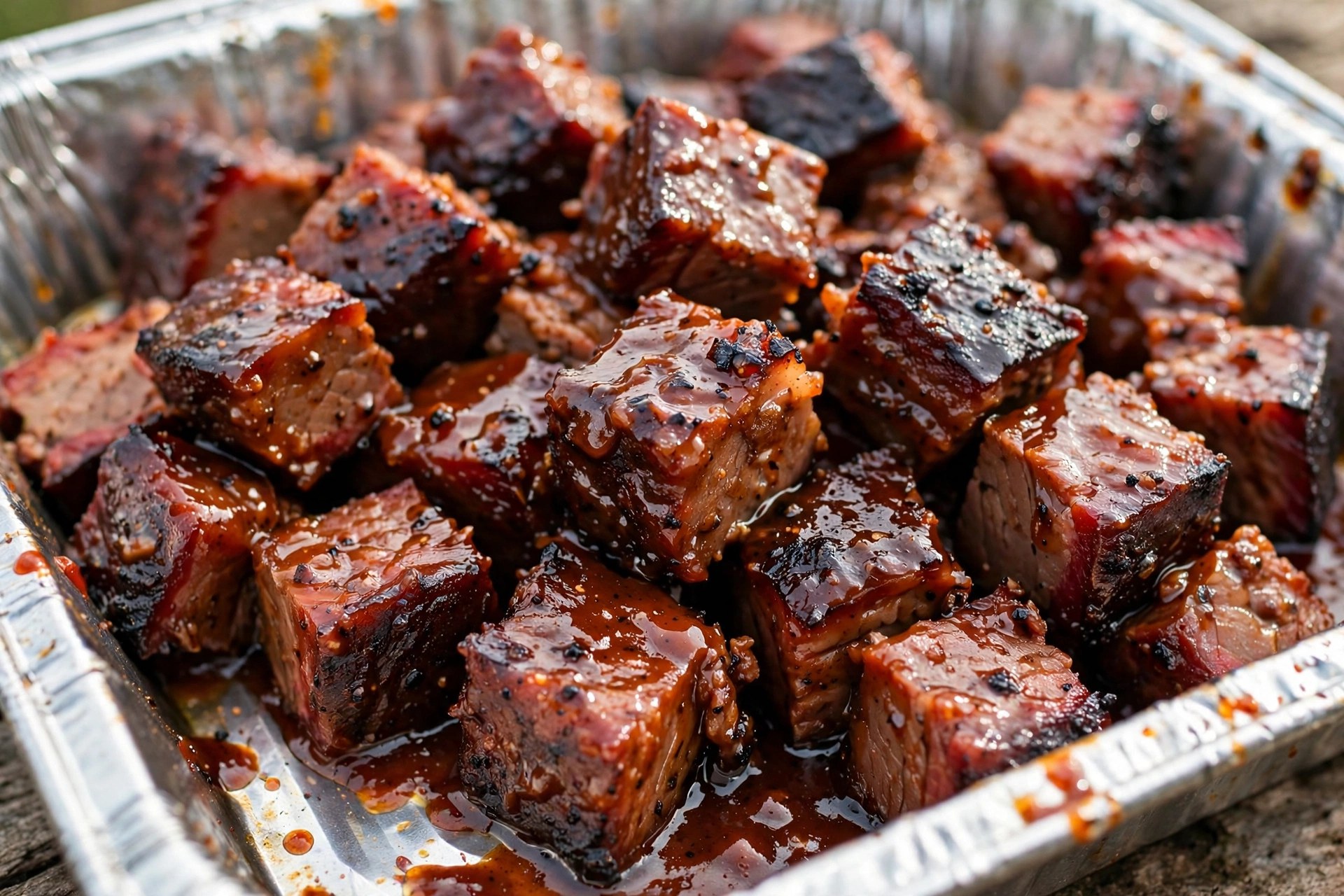
Burnt ends started as a happy accident of brisket economics. A whole packer brisket has two muscles: the lean flat and the fatty point. The point cooks faster and its irregular, craggy edges get deeply caramelized — the parts too crispy to slice for a sandwich. KC pitmasters started cubing those edges, tossing them back in sauce, and smoking them again. Customers went crazy for them. A scrap became the signature.
Here’s the standard method, and why each step exists:
- Smoke a full packer brisket at 250–275°F until the flat probes tender, usually 195–205°F internal — 10 to 14 hours for a 12–15 pound packer.
- Separate the point from the flat along the fat seam, then cube the point into 1-inch chunks.
- Sauce and re-smoke: toss the cubes in KC sauce with a sprinkle of rub and a few pats of butter, then return them to the smoker uncovered for 1 to 2 hours at 275°F until the sauce caramelizes and the edges crisp.
- Serve immediately. Burnt ends don’t hold well — the magic is the contrast between the crispy bark and the rendered fat inside.
What you’re tasting is concentration: hours of smoke, rendered beef fat, caramelized sugars, and bark, all in one bite. If you want the full technique, our burnt ends guide walks through brisket-point selection, cubing, and the second smoke step by step.
The Meats: What Gets Smoked in Kansas City
KC’s “smoke everything” philosophy means the menu at a good joint reads like a greatest-hits album. Here’s what anchors it, and how each one is typically handled.
Spare ribs and baby backs. Pork ribs are the KC workhorse. Spares get trimmed St. Louis-style, rubbed, smoked at 250°F for 5 to 6 hours, then glazed with sauce to finish. Baby backs run a little faster — 4 to 5 hours. The KC ideal is tender with a slight tug off the bone, not falling apart.
Beef brisket. The full packer, flat for slicing and point for burnt ends. KC brisket wears the complex rub (not just Texas-style salt and pepper) and often finishes with a light sauce glaze. Rest it properly — resting lets the juices redistribute so the first slice doesn’t flood the board — then slice against the grain.
Pulled pork and sausage. Pork shoulder smokes 8 to 10 hours at 250°F until it hits 195–205°F and shreds with a tug, then gets chopped or pulled and sauced. Smoked sausage — often kielbasa-style links — gets a quick 2-hour smoke and a sauce glaze, served sliced on a platter or in a sandwich.
Chicken and turkey. Spatchcocked chickens and turkey breasts pick up the rub and a lighter hand with the sauce. They’re the underrated order — cheaper, faster, and a good test of whether a pit can handle delicate meat without drying it out.
And the plate isn’t complete without the sides: baked beans (often cooked with brisket trimmings), coleslaw, cheesy corn, pickles, and white bread. In KC, the beans aren’t an afterthought — they’re practically a food group.
How to Cook Kansas City Style BBQ at Home
You don’t need a Kansas City pit to cook KC style. You need the right wood, the right rub, the right sauce timing, and patience.
Set up the smoke. Run your smoker at 250–275°F with hickory as the primary wood — splits, chunks, or pellets. Hickory’s strong, bacony smoke is the KC signature; a little oak mixed in keeps the fire steady on long cooks. Keep the smoke thin and blue, not thick and white — heavy white smoke lays down bitter creosote instead of flavor.
Build the rub. A solid KC-style rub ratio to start with: 1/2 cup paprika, 1/4 cup kosher salt, 1/4 cup brown sugar, 2 tablespoons each of black pepper, garlic powder, and onion powder, plus 1 tablespoon each of cumin and mustard powder. That’s enough for a full packer brisket or two racks of ribs. Apply it generously — 1 to 2 tablespoons per pound — and let the meat sit rubbed for at least 4 hours, ideally overnight.
Cook low and slow, sauce late. Smoke ribs 5–6 hours, pork shoulder 8–10, brisket 10–14, all in that 250–275°F window. Wrap in foil or butcher paper when the bark is set and dark (usually around 160–170°F internal) to push through the stall. Brush on sauce only in the final 15–30 minutes, then let it tack up over the heat.
Rest before you slice. Tent ribs 15–20 minutes; rest brisket and pork shoulder 1–2 hours wrapped in a cooler. Resting lets juices redistribute so the first slice doesn’t flood the cutting board.
Kansas City Style BBQ FAQs
What is Kansas City style BBQ known for?
Thick, sweet, tomato-based sauce, a wide variety of smoked meats, complex dry rubs, hickory and oak smoke, and burnt ends — the caramelized brisket-point cubes KC invented.
What is the difference between Kansas City and Texas BBQ?
Kansas City smokes many meats with a complex rub and finishes with thick, sweet tomato sauce. Texas focuses on beef brisket seasoned with just salt and pepper, with thin sauce served on the side or not at all.
What wood is used for Kansas City BBQ?
Hickory is the traditional and most popular wood, often blended with oak. Hickory gives a strong, bacony smoke that pairs well with KC’s sweet sauces.
Are burnt ends actually burnt?
No. Burnt ends are cubes cut from the brisket point, sauced and smoked a second time until caramelized and crispy on the outside. The dark color comes from bark and caramelized sauce, not char.
What sides go with Kansas City BBQ?
Baked beans (often made with brisket trimmings), coleslaw, cheesy corn bake, pickles, and white bread are the classic KC sides.
Next step: pick one KC classic and cook it this weekend — a rack of spare ribs with a sweet tomato glaze is the fastest way to taste the style. Then decide which camp you’re in: team wet, with that sticky glaze, or team dry.
Leave a Reply