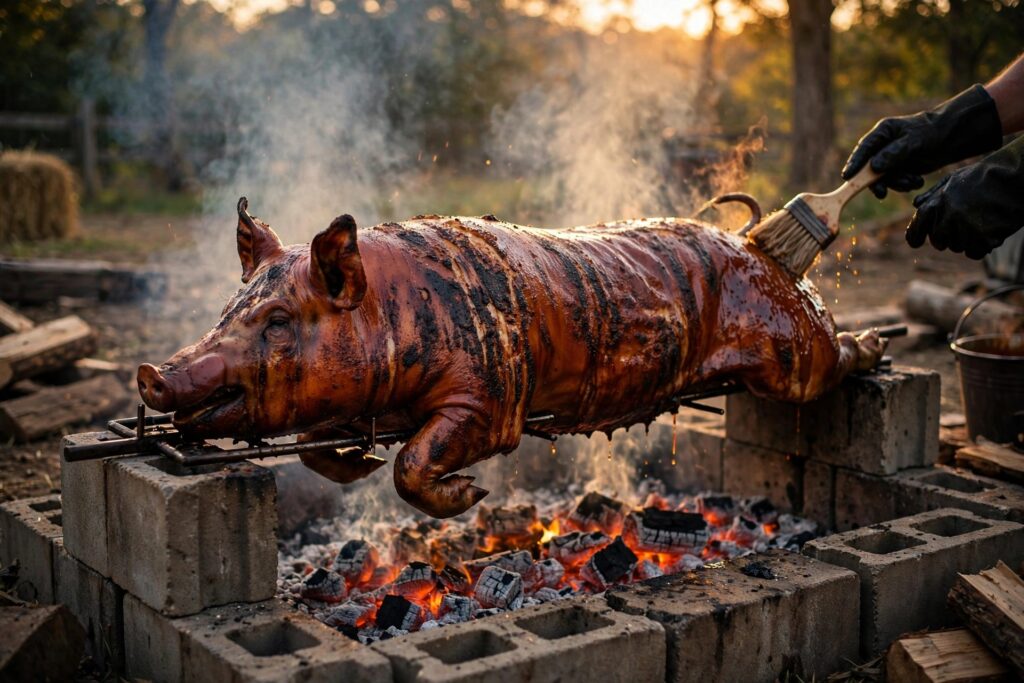
Carolina style BBQ is the Carolinas’ pork-based barbecue tradition: whole hogs or pork shoulders smoked low and slow over hardwood, then chopped or pulled and dressed with thin, acidic sauces — vinegar-and-pepper in eastern North Carolina, ketchup-vinegar in the Piedmont, and mustard-based “Carolina Gold” in South Carolina. It’s the oldest barbecue tradition in the United States, and the only one built on the whole hog.
Say “barbecue” in the Carolinas and people hear a noun, not a verb. In much of the state, “barbecue” means chopped pork on a bun, dressed in vinegar sauce and topped with slaw — full stop. The word refers to the food, and the food is always pork. Beef has no seat at this table, and a thick, sweet tomato glaze would get you some very serious looks.
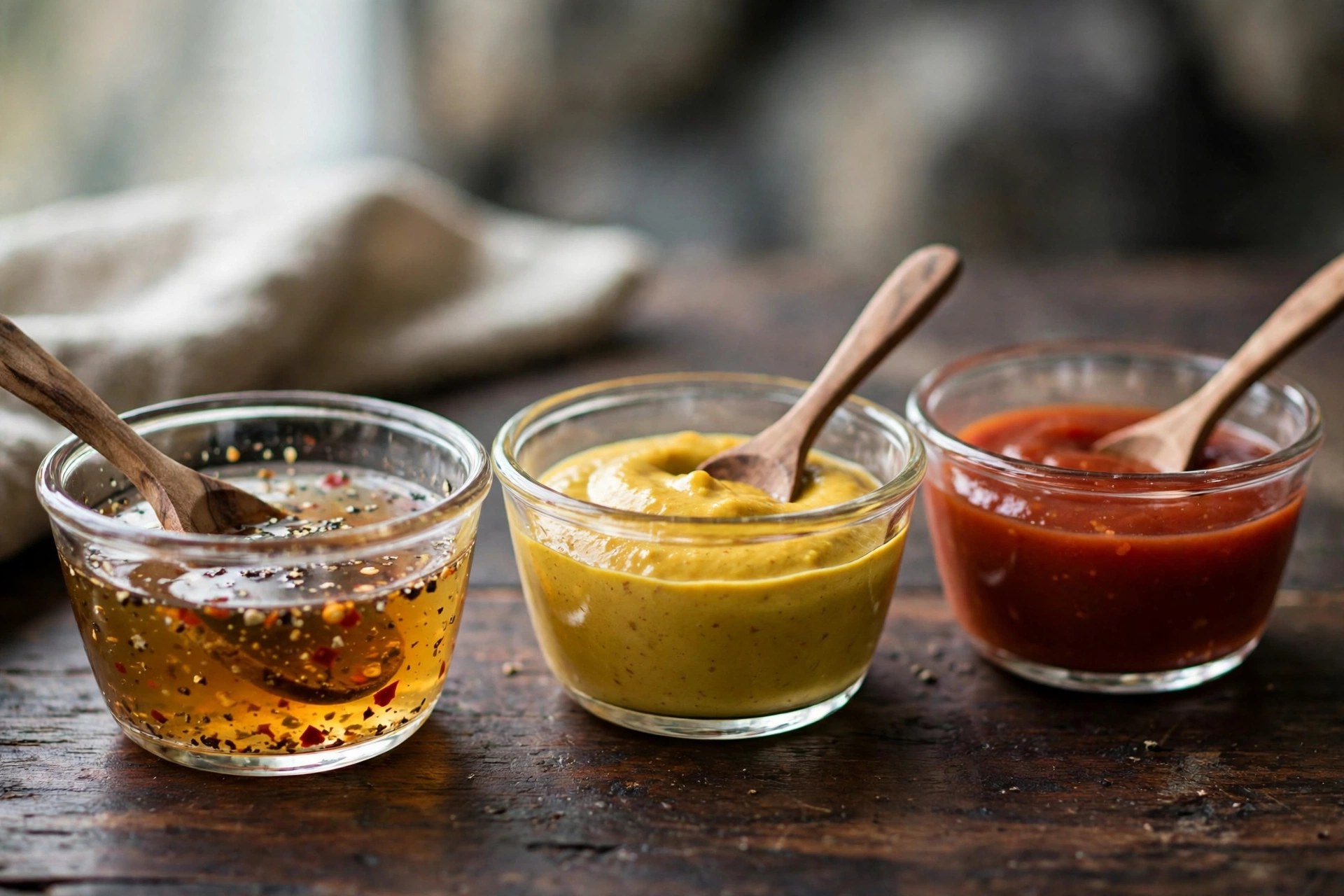
The Three Sauces of Carolina Style BBQ
If you learn one thing about Carolina style BBQ, make it this: the region is really three sauce traditions sharing one pig. Everything else — the cuts, the cooking, the sides — flows from which sauce you’re standing in.
| Style | Meat | Sauce base | Flavor profile |
|---|---|---|---|
| Eastern North Carolina | Whole hog | Vinegar and crushed red pepper | Sharp, tangy, peppery — no tomato at all |
| Lexington / Piedmont NC | Pork shoulder only | Vinegar with a touch of ketchup | Tangy with a whisper of sweetness |
| South Carolina | Pulled pork (shoulder) | Mustard (“Carolina Gold”) | Bright, zesty, tangy |
Notice what the three have in common: none of them is sweet, thick, or tomato-heavy. Carolina sauces are thin by design. A whole hog or a 10-pound shoulder is a lot of rich, fatty meat, and the sauce’s job is to cut through that fat, not to bury it.
Eastern North Carolina: Whole Hog and Vinegar-Pepper
Eastern North Carolina is where Carolina style BBQ begins — and, many pitmasters will tell you, where American barbecue begins, period. The tradition is whole-hog barbecue: a full pig, butterflied or split, cooked low and slow over hardwood coals for 10 to 14 hours until every muscle gives up and surrenders.
The whole hog is the hardest thing in Carolina barbecue to do well. A 150-pound animal doesn’t cook evenly by itself — the shoulders, loins, and hams all finish at different times. Pitmasters manage this by mopping the hog with vinegar sauce throughout the cook and by knowing their pits the way sailors know the sea. It is physically demanding, all-night work.
When the hog comes off the pit, the meat is chopped — traditionally with cleavers, often right on the pit lid — and dressed with a sharp, thin sauce of apple cider vinegar, crushed red pepper, salt, and a little black pepper. No tomato, ever. The chopped meat gets mixed with the sauce so every bite carries tang and heat. As pitmaster Rodney Scott explains, what makes Carolina barbecue unique is that whole-hog cooking technique — a tradition that turns a cookout into a community event.
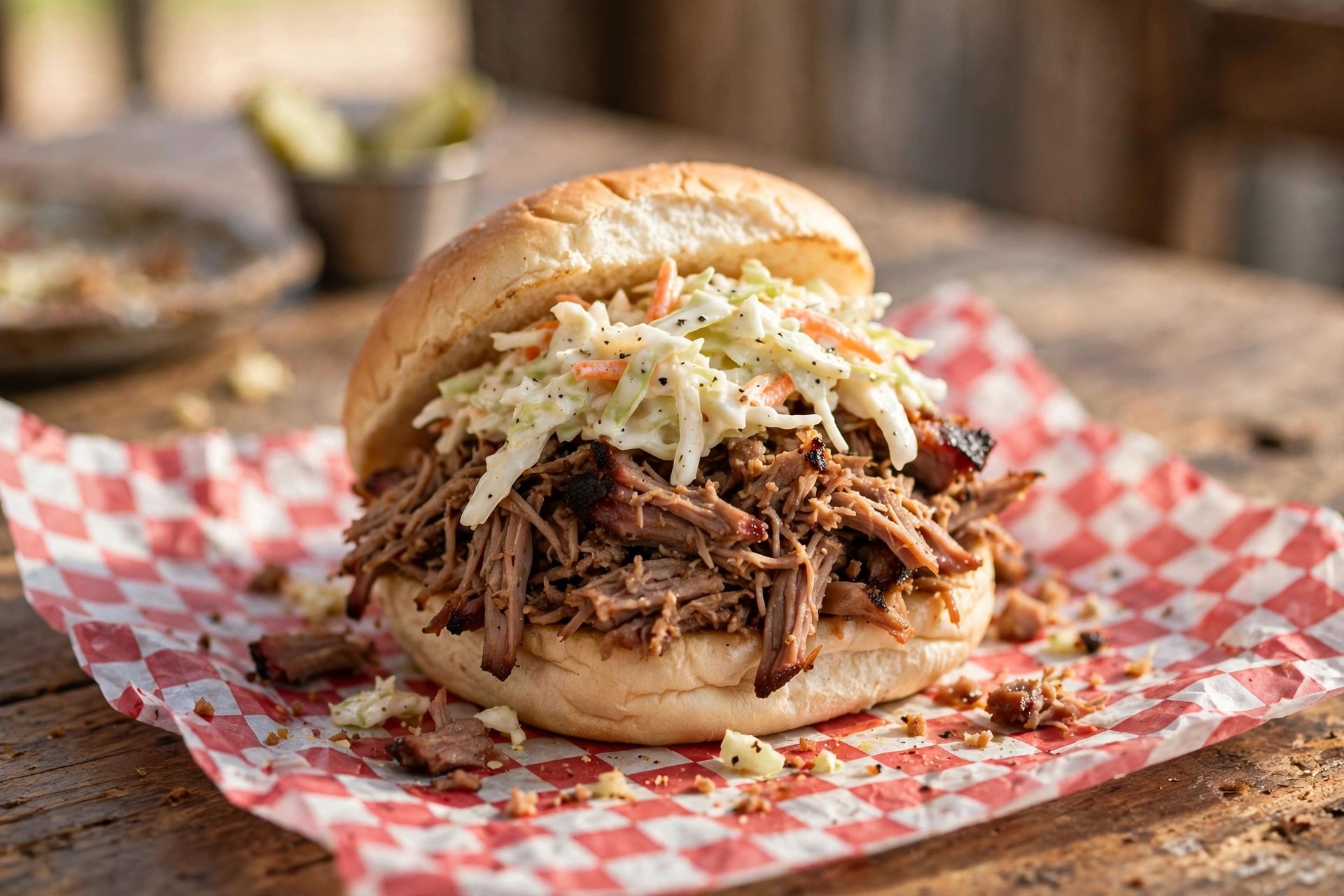
The classic eastern North Carolina plate is a chopped pork sandwich on a soft white bun, dressed in vinegar sauce and topped with creamy coleslaw, served with hush puppies and maybe a side of collard greens. Order it “all the way” at an eastern joint and the slaw goes on the sandwich. That’s not optional up for debate — it’s the local way.
Lexington Style: The Piedmont’s Pork-Shoulder Tradition
Drive west from the coast into North Carolina’s Piedmont region and the tradition changes. Lexington style — named for the town of Lexington, which has called itself the “Barbecue Capital of the World” for the better part of a century — uses pork shoulder only, no whole hog.
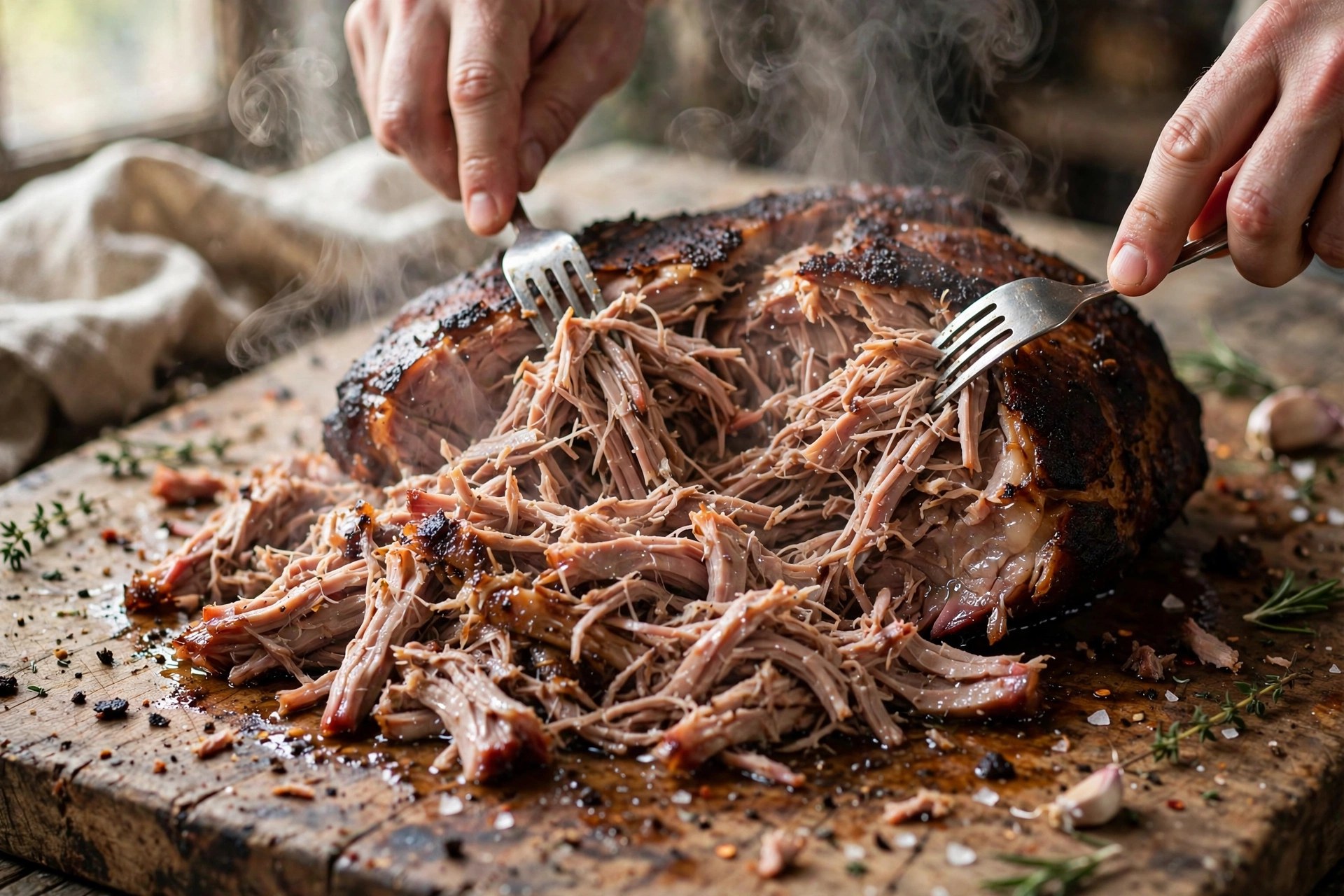
The shoulder (often called a Boston butt, 8 to 10 pounds) smokes at 225°F to 250°F for roughly 10 to 12 hours until it hits an internal temperature of about 195°F to 205°F — the range where the connective tissue melts and the meat pulls apart. It’s then chopped or pulled and mixed with “dip”: the Lexington sauce, which is the eastern vinegar-pepper base with a touch of ketchup added for color and a hint of sweetness.
Lexington’s signature side is “red slaw” — coleslaw tinted with the same ketchup-vinegar dip instead of mayonnaise. It runs tangier and leaner than the creamy slaw of the east, and it’s another example of the Carolina instinct: keep the acid high, keep the fat in check. A simple Lexington-style rub is just salt, pepper, and garlic — the smoke and the dip do the talking.
One note on sourcing: whole hogs need special-order butchery, but pork shoulders are available everywhere, which is exactly why Lexington style is the easiest Carolina tradition to cook at home. A single 8-pound butt, a kettle smoker, and ten hours will get you remarkably close to the real thing.
South Carolina: Mustard-Based “Carolina Gold”
Cross the state line into South Carolina and the sauce turns yellow. “Carolina Gold” is a mustard-based barbecue sauce — tangy, bright, and sharply flavored — and it’s the default across much of the state. Its roots run back to German immigrants who settled the South Carolina midlands in the 1700s, bringing their mustard with them.
A classic Carolina Gold mixes yellow mustard with apple cider vinegar, brown sugar, honey, and spices — cayenne, black pepper, garlic. The result is the most assertive of the three Carolina sauces: the mustard’s sharpness rides over the vinegar’s tang, and it clings to pulled pork the way the thinner vinegar sauces can’t. It pairs best with pork shoulder pulled into strands, where the sauce can wrap every piece.
South Carolina actually claims all four recognized barbecue sauce families — mustard, vinegar-pepper, and both light and heavy tomato sauces — depending on which county you’re standing in. But mustard is the flag it flies. If a bottle of yellow sauce shows up next to your pulled pork anywhere in the South, you’re in Carolina Gold country.
The Meats, Wood, and Timing Behind Carolina Style BBQ
Carolina style BBQ looks simple — pork, smoke, vinegar — but the technique is precise. Here’s what the tradition actually calls for:
- The meat: whole hog (100 to 175 pounds) for eastern NC; Boston butt / pork shoulder (8 to 10 pounds) everywhere else. Ribs appear on Carolina menus, but the pork shoulder is the star.
- The wood: hickory and oak, the hardwoods of the Carolina piedmont. Hickory brings a strong, bacony smoke; oak burns steadier and milder. Pitmasters warn against over-smoking — the smoke should season the pork, not overpower it.
- The temperature: 225°F to 250°F for shoulders, slightly lower for whole hogs (around 225°F). Whole hogs need 10 to 14 hours; an 8-pound shoulder needs 10 to 12 hours.
- The target internal temp: 195°F to 205°F, the internal temperature for pulled pork where collagen melts into gelatin and the meat shreds cleanly.
- The sauce: applied as a mop during cooking and mixed in after chopping — never slathered thick at the table.
The classic Carolina vinegar mop is dead simple: about 2 cups of apple cider vinegar, 2 tablespoons of crushed red pepper flakes, 1 tablespoon of salt, and 1 teaspoon of black pepper. Whisk, bottle, mop the hog every hour after the first three hours. The mop keeps the meat moist and layers flavor into the bark without adding sugar that could burn.
If you’re cooking this at home, plan on about half a pound of cooked pork per person — a raw 8-pound butt yields roughly 4 to 4.5 pounds of pulled meat after shrinkage. And when you’re done, the vinegar in the sauce is your friend: the acid helps the pork stay moist on day two and three.
How to Eat Carolina BBQ Like a Local
Carolina barbecue has table manners, and locals notice when visitors miss them. Here’s the short course:
- Order the sandwich, not the platter — the chopped pork sandwich on a soft bun is the definitive Carolina format. In the east, it comes with slaw on top.
- Don’t ask for sweet sauce. The vinegar and mustard sauces are the point. Asking for a thick tomato glaze marks you as an outsider instantly.
- Eat the skin. In whole-hog country, the chopped meat includes crispy skin mixed through — that’s texture and flavor, not a mistake.
- Save room for the sides. Hush puppies, collard greens, boiled potatoes, and Brunswick stew round out a Carolina plate. The best BBQ side dishes here are simple, starchy, and built to soak up sauce.
- Respect the line between the sauces. In North Carolina, the vinegar-vs-mustard debate is real — but both sides agree pork is the only meat that counts.
Carolina Style BBQ vs. Other Regional Styles
Carolina is one of the four regions of American BBQ, and the contrasts tell you a lot about what makes it special:
- vs. Texas: Texas smokes beef brisket with salt and pepper and barely uses sauce. Carolina smokes pork with almost no rub and sauces it with vinegar or mustard. They’re near-opposites — meat, wood, seasoning, and sauce all differ.
- vs. Kansas City: KC sauces everything thick and sweet. Carolina sauces everything thin and tangy. KC’s sauce is the star; Carolina’s sauce is the supporting act.
- vs. Memphis: the closest cousin — both are pork traditions. But Memphis leads with a paprika dry rub and offers a dry-or-wet choice, while Carolina leads with the sauce and chops or pulls its pork finely dressed.
For the full map — how Carolina fits alongside Texas, KC, and Memphis — see our guide to the four regions of American BBQ. And for the deeper history behind it all, read the history of Southern BBQ, where the whole-hog tradition began.
FAQs: Carolina Style BBQ
What is Carolina style BBQ?
Carolina style BBQ is a pork-based barbecue tradition from North and South Carolina: whole hogs or pork shoulders smoked low and slow over hickory and oak, chopped or pulled, and dressed with thin acidic sauces — vinegar-pepper (eastern NC), ketchup-vinegar (Lexington), or mustard-based “Carolina Gold” (South Carolina).
What is the difference between Eastern and Western NC BBQ?
Eastern North Carolina cooks the whole hog and dresses the chopped meat with a vinegar-and-crushed-red-pepper sauce (no tomato). Western / Lexington-style NC cooks pork shoulder only, with a vinegar sauce that adds a touch of ketchup, served with tangy “red slaw.”
What is Carolina Gold sauce made of?
Carolina Gold is a mustard-based barbecue sauce from South Carolina, made with yellow mustard, apple cider vinegar, brown sugar or honey, and spices like cayenne and black pepper. It’s tangy, bright, and the traditional partner for pulled pork in the state.
What temperature is pulled pork done at for Carolina BBQ?
Pulled pork is done when it reaches an internal temperature of 195°F to 205°F — the range where the collagen in a pork shoulder melts into gelatin and the meat shreds easily. A typical 8-pound shoulder takes 10 to 12 hours at 225°F to 250°F.
Why is Carolina BBQ vinegar-based instead of tomato-based?
Carolina’s vinegar and mustard sauces are thin and acidic by design: they cut through the richness of fatty pork rather than masking it. The tradition grew out of whole-hog cooking, where mopping the meat with vinegar during a 10- to 14-hour cook adds flavor and moisture without sugars that would burn.
The best way to understand Carolina style BBQ is to cook it — or at least to taste it at a joint that does it right. Smoke a pork shoulder at 225°F for ten hours, chop it, dress it with vinegar-pepper, pile it on a soft bun with slaw, and you’ll understand in one bite why this tradition has been running for three hundred years. Pork, smoke, vinegar. Nothing else needed.
Leave a Reply