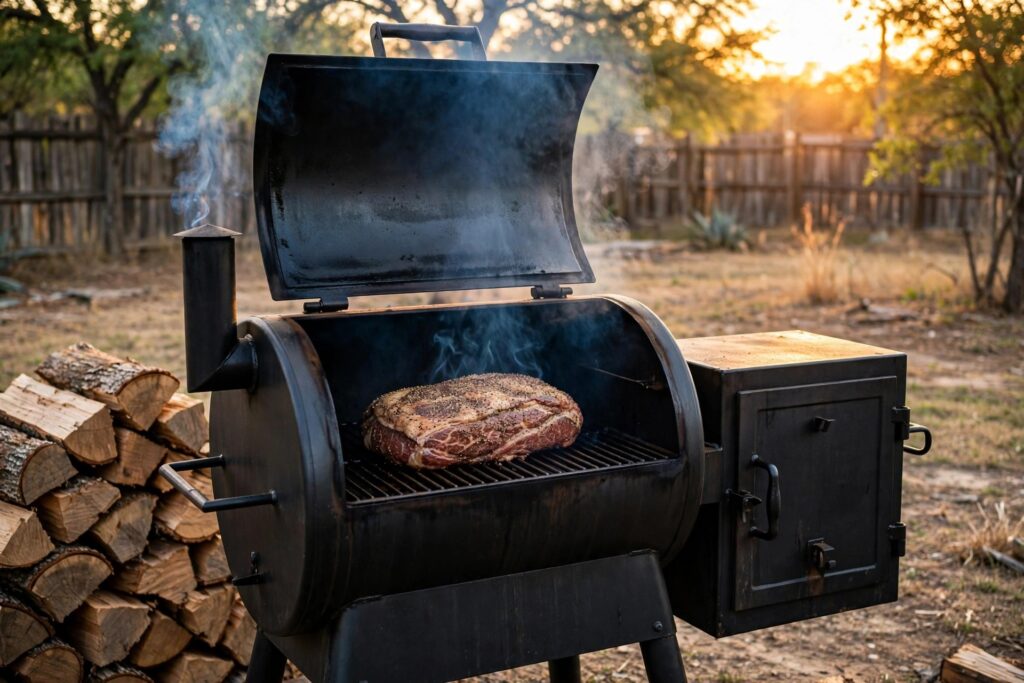
Post oak is the best wood for smoking brisket. It burns clean with a medium-intensity, earthy smoke that complements beef instead of overpowering it — which is exactly why Franklin Barbecue in Austin builds its entire brisket program around post oak. Pecan runs a close second with a slightly sweeter, nuttier profile. This guide breaks down what the best wood for smoking brisket actually does during a 12 to 16 hour cook, which woods to avoid, and the blends that give you the most flavor for your effort.
Why Wood Choice Hits Harder on Brisket Than Anything Else
Brisket is the least forgiving cut in barbecue. A pork shoulder has enough fat and connective tissue to shrug off assertive smoke; brisket’s flat is lean, exposed, and on the pit for 12 to 18 hours. That long exposure compounds everything. A wood that tastes great at hour two can turn bitter by hour eight, because smoke compounds keep accumulating in the meat the whole time the fire is lit.
There’s a second factor most guides skip: meat stops taking on meaningful smoke flavor once its surface passes roughly 140°F. After that point, you’re still cooking with the wood’s heat, but additional smoke is mostly stacking up on the bark — which is where bitterness lives if you overdo it. So the wood you choose for the first half of the cook matters far more than what you burn in the second half. Plan accordingly.
That long, slow exposure is why Central Texas pitmasters converged on post oak decades ago. It was the right answer hiding in plain sight: abundant, clean-burning, and assertive enough to matter without hijacking the beef.
Post Oak: The Central Texas Standard
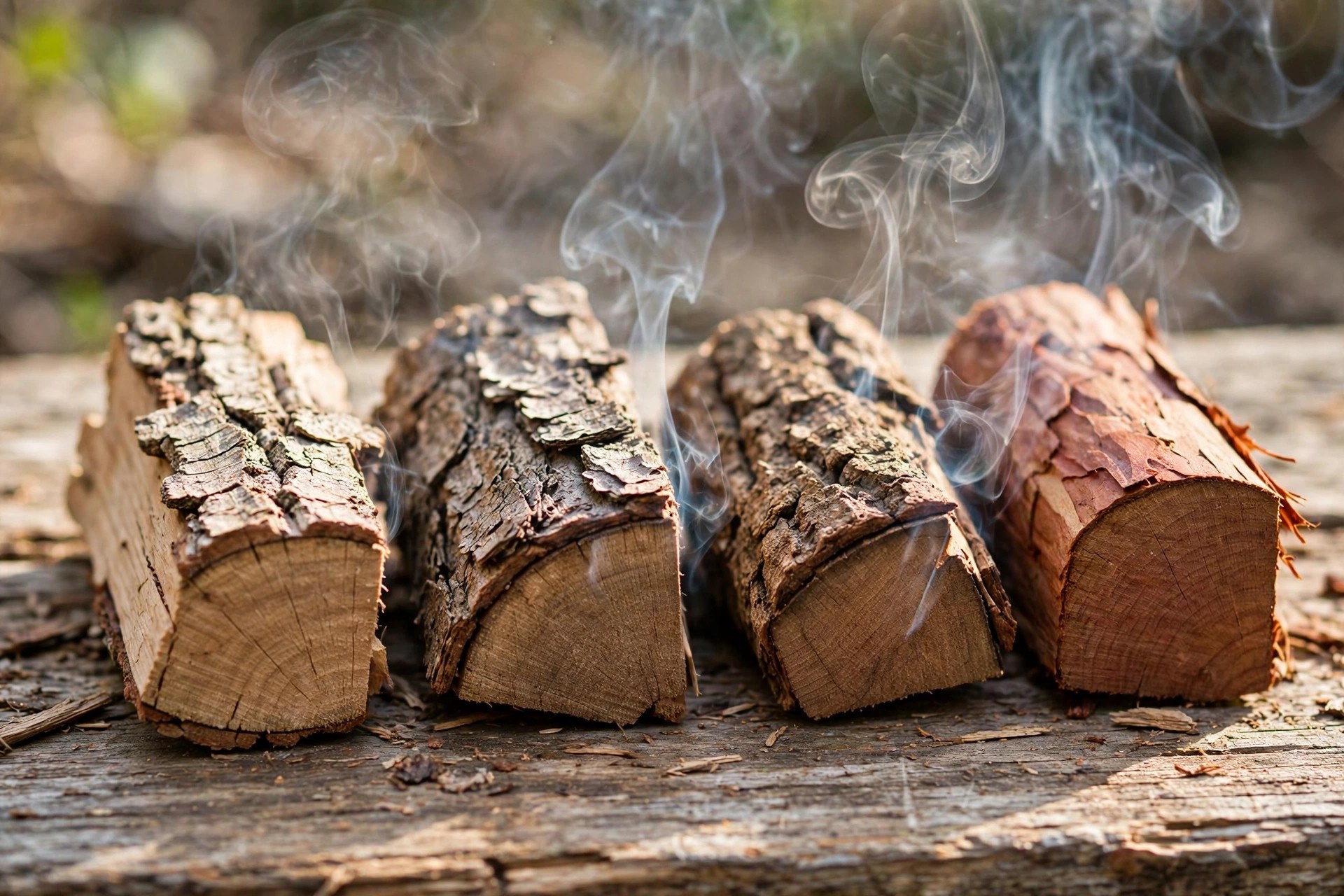
If you only remember one thing from this page, make it this: when in doubt, burn post oak. Aaron Franklin’s book Franklin Barbecue: A Meat-Smoking Manifesto puts it plainly — post oak is his first choice for smoking meats because it burns clean, it’s widely available in Central Texas, and it complements the meat rather than competing with it, as BBQ Smoke Central’s roundup of pitmaster recommendations notes.
What makes post oak special is balance. Its smoke is medium intensity — earthy and clean, with none of the sharp edge that stronger woods carry. Over a 14-hour cook it builds flavor steadily instead of piling up, so the finished brisket tastes like beef with smoke, not smoke with beef. It also burns long and steady, which means fewer temperature swings during the overnight hours when you’d rather be sleeping.
Practically speaking, post oak is also the hardest wood to mess up on brisket. Beginners who run too much of it still land in edible territory; the same can’t be said for the stronger woods below. If post oak grows near you or your supplier stocks it, stop shopping and start cooking.
Hickory and Mesquite: The Loud Woods
Hickory is the flavor most people picture when they imagine “barbecue smoke” — bold, slightly sweet, bacon-adjacent. It’s fantastic on pork and on shorter beef cooks. On a full packer brisket, though, it demands respect. Hickory’s intensity accumulates, and by hour six or seven it can start steamrolling the meat, leaving a brisket that tastes like smoke first and beef second.
That doesn’t mean hickory is off the table. The smart play, used by plenty of experienced pitmasters, is to burn hickory for the first two hours only — during the heavy smoke-absorption phase before the meat passes 140°F — then switch to post oak or pecan for the rest of the cook. You get the bold, familiar opening note without the buildup that turns the whole brisket into a hickory monument.
Mesquite is hickory with the volume knob broken off. It’s the most aggressive common smoking wood: earthy, sharp, unmistakable. In Texas border cooking it earned its reputation over fast, hot, direct fires — cabrito and fajitas, on and off in under an hour. Stretched across a full packer, mesquite’s tannins accumulate and the flavor tips from bold into harsh somewhere around hour four.
If you love mesquite character, treat it like a spice, not the main ingredient. One or two chunks at the start of the cook, then hand the fire off to something calmer. For a deeper dive into how these two stack up head to head, see our hickory vs mesquite comparison.
Pecan, Cherry, and Apple: The Supporting Cast That Earns Its Place
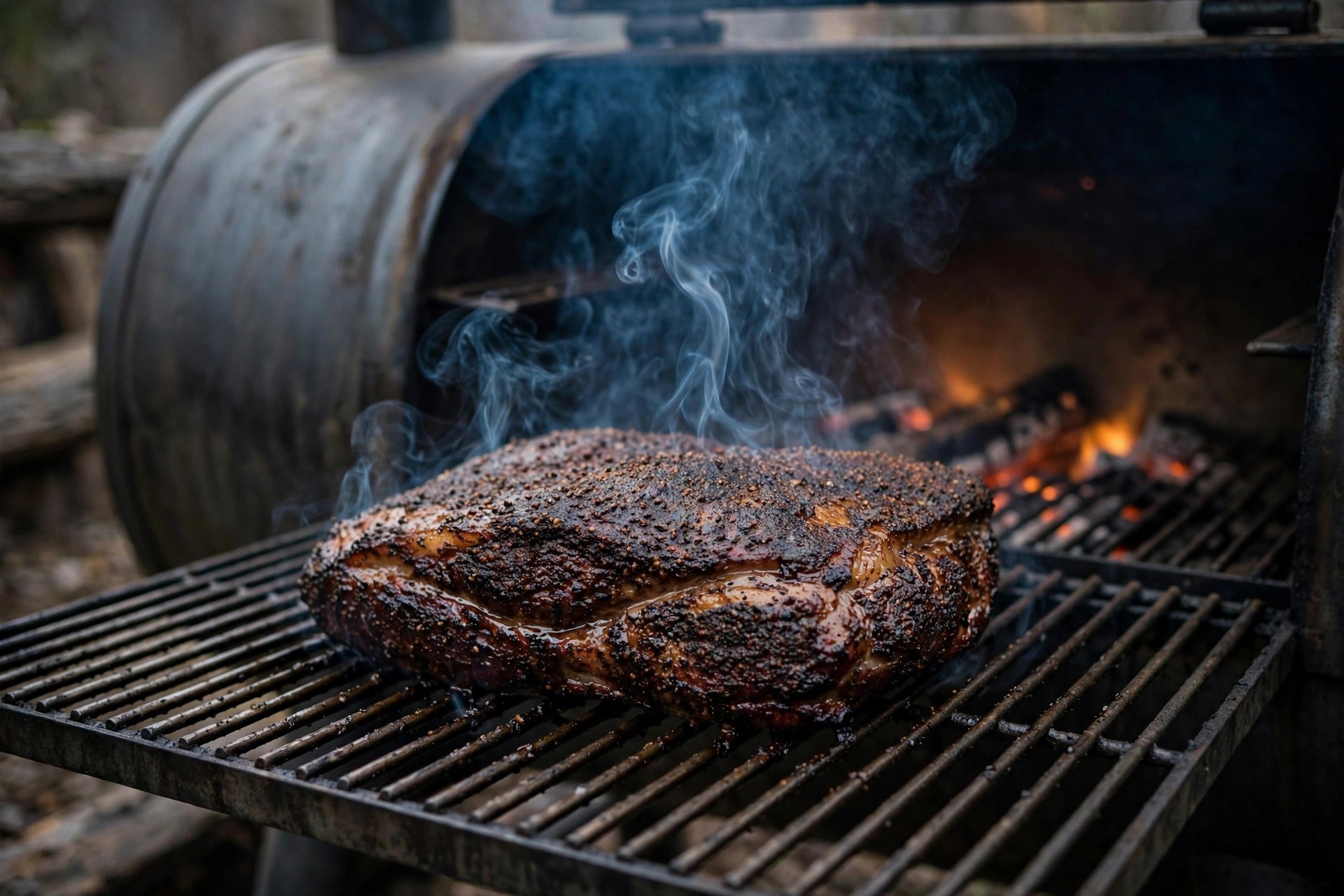
Pecan is the most underrated brisket wood in the shed. It sits in the sweet spot between personality and restraint: nuttier and more interesting than oak, calmer than hickory. Over a long cook it burns very clean, and its mild sweetness does something genuinely good to rendered beef fat. If post oak isn’t available where you live, pecan is the best substitute — and plenty of pitmasters prefer it outright. A pecan and post oak blend is one of the classic brisket combinations for a reason.
Cherry is the color wood. On flavor alone it’s mild — soft, faintly sweet, nearly zero bitterness risk — but it deepens bark and smoke ring into a dark mahogany that looks competition-ready. Use it as 20 to 30 percent of a blend with post oak or pecan. On its own it’s too polite for a full brisket, but as a supporting player it’s excellent. Our apple vs cherry wood guide covers both fruit woods in detail.
Apple is lighter still: sweet, delicate, fruity. Most people file it under poultry and pork, and for a solo brisket cook they’re right — it won’t give a 14-hour beef cook enough smoke presence on its own. But a chunk or two riding alongside post oak or pecan adds a quiet sweetness and helps build that deep mahogany bark. Treat it as seasoning, not fuel.
One practical note on fruit woods: apple burns hotter and faster than its gentle reputation suggests, so factor that into fire management on long cooks if you’re mixing it into an offset fire you want cruising low and steady.
Match the Wood to Your Smoker: Logs, Chunks, Chips, and Pellets
Species is only half the decision. The form your wood comes in has to match your cooker, or you’ll fight the fire all night:
- Offset smokers: splits/logs. Full-size splits (roughly 12 to 16 inches long, 3 to 4 inches thick) are both the heat source and the smoke source. This is the post oak heartland — the classic Central Texas setup.
- Charcoal smokers (kettle, kamado, drum): chunks. Fist-sized chunks placed on hot coals smolder for 30 to 60 minutes each. Add 3 to 4 chunks at the start; the charcoal provides steady heat while the wood provides flavor. This is the most forgiving setup for trying hickory, since you control exactly how much wood is burning.
- Gas and electric smokers: chips. Chips burn out in 15 to 30 minutes, so they need refilling — plan on a fresh handful every half hour for the first 3 to 4 hours, then stop. Remember, the meat stops absorbing much smoke past 140°F anyway.
- Pellet grills: pellets. The auger feeds automatically, so your only decision is the blend in the hopper. Pure oak or an oak-forward blend is the standard brisket choice. A 14-hour cook burns roughly 8 to 12 pounds of pellets, so fill the hopper and keep a backup bag handy. Avoid bargain pellets with unlisted filler wood — they burn dirtier and produce more ash, which BBQ Ember’s pellet testing shows can spike grill temps on long cooks. More on the cooker side in our pellet grill guide.
Whatever form you buy, the wood must be seasoned — dried at least 6 months, ideally closer to a year. Green or wet wood smolders instead of burning, and smoldering wood makes thick white smoke loaded with creosote, which tastes bitter and acrid. Good wood feels light for its size, sounds hollow when two pieces knock together, and shows cracks at the ends. If your brisket ever comes off the pit tasting like an ashtray, bad wood or bad fire management is almost always the cause — see our guides to thin blue smoke and how creosote ruins BBQ.
Blends Worth Trying: Ratios That Actually Work
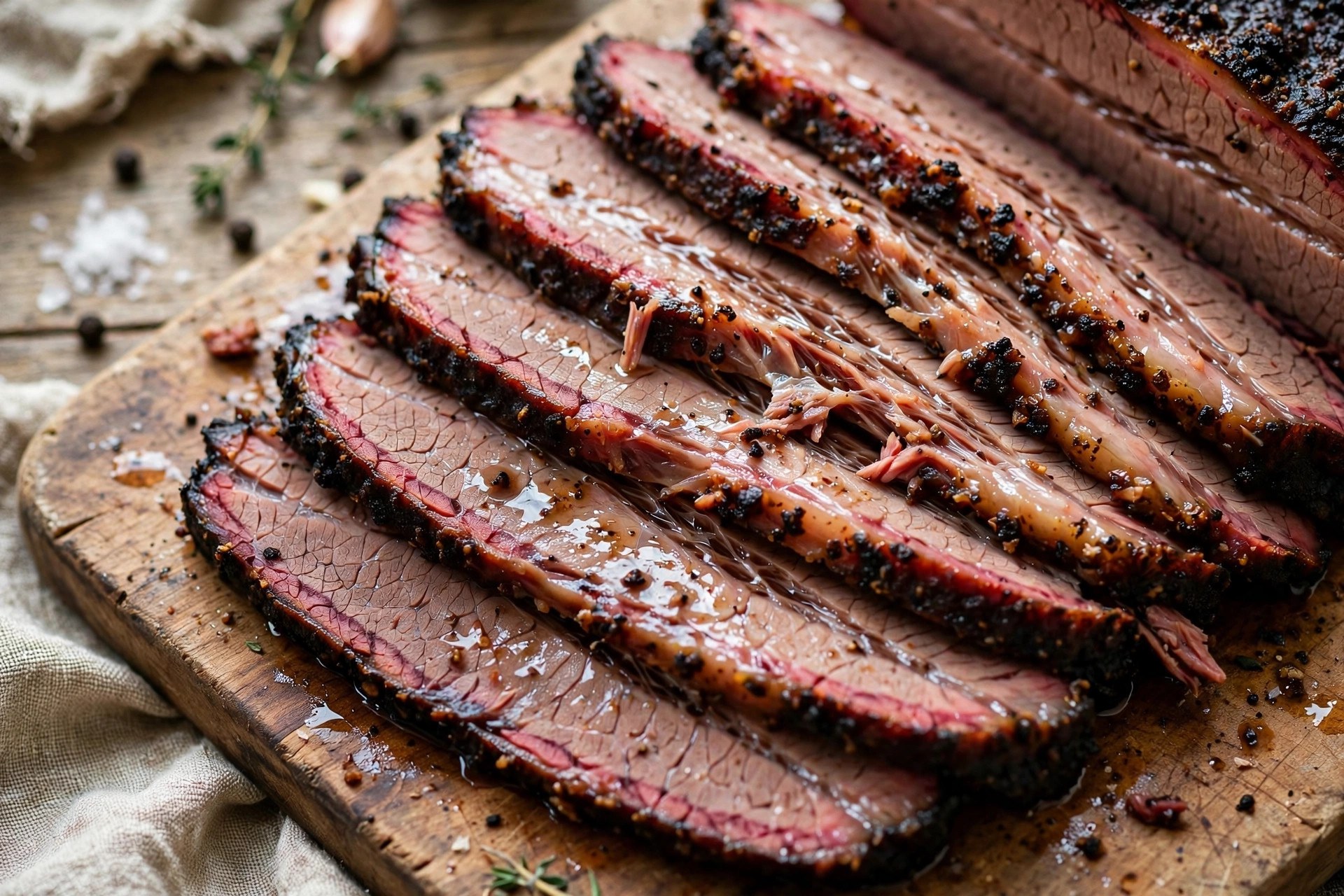
The best pitmasters rarely burn a single wood for everything. Blending lets you set a clean base and layer character on top. A practical starting framework: 60 to 70 percent base wood for structure, 30 to 40 percent flavor wood for character.
| Blend | Ratio | What you get |
|---|---|---|
| Post oak + pecan | 70 / 30 | The default brisket blend: clean Texas smoke with nutty depth |
| Post oak + cherry | 75 / 25 | Classic smoke plus dark mahogany bark and color |
| Hickory + post oak | 30 / 70 (hickory first 2 hrs) | Bold opening note, calm finish — no buildup |
| Pecan + apple | 70 / 30 | Sweeter, rounder smoke; still reads as serious BBQ |
| Mesquite + pecan | 20 / 80 (mesquite early only) | Sharp Texas edge up front, gentle for the long haul |
| Oak + hickory + cherry | 50 / 30 / 20 | Competition-style complexity; the cherry deepens bark color |
Two rules keep blends working. First, put the strongest wood in early, when the meat is still below 140°F and absorbing smoke fastest — then coast on the milder base. Second, change one variable at a time between cooks. If you swap wood, rub, and temperature all at once, you’ll never know what made the brisket better.
And remember that wood is one input among several. Brisket quality, steady temperature (225°F to 250°F is the standard range), wrapping through the stall, and a proper rest all matter more than the exact species in the firebox. Wood sets the ceiling on smoke flavor — technique decides whether you reach it. For the rest of the cook, our guide to the best temperature to smoke brisket picks up where this one leaves off.
Frequently Asked Questions
What is the best wood for smoking brisket on a pellet grill?
Oak or an oak-forward blend. Pure oak pellets give you the clean, medium smoke brisket wants, and they’re the closest pellet equivalent to the post oak splits Central Texas pits burn. A blend of roughly 75% oak and 25% cherry adds bark color and a touch of sweetness without changing the fundamentals.
Can you mix hickory and mesquite for brisket?
You can, but it’s the highest-risk blend on this page — two aggressive woods stacked together over a 12+ hour cook. If you try it, use both sparingly and early (first 2 to 3 hours), then finish on oak or pecan. Most cooks who try full-strength hickory plus mesquite end up with bitter bark.
How much wood do you need for a brisket?
On an offset smoker, plan roughly one full split every 45 to 60 minutes — a 14-hour cook eats 14 to 18 splits, so keep a generous stack on hand. On a charcoal smoker, 6 to 10 fist-sized chunks total is usually plenty, added mostly in the first half. On a pellet grill, budget 8 to 12 pounds of pellets for a long cook.
Is mesquite bad for brisket?
Not bad — just easy to overdo. Mesquite’s intense, earthy smoke turns harsh after 3 to 4 hours of exposure, which is well short of a full brisket cook. Used as one or two chunks in the first hours and blended with oak or pecan afterward, it adds a legitimate Texas edge. Burned straight through, it punishes you.
Does the wood really matter more than the rub?
For brisket, yes — wood has the bigger vote. Central Texas brisket is famously just salt, pepper, post oak, and time, and nobody accuses it of being under-seasoned. The rub seasons the surface; the wood flavors every bite over 14 hours. Get the wood right first, then fuss over the rub.
Your next step: before your next brisket, buy one bag of post oak (or pecan) chunks and one bag of whatever you’re currently burning. Cook two chuck roasts side by side, same rub, same temp, different wood. One afternoon, one clear answer about what your palate actually prefers.
[…] wood like apple or oak. If the bitterness disappears, you’ve found your answer. Our guide to choosing wood for smoking brisket walks through which woods suit long cooks — and a comparison of hickory vs mesquite explains why […]