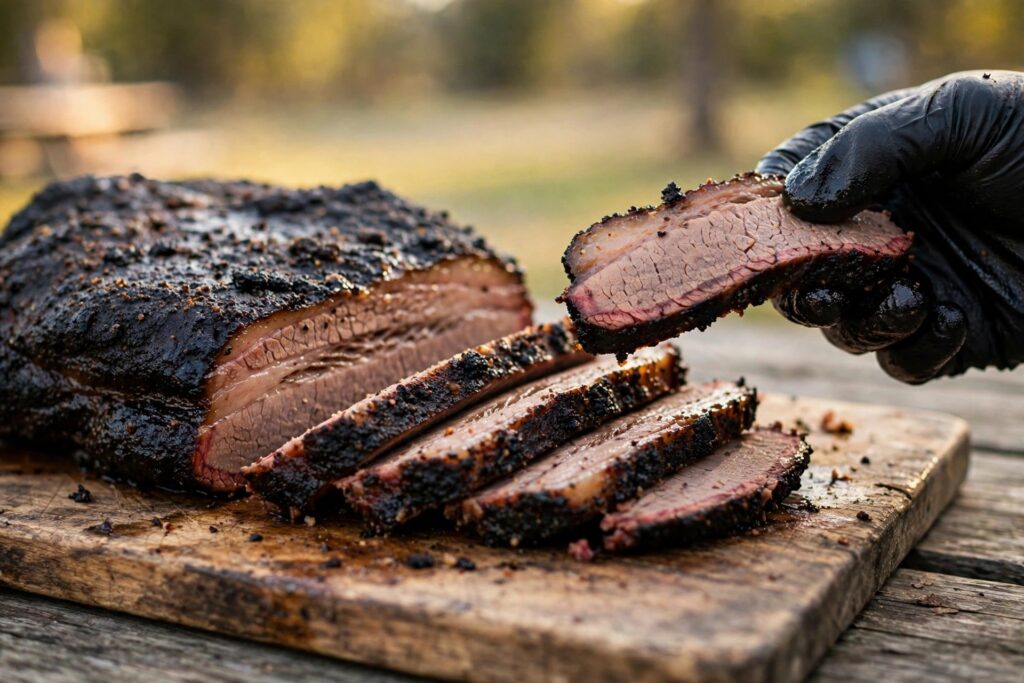
Smoked meat usually tastes bitter because of creosote, a tar-like residue created when wood doesn’t burn completely. Thick white smoke, too much wood, choked airflow, wet or green wood, and a dirty smoker all coat the meat in it. The good news: most of the bitterness lives in the bark, not the meat itself — and a badly smoking fire is fixable.
You spent six, ten, maybe fourteen hours nursing a brisket. You slice it, take a bite, and instead of rich smoky flavor you get a harsh, acrid bite that stings your tongue. It’s one of the most common complaints in barbecue, and it almost always traces back to the same culprit: bad smoke.
This guide explains what makes smoked meat taste bitter, how to spot the problem while you’re cooking, and exactly how to prevent it — plus how to salvage meat that’s already come off the smoker tasting off.
Why Your Smoked Meat Tastes Bitter: The Creosote Problem
The number-one reason smoked meat tastes bitter is creosote — a compound created during the incomplete combustion of wood. Hardwood contains a substance called lignin, and when it burns without enough heat or oxygen, the smoke carries unburned compounds with it. As the Bearded Butchers explain, creosote becomes a vapor at temperatures below about 540°F, then cools and condenses as it enters the smoking chamber — which, at normal smoking temperatures below 250°F, is exactly where your meat is sitting.
That condensed residue lands on everything: your smoker walls, your chimney, and the outside of your meat. On the meat it mixes into the bark, turning what should be a dark, savory crust into something sooty, shiny-black, and acrid. That’s the bitter taste. Creosote can even make the tip of your tongue tingle or go slightly numb — a dead giveaway you’re tasting it rather than just strong smoke flavor.
There’s a useful distinction here. Over-smoked meat tastes powerfully smoky all the way through — too much of a good thing. Badly smoked meat tastes bitter and harsh on the outside. If the inside tastes fine but the crust is awful, creosote is your problem, and it’s usually a fire-management issue rather than a recipe issue.
7 Causes of Bitter Smoked Meat
Creosote doesn’t appear out of nowhere. Every one of these seven causes comes down to the same thing: wood that isn’t burning cleanly.
- Too much wood. The classic beginner mistake. On a charcoal smoker, 2–3 fist-sized wood chunks during the first half of the cook is plenty. Piling on more doesn’t add flavor — it smothers the fire and creates dirty smoke.
- Wet or green wood. Unseasoned wood is full of sap and moisture that steams and smolders instead of burning. Wood should be seasoned at least 6–12 months until its moisture content is below about 20%. If you can snap a piece and it bends or smells sappy, it’s not ready.
- Choked airflow. Fire needs oxygen to burn completely. If your intake vents are barely open and your exhaust is choked down, the fire smolders in its own exhaust — a creosote factory. Keep the exhaust vent wide open and control temperature with the intake.
- A smothered, struggling fire. Coals that aren’t hot enough, or wood thrown onto a cold fire, produce grey or black smoke loaded with bitter compounds. Let your fire burn hot and steady before the meat goes anywhere near the grate.
- A dirty smoker. Soot and old creosote build up on smoker walls, lids, and chimneys over time. A flaky, dripping interior re-deposits nasty residue onto every cook. A periodic deep clean is basic food hygiene and flavor insurance.
- Wood that’s too strong for the job. Mesquite and hickory burn hot and assertive. Used alone over a 12-hour brisket cook, they can push the smoke flavor past bold into harsh. Match strong woods with milder ones like oak, or use them for shorter cooks.
- Charcoal additives and fines. Cheap briquettes with chemical binders, or the dusty crumbs from the bottom of a lump charcoal bag, can burn unevenly and leave an acrid edge. Use natural lump charcoal in even-sized pieces and leave the dust behind.
If you suspect the wood itself, a simple test works: change nothing else on your next cook except swapping to a mild, well-seasoned wood like apple or oak. If the bitterness disappears, you’ve found your answer. Our guide to choosing wood for smoking brisket walks through which woods suit long cooks — and a comparison of hickory vs mesquite explains why those two heavy hitters need a careful hand.
Reading Your Smoke: What the Color Tells You
You don’t need gadgets to diagnose your fire — your eyes are enough. Smoke color is the fastest read on combustion quality, and experienced pitmasters check it the way a chef checks a sauce: constantly.
| Smoke color | What it means | What to do |
|---|---|---|
| Thin, pale blue — almost invisible | Clean, complete combustion | This is the goal. Cook with confidence. |
| Billowing white | Wood just ignited, or soaked wood steaming | Wait 10–15 minutes for it to burn off before cooking |
| Grey or black | Charcoal or wood lighting up, incomplete combustion | Hold the meat back until the fire settles |
| Yellowish | Grease dripping onto the fire, flare-up | Check the drip situation, clear any flare-ups |
| Slow, lazy, and lingering | Smoke hanging in the chamber instead of flowing | Open the exhaust wider — smoke should move through briskly |
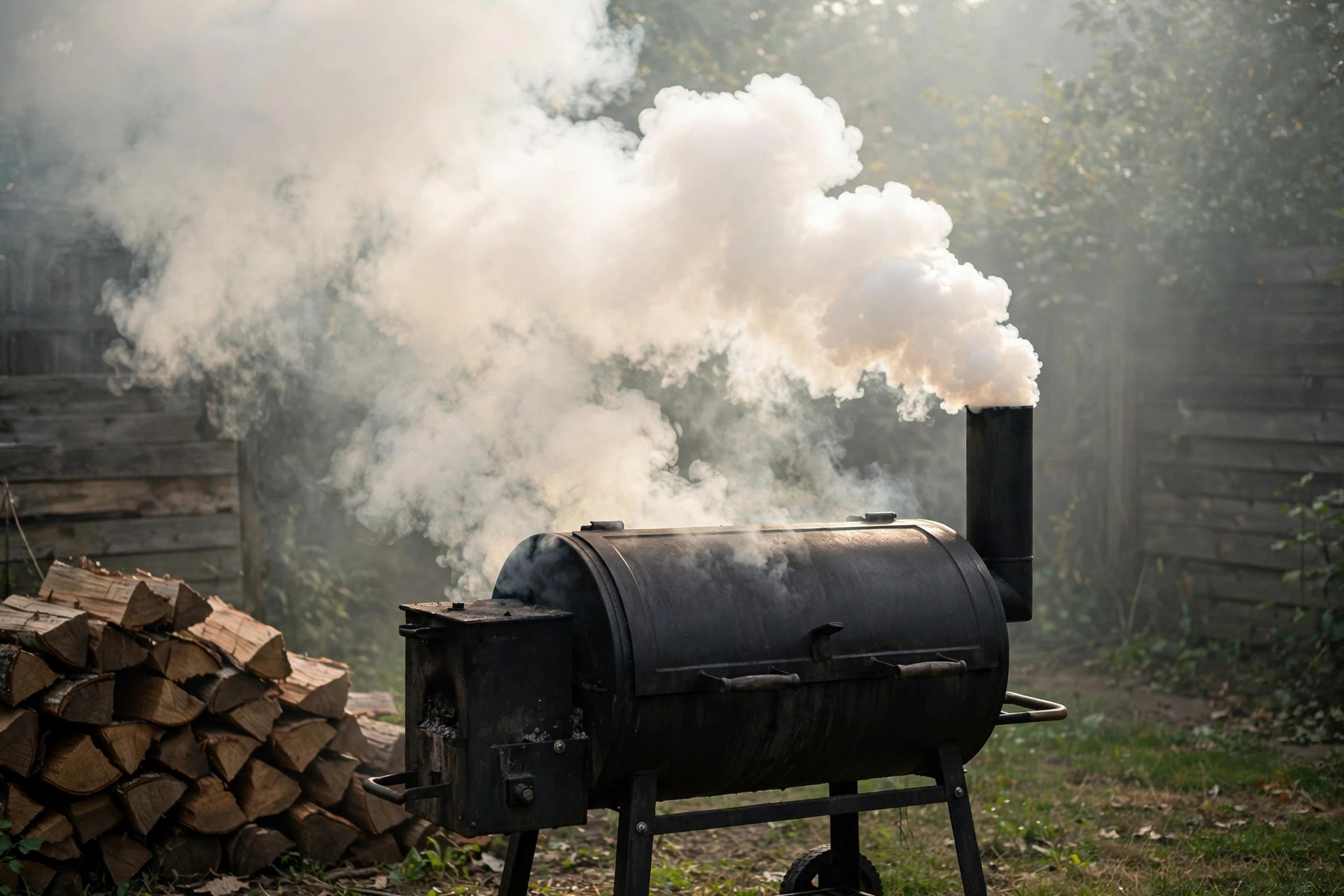
The most important row in that table is the white smoke one. Thick white smoke looks impressive — it feels like something is happening — but it’s the single biggest source of creosote. As pitmaster Robbie Shoults told Tasting Table, puffy white smoke carries a heavy load of creosote and bitterness: let it burn off before your meat ever sees it. Learn the difference between good and bad smoke in our full guide to thin blue smoke.
How to Prevent Bitter Smoke on Your Next Cook
Prevention is a short checklist of fire habits. None of these is difficult; they just need to happen every time.
- Preheat the smoker until the smoke runs thin and blue. Don’t put meat on a smoker that’s still coughing white smoke. Give it 30–45 minutes to settle into a clean fire first. See how long to preheat a smoker for the full warm-up routine.
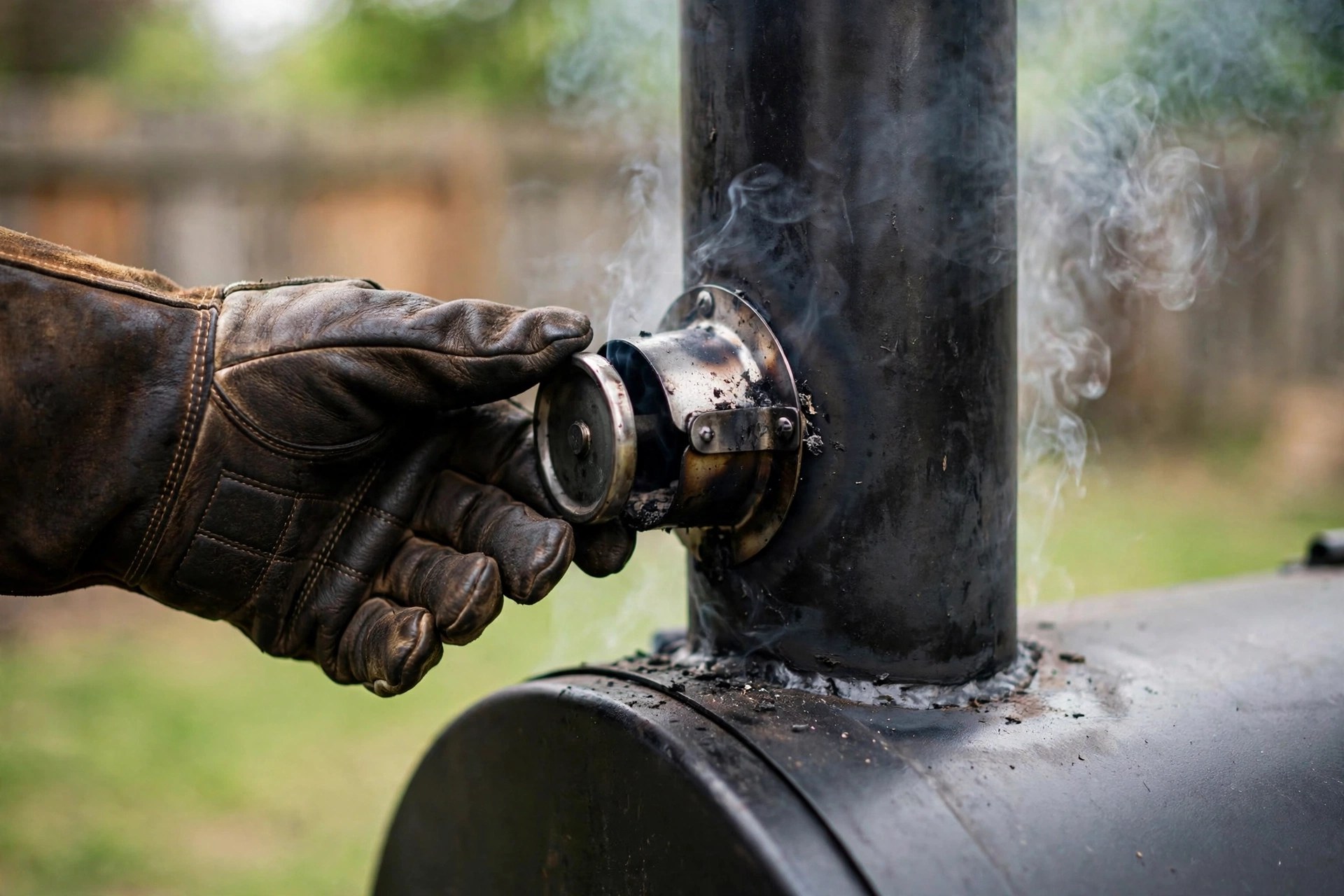
- Keep the exhaust vent fully open. Always. Control your temperature with the intake vents instead. Stale, lingering smoke is creosote’s best friend.
- Burn a small, hot fire. On a stick burner, feed one split of wood at a time rather than loading the firebox. A small fire that burns cleanly beats a big fire that smolders.
- Use dry, seasoned hardwood only. No softwoods — pine, cedar, and spruce are loaded with sap that turns smoke acrid. No painted or treated lumber either; that’s a health hazard, not a seasoning.
- Light charcoal in a chimney first. Pre-burning in a chimney starter drives off the bitter compounds before the fuel ever enters the cook chamber.
- Wrap once the bark is set. When the bark has firmed up and the meat is around 150–165°F, wrapping in butcher paper or foil blocks further smoke absorption while the meat finishes. Meat absorbs most of its smoke flavor in the first few hours anyway.
Can You Fix Smoked Meat That Already Tastes Bitter?
What’s done is done — no method will turn creosote-covered meat into perfect barbecue. But there’s a real difference between “ruined” and “salvageable,” and most bitter meat falls in the second category. Smoke doesn’t penetrate far; creosote settles almost entirely on the outside, so the interior is often perfectly fine.
- Trim the bark. This hurts, but it works. With a sharp knife, shave off the dark, sooty outer layer from thick cuts like brisket, pork butt, or pork shoulder — as thin a slice as you can manage. On ribs this is nearly impossible without wasting the whole cut, which is why step five exists.
- Sauce it, especially with something acidic. A vinegar-based sauce cuts through bitter smoke better than anything else; the tang overpowers the acrid edge. Sweet, thick BBQ sauce works too — sweetness is bitterness’s natural counter.
- Add fat. Melted butter or warm beef tallow drizzled over the meat rounds off harsh flavors. Fat coats the palate and mutes the sharp bite of creosote residue.
- Slice thin and pair it. Thin slices with a sweet-tangy coleslaw, pickles, or a creamy dressing spread the bitter load across other flavors. Cold sides help; so does a glass of water at the table, since creosote can sting the tongue a little.
- Repurpose the meat. Chop it into tacos, fold it into chili, or turn it into a stir fry with vegetables. Once the meat is one flavor among many, the smokiness becomes a background note instead of the whole dish.
- The water soak — last resort. A 10-minute soak in water (or broth) can pull a surprising amount of bitter flavor off the surface. The trade-off is real: you lose the bark and the texture goes soft. Use this only if the alternative is the trash can.
Be honest about severity. If the bitter taste runs deep into the meat or the whole cut smells like an ashtray, it’s not worth serving. Chalk it up to tuition and start the next cook with a clean fire — bitter meat is almost always a lesson you only need to learn once.
Bitter Bark vs Bitter Meat: Where the Problem Lives
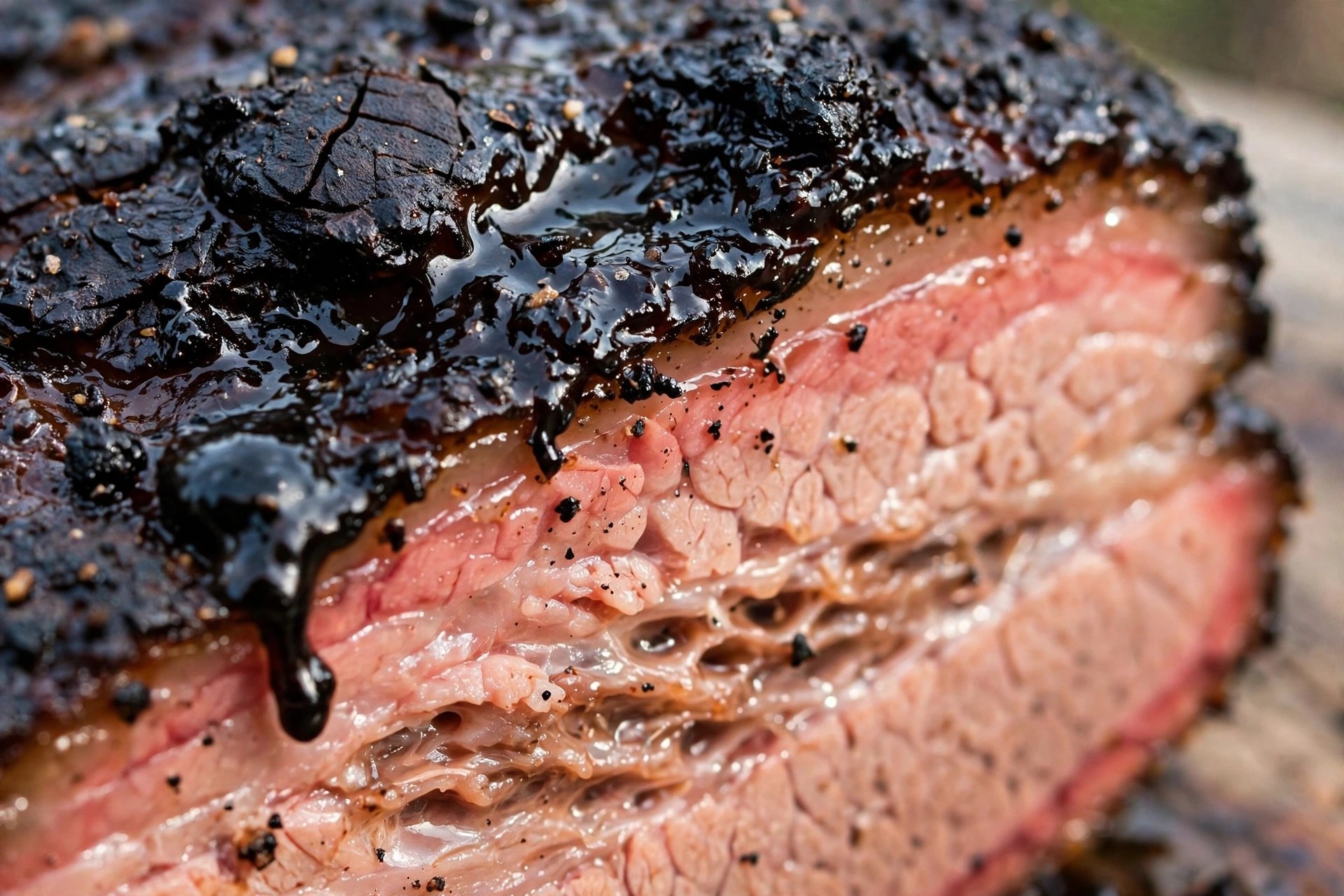
Here’s the comforting physics: smoke compounds don’t penetrate far into meat. The bark — that dark crust of smoke, seasoning, and rendered fat — catches nearly all of the creosote. Underneath it, the meat is often clean-tasting, especially in thick cuts like brisket and pork butt.
That’s why the visual check matters. A good bark looks dark mahogany and feels dry and crusty. A creosote-laden bark looks shiny — sticky, almost wet-looking, sometimes with black drips or a tar-like sheen. If your bark shines like it was varnished, that’s creosote, not caramelization. Compare that against the smoke ring underneath — the pink layer is harmless chemistry (nitric oxide from combustion reacting with myoglobin), and it has nothing to do with bitterness.
One more distinction worth knowing: burnt sugars in your rub can also taste bitter, and that has nothing to do with smoke. If the bitterness is only where the rub was thickest and your smoke was thin and blue all cook, check your seasoning blend — heavy sugar burns fast at smoking temperatures.
Frequently Asked Questions About Bitter Smoked Meat
Why does my smoked brisket taste bitter on the outside but fine inside?
Creosote settles on the surface and barely penetrates the meat, so the interior often tastes clean. Trim off the shiny, sooty bark and you’ll usually find good brisket underneath. This is also why thick cuts are easier to salvage than ribs.
Can too much smoke make meat bitter?
Yes — but it’s the kind of smoke that matters most. Thin blue smoke for twelve hours gives deep, clean flavor. Thick white smoke for three hours can make the same cut bitter. More smoke time only helps when the smoke is clean.
Does wrapping meat prevent bitter taste?
It limits it. Once the meat is wrapped in butcher paper or foil, almost no new smoke reaches the surface, so wrapping at the stall (around 150–165°F) caps your smoke exposure. It won’t undo bitterness that’s already there, though.
Why does my smoked meat taste bitter and make my tongue tingle?
That tingling or slightly numb sensation is a classic sign of creosote — the tar-like byproducts of incomplete wood combustion. The smoke ring itself doesn’t cause this; it’s the residue sitting on the bark.
Is bitter smoked meat safe to eat?
A mild bitter edge from heavy smoke is unpleasant, not dangerous. Truly acrid, sooty meat coated in creosote isn’t something you’d want much of — trim it off or repurpose the interior. When in doubt, the inside of a thick cut is the safest part.
Your single most valuable habit is this: wait for thin blue smoke before the meat goes on. Every bitter-smoke story starts with someone who got impatient at the firebox. Master that one waiting game, keep your wood dry, and bitterness stops being a thing that happens to your barbecue.