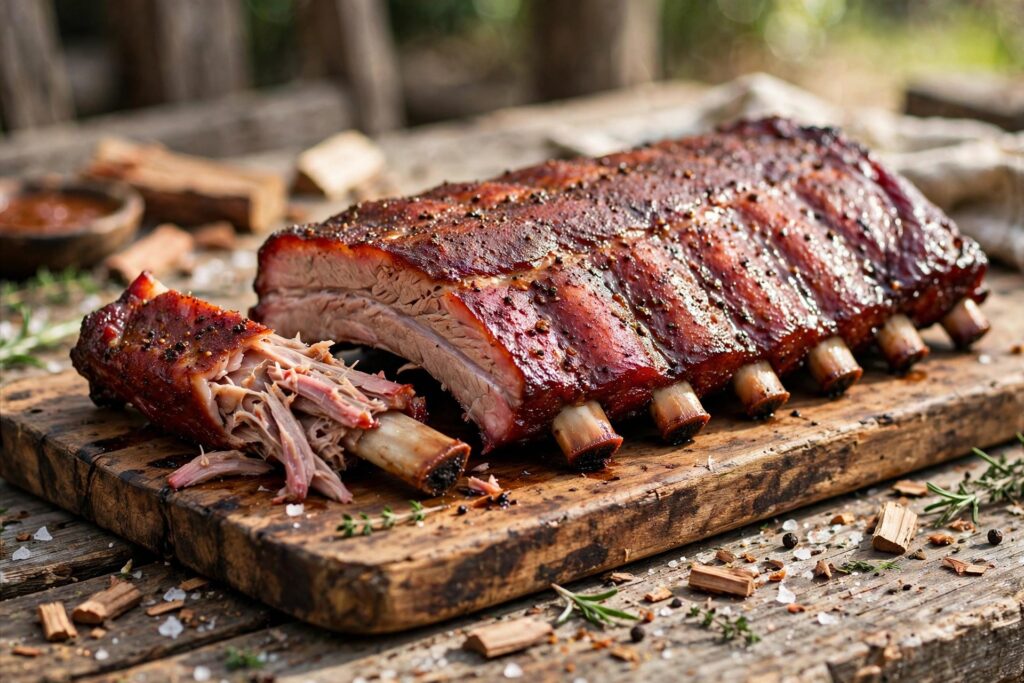
Apple vs cherry wood for smoking pork is a close call: apple gives the mildest, sweetest, most neutral fruity smoke — the safest pick for ribs and pulled pork — while cherry adds a touch more fruity depth plus a gorgeous reddish-mahogany color and a deeper smoke ring. For pure flavor, apple wins; for looks, cherry wins.
Both are fruit woods, both are mild compared to hickory and mesquite, and both flatter pork’s natural sweetness instead of burying it. The differences are subtle but real, and they matter most on ribs — the cut where smoke wood choice shows up clearest. Here’s how each wood tastes, what it does to your meat, and which one belongs in your smoker.
The Short Answer: Apple vs Cherry at a Glance
Reach for apple when you want the meat to be the star. It’s the gentlest of the two — a mild, sweet, faintly tart smoke that seasons pork without announcing itself. Beginners love it because it’s nearly impossible to oversmoke with apple.
Reach for cherry when you want flavor plus presentation. Cherry smoke is a touch richer and fruitier than apple, and it paints the meat a deep reddish-mahogany that’s pure eye candy. It also tends to produce a more vivid smoke ring. Competition cooks prize cherry partly because judges eat with their eyes first.
If you can only buy one bag: apple for the mildest flavor, cherry if you want that color. Honestly, most serious pork smokers end up keeping both — and blending them.
What Does Apple Wood Smoke Taste Like?
Apple smoke is sweet, mild, and faintly fruity — often described as having a tart-apple note, like biting into a crisp apple rather than eating apple pie. It’s the lightest-touch smoke wood that still reads clearly as “smoke.” On pork, it adds a gentle sweetness that sits underneath the meat’s own flavor instead of competing with it.
That mildness is apple’s superpower on long cooks. A pork shoulder can take 10–14 hours at 225–250°F, and a stronger wood’s flavor compounds over that much time. Apple stays polite from hour one to hour twelve — the bark keeps building, the smoke keeps kissing, and the meat never turns bitter. It’s the most forgiving wood in BBQ.
As the folks at Kona BBQ Store’s apple wood guide note, apple’s sweet, fruity character comes from the natural sugars in the wood, and it pairs beautifully with bold meats — brisket, pork shoulder, ribs — where it complements strong flavors rather than getting lost in them.
Apple’s one weakness: it’s so mild that on a pellet grill, where the smoke is already light, straight apple pellets can taste like almost nothing. (More on the pellet problem below.)
Best apple pairings:
- Baby back and spare ribs — the classic; lets the pork and rub shine
- Pulled pork shoulder — gentle enough for a 12-hour cook
- Pork loin and tenderloin — lean cuts that stronger woods bully
- Chicken and turkey — apple is one of the safest woods for poultry
What Does Cherry Wood Smoke Taste Like?
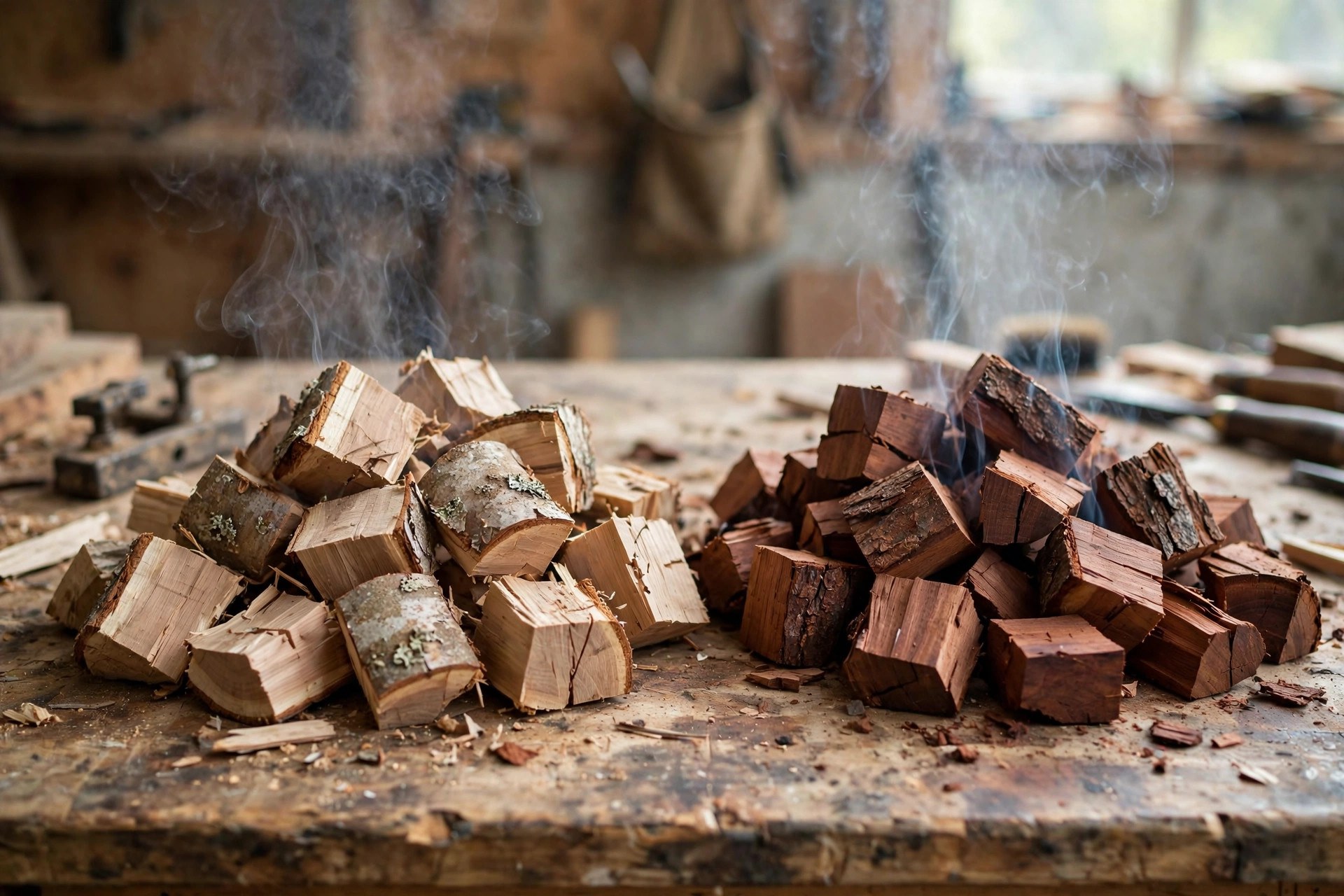
Cherry is apple’s slightly bolder sibling. The smoke is sweet and fruity like apple, but with a touch more depth — a richer, almost wine-like fruitiness that reads as “cherry” in the same way apple smoke reads as “apple.” It’s still mild by BBQ standards (nowhere near hickory), just a half-step stronger than apple.
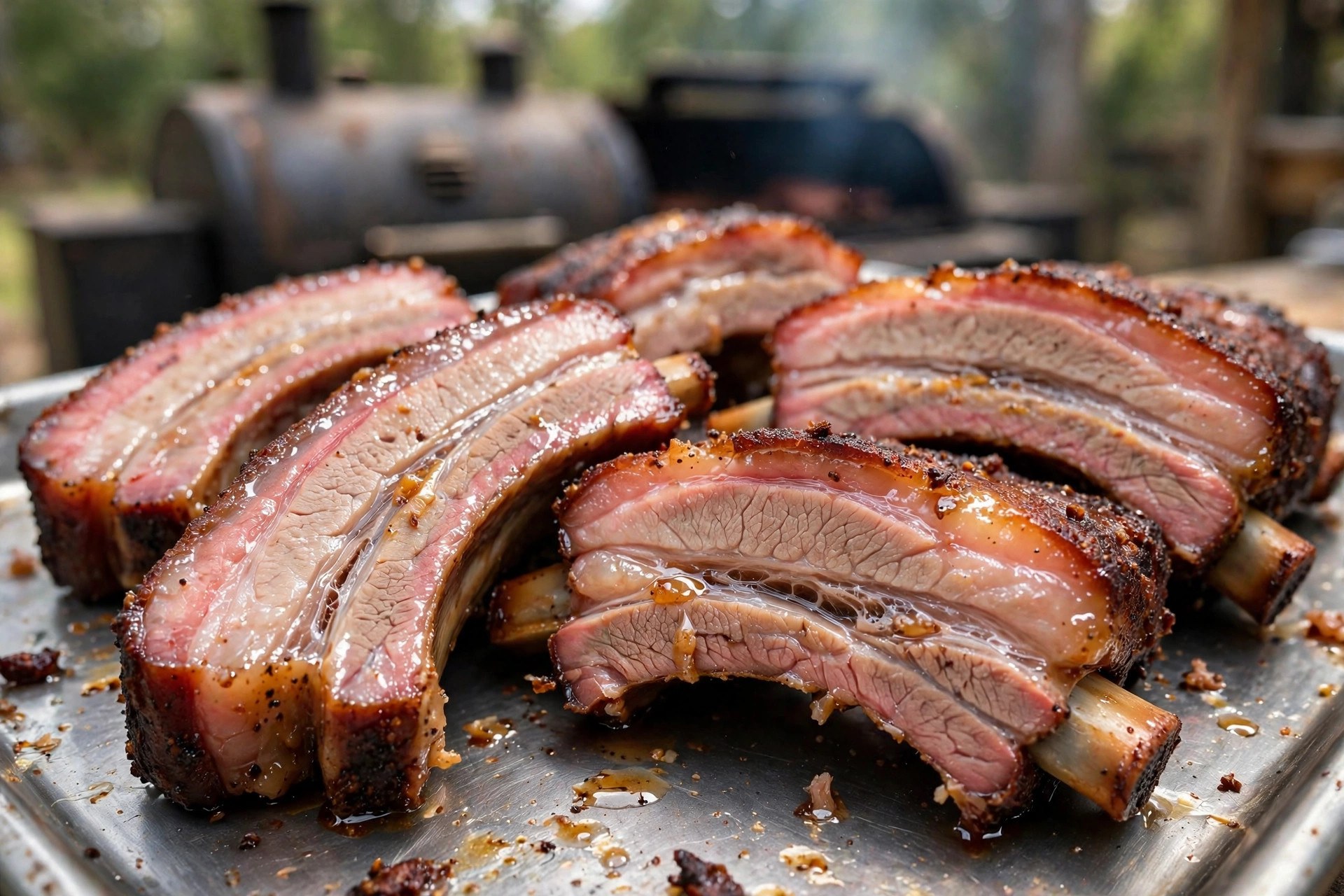
Where cherry really separates itself is appearance. Cherry wood gives smoked meat a deep reddish-mahogany color that no other wood quite matches, and it produces one of the most vivid smoke rings in BBQ. That color isn’t just pretty — on a competition turn-in box or a party platter, it makes the meat look impossibly appetizing. Tasting Table’s rib wood guide calls out exactly this: cherry brings more depth and a reddish tint that adds wow-factor to ribs.
One practical note: cherry’s color can fool you. Meat smoked with cherry looks “more done” than it is — that gorgeous red exterior says nothing about internal temperature. Always cook to temp (195–205°F for pulled pork, 145°F for loin), never to color.
Best cherry pairings:
- Ribs — flavor plus that competition color
- Pork shoulder — richer fruit note stands up to the long cook
- Ham and bacon — cherry’s sweetness loves cured pork
- Duck and game birds — cherry is a classic here
Apple vs Cherry: Side-by-Side Comparison
| Apple Wood | Cherry Wood | |
|---|---|---|
| Flavor intensity | Mildest of the two | Mild, a half-step stronger |
| Flavor notes | Sweet, faintly tart, like a crisp apple | Sweet, fruitier, richer — like tart cherry |
| Color on meat | Golden-brown | Deep reddish-mahogany |
| Smoke ring | Good | Excellent — among the best of any wood |
| Best pork cuts | Ribs, pulled pork, loin, tenderloin | Ribs, shoulder, ham, bacon |
| Forgiveness | Nearly impossible to oversmoke | Very forgiving, slightly less so than apple |
| Long cooks (10+ hrs) | Ideal — stays mellow | Great — flavor deepens without bitterness |
| Availability | Easy — every big-box store carries it | Easy — slightly less common than apple |
Which Pork Cut Gets Which Wood
Match the wood to the cut and you’ll rarely go wrong:
Ribs — either, with a lean toward cherry. Pork ribs (4–6 hours at 225–250°F) are the cut where this choice matters most, because they’re thin and soak up smoke fast. Apple keeps the flavor clean and lets your rub do the talking — ideal for dry-style ribs where there’s no sauce to hide behind. Cherry adds that extra dimension of fruit plus the color. Can’t decide? Split the difference with a 50/50 blend (see below). For timing, check how many ribs are in a full rack so you buy enough wood for the cook.
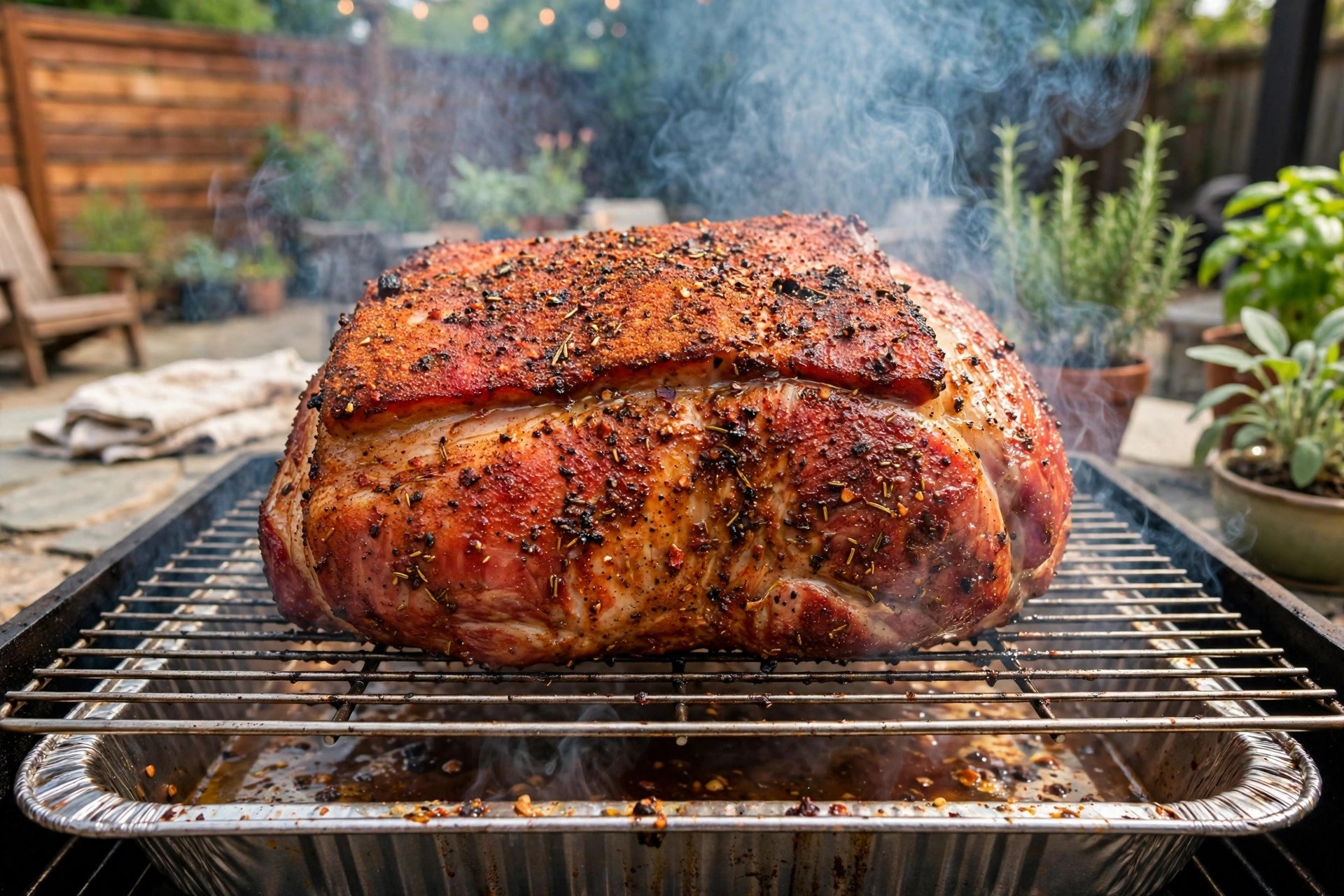
Pulled pork shoulder — apple first, cherry close second. A pork butt runs 10–14 hours at 225–250°F to reach the 195–205°F internal that makes it shreddable (see pulled pork temperature). Apple’s mildness is perfect insurance over that marathon — the smoke stays sweet the whole way. Cherry works beautifully too and gives the bark a stunning red tint; just know the flavor will be a touch more forward.
Pork loin and tenderloin — apple. Lean, mild, and quick (about 2–3 hours to 145°F internal), loin has nowhere to hide from aggressive smoke. Apple is the safe play; cherry is fine too but can tint the pale meat pinkish-red, which alarms guests who don’t know it’s just the smoke ring.
Ham, bacon, sausages — cherry. Cured and fatty pork loves cherry’s richer fruit note. If you’re cold-smoking bacon or finishing a fresh ham, cherry is the traditional pick.
A general rule for both woods: spritz with apple juice during the cook and you’ll layer fruit-on-fruit flavor that complements either wood. Spritz once an hour after the first 2 hours — enough to keep the surface moist, not so much that you wash off the bark.
What Competition Pitmasters Actually Use
Want to know which wood wins when money is on the line? Follow the trophies. BBQ Dry Rubs’ roundup of pro rib woods makes a compelling case:
- Myron Mixon — the “winningest man in barbecue” with 180+ grand championships — smokes ribs over peach wood from his native Georgia.
- Melissa Cookston — seven-time world champion — prefers mild woods like apple and cherry for ribs.
- Mike Mills — four-time world champion, “The Legend” — uses apple wood for his ribs.
- Tuffy Stone — six-time world champion — cooks ribs over apple wood.
Notice the pattern: not one of them reaches for hickory or mesquite on ribs. When the flavor has to be perfect, the pros go mild and fruity.
Tuffy Stone’s biggest piece of wood advice applies double to fruit woods: most backyard cooks use too much smoke. On a charcoal cooker like a Weber Smokey Mountain, two to three fist-sized chunks is plenty for a rack of ribs. You want thin blue smoke, not a white billowing cloud — dirty smoke will make even gentle apple taste bitter.
The pellet grill caveat: pellet grills burn so cleanly that smoke flavor is already light, and most bags labeled “cherry” or “apple” are actually blends — roughly 80% oak and 20% flavor wood. On a pellet grill, fruit woods can taste faint. Fix it by buying 100% flavor-wood pellets from a specialty brand, or run a smoke tube filled with apple or cherry pellets alongside the cook for an extra 2–3 hours of real smoke.
Try the 50/50 Apple-Cherry Blend
Here’s the open secret of pork smokers: you don’t have to choose. A 50/50 mix of apple and cherry chunks is one of the most popular rib woods in backyard BBQ — apple’s clean sweetness underneath, cherry’s depth and color on top. It’s the best of both columns in the comparison table.
How to blend:
- Chunks: alternate apple and cherry chunks in the charcoal — 2 of each for a rib cook, 3 of each for a pork shoulder.
- Chips (electric/gas smokers): mix the chips in the tray or foil pouch at roughly equal volumes; refill once halfway through a rib cook.
- Pellets: layer half a hopper of apple and half of cherry, or just buy a pre-made fruit blend.
You can also blend either fruit wood with oak as a base — say 2 parts oak to 1 part cherry — for longer cooks where you want steady heat plus fruit flavor. Oak burns long and neutral, and the fruit wood rides on top. What you don’t need: mesquite anywhere near this blend. Save the strong stuff for beef.
If you’re exploring regional styles, fruit woods are the backbone of Memphis-style BBQ, where sweet smoke and dry rubs define the plate. Apple and cherry are right at home there.
Your next step: buy one bag of apple chunks and smoke a rack of baby backs this weekend — 225°F, 2–3 chunks, 5 hours, spritz with apple juice hourly after hour two. Then do the same cook with cherry next weekend. Two weekends, two racks, and you’ll know exactly which wood is yours.
Frequently Asked Questions
Can you mix apple and cherry wood for smoking?
Absolutely — a 50/50 apple-cherry blend is one of the most popular woods for pork ribs. You get apple’s clean, mild sweetness plus cherry’s richer fruit note and reddish color. Alternate the chunks in your charcoal bed at roughly equal amounts.
Which gives a better smoke ring, apple or cherry?
Cherry, by most accounts. Cherry wood is famous for producing a deep, vivid smoke ring and a reddish-mahogany exterior. Apple gives a good ring too, but cherry’s color is the reason competition cooks reach for it when appearance counts.
Is apple or cherry better for pork ribs?
Both are excellent — ribs are the cut where either wood shines. Apple is milder and lets your rub and the pork flavor lead; cherry adds a touch more fruity depth and gorgeous color. If you truly can’t pick, blend them 50/50.
Do fruit woods work on a pellet grill?
They work, but the flavor is faint — pellet grills burn very cleanly, and most “cherry” or “apple” pellets are about 80% oak. For stronger fruit-wood flavor on a pellet grill, buy 100% flavor-wood pellets or add a pellet smoke tube filled with apple or cherry for extra smoke.
Can you use apple or cherry wood for brisket?
You can, and some pitmasters do — apple on brisket is milder and sweeter than the classic oak/hickory profile. But beef’s big flavor usually wants a stronger wood. If you go fruity on brisket, blend the apple or cherry 50/50 with oak so the smoke has enough backbone for a 12+ hour cook.