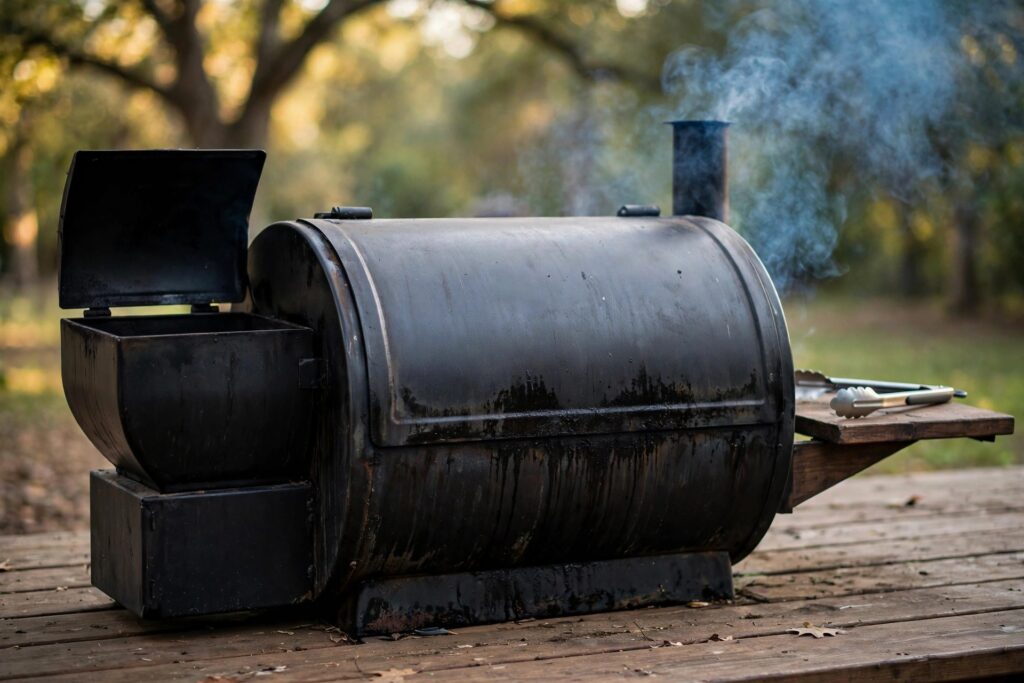
A pellet grill is an outdoor cooker that burns compressed hardwood pellets instead of gas or charcoal. Pellets feed automatically from a hopper into a fire pot, an electric igniter lights them, and a digital controller adjusts the feed rate to hold your set temperature within about 10°F. You get real wood smoke with oven-like control.
If that sounds like the best of both worlds, it kind of is. Pellet grills have turned backyard barbecue from a fire-tending hobby into something closer to setting an oven dial — while still burning 100% real wood. Traeger invented the original in 1987 in Mt. Angel, Oregon. This guide breaks down what a pellet grill is, exactly how one works, what it cooks well, and whether it’s worth your money.
What Is a Pellet Grill, Exactly?
A pellet grill is an electric-powered outdoor cooker fueled by small cylindrical pellets of compressed hardwood sawdust. Pellets load into a storage bin called a hopper; a motorized auger moves them into a fire pot, an electric hot rod ignites them, a fan circulates heat and smoke, and a drip tray sits between flame and food to keep the cooking indirect.
The short version you’ll hear pitmasters use: a pellet grill is a wood-fired convection oven with a thermostat. Set 225°F, and the controller feeds just enough pellets to hold it. Set 450°F and it feeds aggressively to get hot. The fire itself is real wood, which is where the smoke flavor comes from.
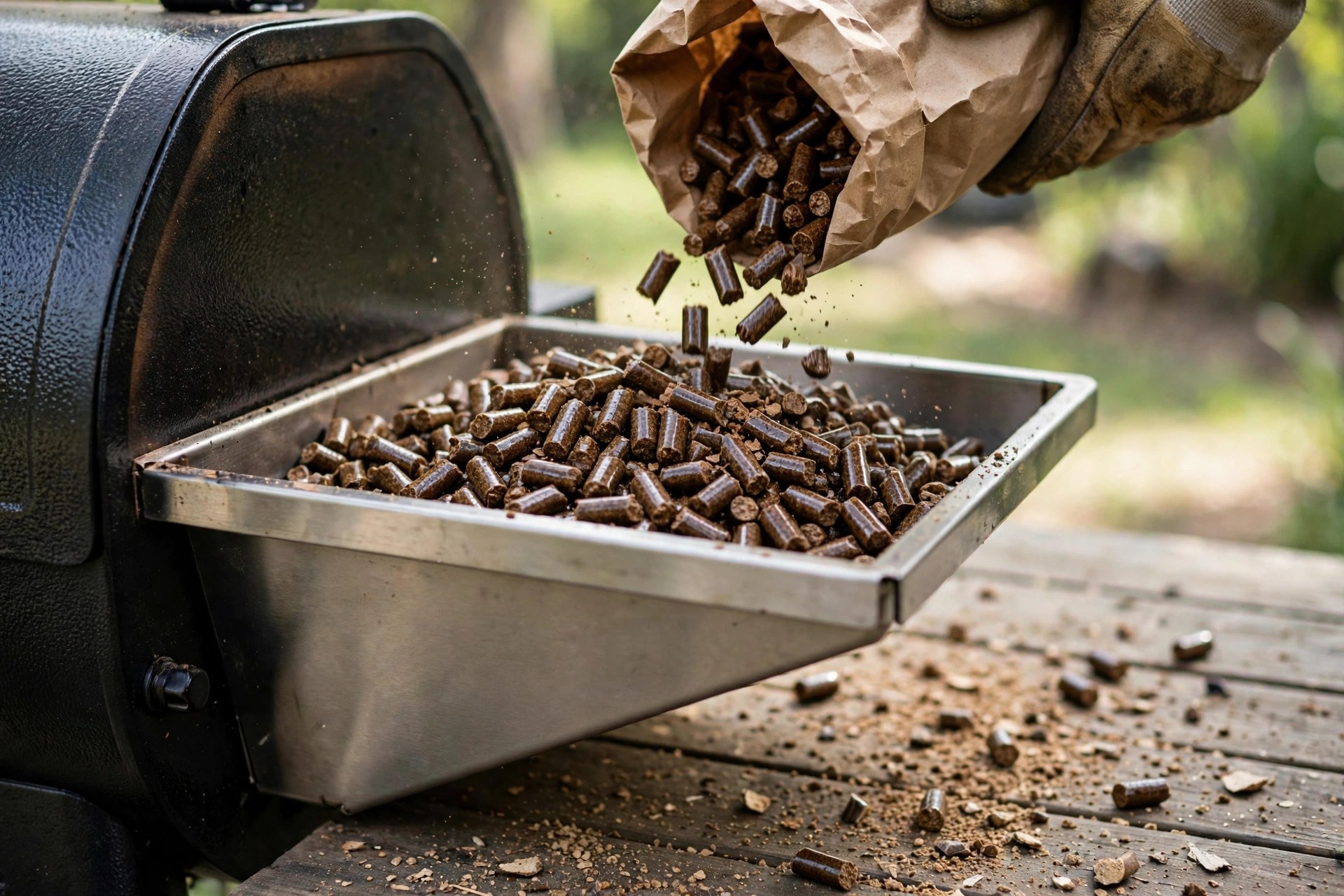
A pellet grill and a pellet smoker are the same machine — at 180–225°F it smokes, at 350°F it roasts, at 450–500°F it grills. The pellets are food-grade 100% hardwood (oak, hickory, cherry, apple, mesquite), never heating pellets. A 20-pound bag costs roughly $15–$25: smoking burns about 1 pound per hour, a hot sear 2–3. Traeger’s breakdown of how pellet grills work describes the same three-part loop: fuel the fire, set the temperature, let the controller handle the rest.
How a Pellet Grill Works: 6 Parts, One Loop
Understanding the parts makes everything about the grill — the quirks, the maintenance, the troubleshooting — click into place. Here’s the full loop, in the order things happen.
1. The hopper. The storage bin on the side of the grill, usually holding 18–22 pounds of pellets. Pellets funnel down by gravity into the auger tube. Keep them dry — damp pellets swell, crumble into sawdust, and jam the auger.
2. The auger. A steel screw that turns on a timer, pushing pellets from the hopper into the fire pot. The controller decides how long and how often it turns, which is how it regulates temperature. This is the only part that feeds the fire, and it’s why the grill can hold a setpoint for 12 hours untouched.
3. The fire pot. A small steel cup at the bottom of the cook chamber where combustion happens. On startup, the hot rod inside glows red-hot to ignite the first pellets; after ignition, the burning pellets sustain the fire on their own.
4. The fan. An induction fan feeds oxygen to the fire and pushes heat and smoke up and around the chamber, creating convection. That circulating hot air evens out temperatures — though the grate still runs hottest directly over the fire pot.
5. The drip tray. A sloped metal plate above the fire pot that catches grease and blocks direct flame. Drippings hit the tray and slide into a grease bucket instead of igniting, which is why you don’t get flare-ups. It’s also why true steakhouse searing is the grill’s weakest skill: the flame never touches the food.
6. The controller. The brain. A sensor inside the chamber reports the actual temperature, and the controller speeds up or slows down the auger to close the gap. Modern PID controllers hold within ±5–10°F; older or cheaper ones can swing ±20°F or more.
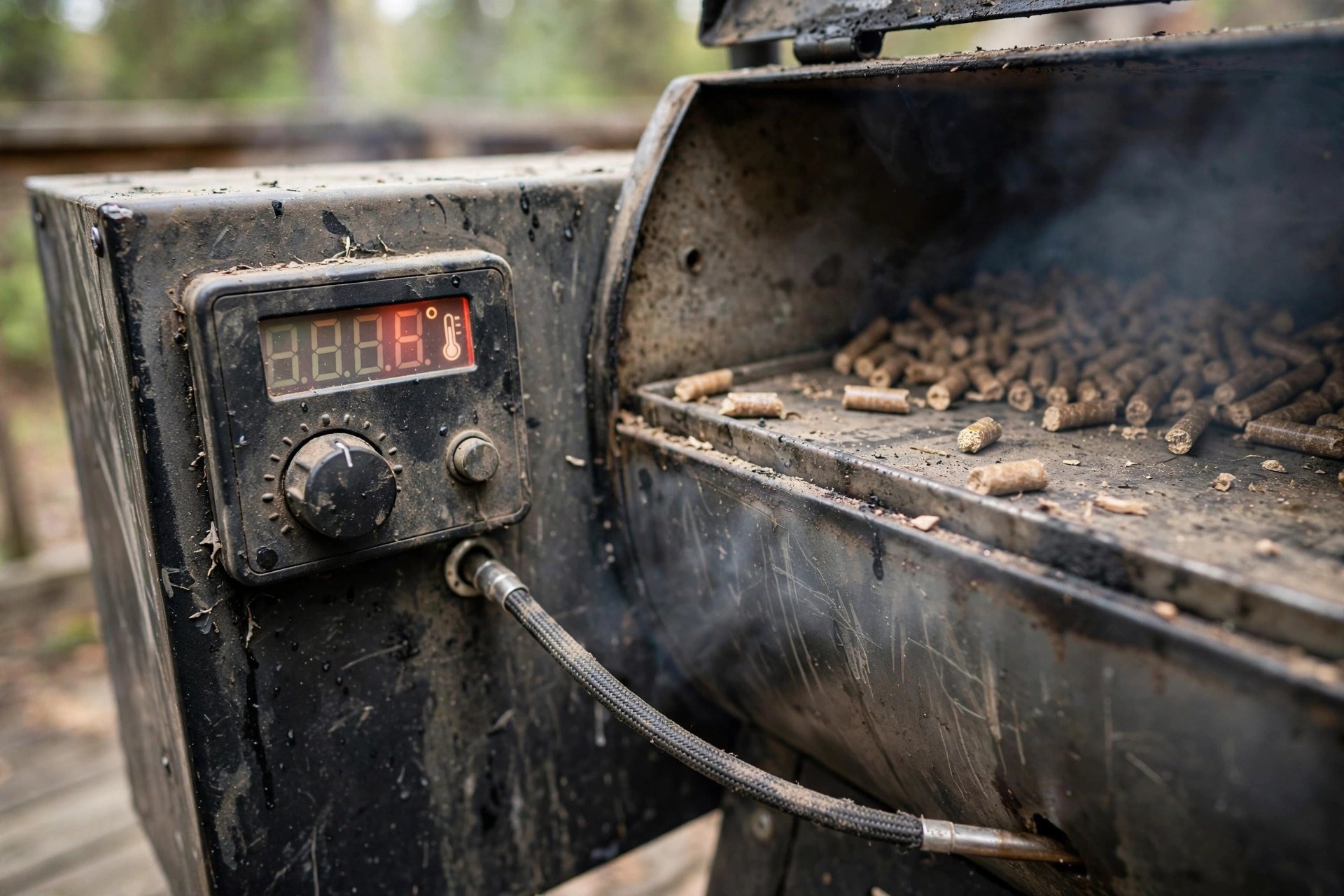
Put it together: you dial in 225°F, the auger feeds pellets, the hot rod lights them, the fan circulates the heat, the sensor reports back, and the controller trims the feed. That feedback loop is the whole secret behind the “set it and forget it” reputation.
One requirement: electricity. Pellet grills run on a standard 120V outdoor outlet (GFCI is the right call). Startup draws about 300 watts for the igniter, then settles to around 50 watts for the fan and auger.
Pellet Grill vs. Smoker vs. Gas Grill
The real decision is pellet grill versus an offset or charcoal smoker, and pellet grill versus a gas grill:
| Pellet Grill | Offset / Charcoal Smoker | Gas Grill | |
|---|---|---|---|
| Fuel | Hardwood pellets | Charcoal + wood chunks/splits | Propane / natural gas |
| Smoke flavor | Moderate, clean wood smoke | Heavy, deep smoke | None (without add-ons) |
| Temperature control | Digital dial, ±5–10°F | Manual vents and fire tending | Knob, fast and responsive |
| Temperature range | ~180–500°F | ~200–400°F practical | ~200–550°F+ |
| Searing | Weak to decent (some models have sear zones) | Decent over the firebox | Excellent |
| Effort | Near zero after setup | High — tend the fire every 30–60 min | Near zero |
| Startup cost | $400–$2,000+ | $200–$1,500 | $200–$1,000 |
| Needs electricity | Yes | No | No (battery igniter on most) |
The honest tradeoff: a pellet grill won’t match the deep, heavy smoke of a well-run offset, but it beats the offset on convenience and beats a gas grill on flavor. If you want the fundamental split between the two cooking styles, our smoking vs. grilling guide covers when low-and-slow beats hot-and-fast.
What Can You Cook on a Pellet Grill?
Almost anything you’d cook in an oven or on a grill, plus real barbecue. Three temperature zones cover the whole menu:
| Zone | Grill Temp | What to Cook | Internal Temp Target |
|---|---|---|---|
| Smoke | 165–225°F | Brisket, pork butt, ribs, salmon, cheese (cold smoke) | Brisket 200–205°F; pork butt 200–205°F |
| Roast / bake | 275–375°F | Whole chicken, turkey, meatloaf, pizza, cornbread, desserts | Chicken 165°F; turkey 165°F |
| Grill / sear | 450°F+ | Burgers, steaks (reverse sear), chops, vegetables | Burgers 160°F; steak 130–135°F med-rare |
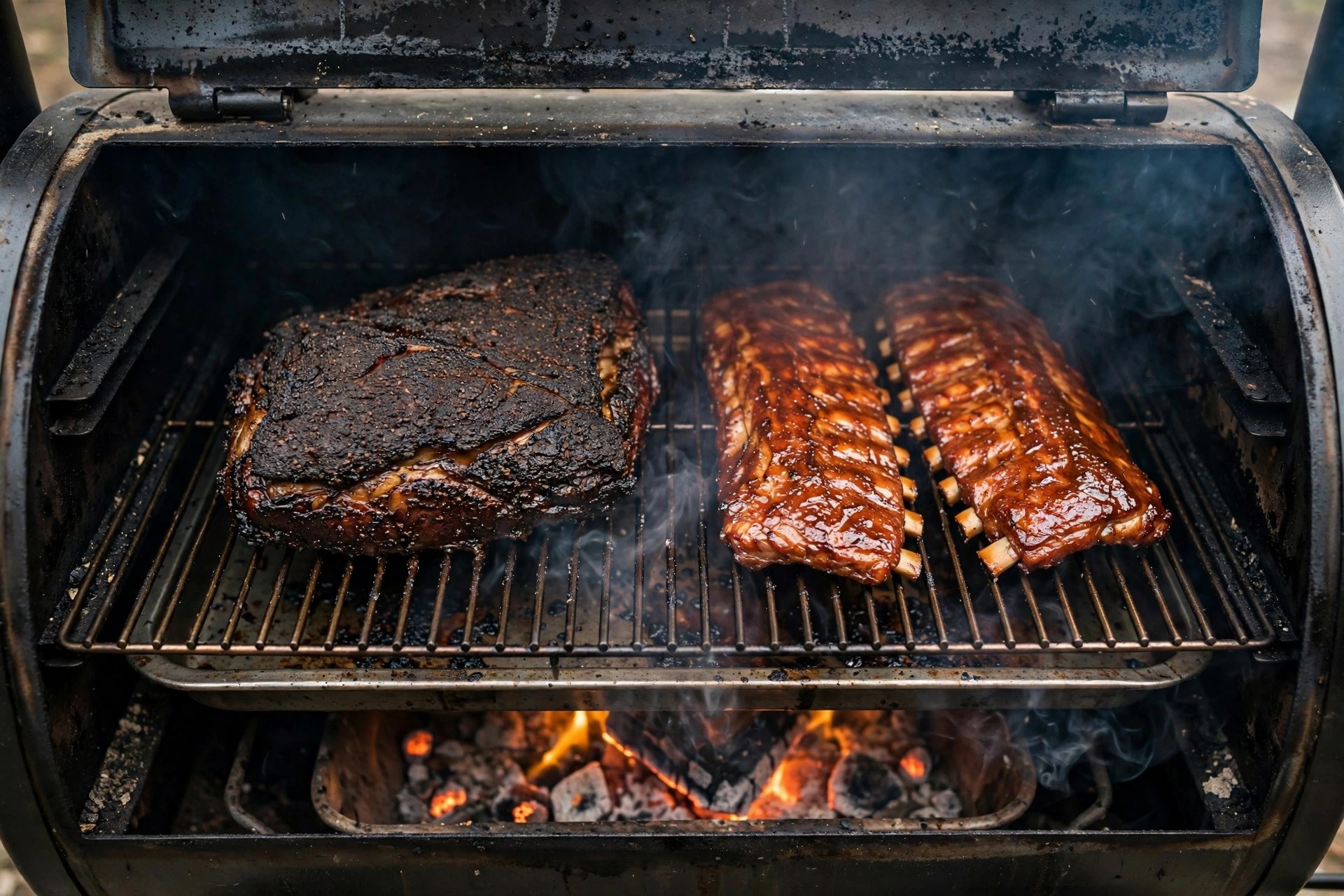
The machine’s sweet spot is long smokes. A brisket on the right wood at 225°F for 12–14 hours is exactly the cook a pellet grill was built for — steady heat, constant thin smoke, no 3 a.m. fire tending. Roasting is the underrated talent: a whole chicken at 350°F picks up wood flavor no kitchen oven can match.
Searing is the compromise. Because the drip tray blocks direct flame, you won’t get the blistered crust of a screaming-hot charcoal bed. The workaround most pellet grill owners swear by is the reverse sear: smoke the steak low at 225°F until it hits 115–120°F internal, pull it, crank the grill to max, then finish 60–90 seconds per side.
Pellet Grill Pros and Cons
No cooker is perfect. Here’s the straight version after weighing both sides.
Pros:
- Set-it-and-forget-it temperature control. Dial in a temp and walk away for hours. For a 14-hour brisket, this alone justifies the price.
- Real wood flavor. It burns actual hardwood — not gas with a smoke box, not an electric element with chips.
- Versatility. Smoke, roast, bake, grill, and (sort of) sear on one machine. Many owners cook on it 3–4 times a week because it’s that easy to fire up.
- Easy startup and shutdown. Push a button, wait 10–15 minutes to preheat, and cook. The shutdown cycle burns out the fire pot so the next start is clean.
- Fuel efficiency. A 20-pound bag stretches across several long cooks at smoking temps.
Cons:
- Milder smoke than an offset. Pellet smoke is clean and pleasant but lighter. Heavy-smoke lovers sometimes add a pellet smoke tube for extra output.
- Mediocre searing. The drip tray keeps flames off the food, which is great for low-and-slow and limiting for steakhouse crusts.
- Needs electricity. No outlet, no cook — and a power outage mid-brisket is a bad afternoon.
- More parts to fail. Augers jam, hot rods burn out, fans die. A charcoal kettle has essentially nothing to break; a pellet grill has a motor, a controller, and a sensor.
- Pellet quality matters. Cheap dusty pellets cause auger jams and bitter smoke. Buy 100% hardwood, food-grade pellets and store them airtight.
Your First Pellet Grill Cook, Step by Step
Before the first cook, season the grill: prime the auger per your manual, then run it empty at 350–450°F for 30–45 minutes to burn off manufacturing oils. After that, the routine is the same every time:
- Fill the hopper. Pour in food-grade hardwood pellets before you light — a full hopper (18–22 pounds) covers a full brisket cook at 225°F. Oak, hickory, or a competition blend are the classics; our wood for smoking brisket guide covers the pairings.
- Plug in and power on. Use a GFCI outdoor outlet. You’ll hear the fan spin up first — that’s normal.
- Run the ignition cycle. Start on the Smoke setting with the lid closed. Never start a cold grill on a high temperature — it floods the fire pot with unburned pellets.
- Set your target temperature. For a first cook, try chicken thighs or pork ribs at 250°F — forgiving cuts that show off the smoke.
- Preheat 10–15 minutes, lid closed. Watch the smoke, not the clock: wait until it turns from thick white to a faint blue haze. That’s thin blue smoke, the sign of a clean-burning fire. Preheating properly matters more than most beginners think.
- Load the food and place probes. The grate runs hottest over the fire pot. Probe the thickest part of the meat, away from bone.
- Cook to internal temperature, lid shut. Every peek costs you heat and smoke. Trust the probe, not the clock.
- Run the shutdown cycle. Don’t just unplug it. The cycle burns the remaining pellets out of the fire pot so your next ignition works.
Maintenance and the Mistakes That Cost You Cooks
A pellet grill rewards about 15 minutes of maintenance every few cooks: burn off the grates after each cook, swap the drip-tray liner every 2–3 cooks, vacuum ash from the fire pot every 3–5 cooks, and empty the grease bucket before every long cook. The pellet grill guide at Blazing Embers lays out the same schedule.
The mistakes that actually ruin cooks, in rough order of how often they happen:
- Letting pellets get damp. Moisture is the #1 killer — damp pellets crumble, jam the auger, and produce bitter, ashy smoke. Never leave the hopper full in the rain.
- Skipping the fire-pot vacuum. Ash buildup chokes airflow and the fire smolders instead of burning clean. A $30 shop vac solves it in two minutes.
- Starting hot on a cold grill. Dialing 450°F on a cold fire pot floods it with pellets. Always ignite low, then ramp up.
- Ignoring the grease bucket. Let it overflow and you’ve built a grease fire waiting for a hot cook.
- Cooking only at high heat. Smoke output drops as temperature rises. Run the first hour at 165–225°F where the smoke is heaviest.
Is a Pellet Grill Worth It for You?
Buy one if you want real wood-smoked barbecue without babysitting a fire — weeknight ribs, overnight briskets, roast chicken with a smoke kiss, all on a dial. Check our best pellet grill picks for the models worth your money, and our best pellet smokers roundup if smoke output is your top priority.
Skip it if you live for heavy offset smoke, if you sear steaks more than you smoke, or if you don’t have a reliable outdoor outlet. If you mostly want hot-and-fast grilling, a kettle or gas grill plus a smoke tube gets you 80% of the way for half the money.
Pellet Grill FAQs
Do pellet grills need electricity?
Yes. The auger, igniter, fan, and controller all run on a standard 120V household outlet — ideally GFCI-protected and outdoors. Startup pulls about 300 watts; once running it sips around 50 watts.
Can you sear a steak on a pellet grill?
You can, with caveats. Most pellet grills top out around 450–500°F and the drip tray blocks direct flame. Reverse-searing — smoking low to 115–120°F internal, then finishing hot — gives the best results.
How long do wood pellets last?
About 1 pound per hour at smoking temperatures (180–225°F) and 2–3 pounds per hour at high heat. A 20-pound bag covers roughly 8–20 hours of cooking depending on how hot you run.
Can you use a pellet grill in the rain?
Light rain is fine on most models, but keep the hopper and pellets dry at all costs — wet pellets swell and jam the auger. Never run any grill in a garage or enclosed porch; burning wood produces carbon monoxide.
Do pellet grills produce enough smoke flavor?
They produce clean, mild-to-moderate smoke — plenty for most people, lighter than an offset smoker. For more smoke, run the first hour at 165–225°F (smoke output peaks at low temps) or add a pellet smoke tube.
Your next step: pick your first cook before you pick your grill — pork ribs at 250°F will teach you the whole routine in one afternoon. Then check our best pellet grill guide to match a model to your budget.
[…] 1,000-square-inch offset needs more warm-up than a tabletop electric. If you run a pellet rig, our pellet grill guide covers the startup sequence in more […]