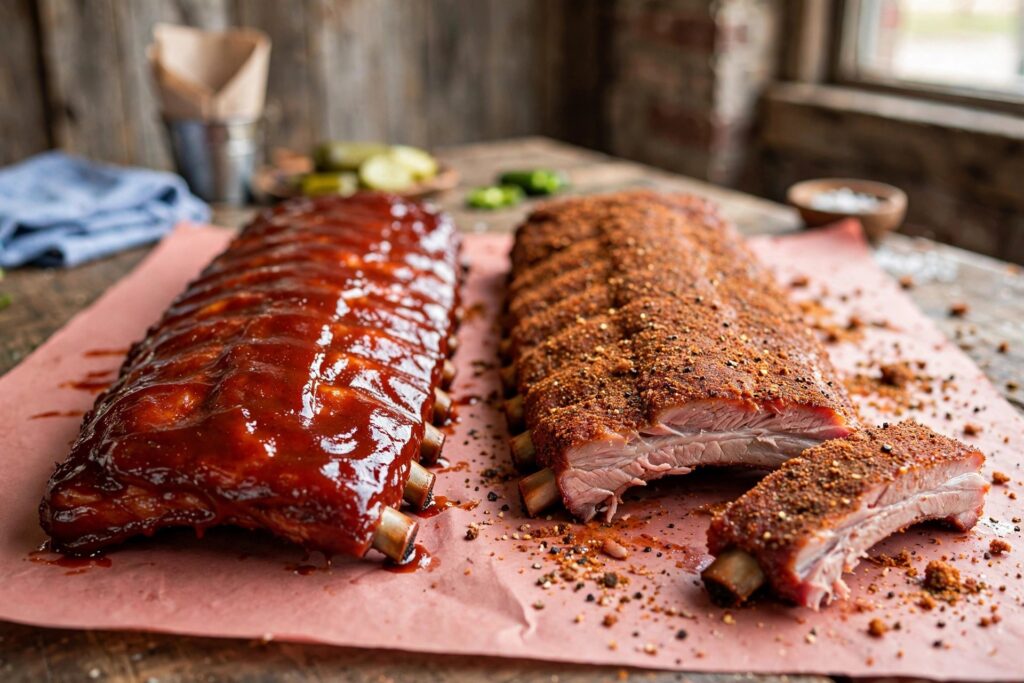
Wet ribs get brushed with barbecue sauce during the final stretch of cooking, leaving them glossy, sticky, and sweet-tangy. Dry ribs skip the sauce entirely and finish with an extra dusting of dry rub, so the flavor comes from spices, smoke, and the meat itself. Both are Memphis classics — but they eat like completely different meals, and ordering the wrong one for your taste is the easiest way to be disappointed by great barbecue.
Walk into any serious Memphis joint and the server will ask you one question: wet or dry? It’s not small talk. It decides how your ribs were seasoned, how they were cooked, what they taste like, and how many napkins you’ll need. Get it wrong and you’ll still eat fine ribs — get it right and you’ll understand why people fly across the country for this debate.
Here’s the real difference between wet and dry ribs, where each style came from, how each is cooked, and which one you should order (or make) based on how you actually like to eat.
What Are Dry Ribs?
Dry ribs are Memphis’s gift to barbecue — and they were born by accident. In 1948, Charlie Vergos cleaned out the basement of his Memphis diner, found an old coal chute, and turned it into a charcoal pit. By the mid-1950s he was grilling ribs over live charcoal instead of slow-smoking them, seasoning them with a Greek-influenced spice blend from his heritage mixed with the paprika and Cajun flavors he’d picked up in New Orleans.
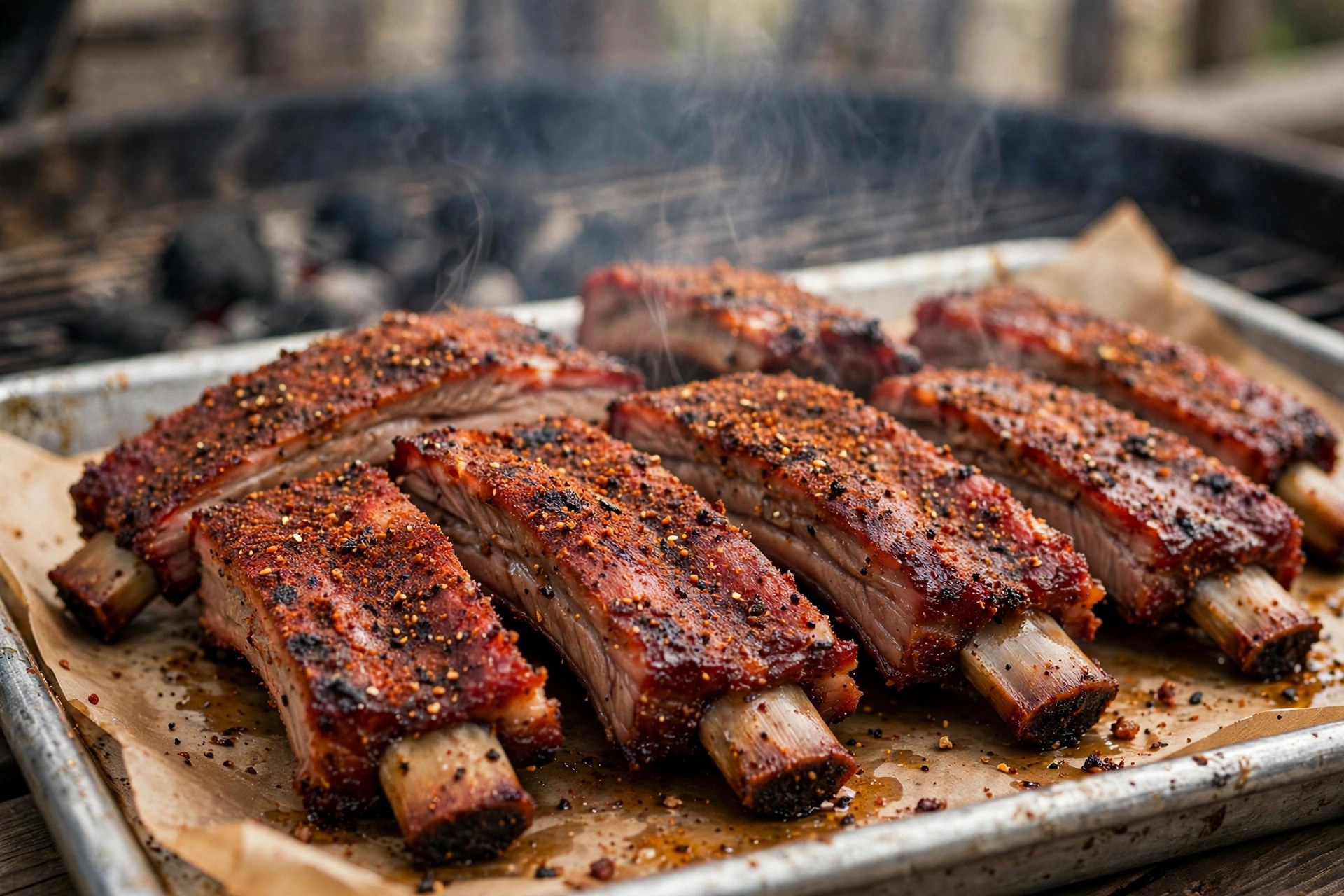
The technique at Charlie Vergos’ Rendezvous, the restaurant that made dry ribs famous, is still the blueprint: ribs basted with a thin vinegar solution while they cook over charcoal, then finished with a heavy final dusting of the house dry rub just before serving. No sauce during the cook. No sauce on the ribs at the table — though a bottle is always nearby if you want it. The Southern Foodways Alliance’s oral history with the Vergos family documents how that Greek spice mix and charcoal method set the Memphis dry-rub standard more than 75 years ago.
What you taste in a dry rib: a dark, craggy spice crust with paprika, garlic, oregano, and pepper notes up front, pork and smoke in the middle, and a savory finish that makes you reach for another rib instead of a napkin. The rub doesn’t just season the surface — applied before and after cooking, it builds a crust with real texture, somewhere between a crust and a second skin.
What Are Wet Ribs?
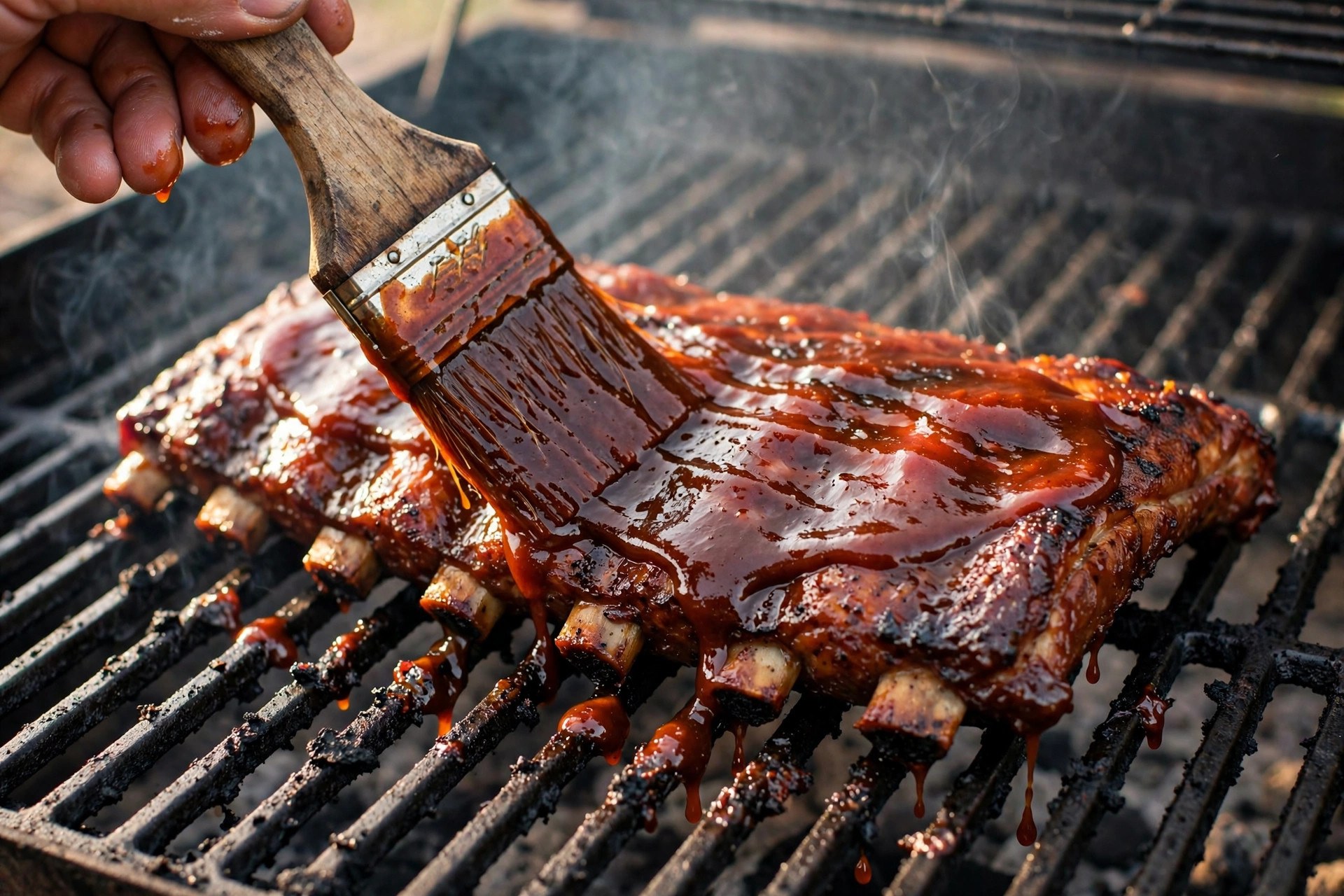
Wet ribs are what most of America pictures when it hears “barbecue ribs”: slow-smoked over hickory — the local wood of choice in Memphis — seasoned with a dry rub, then brushed with a thin, tangy tomato-based sauce toward the end of the cook. The sauce caramelizes in the heat until it becomes more of a glaze than a topping: glossy, sticky, and fused to the meat.
The key detail most recipes get wrong: the sauce goes on late, not early. Brush it on in the last 30–45 minutes of a 5–6 hour cook, and it tightens into a lacquer. Brush it on at hour two and the sugars scorch into bitterness. Good wet ribs glisten; they don’t swim. As the pitmasters interviewed by Taste of Home’s Memphis barbecue guide explain, the sauce should be a layer of tangy flavor, not a mask — the smoke and spice still have to come through.
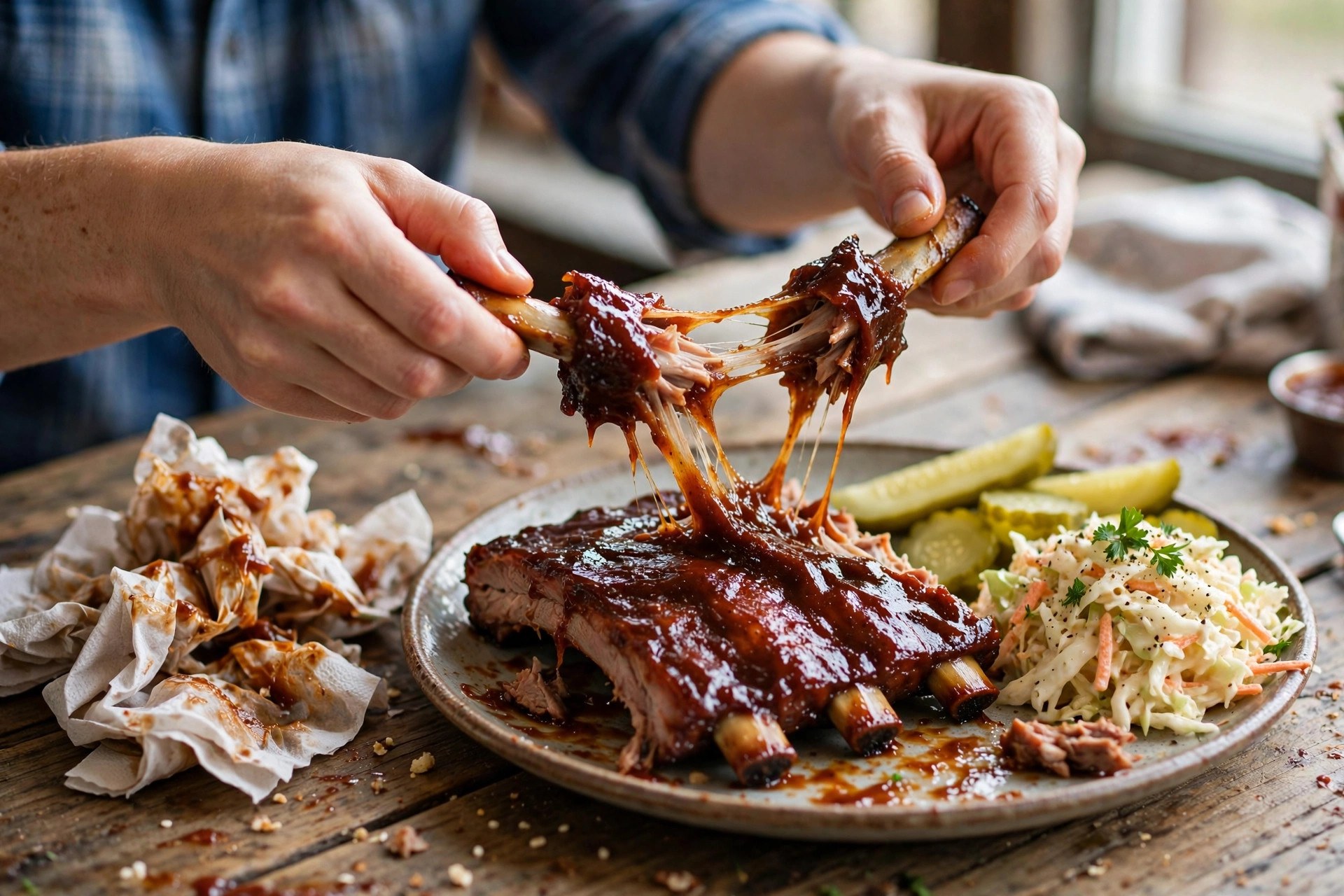
What you taste in a wet rib: sweetness first, then tang, then smoke and spice underneath, with a sticky texture that coats your fingers. It’s the more indulgent, crowd-pleasing style — and the messier one. Keep the napkins close.
Wet vs Dry Ribs: Side-by-Side Comparison
| Dry ribs | Wet ribs | |
|---|---|---|
| Seasoning | Dry rub before cooking + second dusting after | Dry rub before cooking + sauce at the end |
| Sauce | None on the ribs; served on the side | Brushed on during last 30–45 min of cook |
| Flavor profile | Savory, spicy, smoky — spice-forward | Sweet, tangy, smoky — sauce-forward |
| Texture | Dry, craggy spice crust with bite | Glossy, sticky glaze over tender meat |
| Cooking method | Charcoal-grilled (Rendezvous) or smoked | Slow-smoked, usually over hickory |
| Smoke intensity | More prominent — nothing covering it | Softer — sauce mellows the smoke |
| Mess factor | Low — a few napkins | High — a stack of napkins and wet wipes |
| Best for | Spice lovers, purists, sauce skeptics | Sauce lovers, kids, first-time rib eaters |
The shorthand: dry ribs show off the pitmaster’s rub and fire control; wet ribs show off the pitmaster’s sauce. Neither is more “authentic” — both grew up in the same city, and Memphis joints have served both for decades. The Memphis style is the debate itself.
It’s worth noting that “wet” dominates outside Memphis. Kansas City ribs, for example, are almost always finished wet — thick, sweet sauce is the KC signature. So when a Memphis local says “wet ribs,” they usually mean a thinner, tangier Memphis-style sauce applied with restraint; when a Kansas City cook says it, expect a heavier, sweeter glaze. The wet/dry question is sharpest in Memphis because it’s the one city where both answers are equally correct.
How Each Style Is Cooked
The cooks diverge in the last hour. Everything before that — trimming, rub, 225–275°F heat — is nearly identical.
Dry ribs:
1. Pull the membrane and coat both sides generously with dry rub. 2. Cook at 250–275°F for 5–6 hours (baby backs) or 6–7 hours (spares), spritzing lightly with vinegar solution if the surface looks dry. 3. Skip the wrap, or wrap only briefly — you want the crust to stay craggy. 4. In the last 10 minutes, hit the ribs with a second heavy dusting of rub so it blooms in the heat. 5. Rest 10–15 minutes, slice, serve — sauce on the side, optional. Want the full competition method? Our 3-2-1 ribs guide adapts easily: just skip the saucing step.
Wet ribs:
1. Same prep and rub, same 250–275°F. 2. Smoke unwrapped for about 4 hours until the bark is set and the meat has pulled back ¼–½ inch from the bone tips. 3. Now brush on a thin coat of sauce — thinned with a splash of vinegar or apple juice so it spreads instead of glopping. 4. Back on the heat 30–45 minutes until the glaze tightens and turns shiny. One coat is enough; two thin coats max. 5. Rest, slice, serve with extra sauce for the dippers.
The classic mistake with wet ribs is saucing too early. Sauce sugars start to scorch around 300°F, and even at 275°F a sugary sauce applied at hour three turns dark and bitter by hour six. Late sauce, hot finish — that’s the whole secret.
Which Should You Order — or Make?
- Order dry if you love spice blends, black pepper, and tasting the actual pork. Dry ribs are the connoisseur’s pick — nothing hides behind sauce, so you taste the pitmaster’s skill directly. They’re also the better road-trip or picnic rib: no sticky fingers on the steering wheel.
- Order wet if you want the classic, indulgent barbecue experience — sweet, sticky, unapologetic. Wet ribs are friendlier to beginners and kids, and the sauce adds a safety net if the ribs cooked a little past ideal.
- Making them at home? Dry is more forgiving for a first cook. There’s no sauce timing to nail, no scorch risk, and a great rub does the heavy lifting. Wet ribs reward a little more experience — that 30-minute saucing window is the difference between lacquered and burnt.
- Cut matters less than you think. Both styles work on baby backs and spares. Baby backs (13 bones per rack) cook faster and leaner; spares are meatier and take sauce beautifully. If you’re feeding a crowd, our guide to how many ribs are in a full rack helps with the math.
- Can’t decide? Split the rack. Sauce half the ribs in the last 30 minutes, dust the other half with rub. Serve both, let the table vote. Most Memphis natives have a strong opinion — you’ll find yours fast.
- When in doubt, cook dry and sauce on the side. This is the diplomat’s move and it’s what smart caterers do: everyone gets the same smoky, crusty ribs, and each person decides how wet their plate gets. Warm the sauce before serving — cold sauce on hot ribs is a small thing that makes a big difference.
One more consideration: beef ribs vs pork ribs is a separate debate, but the same wet/dry logic applies. Beef ribs take a dry rub beautifully and stand up to bold sauce equally well — pick your style, then pick your cut.
Frequently Asked Questions
Are dry ribs actually dry?
No — “dry” only means no sauce. Properly cooked dry ribs are just as juicy as wet ribs; the moisture is in the meat, not on it. If a dry rib eats dry, it was overcooked, not under-sauced. A bend test or toothpick probe tells you more than any sauce ever will — see our guide to telling when ribs are done without a thermometer.
Which is more popular in Memphis?
It’s a genuine split, which is why every joint asks. Dry ribs have the famous origin story at the Rendezvous and the purist following; wet ribs have the broader crowd appeal. Locals order by joint loyalty as much as by style — you go to the Rendezvous for dry, and plenty of other spots for wet.
Should sauce go on ribs before or after cooking?
Near the end of cooking, or after. Brushing sauce on in the last 30–45 minutes lets it caramelize into a glaze. Applying it hours early scorches the sugars. Serving extra sauce warm on the side covers the dippers without risking the rack.
Can I make wet ribs from dry ribs, or vice versa?
Wet from dry is easy: brush warm sauce over finished dry ribs and give them 10 minutes on the grill or under the broiler to set the glaze. Going the other way doesn’t work — you can’t un-sauce a rib. When in doubt, cook dry and sauce at the table.
What wood is best for ribs?
Hickory is the Memphis standard — bold and bacon-like, it stands up to both heavy rub and sauce. Fruit woods like apple and cherry are milder and add a rosy color that looks great under a glaze. Avoid mesquite for long rib cooks; it’s too aggressive and turns bitter.
Next time you’re at a Memphis-style joint, do what the regulars do: order one rack dry and one wet, put them side by side, and settle the debate for yourself. And if you’re cooking at home, try the split-rack trick on your next smoke — same cook, two styles, zero regrets. If you end up with leftovers, here’s how to reheat ribs without drying them out.
[…] you’re cooking wet vs dry ribs, note that sauced racks read softer in every test. Sugar in the sauce caramelizes and the wet […]
[…] and soak up smoke fast. Apple keeps the flavor clean and lets your rub do the talking — ideal for dry-style ribs where there’s no sauce to hide behind. Cherry adds that extra dimension of fruit plus the […]
[…] wins? Neither is more flavorful — they’re just different instruments playing the same song. Our wet ribs vs dry ribs comparison digs into the practical differences, and if you’re cooking at home, this guide to telling […]