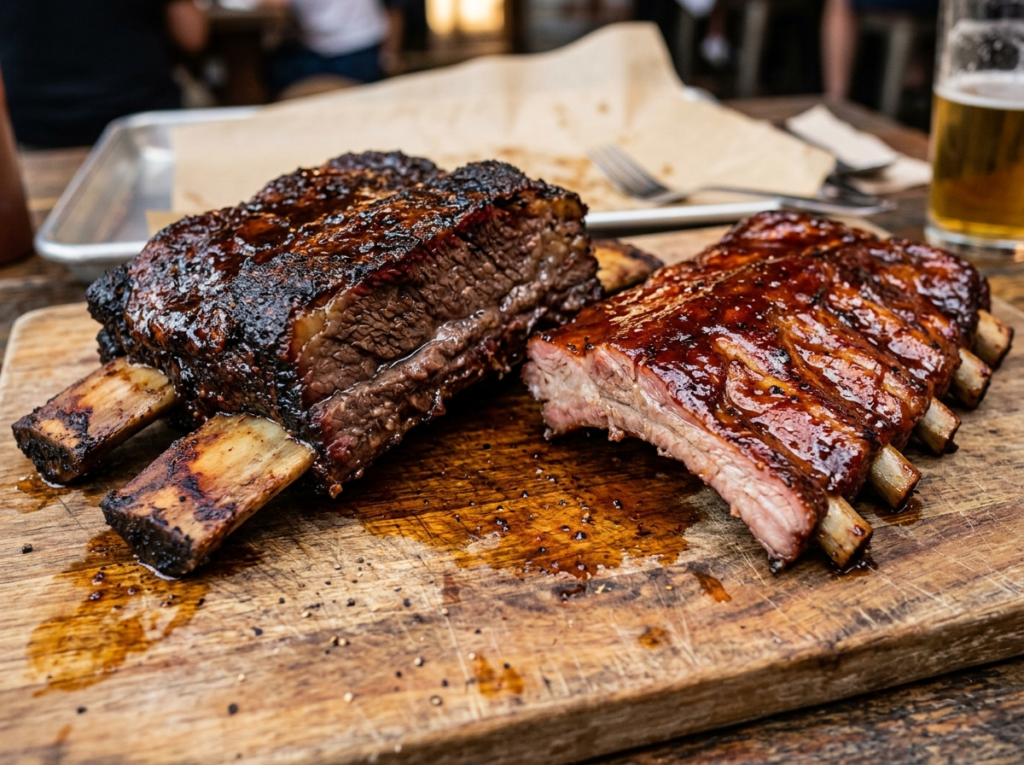
A single beef plate rib can weigh more than an entire rack of baby back ribs. Let that sink in for a second. Both cuts come from the rib section of the animal, both taste unbelievable off a smoker, and both have diehard fans who’ll argue all day about which one’s better. But they’re wildly different in size, flavor, fat content, cooking time, and price.
If you’ve been standing at the meat counter trying to figure out which one to grab for your next cookout, you’re not alone. This is one of the most common debates in the BBQ world. And honestly? There’s no single right answer. It depends on what you’re cooking for, who you’re feeding, and what kind of flavor profile you’re chasing.
Let’s break the whole thing down — no fluff, no filler, just everything you actually need to know to make the right call.
Understanding the Cuts: What You’re Actually Buying
Before we get into flavor and cooking methods, you need to understand that “beef ribs” and “pork ribs” aren’t just two simple cuts. Each one has sub-categories, and they behave very differently on the grill or smoker.
Beef Rib Cuts
Beef ribs generally come in two main styles:
Beef Plate Ribs (Short Ribs) — These are the big, beefy monsters you see competition pitmasters posting on Instagram. They come from the lower portion of the rib cage (ribs 6–8 typically) and carry a thick, meaty cap on top with generous marbling throughout. A single bone can easily have 2–3 inches of meat sitting on top of it. People sometimes call these “brisket on a stick” because the texture and richness are remarkably similar to a well-smoked brisket.
Beef Back Ribs — These come from the upper rib area, right near the prime rib or ribeye section. Here’s the catch though — most of the meat gets cut away with the ribeye, so beef back ribs are actually pretty lean and don’t carry a ton of meat between the bones. They’re cheaper than plate ribs, but they won’t give you that jaw-dropping meaty experience.
Pork Rib Cuts
Pork ribs also split into distinct types:
Baby Back Ribs — These sit at the top of the rib cage where the loin meets the spine. They’re shorter, curved, and leaner than spare ribs. The meat is tender and cooks relatively fast. A full rack usually weighs around 1.5–2 pounds. If you’ve ever followed a 2-2-1 method for baby backs, you know they can be done in about 5 hours.
Spare Ribs — These come from the belly side after the baby backs are removed. They’re flatter, larger, and fattier. Spare ribs have more connective tissue, which means they take longer to cook but reward you with deeper flavor and a more satisfying chew.
St. Louis Style Ribs — These are just spare ribs with the sternum bone, cartilage, and rib tips trimmed off. You get a cleaner, more uniform rectangle of meat that’s easier to cook evenly and looks great on a plate.
Pro Tip: If someone just says “ribs” at a BBQ joint without specifying, they almost always mean pork spare ribs or St. Louis cut. Beef ribs are usually called out specifically on a menu because they’re a specialty item.
Size and Meat Yield: Not Even Close
This is where the two really separate themselves.
A full rack of baby back ribs has 10–13 bones and typically weighs between 1.5 and 2.5 pounds. A rack of spare ribs runs a bit bigger — usually 2.5 to 3.5 pounds. Either way, you’re looking at a manageable amount of food. One rack feeds about 2–3 people comfortably.
Beef plate ribs? A three-bone section can weigh 4–5 pounds all by itself. The individual bones are massive, and the meat cap is thick and rich. One bone can easily serve as a full meal for one person — sometimes even more than enough.
Beef back ribs are the exception here. They’re closer in meat yield to pork ribs, sometimes even less generous because so much of the meat follows the ribeye during butchering.
So if you’re feeding a crowd and want something impressive to set on the table, a few sections of beef plate ribs make a real statement. But if you want everyone to grab their own rack and go to town, pork ribs are the move.
Flavor Profile: Rich and Beefy vs Sweet and Porky
Let’s talk taste, because this is where personal preference really kicks in.
Beef plate ribs deliver an intense, rich, almost buttery flavor. The fat content is high, the marbling is incredible, and the meat itself has that deep umami quality you get from well-cooked beef. If you love brisket — that slow-smoked, melt-in-your-mouth brisket — beef plate ribs hit a very similar note. They don’t need much seasoning. Salt, pepper, maybe a touch of garlic powder, and you’re golden. The beef does the talking.
Pork ribs have a completely different personality. The meat is lighter, slightly sweet, and takes on rub flavors and smoke like a sponge. This is why pork ribs pair so naturally with sweet and tangy BBQ sauces, fruit-based glazes, and complex spice rubs. They’re versatile. You can go Memphis-style dry rub, Kansas City sweet and sticky, Carolina vinegar-based — the pork plays well with all of it.
Here’s a good way to think about it: beef ribs are like a good steak — you want to keep it simple and let the meat shine. Pork ribs are more like a blank canvas — you can paint whatever flavor story you want.
Did You Know? The fat in beef plate ribs has a higher melting point than pork fat. That’s why beef ribs feel richer and more coating on the palate, while pork ribs tend to feel lighter even when they’re well-marbled.
Cooking Methods and Time
Both types of ribs do their best work low and slow, but the specifics differ quite a bit.
Smoking Pork Ribs
Pork ribs are the more forgiving of the two. Baby backs typically take 4–5 hours at 225°F. Spare ribs and St. Louis cuts need 5–6 hours at the same temperature. The classic 3-2-1 method — 3 hours smoking, 2 hours wrapped in foil, 1 hour unwrapped with sauce — has been the go-to technique for years, and it works beautifully for spare ribs. Baby backs do better with a 2-2-1 approach since they’re thinner and can dry out with too much time in the smoker.
You’re aiming for an internal temperature around 195–203°F. The meat should pull back from the bone about a quarter inch, and a toothpick should slide into the meat with almost no resistance.
Pork ribs work on pretty much any cooker — pellet grills, offset smokers, kamado grills, kettle grills, even a basic gas grill with indirect heat. They’re adaptable and relatively easy to get right.
Smoking Beef Ribs
Beef plate ribs are a bigger commitment. Because of that thick meat cap, they need 8–10 hours at 250–275°F. Some pitmasters go even longer at lower temps. You’re essentially cooking them like a small brisket — and they go through a stall just like brisket does, where the internal temperature plateaus around 150–170°F as moisture evaporates from the surface.
The target internal temp is around 203–210°F. At that point, the collagen and connective tissue have broken down completely, and the meat is tender enough to pull apart with your fingers.
Seasoning for beef plate ribs is usually simple — a heavy coat of coarse black pepper with kosher salt (the classic Texan dalmatian rub). Maybe some garlic powder. That’s it. You don’t want to compete with the natural beef flavor.
Beef back ribs cook faster — closer to 3–4 hours — because there’s less meat. But they can also dry out quickly, so keep an eye on them.
Warning: Don’t wrap beef plate ribs too early. You want a solid bark to develop on that thick fat cap before you even think about foiling. If you wrap at the first sign of a stall, you’ll end up with a soggy exterior and lose all that beautiful crust.
Price and Availability
This is a practical consideration that a lot of comparison articles gloss over, but it matters — especially if you’re cooking for a group.
Pork ribs are widely available at pretty much every grocery store, warehouse club, and butcher shop. Baby backs typically run $4–6 per pound, and spare ribs are even cheaper at $3–5 per pound. You can find them on sale regularly, especially around summer holidays like Memorial Day and July 4th.
Beef plate ribs are a different story. They’re harder to find in regular grocery stores. You’ll often need to visit a specialty butcher or order online. And the price? Expect to pay $8–15 per pound depending on grade and where you live. USDA Prime or Wagyu beef ribs can climb well above $20 per pound. Since a three-bone section can weigh 4–5 pounds, you’re looking at a $40–75 investment for one section.
Beef back ribs are much more affordable — usually $5–7 per pound — but remember, you’re getting less meat per bone.
So if budget is a factor, pork ribs give you more bang for your buck. If you’re treating yourself or impressing guests at a special cookout, beef plate ribs are worth the splurge.
Nutritional Differences
People don’t usually eat ribs for health reasons — let’s be honest about that. But if you’re curious, here’s how they compare in broad terms.
Beef ribs carry more calories and fat per serving, especially plate ribs with their thick fat cap and heavy marbling. A typical serving of beef plate ribs (around 6 ounces of meat) can pack 400–500 calories with 30+ grams of fat. On the flip side, they’re loaded with protein, iron, zinc, and B vitamins.
Pork ribs are leaner overall, particularly baby backs. A comparable serving of baby back rib meat runs about 250–350 calories with 15–25 grams of fat. Spare ribs land somewhere in between because of their higher fat content.
Neither cut is a “diet food,” and that’s perfectly fine. You’re cooking ribs. Enjoy them. Just know that if you’re watching portions, pork baby backs will be the lighter option.
Which One Works Better for Your Situation?
Choosing between beef ribs and pork ribs really comes down to context. Ask yourself a few questions:
How many people are you feeding? For larger groups, pork ribs make logistics easier. You can throw multiple racks on the smoker, they cook faster, and everyone gets their own section. Beef plate ribs work best for smaller gatherings where you can give each person one massive bone as a statement piece.
What’s your experience level? If you’re still dialing in your smoker skills, start with pork ribs. They’re more forgiving, cheaper to practice with, and cook faster. Baby backs are especially beginner-friendly. Beef plate ribs require more patience and temperature control — they’re closer to smoking a brisket in terms of difficulty.
What vibe are you going for? Backyard cookout with cold drinks and paper plates? Pork ribs all day. Serious pitmaster dinner where you want jaws to drop? Bring out the beef plate ribs. There’s something almost primal about handing someone a bone with 3 inches of smoky beef on top.
What equipment do you have? Both cuts work on most smokers and grills, but beef plate ribs do benefit from a cooker that holds steady temps for long periods. A good pellet smoker or offset smoker makes the 8–10 hour cook a lot less stressful. And whatever you’re cooking, a reliable instant read thermometer is non-negotiable. Don’t guess on temperatures.
Side Pairings: What Goes With What
Your choice of ribs should influence what you put on the table next to them.
Beef plate ribs are rich and heavy. You want sides that cut through that richness — pickled onions, tangy coleslaw, simple white bread, pickles, and maybe a bright, vinegar-dressed potato salad. Keep the sides clean and acidic to balance all that beefy fat.
Pork ribs pair well with heartier, sweeter sides. Think baked beans, mac and cheese, cornbread, grilled corn, and creamy coleslaw. The sweetness in pork harmonizes with these classic cookout staples beautifully. If you need some fresh BBQ side dish ideas, the right pairings can really elevate the whole meal.
A Quick Comparison at a Glance
| Feature | Beef Plate Ribs | Pork Baby Backs | Pork Spare Ribs |
|---|---|---|---|
| Weight per rack/section | 4–5 lbs (3 bones) | 1.5–2.5 lbs | 2.5–3.5 lbs |
| Cook time (225–275°F) | 8–10 hours | 4–5 hours | 5–6 hours |
| Price per pound | $8–15+ | $4–6 | $3–5 |
| Fat content | High | Moderate | Moderate–High |
| Flavor intensity | Bold, beefy, rich | Mild, sweet, versatile | Porky, deeper than baby backs |
| Difficulty level | Intermediate–Advanced | Beginner–Intermediate | Beginner–Intermediate |
| Best seasoning approach | Simple (salt + pepper) | Rubs, sauces, glazes | Rubs, sauces, glazes |
FAQ
Can you use the same rub on beef ribs and pork ribs?
You can, but you probably shouldn’t. Pork ribs love complex rubs with paprika, brown sugar, chili powder, and garlic. Beef plate ribs shine with simplicity — coarse black pepper and kosher salt (sometimes called a dalmatian rub) let the natural beef flavor come through. A sweet pork rub on beef plate ribs can taste out of place because the sugars compete with the richness of the beef.
Which one is easier to overcook?
Pork baby back ribs dry out faster because they’re thinner and leaner. If you leave them on the smoker too long or cook at too high a temperature, they’ll turn tough and chalky. Beef plate ribs are more forgiving in that sense — their thick fat cap and heavy marbling insulate the meat. But if you undershoot the temperature (pulling them off before 200°F internal), they’ll be chewy and tough because the collagen hasn’t fully rendered.
Are beef ribs worth the extra cost?
If you’ve never tried properly smoked beef plate ribs, yes — at least once. The experience is completely different from pork ribs. That said, pork ribs deliver incredible flavor at a fraction of the price and with less time invested. For regular weekend cooking, pork ribs make more practical sense. Save the beef plate ribs for occasions when you want to go all out.
Can I cook beef ribs on a gas grill?
Technically yes, using indirect heat, but it’s tricky. Beef plate ribs need 8–10 hours of steady low heat, and most gas grills struggle to maintain 250°F that long without burning through a lot of propane. A charcoal setup, pellet grill, or offset smoker gives you much better results. If a gas grill is all you’ve got, beef back ribs are a better choice since they cook in 3–4 hours.
How do I know when ribs are done without a thermometer?
For pork ribs, do the bend test — pick up the rack from one end with tongs. If it bends sharply and the meat starts to crack on the surface, they’re close. For beef plate ribs, poke the meat with a toothpick or probe. It should slide in and out like you’re poking room-temperature butter. But honestly, grab a good thermometer — it takes the guesswork out entirely.
So, Which Ribs Should You Cook This Weekend?
Here’s the honest truth — you really can’t go wrong with either one. Beef plate ribs and pork ribs are both incredible in their own right, and they solve different cravings. Pork ribs are the reliable everyday hero — affordable, approachable, and endlessly customizable. Beef plate ribs are the special occasion showstopper that’ll make your guests remember the meal for months.
If you’ve been cooking pork ribs for a while and feel comfortable managing a long smoke, challenge yourself with a rack of beef plate ribs. The first time you pull one off the smoker and see that deep mahogany bark with a perfect smoke ring underneath, you’ll understand what all the fuss is about.
And if you’re just getting started? Grab a rack of baby backs, fire up your smoker, and enjoy the ride. Great BBQ isn’t about picking sides — it’s about cooking what makes you happy and sharing it with people you care about. So pick your ribs, season them well, and let the smoke do its thing.