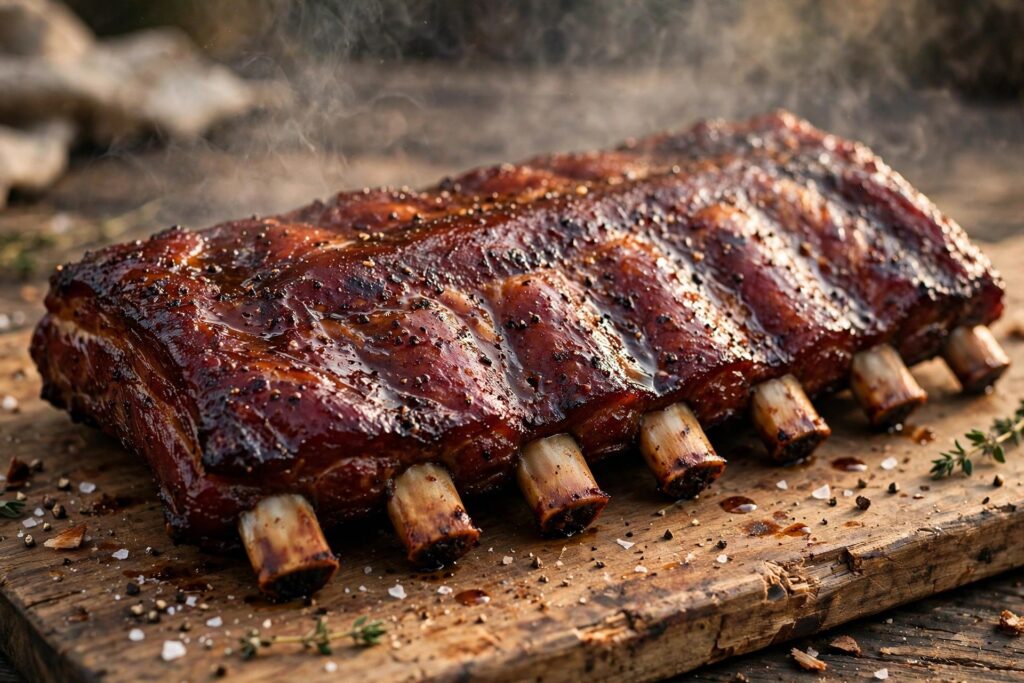
A full rack of pork ribs usually has 10 to 13 bones. Baby back ribs typically run 10–13, spare ribs 11–13, and trimmed St. Louis style ribs 12–15. Beef ribs are counted differently: a full section of beef back ribs is 7 bones, while the giant “dino” plate ribs are sold as a 3-bone plate. The cut matters more than any single number — here’s the full breakdown.
If you’ve ever stood in the meat aisle wondering whether the package in front of you is a whole rack or half of one, you’re not alone. “Full rack” sounds precise, but it’s really just butcher shorthand for a connected section of ribs — and the bone count shifts with the cut, the trim, and whether you’re looking at pork or beef. This guide covers every cut you’ll actually meet at the store, what the labels mean, and how many racks to buy when you’re feeding a crowd.
How Many Ribs in a Full Rack: The Quick Answer
Here’s every common cut in one chart — the numbers below come from USDA purchase specifications and what major BBQ resources like Destination BBQ’s rib rack guide document at retail:
| Rib cut | Bones per full rack | Typical rack weight | Feeds |
|---|---|---|---|
| Baby back ribs | 10–13 | 1.5–2 lb | 1–2 adults |
| Spare ribs | 11–13 (up to 15 untrimmed) | 2.5–3.5 lb | 2–3 adults |
| St. Louis style ribs | 12–15 | 2.5–3 lb | 2–3 adults |
| Beef back ribs | 7 | 3–4 lb | 1–2 adults |
| Beef plate ribs (dino) | 3 | 4–6 lb | 2–3 adults |
| Beef chuck short ribs | 4 (range 2–5) | 3–5 lb | 2 adults |
| Half rack (pork) | 5–7 | varies | 1 adult |
The “12 ribs” figure you hear everywhere is a useful rule of thumb for pork — it sits right in the middle of the 10–13 range — but don’t treat it as a guarantee. Count the bone ends through the package if the rack looks short.
Baby Back Ribs: 10 to 13 Bones
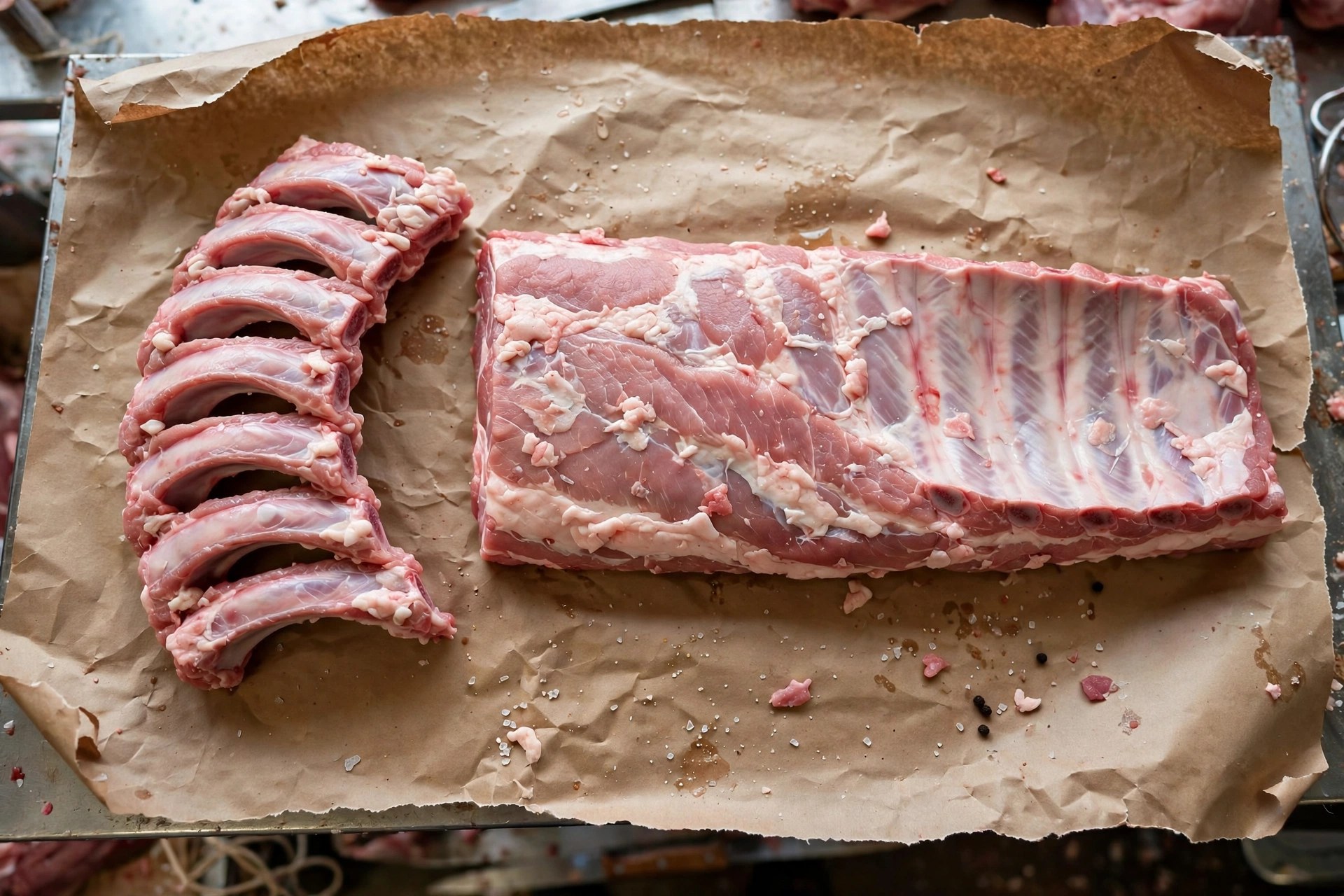
Baby backs are cut from the top of the rib cage, right under the loin. They’re the rack most people picture: short, curved bones with most of the meat sitting on top rather than between the bones. A full rack weighs 1.5–2 pounds and feeds one to two adults, depending on appetite and sides.
The “baby” in the name refers to their size relative to spares, not the age of the pig. USDA minimum for pork loin back ribs is 8 bones, but grocery-store racks almost always have 10–13. Individual bones run about 3–6 inches long, tapering from the wide end to the narrow end — that’s what gives the rack its curved shape.
Baby backs are leaner than spares, which makes them tender but less forgiving if you overcook them. They cook faster too: at 225°F, expect about 5–6 hours unwrapped (or roughly 4–5 hours with the 2-2-1 method at 225°F). Because there’s less fat to save you, they dry out faster than spare ribs when neglected.
Spare Ribs: 11 to 13 Bones (Up to 15 Untrimmed)
Spare ribs come from lower on the hog — the belly side, below the baby backs. They’re bigger, flatter, and fattier, with the meat sitting both between and on top of the bones. A full untrimmed rack weighs 2.5–3.5 pounds and feeds 2–3 adults.
Why the wider range? A full intact rack of spare ribs breaks down by anatomy:
- 7 true ribs — attach directly to the sternum
- ~6 false ribs — attach through shared cartilage
- 1–2 floating ribs — short, barely attached, with little meat
That adds up to 13–15 bones in a truly whole rack, though store-bought racks are usually trimmed to 11–13. The bottom floating ribs are short with little meat — butchers sometimes remove them, which is why one rack has 11 bones and the next has 14. As Resto NYC’s spare rib breakdown explains, the count varies with the butcher’s cut and the size of the hog.
Because spares carry more fat and connective tissue, they need a longer cook to get tender — the classic 3-2-1 method (3 hours unwrapped, 2 wrapped, 1 sauced at 225°F) was built for exactly this cut.
St. Louis Style: 12 to 15 Bones
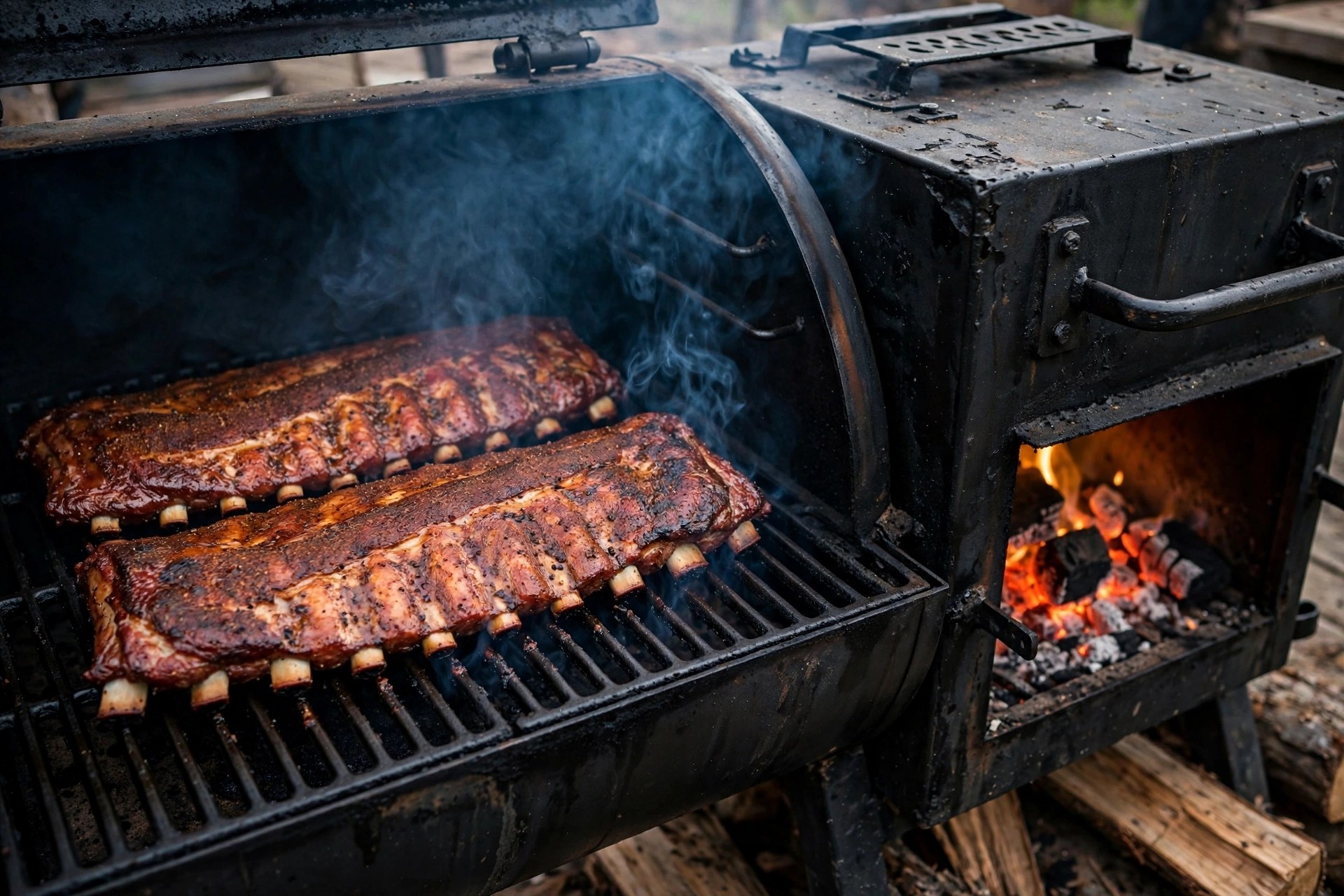
St. Louis ribs aren’t a different part of the pig — they’re spare ribs that have been trimmed into a neat rectangle. The trim removes the sternum, the cartilage, and the flap of meat on the underside (the rib tips), leaving a uniform rack that cooks evenly and looks great on a platter.
Trimming doesn’t remove bones, so St. Louis racks keep the spare rib count: 12–15 bones, varying with the original rack. They weigh roughly the same as spares (2.5–3 lb) and feed the same 2–3 adults. The main difference is practical, not numerical: the rectangular shape means every bone cooks at the same rate, which is why competition pitmasters overwhelmingly cook St. Louis style.
The trimmed-off rib tips aren’t waste, by the way — they’re delicious smoked on their own. But don’t count them as rack ribs when you’re planning portions.
Beef Ribs Are Counted Differently
This is where most people get tripped up. Pork and beef ribs share a name and almost nothing else. Don’t apply pork numbers to beef.
Beef back ribs — 7 bones. These come from ribs 6 through 12, and a full intact section is always 7 bones. But manage expectations: the ribeye has already been removed, so most of the meat sits between the bones, not thick on top. A 3–4 pound rack feeds 1–2 adults.
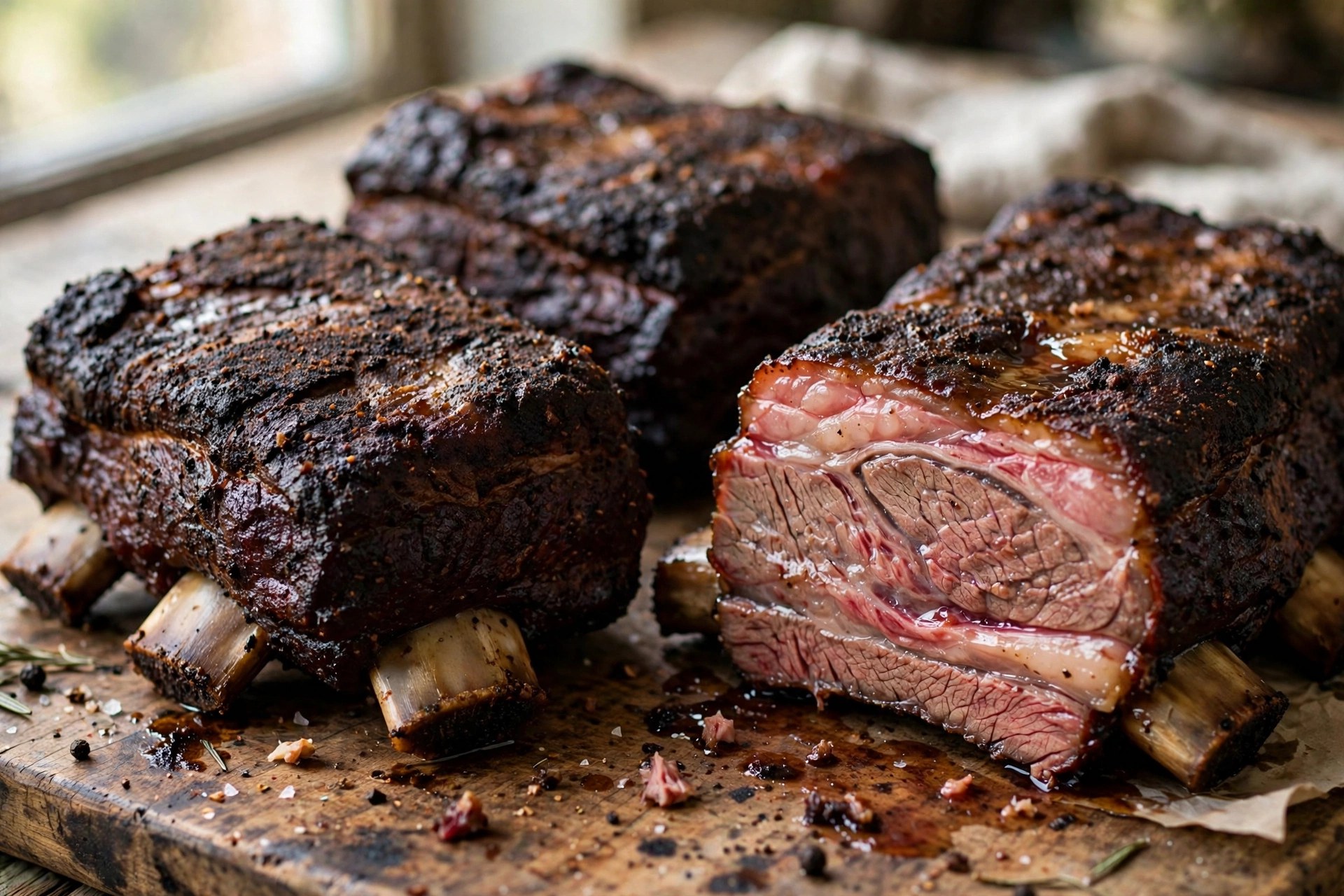
Beef plate ribs (“dino ribs”) — 3 bones. These are the monsters: plate short ribs from ribs 6, 7, and 8, sold as a 3-bone plate weighing 4–6 pounds. One bone can carry a pound of meat. Count them by the bone, not by the rack — a single dino bone is a serious serving.
Beef chuck short ribs — usually 4 bones. USDA specs allow 2–5 ribs in short-rib items, so check the label. Chuck ribs are meatier than back ribs but smaller than plate ribs.
Half Racks, Cheater Racks, and Labels That Aren’t Racks
A few more terms you’ll meet at the store and on menus:
- Half rack: Usually 5–7 bones — roughly half a pork rack, and a standard restaurant portion. Six bones is the most common menu serving.
- Cheater rack: Pitmaster slang for a pork rack with fewer than 10 bones. Not an official term, but useful to know if a rack looks suspiciously short.
- Rib tips: The strips trimmed off spare ribs when making St. Louis style. Pieces, not a rack — plan them by weight.
- Riblets: Small cut pieces. Not individual full rib bones, and not a rack.
- Country-style ribs: Not rib-cage ribs at all — they’re cut from where the loin and shoulder meet. Plan by piece or by weight (about 1/2 lb per person), never by “rack.”
- Flanken-style ribs: Beef short ribs cut thin across the bones. A cutting style, not a rack.
Before you buy, check the package for the cut name first and the weight second. “Ribs” alone could mean baby backs, spares, St. Louis, beef back ribs, short ribs, or cut pieces — and as the comparison in What’s in the Pan’s rib cut guide shows, the three pork cuts differ in bone shape, fat content, and cook time even when the bone counts overlap.
How Many Racks to Buy for a Crowd
Bone counts tell you what you’re holding. Servings tell you how much to buy. For pork ribs, plan on 3–4 bones per person as a main dish with sides:
| Cut | Bones per person | Racks for 10 adults | Racks for 20 adults |
|---|---|---|---|
| Baby backs | 4–5 bones | 4–5 racks | 8–10 racks |
| Spare ribs | 3–4 bones | 3–4 racks | 6–8 racks |
| St. Louis style | 3–4 bones | 3–4 racks | 6–8 racks |
The logic: a 12-bone rack of baby backs serves about 3 people at 4 bones each, while a 12-bone rack of spares — meatier bones, more fat — comfortably serves 3–4. Round up when ribs are the only meat, when your crowd skews toward big eaters, or when you want leftovers. (Leftover ribs reheat well and beat running short every time.)
One more practical limit: your smoker. A standard 22-inch kettle or a typical offset fits 2–3 racks flat; rib racks (the vertical wire holders) double that. For 20+ guests, most backyard cooks end up running two batches or borrowing a second smoker — so count your grate space, not just your guest list, before you buy.
For deeper planning, see our comparisons of beef ribs vs pork ribs and wet ribs vs dry ribs, and if you’re deciding doneness by feel rather than gadgets, here’s how to tell when ribs are done without a thermometer.
Frequently Asked Questions
How many ribs are in a full rack of baby back ribs?
10 to 13 bones. USDA minimum is 8, but store-bought racks almost always have 10–13. If your rack looks short, count the bone ends through the package before assuming it’s a full rack.
How many ribs are in a rack of spare ribs?
11 to 13 bones at most stores, up to 15 in a fully intact untrimmed rack (7 true ribs, ~6 false ribs, 1–2 floating ribs). USDA requires at least 11 for the cut to be sold as spare ribs.
Is a rack of ribs always 12 bones?
No — 12 is a common middle ground for pork racks, not a rule. Baby backs and spares usually land between 10 and 13, St. Louis ribs can run 12–15, and beef ribs use completely different numbers (7 back ribs, 3 dino plate ribs).
How many people does a full rack of ribs feed?
A rack of baby backs (1.5–2 lb) feeds 1–2 adults; a rack of spare or St. Louis ribs (2.5–3.5 lb) feeds 2–3 adults. Plan on 3–4 bones per person when ribs are the main dish with sides.
What’s the difference between a rack and a slab of ribs?
Nothing meaningful — “slab” is just BBQ slang for a full rack. A “half rack” is roughly half (5–7 bones), and “rib tips” or “country-style ribs” aren’t racks at all, so plan those by weight instead.
Your next step: Next time you buy ribs, read the cut name on the label first, count the bone ends through the package second — and buy one more rack than your math says you need. For holding ribs warm for a party without overcooking them, that’s the guide to bookmark alongside this one.
[…] spares are meatier and take sauce beautifully. If you’re feeding a crowd, our guide to how many ribs are in a full rack helps with the […]