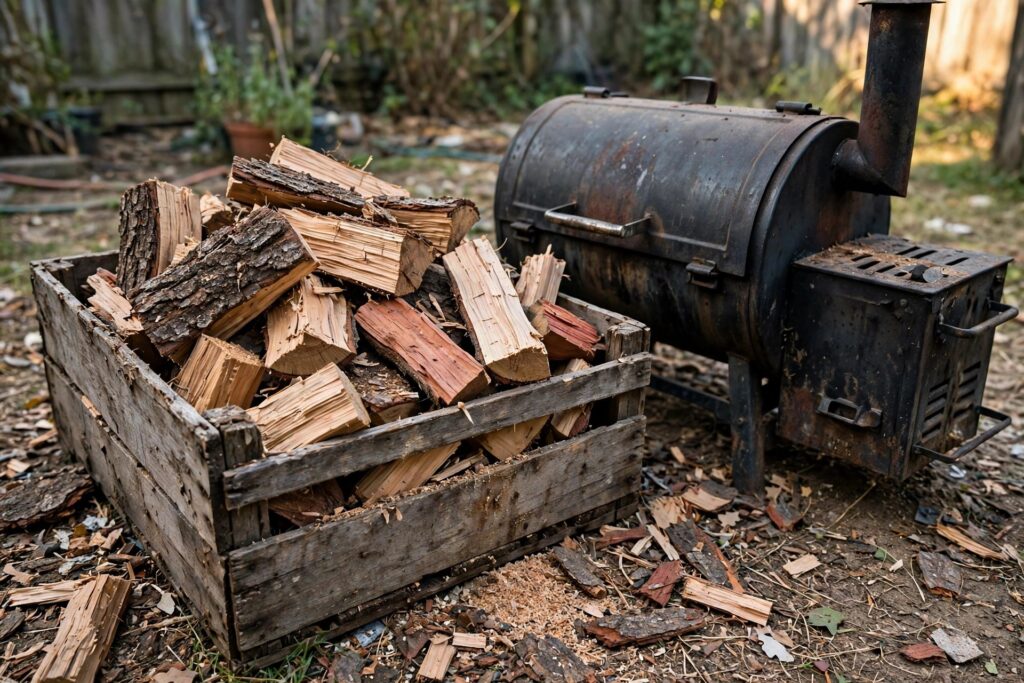
Walk into any barbecue supply aisle and the wall of smoking wood hits you like a paint chart: hickory, mesquite, apple, cherry, oak, pecan, maple, alder, and half a dozen trendy blends with pitmaster faces on the bags. Standing there, bag in hand, wondering what any of it actually does to a brisket — that’s the exact moment this guide is for.
The Smoke Is the Seasoning You Can’t Take Back
Think about it this way: you can scrape off a rub that was too heavy. You can serve sauce on the side when somebody went too far with it. But once smoke settles into meat, it’s in there permanently. Smoke is the only seasoning on the entire cook that can’t be undone, which is why picking the wood deserves more thought than most people give it — and why picking the wrong wood can ruin an otherwise perfect brisket before you’ve done a single thing wrong.
The good news is that the whole subject is simpler than the bag wall makes it look. Smoke flavor lives on a spectrum from delicate to punishing, and the only real rule is to match the wood’s strength to the meat’s personality. Delicate meats want delicate smoke. Big, fatty, stubborn cuts can stand up to something with a backbone. Everything else is detail.
Hickory: The Bacon-Flavored Workhorse
If American barbecue has a default setting, it’s hickory. Strong, savory, and unmistakably bacon-forward, it’s the wood behind the classic barbecue flavor most of us grew up on — the one that says “smoke” the loudest. Pork is its natural partner: pork shoulder, spare ribs, anything fatty enough to absorb hickory’s punch without getting buried by it.
Hickory’s strength is also its warning label. Run it heavy and long on delicate meat and the smoke stops tasting like barbecue and starts tasting like an ashtray. It’s a wonderful primary wood for pork and beef ribs, and plenty of pitmasters run it on brisket, but it does best when you respect it: steady, moderate smoke, not a billowing cloud. Hickory pellets and chunks are everywhere, which makes it the easiest wood to cook with for years without running out.
Post Oak: The Texas Standard
Central Texas built its barbecue reputation on post oak, and there’s a reason it became the standard for brisket. Oak burns steady and long with a medium-strength smoke that’s clean rather than flashy — it lets the beef lead and keeps the supporting role. For a twelve-plus-hour brisket cook, that restraint matters more than intensity. We’ve run post oak on every brisket in our full brisket walkthrough for exactly that reason.
Oak is arguably the most versatile wood in the pile. It’s strong enough for beef plate ribs — the true dino bones we smoked not long ago rode on oak the whole cook — and gentle enough not to wreck pork or poultry when that’s what’s on the menu. If you buy one wood and cook a little of everything, this is the bag to grab.
Apple and Cherry: The Fruitwoods
Apple smoke is the mildest thing on this list, sweet and fruity in a gentle way that never steps on the meat. It’s the wood that makes chicken taste like the best version of chicken, and it treats pork loin and ham kindly too. Apple is also the pellet-grill default for poultry for a reason: it burns clean at low temperatures without a trace of bitterness.
Cherry sits right next to apple on the strength scale, with one extra trick: it paints bark a deep, gorgeous mahogany color that makes ribs look like they came off a competition table. Most serious cooks blend cherry rather than running it straight — a handful of cherry chunks riding on top of a hickory fire is the classic rib combination, sweetness and color over a smoky backbone.
Pecan: The Diplomat
Pecan is what you reach for when you want hickory’s richness without its volume. Sweeter and milder than hickory, stronger than any fruitwood, it lands in the sweet spot where it’s genuinely hard to cook something bad. Pork, poultry, beef, even fish — pecan treats all of them well. If hickory is the loud friend at the cookout, pecan is the one who gets along with everybody.
For beginners this matters more than any pairing chart. Pecan is the most forgiving wood on the shelf, the one where the difference between a little and a lot won’t ruin dinner. Plenty of backyard cooks buy a bag of pecan as their training wood and keep buying it forever.
Mesquite: Powerful, and Easy to Regret
Mesquite is the wood people reach for when they want to be Texas about things, and then regret when the brisket comes out tasting like a tire fire. It’s the strongest wood on this list by a wide margin: hot-burning, earthy, almost piney, and quick to turn bitter on a long cook. The Texas mesquite tradition is a direct-grill tradition — carne asada over coals, steaks seared fast, fajitas — not a twelve-hour smoker tradition. Mexican pitmasters using it for a thirty-minute cook are doing something very different from you putting it on a brisket at midnight.
None of which means mesquite has no place. For cooks under a few hours — grilled steaks, chicken pieces, vegetables — it delivers a bold, distinctive flavor nothing else matches. And a few pitmasters mix a small amount into an oak fire for extra intensity on beef. The operative word is small. Mesquite as an accent is seasoning; mesquite as the whole cook is a dare.
Maple and Alder: The Gentle Ones
Maple is the quietest smoke in common use: mild, a touch sweet, with a faint caramel note that flatters poultry, ham, and cheese. It won’t leave any signature on beef, which is its real limitation — smoke a brisket on maple and you’ll wonder where the smoke went. But for a turkey or a batch of smoked cheese, gentleness is the whole point.
Alder is the Pacific Northwest’s answer to the same question: the traditional wood for salmon and trout, delicate and almost floral, made for oily fish that would be flattened by anything stronger. It’s also kind to chicken and vegetables. If you smoke fish more than once a year, keep a bag around. If you don’t, the fruitwoods cover the same ground.
Two Woods Is Plenty: The Blending Rule
Here’s where a lot of cooks go wrong: they start collecting bags and end up running four or five woods at once, and the flavor turns to mud. The fix is simple. Pick a primary wood — the one doing the real work — and add at most one accent. Seventy percent hickory with thirty percent cherry gives you classic ribs with better color. Oak with a handful of pecan gives you depth without covering up the beef. Two voices harmonize; five just argue.
The Rules That Matter More Than the Pairings
Honestly, the pairings above are the easy part. The mistakes that actually wreck cooks live one level down, and they’re all about how the wood burns rather than which bag you grabbed.
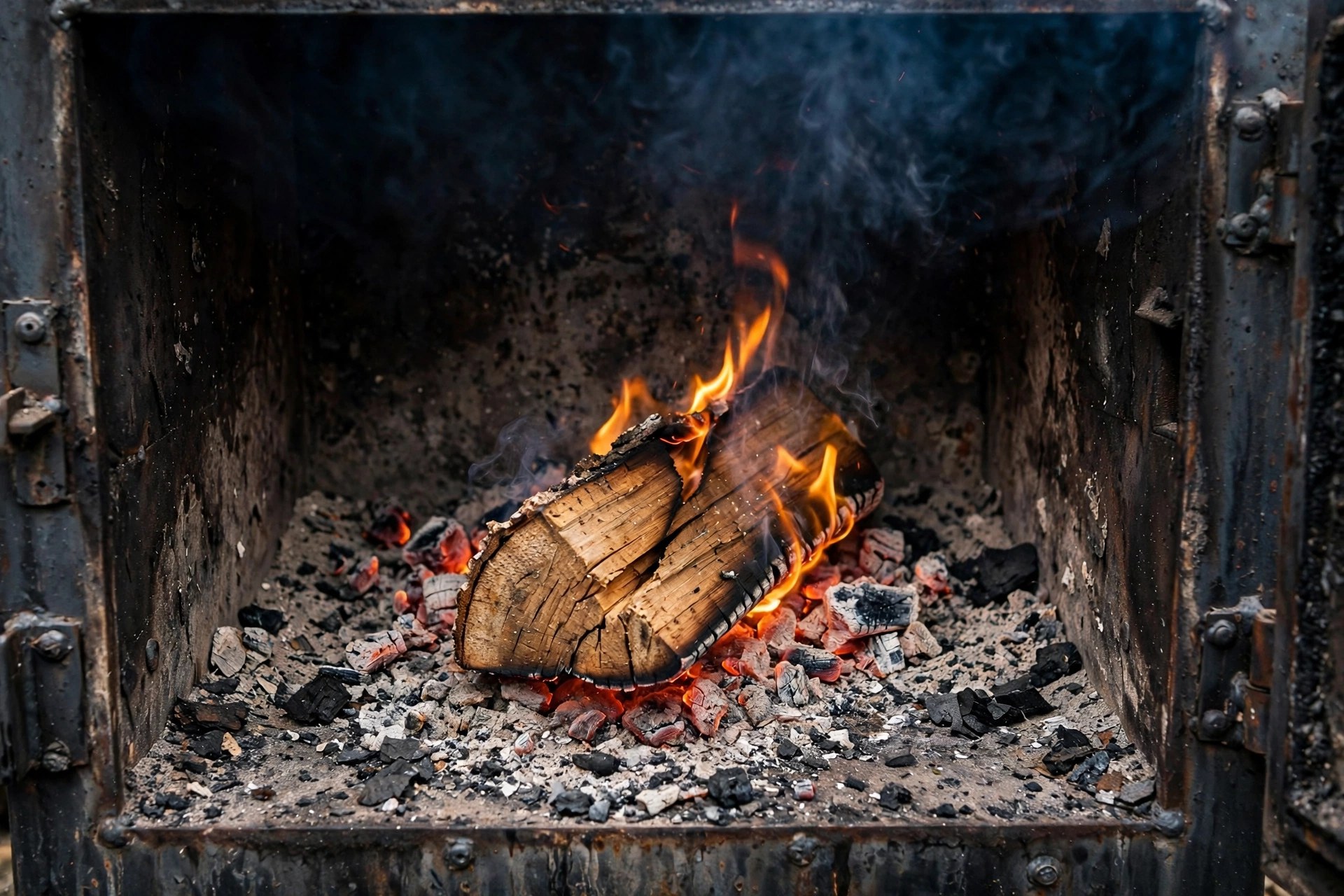
Burn it dry, for one. Properly seasoned wood — roughly 12 to 20 percent moisture — burns clean with a thin, bluish smoke you can barely see. Green or wet wood billows thick white smoke loaded with creosote, and that bitterness is what people usually blame on “too much smoke” when the real problem was wet wood. If you’re cutting your own, season splits six to twelve months before they go near a firebox.
Stop soaking your chips while you’re at it. Wet wood doesn’t make smoke — it makes steam, and steam carries the same bitter compounds as dirty smoke. If you cook with chips, run them dry in a smoker box or foil pouch, and step up to chunks when you can; chunks burn slower and cleaner.
And use less wood than you think. Most of a meat’s smoke flavor lands in the first two or three hours, while the surface is still cool and moist. Once bark sets, the meat is taking on very little additional smoke. A cook that stays in thin, clean smoke for the whole ride will always beat one that started with a bonfire and spent the back half apologizing for it.
If You Only Buy Three Bags
After all of that, here’s the short version for the cook standing in the aisle right now. Buy post oak for beef and long cooks, hickory for pork and ribs, and apple for poultry and fish. That covers nearly everything that will ever hit your grate. Add cherry when you want prettier ribs, pecan when you want to experiment safely, and mesquite only when you know exactly why you’re reaching for it. The woodpile doesn’t need to be complicated. The fire just needs to be clean.
[…] recipe does. If you want to think about fuel the way Raichlen’s country profiles do, our own smoking wood and meat pairing guide is a good domestic starting point for the same question: what goes under the food, and […]
[…] that plays well with cream cheese, where a heavy dose of mesquite can bulldoze the whole bite. Our smoking wood and meat pairing guide walks through why that matters, and which woods tend to overpower smaller cuts and appetizers. If […]
[…] like chicken when it comes off. If you want a deeper dive into which woods suit which meats, our smoking wood and meat pairing guide walks through the whole […]
[…] cook to ribs and pulled pork. If you want a refresher on which woods pair with those cooks, our smoking wood and meat pairing guide has you […]
[…] the way post oak smoke should be when the fire is managed well. If you have ever wondered why the choice of smoking wood matters so much, this is the demonstration: the wood is not a seasoning sprinkled on top, it is woven through the […]