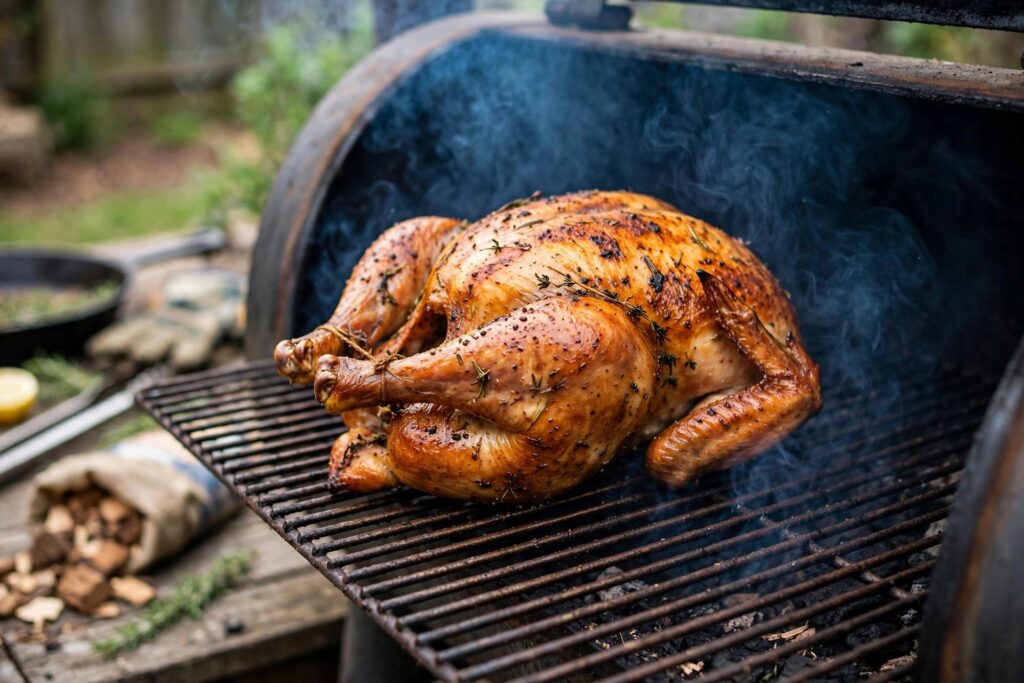
Smoked chicken should be the easiest win on the smoker. It is cheaper than brisket, faster than pork shoulder, and everybody likes it. Yet somehow it is also the cook most people get wrong — rubbery skin, meat that tastes like an ashtray, or a bird that comes off dry despite hours of babysitting. The fixes are not complicated. They are just different from what most beginners assume, and they all come down to five decisions you make before and during the cook.
1. Dry the Skin the Day Before, Not the Morning Of
Rubbery skin is the number one complaint about smoked chicken, and it is almost never the smoker’s fault. Skin turns rubbery when it goes into the cooker wet, because moisture has to steam off before fat can render and the skin can crisp. A quick pat with paper towels helps, but it is not enough on its own.
The move that changes everything is a dry brine: salt the bird generously, all over and under the skin where you can reach, then leave it uncovered on a rack in the fridge overnight. Twelve to twenty-four hours is the sweet spot. The salt seasons the meat all the way through, and the dry fridge air does the real work — it dries the skin out so it can actually crisp in the smoker instead of steaming. Some cooks add a teaspoon of baking powder to the salt, which raises the skin’s pH and helps it brown; it is optional, but it does make a visible difference. What you should skip is a wet brine if crispy skin is your goal. A bird that spent the night swimming in salt water starts the cook waterlogged, and no amount of heat at the end fully undoes that.
2. Cook Hotter Than You Think
Low and slow is gospel for brisket and pork shoulder, because those cuts need hours for tough connective tissue to break down. Chicken has no such problem. It is already tender. Cooking it at 225 degrees for four or five hours does not make it more tender — it mostly gives the skin more time to go rubbery and the meat more time to pick up bitter, oversmoked flavor.
Most experienced pitmasters smoke chicken at 275 to 325 degrees. At that range a whole bird finishes in roughly two to three hours depending on size, the skin renders properly, and the smoke flavor stays clean rather than acrid. If your smoker runs cool, you can still finish hot: move the bird to a hotter grill or crank the cooker up for the last stretch of the cook. Either way, the principle is the same — chicken wants heat, not patience. Save the all-day smokes for the cuts that actually need them.
3. Pick a Mild Wood and Let the Chicken Taste Like Chicken
Chicken is a sponge for smoke, and that is a blessing and a curse. A wood that would be perfect on a pork shoulder can bulldoze a whole bird. Mesquite is the classic mistake here — it is bold, earthy, and wonderful on beef, but on chicken it turns bitter fast, especially over a long cook.
Fruit woods are the safe and genuinely best choice: apple and cherry give a gentle, slightly sweet smoke that complements poultry instead of burying it. Pecan sits in the middle — a little nuttier and richer, still well behaved. Hickory works if you use it sparingly, mixed with a fruit wood rather than on its own. The point is restraint. You want the smoke to be a seasoning, not the main event, and you want the meat to still taste like chicken when it comes off. If you want a deeper dive into which woods suit which meats, our smoking wood and meat pairing guide walks through the whole lineup.
4. Season Under the Skin, Not Just On It
Rub sitting on top of the skin flavors the skin. That is fine as far as it goes, but the skin is a barrier, and most of that seasoning never reaches the meat — especially the breast, which is the part most likely to taste bland. The fix takes about a minute: work your fingers gently under the skin over the breast and thighs to loosen it, then push a seasoned butter or a thin layer of oil mixed with your rub right onto the meat.
This does two jobs at once. The seasoning actually touches the meat, so the flavor goes where it belongs, and the fat in the butter or oil bastes the breast from the inside as it cooks, which is real insurance against dryness. Keep the rub itself balanced — salt, black pepper, garlic, paprika, a little sugar if you like a touch of sweetness — and go easy on the sugar if you are cooking hot, since sugar burns before the bird finishes. Then season the outside too, because the skin deserves flavor as well. Just do not expect the outside rub alone to carry the whole bird.
5. Cook to Temperature, Then Let It Rest
Time estimates are a starting point, not a finish line. Every bird is a different size, every smoker runs a little differently, and the only thing that actually tells you the chicken is done is a thermometer in the thickest part of the meat. The USDA’s safe minimum for poultry is 165 degrees Fahrenheit, and the breast should reach at least that. Thighs are more forgiving and taste better a little hotter, around 175 degrees, because their extra fat and connective tissue need the heat to relax.
Probe the thickest part of the breast and the thickest part of the thigh, away from bone, which reads hot and lies to you. If you are still guessing with a dial thermometer or poking and hoping, our BBQ thermometers guide explains which types are actually worth owning. Once the bird hits its numbers, pull it and leave it alone for 10 to 15 minutes before carving. Resting lets the juices settle back into the meat instead of running out onto the cutting board, and the internal temperature will coast up a few degrees while it sits. Cutting into it straight off the smoker undoes a good chunk of everything you just did right.
None of this requires new equipment or exotic ingredients. Dry the skin overnight, cook hotter than brisket logic tells you to, keep the smoke mild, season under the skin, and trust a thermometer over the clock. Get those five things right and smoked chicken stops being the cook you apologize for and becomes the one people ask about.
Leave a Reply