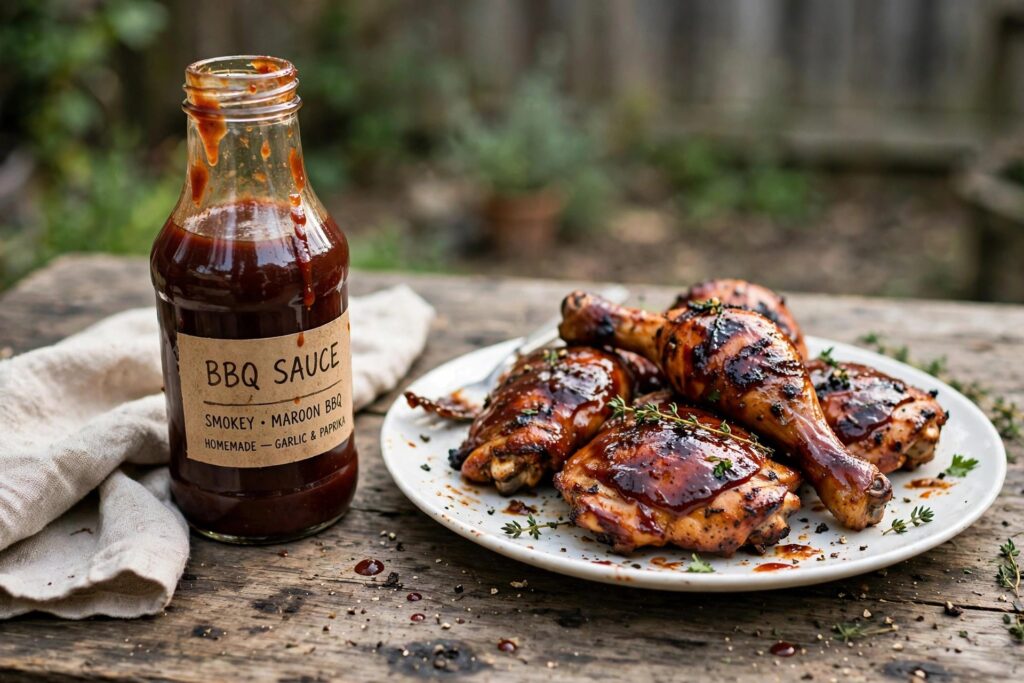
Every barbecue region has its idea of what sauce should be, and most bottled sauces pick a side. Kansas City sweet, Carolina vinegar, Memphis tangy, Texas peppery — you know the lineup. Draper’s BBQ Smokin’ Sauce refuses to pick. Its maker, Shane Draper, famously described it as none of those styles: “It’s DBQ style.” That is either a bold claim or a dodge, depending on how the sauce tastes. Having spent time with a bottle, here is the honest verdict: it earns the claim.
The Story Behind the Bottle
Shane Draper did not come to sauce-making from a marketing department. His grandfather owned Draper’s Pit Barbecue in Bardwell, Kentucky, and though the restaurant eventually closed, the family’s barbecue tradition passed down through Shane’s father, Mike. After time away from Kentucky, Shane returned home, learned the ropes from his dad, and set out to build a sauce that could stand up to the big names on the shelf. It did more than that on the competition circuit — the sauce took 8th place in the tomato-based sauce category at Memphis in May, one of the most competitive sauce contests in the country, beating entries from far bigger operations.
That background matters because it shows up in the bottle. This is not a sauce engineered by committee to hit a focus-group flavor profile. It is a family recipe scaled up, made by a small bottler who built his reputation one bottle and one festival at a time. Small sauce makers live or die on repeat orders, and that tends to keep them honest in a way the big grocery-aisle brands are not.
First Impressions: Aroma and Appearance
Out of the bottle, Smokin’ Sauce is a smooth, deep maroon, running just slightly thicker than medium. Tip a spoon and it does not rush off — an initial dollop releases, then the rest follows in a slow, steady drizzle, with visible specks of black pepper scattered through it. It is thick enough to cling to meat without sliding off, but not so thick that it glops. That middle ground is exactly where a good all-purpose sauce should sit, and it is harder to hit than it looks.
The aroma is robust without being heavy. Molasses leads, as it should, with mustard, tomato, and Worcestershire sauce close behind that sweetness. Vinegar is there but faint, and there is a whisper of smoke in the background rather than a campfire blast. Nothing about the smell warns you off, and nothing about it is shy either. It smells like a sauce that knows what it is doing.
Tasting Notes: Straight From the Jar
The taste is bolder than the aroma suggests, and it unfolds in stages. First comes a deep, sweet molasses that overtakes the ketchup base — this is unmistakably a sweet-leaning sauce, and if you do not like sweet barbecue sauce, this one will not convert you. As it settles, the mustard and Worcestershire start making themselves known, along with garlic, onion, and a light herbal note from thyme and basil. Then the vinegar kicks in and the sauce turns briefly tart, before finishing with a gentle kick of heat and a touch of smoke.
The ingredient list explains that layered flavor: ketchup, molasses, honey, brown sugar, mustard, vinegar, Worcestershire sauce, chili powder, dried onion and garlic, cinnamon, nutmeg, basil, thyme, and smoke flavor. The cinnamon and nutmeg are the quiet surprise — they do not announce themselves as spice-cake notes, but they round out the sweetness and give the sauce a warmth that separates it from the one-note sugary sauces crowding the shelves. The heat is real but modest, a warming finish rather than a challenge. It builds slowly and fades cleanly, which makes it easy to keep eating.
Cooked On: Where It Really Proves Itself
Some sauces taste great from a spoon and fall apart on the grill — they burn, turn bitter, or slide off the meat. Smokin’ Sauce is better cooked than raw, which is the highest compliment a barbecue sauce can get. Brushed onto chicken over direct heat, it coats well and caramelizes to just the right point, leaving crispy, slightly charred bits at the edges without turning acrid. The molasses sweetness mellows under heat and finds a better balance with the other ingredients, so the cooked flavor is rounder and more adaptable than the out-of-the-jar taste.
That matters for how you use it. As a finishing glaze in the last stretch of a cook — brushed on once the meat is nearly done, then given a few minutes over the heat — it is excellent. The sugars need that short window: put it on too early and any sweet sauce will scorch. Used this way, it works across the board, from the smoked chicken on your weekend cook to ribs and pulled pork. If you want a refresher on which woods pair with those cooks, our smoking wood and meat pairing guide has you covered.
Pairings and the One Caveat
As a table sauce, Smokin’ Sauce is at its best with meats that can stand up to it: pulled pork, brisket, ribs, grilled chicken, and burgers all hold their own against its heavy, sweet flavor. On more delicate things — grilled fish, plain grilled vegetables — it can overpower, and a lighter hand or a thinned-out version works better there. Cooking with it tames the sweetness a bit, so if you find it strong from the jar, try it as a glaze before deciding.
The one honest caveat is availability. This review reflects the sauce as reviewed — a small-batch product from an independent maker, not a grocery-aisle staple — and we could not verify current stock or pricing at the time of writing, so we are not going to pretend it is sitting on a shelf near you. Small bottlers come and go, and their distribution changes. If you track a bottle down, it is worth the effort; just check the maker’s own site before assuming it is in stock.
The Verdict
Draper’s BBQ Smokin’ Sauce is a genuinely good all-purpose sauce, and the reason it stands out is balance. The molasses sweetness is the headline, but it is not the whole story — mustard, Worcestershire, vinegar, herbs, and a warm spice backbone all get their turn, and the finish brings heat and smoke without overstaying. It is sweet enough for the sweet-sauce crowd, complex enough for people who usually find sweet sauces boring, and it performs better on the grill than it does from the spoon, which is exactly the right priority for a barbecue sauce.
Is it the best bottled sauce ever made? That is a bar fight, not a review. But it is one of the best small-batch sauces to come out of the competition circuit, it refuses to be pigeonholed into a regional style, and it backs up its maker’s “DBQ style” boast with a bottle that holds up on chicken, pork, and beef alike. If you like your sauce sweet with a kick, this one belongs in the fridge door — right up there with the dozen other bottles you will inevitably accumulate once you start caring about sauce.
Leave a Reply