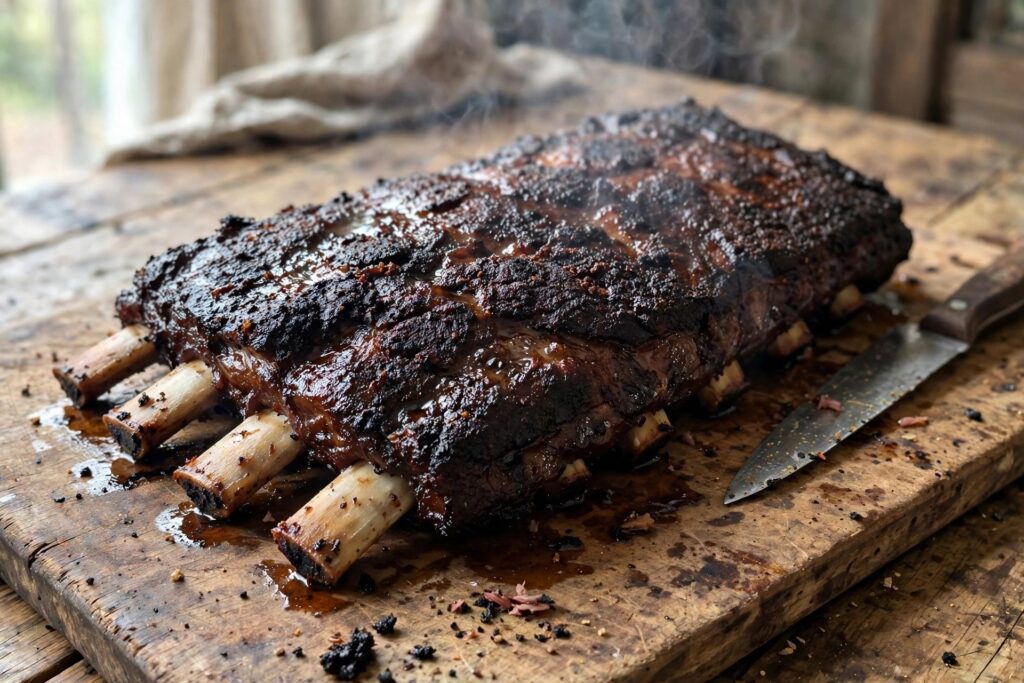
The first time someone sets a full rack of beef plate ribs on your cutting board, you understand the nickname immediately. Three bones, each one thick as your forearm, carrying a slab of meat that looks like it belonged to something that roamed with the dinosaurs. Then you taste it — beef so rich it eats like brisket on a handle — and you wonder why you’d ever cooked anything else. This is the full guide: what dino bones actually are, how to buy them without getting burned, and how to smoke them into something worth bragging about.
So What Are “Dino Bones,” Really?
Not every beef rib earns the name. The true dino bones are plate ribs — the 3-bone (sometimes 4-bone) rack cut from the short plate, which sits on the lower belly side of the cow, ribs six through eight. A single plate rack weighs in around six to eight pounds, with a thick cap of meat and fat over each bone. That’s the cut that looks prehistoric, because it nearly is: big bones, big meat, big flavor.
What gets confusing is that two other rib cuts sit on the same animal, and both get sold as “beef ribs.” Back ribs come from the upper rib primal — the same stretch that gives you the ribeye. Once the ribeye muscle is trimmed off for steaks, what’s left is a rack of long, clean bones with relatively thin meat stretched between them. They look impressive on the shelf and they cook faster, but they’re leaner and they dry out if you treat them like plate ribs. Then there are chuck ribs, cut from ribs two through five further up the shoulder — meatier than back ribs, but smaller bones and a different shape.
All three are worth eating. But when a pitmaster says dino bones, they mean plate ribs. If you ask a butcher for “plate ribs, NAMP 123A” you’ll get exactly the right thing — and using the butcher’s language marks you as someone who can’t be sold a rack of back ribs at plate-rib prices.
Picking the Rack
Good dino bones start at the counter, and there are a few things to look for. You want a three-bone plate rack with even thickness across the whole thing — one thin end and one thick end means one end finishes an hour before the other, and there’s no fixing that mid-cook. The fat cap should be thick and even, white to creamy in color. Press the meat: it should feel firm and give back, not mushy.
Watch for “shiners” — spots where the fat and meat have been trimmed so aggressively the bone shines through. A little trimming is normal; a bald patch is where the rack will dry out no matter what you do. On grade, Choice is the sweet spot for most backyard budgets, the same as brisket — enough marbling to stay forgiving through a long smoke without paying the Prime premium for fat that mostly renders out anyway. Plan on roughly half a pound to three-quarters of a pound per person; one bone feeds two normal appetites, which means a single three-bone rack handles six hungry people.
Trim It Cold, Season Simply
Do your trimming straight out of the refrigerator. Cold fat cuts cleanly; warm fat smears, gums up the knife, and leaves ragged edges that catch smoke unevenly. You’re shaping the rack for a long, even ride: square off the thin, papery flaps that would incinerate, and take the fat cap down to about a quarter inch. That quarter inch is a shield and a baste — it renders slowly over the cook and keeps the meat underneath moist. Dig out any hard, waxy chunks of deckle-type fat; that stuff never renders, no matter how long it rides, and it eats like candle wax.
Here’s a place plate ribs differ from pork ribs: leave the membrane on the bone side alone. On pork spares, everyone peels the membrane. On beef plate ribs, the membrane holds the rack together through a long cook, and there’s enough fat and connective tissue involved that it doesn’t turn into leather. Plenty of competition cooks leave it. You can too.
For seasoning, steal from Central Texas and don’t look back: equal parts coarse kosher salt and coarse black pepper, and that’s the whole rub. If you can find 16-mesh butcher-grind pepper, use it — those big flakes are what build the dark, craggy bark that makes plate ribs famous. A thin smear of yellow mustard or hot sauce underneath helps the rub cling; you won’t taste it after six hours of smoke. Season heavily on every surface. This is a huge, dense cut, and timid seasoning simply disappears into it.
The Smoke: Low, Slow, and Patient
Run your smoker at 250 to 275°F with clean, thin smoke — oak is the classic, hickory and pecan both do fine work — and let the cooker fully stabilize before the ribs go on. Place the rack bone-side down and close the lid. Then leave it alone. The first few hours are when the bark forms, and every lid lift costs you heat and smoke exactly when you need them most.
After three or four hours, when the ribs have real color, you can start spritzing — beef broth, or broth cut with a little apple cider vinegar, once an hour at most, just enough to keep the edges from drying. Somewhere around 165°F internal, the bark will be dark and set: press it with a finger and it doesn’t smear. That’s when you wrap, tight in pink butcher paper. Paper breathes, so it pushes through the stall faster than foil while keeping the bark you spent all morning building. Foil works in a pinch but it braises the meat and softens that bark toward pot roast.
Now comes the part beginners get wrong: the finish line is not a number. Start probing around 195°F in the thickest part of the meat, and pull the ribs when the probe slides in with almost no resistance — like pushing into warm butter. Most plate ribs land somewhere between 200 and 205°F, but two racks from the same case can finish degrees apart because collagen breaks down on its own schedule. Trust the feel. The whole cook runs about six to eight hours for a typical rack, and if that sounds a lot like smoking a brisket, it should — the two cuts are cousins, and everything you know about a long brisket cook transfers straight over.
Rest, Slice, and Serve
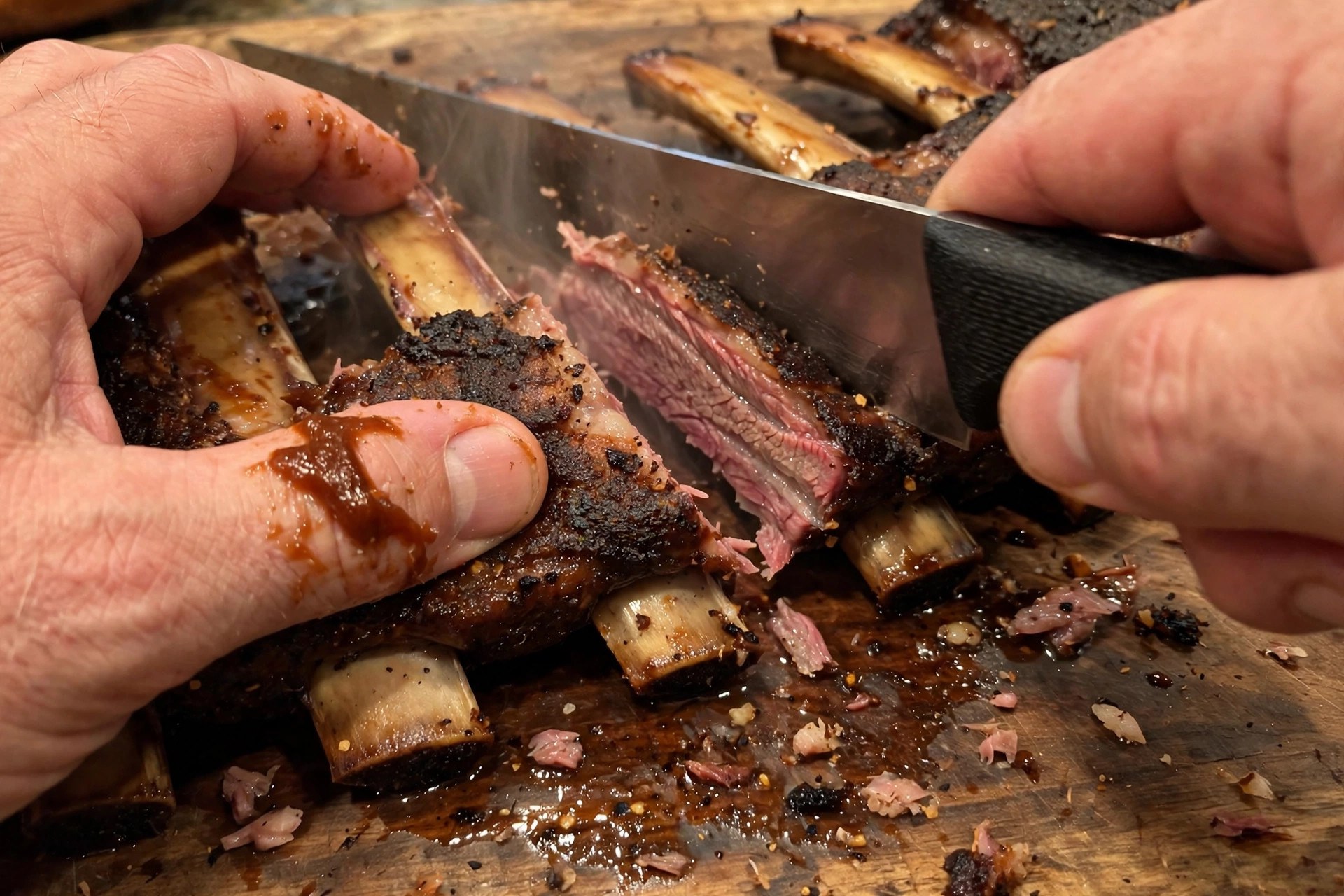
The step people skip and the step that matters most: rest the ribs. Keep them wrapped, set them in a dry cooler with old towels packed around to fill the air gaps, and give them a minimum of one hour. Two is better. The juices redistribute, the collagen finishes converting to gelatin, and the meat relaxes into something that holds together when you slice it instead of bleeding out across the board. A cooler buys you three or four hours of holding time, so the rest doubles as schedule insurance — if the ribs finish early, they wait for you, not the other way around.
To serve, slice straight down between the bones and hand each person a bone. That’s the whole presentation, and it needs nothing else — though a cold beer and a stack of napkins are strongly advised. One bone is a meal for two; an ambitious eater might take one solo. Eat them hot, and eat them slow, because a proper plate rib is one of the richest things that comes off a smoker.
Dino bones aren’t an everyday cook. They’re a commitment — the cost of the rack, the all-day smoke, the patience through the stall. But that’s exactly why they’re worth it. The best barbecue was never about convenience. It’s about taking the biggest, most intimidating cut at the counter and turning it into the thing everyone talks about for weeks. Start the smoker early, trust the probe over the clock, and don’t you dare skip the rest. The dinosaurs would approve.
[…] ever wondered how to size up a plate of beef ribs before you cook them yourself, our walkthrough of smoking dino bones — BBQ beef plate ribs covers the cut, the bark, and the cook. And if David’s smoker tour piqued your curiosity, the […]