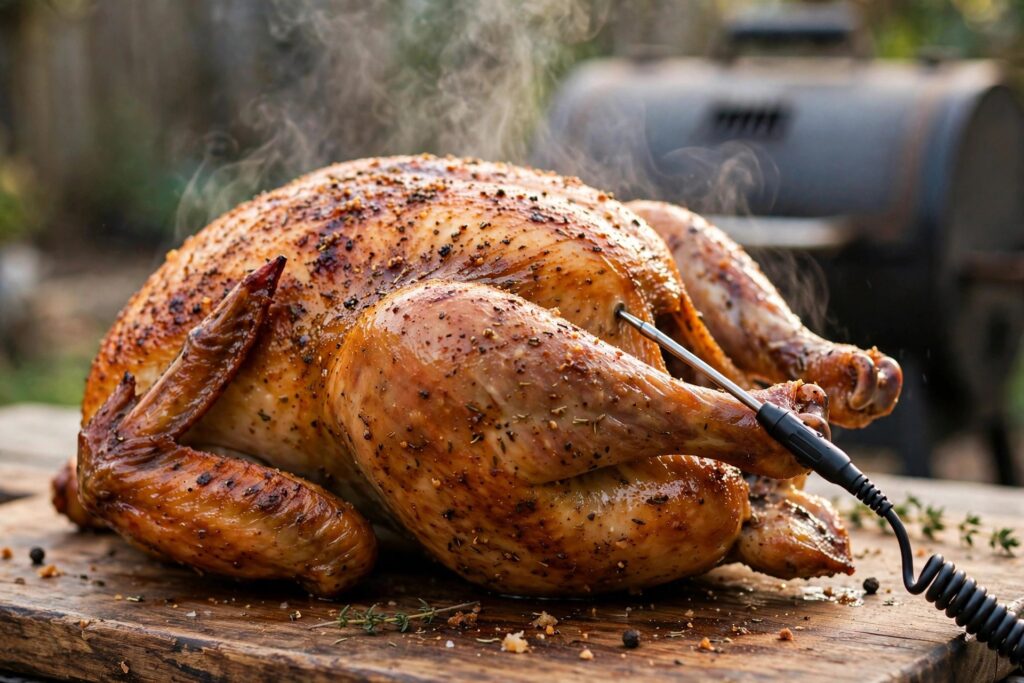
How can you tell when smoked chicken is fully cooked? Check the internal temperature with a thermometer: the thickest part of the breast must read 165°F (74°C), and thighs and legs eat better at 175–185°F. The meat should look opaque with clear juices, and the leg should wiggle freely at the joint. Temperature is the verdict — everything else is supporting evidence.
Smoked chicken is trickier than it looks. The smoke paints the outside a gorgeous mahogany color long before the inside is done, which fools a lot of first-timers into pulling the bird early. At the same time, chicken is the one meat where undercooking isn’t just a texture problem — salmonella and campylobacter are real risks. So you need to be exact, and you need to know that “done” means two different things depending on which part of the bird you’re talking about.
The Two Numbers: 165°F for Safety, Higher for Texture
The USDA draws one hard line: all poultry must reach 165°F internal to be safe to eat. No rest-time loophole like pork, no exceptions for thighs versus breasts. 165°F is where the harmful bacteria die, period.
But here’s what the USDA chart doesn’t tell you: chicken cooked to exactly 165°F everywhere is safe, but the dark meat won’t be at its best. Thighs and drumsticks are full of connective tissue and fat, and they turn genuinely tender and succulent around 175–185°F — the collagen melts, the meat pulls cleanly from the bone, and the texture goes from “fine” to “fight-over-the-last-piece.” Breast meat is the opposite: it’s lean, and every degree past 165°F squeezes out moisture. Past 170°F in the breast, you’re heading toward chalky.
So the pitmaster’s real target on a whole bird is a split decision: pull when the breast hits 160–162°F and let carryover cooking carry it to 165°F during the rest, while the thighs coast into the 175–180°F zone on their own. The breast and thighs cook at different rates anyway — dark meat is denser and sits closer to the bone — so this split usually happens naturally if you position the bird right.
How to Temp Smoked Chicken the Right Way
A leave-in probe or an instant-read thermometer is mandatory gear here. If you’re smoking regularly, a wireless meat thermometer pays for itself the first time you catch a bird coasting past 165°F in the breast while you were inside watching the game. Placement matters as much as the tool:
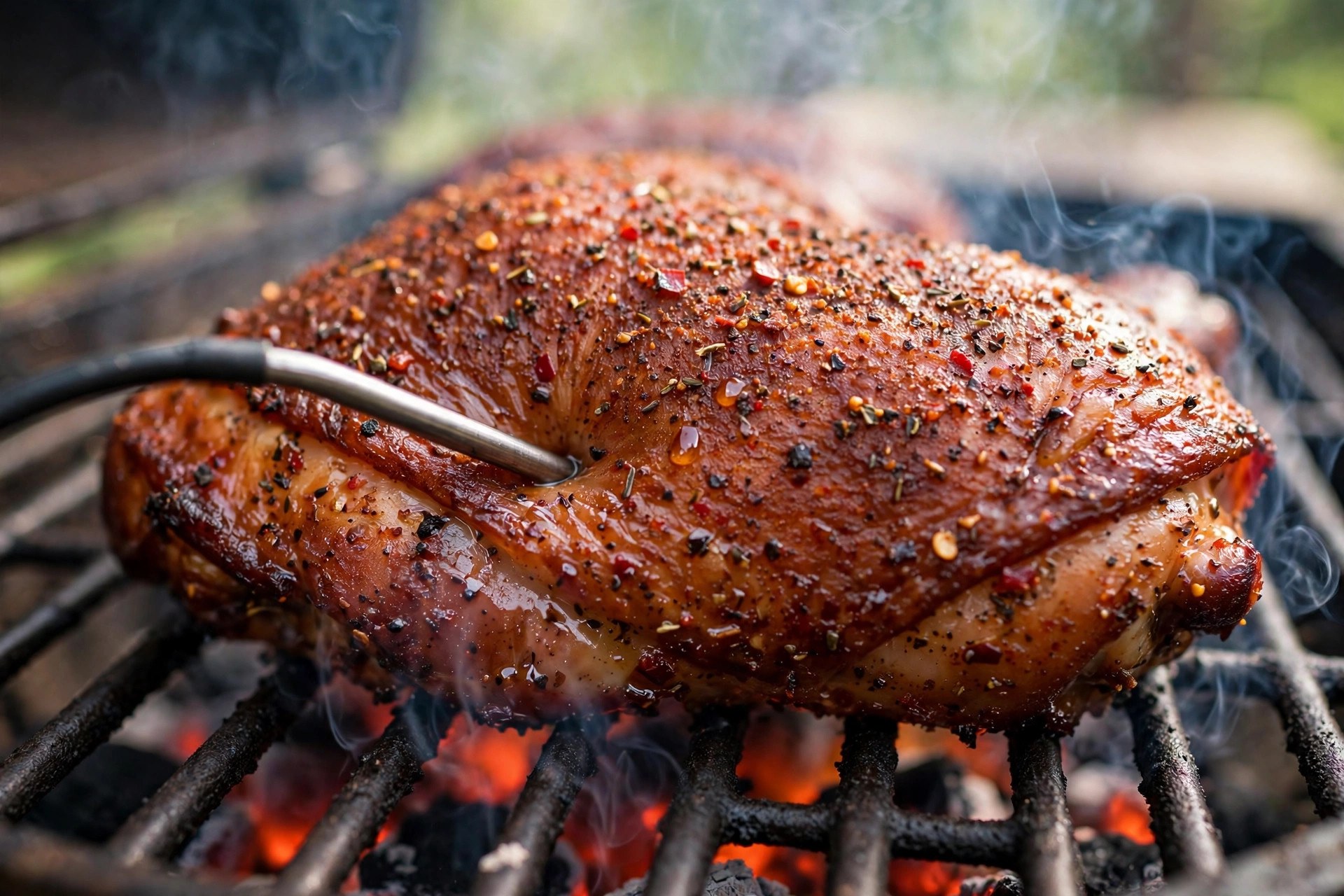
- Breast: Insert into the thickest part of the breast from the side, keeping the tip centered in the meat and away from the breastbone. The breast is the leanest part and the one most likely to dry out, so this is your “don’t overshoot” alarm.
- Thigh: Push the probe into the thickest part of the inner thigh, parallel to the bone but not touching it. Bone reads hot and will lie to you by 5–10°F.
- Check both sides. On a whole bird, temp the breast on one side and the thigh on the other. Smokers have hot spots, and one side can run 10°F ahead of the other.
- Don’t trust the pop-up timer. Those little plastic pop-ups are typically calibrated to 180°F+ in the breast — a guarantee of dry white meat. Pull them out and throw them away; they’re decoration.
- Calibrate monthly. Ice water should read 32°F. A thermometer that’s off by 6 degrees is the difference between juicy and jerky.
5 Signs Your Smoked Chicken Is Fully Cooked
The thermometer is the judge, but these visual and touch cues tell you when it’s time to check — and they confirm what the numbers say.
- Clear juices. Pierce the thickest part of the thigh with a skewer or the thermometer probe. The juices that run out should be clear, not pink or red. Pink juices mean it needs more time — no exceptions.
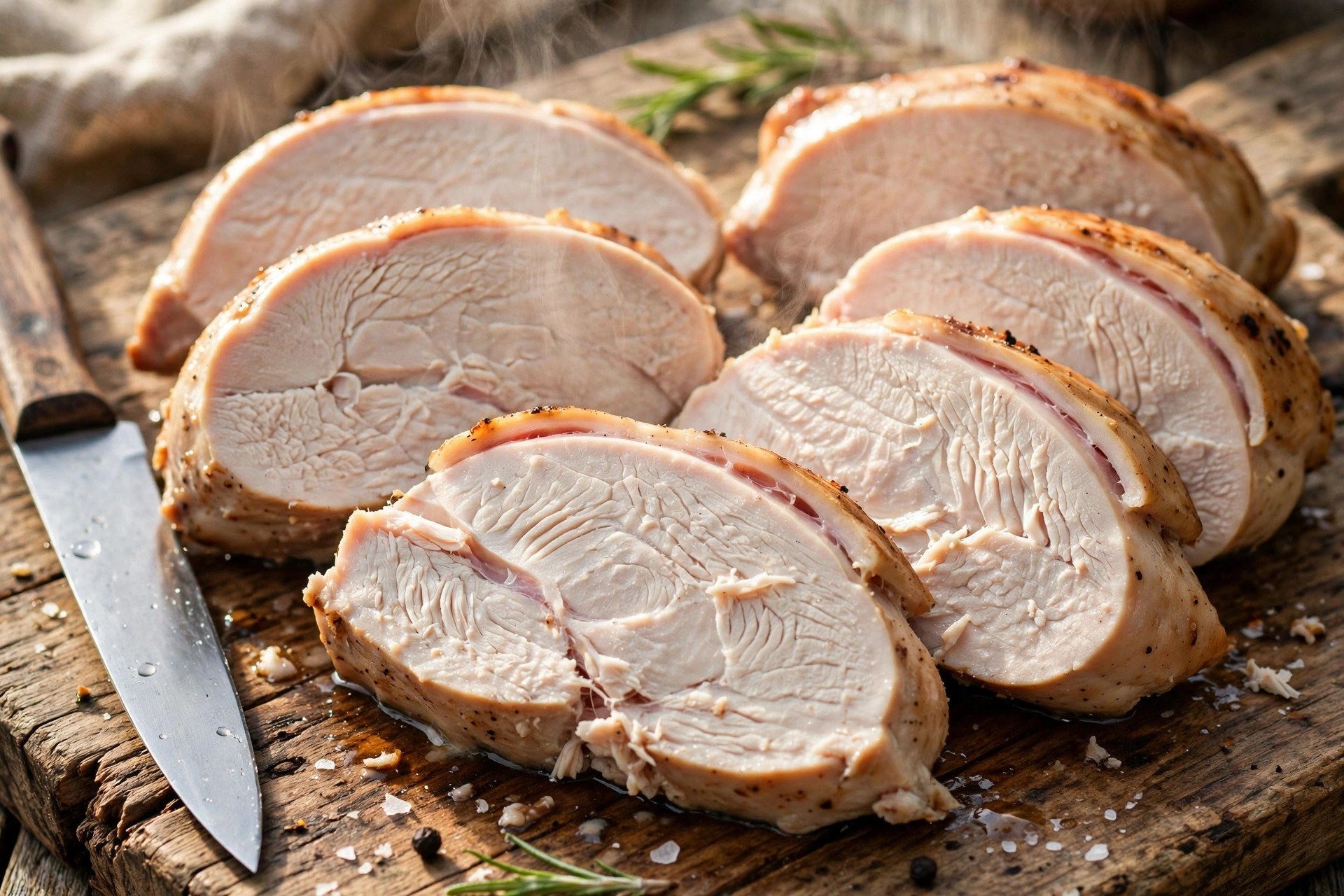
- Opaque meat, no translucency. Cut into the thickest part of the breast or thigh. Cooked chicken is opaque and white (or tan in dark meat) all the way through. Any glassy, translucent patches mean raw meat.
- The leg wiggles. Grab a drumstick and twist gently. On a done bird, the leg moves freely in the joint and the meat has visibly shrunk back from the end of the bone, exposing a half inch or so of clean bone.
- Meat pulls from the bone. In the thigh, cooked meat releases from the bone with a gentle tug. If it’s clinging tight and rubbery, the collagen hasn’t melted yet — give it another 20–30 minutes.
- Skin is set and golden. The skin should be taut, golden to mahogany, and slightly crisp — not pale, flabby, or rubbery. Pale skin usually means the smoker ran too cool, which also means the inside may be lagging.
Use these as a team. Any single cue can mislead — clear juices with a 150°F reading still means raw chicken — but when the thermometer says 165°F and the leg wiggles and the juices run clear, dinner is done.
The Pink Problem: Smoke Ring vs. Undercooked Chicken
This is the number-one source of panic for new smokers. You pull a beautiful bird at 165°F, slice into the breast, and there’s pink meat staring back at you. Before you throw it back on the smoker, know this: smoked chicken can be pink and fully cooked at the same time.
Wood smoke contains gases — mostly carbon monoxide and nitric oxide — that react with myoglobin in the meat and lock in a pink color called a smoke ring. It forms in the first couple of hours of the cook, in a band just under the surface, and it does not fade no matter how high the internal temp climbs. A chicken breast can read 175°F and still show a rosy quarter-inch ring. That’s chemistry, not rawness.
How do you tell the difference? Location and texture. A smoke ring is a thin, even band near the surface; the meat beneath it is opaque and firm. Undercooked chicken is pink or translucent deep in the center, and the texture is soft, almost jelly-like. And the tiebreaker is always the thermometer: 165°F in the center means safe, whatever color the outer quarter-inch is wearing. Cooking with clean thin blue smoke instead of thick white smoke keeps the ring subtle rather than alarming.
How Long Does Smoked Chicken Take?
Time is the least reliable indicator of doneness, but you still need a rough plan so dinner lands when people are hungry. At a steady 250–275°F smoker temp — the sweet spot for chicken, hot enough for crisp skin — here are ballpark times. Always cook to temperature, not the clock.
| Cut | Weight | Time at 250–275°F | Target internal temp |
|---|---|---|---|
| Whole chicken | 4–5 lbs | 2.5–3.5 hours | 165°F breast / 175°F thigh |
| Whole chicken (spatchcocked) | 4–5 lbs | 2–2.5 hours | 165°F breast / 175°F thigh |
| Chicken halves | 2–2.5 lbs each | 1.5–2.5 hours | 165°F breast / 175°F thigh |
| Leg quarters | 10–12 oz each | 1.5–2 hours | 175–185°F |
| Thighs (bone-in) | 6–8 oz each | 1.25–1.75 hours | 175–185°F |
| Breasts (bone-in) | 10–12 oz each | 1–1.5 hours | 160–162°F pull, 165°F final |
| Wings | — | 1–1.5 hours | 175–185°F |
Spatchcocking — removing the backbone so the bird lies flat — is the single biggest upgrade for even cooking. It exposes the thighs to more heat while the breast cooks gently, and it can shave 30–45 minutes off the cook. Cold weather, wind, and a smoker that won’t hold temp will all stretch these times, which is one more reason the thermometer outranks the clock.
Expect the BBQ stall to make an appearance on bigger birds: the internal temp can park around 150–160°F for an hour as surface moisture evaporates. Don’t panic and don’t crank the heat — just wait it out, or wrap in foil if you’re in a hurry (you’ll trade crispy skin for speed).
Pulled Smoked Chicken: The 185–203°F Zone
If your plan is pulled or shredded chicken for tacos, sandwiches, or nachos, 165°F is just the starting line. Like pork shoulder, chicken needs higher heat to break down connective tissue — take it to 185–203°F and the meat shreds effortlessly with two forks. The thighs are the star here; they’re richer and shred better than breast meat.
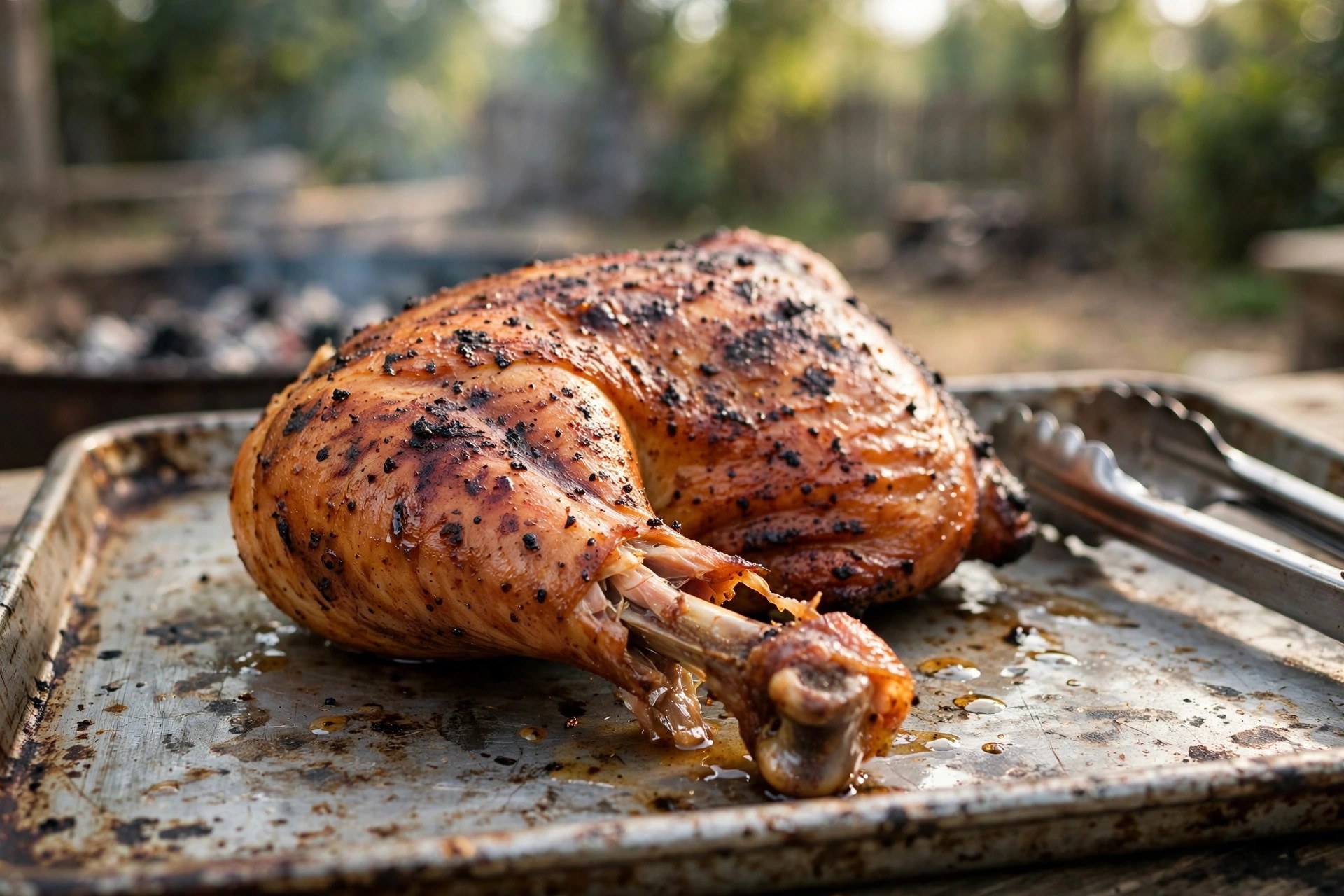
The pulled-chicken window is forgiving but has a ceiling: past 205°F the meat starts turning mushy and dry at the same time, a weird texture nobody wants. Pull at 195–200°F for the sweet spot — tender strands with a little bite left. A detailed breakdown of times, temps, and technique lives in this guide to pulling smoked chicken at the right temperature.
Fruit woods are the classic pairing for chicken — apple and cherry wood give a mild sweetness that doesn’t overpower the meat the way mesquite can. And once it’s pulled, keeping it warm for serving without drying it out is its own skill: hold it covered with a splash of broth, never back on high heat.
4 Mistakes That Ruin Smoked Chicken
- Smoking too cool. Chicken isn’t brisket — there’s no benefit to 200°F smoker temps. Below 225°F, the skin turns rubbery and the bird spends too long in the bacterial danger zone (40–140°F). Run 250–275°F for the whole cook.
- Pulling by color. That deep mahogany exterior shows up an hour before the inside is done. Plenty of gorgeous-looking birds have gone to the table at 150°F. Temp it, every time.
- Skipping the rest. Cut into a chicken straight off the smoker and the juices flood the board. Rest a whole bird 15–20 minutes tented loosely in foil; pieces need 5–10. The internal temp will also coast up a few degrees, which is your safety margin on the breast.
- Overcooking the breast to save the thighs. If your breast keeps hitting 175°F before the thighs are tender, the bird’s geometry is the problem. Spatchcock it, or start the bird breast-side down and flip halfway. Don’t sacrifice the breast for the legs.
Smoked Chicken Doneness FAQs
How can I tell smoked chicken is done without a thermometer?
You can’t do it reliably — and with chicken, guessing wrong has real consequences. That said, if you’re truly without one: the juices must run completely clear when you pierce the thigh, the leg should twist freely in the joint, and the meat should be opaque with zero translucency. Then buy a thermometer before your next cook. It’s the cheapest insurance in BBQ.
Why is my smoked chicken still pink at 165°F?
That’s the smoke ring — gases in wood smoke reacting with myoglobin near the surface. It’s a thin, even pink band, and the meat beneath it will be opaque and firm. Deep, glassy pink in the center with soft texture means undercooked. When the center reads 165°F, pink near the surface is cosmetic.
How long should smoked chicken rest?
Rest a whole bird 15–20 minutes, tented loosely with foil. Pieces and parts need 5–10 minutes. Resting lets juices redistribute so they stay in the meat instead of on the cutting board, and carryover heat nudges the breast those last couple of degrees to 165°F.
Can you eat smoked chicken cold the next day?
Yes, as long as it was fully cooked to 165°F and refrigerated within 2 hours. Cold smoked chicken is great in salads and sandwiches. If you’d rather reheat, bring it to 165°F internal again — and do it gently, covered with a splash of broth, so it doesn’t dry out.
What temp should I pull chicken for shredding?
195–200°F in the thighs for pulled smoked chicken. At 165°F the meat is safe but won’t shred — the connective tissue needs the extra heat to melt into gelatin. Don’t go past 205°F or the texture turns mushy.
Your next step: on your next smoke, run the smoker at 250–275°F, probe the breast and thigh separately, and pull when the breast reads 160–162°F. Rest it 15 minutes, then check the thigh — you’ll find it coasted right into that tender 175°F zone on its own. That’s the whole trick, and now it’s yours.
Leave a Reply