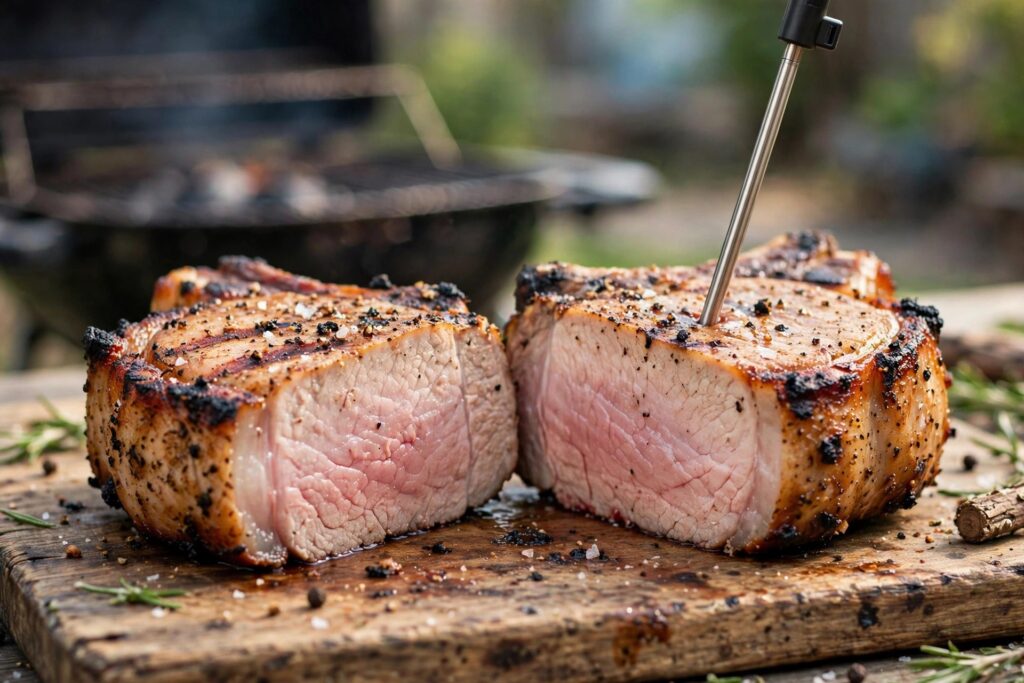
What temperature is pork done? For whole cuts like chops, tenderloin, and loin roasts, pork is done and safe to eat at 145°F (63°C) measured in the thickest part, followed by a 3-minute rest. Ground pork needs to reach 160°F (71°C), and reheated leftovers should hit 165°F (74°C). That’s the short answer — the rest of this guide is about landing those numbers without turning dinner into shoe leather.
If you grew up in a house where pork chops came out gray, dry, and cooked “until the juices ran clear,” you’re not alone. For decades, home cooks were told to take pork to 160°F or higher, and a whole generation learned to hate pork because of it. The USDA revised its guidance in 2011, dropping the safe target for whole cuts to 145°F with a rest — and it changed what good pork tastes like.
Why 145°F and a Rest Beat the Old 160°F Rule
Back in the day, 160°F was the rule because trichinosis — a parasite once common in pork — was a genuine worry. Modern farming practices have nearly wiped it out in commercial pork, and food scientists found that 145°F plus a 3-minute rest kills the pathogens that actually matter today, including salmonella. The USDA’s own food safety basics spell out the numbers: 145°F with a 3-minute rest for whole cuts, 160°F for ground meat, 165°F for poultry.
Why does that 15-degree difference matter so much? Pork muscle fibers start squeezing out moisture fast above 150°F. Between 145°F and 160°F, a chop can lose a third or more of its juices. That’s the difference between a chop you need a steak knife for and one you can cut with a fork. The rest matters too: it lets heat even out from the hotter exterior to the cooler center, so the middle finishes cooking gently instead of getting blasted by direct heat.
One important note: that 145°F number is about safety, and safety and texture are two different finish lines. A pork shoulder is technically safe at 145°F, but you’d need a chainsaw to slice it. More on that below.
Pork Doneness Temperature Chart
Stick this on your fridge, or just bookmark the page. These are pull temperatures — where you take the meat off the heat — plus the final target after resting.
| Cut | Pull from heat | Final temp | Rest |
|---|---|---|---|
| Pork chops (bone-in or boneless) | 140–143°F | 145°F | 3 minutes |
| Pork tenderloin | 140–143°F | 145°F | 3 minutes |
| Pork loin roast | 140°F | 145°F | 10–15 minutes |
| Fresh ham (uncured leg) | 140°F | 145°F | 15–20 minutes |
| Ground pork / sausage / meatballs | 160°F | 160°F | None needed |
| Pork shoulder for pulled pork | 195–205°F | 195–205°F | 45–60 minutes, wrapped |
| Spare ribs / baby backs | 195–203°F | 195–203°F | 15–30 minutes |
| Leftover pork (reheat) | 165°F | 165°F | None needed |
Notice the gap between “pull” and “final” on whole cuts. That’s carryover cooking — meat keeps climbing 3–5°F after it leaves the heat as hot outer layers push warmth toward the center. If you want the full breakdown of how that works, our guide to carryover cooking walks through it cut by cut.
How to Measure Pork Temperature the Right Way
A thermometer is the only tool that tells you the truth. Not the clock, not the color, not the little pop-up timer that came in the roast (those routinely overshoot by 10–15°F). The USDA is blunt about this in its guide to knowing when meat is done: color and firmness can’t confirm safety. Only temperature can.
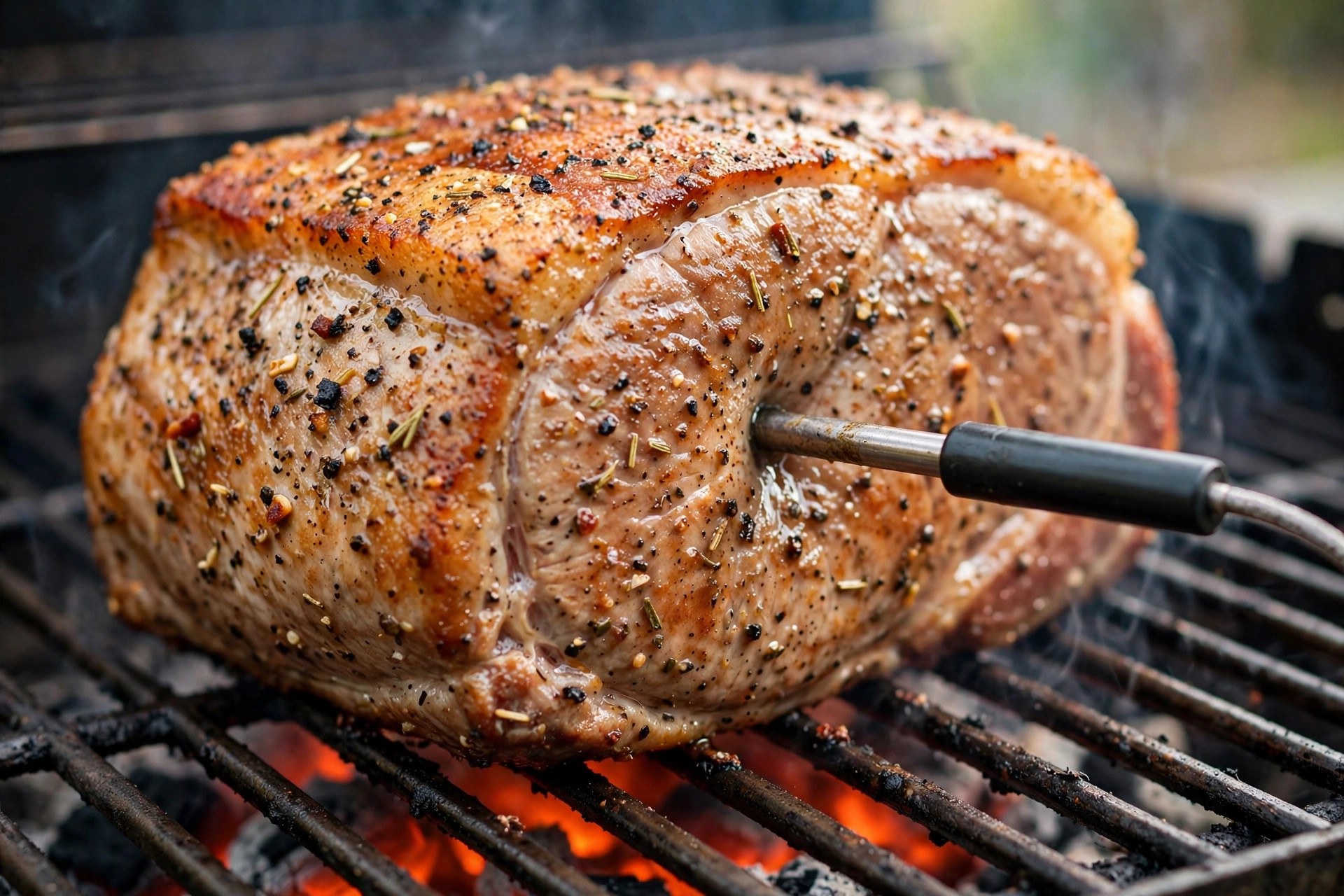
If you’re shopping for one, an instant-read thermometer is the single best $15–30 you can spend on better pork. Here’s how to use it so the number you see is the number that counts:
- Go for the thickest part. That’s the last spot to come up to temp. On a chop, slide the probe in from the side so the tip sits dead center.
- Stay off the bone. Bone conducts heat and reads hotter than the meat around it. Keep the tip at least half an inch away — if a bone-in chop reads 145°F right next to the bone, the meat an inch away might be 138°F.
- Dodge fat pockets. Thick seams of fat also read hot. Aim for solid muscle.
- Give it 3–5 seconds. Let the reading stabilize before you trust it. Cheap thermometers wander for a few seconds.
- Check two spots on big cuts. On a loin roast or shoulder, take a second reading a few inches away and trust the lower one.
- Calibrate once in a while. A glass of ice water should read 32°F. If yours says 38°F, every reading you take is 6 degrees optimistic.
Can Pork Be Pink and Still Be Safe?
Yes — and this is the part that trips up everyone who learned the old rules. Pork cooked to 145°F and rested can show a faint blush of pink in the center, and it’s completely safe. The pink comes from myoglobin, a protein in the muscle, not from blood or rawness.
A few things make pork pinker than you’d expect. Brined or cured pork holds its pink color at higher temps (that’s why ham stays pink all the way through). Young pigs can have meat that pinks up more. And smoked pork is a special case: the gases in wood smoke react with myoglobin to form a pink “smoke ring” just under the surface that can survive all the way past 190°F — which is exactly why pitmasters never judge pulled pork temperature by color.
The reverse is also true, and it’s more dangerous: pork can look fully cooked — gray, no pink at all — and still be under 145°F in the middle, especially with high-heat searing that browns the outside fast. Gray is not a thermometer. If the probe says 145°F after a rest, eat with confidence. If it doesn’t, pink or not, it goes back on the heat.
Ground Pork, Sausage, and Stuffed Cuts: The 160°F Rule
Grinding changes everything. On a whole chop, bacteria live on the surface, and searing plus 145°F handles them. Grind that same meat and the surface gets mixed all through the middle — so the middle has to be treated like the surface. That’s why ground pork, pork sausage, and pork meatballs all need a full 160°F (71°C) with no rest required.
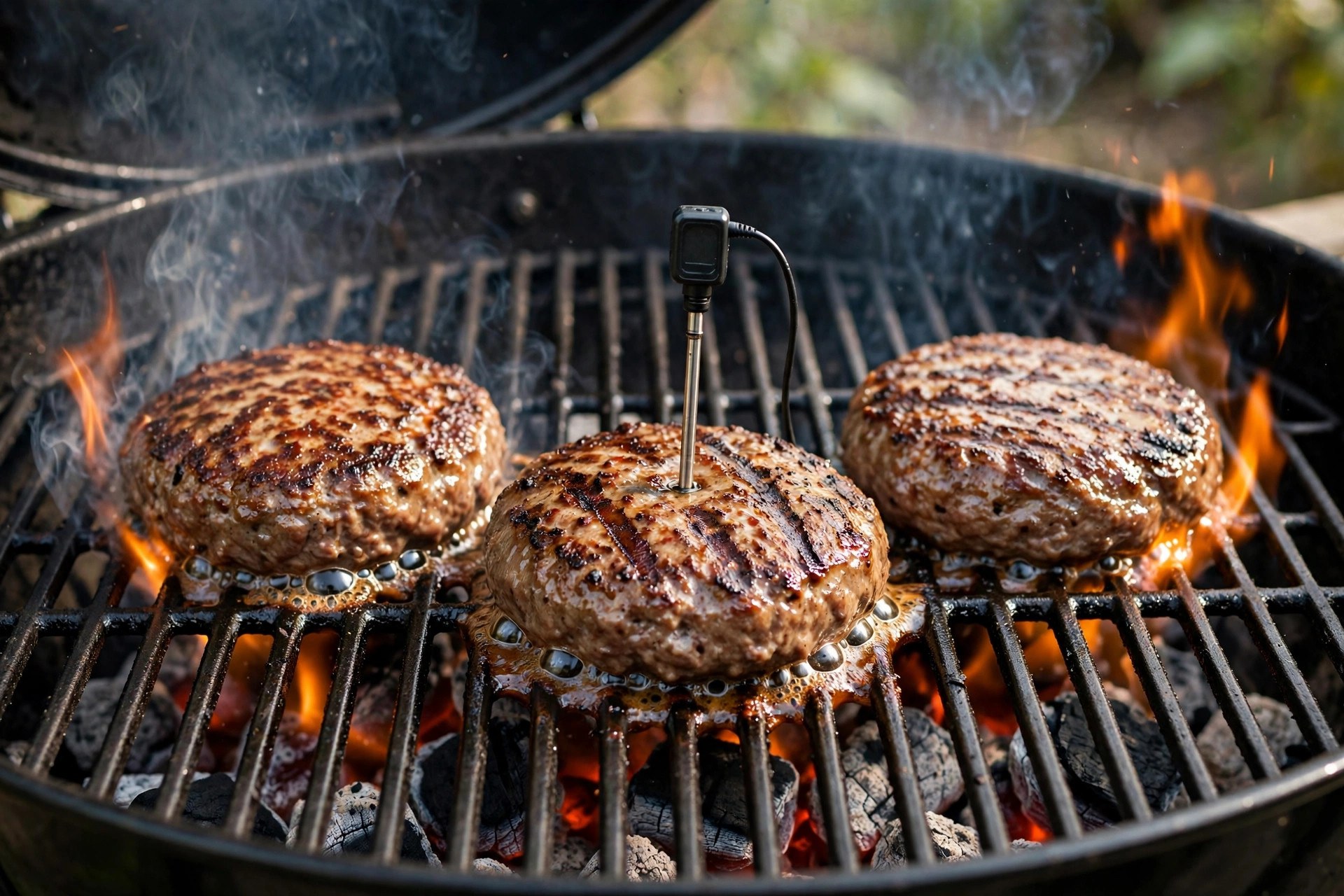
The same logic applies to anything stuffed. A pork loin stuffed with apples or sausage filling needs the center of the stuffing to hit 165°F, since dense filling heats slower than the meat around it. Probe both: 145°F in the meat after a rest, 165°F in the stuffing. When in doubt on a stuffed roast, cook to the stuffing’s number — dry-ish stuffing beats a foodborne illness every time.
One more ground-meat trap: the pink problem in reverse. Store-bought pork sausage often stays pink inside at 160°F because of the salt and spices in the mix. Color lies in both directions with ground pork, which is one more reason the thermometer stays non-negotiable.
When “Done” Means 195°F: Pulled Pork and Ribs
Here’s where BBQ breaks the chart on purpose. A pork shoulder is technically safe at 145°F, but safe and edible are different things at that point — the meat would be tough enough to bounce. Shoulder and ribs are loaded with collagen and connective tissue, and that tissue only melts into silky gelatin somewhere between 195°F and 205°F. That’s a texture target, not a safety target, and it’s what separates pulled pork from a pork-flavored workout.
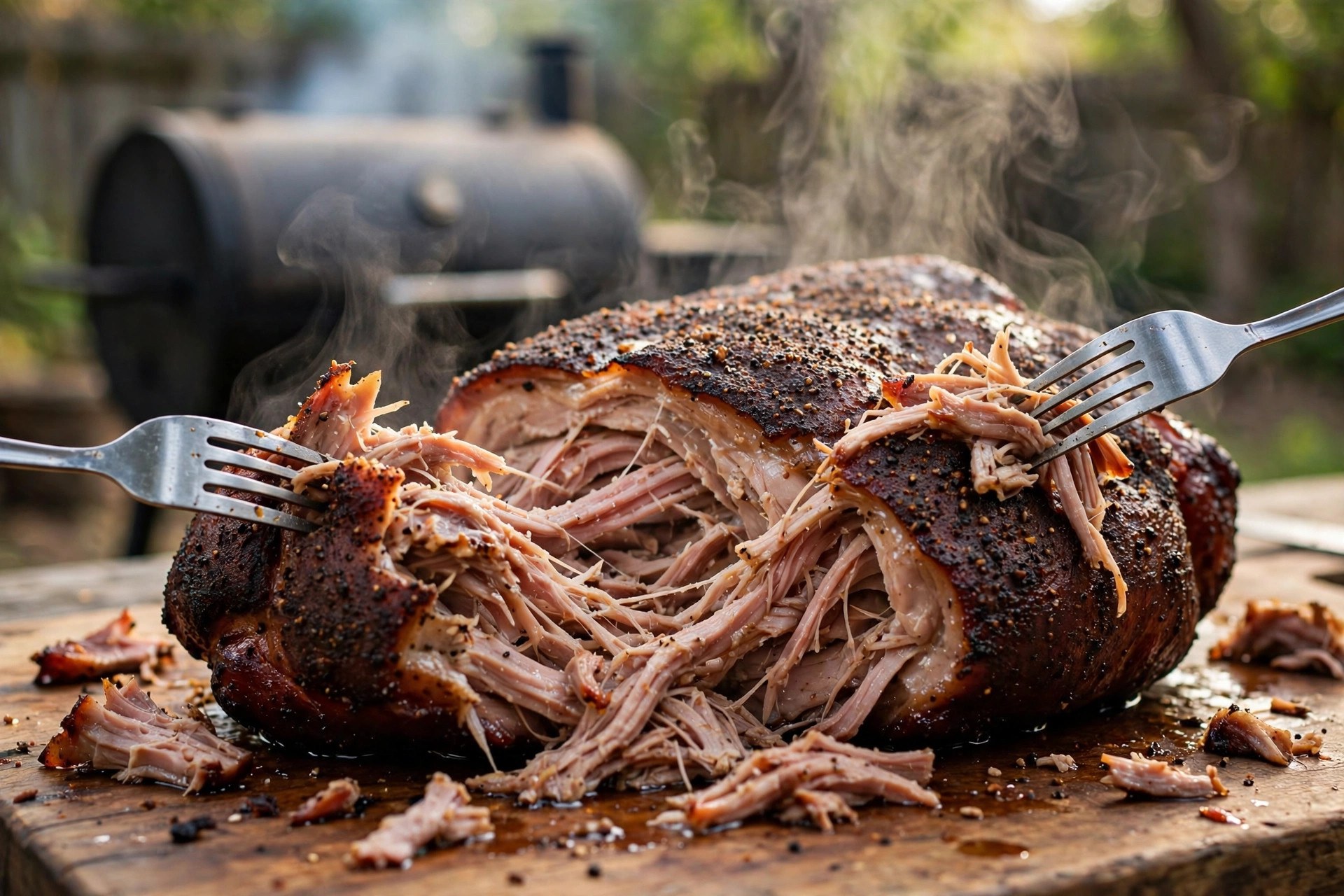
For pulled pork, most pitmasters aim for 203°F in the thickest part of the flat, then rest the shoulder wrapped for at least an hour before shredding. For ribs, 195–203°F plus the bend test: pick the rack up with tongs and it should bow and crack slightly on the surface. Our ribs per rack guide covers how that translates to servings, if you’re planning a cookout.
The funny thing is that once you’re cooking to 195°F+, safety stopped being the question hours ago. Every pathogen of concern died long before the stall. At these temps you’re cooking for tenderness, and the thermometer is telling you about texture, not safety.
5 Pork Temperature Mistakes That Ruin Dinner
- Trusting cook time instead of temp. “25 minutes per pound” doesn’t know your oven runs hot, your chop is an inch thicker than the recipe’s, or that you opened the door four times. Time estimates get you in the neighborhood; the thermometer gets you home.
- Skipping the rest. Cut a chop the second it leaves the pan and the juices run all over the board instead of staying in the meat. Three minutes is the minimum for chops; give a loin roast 10–15. Tent loosely with foil — wrapping tight steams the crust soft.
- Probing too close to the bone. Bone-in chops and roasts read hot near the bone. If your only reading is touching bone, you’re flying blind on the actual meat temp. Probe the center of the muscle, half an inch clear.
- Cooking straight from the fridge. A 2-inch chop straight out of a 38°F fridge can take 8–10 extra minutes to come up to temp, and the outside overcooks while the middle catches up. Twenty to 30 minutes on the counter before cooking evens things out.
- Reheating without a target. Leftover pork needs 165°F all the way through, not just “hot.” And the best way to get there without drying it out is low and slow — covered, with a splash of broth. Our leftover BBQ storage guide and pulled pork reheating method cover the details.
Pork Temperature FAQs
Is it safe to eat pork at 140°F?
Not quite. The USDA safe minimum is 145°F followed by a 3-minute rest. That said, if you pull a chop at 140°F and carryover cooking brings it to 145°F during the rest, you’ve hit the target — the final temp after resting is what counts, not the number at the moment you pulled it.
Why does ground pork need 160°F when chops only need 145°F?
Grinding mixes surface bacteria throughout the meat, so the center has to reach a temperature that kills pathogens on its own. On an intact chop, the bacteria are on the outside where heat hits first and hardest. Different structure, different number.
What temperature should I reheat leftover pork to?
165°F (74°C), measured in the thickest part. This applies to pulled pork, chops, roasts, and any pork dish that’s been refrigerated. One reheat only — cool it, reheat it once, and don’t put reheated meat back in the fridge for round three.
How long should pork rest after cooking?
At least 3 minutes for chops and tenderloin — that’s part of the USDA safety guidance, not just a texture tip. Give a loin roast 10–15 minutes and a pork shoulder destined for pulling a full hour, wrapped. Bigger cuts carry more heat and need more time to settle.
Can I tell pork is done without a thermometer?
Not reliably. Color, juice clarity, and firmness all lie — smoked pork stays pink past 190°F, and a hard sear can make the outside look done while the middle lags 15 degrees behind. A basic instant-read thermometer costs less than one ruined pork loin and answers the question in 5 seconds.
Your next step is simple: put a thermometer in your kitchen if you don’t have one, and cook your next batch of pork chops to 145°F with a real 3-minute rest. Taste the difference that 15 degrees makes — then you’ll never go back to the gray, dry chops of the old 160°F days.
Leave a Reply