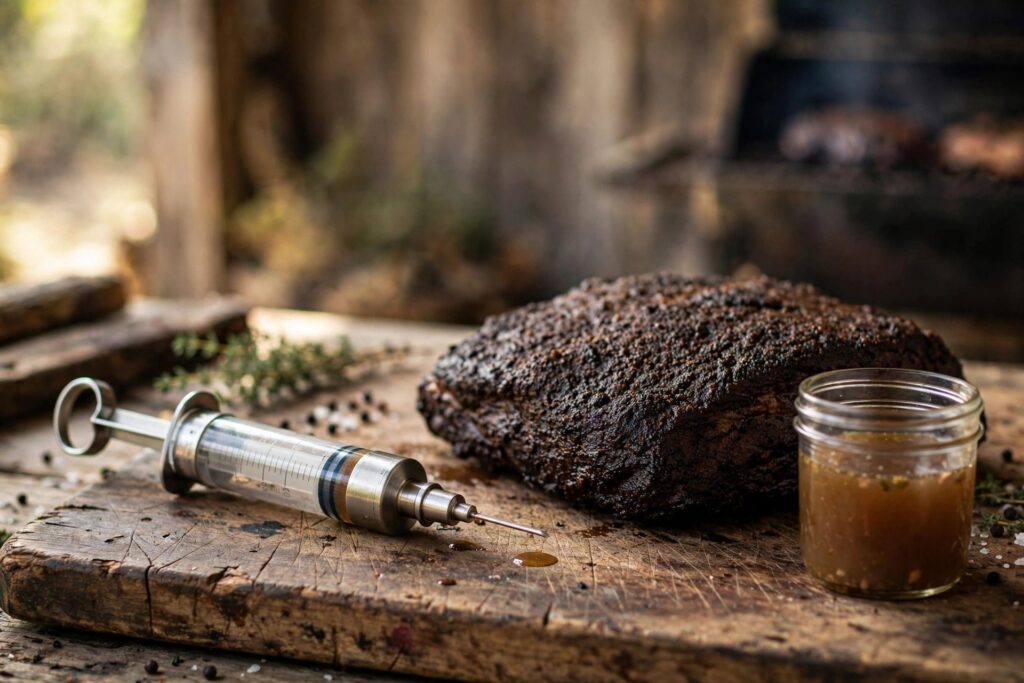
A meat injector is a large syringe that pumps marinade, broth, or melted butter deep inside a cut of meat. To use one, fill it with strained liquid, insert the needle deep into the thickest parts of the meat, and inject about 1 ounce of liquid per pound in a grid pattern, spacing each injection 1 to 2 inches apart. Rest the meat 30 to 60 minutes before cooking.
Here’s the problem it solves: a dry rub flavors the surface. A marinade flavors the surface. But a brisket flat is two inches thick, and nothing you do on the outside reaches the center of it. An injector skips the surface entirely and puts moisture and seasoning exactly where dryness happens — deep in the muscle.
Below: how injectors work, which meats are worth injecting, three proven injection recipes with exact quantities, the step-by-step technique, food safety rules, and the mistakes that leave you with soggy or uneven meat.
What a Meat Injector Does (and Why Rubs Alone Can’t)
During a long smoke, meat loses moisture — brisket can lose 30 to 40 percent of its raw weight by the time it’s done. Fat and collagen help, but lean sections like the brisket flat or a turkey breast have little fat to protect them. An injector adds moisture and dissolved salt directly into the muscle fibers before the cook starts.
The salt matters as much as the liquid. Salt absorbed into the meat’s cells helps those cells hold onto water during cooking — the same principle as brining, delivered straight to the interior in seconds instead of the 12 to 24 hours a brine takes. Competition pitmasters inject for exactly this reason: juicier results with less waiting.
It also fixes the flavor-depth problem. Smoke and rubs flavor the outer half inch. The center of a thick roast tastes like plain meat. An injection of beef broth, Worcestershire, or apple juice puts seasoning into the middle so every bite tastes finished, not just the crust.
Which Meats Are Worth Injecting
Not everything benefits. Thin cuts, ground meat, and anything that cooks in under an hour won’t absorb enough to matter. The payoff is on big, lean, slow-cooked cuts.
| Cut | Why inject it | What to inject |
|---|---|---|
| Brisket (especially the flat) | The flat is lean and cooks for 10+ hours; dries out first | Beef broth + Worcestershire + brown sugar |
| Pork butt / shoulder | Big and thick; interior stays bland even in juicy pork | Apple juice + apple cider vinegar + rub |
| Turkey breast | Very lean, notorious for drying out in the smoker | Melted butter + chicken broth + herbs |
| Whole chicken | Breast dries while thighs finish; injection evens it out | Herb butter or garlic-citrus broth |
| Pork loin | Lean with almost no fat cap to protect it | Apple juice + salt + brown sugar brine |
Skip the injector for steaks, chops, ribs, and burgers. Those cuts are thin enough that surface seasoning and proper temperature control do all the work — injecting just makes a mess. And never inject ground or mechanically tenderized meat; the interior is already exposed, so there’s nothing to gain.
What to Inject: Three Proven Recipes
The best injections taste like the meat, amplified — not like a different food entirely. Meathead of AmazingRibs keeps it simple on brisket: plain beef broth, about 1 ounce (28 g) per pound of raw meat. Here are three recipes that follow that philosophy.
Brisket injection (for a 12–14 lb packer):
- 2 cups low-sodium beef broth
- 2 tablespoons Worcestershire sauce
- 1 tablespoon brown sugar, fully dissolved
Pork butt injection (for an 8–10 lb shoulder):
- 1½ cups apple juice
- ½ cup apple cider vinegar
- 1 tablespoon of your BBQ rub, whisked smooth
- 1 teaspoon kosher salt
Poultry injection (for a 12–14 lb turkey or whole chickens):
- 1 cup melted unsalted butter, kept warm
- 1 cup low-sodium chicken broth
- 1 tablespoon lemon juice
- 1 teaspoon granulated garlic
- 1 teaspoon dried thyme
Mix each until every grain of sugar and salt is fully dissolved. Undissolved crystals and herb bits are the number-one cause of clogged needles. Strain the mix through a fine-mesh sieve before it goes anywhere near the injector — this single step saves more frustration than anything else in this article.
Keep the total volume sensible. The widely used rule is about 1 fluid ounce of injection per pound of raw meat. A 12-pound brisket takes roughly 12 ounces (1½ cups). More than that and the liquid pools instead of absorbing — you’ll see it weep out during the cook.
How to Use a Meat Injector, Step by Step
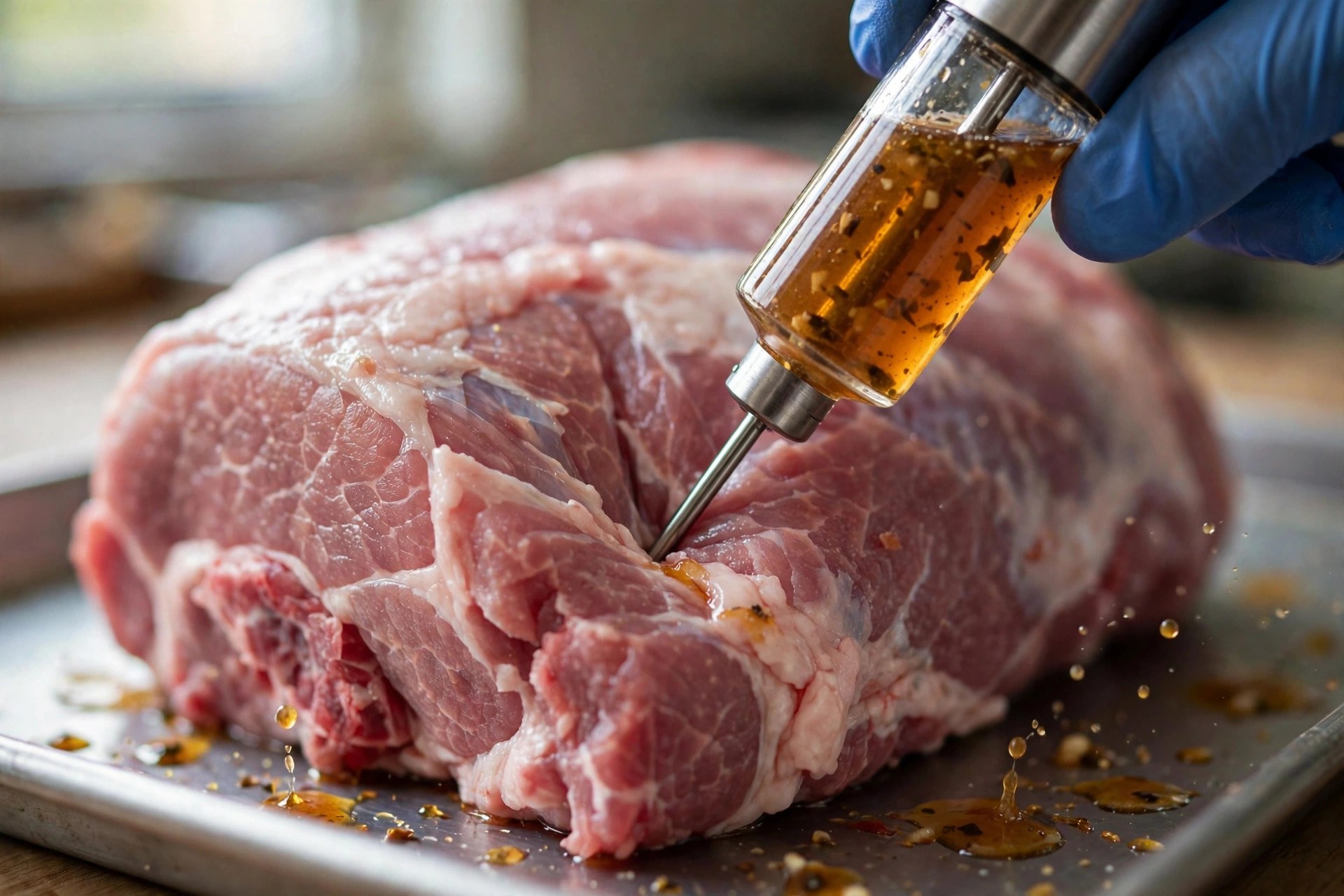
- Work cold and clean. Keep the meat refrigerated until you’re ready. Wash the injector in hot, soapy water first, and assemble it on a rimmed sheet tray or in the sink — injection liquid squirts. One BBQ supply guide puts it bluntly: inject over a pan or the sink, because juices will squirt back at you.
- Load and de-air the barrel. Submerge the needle tip in the marinade and pull the plunger back slowly to fill. Then point the needle up and push gently until a few drops emerge — air bubbles trapped in the barrel create uneven pockets in the meat.
- Inject with the grain, not against it. Slide the needle in parallel to the muscle fibers, deep into the thickest sections. Needle tracks left across the grain show up as visible lines in the finished slices; going with the grain hides them. On brisket, work from the side of the flat rather than stabbing straight down from the top.
- Depress while withdrawing. Push the needle in deep, then press the plunger slowly as you back the needle out. This lays the liquid along the needle’s path instead of dumping it in one spot. One spot’s worth is plenty — move on.
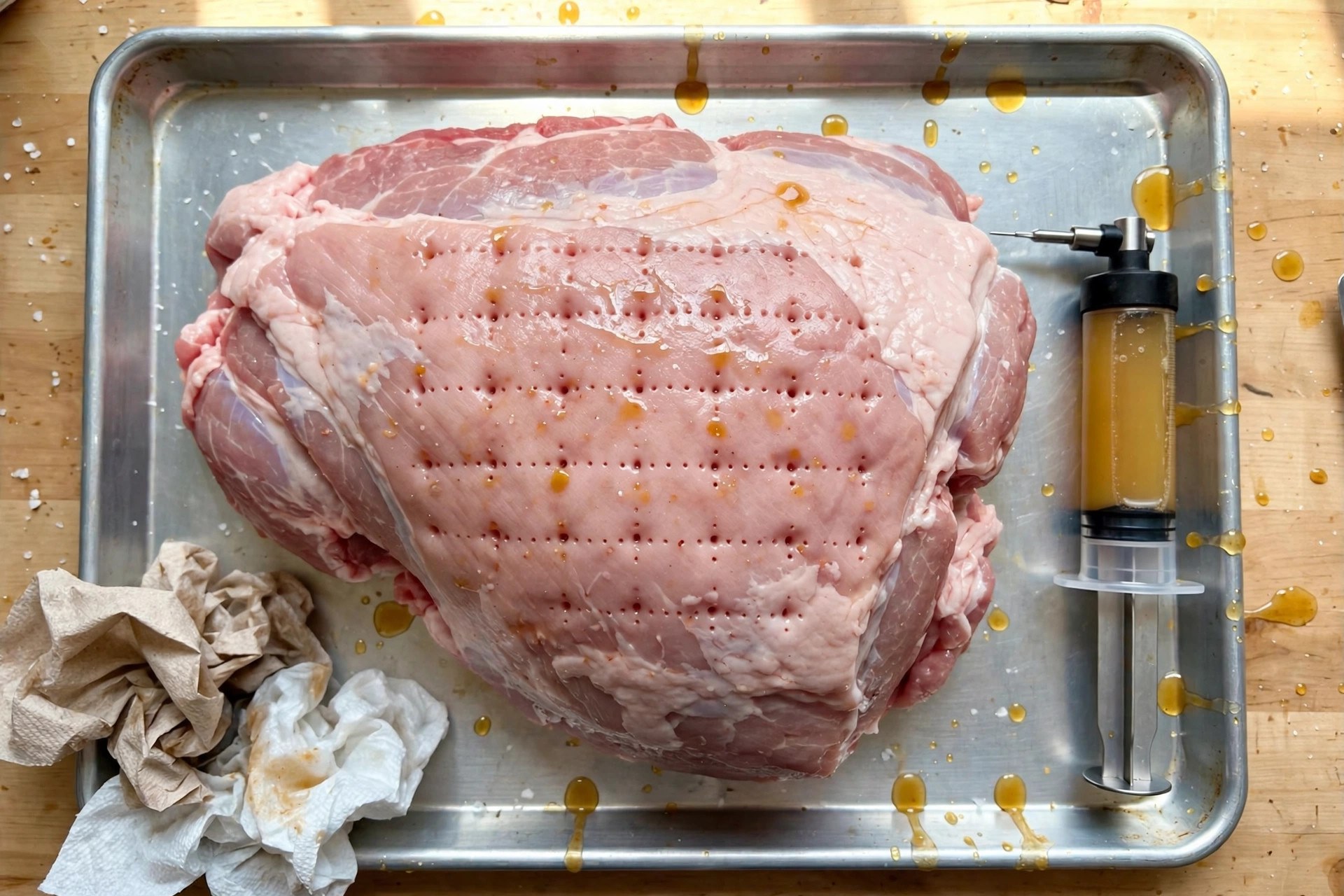
- Work a grid, 1 to 2 inches apart. Cover the whole cut in a grid pattern, giving extra attention to the thickest areas. On a brisket flat, that means lines about 1 inch apart across the entire surface; on a pork butt, every 1.5 to 2 inches.
- Don’t inject the fat. Fat caps and fat seams don’t absorb liquid — it just runs out and makes a greasy mess. Aim for muscle. If liquid pools on the surface, you’ve hit fat or an already-saturated spot; move to a new one.
- Rest before cooking. Pat the surface dry, then rest the meat refrigerated: at least 30 to 60 minutes for the liquid to settle, or overnight if your injection includes salt (the salt needs hours to do its moisture-holding work inside the muscle). Apply your dry rub after the rest, not before — seasoning after injection keeps the rub from washing off in the drips.
That rest step is where most beginners go wrong — they inject and throw the meat straight on the smoker. Give the liquid time to distribute and you’ll taste the difference.
Picking the Right Injector
Plastic injectors cost a few dollars and work fine for thin liquids like broth or apple juice. They’re a good way to try injecting before committing. The downside: thin barrels, flimsy plungers, and needles that clog on anything with body. Plan on replacing them.
Stainless steel injectors are the buy-once option. Look for a barrel of at least 2 ounces, a comfortable pistol-grip or ring handle, and multiple needles: a narrow one for thin brines and a wide-bore one for thicker marinades like melted butter. They disassemble for cleaning, survive the dishwasher’s top rack, and don’t absorb odors.
Whatever you buy, it must come apart completely for cleaning. Dried marinade in a barrel is a clog — and a food-safety problem — waiting to happen. If you can’t unscrew it and scrub every part, don’t buy it.
Pair your injector with a good instant-read thermometer. Injected meat looks done before it is done, and the only way to know is temperature, not color or feel.
Food Safety Rules for Injecting
This part matters more than the technique. A needle pushes surface bacteria deep into the meat, where heat reaches last. Treat injected meat with extra care:
- Cook to temperature, not time. Injected poultry must hit 165°F in the deepest part; injected pork and beef should reach your target temp verified with a probe in the thickest injected area. Check our pork temperature guide and pulled pork target temps for exact numbers.
- Keep it cold until the cook. Don’t let injected meat sit at room temperature for more than 2 hours total. Inject it cold, rest it in the fridge, and put it on the smoker straight from the fridge.
- Never reuse leftover injection. Once the needle has touched raw meat, the remaining liquid is contaminated. Mix fresh if you need more, and discard the rest.
- Sanitize the injector immediately. Disassemble and wash in hot, soapy water right after use. Don’t let marinade dry inside the barrel or needle — dried protein is nearly impossible to clean and harbors bacteria.
One more timing note: injected meat often cooks a touch faster because the added liquid conducts heat. Start checking temps about 30 minutes earlier than your recipe says, and remember carryover cooking will add a few more degrees during the rest.
Mistakes That Ruin an Injection
Over-injecting. More than ~1 oz per pound creates liquid pockets that leak during the cook and leave mushy spots. If marinade is running off the tray, stop — the meat is full.
Skipping the strain. Rub granules, herb flakes, and undissolved sugar jam the needle mid-injection. Strain everything through a fine sieve. Every time.
Injecting cold butter. Melted butter that cools even slightly turns to sludge in the needle. Keep butter-based injections warm (not hot) in a bowl of warm water while you work.
Injecting right through to the other side. If the needle exits the far side, the liquid follows it straight out. Gauge your depth — on a 2-inch-thick flat, a 3-inch needle should stop well short of the far surface.
Salting twice. If your injection already contains salt or salty broth, cut the salt in your surface rub roughly in half. Salty injection plus a full-salt rub is the fastest route to inedible meat. Rest the meat properly after cooking and the seasoning will taste balanced, not harsh.
Meat Injector FAQs
How much liquid should I inject per pound of meat?
About 1 fluid ounce (2 tablespoons) per pound of raw meat. A 10-pound pork butt takes roughly 10 ounces (1¼ cups). Exceeding this usually causes the liquid to pool and leak out during cooking instead of absorbing.
Should I inject brisket before or after applying the rub?
Inject first, then rest the meat, pat the surface dry, and apply the rub. Rubbing first washes seasoning off in the injection drips. If the injection contains salt, rest the meat overnight in the fridge so the salt can penetrate before the rub goes on.
Can you inject a turkey for smoking?
Yes — turkey breast is one of the best candidates for injection since it’s so lean. Use a warm melted-butter and broth mixture, inject the breast in a grid pattern every 1.5 inches, and cook to 165°F in the deepest part of the breast.
Do I need a meat injector for pulled pork?
Not strictly — pork butt has enough fat to stay moist on its own. But injecting apple juice and vinegar deep into the shoulder seasons the interior, so the pulled meat tastes seasoned all the way through instead of only on the bark.
How do you clean a meat injector?
Disassemble it completely immediately after use and wash every part in hot, soapy water, running water through the needle. Let it air-dry fully before reassembling. Never let marinade dry inside the barrel.
Your next cook is the test. Pick one cut — a pork butt is the most forgiving — mix the apple juice injection above, and inject 1 ounce per pound in a grid pattern the night before. Smoke it like you normally would. When you pull it and the interior tastes as seasoned as the bark, you’ll understand why competition pitmasters never skip this step.