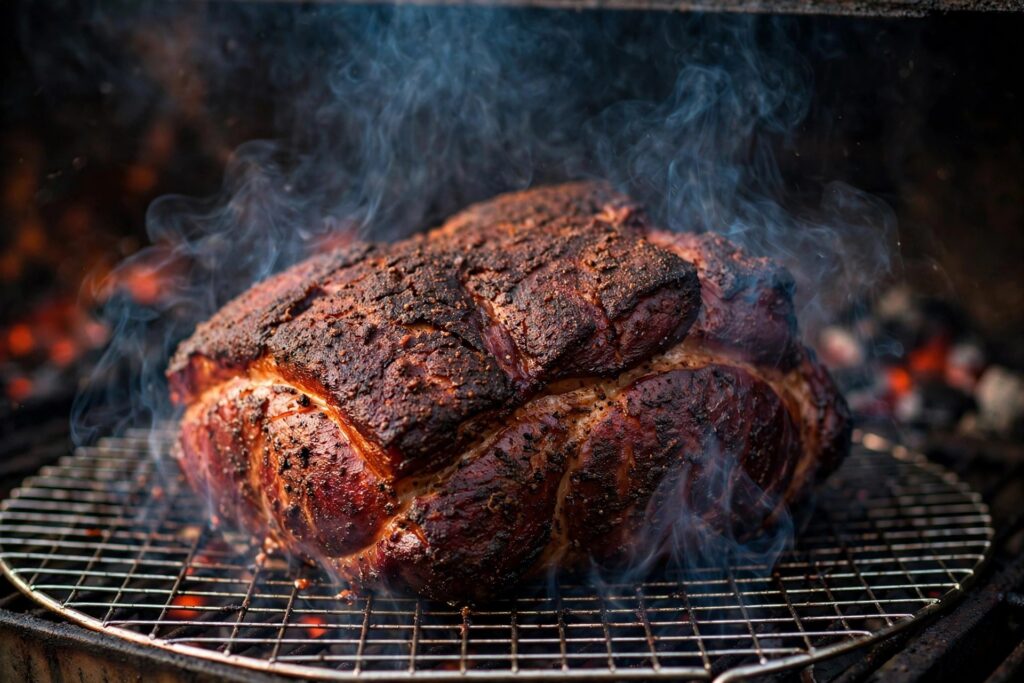
Plan on 1/3 pound of cooked pulled pork per adult and 1/4 pound per child. Because pork butt loses about half its weight in the smoker, you’ll need to buy roughly double that amount raw — about 2/3 pound of raw pork butt per adult. For 50 guests, that means roughly 17 pounds cooked, or 33–35 pounds raw.
That’s the short version. If you’re catering a wedding, feeding a church group, or just hosting the neighborhood block party, the math gets a little more interesting. Buffet lines eat differently than plated dinners. Sliders stretch further than full sandwiches. And hungry teenagers are a force of nature that no calculator can fully account for. This guide covers all of it: exact portions by meal type, the raw-vs-cooked formula, quick lookup tables for crowds from 10 to 200, and the catering details that separate a smooth event from an empty pan at 6 PM.
How Much Pulled Pork Per Person: The Quick Answer
Most BBQ pros land on 1/3 pound (about 5 ounces) of cooked pulled pork per adult as the baseline. That works when pulled pork is one of several dishes on the table — the standard backyard barbecue or potluck spread with sides like coleslaw, baked beans, and mac and cheese.
But one size doesn’t fit every gathering. Here’s how the portion changes with the situation:
| Meal type | Cooked pulled pork per adult | Cooked per child |
|---|---|---|
| Light meal, lots of sides/appetizers | 1/3 lb (5 oz) | 1/4 lb (4 oz) |
| Typical BBQ with 2–3 sides | 1/2 lb (8 oz) | 1/4 lb (4 oz) |
| Pulled pork is the main dish, few sides | 3/4 lb (12 oz) | 1/3 lb (5 oz) |
| Big eaters / teen boys / leftovers planned | 2/3 lb (10 oz) | 1/3 lb (5 oz) |
The 1/2-pound figure is what Jeff Phillips of Smoking-Meat.com recommends for a typical barbecue, and it’s become the de facto standard for caterers too. Professional BBQ caterers often work in ounces rather than fractions: 6–8 ounces per person for sandwiches, 8 ounces for plated meals with sides.
Raw vs Cooked: Why You Buy Double
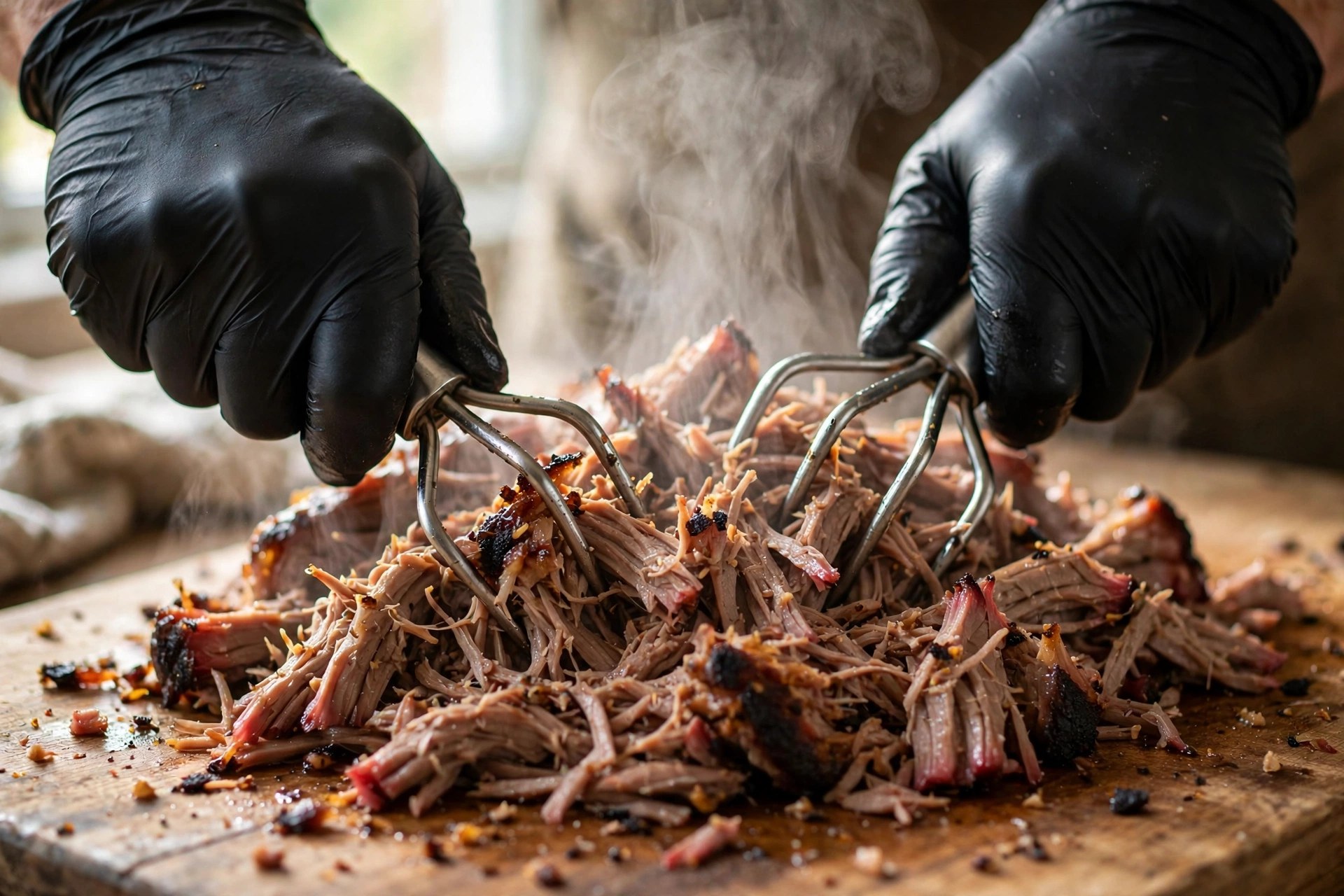
Here’s the part that trips up first-time cooks. You buy a 10-pound pork butt, smoke it all day, and end up with maybe 5–6 pounds of actual pulled pork. Where did the rest go? Fat rendered out, moisture evaporated, and — if you bought bone-in — the shoulder blade got tossed.
Across hundreds of documented cooks, a pork butt yields 50–60% of its raw weight as finished pulled pork. Boneless butts run a little higher; bone-in butts run a little lower because the bone itself is roughly 10% of the package weight. The safe planning number is 50%: buy double the cooked weight you need.
That makes the mental math easy:
- Need 10 lb cooked? Buy 20 lb raw (two 10-pound butts).
- Need 16 lb cooked? Buy 32–35 lb raw (three to four butts).
- Buying bone-in? Add about 10% to your raw target to cover the bone.
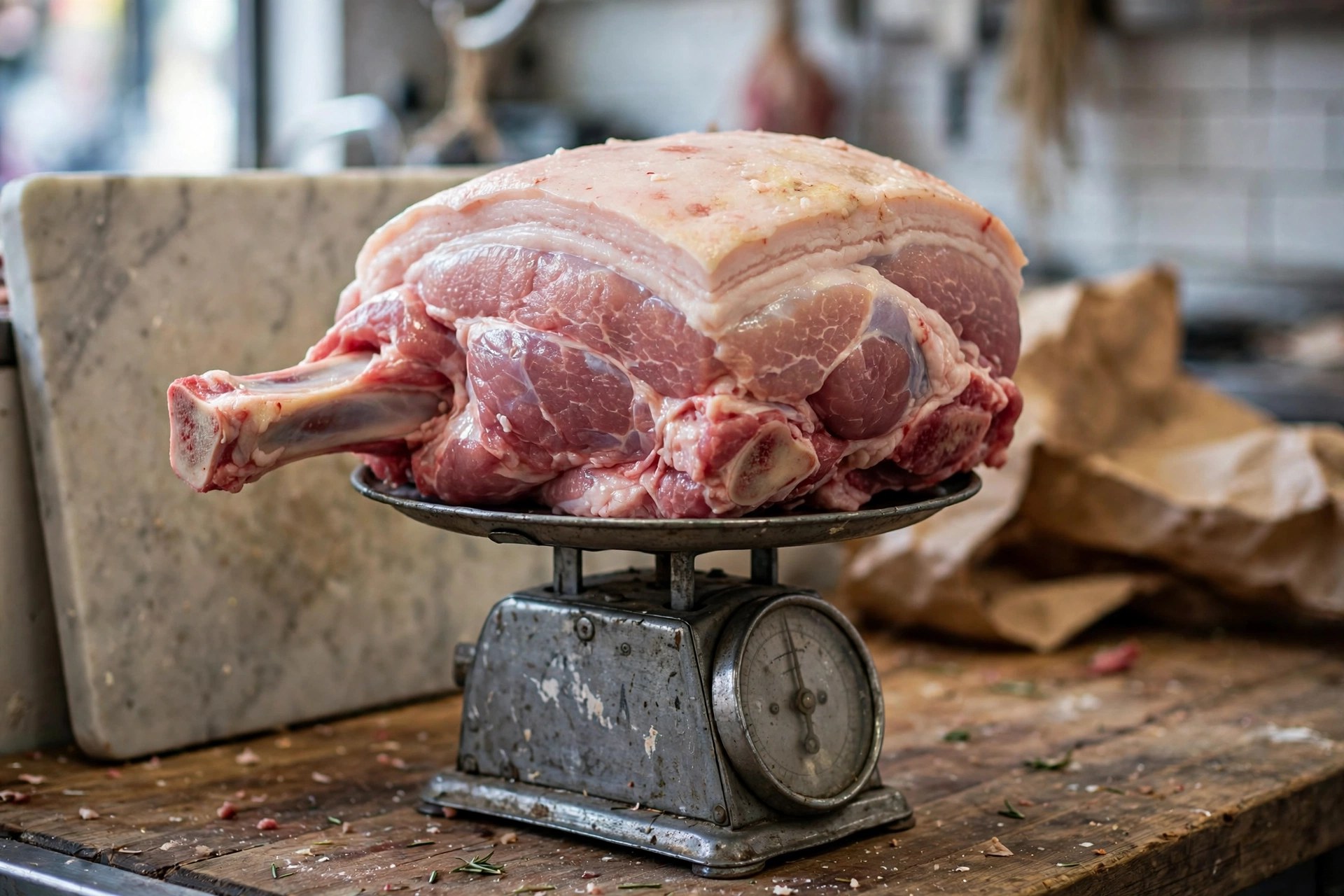
If you’re buying at a warehouse club, pork butts usually come in cryovac twin-packs around 14–20 pounds total, which conveniently covers a 25–30 person event. One thing worth knowing: two smaller butts cook faster and more evenly than one giant one, and they give you a better bark-to-meat ratio. For large crowds, several 8–10 pound butts beat a single 20-pounder every time.
The Pulled Pork Formula (Plus Ready-Made Tables)
If you want a number you can trust instead of a guess, use this formula:
Raw pork needed = ((adults × 1/3) + (kids × 1/4)) × 2
That gives you pounds of raw boneless pork butt. Walk through it once: 40 adults and 10 kids. (40 × 1/3) = 13.3, (10 × 1/4) = 2.5, total cooked = 15.8 lb. Double it: about 32 pounds raw. Round up to 33–34 if you’re buying bone-in.
Don’t feel like doing math? Use this table — it assumes 1/2 pound cooked per adult (the typical-BBQ column above) with the 50% yield already factored in:
| Guests | Cooked pulled pork | Raw boneless pork butt | Raw bone-in pork butt |
|---|---|---|---|
| 10 | 5 lb | 10 lb | 11 lb |
| 25 | 12.5 lb | 25 lb | 27–28 lb |
| 50 | 25 lb | 50 lb | 55 lb |
| 75 | 37.5 lb | 75 lb | 82–83 lb |
| 100 | 50 lb | 100 lb | 110 lb |
| 150 | 75 lb | 150 lb | 165 lb |
| 200 | 100 lb | 200 lb | 220 lb |
These numbers assume you’re serving sandwiches or plates with sides. If pulled pork is the only protein and you’re light on sides, bump everything up one row. And if you specifically want leftovers — which, with pulled pork, you should — add another 10–15% on top. Leftover pulled pork is one of the best problems in BBQ; it freezes beautifully for months.
Adjusting Portions for Real Catering Situations
The formula gives you a starting point. Now adjust for the humans you’re actually feeding:
- Buffet vs plated. Buffet guests serve themselves, and self-served portions run about 20–30% larger than plated ones. If you’re running a buffet, use the 1/2-pound-per-adult column even if sides are plentiful.
- Sandwiches vs plates. One pound of cooked pulled pork makes 3–4 full sandwiches or 5–6 sliders. If you’re serving sliders on small buns, guests eat more total pieces but less meat per piece — plan on the standard 1/3 lb and you’ll usually have room to spare.
- Big sides cut meat consumption. Heavy sides like mac and cheese, baked beans, and potato salad genuinely reduce how much pork people eat. If your spread has four or more real sides, the 1/3-lb figure holds. Two sides or fewer? Plan on 1/2 lb.
- Kids aren’t small adults. The 1/4-pound kid portion works up to about age 12. Teenagers eat like adults — sometimes like two adults. Count anyone 13+ as an adult in your formula.
- Vegetarian and non-pork guests. At weddings and corporate events, 5–10% of guests may skip pork entirely. Don’t reduce the pork order for them — but do make sure you have an alternative protein so they aren’t stuck with coleslaw.
- Alcohol at the event. Beer and BBQ go together, and drinking guests eat more. Add 10% if it’s that kind of party.
Professional caterers also think in servings per pound: 3 servings per pound of cooked pork is the industry-standard conversion. So a 100-person event at 1/2 lb each needs 50 pounds cooked — that’s 150 servings at the 1/3-lb size, if you want a sanity check on your trays.
Timing the Cook When You’re Feeding a Crowd
Portion math means nothing if the pork isn’t ready when guests arrive. A pork butt smoked at 225–250°F takes roughly 1.5–2 hours per pound, so an 8-pound butt can take 12–16 hours. Plan the cook backwards from serving time, then add a 2-hour buffer.
The target is an internal temperature of 195–205°F, when the bone wiggles free and the meat shreds with two forks. Don’t pull it at 165°F — that’s safe to eat but won’t shred. For the full temperature breakdown, see our guide to the internal temperature for pulled pork and the best temp to smoke a pork butt.
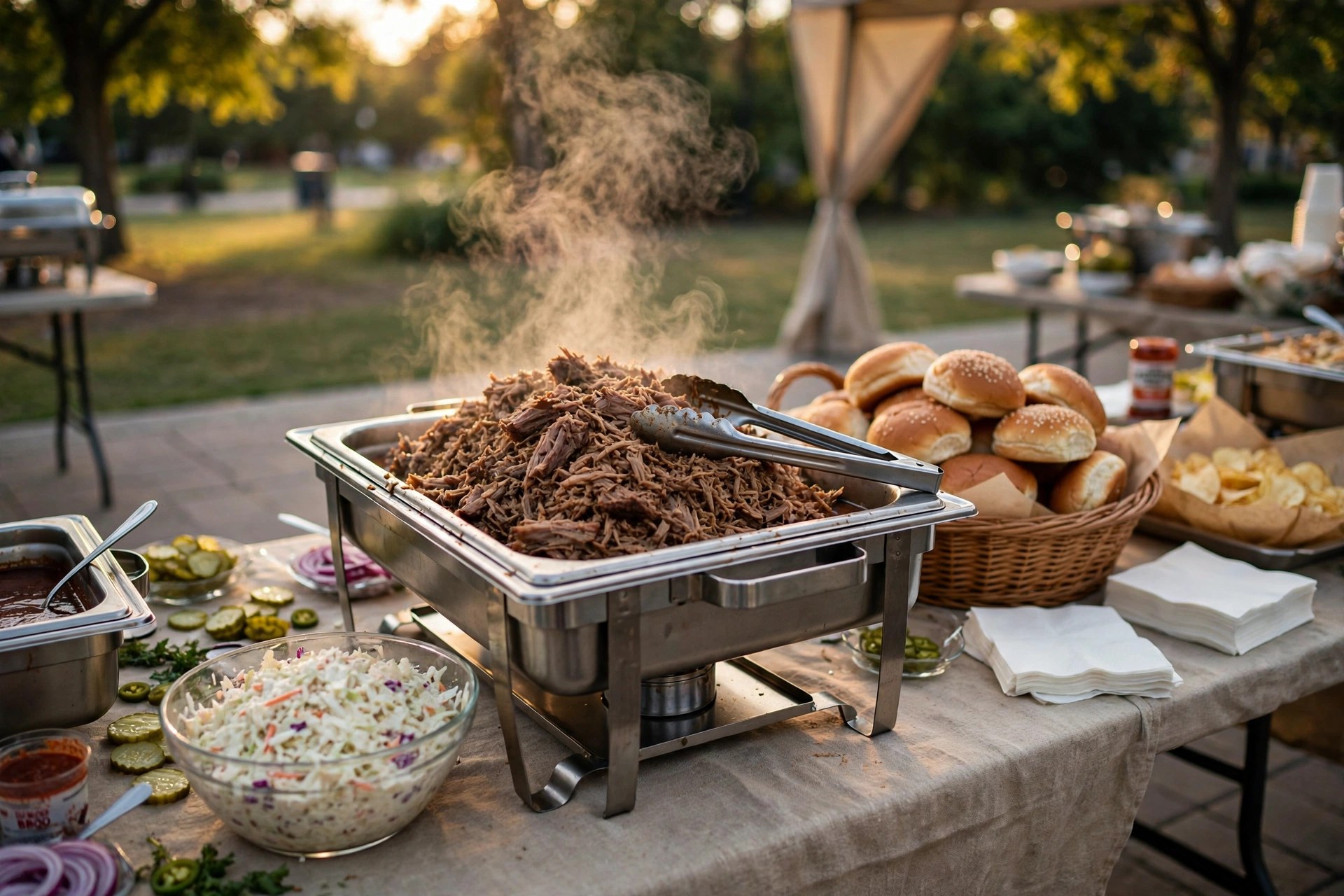
For a crowd, cook a day ahead. Pulled pork reheats almost perfectly — arguably better, since the flavors settle overnight. Smoke it, shred it, refrigerate in foil pans with some of the cooking juices, and reheat it gently the day of. At the event, hold it in chafing dishes or a slow cooker set to warm (above 140°F for food safety) with a splash of apple juice or broth to keep it moist. A full chafing pan (about 10 lb of pork) serves roughly 30 guests at 1/3 lb each — handy for tray planning.
What If You’re Running Short? (And the Leftover Plan)
It happens. The RSVP count was wrong, or the pork stalled at 165°F for four hours and guests ate the appetizers while waiting. If you realize you’re light on meat:
- Switch to slider buns. Smaller buns mean smaller portions, and nobody feels shorted — they just go back for more sliders.
- Put out generous sides early. Guests fill up on beans and slaw while the pork stretches.
- Sauce the pork lightly. A little sauce keeps smaller portions tasting rich and juicy.
- Shred finer rather than chunkier. Finely shredded pork fills a sandwich visually with less meat per bun.
The flip side is far better: having extra. Pulled pork is one of the most freezer-friendly meats in BBQ. Portion leftovers into 1-pound bags with a spoonful of cooking juices, squeeze out the air, and freeze — it keeps 3–4 months and reheats in simmering water or a low oven without drying out. See our guide on storing leftover BBQ safely for the full breakdown, and if you’re comparing proteins for your next event, our brisket per person guide runs the same math for beef.
Frequently Asked Questions
How much pulled pork per person for sandwiches?
Plan on 1/3 pound (about 5 oz) of cooked pulled pork per adult for standard sandwiches. One pound of cooked pork makes 3–4 full-size sandwiches, so 25 guests need about 8–9 pounds of cooked pork — roughly 17–18 pounds of raw pork butt.
How much raw pork butt do I need for 50 people?
For 50 adults, buy 50 pounds of raw boneless pork butt (or about 55 pounds bone-in). That yields roughly 25 pounds of cooked pulled pork at 1/2 pound per person. If sides are light, round up to 55–60 pounds raw.
Does bone-in or boneless pork butt yield more pulled pork?
Boneless yields slightly more — about 55–60% of raw weight vs 50–55% for bone-in, since the bone accounts for roughly 10% of the package. The difference is small enough that either works; just add 10% to your raw purchase if you buy bone-in.
How far ahead can I cook pulled pork for a party?
Smoke it up to 2 days ahead, shred, and refrigerate in covered foil pans with some cooking juices. Reheat covered at 250°F until it hits 165°F internally, adding a splash of apple juice if it looks dry. Pulled pork also freezes well for 3–4 months.
How do caterers keep pulled pork warm for hours?
Chafing dishes with sterno burners are the standard — they hold pork safely above 140°F for 2–4 hours. Add a little apple juice or broth to the pan, keep it covered between servings, and refill from a backup pan rather than letting one pan sit all day. More tips in our guide on keeping BBQ warm for a party.
Your next step: Count your guests, pick your portion column from the table above, and buy your pork butts a day early — then work the cook backwards from serving time using a 1.5–2 hour per pound estimate at 250°F. Do that, and the pan won’t run dry.
[…] pork without it drying out over hours — and it pairs perfectly with planning portions from our pulled pork per person guide so you’re reheating the right amount in the first […]