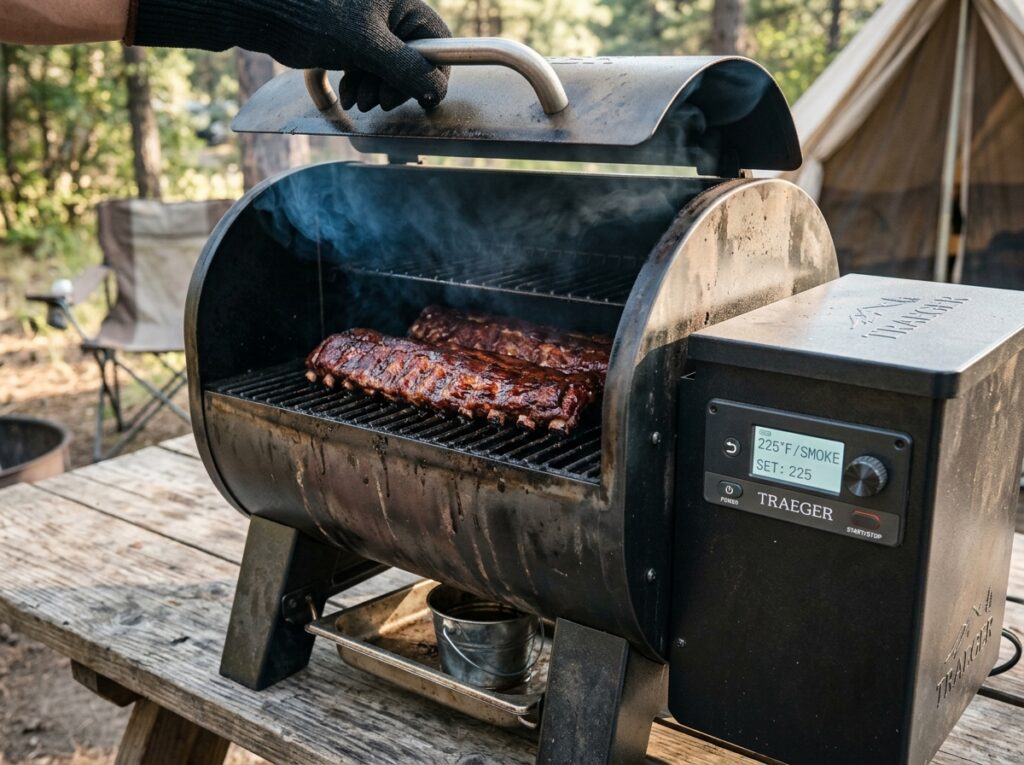
A full-size pellet smoker can weigh over 150 pounds. Try loading that into your truck bed for a weekend camping trip or a tailgate party — it’s not happening. That’s exactly the gap portable pellet grill smokers fill. They give you real wood-fired flavor, automated temperature control, and enough cooking space to feed a small crew, all packed into something you can actually carry or toss in your car without throwing out your back.
But here’s the thing — not every portable pellet grill lives up to its promise. Some run out of pellets too fast. Some can’t hold temperature in a light breeze. And a few are “portable” only if you consider 80 pounds something you’d casually move around.
I’ve spent years testing, comparing, and writing about grills and smokers. This guide breaks down what actually matters in a portable pellet grill smoker, which models are worth your money right now, and how to pick the one that fits YOUR specific situation — whether you’re a tailgater, a camper, or someone with a tiny apartment balcony.
Why Portable Pellet Grill Smokers Have Gotten So Popular
The pellet grill market has exploded over the past few years. According to industry data, pellet grill sales in the U.S. grew by more than 30% between 2020 and 2023, and a big chunk of that growth came from the portable segment. It makes sense. People want the convenience of a pellet grill — set-it-and-forget-it temperature control, consistent smoke, no babysitting — but they don’t want to be chained to their backyard.
Think about it this way. A charcoal grill is portable, sure, but you’re constantly managing airflow, adjusting vents, and watching temperatures. A propane grill is portable and easy, but you get zero smoke flavor. A portable pellet grill smoker splits the difference beautifully. You get authentic wood smoke taste with push-button simplicity, and you can take it wherever you want.
The rise of van life culture, overlanding, competitive tailgating, and outdoor festivals has only made people hungrier for this kind of gear. You’re not the only one searching for one — and you’re smart to do your homework before buying.
What to Look For Before You Buy
Before I get into specific models, let’s talk about what separates a great portable pellet grill from one you’ll regret buying. Because trust me, there are some duds out there that look good on paper but fall apart in real use.
Weight and True Portability
This is the most obvious factor, and also where brands stretch the truth the most. If a grill weighs 75 pounds, you CAN technically carry it — but will you want to? For most people, anything under 60 pounds feels genuinely portable. Under 40 pounds, and you’re in “grab and go” territory. Pay attention to whether the grill has folding legs, a built-in handle, or latches that lock the lid during transport.
Cooking Area
You’ll see cooking area measured in square inches. For a portable unit, anything between 200 and 350 square inches is the sweet spot. That’s enough to smoke a rack of ribs, grill a dozen burgers, or cook for 4–6 people comfortably. Go smaller than 200, and you’re basically cooking for yourself. Bigger than 400, and the grill starts getting heavy and bulky — defeating the whole portable purpose.
Hopper Capacity
The hopper holds your wood pellets. On full-size grills, hoppers hold 15–20 pounds. On portables, you’re usually looking at 4–10 pounds. A smaller hopper isn’t necessarily a dealbreaker, but it does mean you’ll need to refill more often during long smokes. If you plan to do brisket or pork butts on the road, look for at least an 8-pound hopper.
Pro Tip: Always bring extra pellets in a sealed bucket. Nothing ruins a cook faster than running out of fuel three hours in.
Temperature Range and Control
Good portable pellet grills hold temperatures between 180°F and 500°F. That range lets you low-and-slow smoke at 225°F AND sear steaks at high heat. Cheaper models often cap out around 400°F and struggle to maintain steady temps below 200°F. Look for grills with PID controllers — they’re much more precise than older-style controllers and keep temp swings within 5–10 degrees.
Power Source
Here’s something a lot of first-time buyers overlook. Pellet grills need electricity. The auger that feeds pellets, the fan that circulates air, and the igniter rod all run on power. Most portable pellet grills use a standard 120V outlet, which is fine at home or a campsite with hookups. But if you’re going off-grid, you’ll need a portable power station or an inverter connected to your vehicle battery. A few newer models run on 12V DC power directly, which is a huge plus for camping and overlanding.
Build Quality and Durability
Portable doesn’t have to mean flimsy. Look for heavy-gauge steel construction, powder-coated finishes, and stainless steel grates. If you’re loading this thing in and out of vehicles regularly, it needs to handle bumps and jostling without warping or losing its seal. Check if the lid has a good gasket — poor seals mean smoke leaks and temperature fluctuations, especially in wind.
Top Portable Pellet Grill Smokers for 2025
Alright, let’s get into the actual models. I’ve narrowed this down to grills that genuinely earn the “portable” label and perform well enough to make serious BBQ on the go.
Traeger Ranger
Traeger basically invented the pellet grill category back in the 1980s, and their Ranger has been one of the most recognized names in the portable pellet space. It weighs about 60 pounds, which is on the heavier side for portable, but the build quality justifies it. You get 184 square inches of cooking space, a cast iron griddle plate option, and Traeger’s Digital Arc controller that maintains temps within about 15 degrees.
The hopper holds 8 pounds of pellets, which is solid for its size. Where the Ranger really shines is in its Keep Warm mode — you can cook your food, switch to Keep Warm, and serve when you’re ready. That’s perfect for tailgating when you want everything hot at kickoff.
The downsides? The cooking area is on the smaller side. You’ll fit about 8 burgers or a small rack of ribs, but don’t expect to cook for a big group. And at roughly $400–$450, it’s priced at the premium end for what you get.
Green Mountain Grills (GMG) Trek
The GMG Trek is a strong contender that often gets overlooked next to Traeger’s marketing machine. It weighs around 57 pounds with a sense-mate thermal sensor built in. The cooking surface gives you about 219 square inches — a nice step up from the Ranger. The hopper is a bit smaller at roughly 5 pounds of pellet capacity, so you’ll refill more on longer cooks.
What sets the Trek apart is its WiFi capability and app control through GMG’s smart phone app. You can monitor and adjust temperature from your phone, which feels almost absurd for a portable grill — but it’s genuinely useful. The price point tends to sit around $350, which makes it solid value.
One thing to watch: the legs are a bit wobbly on uneven ground. If you’re setting up at a campsite with rough terrain, bring a small piece of plywood to set it on.
Camp Chef Pursuit 20
Camp Chef has been making quality outdoor cooking equipment for decades, and the Pursuit 20 is their answer to the portable pellet grill question. It gives you a generous 501 square inches of cooking space (including the upper rack), which is significantly more than most competitors. You can genuinely cook for 8–10 people on this thing.
It weighs around 57 pounds and features Camp Chef’s Ash Kickin’ cleanout system — pull a lever and ash drops into a cup below. If you’ve ever dealt with the mess of cleaning out a portable grill at a campsite, you’ll appreciate that feature deeply.
The slide-and-grill technology also lets you open the flame broiler for direct heat grilling, giving you sear marks and high-heat cooking that most pellet grills struggle with. Priced around $400–$500 depending on sales, it’s a versatile option that works for both quick grills and low-and-slow sessions.
Recteq RTCS
Recteq (formerly REC TEC) has built a cult following in the pellet grill community, and their portable option doesn’t disappoint. The RTCS delivers around 340 square inches of cooking space with a sturdy stainless steel build that feels more like a full-size unit. The PID controller is impressively precise, keeping temperature swings within 5 degrees.
It comes with WiFi and Bluetooth connectivity, letting you monitor cooks from your phone. The hopper holds about 8 pounds, and the temperature range goes from 200°F up to 500°F. Weight sits around 68 pounds — heavier than ideal for “grab and go,” but if your priority is cook quality over ultralight portability, this is hard to beat.
The Recteq brand also comes with a standout warranty and responsive customer support, which matters when you’re investing $500+ in a portable cooker.
Asmoke AS300
If budget is a big factor, the Asmoke AS300 deserves a close look. At around $250–$300, it’s one of the most affordable portable pellet grills that still performs respectably. You get about 256 square inches of cooking space, a double-walled construction for better insulation, and it weighs a manageable 44 pounds.
The AS300 comes with a cover and a meat probe included — small things that add up in value since you’d buy them separately for other grills. Temperature range runs from 180°F to 500°F, and the analog-style controller is simple enough that anyone can use it right out of the box.
Where does it fall short? The build materials aren’t as premium as Traeger or Recteq. The paint finish can chip over time, and the temperature accuracy isn’t as tight as PID-controlled models. But for casual use — weekend camping trips, small tailgates, apartment balcony cooking — it punches well above its price. If you want a deeper look at this brand, check out our Asmoke pellet grill review for a more detailed breakdown.
Weber SmokeFire EX4 (Honorable Mention)
Technically, the SmokeFire EX4 isn’t marketed as a portable grill — it has a full leg frame and weighs over 100 pounds. But I mention it because some people shopping for “portable” really mean “compact enough for a small patio” rather than truly mobile. If that’s you, the EX4’s 672 square inches of cooking space and Weber’s Flavorizer bar system for direct grilling make it incredibly versatile. Just don’t expect to load it into a sedan.
How a Portable Pellet Grill Compares to Other Portable Options
You might be wondering how a portable pellet grill smoker stacks up against other portable cooking options. Let me give you an honest comparison.
A portable charcoal grill — like a Weber Kettle or a small Kamado — gives you more intense smoky flavor and reaches higher temperatures. But it requires constant attention. You’re managing coals, adjusting vents, and monitoring temps yourself. If you enjoy that hands-on process, great. But if you want to set a temperature and go play cornhole for two hours, a pellet grill wins.
A portable gas grill is dead simple. Turn a knob, and you’re cooking. But gas delivers virtually no smoke flavor. You’re basically cooking on a stove outdoors. For burgers and hot dogs at a quick cookout, gas is fine. For real BBQ? Not even close.
A portable electric smoker does offer set-and-forget convenience, but most are heavy, bulky, and limited in temperature range. Plus, they don’t produce as much visible smoke ring or deep wood flavor as pellet grills.
The portable pellet grill sits right in the middle — easier than charcoal, more flavorful than gas, and more versatile than electric. That’s why it’s become the go-to for so many outdoor cooks.
If you’re still weighing whether a pellet grill is the right type for you, our guide on the best pellet grills covers full-size options that might suit your needs better if portability isn’t the main concern.
Getting the Most Out of Your Portable Pellet Grill
Owning a portable pellet grill is one thing. Actually using it well is another. Here are some practical tips I’ve picked up from years of cooking on these things.
Season It Before Your First Cook
Just like a cast iron skillet, your pellet grill needs seasoning. Run it at 350°F for about 30–45 minutes with the lid closed. This burns off manufacturing oils and coats the interior with a light protective layer. Most brands include seasoning instructions — follow them.
Use Quality Pellets
Not all wood pellets are created equal. Cheap pellets often contain fillers, bark, and binding agents that produce bitter smoke and leave excessive ash. Stick with 100% hardwood pellets from brands like Lumberjack, Bear Mountain, or the grill manufacturer’s own brand. The type of wood — hickory, mesquite, apple, cherry — affects flavor significantly. For an all-purpose choice, a blend of hickory and cherry works great on almost everything.
Mind the Wind
Wind is the number one enemy of portable pellet grill performance. Even a moderate breeze can cause temperature swings of 30–50 degrees because portable units have thinner walls and less insulation than full-size grills. Position your grill behind your vehicle, a wall, or a natural windbreak whenever possible. Some people carry a foldable wind screen, and that small addition makes a surprising difference.
Keep Your Grill Clean
Ash buildup in the fire pot is the most common cause of temperature problems and ignition failures on pellet grills. After every 2–3 cooks, vacuum out the fire pot and ash tray. On a portable grill with a small fire pot, even a little excess ash can smother the fire and cause a flameout mid-cook.
Invest in a Good Thermometer
The built-in thermometers on most portable pellet grills are decent but not perfect. An instant-read thermometer is essential for checking meat doneness accurately, and a wireless meat thermometer lets you monitor internal temps from a distance — handy when you’re off enjoying the campsite or the game.
What Can You Actually Cook on a Portable Pellet Grill?
More than you’d think. People assume portable means limited, but a good portable pellet grill smoker handles a surprisingly wide range of food.
Smoked ribs are a natural fit. A baby back rack fits on most portable grills without trimming, and you can get competition-quality results with the right technique. If you’re new to ribs, our 3-2-1 ribs guide walks you through the method step by step — it works just as well on a portable as it does on a full-size smoker.
Burgers and steaks work great too, especially on models with a direct flame option. Set the grill to high (450–500°F), and you’ll get solid sear marks with a subtle smoke kiss.
Smoked chicken — whole spatchcocked or thighs — cooks in under two hours at 275°F and comes out with incredible flavor. Pork shoulder is doable on portables with larger hoppers, though you’ll need to plan for refills during a 10–12 hour cook. Knowing the best temp to smoke pork butt makes a big difference in your results.
You can even smoke cheese, nuts, and vegetables at lower temperatures. A portable pellet grill isn’t just a one-trick pony — it’s a legitimate outdoor cooking station that happens to fold up and fit in your trunk.
Accessories You’ll Want to Grab
You don’t need a mountain of accessories, but a few smart additions make a real difference.
A grill cover is non-negotiable if your grill doesn’t come with one. Portable grills get moved around a lot, and exposed metal plus moisture equals rust. A drip tray liner saves you cleanup time — just toss the liner after cooking instead of scraping grease. Quality grill tools — tongs, a spatula, and a good basting brush — are obvious but easy to forget when you’re packing for a trip.
And don’t forget a portable power solution if you’re going off-grid. A small battery-powered generator or a jackery-style power station in the 300–500 watt range will run a pellet grill for 6–8 hours easily.
How Much Should You Spend?
Portable pellet grill smokers range from about $200 on the low end to $700+ for premium models. Here’s a rough breakdown of what you get at different price points.
Under $300 gets you a functional grill that handles casual use well. Expect thinner construction, simpler controllers, and smaller cooking areas. Great for someone who grills a few times a month and doesn’t need precision temperature control.
$300–$500 is the sweet spot for most people. You’ll find PID controllers, WiFi connectivity, more cooking space, and better build quality. If you’re serious about BBQ but don’t want to overspend, this is where to aim.
$500+ gets you premium materials, the tightest temperature control, larger hoppers, and brand-name reliability from companies like Recteq or Traeger’s higher-end models. Worth it if you cook frequently or use your grill for competition-style BBQ.
Quick Fact: The best time to buy any grill — portable or otherwise — is during off-season sales in late fall and winter. Our guide on the best time to buy a grill covers the exact months and sales events to watch for.
FAQ
Can you use a portable pellet grill for smoking brisket?
Yes, but with some planning. Brisket cooks take 10–16 hours, so you’ll need to refill the hopper multiple times on most portable models. Choose a grill with at least an 8-pound hopper, and keep extra pellets handy. Smaller cuts like brisket flats (4–6 pounds) work better than full packers on portable grills because of space constraints. Check our guide on the best temp to smoke brisket for timing and technique tips.
Do portable pellet grills work without electricity?
No. All pellet grills require electricity to run the auger motor, igniter, and fan. For off-grid use, you’ll need a portable battery power station (300+ watts recommended) or a 12V inverter connected to a vehicle battery. Some models, like certain Camp Chef units, offer 12V adapters specifically for camping and tailgating.
How do portable pellet grills handle cold weather?
They can struggle. Thin-walled portable grills lose heat faster in cold or windy conditions, which means the grill burns more pellets to maintain temperature. Using an insulated blanket (several brands make them for specific models) helps significantly. Positioning the grill out of the wind and starting with a full hopper also makes cold-weather cooks much smoother.
Are portable pellet grills worth it over portable charcoal grills?
It depends on your priorities. If you want convenience and consistent results with minimal effort, a portable pellet grill is absolutely worth it. If you enjoy the hands-on ritual of managing charcoal and you prioritize maximum smoke flavor and high-heat searing, a charcoal option like a small kamado grill or kettle grill might suit you better.
What pellet flavors work best for general grilling?
A hickory-cherry blend is the most versatile option. Hickory adds bold, classic BBQ smoke flavor, while cherry mellows it out with a slightly sweet, fruity note. For poultry and fish, apple or maple pellets give a lighter, more delicate smoke. Mesquite is intense — great for beef, but use it sparingly or blend it with something milder.
Your Next Move
Picking the best portable pellet grill smoker really comes down to three questions: How much cooking space do you need? How portable does it truly need to be? And what’s your budget?
If you want the most cooking space in a portable package, the Camp Chef Pursuit 20 is hard to argue against. If you want the tightest temperature control and don’t mind a bit more weight, the Recteq RTCS delivers serious performance. For budget buyers, the Asmoke AS300 gets you into the pellet grill game without emptying your wallet. And for brand trust and resale value, Traeger’s Ranger remains a proven choice.
Whatever you choose, you’re making a smart call by going with a pellet grill for portable cooking. The combination of real smoke flavor, hands-off temperature control, and genuine portability is something no other grill type can match right now. Grab one, load it up, and go make some incredible food wherever the road takes you.