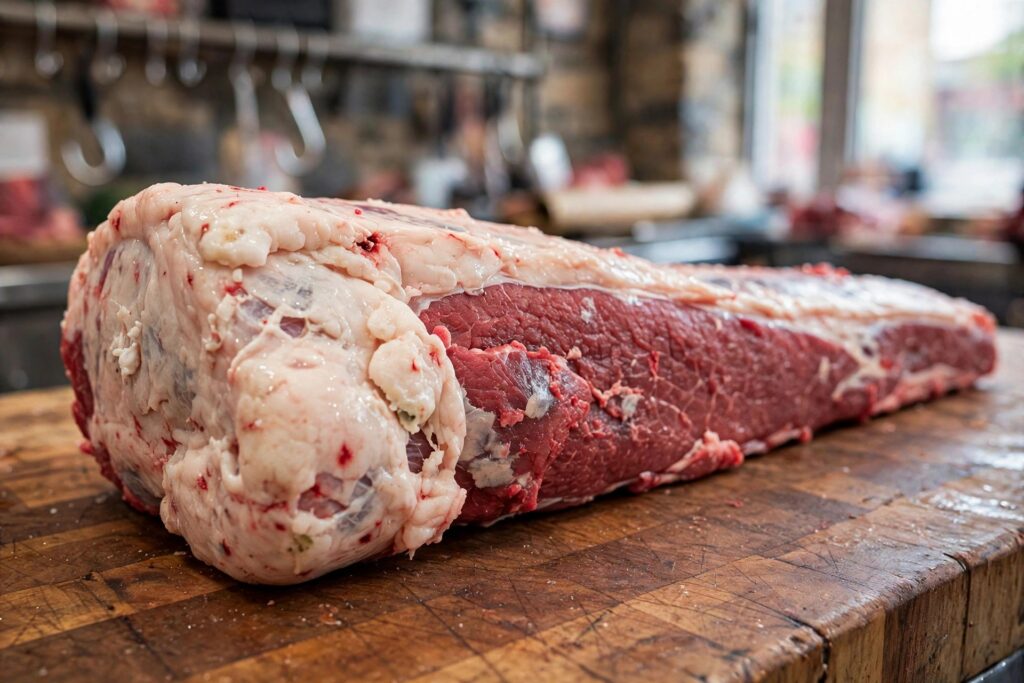
Brisket comes from the lower chest of the cow, right between the forelegs. It’s cut from the pectoral muscles — the same muscles that carry roughly 60 percent of the animal’s body weight every time it stands or walks. That constant workload loads the meat with connective tissue, which is exactly why brisket demands long, slow cooking to turn tender.
That’s the short answer. The longer answer is more interesting, because knowing where brisket lives on the animal explains almost everything about how to buy it, trim it, and cook it. Once you picture the cut on the cow, the point-versus-flat debate, the fat cap, and the whole low-and-slow gospel all click into place.
What Part of the Cow Is Brisket, Exactly?
Picture a cow standing in a pasture. The brisket is the broad slab of muscle across the breast, tucked between the two front legs and running from the base of the neck back toward the belly. Butchers classify it as one of the eight primal cuts — the large sections a carcass is first broken into — sitting directly below the chuck (shoulder) and just ahead of the plate (belly).
Anatomically, the brisket is two overlapping pectoral muscles: the deep pectoral and the superficial pectoral. The deeper, thicker muscle becomes the point; the thinner, more superficial one becomes the flat. These muscles act as the cow’s shock absorbers. Cattle don’t have collarbones, so instead of a bony frame holding up the front half of a 1,200-pound animal, the brisket muscles do the job on their own.
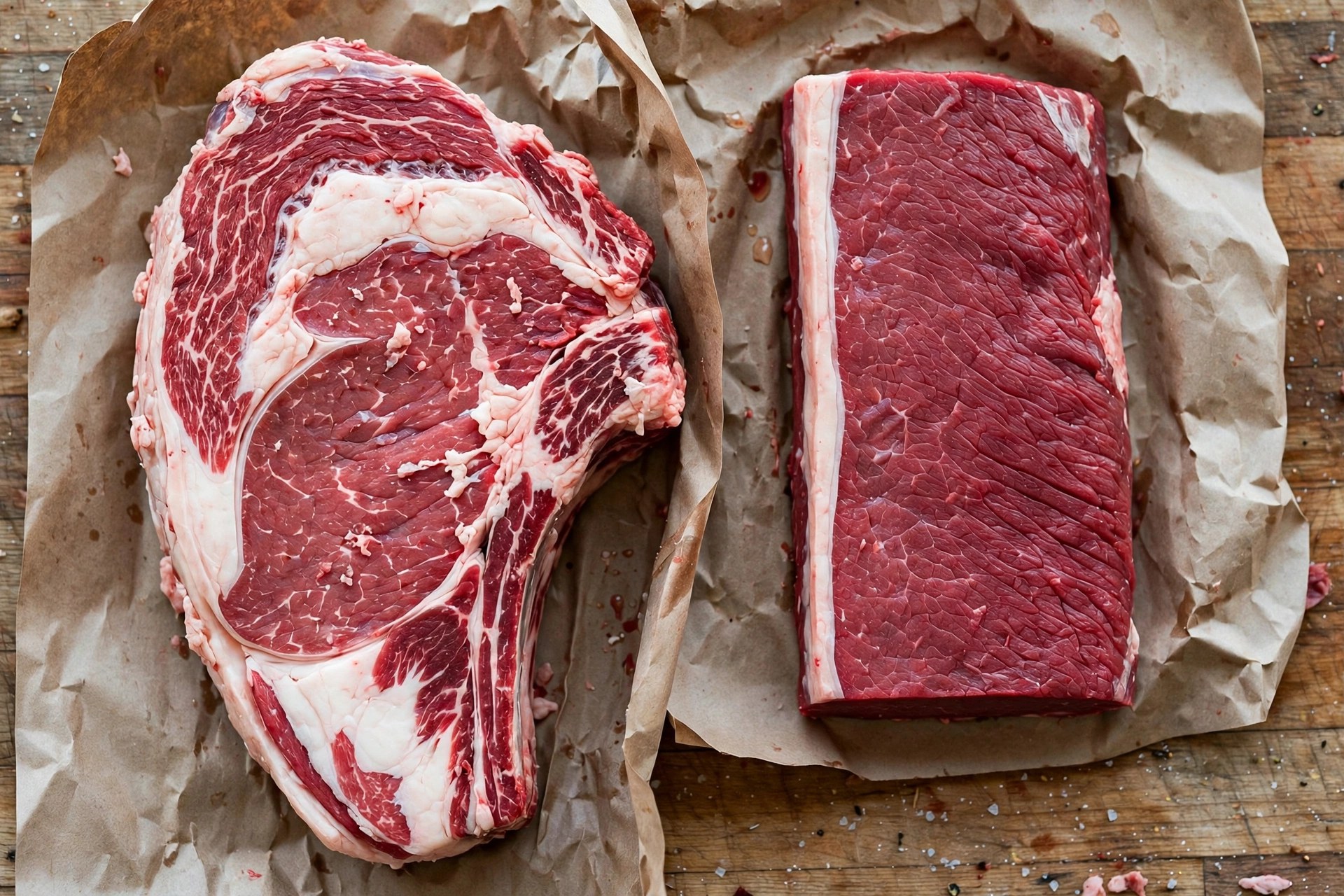
That detail matters more than it sounds. Every step the cow takes works these muscles, and worked muscle means dense fibers plus thick bands of collagen-rich connective tissue. A ribeye comes from the back, where the muscles barely move — that’s why it’s tender enough to sear in minutes. Brisket comes from the front, where everything moves constantly — that’s why it needs 10 to 14 hours in a smoker to surrender. As BBQ Host’s brisket anatomy guide puts it, the location is the reason for both the toughness and the flavor.
The Two Muscles Inside Every Brisket: Point vs Flat
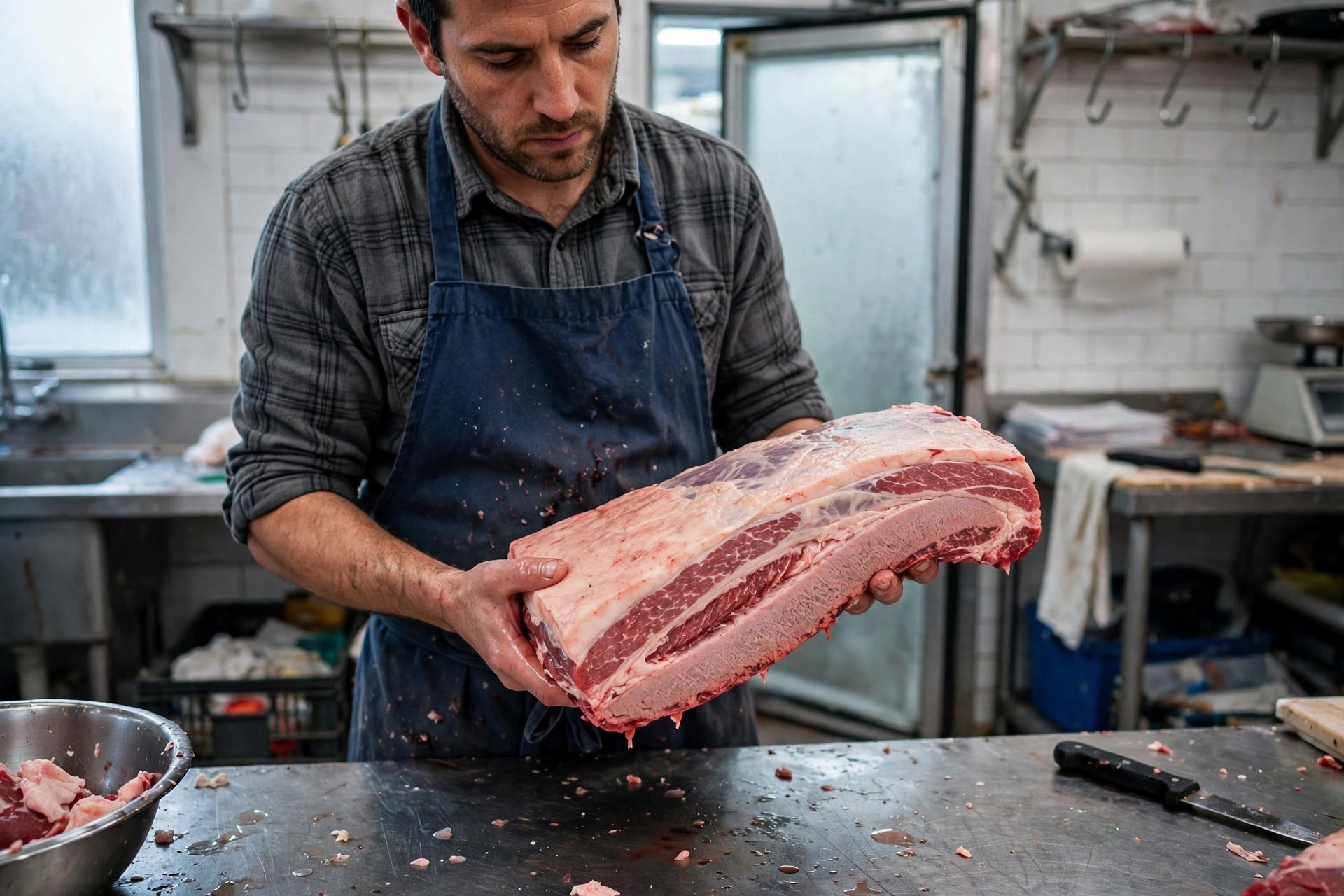
Every whole brisket — what pitmasters call a “packer” — holds two distinct muscles layered on top of each other and divided by a thick seam of fat called the deckle. They cook differently, slice differently, and honestly eat like two different cuts of meat. If you’ve ever wondered why one end of your brisket was juicy and the other end dry, this is why.
The flat, sometimes labeled the “first cut,” is the leaner, more rectangular muscle. It sits closer to the ribs, wears a fat cap on top, and slices into those picture-perfect uniform pieces you see fanned across competition trays. Because it’s lean, it’s also the half that dries out first if you overshoot your temperatures.
The point, also called the “second cut” or deckle, is the thick, heavily marbled muscle riding on top of the flat. It’s fattier, juicier, and far more forgiving — and it’s the piece that gets cubed and thrown back on the smoker to become burnt ends. Ask a room of pitmasters which half tastes better and the point wins the vote most days.
Here’s how the two halves compare at a glance:
| Feature | Flat (first cut) | Point (second cut) |
|---|---|---|
| Muscle | Superficial pectoral | Deep pectoral |
| Typical weight | 6–10 lbs | 5–7 lbs |
| Fat content | Lean, with a fat cap on top | Heavily marbled throughout |
| Shape | Long, rectangular, even thickness | Thick, tapered, irregular |
| Best for | Neat slices, sandwiches, corned beef | Chopped beef, burnt ends, shredding |
| Forgiveness | Dries out if overcooked | Stays juicy through a wide window |
When you buy a whole packer brisket, you’re getting both muscles still joined at the deckle — typically 10 to 16 pounds in the bag. When you see a “brisket flat” at the grocery store, you’re getting just the lean half, usually 5 to 8 pounds. That smaller flat is what most home cooks actually bring home, and it’s worth knowing which half you’re dealing with before you fire up the smoker. Our full point vs flat breakdown covers which one to pick for your cook.
Why Brisket Is One of the Toughest Cuts on the Cow
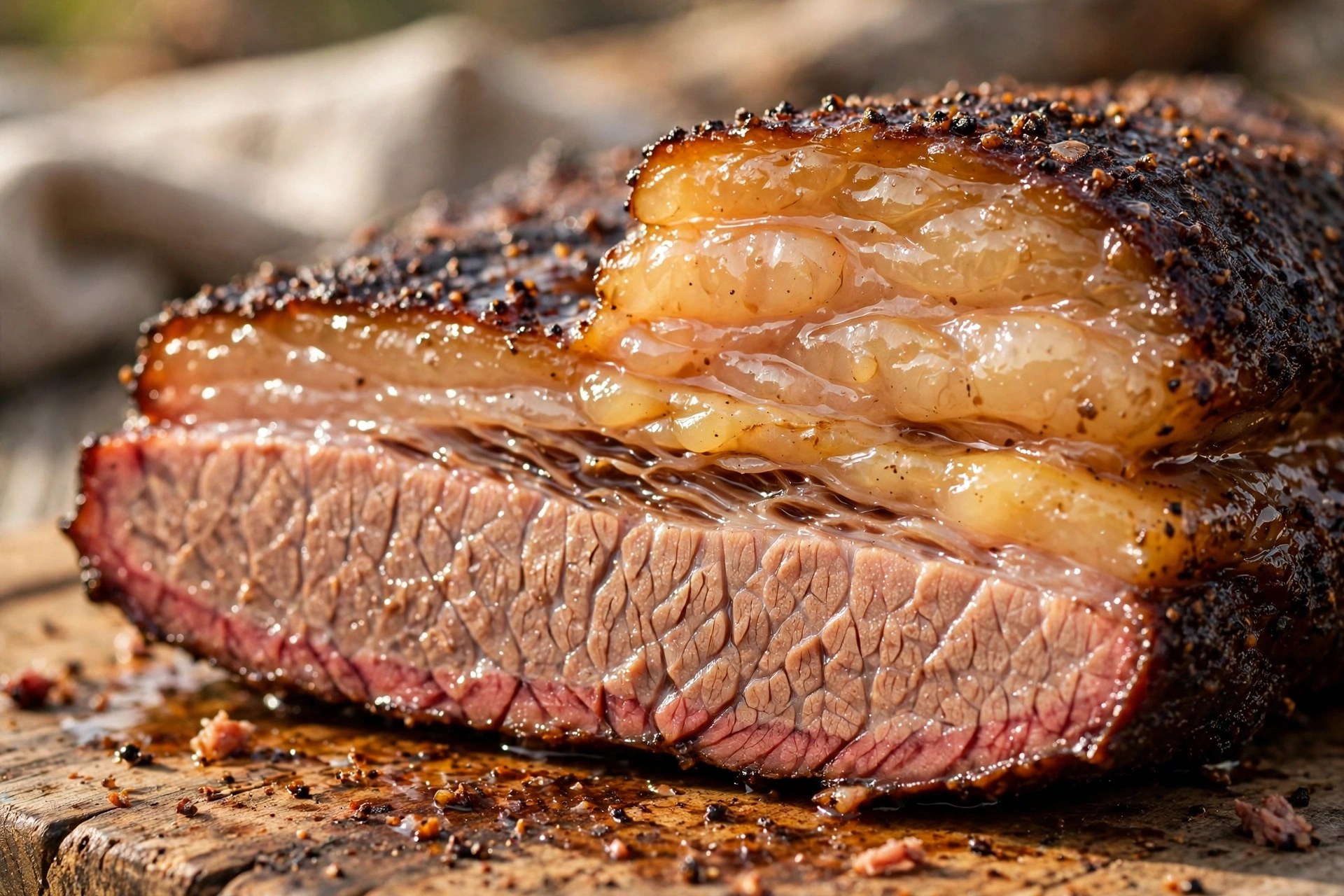
Toughness in beef comes down to two things: how much the muscle worked during the animal’s life, and how much connective tissue that work built up. Brisket maxes out both. Those pectoral muscles fire every time the cow shifts its weight, stands up, or walks to water — thousands of contractions a day across a multi-year life.
The result is meat laced with collagen, the tough protein that holds muscle fibers together. Eat brisket cooked fast and that collagen stays rubbery; you’ll be chewing a very long time. But hold the meat between 195°F and 205°F internal for a few hours and something wonderful happens: collagen melts into gelatin. The fibers loosen, the intramuscular fat renders, and the whole slab turns spoon-tender and juicy.
This is the entire scientific argument for low-and-slow barbecue in one cut of meat. The Kitchen KnowHow’s detailed brisket guide notes the same thing — the pectoral muscles’ workload is directly responsible for both the chewiness of raw brisket and the richness of properly cooked brisket. Toughness isn’t a flaw here. It’s the raw material.
It’s also why brisket was historically cheap. Before backyard smokers and Texas barbecue culture turned it into a delicacy, brisket was the cut butchers practically gave away — too tough for steaks, too big for most pots. Immigrant communities figured out first what pitmasters later perfected: give a hardworking muscle enough time and gentle heat, and it pays you back with the deepest beef flavor on the animal.
Where Brisket Sits on the Beef Chart
If you look at a beef carcass diagram, the brisket occupies the lower front quarter. Going clockwise from the top: the chuck (shoulder) sits above it, the rib sits behind it, and the plate (belly) and shank (foreleg) sit below and beside it. The brisket’s front edge starts near the neck; its rear edge runs back to about the fifth rib.
A few facts that help you read any beef chart with confidence:
- Two briskets per animal. Every steer yields a left and a right brisket, one from each side of the chest.
- One of eight primals. The brisket is separated early in butchering, alongside the chuck, rib, loin, round, plate, flank, and shank.
- IMPS number 120. In the meat industry’s Institutional Meat Purchase Specifications, a whole brisket is item 120 — handy if you ever order from a wholesale butcher.
- Roughly 3–4% of carcass weight. A 1,200-pound steer dresses out to around 750 pounds of carcass, and each brisket runs 10–16 pounds raw.
- Neighbors matter. The chuck above it is also a hardworking cut (think pot roast), while the rib behind it barely works at all (think ribeye). Brisket sits right at the boundary between tough and tender country.
That boundary is exactly why the flat and point behave so differently. The flat extends back toward the rib side, where the muscle works a little less. The point sits up front under the chuck, where the workload — and the marbling — is heaviest.
Packer, Flat, or Point: What You’ll See at the Store
Walk into a butcher shop or a warehouse club and brisket shows up under a few different labels. Knowing what each one means saves you from buying the wrong cut for your cook.
A whole packer brisket is the entire primal: point and flat together, usually 10–16 pounds, sold in a vacuum-sealed bag with the fat cap mostly intact. This is what competition cooks and Texas joints buy. It needs a big smoker and 12+ hours, but it gives you the full experience — and the point protects the flat during the cook.
A brisket flat is the lean half on its own, 5–8 pounds, rectangular and tidy. This is the most common brisket in regular grocery stores. It cooks faster (8–10 hours) but punishes mistakes — there’s less fat to cover for an overshoot.
A brisket point on its own is rarer at retail, 5–7 pounds of marbled, irregular muscle. If you spot one, grab it for burnt ends or chopped beef sandwiches.
You’ll also see brisket turned into other products: corned beef and pastrami are both cured brisket (usually the flat), and plenty of butchers grind brisket trimmings into premium burger blends. When you’re picking a packer, look for a thick, even flat, a flexible bend in the bag (a stiff brisket can signal a thick deckle of hard fat), and fat that’s white rather than yellow.
Why the Location Dictates How You Cook It
Everything about brisket cookery flows from the anatomy. The collagen needs time above 195°F internal to convert to gelatin, so the standard playbook is: smoke at 225–250°F until the meat probes tender, usually around 200–205°F internal, which takes roughly 1 to 1.25 hours per pound for a packer.
The fat cap goes on top in most smokers so it bastes the flat as it renders (fat-side-down folks have their reasons too, mainly protecting against harsh direct heat). The point, with its heavy marbling, powers through the stall with less drama; the lean flat is the part you wrap in butcher paper to protect. After the cook, a long rest — 1 to 2 hours minimum, wrapped and held warm — lets the gelatin set and the juices redistribute instead of flooding the cutting board.
Then comes the part the location makes non-negotiable: slicing. The grain in the flat runs one way; the grain in the point runs another, nearly perpendicular. Slice both against the grain or all that careful cooking goes to waste — long muscle fibers chew like rope no matter how tender the gelatin made them. Separate the point from the flat along the deckle seam first, then slice each muscle across its own grain. It’s the last anatomical lesson the brisket teaches you, right on the cutting board.
Frequently Asked Questions
What part of the cow is brisket?
Brisket is cut from the lower chest of the cow, between the forelegs. It comes from the two pectoral muscles — the deep pectoral (point) and the superficial pectoral (flat) — which support about 60 percent of the animal’s body weight.
Is brisket beef or pork?
Brisket is beef, cut from cattle. Pork has a roughly equivalent cut sometimes called pork brisket, but when a recipe or menu says “brisket” with no qualifier, it means beef.
Why is brisket so tough compared to steak?
The pectoral muscles work constantly to support the cow’s front half, building dense fibers and heavy collagen. Steaks come from back muscles that barely move. Brisket needs long, slow cooking to 200–205°F internal so the collagen melts into gelatin.
What’s the difference between the point and the flat?
The point is the thick, fatty upper muscle — juicier, more marbled, best for chopping and burnt ends. The flat is the lean, rectangular lower muscle — better for neat slices but easier to dry out. A whole packer brisket includes both.
Is corned beef the same cut as brisket?
Corned beef starts as brisket (usually the flat) that’s been cured in seasoned brine. Same origin on the cow, completely different preparation and flavor.
The next time you unwrap a packer, take a second to feel the anatomy before you trim: the thick knob of the point, the long runway of the flat, the fat seam between them. Then cook it low and slow, rest it properly, and slice against the grain. If you want the full temperature playbook, our guide to the best temp to smoke brisket picks up right where this one leaves off.