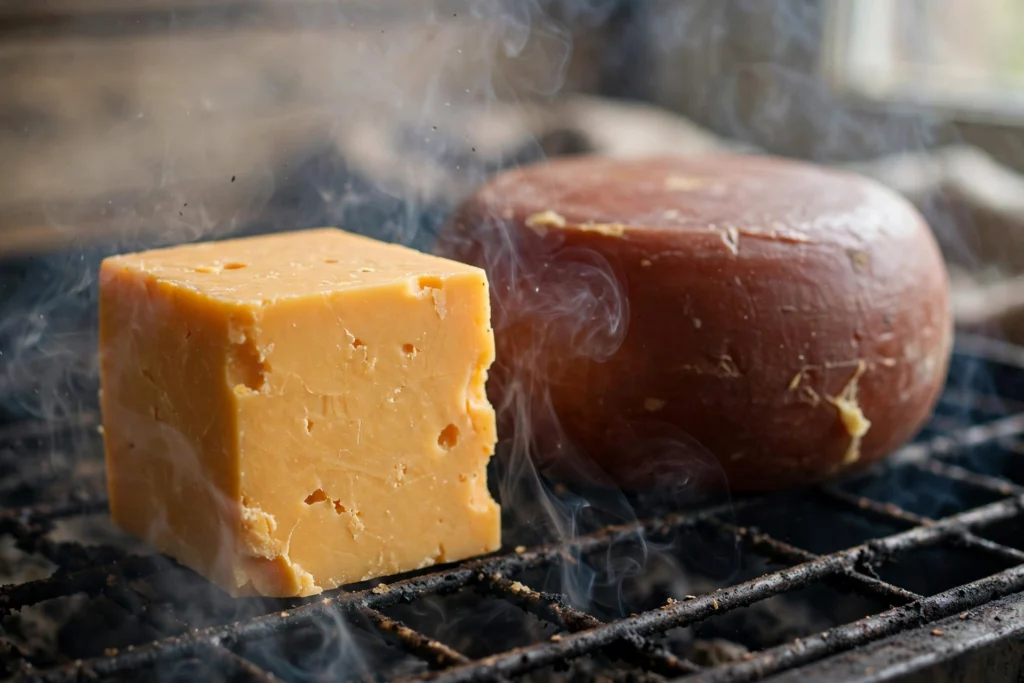
Most of what we do at the pit is hot smoking: fire close by, meat cooking slowly in a stream of warm smoke until it gives up and goes tender. Cold smoking is the quieter cousin. The food never cooks. It simply sits in cool smoke for hours, sometimes days, soaking up flavor while staying essentially raw — and that one difference changes everything about how you approach it, what you can smoke, and how careful you have to be.
It is also how some of the best things in a deli case are made. Lox. Smoked cheddar. The bacon hanging in old smokehouses. None of it ever saw real heat. If you have a grill or a smoker and a way to make smoke without making heat, you can do this at home — and one of the oldest tricks in the backyard BBQ playbook involves a soup can and a soldering iron.
What “Cold” Actually Means
Cold smoking happens below 90°F, and the sweet spot most practitioners aim for is roughly 68 to 86°F. Above 90°F, fat starts to render, cheese sweats and slumps, and you have wandered into warm-smoking territory whether you meant to or not. Down at true cold-smoke temperatures, the food’s texture barely changes. A slice of cured salmon stays silky. A block of cheddar stays firm. Smoke compounds settle on the surface and, given time, work their way in.
That is why cold smoking belongs to the cooler months for most of us, or to early mornings and evenings in summer. Your chamber temperature is mostly at the mercy of the weather, because the whole point is that your smoke source produces almost no heat of its own. On an 85°F afternoon, no rig on earth will keep a smoking chamber at 75°F without help — a tray of ice in the chamber buys you a little room, but picking a cool day buys you more.
The MacGyver Rig: A Can, an Iron, and a Pile of Chips
The classic DIY cold-smoke generator, the one that floated around BBQ blogs and forums for years, is disarmingly simple. Take a clean, empty tin can — the big tomato can size works well. Punch a hole in the side near the bottom. Fill the can partway with fine wood chips or sawdust. Then push the tip of a soldering iron through the hole so it sits buried in the chips, plug it in, and wait.
The iron’s tip gets hot enough to smolder the chips around it without ever bursting into flame. No flame means almost no heat. The can becomes a slow, steady smoke factory that can puff away for hours, and because it sits inside your grill or smoker with the lid closed, the smoke pools around whatever you have on the grate. Refills are easy: unplug, top up the chips, plug back in. Total build cost, assuming you do not already own a soldering iron, is less than a bag of good lump charcoal.
Two honest cautions belong here, and they matter more now than they did when this hack first made the rounds.
- Use a brand-new iron that has never touched solder. Solder is traditionally a lead alloy, and an iron that has spent its life melting it is not something you want cooking smoke into your food. Buy a cheap iron, dedicate it to this job, and never use it for anything else.
- Keep the cord and the setup dry and supervised. It is an electrical appliance running unattended for hours in a metal box. Treat it with the same respect you would a space heater: stable ground, no rain, and a cook who checks in on it.
If the soldering-iron idea makes you twitch, you are in good company — plenty of cooks have retired theirs. The modern descendants of the can-and-iron rig are pellet tubes and maze-style generators filled with pellets or sawdust, lit with a torch at one end and left to creep-smolder for four to twelve hours depending on size. They produce the same cool, steady smoke with no electricity at the cooker, and our roundup of the best cold smokers covers the current options if you would rather buy the tool than build it.
What Is Worth Cold Smoking
Start with the foods that cannot betray you. Cheese is the gateway: hard and semi-hard cheeses like cheddar, gouda, provolone, and pepper jack take two to three hours of cold smoke beautifully. Vacuum-seal or wrap them afterward and let them rest in the fridge for a week or two before eating — fresh off the smoke, cheese tastes like an ashtray; after the rest, the smoke mellows and spreads evenly through the block. That patience is not optional. It is the whole trick.
Nuts are nearly as forgiving. Almonds, pecans, and walnuts pick up smoke in an hour or two and need nothing but a light toss of salt beforehand. Garlic, sea salt, and whole spices all take smoke well and keep indefinitely. And then there are the two classics that made cold smoking famous: salmon and bacon — which come with rules.
The Safety Part, Which Is Not a Formality
Here is the physics of the problem. Food held between 40 and 140°F sits in what food-safety folks call the danger zone, where bacteria multiply happily. A hot smoker pushes food through that zone with heat. A cold smoker parks food in the middle of it for hours. That is precisely why traditional cold smoking was always paired with curing, and why the USDA advises against cold smoking any meat or fish that has not been cured or cooked first.
The cure — salt, usually with sugar and spices — draws out moisture and makes the surface hostile to bacteria. Salmon for lox gets a salt cure (often a dry cure of salt and brown sugar, sometimes with a measured amount of curing salt) for a day or more before it ever sees smoke. Bacon is cured for the better part of a week, traditionally with a nitrite curing salt such as Prague Powder #1, which is what guards against botulism in a low-oxygen, low-temperature environment. The bacon still gets cooked before you eat it. The lox goes into the fridge, stays there, and gets eaten within days.
None of this means home cold smoking is reckless. It means the sequence is non-negotiable: cure first, smoke cool, refrigerate promptly, and respect the clock. If you are pregnant, immunocompromised, or cooking for someone who is, commercially produced cold-smoked fish is the wiser purchase — that is the standard guidance, and we are not going to pretend otherwise just because the DIY version is more fun.
Smoke Quality Counts Double Here
In hot smoking, a brief stretch of thick, white, billowing smoke can hide inside a twelve-hour cook. In cold smoking there is nowhere for mistakes to hide — the food is not cooking, so every harsh, acrid compound in dirty smoke lands on the surface and stays there. You want the same clean, barely-there smoke you chase on the big pit: thin, pale, and sweet-smelling rather than choking. Our guide to thin blue smoke explains what clean combustion looks like and why it tastes the way it does, and every word of it applies with twice the force here. Smoldering chips make gentle smoke almost by default — one of the can-and-iron rig’s genuine virtues — but damp chips or a flare-up will still ruin a batch of cheese.
Cold smoke also plays an interesting trick with color. Given enough hours, raw cured meat takes on that deep mahogany blush people associate with the BBQ smoke ring, because the same smoke gases that react with myoglobin in a brisket are at work here too — just slowly, and without any cooking happening underneath.
A First Session, Start to Finish
Pick a cool morning. Cure nothing, risk nothing: this first run is cheese and nuts. Set two blocks of cheddar and a pan of almonds on the cold grate. If you are running a pellet tube or maze, light one end, let the flame die to a smolder, and set it below the food. If you built the can-and-iron rig, fill the can, plug in, and give it ten minutes to start puffing steadily. Close the lid. Check the chamber temperature with any thermometer you trust and confirm it is under 90°F — on a genuinely cool morning it will barely register above the weather.
Walk away for two hours. Come back, pull everything, and resist the cheese. Wrap it, date it, forget it for ten days. The nuts you may eat tonight, standing at the counter, telling yourself you are just checking the salt. That first bite of properly rested smoked cheddar, two weeks out, is when most people start curing a side of bacon — with the cure measured carefully, the chamber kept cold, and a new respect for the old smokehouse hands who figured all of this out long before anybody owned a soldering iron.
Leave a Reply