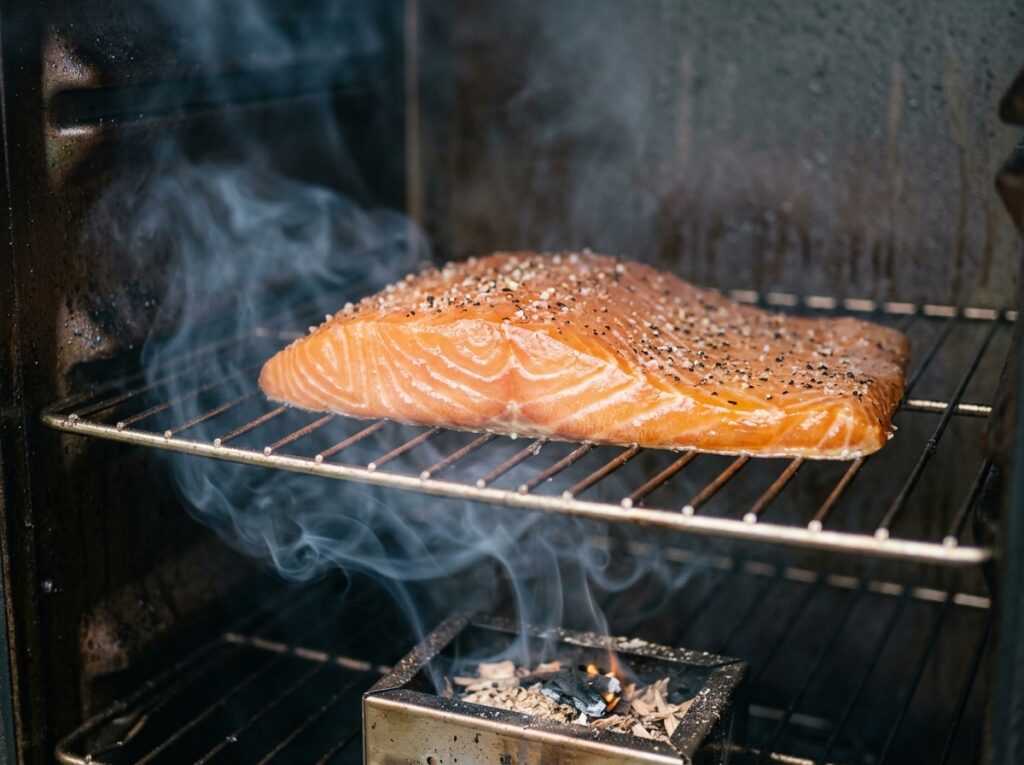
A perfectly cold-smoked slab of salmon or a wheel of gouda with that deep, woodsy flavor — that’s the kind of thing you can’t just buy off a grocery shelf. You have to make it. And making it starts with picking the right cold smoker.
Here’s the thing most people don’t realize: cold smoking isn’t just regular smoking at a lower temperature. It’s a completely different process, a different mindset, and it needs different equipment. If you’ve been searching for the best cold smokers and ended up overwhelmed by dozens of options, random Amazon listings, and conflicting advice, you’re not alone.
I’ve spent a solid amount of time testing, comparing, and talking to folks who cold smoke everything from cheese to bacon to sausages. This guide breaks down the best cold smokers available right now, explains what actually matters when you’re choosing one, and helps you avoid the mistakes that waste money and ruin food.
Let’s get into it.
What Exactly Is Cold Smoking (And Why Does It Matter)?
Before you spend a single dollar, you need to understand what cold smoking actually does — because it’s wildly different from hot smoking.
Hot smoking cooks your food. The temperature sits between 225°F and 275°F, and by the time you pull your brisket or ribs off the smoker, they’re fully cooked and ready to eat. If you’ve ever followed a 3-2-1 ribs recipe, you know exactly what hot smoking looks like.
Cold smoking? No cooking happens. The temperature stays below 90°F — sometimes as low as 68°F. You’re not using heat to transform the food. You’re using smoke alone to add flavor, preserve texture, and in some cases, extend shelf life.
Think about lox-style smoked salmon. It’s silky, raw in texture, and bursting with smoky depth. That’s cold smoking. Or think about smoked cheddar — firm, unmelted, but packed with wood-fired flavor. You can’t achieve that in a regular grill or a pellet smoker running at standard temps.
The trick is generating smoke without generating heat. And that’s exactly where a dedicated cold smoker (or a cold smoke attachment) comes in.
Quick fact: Cold smoking has been used for food preservation since ancient times — long before refrigeration existed. Cultures across Europe and Scandinavia relied on it for centuries to keep fish and meats edible through harsh winters.
How Cold Smokers Work
The basic principle is simple: produce smoke in one chamber, channel it into another chamber where the food sits, and keep the heat source far enough away that the temperature stays well below cooking range.
Most cold smokers fall into three design categories.
Smoke generators are small, standalone devices that produce smoke from wood pellets, chips, or dust. You place them inside or attach them to an existing grill, smoker, or even a cardboard box (yes, really). They don’t produce significant heat because they use smoldering, not burning.
Cold smoke attachments are accessories designed to connect to a specific smoker brand. Brands like Masterbuilt sell dedicated cold smoking kits that bolt onto their electric smokers. The attachment generates smoke externally and pipes it into the main chamber.
Dedicated cold smoker cabinets are full standalone units built specifically for cold smoking. They usually feature a separate firebox connected by a pipe or duct to a smoking chamber where the food hangs. These are the most traditional setup and offer the most control.
Each design has trade-offs. Smoke generators are cheap and versatile but require babysitting. Cold smoke attachments are convenient but lock you into one brand. Dedicated cabinets give the best results but take up space and cost more.
Best Cold Smokers — The Top Picks for 2025
After comparing build quality, smoke consistency, ease of use, capacity, and real-world user feedback, here are the cold smokers that stood out this year.
Masterbuilt Slow Smoker Attachment
If you already own a Masterbuilt electric smoker (or you’re thinking about getting one), this cold smoke attachment is a no-brainer. It mounts directly to the side of compatible Masterbuilt smokers and feeds smoke through a dedicated port.
You load it with wood chips, light it, and the attachment smolders at low enough temperatures to keep the main chamber well under 90°F. It runs for about 6 hours on a single load, which is respectable for most cold smoking sessions.
What makes it stand out: The integration is seamless — sorry, let me rephrase — it connects cleanly without any DIY modifications. You’re getting a proper, manufacturer-designed cold smoking solution that works predictably every time.
Watch out for this: It only works with Masterbuilt smokers. If you own a different brand, you’ll need to look elsewhere. And the wood chip capacity, while decent, won’t get you through a 12-hour salmon smoke without a refill.
Best for: People who already own a Masterbuilt and want the easiest path into cold smoking.
Smoke Daddy Big Kahuna Cold Smoke Generator
The Smoke Daddy has earned a cult following among serious cold smoking enthusiasts, and for good reason. It’s an externally mounted smoke generator built from heavy-gauge stainless steel that attaches to virtually any grill, smoker, or enclosed container.
You fill the chamber with wood chips or pellets, light them with a small torch, and a built-in adjustable air pump controls airflow. That pump is the key detail — it keeps the wood smoldering at a controlled rate without letting it burst into flame.
The Big Kahuna model holds enough fuel for 3 to 4 hours of continuous smoke. For longer sessions, you just refill and relight.
What makes it stand out: Versatility. You can mount this on a kettle grill, a cabinet smoker, a cardboard box, an old refrigerator — really anything with a wall you can drill into. The adjustable air pump also lets you control smoke density, which is something cheaper generators can’t do.
Watch out for this: Installation requires drilling a hole into whatever you’re mounting it on. That can be intimidating if you don’t want to modify your existing grill. And at its price point (typically around $100-$130 for the Big Kahuna), it’s more of an investment than a basic tube smoker.
Best for: DIY-minded folks who want a serious, long-term cold smoking setup they can customize.
A-MAZE-N Pellet Tube Smoker (12-inch)
This is probably the most popular entry point for cold smoking, and it deserves that popularity. The A-MAZE-N tube smoker is dead simple: it’s a perforated stainless steel tube that you fill with wood pellets, light one end with a propane torch, and let it smolder.
No electricity. No moving parts. No installation. You just set it inside any grill or smoker and let it do its thing.
The 12-inch version burns for roughly 4 to 6 hours depending on the pellets you use. The smoke output is consistent — not overwhelming, not wimpy — and it works well for cheese, nuts, salt, butter, and even fish.
What makes it stand out: The price. You can grab one for around $20 to $25. For someone who’s never cold smoked before and wants to test the waters, there’s no lower-risk option. And because it’s portable and needs no power, you can use it anywhere — on your patio, at a campsite, wherever.
Watch out for this: Keeping the pellets lit can be finicky, especially in humid weather. You need to light them properly (hold the flame for 60-90 seconds, then let the pellets glow for 10 minutes before blowing out the flame). If you rush this step, the tube goes out mid-smoke and you end up with half-flavored cheese.
Also, without a pump or fan, you get less smoke control. You can’t easily dial the density up or down.
Best for: Beginners who want an affordable, zero-commitment way to start cold smoking.
A-MAZE-N Pellet Maze Smoker (The Tray Version)
Same company, different design. Instead of a tube, this version uses a flat, maze-shaped tray. You fill the channels with wood dust (not pellets — that matters), light one corner, and the smoldering dust slowly winds its way through the maze pattern.
The big advantage? Burn time. A fully loaded maze smoker can run for 8 to 12 hours without reloading. For long cold smoke sessions — like a full slab of salmon that needs 12+ hours of smoke — this is a massive convenience upgrade over the tube version.
What makes it stand out: Run time and hands-off operation. You light it once, and it burns all day. It’s ideal for those marathon smoking sessions where you don’t want to keep checking and refilling.
Watch out for this: It’s larger and flat, so it takes up more space inside your smoking chamber. In a small grill, it can crowd out the food. Also, it specifically needs sawdust or very fine wood dust — regular pellets won’t work properly in the maze channels.
Best for: Experienced cold smokers who do long sessions (8+ hours) and want minimal babysitting.
Smokehouse Products Smoke Chief Cold Smoke Generator
The Smoke Chief is an electric cold smoke generator that attaches externally to any grill or smoker. You plug it in, fill it with standard wood pellets, and it automatically feeds pellets onto an electric heating element at a controlled rate.
What separates it from other options is the electric automation. You’re not relying on smoldering physics — the element heats just enough to produce smoke, and a gravity-fed hopper keeps the pellets moving. It runs for about 3 hours per load on around a half-pound of pellets and produces a surprisingly clean, thin blue smoke.
What makes it stand out: Set-it-and-walk-away convenience. Because it’s electric, there’s no risk of the fuel going out. The smoke stays consistent from start to finish, which gives you more predictable flavor results.
Watch out for this: You need a power outlet, so this isn’t a portable or off-grid solution. It’s also a bit noisier than passive generators because of the heating element. And like the Smoke Daddy, installation means drilling a hole for the smoke tube.
Best for: People who value consistency and don’t want to babysit their smoke source.
Bradley Smoker Cold Smoke Adapter
Bradley has built a strong reputation in the electric smoker world, and their cold smoke adapter extends that into cold smoking territory. It’s a separate attachment that connects between the Bradley smoke generator and the main smoking cabinet, adding length to the smoke path so the smoke cools down before reaching the food.
Bradley’s unique bisquette system (pre-measured wood pucks on a rail) automatically feeds one bisquette every 20 minutes, giving you a remarkably clean smoke profile. The cold smoke adapter essentially adds an extra chamber where hot smoke loses its heat before entering the food area.
What makes it stand out: The bisquette system is unlike anything else on the market. You don’t fiddle with chips, pellets, or dust. You just load the rail, and the smoker does the rest. For pure ease of use, it’s hard to beat.
Watch out for this: You’re locked into the Bradley ecosystem. The bisquettes are proprietary and more expensive per session than loose pellets or dust. And you need the Bradley digital smoker as your base unit — this adapter doesn’t work standalone.
Best for: Bradley smoker owners who want a dedicated cold smoking extension without buying new equipment.
What to Look for Before Buying a Cold Smoker
Picking the right cold smoker isn’t just about brand names. You need to match the smoker to your specific situation. Here’s what actually matters.
Temperature Control
This is non-negotiable. The whole point of cold smoking is keeping temps below 90°F. If your smoke source generates too much heat, you’re not cold smoking — you’re just smoking badly.
External smoke generators (like the Smoke Daddy or Smoke Chief) naturally solve this because the combustion happens outside the food chamber. Internal options like the A-MAZE-N tubes work well in cooler weather but can struggle on a hot summer day when ambient temperature is already 85°F+.
Pro tip: If you live somewhere hot, cold smoke during early morning hours or at night. Some folks even put ice trays or frozen water bottles inside the smoking chamber to keep temps down. It sounds janky, but it works.
Smoke Duration and Consistency
Different foods need different smoke times. Cheese might only need 2 to 4 hours. Salmon can go 12 to 24 hours. Bacon usually lands somewhere around 6 to 12 hours.
If you’re mostly smoking cheese and nuts, a simple tube smoker with 4 to 6 hours of burn time will handle it. But if you’re planning to smoke fish or cure meats, you want something with longer burn time or easy reloading — like the maze smoker or an electric generator.
Consistency matters too. Intermittent smoke (where the fuel keeps dying and relighting) gives you uneven flavor. You want a smooth, steady stream of thin blue smoke throughout the session. A good instant-read thermometer can help you monitor the chamber temperature and make sure things are staying in range.
Fuel Type
Wood pellets, chips, dust, bisquettes — each works differently.
Pellets are the most versatile and widely available. They work in tube smokers, generators, and electric units. Apple, cherry, hickory, and mesquite are all common choices for cold smoking.
Wood dust/sawdust burns slower and cooler than pellets, making it ideal for maze-style smokers and very low-temp applications. If you’re smoking delicate items like cheese or salt, dust gives you a gentler smoke.
Chips burn hotter and faster, which makes them less ideal for cold smoking unless used in a controlled attachment like the Masterbuilt slow smoker.
Bisquettes are Bradley’s proprietary pucks. Convenient but expensive.
Compatibility With Your Existing Setup
Before buying anything, ask yourself: what do I already own?
If you have a pellet grill or a gas grill, you can often add a cold smoke generator to it. You don’t need to buy a whole new smoker. A tube smoker can sit right on the grates of an unlit grill. An external generator can attach to the side.
If you have nothing, you might want to consider a Masterbuilt electric smoker paired with their cold smoke attachment — it gives you both hot and cold smoking in one setup.
Build Quality and Durability
Stainless steel outlasts aluminum. Thicker gauge metals hold up better over time. If you’re buying a generator like the Smoke Daddy, it’s a one-time purchase that’ll last years. Cheaper imitations from no-name brands often develop rust, warped seals, or electrical issues within a season.
Best Foods for Cold Smoking
One of the best parts of getting into cold smoking is discovering how many foods you can transform with it. Here are the most popular ones.
Cheese is the gateway drug of cold smoking. Cheddar, gouda, mozzarella, pepper jack — they all take smoke beautifully. A 2-hour session with apple or cherry pellets gives you something that tastes like it came from an artisan shop. Just make sure to rest the cheese in the fridge for at least 24 to 48 hours after smoking — it needs time for the smoke flavor to mellow and distribute evenly.
Salmon is the classic cold-smoked protein. You’ll need to cure it first with a salt-sugar mixture (typically 24 to 48 hours in the fridge), then cold smoke for 12 to 24 hours. The result is that silky, lox-like texture with deep smoke flavor.
Bacon starts with a cured pork belly. After a week-long cure, you cold smoke for 6 to 12 hours. This gives you traditional European-style bacon that’s smoky but still needs to be cooked before eating — unlike hot-smoked American bacon that’s essentially cooked during the smoking process. If you’re curious about the best temps for pork in general, check out this piece on the best temp to smoke pork butt.
Salt and butter are underrated cold smoking candidates. A couple hours of smoke turns plain kosher salt into a gourmet finishing salt that elevates steaks, eggs, and popcorn. Smoked butter on a warm biscuit? Life-changing.
Nuts, garlic, and even cocktail ingredients (like ice cubes or simple syrup) all take well to a short cold smoke session. Once you start experimenting, you’ll find yourself smoking things you never expected.
Safety: The Part You Can’t Skip
Cold smoking operates in what food scientists call the “danger zone” — between 40°F and 140°F. Bacteria love this range. Since cold smoking keeps food in this zone for hours (sometimes an entire day), you need to take precautions seriously.
Always cure meat and fish before cold smoking. Curing with salt (and optionally sodium nitrite, also known as pink curing salt #1) inhibits bacterial growth — particularly Clostridium botulinum, which can cause botulism. Don’t skip this step. Don’t wing it with amounts. Follow established curing ratios.
Keep your smoking environment clean. Sanitize your grates, racks, and chamber before each session. Make sure air circulation is adequate — good airflow discourages mold and helps smoke penetrate evenly.
Monitor temperature throughout the session. A wireless meat thermometer with an ambient probe is incredibly useful here. You want to know immediately if the chamber is creeping above 90°F.
Refrigerate food immediately after smoking. Don’t leave cold-smoked fish or meat sitting at room temperature. Get it into the fridge (or vacuum seal and freeze it) as soon as the session ends.
⚠️ Warning: Cold smoking raw meats and fish carries inherent risk. If you’re new to this, start with low-risk foods like cheese, nuts, or salt. Work your way up to meats and fish only after you’re confident in your curing and temperature control process.
Cold Smoking vs. Hot Smoking: Know the Difference
People mix these up constantly, so let’s make it crystal clear.
Hot smoking cooks food and smokes it at the same time. Temperatures run between 225°F and 275°F. Your brisket, pulled pork, and baby back ribs are all hot-smoked products. When they come off the smoker, they’re ready to eat.
Cold smoking adds smoke flavor without cooking. The food stays raw (or at least uncooked by the smoker). It’s a flavoring and preservation technique, not a cooking method.
Here’s a practical way to think about it: if you want smoked cheddar that stays firm and sliceable, you cold smoke it. If you tried to “smoke” cheese in a hot smoker at 250°F, you’d end up with a melted puddle. Same with salmon — hot smoking gives you flaky, cooked smoked salmon. Cold smoking gives you silky, raw-textured lox.
Some foods work with both methods, and the choice comes down to what texture and flavor you’re after. Bacon is a perfect example. Hot-smoked bacon is what most Americans are used to. Cold-smoked bacon is what you’ll find in traditional European charcuterie — it has a different texture and a deeper, more complex smoke flavor.
Tips That Actually Help (From People Who’ve Done This)
Don’t smoke cheese straight from the fridge. Let it come to room temperature first (about 30 to 45 minutes). Cold cheese sweats less during the smoking process and absorbs smoke more evenly.
Light your pellets properly. This is the number one reason people fail with tube and maze smokers. Use a good propane torch, hold the flame on the pellets for a solid 60 to 90 seconds, then let them burn with an open flame for about 10 minutes. Blow it out after that. If you rush the lighting phase, the smolder dies an hour in.
Use mild wood for delicate foods. Apple, alder, and cherry are forgiving and pair well with cheese, fish, and poultry. Hickory and mesquite are stronger and can overwhelm delicate items if you’re not careful. Save those for meats.
Cold smoke on cool days. Ambient temperature affects your chamber temperature directly. A 95°F summer day makes it nearly impossible to keep your smoker below 90°F. Early mornings in spring or fall are ideal. If you must smoke in summer, do it after dark and use ice packs inside the chamber.
Let smoked foods rest before eating. This applies to everything, but especially cheese and fish. Freshly smoked food often tastes harsh and acrid. After 24 to 48 hours in the fridge (wrapped loosely in butcher paper or plastic wrap), the flavor smooths out dramatically.
Did you know? Some commercial smokehouses in Scotland cold smoke salmon for up to 72 hours. That’s the extreme end, but it shows just how much depth of flavor you can build with patience and low, steady smoke.
FAQ
Can I cold smoke in a regular grill or smoker?
Yes, you absolutely can — as long as you’re not using the grill’s heat source. Place a tube smoker or maze smoker inside your offset smoker, kettle grill, or pellet grill without turning on the burners or fire. The grill acts as your smoking chamber while the tube generates the smoke. Just keep the lid closed and monitor temperature to make sure it stays under 90°F.
Is cold-smoked food safe to eat?
It depends on the food. Cold-smoked cheese, nuts, salt, and butter are perfectly safe because they’re not raw proteins. Cold-smoked meat and fish carry more risk because they remain uncooked and spend extended time in the bacterial danger zone. Proper curing before smoking, clean equipment, temperature monitoring, and immediate refrigeration afterward are all essential safety measures. If you’re smoking raw proteins, follow tested curing recipes from reputable sources — don’t guess.
What’s the best wood for cold smoking cheese?
Apple and cherry are the top choices for cheese. They produce a mild, slightly sweet smoke that complements dairy without overpowering it. Maple works well too. Avoid mesquite and heavy hickory for cheese — they can leave a bitter, aggressive flavor that doesn’t suit delicate foods.
How long does cold-smoked food last?
Cheese, when vacuum-sealed after resting, can last several weeks in the fridge and months in the freezer. Cold-smoked and properly cured salmon keeps for about a week refrigerated or 2 to 3 months frozen. Smoked salt and butter last just as long as their unsmoked counterparts when stored properly — the smoke doesn’t significantly change shelf life for non-protein items.
Do I need a dedicated cold smoker, or can I use an attachment?
If you already own a grill or smoker, an attachment or a tube smoker is the most cost-effective starting point. You only need a dedicated cold smoking cabinet if you plan to cold smoke regularly in large quantities — like if you’re processing whole sides of salmon or batches of sausages. For most home cooks, a $20 tube smoker or a $100 external generator attached to existing equipment does the job perfectly.
Your Next Step
Cold smoking opens up a whole world of flavors that you simply can’t get from any other cooking method. Whether you start with a $20 A-MAZE-N tube and a block of cheddar, or go all-in with a Smoke Daddy generator bolted to your favorite grill, the learning curve isn’t as steep as it looks.
Pick one of the cold smokers from this list that fits your budget and existing setup. Grab some good wood pellets and a block of cheese. Light it up, keep the temp low, and give yourself the patience to let the food rest afterward.
That first bite of homemade smoked cheese — sharp, woodsy, and nothing like anything from a store — will tell you everything you need to know about whether cold smoking is for you. Spoiler: it usually is.