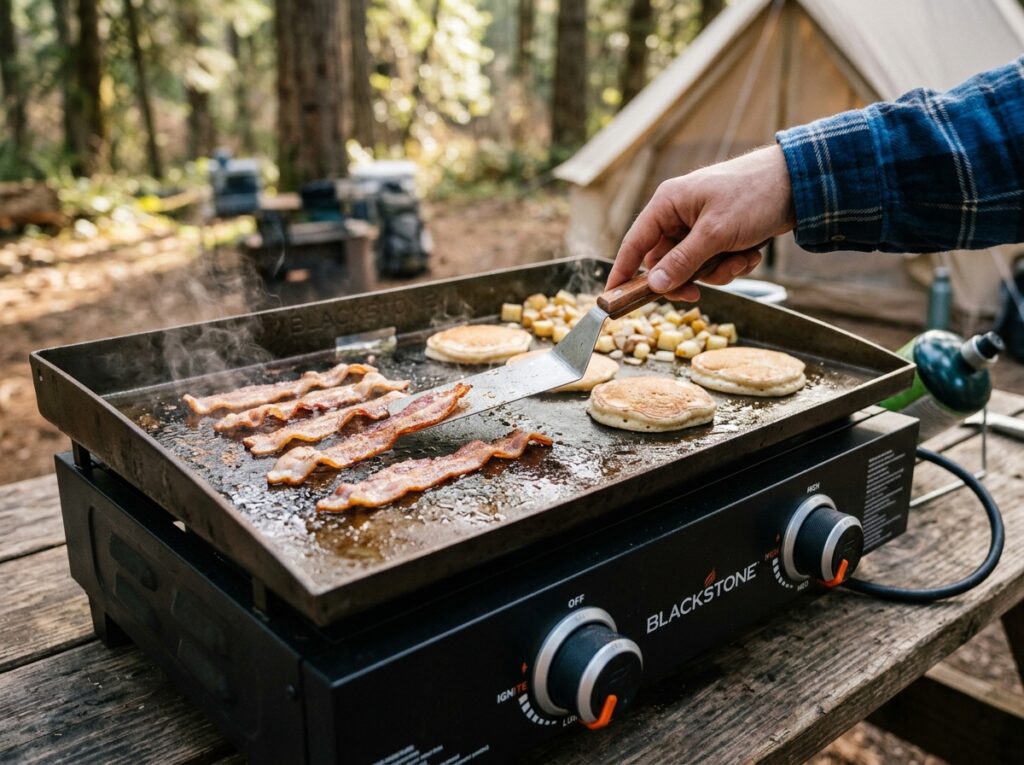
Picture this. You’re at a campsite on a Saturday morning, the air smells like pine and coffee, and you’re flipping pancakes on a flat, sizzling surface while your kids argue about who gets the first batch of bacon. That’s the magic of owning a good portable griddle. It turns any outdoor spot — a tailgate, a beach, a cabin porch — into a proper cooking station.
But here’s the thing: not every portable griddle lives up to the promise. Some heat unevenly, others weigh a ton (kind of defeats the “portable” part), and a few rust out after one rainy camping trip. I’ve spent a lot of time testing, comparing, and talking to people who cook outdoors regularly, and this guide covers everything you actually need to know before spending your money.
Why a Portable Griddle Belongs in Your Outdoor Setup
A portable griddle isn’t just a smaller version of a full-size outdoor griddle. It’s a completely different tool with a different purpose. You buy one because you want to cook real meals — eggs, smash burgers, stir-fry, quesadillas — somewhere away from your kitchen, without hauling around your entire cooking setup.
Think about the situations where a regular grill won’t cut it. Grill grates are great for steaks and hot dogs, but they can’t handle runny eggs, diced vegetables, or thin sliced cheese melting over a patty. A flat cooking surface changes the game. You get full contact between the food and the heat, which means better browning, more control, and way fewer things falling through the cracks — literally.
If you’ve ever debated the Blackstone vs grill argument, you already know that griddles open up a whole different style of cooking. A portable version just makes that style travel-friendly.
And don’t think portable means flimsy. The best models today pack serious BTUs into compact frames, heat up in under five minutes, and fold down small enough to fit in a truck bed or even a car trunk.
What to Look for Before You Buy
Before I get into specific models, let’s talk about the features that actually matter. There’s a lot of marketing noise out there — brands love throwing around buzzwords. But you need to focus on a few core things.
Cooking Surface Size
This is the first question you should answer: how many people do you normally cook for? A solo camper or a couple can get away with a 17-inch griddle, but if you’re feeding a family of four or cooking at a tailgate with friends, you’ll want something in the 22-inch to 28-inch range.
Keep in mind that a bigger surface means more weight. There’s always a trade-off. A 36-inch griddle sounds tempting, but if you can barely carry it from the car to the picnic table, it’s not really portable anymore.
Heat Output and Distribution
BTU count matters, but not in the way most people think. A griddle with 20,000 BTUs doesn’t automatically cook better than one with 12,000. What matters more is how evenly that heat spreads across the cooking surface. Hot spots are the enemy of good griddle cooking. If the center of your griddle is scorching while the edges stay lukewarm, you’ll constantly battle burnt pancakes next to half-cooked ones.
Look for models with multiple burners — even on a small portable unit. Two independently controlled burners give you heat zones, which is a big deal when you’re cooking eggs on one side and searing burgers on the other.
Weight and Portability
If you plan to carry this thing any real distance — from a parking lot to a campsite, or on and off a boat — weight becomes critical. Most good portable griddles fall between 15 and 35 pounds. Anything over 40 pounds, and you’re basically looking at a tabletop griddle, not a truly portable one.
Handles matter too. Cheap plastic handles get hot and break. Solid side handles with good grip make a real difference when you’re lifting a griddle that’s still warm from cooking.
Fuel Type
The majority of portable griddles run on propane, and for good reason. One-pound propane canisters are cheap, available everywhere, and easy to swap out. Some models also connect to a standard 20-pound propane tank via an adapter hose, which gives you longer cook times for bigger events.
A few portable griddles are electric, and they work well if you’re near a power outlet — think patio cooking or RV setups. But for true outdoor portability, propane is still king.
Grease Management
This sounds boring until you’re dealing with a pool of grease sliding off the back of a griddle and onto your camping table. A good grease management system — a rear drain hole leading to a grease cup or tray — keeps things clean and safe. Cheap griddles often skip this or do it poorly, and you pay for it in cleanup time.
Top Portable Griddles Worth Your Money
I’m not going to throw twenty options at you. Instead, here are the models that consistently earn praise from real users and hold up over time.
Blackstone 22-Inch Tabletop Griddle
Blackstone basically owns the griddle market right now, and this 22-inch tabletop model is their most popular portable option. It packs two H-style burners producing 24,000 BTUs total, which heats up the 339 square inches of cold-rolled steel quickly and evenly.
At about 32 pounds, it’s not the lightest option. But it folds up with a built-in hood, the legs tuck underneath, and it fits in most car trunks without issue. The rear grease management works well, and seasoning the surface is straightforward.
Who it’s for: Families, tailgaters, and car campers who want reliable performance and don’t mind a little extra weight.
Pro Tip: Season this griddle at least three times before your first real cook. Thin layers of flaxseed oil, heated until smoking, create a non-stick surface that rivals any coated pan.
Camp Chef Portable Flat Top Grill 600
Camp Chef has built a strong reputation with outdoor cooking gear, and their Portable Flat Top Grill 600 is a solid competitor to the Blackstone. It offers 604 square inches of cooking space with four burners pushing 48,000 BTUs — that’s a lot of heat in a portable package.
It weighs about 62 pounds with the stand, so calling it “portable” depends on your definition. Without the stand, it’s a tabletop unit that’s more manageable. The True Seasoned Finish that Camp Chef uses on their cooking surfaces means less prep work for you out of the box.
Who it’s for: People who want a large cooking area and don’t mind a heavier unit. Great for group camping or regular backyard use too.
Blackstone 17-Inch Tabletop Griddle
If true portability is your top priority, this is the one to look at. The 17-inch Blackstone weighs just under 20 pounds and has a single burner with 12,000 BTUs. The cooking area is 268 square inches — enough for two to three people.
It doesn’t have a hood or lid, so you won’t get that steam-melt effect on cheese unless you improvise with a metal bowl. But for quick breakfasts, smash burgers, and simple lunches at a campsite, it does exactly what you need.
Who it’s for: Solo campers, couples, and anyone who values light weight and simplicity above everything else.
Royal Gourmet PD1301S Portable Griddle
This model flies under the radar, but it’s a strong value pick. It costs significantly less than the Blackstone options, and it still delivers decent performance. A single burner puts out 10,000 BTUs, and the porcelain-enameled cooking surface heats reasonably well.
The build quality isn’t on the same level as Blackstone or Camp Chef. The grease trap is basic, and the legs feel a bit wobbly. But if you’re on a tight budget and want a portable griddle that works, this gets the job done.
Who it’s for: Budget-conscious buyers who want to try griddle cooking without a big investment.
Country Smokers Portable Griddle
Made by the same parent company as Camp Chef, this model hits a nice sweet spot between performance and price. Two burners, 18,000 BTUs, and about 26 pounds. The cooking surface isn’t as large as the 22-inch Blackstone, but the heat distribution is impressive for a mid-range unit.
Who it’s for: People who want something between the bare-bones 17-inch models and the larger 22-inch+ options.
Propane vs Electric Portable Griddles
Most people automatically go propane, and that makes sense for outdoor cooking. But electric griddles have carved out a niche, especially for people who cook on patios, balconies, or at RV campsites with electrical hookups.
A propane griddle gets hotter, heats faster, and doesn’t need a power source. You light it, adjust the flame, and cook. It feels more like “real” outdoor cooking. The downside is you always need fuel on hand, and some campsites or apartment complexes restrict open flames.
An electric portable griddle plugs in and heats up a flat surface using electric elements underneath. Temperature control is usually more precise — you set it to 375°F and it holds pretty close to that. Cleanup tends to be easier since many electric griddles have removable cooking plates that go in the dishwasher.
The trade-off? You’re tethered to an outlet. And electric models rarely reach the searing temperatures that propane griddles hit, which means you might not get that dark, crispy crust on your smash burgers.
For most outdoor cooking scenarios, propane is the better bet. But if you live in an apartment and want to griddle on your balcony, or you primarily cook at powered campsites, electric is worth considering.
How to Season and Maintain Your Portable Griddle
A lot of people buy a portable griddle, cook on it once, and wonder why everything sticks. The answer is almost always the same: they didn’t season it properly.
Seasoning a griddle isn’t complicated, but you can’t skip it. Start by washing the new cooking surface with soap and water — this is the only time you’ll use soap on it. Dry it completely. Then heat the griddle on high until it starts to discolor. Apply a thin layer of high-smoke-point oil (flaxseed, avocado, or canola) using a paper towel held with tongs. Let it smoke off completely. Repeat this process three to four times.
After each cook, scrape the surface while it’s still warm with a metal spatula or griddle scraper. Wipe it down with a light coat of oil before storing it. Don’t use soap for regular cleaning — it strips the seasoning you’ve worked to build up.
If you’re using a good set of grill tools, make sure you have a dedicated flat scraper for your griddle. The angled ones designed for grill grates won’t work as well on a flat surface.
Quick Fact: A well-seasoned griddle surface develops a layer of polymerized oil that’s essentially a natural non-stick coating. It gets better with every cook, which is why experienced griddle owners insist that their three-year-old surface outperforms any new one.
Portable Griddle vs Portable Grill — What’s the Better Choice?
This question comes up constantly, and there’s no single right answer. It depends on what you cook most often.
A portable grill — whether it’s a small gas grill or a portable pellet grill — excels at anything that benefits from direct flame and smoke flavor. Steaks, chicken thighs, sausages, and kebabs all taste better on a grill because you get char marks, rendered fat dripping into the flames, and that smoky flavor you can’t replicate on a flat surface.
A portable griddle wins at everything that needs a flat surface. Breakfast foods, fried rice, philly cheesesteaks, fajitas, smash burgers, and delicate fish fillets all work better on a griddle. You also waste less food — nothing falls through the grates.
Some people solve this by buying a griddle-grill combo that has a flat surface on one half and grill grates on the other. These work okay for casual cooking, but they don’t excel at either function. If you’re serious about outdoor cooking, you’re better off picking the one that matches your style and doing it well.
For a deeper comparison of outdoor griddles specifically, the best outdoor griddle guide goes into more detail about full-size options if you decide portability isn’t your top priority.
Real-World Cooking Tips for Portable Griddles
Owning a good griddle is one thing. Cooking great food on it is another. Here are some tips that make a real difference.
Get the Temperature Right Before You Start
One of the biggest mistakes is throwing food on a griddle that isn’t fully preheated. You want a surface temperature of around 375–400°F for most cooking. If you don’t have an infrared thermometer, flick a few drops of water on the surface. They should sizzle and evaporate within two seconds. If they just sit there, you need more heat. If they vanish instantly, you’re too hot.
A reliable instant-read thermometer is useful for checking the internal temperature of your food, especially burgers and chicken. Guessing doneness on a flat surface is harder than on a grill because you can’t see flare-ups or dripping juices as visual cues.
Use the Zones
If your griddle has two burners, set them to different temperatures. Keep one side on high for searing and the other on medium-low for warming or cooking more delicate items. This simple technique doubles your versatility.
Don’t Overcrowd the Surface
It’s tempting to fill every inch of the griddle when you’re hungry and feeding a group. Resist that urge. Overcrowding drops the surface temperature fast, and instead of searing, your food steams. Cook in batches if you need to. Better food is worth the extra five minutes.
Butter and Oil Have Different Jobs
Butter adds flavor but burns at lower temperatures. Oil handles high heat better. For the initial sear, use oil. Add butter at the end for flavor. A mix of both — butter melted into a thin oil layer — works beautifully for pancakes and eggs.
Accessories That Make a Difference
You don’t need a cart full of gadgets to cook well on a portable griddle. But a few things genuinely improve the experience.
A wind guard is underrated. Cooking outdoors means wind, and wind kills your heat consistency. Most portable griddles don’t come with wind guards, but aftermarket options and even DIY aluminum foil barriers make a noticeable difference in cooking performance.
A carry bag or case protects your griddle during transport and keeps your car clean. Some brands sell custom bags; universal ones work fine too.
Squeeze bottles for oil and water are cheap and incredibly useful. A quick squirt of oil before each batch of food, or a splash of water to create steam for melting cheese — these small moves elevate your cooking significantly.
And if you’re cooking outdoors regularly, pairing your griddle setup with some solid side dishes turns a simple griddle meal into something that feels like a proper feast.
How Much Should You Spend?
Portable griddles range from about $50 to $300, and the price difference usually reflects cooking surface size, build quality, and brand reputation.
Under $80, you’ll find basic single-burner models that work for light use. They get the job done for occasional camping trips but might not hold up to weekly use over multiple seasons.
Between $100 and $180 is the sweet spot for most buyers. This is where models like the Blackstone 22-inch live, and you get good performance, decent construction, and enough cooking space for a family.
Above $200, you’re looking at larger portable griddles from Camp Chef or Blackstone’s premium line, often with added features like built-in lids, matchless ignition, or better wind protection. These are worth it if you cook outdoors frequently and want something that’ll last five or more years.
Did You Know? The best time to buy outdoor cooking equipment — including grills and griddles — is during end-of-season sales in September and October, or during major holiday sales like Memorial Day and Black Friday. You can easily save 20–30% by timing your purchase.
Common Mistakes That Ruin the Griddle Experience
A few mistakes come up over and over with new griddle owners. Knowing about them upfront saves you frustration.
Cooking on a brand-new, unseasoned surface is the most common one. Food sticks, you get frustrated, and you assume the griddle is defective. It’s not. You just need to season it first.
Using too much oil creates a gummy, sticky residue. You want a thin, barely-there layer. If you can see oil pooling on the surface before you put food down, you’ve used too much. Wipe the excess off with a paper towel.
Storing the griddle without a cover or oil coat leads to rust. Cold-rolled steel — which most griddle surfaces are made from — will rust if exposed to moisture without a protective oil layer. Always wipe down your clean griddle with a light coat of oil and cover it before storing.
Ignoring wind conditions leads to uneven heating and longer cook times. Position your griddle with the burners perpendicular to the wind direction, or use a wind guard. This alone can cut your preheat time in half on a breezy day.
FAQ
Can you use a portable griddle indoors?
Propane griddles should never be used indoors or in enclosed spaces. They produce carbon monoxide, which is deadly in confined areas. Electric portable griddles can be used indoors safely, as long as you have adequate ventilation for smoke and grease splatter. If you want a griddle for both indoor and outdoor use, an electric model is your only safe option.
How long does a 1-pound propane canister last on a portable griddle?
It depends on how many burners you’re running and the heat setting. On a single-burner griddle at medium heat, you’ll typically get 60 to 90 minutes of cooking time from a 1-pound canister. A two-burner griddle at high heat can burn through a canister in about 30 to 45 minutes. Carrying a couple of extra canisters on any trip is always a smart move.
Is a Blackstone griddle worth the price?
For most people, yes. Blackstone has built a strong reputation for reliable portable griddles, and their 17-inch and 22-inch tabletop models deliver consistent performance at fair prices. The cold-rolled steel surface seasons beautifully and lasts for years with basic maintenance. You’re paying a slight brand premium, but the build quality and aftermarket support (accessories, replacement parts, community recipes) justify it for regular users.
What’s the best oil for seasoning a portable griddle?
Flaxseed oil creates the hardest, most durable seasoning layer because of its high concentration of omega-3 fatty acids that polymerize well. Avocado oil and canola oil are easier to find and still work great. The key is choosing a high-smoke-point oil and applying it in very thin layers. Multiple thin layers always beat one thick layer.
Can you cook on a portable griddle in the rain?
You can, but it’s not ideal. Rain drops hitting a hot griddle surface cool it rapidly and can cause food to steam instead of sear. A griddle with a lid or hood helps. Some people set up a canopy or cooking tent to create a sheltered cooking space. Just make sure there’s enough ventilation if you’re using propane — never cook in a fully enclosed tent or canopy with walls.
Your Next Step
A good portable griddle is one of those purchases that changes how you think about outdoor cooking. It’s not a replacement for your grill — it’s a companion to it. Breakfast at the campsite, lunch at the tailgate, dinner on the patio… a flat cooking surface opens up meals that grates simply can’t handle.
If you’re just getting started, the Blackstone 17-inch is hard to beat for pure portability. If you want more cooking space and don’t mind the extra weight, the 22-inch model is the one most people end up choosing — and sticking with for years.
Whatever you pick, invest ten minutes in proper seasoning before your first cook. That small step is the difference between a frustrating experience and a griddle that feels like a well-worn cast iron skillet. Pair it with good tools, a reliable thermometer, and fresh ingredients, and you’ll wonder how you ever cooked outdoors without one.