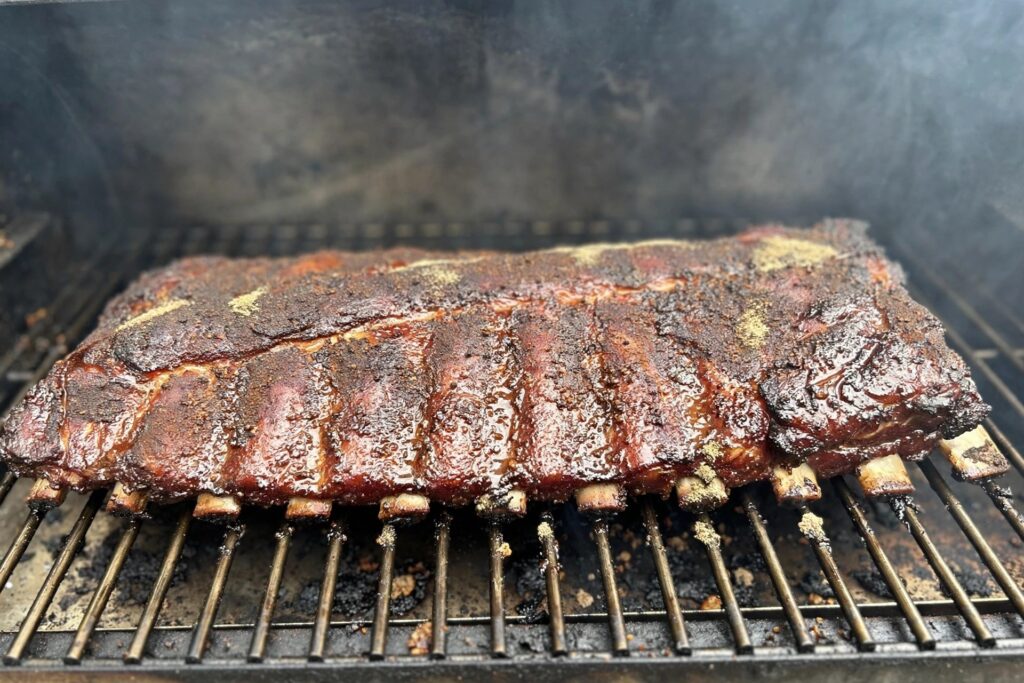
Every barbecue region has a hill it will die on. Texas has brisket. Kansas City has burnt ends and sauce thick enough to stand a spoon in. Memphis has ribs — and more specifically, ribs with no sauce in sight. Walk into a Memphis rib joint and the rack that lands in front of you wears nothing but a dark, spice-caked crust. If you want sauce, it’s in a little cup on the side, and the joint’s pride depends on you never needing it.
Dry Ribs, Wet Ribs, and the Memphis Divide
“Dry” doesn’t mean what it sounds like. A proper Memphis dry rib is anything but dry — it’s glistening, juicy, and coated in a bark so flavorful you wonder why anyone ever covered a rib in sauce at all. The word only means there’s no mop of barbecue sauce on the finished rack. The entire flavor has to come from smoke, rub, and technique, with nowhere to hide. That honesty is the whole point of the style, and it’s what makes dry ribs a better test of a cook’s skill than any sauced rack.
The contrast is Kansas City, where ribs get finished in a lacquer of sweet, sticky sauce that caramelizes into the meat. Both are legitimate. But Memphis decided long ago that a rib worth eating shouldn’t need a cover story, and the city’s cooks have spent seventy years proving it.
Where the Dry-Rub Tradition Comes From
The story starts in a basement. In 1948, Charlie Vergos opened a little sandwich shop in an alley off Second Street in downtown Memphis — the Rendezvous — and started cooking pork ribs in his charcoal pit, heavily crusted with a proprietary spice rub. His ribs didn’t look like anyone else’s: dark, char-flecked, dusted with seasoning until the bark went nearly black, served with a thin vinegar mop and a bottle of sauce you could apply yourself if you insisted. They were unlike anything in American barbecue, and they made the Rendezvous a pilgrimage site.
The restaurant never changed the formula, and neither did the city. Generations of Memphis pitmasters — and eventually the cooks who battle it out every May at the Memphis in May World Championship Barbecue Cooking Contest, the contest people call the Super Bowl of Swine — took the dry-rub rib as the starting point for an entire style: rub hard, smoke low and slow, finish with a final dust of spice, and let the meat do the talking.
The Championship Method: Chris Lilly’s Approach
If you want to learn the style the way champions cook it, the cook to study is Chris Lilly. As pitmaster at Big Bob Gibson Bar-B-Q in Decatur, Alabama — a joint founded in 1925 that may be the most decorated restaurant in the competition world — Lilly has led his team to five Memphis in May World Grand Championships, in 2000, 2003, 2011, 2014, and 2017. He wrote it all down in Big Bob Gibson’s BBQ Book (Clarkson Potter, 2009), and his method for Memphis-style dry ribs is the best blueprint a backyard cook can follow.
What makes Lilly’s approach different isn’t a secret ingredient. It’s the discipline of building flavor in layers: a heavy initial rub, a long, gentle smoke, and then — this is the step that separates championship ribs from good ones — a vinegar “shine” bath and a final, heavy dusting of fresh rub after the ribs come off the heat. The finished rack looks almost shocking: dark, craggy, caked with spice.
A Memphis-Style Dry Rub You Can Mix Tonight
A real Memphis dry rub is a spice-forward, sweet-heat blend, and it’s worth mixing from scratch rather than shaking out of a bottle. Stir together half a cup of dark brown sugar, a quarter cup of paprika, and two tablespoons of kosher salt. Then the aromatics: a tablespoon each of black pepper and chili powder, two teaspoons of granulated garlic, and a teaspoon each of onion powder, ground cumin, and dried oregano. Finish with a half teaspoon of cayenne — enough to wake the blend up without starting a fire — and a quarter teaspoon of white pepper for a little back-of-the-throat warmth.
That makes roughly a cup and a half, enough for two full racks with plenty left over for chicken or pork shoulder later. Brown sugar is the backbone of the style; it caramelizes through the long cook and builds the dark crust dry ribs are known for. Keep it sealed and it holds for months, though a rub this good rarely lasts that long.
The Cook, Hour by Hour
Start with St. Louis-cut spare ribs — two full slabs. The championship standard is spares, not baby backs: they’re meatier, fattier, and more forgiving over a long cook, and the rub has more surface to work with. Peel the membrane off the bone side of each slab; slide a butter knife under it at one end, grab the loose edge with a paper towel, and pull it off in one sheet. That papery layer never renders, and leaving it on puts a barrier between the smoke and the meat.
Apply the rub like you mean it, front and back, pressing it in so it adheres. Set about a third of the rub aside in a separate bowl — you’ll need it at the end, and you don’t want to double-dip into the supply you already put on raw pork.
Set up for indirect heat at 250°F. Whether you’re running an offset, a kettle with the coals banked to one side, or a pellet grill, the setup is the same: ribs on the cool side, meat side up, lid closed. Hickory is the classic Memphis smoke for ribs — strong enough to stand up to a spice crust this heavy — though a hickory-and-cherry blend adds sweetness and color to the bark. Leave the ribs alone. Four hours, more or less, with the lid shut; every time you open it, you bleed heat and gain nothing. A light spritz of apple juice or vinegar after the first couple of hours keeps the edges from drying.
The Shine Bath: The Step Everyone Skips
This is the move that makes the rack. While the ribs finish, mix a cup of white vinegar with a cup of water in a shallow baking pan. When the ribs are tender — we’ll get to how to tell in a moment — pull them off the heat and dip each slab quickly through the vinegar wash, letting it glisten on the surface. Set the slabs on a cutting board and immediately hit them with that reserved rub: a heavy, generous, final dusting over the whole surface, pressed lightly so it sticks to the damp crust.
Two things are happening at once. The vinegar wash adds a whisper of tang that cuts through the pork’s richness, and it wets the bark just enough to grab the fresh spice. That final layer of rub is raw and fragrant in a way that cooked rub never is — the first thing your nose registers, and the signature flavor of the style.
How to Tell They’re Done
Forget the clock for the final call. Pick up a rack in the middle with tongs and let the ends hang: done ribs bend easily, the bark cracking just slightly, but the rack doesn’t break or flop in half. That’s the bend test, and it’s the same test judges use at Memphis in May.
Temperature tells you when you’re close, not when you’re finished. Spare ribs usually land somewhere around 195 to 203°F internal, but the real answer is feel, not a number — the probe should slide between the bones with almost no resistance. If you’re still cooking by guesswork, this is the cook that will convince you to cook with a thermometer worth trusting: use it to watch the cooker temperature and confirm the neighborhood, then let the bend test make the call.
And ignore the people who tell you the meat should fall off the bone. In competition — and in Memphis — meat that falls off the bone is overcooked. A proper dry rib pulls clean off the bone with each bite, leaving a clean bite mark. That’s the texture you’re chasing.
Serve Them Dry, Sauce on the Side
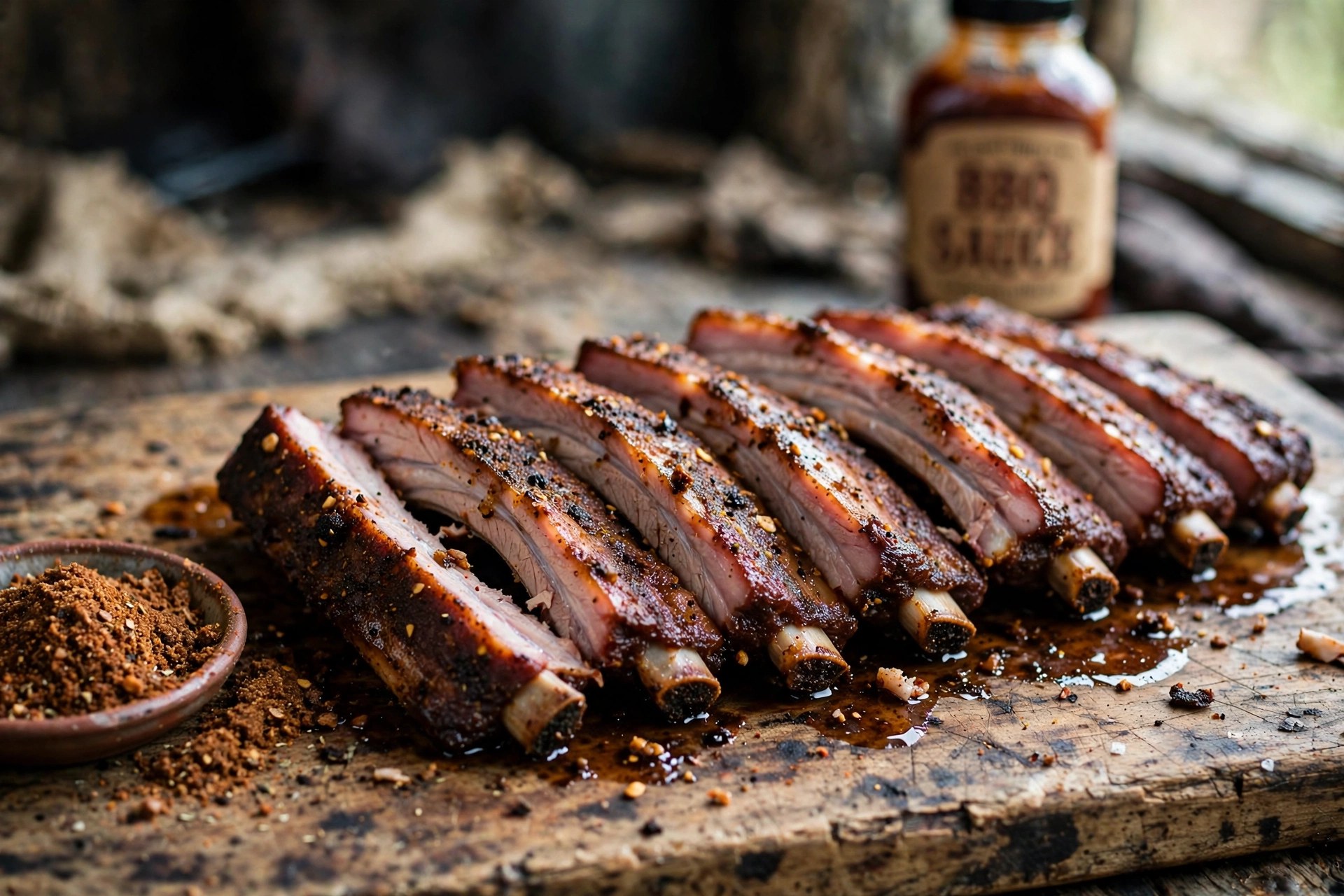
Slice straight down between the bones and serve the ribs naked, exactly as they come off the board, with a little cup of your favorite barbecue sauce off to the side. Most of your guests will never reach for it. The ones who do get the best of both worlds.
That bare presentation is what Memphis style is really about. Sauce can fix a mediocre rack; it can also hide one. A dry rib stands there with nothing to hide behind — rub, smoke, pork, and the confidence to serve it all without a coat on. Cook it the championship way and you’ll understand why Memphis never saw the need to change the formula.
Leave a Reply